

Professional exterior cleaning can use as little as 30 to 60 litres per vehicle, while driveway washing can use about 450 litres. For GTA drivers, that makes a properly managed commercial wash more than a convenience: it can be the more resource-conscious choice.
That sounds counterintuitive until you see what Ontario puts on a vehicle between November and spring. Road salt, brine, grit, and wet slush settle into wheel wells, rocker panels, seams, and underbody pockets. A quick rinse may improve the appearance, but it doesn't necessarily remove the contamination that starts corrosion.
A good exterior cleaning service treats the vehicle as a system. It cleans the paint, reaches the underside, limits water waste through controlled equipment, and gives you a repeatable maintenance routine. The right choice depends on how often you drive, where you park, whether you own a car or truck, and how much winter exposure the vehicle receives.
Table of Contents
- The Truth About Exterior Cleaning Services
- How Exterior Cleaning Actually Works
- Express Washes vs Full-Service Car Washes
- Why Underbody Washing and Rust Proofing Matter in Ontario
- Building a Complete Exterior Care Plan
- Choosing the Right Service for Your Needs
- Take the Next Step for Your Vehicle
The Truth About Exterior Cleaning Services
Exterior cleaning in Ontario is corrosion control, not a cosmetic luxury. Canadian vehicle-wash guidance reports that a well-maintained self-serve facility typically uses about 60 litres per vehicle without recycling, while automatic systems with recycling can use less than 30 litres per vehicle. Driveway washing can use about 450 litres per wash. Canadian vehicle-wash guidance places these figures within broader water and energy-management considerations.
For GTA drivers, the maintenance value matters more than the shine. Road salt, brine, grit, and wet slush work into wheel wells, rocker panels, seams, and underbody pockets. Toronto-area freeze-thaw weather keeps that residue wet, while rain and a garden hose rarely reach the areas where contamination stays packed.
A professional service gives you controlled water application, managed runoff, and equipment designed to reach the underside. That combination helps remove corrosive road film without turning the driveway into an unrestricted wash area.
Why the GTA makes this practical
Winter exposure varies by vehicle and routine. A car parked outdoors near salted roads needs a different schedule from a garage-kept vehicle used occasionally. Trucks and vehicles driven through slush can also carry more contamination into wheel wells and frame areas.
Choose the service according to what needs removal. A quick exterior wash suits loose dirt. Add an underbody rinse when salt is heavy, and choose a more detailed service when the vehicle needs broader attention.
Practical rule: Judge a wash by the contamination it removes, not only by the gloss visible when you leave.
Lower water use supports the case for professional washing, but access and consistency are the stronger maintenance benefits. Regularly clearing salt from hidden areas gives Ontario vehicles a better chance against winter corrosion.
How Exterior Cleaning Actually Works
A proper exterior wash is a sequence, not a single blast of water. The first stage is usually a high-pressure presoak that softens road film and loosens the upper layer of grit. Soap matters here because it helps separate oily contamination from painted surfaces before contact or stronger rinsing takes place.
Foam follows. A dense foam layer clings to the bodywork, giving cleaning agents time to work across panels, glass, mirrors, and trim. The aim isn't to pretend that foam magically removes every contaminant. Its value is that it reduces the amount of dry, abrasive material left on the paint before the next stage.
From surface rinse to controlled drying
The rinse removes loosened grime and detergent. On packages with an underbody option, water is directed beneath the vehicle, where salt and brine collect around suspension components, floor pans, brake lines, and exhaust parts. That step is easy to overlook because you can't judge its result from the driver's seat.
A drying agent helps water sheet away and reduces spotting. Air blowers then push moisture from door handles, badges, mirrors, grilles, and other crevices. Those details matter in winter because trapped water can carry dissolved salt into narrow gaps after the vehicle leaves the bay.
The process also explains why a casual driveway rinse often falls short. A rinse may remove loose dust, but it doesn't necessarily provide the dwell time, pressure pattern, underside access, or controlled drying needed for a thorough clean. For operators evaluating the wider discipline of pressure-based cleaning, pressure washing success stories for contractors offer useful context on how process design affects finished results.
What the equipment can't fix
No automated system compensates for neglected maintenance indefinitely. Caked-on contamination may need extra attention, and an older vehicle with existing rust requires inspection rather than optimistic assumptions. Good equipment supports a sound routine, but frequency and correct service selection still determine the outcome.
Express Washes vs Full-Service Car Washes
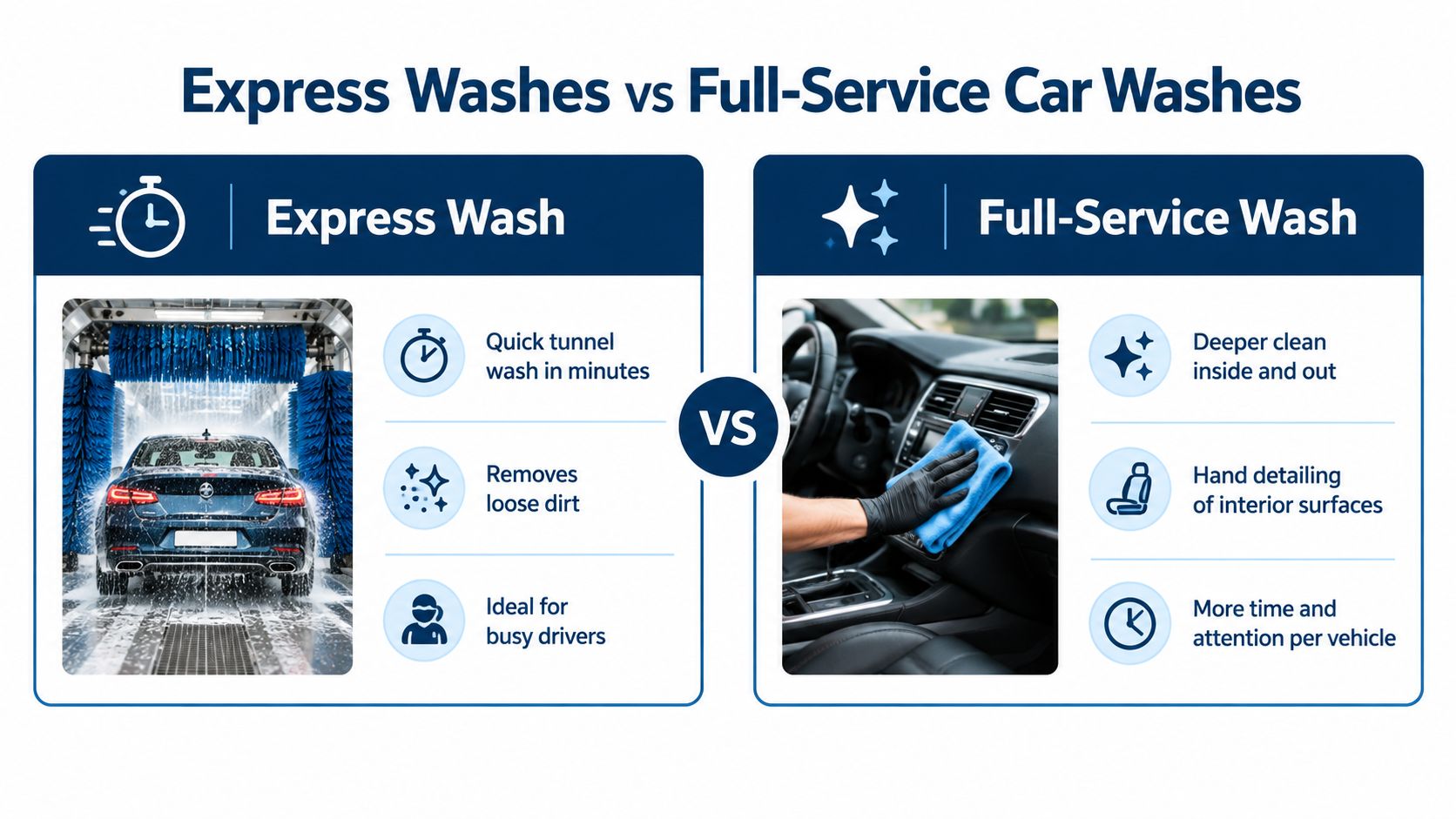
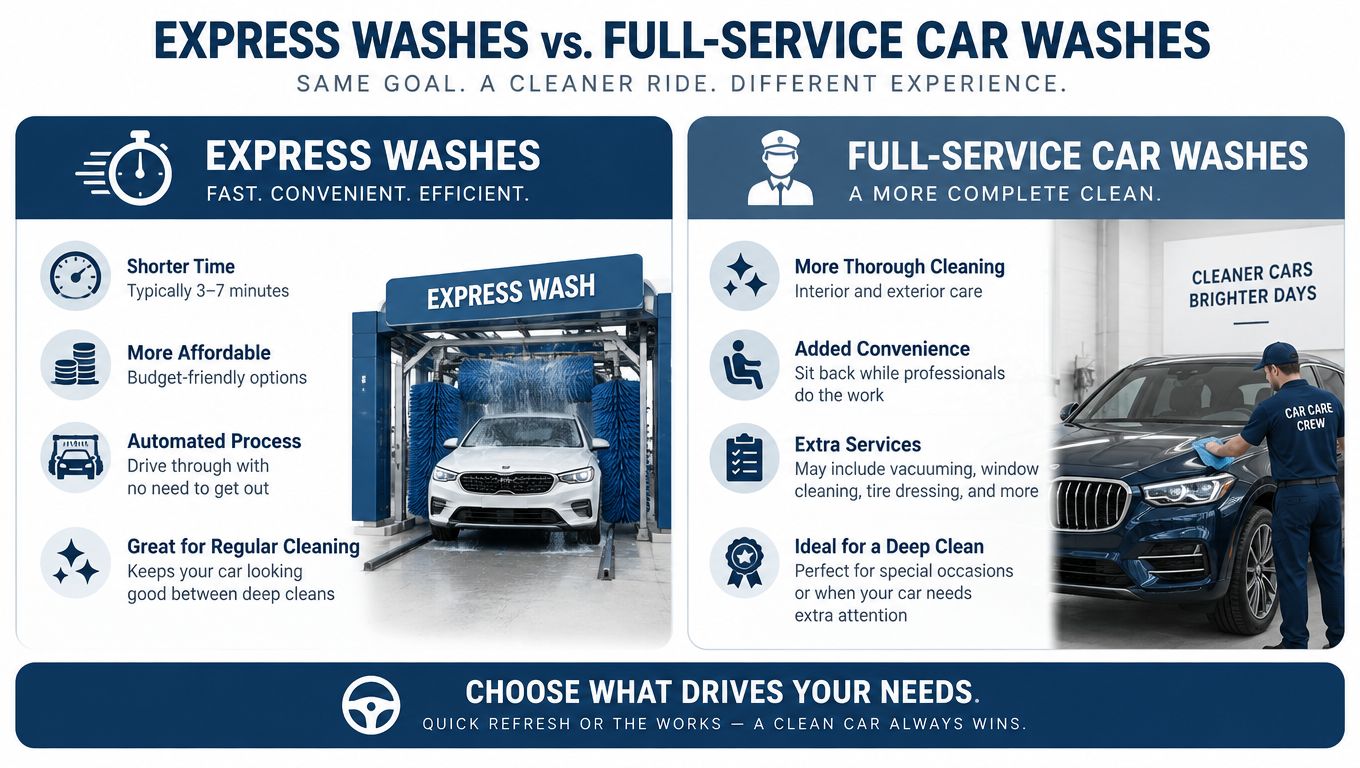
The choice is straightforward when you separate speed from depth. An express wash is designed for a quick exterior reset. It suits a commuter who has loose road dirt on the panels and wants the vehicle cleaned before the next trip. Presoak, foam, rinse, drying agent, and air blowers handle the standard exterior workflow without turning every visit into a detailing appointment.
Full-service cleaning takes a broader approach. Along with the exterior wash, staff may hand-dry the vehicle, vacuum the cabin, clean the dashboard and windows, wipe door panels and consoles, clear cup holders, and apply tire dressing. It makes more sense when the interior is carrying winter salt, food debris, pet hair, or the residue of daily work use.
Match the service to the condition
Use an express wash when:
- The exterior is lightly or moderately dirty: Loose salt film and road dust can be removed efficiently.
- Time is the main constraint: A short visit works well before work, errands, or a longer drive.
- You maintain the vehicle regularly: Frequent lighter cleaning is more effective than waiting for heavy buildup.
Choose full-service care when:
- The cabin needs attention: Vacuuming and surface cleaning address contamination an exterior-only package can't touch.
- You want hand-finishing: Hand drying and attention to trim, panels, and consoles improve the final result.
- The vehicle has been neglected: A broader service can reset both the visible exterior and the interior environment.
The trade-off isn't cheap versus expensive. It's routine maintenance versus concentrated correction. A driver who washes regularly may rarely need an intensive visit, while a family SUV used through every storm may benefit from a more complete service after the worst of winter.
The same principle applies to materials used during hand work. For teams managing shared or public-facing cleaning operations, guidance on selecting cleaning rags for public spaces is relevant because cloth choice, cleanliness, and task separation can affect whether wiping removes contamination or redistributes it.
A full-service wash also isn't a substitute for paint correction. Swirl marks, oxidation, and neglected stains may require detailing, machine polishing, or other specialist work. Select the service that matches the problem instead of paying for a package whose extra steps won't address the actual defect.
Why Underbody Washing and Rust Proofing Matter in Ontario
Ontario's winter problem begins before the car looks dirty. The province applies roughly 1.5 to 3 million tonnes of road salt on public roads each winter, according to an Ontario corrosion summary, while Toronto alone uses about 130,000 to 150,000 tonnes annually. This Ontario road-salt and corrosion overview explains why the underside deserves more attention than a quick pass over the bonnet and doors.
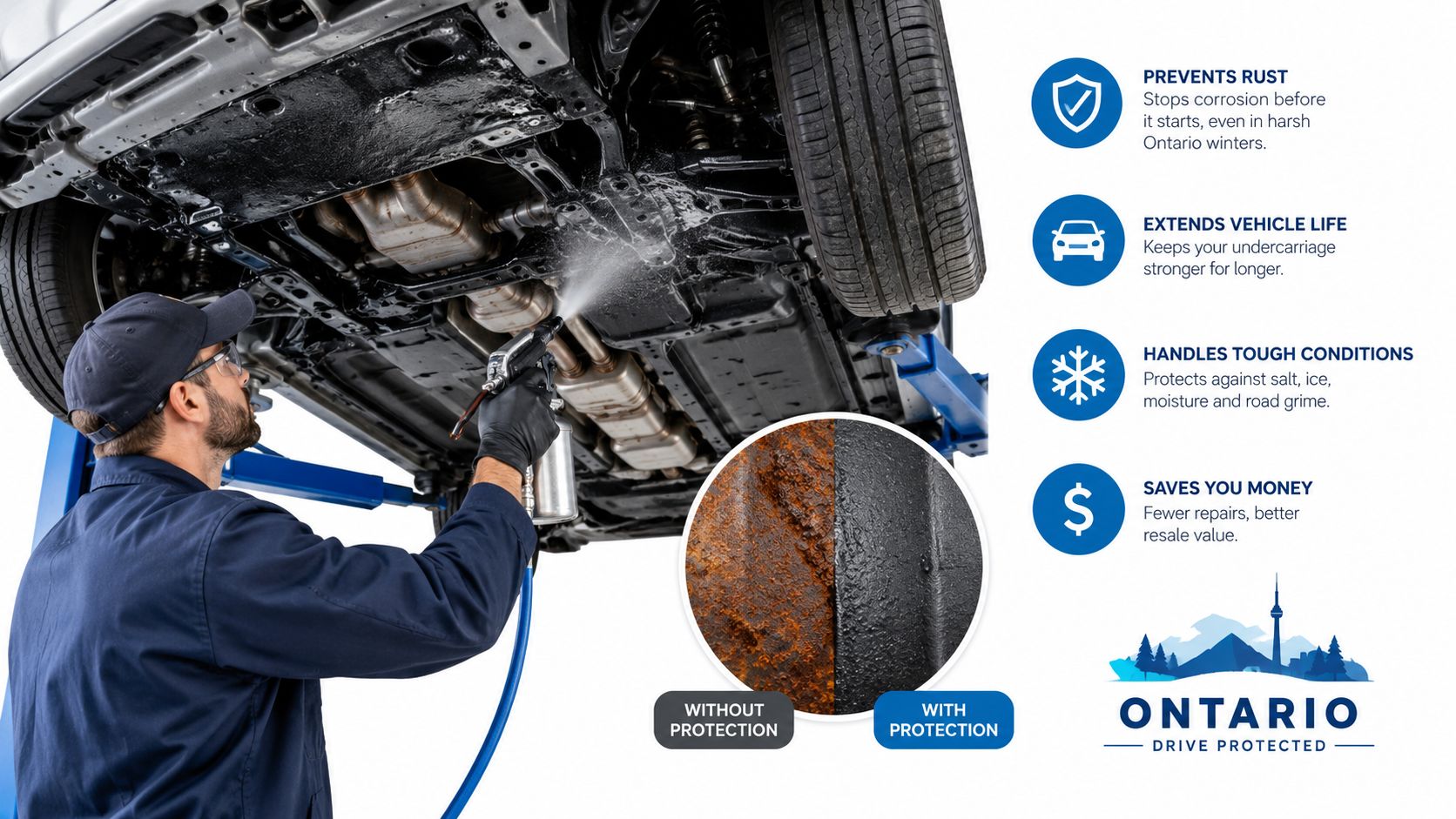
Salt-laden slush gets thrown into wheel wells, seams, rocker panels, and suspension pockets. It stays active after the visible snow disappears, especially when moisture and warmer spring temperatures allow corrosion to accelerate. On older or unprotected vehicles, rust can appear within 2 to 3 winters, and serious structural-rust risk can emerge after roughly 8 to 12 years of year-round driving without rustproofing, as described in the same Canadian summary.
The underside tells the real story
Walk around a freshly washed vehicle and the paint may look fine. The danger is often underneath, where chloride-rich residue collects in places you can't see from a normal standing position. Brake lines, the frame, floor pan, and exhaust components can all suffer when contamination remains trapped.
Canadian rust-prevention guidance recommends pressure washing the underside because it removes contamination rather than merely wetting it. This Canadian rust-proofing guide describes the undercarriage as a high-risk zone and explains why spring humidity can worsen damage left behind by winter driving.
Regular washing is therefore corrosion control. Canadian automotive guidance recommends washing every 1 to 2 weeks during heavy winter driving, particularly with touchless services that reach the undercarriage. CAA gives a broader baseline of every 2 to 4 weeks for protecting paint and limiting corrosion. CAA's winter rust guidance provides those maintenance intervals.
Rust proofing adds another layer, but it isn't a magic shield. It works best when the underside is clean, dry, and inspected before application. A coating won't repair perforated metal, and it shouldn't hide damaged brake lines or structural components. Wash first, inspect, then protect sound surfaces.
Building a Complete Exterior Care Plan
A useful exterior care plan has layers. The first layer is contaminant removal, particularly after salt-heavy driving. The second is surface protection, such as wax or a sealant. The third is attention to concealed areas, including the underbody and wheel wells. Each layer handles a different failure point.
Start with a frequency you can maintain. A light commuter vehicle kept in a garage may need a different rhythm from a delivery vehicle parked outside overnight. The exact package matters less than removing salt before it sits in seams and pockets for extended periods.
Build the routine around exposure
After the wash, select protection according to the vehicle's condition and your expectations:
- Triple foam wax: Adds a product-focused protective step to a standard wash routine.
- Hot wax or sealer wax: Creates a more deliberate barrier on painted surfaces and can make future cleaning easier.
- Lava foam: Suits drivers who want an upgraded finish as part of the wash process.
- Underbody wash: Directs attention to the area most exposed to slush and brine.
- Rust proofing: Uses a dedicated chemical compound on appropriate underbody surfaces after cleaning and inspection.
These services shouldn't be treated as interchangeable. Wax and sealers address exposed painted surfaces. They don't replace an underbody rinse, and neither one repairs existing corrosion. Likewise, rust proofing doesn't remove the salt that remains on a dirty underside.
Protect appearance and function together
A clean exterior helps you spot changes early. Peeling trim, bubbling paint, damaged wheel-well liners, and fresh rust are easier to notice when road film isn't hiding them. That makes washing part of inspection, not just presentation.
For an operator or household with several vehicles, consolidation can simplify the routine. Nanak Car Wash lists express and full-service washes, detailing, underbody-related options, rust proofing, prepaid bundles, and monthly membership choices across GTA-area locations. The practical value is having multiple levels of care available without treating every visit as a full detailing job.
Maintenance works best when the easy option is close enough to repeat.
Don't promise yourself a rare, elaborate clean if your driving pattern calls for frequent basic removal. A modest service used consistently can be more protective than an ambitious package chosen once and then forgotten.
Choosing the Right Service for Your Needs
Start with four questions. How often do you drive? Where does the vehicle sit? What type of vehicle is it? Which contamination needs removing? A daily commuter exposed to salted arterial roads has a different need from a weekend car stored indoors. An SUV, van, or pickup also carries more exterior area and may collect more mud in its lower sections.
Service Selection Guide
| Service Type | Best For | Key Benefits |
|---|---|---|
| Express exterior wash | Regular commuters and busy drivers | Quick removal of loose dirt, soap, rinse, drying agent, and air-blower access |
| Express wash with underbody option | Winter drivers and vehicles exposed to slush | Adds attention to salt and contamination beneath the vehicle |
| Full-service wash | Vehicles needing interior and exterior care | Combines exterior cleaning with vacuuming, surface wiping, windows, and hand-finishing |
| Detailing appointment | Stains, odours, pet hair, and neglected interiors | More intensive cleaning of carpets, seats, vents, leather, and crevices |
| Rust proofing | Owners protecting sound underbody surfaces | Adds a dedicated protective compound after appropriate preparation |
| Prepaid bundle or membership | High-frequency drivers and small fleets | Makes repeat washing easier to plan and spending more predictable |
A membership can suit a ride-hailing or delivery driver who needs frequent cleaning and prefers a regular payment arrangement. A prepaid bundle may fit someone who wants several visits without committing to a monthly routine. Neither is automatically better. The right choice is the one you'll use before salt buildup becomes severe.
Vehicle size also changes the decision. A compact car may be simple to maintain through express visits, while a work van or pickup may justify detailing attention because larger surfaces, cargo use, and job-site grime create different cleaning demands.
Budget should be considered over the entire season, not against a single wash. Compare the cost of repeat basic cleaning with the disruption and expense of allowing salt, stains, and neglect to accumulate. Ask whether the service includes the parts of the vehicle you need cleaned, especially the underbody.
Take the Next Step for Your Vehicle
Exterior cleaning is corrosion control, not a beauty appointment. In the GTA, road salt and slush work into seams, wheel wells, and the underside, where residue can stay active after the paint looks clean. Treat regular washing with the same practical attention you give fluid checks, tyre inspections, and winter equipment.
Choose the simplest service that solves the vehicle's current condition, then repeat it before contamination hardens. An express wash suits routine upkeep. Add an underbody rinse during periods of heavy salt exposure. Full-service cleaning covers the cabin as well as the exterior, while detailing or rust proofing makes sense when ordinary washing cannot address the condition or when you want a more deliberate protection plan.
Service frequency should match how and where you drive. A commuter covering treated GTA roads may need more frequent underbody cleaning than a vehicle used occasionally on cleared streets. Waiting until salt buildup is obvious usually means giving grime more time to collect around edges, suspension components, and hidden surfaces.
Water use also deserves a practical question, not a blanket assumption. As outlined earlier, consumption varies sharply by wash-system design, maintenance, and recycling. Ask how the facility manages water, what the selected package includes, and whether the rinse reaches the underbody. A lower-water process still needs to remove the contamination your vehicle is carrying.
Nanak Car Wash offers express and full-service washing, detailing, and rust proofing for individual drivers, larger vehicles, and repeat users. Its GTA-area locations allow drivers to choose a quick maintenance wash or a more thorough appointment based on the vehicle's condition.
Nanak Car Wash provides express exterior washes, full-service cleaning, detailing, and rust proofing for GTA drivers dealing with salt, slush, and year-round road film. Visit Nanak Car Wash to choose a service and arrange repeat care through Ontario's winter season.

 6600 Finch Ave W, Etobicoke, ON M9V 3Z6
 647-703-8515
 MON – SUN 8 AM to 7 PM