
Most advice about vehicle paint protection starts with shine. That's the wrong place to start in Ontario. A glossy bonnet is pleasant, but it won't help much if road salt has already found a stone chip, seam, rocker panel, or wheel well and begun working beneath the finish.
The practical question is more urgent: how quickly can you remove winter contamination, and which protection prevents the damage you're facing? In Ontario, the answer isn't always an expensive coating. Sometimes it's targeted film on the impact zones, a sealant before winter, an underbody rinse after exposure, or rust control applied before a small defect becomes a repair problem.
Table of Contents
- The Hidden Cost of Ignoring Your Clear Coat
- Comparing the Four Pillars of Paint Defense
- Surviving the Ontario Salt Belt
- Choosing the Right Strategy for Your Vehicle
- Maintaining Your Investment Through Winter
- Final Verdict and Next Steps
The Hidden Cost of Ignoring Your Clear Coat
A clear coat is not decoration. It is the vehicle's first barrier against moisture, salt brine, road grit, ultraviolet exposure, and chemical contamination. Fading, swirls, peeling, and dullness are visible warnings, but the more expensive problem often starts where the damage is harder to see.
Ontario's winter puts that barrier under repeated pressure. Municipalities apply millions of tonnes of road salt each winter, and the GTA sits at the heavy end of that use, with the detailed figures covered in the salt-belt section below. Salt, slush, moisture, and abrasion return to the same exposed areas, especially during repeated freeze-thaw cycles.
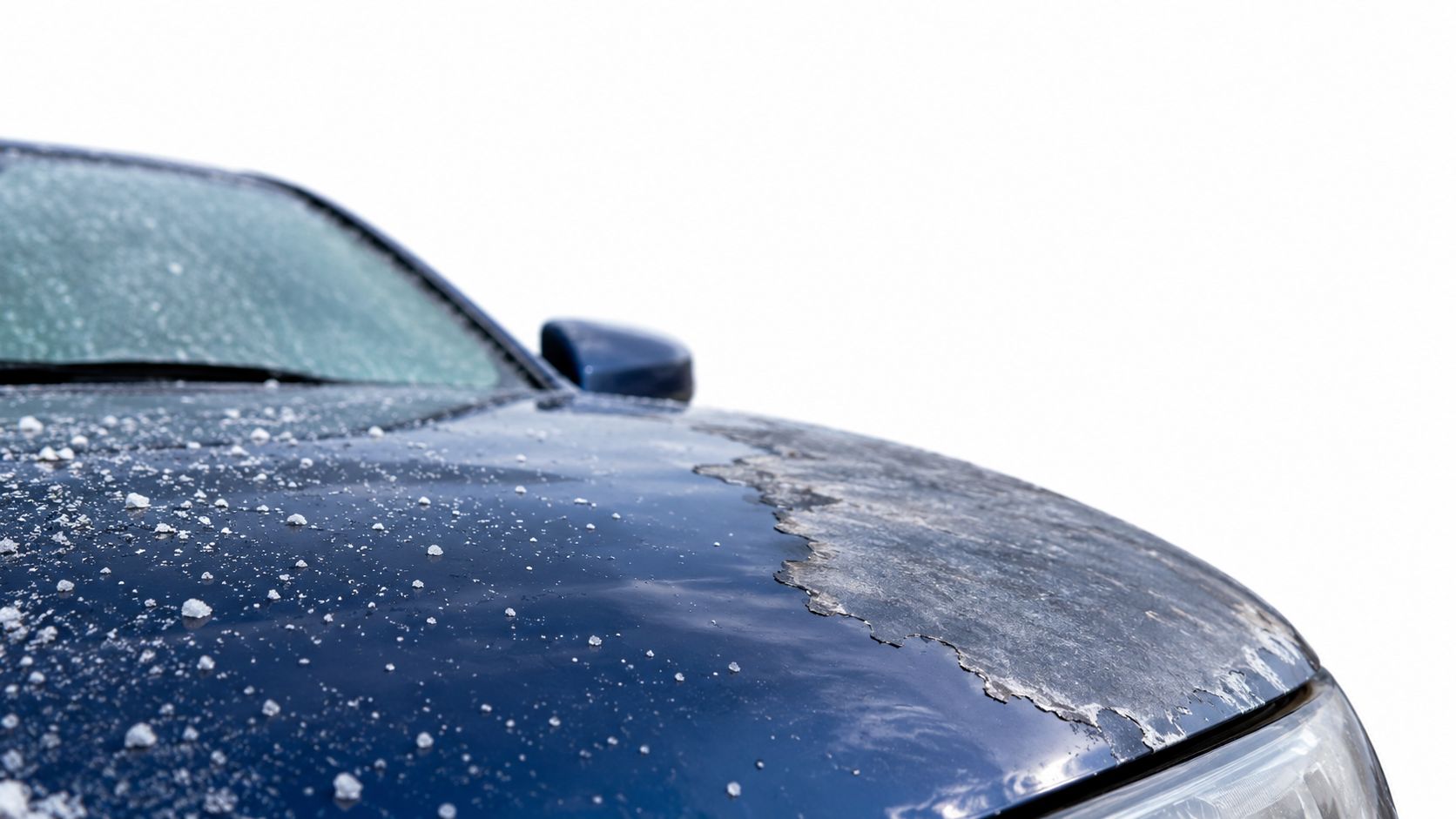
Road brine does not stay on the obvious painted panels. It clings to wheel wells, rocker panels, panel seams, lower doors, and clear-coat chips. A stone strike can open a route toward the underlying metal, while freeze-thaw movement widens the defect. The first 48 to 72 hours after salt exposure deserve more attention than showroom gloss. Remove the contamination before it sits in a chip or seam and begins the corrosion process.
The clear coat is not a force field
A vehicle can look clean from several steps away while residue remains concentrated behind the wheels and along the underbody. After a week on salted highways, visible paint condition tells only part of the story.
Waiting until spring is a costly habit. Bubbling paint, orange staining, lifted edges, and rust around a chip mean the surface has already lost its head start. Paint protection earns its keep by preserving intact paint and making winter cleaning easier. It does not conceal corrosion that has spread underneath.
Practical rule: Treat every exposed chip as a maintenance issue, not a cosmetic blemish.
Wax, sealants, coatings, and film address different threats. None repairs rust, and none makes neglected washing harmless. Start with a close inspection of the bonnet's leading edge, front fenders, mirror caps, lower doors, rocker panels, and areas behind the wheels. Bare metal, bubbling, or lifting paint requires repair before any new protective layer. Judge protection by winter survival and maintenance cost, not by gloss alone.
Comparing the Four Pillars of Paint Defense
The four common choices are carnauba wax, synthetic sealant, ceramic coating, and paint protection film. They overlap in appearance and water behaviour, but they don't solve the same problem.
Carnauba wax is a light raincoat. It adds warmth and gloss, helps water and some grime release more easily, and provides a temporary barrier against ordinary contamination. It won't stop a stone, and its protection needs regular renewal, especially through a harsh winter.
A synthetic polymer sealant is the tougher rain jacket. It generally lasts longer than traditional wax and offers a practical seasonal layer for drivers who want easier cleaning without paying for a full coating or film installation. It still won't absorb a rock strike.
Ceramic coating behaves more like a hard, slick shell. It can make salt brine, road film, and dirt less stubborn, while helping the finish resist chemical contamination and maintain gloss. It isn't a sacrificial impact layer. If a stone hits the bonnet, the coating won't take that hit in the way PPF can.
PPF is closer to a protective vest for high-impact areas. It physically absorbs and distributes some of the force from gravel and road debris before the impact reaches the factory finish. That makes it the relevant choice for rock chips, while coatings, sealants, and waxes mainly address contamination, washing, and surface appearance.
| Protection Type | Longevity | Rock Chip Defense | Salt & Chemical Resistance |
|---|---|---|---|
| Carnauba wax | Short-term, seasonal | None | Basic surface barrier |
| Synthetic polymer sealant | Seasonal to longer-term maintenance layer | None | Good water and contamination release |
| Ceramic coating | Long-term professional or consumer-applied layer | Limited to none | Strong resistance to adhesion and chemical contamination |
| Paint protection film | Long-term sacrificial layer, depending on product and care | Best option for targeted impact zones | Helps protect the finish beneath, but still requires washing |
Choose protection by the damage you're trying to prevent
If your problem is salt sticking to the lower doors and making every wash harder, a sealant or ceramic coating can be useful. If your problem is a daily highway commute that pepper-blasts the bonnet and front fenders, PPF deserves consideration.
A common sales mistake is presenting ceramic coating as an all-purpose shield. It may improve slickness and washability, but it doesn't make paint chip-proof. For commercial vehicles, fleets, and other vehicles exposed to heavy use, it also helps to understand the wider operating context covered in this 2026 commercial auto guide, because appearance protection is only one part of managing a working vehicle.
The sensible combination for many Ontario vehicles is targeted PPF on the highest-impact surfaces, then a coating or sealant where easier cleaning matters. The sensible low-cost alternative is a carefully prepared surface, a quality seasonal sealant, and disciplined winter washing. Buying a ceramic coating when what you really need is chip protection is how owners spend more and still see the damage they were trying to avoid.
Surviving the Ontario Salt Belt
Showroom gloss is the wrong winter benchmark. In Ontario's Salt Belt, a vehicle survives by limiting how long wet salt remains against vulnerable paint and metal. Roads repeatedly deliver salty water to exposed surfaces. Traffic throws brine into the air, where it settles behind trim, inside wheel wells, and across the underbody.
Toronto's commonly cited annual road-salt use is about 130,000 to 150,000 tonnes, while Ontario uses roughly 3 to 5 million tonnes per winter. Those figures explain why GTA vehicles face ongoing contamination rather than one dirty drive, as documented in Toyota Canada's overview of protecting vehicles from winter roads.
Salt becomes more dangerous when it reaches a defect. A small chip can expose the layers below the clear coat, allowing brine to act as a conductive electrolyte wherever moisture reaches exposed metal. Corrosion may spread beyond the visible mark, travelling along seams or collecting behind trim and in the underbody.
The 48-to-72-hour repair window
Research guidance for this topic places the start of corrosion within 48 to 72 hours after road-salt contact and attributes about 50% of vehicle corrosion to road salts. The same guidance reports Toronto at 5,108 mg/dm² over 19 months in a Transportation Research Board corrosion study, ranking it among the highest-corrosion locations in that research.
That timeframe should determine your wash schedule. A monthly wash keeps the vehicle looking presentable, but it does not reliably remove repeated salt exposure. After driving through heavy slush or brine, rinse the vehicle promptly, with special attention to the undercarriage and wheel wells.
The key question isn't whether the vehicle looks dirty. It's whether salt has stayed wet against a compromised surface.
PPF makes sense on the hood's leading edge, front fenders, mirror caps, and rocker panels when those areas face frequent impact. Canadian paint-care guidance identifies them as high-impact zones and recommends flushing the undercarriage every few weeks during winter salt season in its advice on repairing minor paint chips before they rust.
Salt removal beats showroom shine
A coating reduces adhesion. A sealant makes washing easier. Rust inhibitors protect suitable areas. None replaces physical salt removal, so inspect chipped paint and exposed seams before choosing a product. Clean those areas, then apply the appropriate touch-up or repair.
Use the wash process carefully. Keep a high-pressure wand away from lifting film edges and damaged trim. Rinse gritty road film before touching the paint, use a clean wash medium, and flush every area where salt collects. The bonnet may look spotless while the rear of the front wheel arch remains packed with abrasive brine. That is the winter risk your protection strategy must address.
Choosing the Right Strategy for Your Vehicle
The right package depends on mileage, storage, road type, and how long you intend to keep the vehicle. A new SUV driven daily on the 401 has a different protection problem from a weekend coupe that stays indoors.
Daily highway commuter
Choose targeted front-end PPF if the vehicle sees frequent highway driving, winter gravel, and traffic spray. Prioritise the front bumper, hood leading edge, front fenders, mirror caps, and rocker panels. You don't need to cover every painted surface to address the zones taking the most punishment.
Add a ceramic coating or sealant to the remaining paint if easier washing matters. This combination separates the jobs properly, film for impact, coating or sealant for contamination and maintenance.
Ride-hail and delivery vehicle
For a high-mileage working vehicle, full-body PPF is rarely the first place I'd put the budget. Start with front impact zones, underbody cleaning, and rust control, then establish a repeatable wash routine. The vehicle's value comes from staying serviceable and presentable while it works, so protection that can be maintained consistently usually beats an elaborate package that receives no follow-up care.
A durable sealant can make repeated cleaning less frustrating. If the vehicle spends much of its time on highways, targeted film may earn its keep on the front end. If it mostly travels slower urban routes, contamination removal and rust prevention may deliver more practical value.
Garage-kept SUV or weekend vehicle
A garage-kept vehicle usually benefits more from surface preparation and a quality coating or sealant than from automatically buying full PPF. Ceramic coating is a reasonable choice when you care about gloss, slickness, and easier removal of salt film, but don't buy it expecting immunity from gravel.
For occasional winter use, a seasonal wax or synthetic sealant may be enough, provided the vehicle gets washed after exposure and inspected before spring. The key is matching the product to actual use, not copying a package designed for a daily highway commuter.
Small fleet or contractor vehicle
Fleet managers should protect the repeat offenders first. Identify which vehicles accumulate chips on the bonnet, suffer corrosion around lower panels, or spend the most time on salted routes. Use targeted film where impact is predictable, rust inhibitor where exposed areas need additional protection, and scheduled washing as a controlled operating cost.
Ontario-market reporting places the PPF market at US$35.6 million in 2025, with a projection to reach US$45 million by 2030, according to the Canada paint protection film market report. A broader market estimate cited in the research places the global PPF market at US$525.17 million in 2026, with a projected 5.41% CAGR through 2031, as reported in the same research context. Those market figures don't tell you what to buy. They do show why owners should separate genuine impact protection from products sold mainly on shine.
Maintaining Your Investment Through Winter
A protective layer doesn't excuse poor washing. Salt, grit, and oily road film still need to leave the vehicle before they accumulate around edges, seams, wheel wells, and damaged paint.
Start with a thorough rinse. Let water carry away loose grit before contact washing, then use a pH-neutral shampoo and a clean wash mitt. Work from the cleaner upper panels toward the dirtier lower sections, rinsing the mitt often. Avoid wiping a dry vehicle covered in white road film, because that's how a simple maintenance visit becomes a swirl-mark correction job.
Wash the places owners forget
The underbody deserves deliberate attention. Flush behind the wheels, across the rocker areas, and through accessible undercarriage sections. Canadian winter guidance recommends undercarriage flushing every few weeks during salt season, not because the paint needs to look perfect underneath, but because accumulated salt keeps the corrosion process active.
Check the protection itself during routine cleaning. Look for lifted PPF edges, dull or patchy coating behaviour, chips that have reached the base layers, and rust staining around seams. Catching a small issue early gives you more options than discovering bubbling paint after months of wet salt exposure.
A protection product is only as good as the maintenance that keeps contamination from sitting on it.
Professional service can make sense when the vehicle needs more than a basic rinse. A proper detail may include salt and stain removal, crevice cleaning, machine polishing, and preparation before a new sealant or coating. Rust proofing is a separate decision, and it should be applied with attention to the vehicle's condition rather than treated as a substitute for paint repair.
Nanak Car Wash offers express exterior washes with optional underbody wash and wax or sealer upgrades, full-service washes, detailing, ceramic coating, and automotive rust proofing across GTA locations. Its Unlimited Wash Club and prepaid wash options can suit drivers who need a repeatable maintenance routine rather than occasional spring clean-ups.
The best routine is the one you'll follow. A modest protection layer washed regularly will usually serve an Ontario commuter better than an expensive product left under months of salt. Keep the process simple: rinse promptly after heavy exposure, use safe contact washing, flush underneath, and inspect the high-impact zones before damage gets ahead of you.
Final Verdict and Next Steps
Vehicle paint protection in Ontario isn't a contest for the glossiest product. It's a decision about impact, contamination, corrosion, and maintenance.
If your vehicle faces daily highway debris, install targeted PPF on the front impact zones. If it mainly needs easier washing and a slicker finish, choose a ceramic coating or synthetic sealant. If your budget is tight, prepare the paint properly, apply a seasonal protection layer, and spend the remaining money on consistent washes and underbody rinsing.
The 48-to-72-hour corrosion window is the point many glossy product comparisons miss. Salt sitting on intact paint is a maintenance problem. Salt sitting in a chip, seam, or exposed area can become a repair problem quickly, which is why inspection matters more than buying the most expensive bottle on the shelf.
Use this checklist before choosing a service:
- Inspect the finish: Check the hood edge, fenders, mirrors, rocker panels, wheel arches, and seams for chips or bubbling.
- Match the threat: Choose PPF for repeated stone impact, coating or sealant for contamination control, and rust protection for vulnerable exposed areas.
- Plan the washing: Make underbody rinsing part of winter care, especially after heavy slush and salted highway driving.
- Protect the budget: Don't pay for full-body film when targeted coverage addresses your actual driving pattern.
- Fix defects first: Repair compromised paint before sealing contamination beneath a new coating or film.
My recommendation is straightforward. Start with the areas taking the damage, not the product promising the most shine. Get the vehicle inspected, remove existing contamination, and choose a protection package that fits your mileage, storage, and winter habits.
Nanak Car Wash offers express and full-service washes, underbody wash options, detailing, ceramic coating, wax and sealer upgrades, and automotive rust proofing for GTA drivers. Visit Nanak Car Wash to choose a practical winter maintenance service and stop letting salt sit on your vehicle's vulnerable paint.

 6600 Finch Ave W, Etobicoke, ON M9V 3Z6
 647-703-8515
 MON – SUN 8 AM to 7 PM