
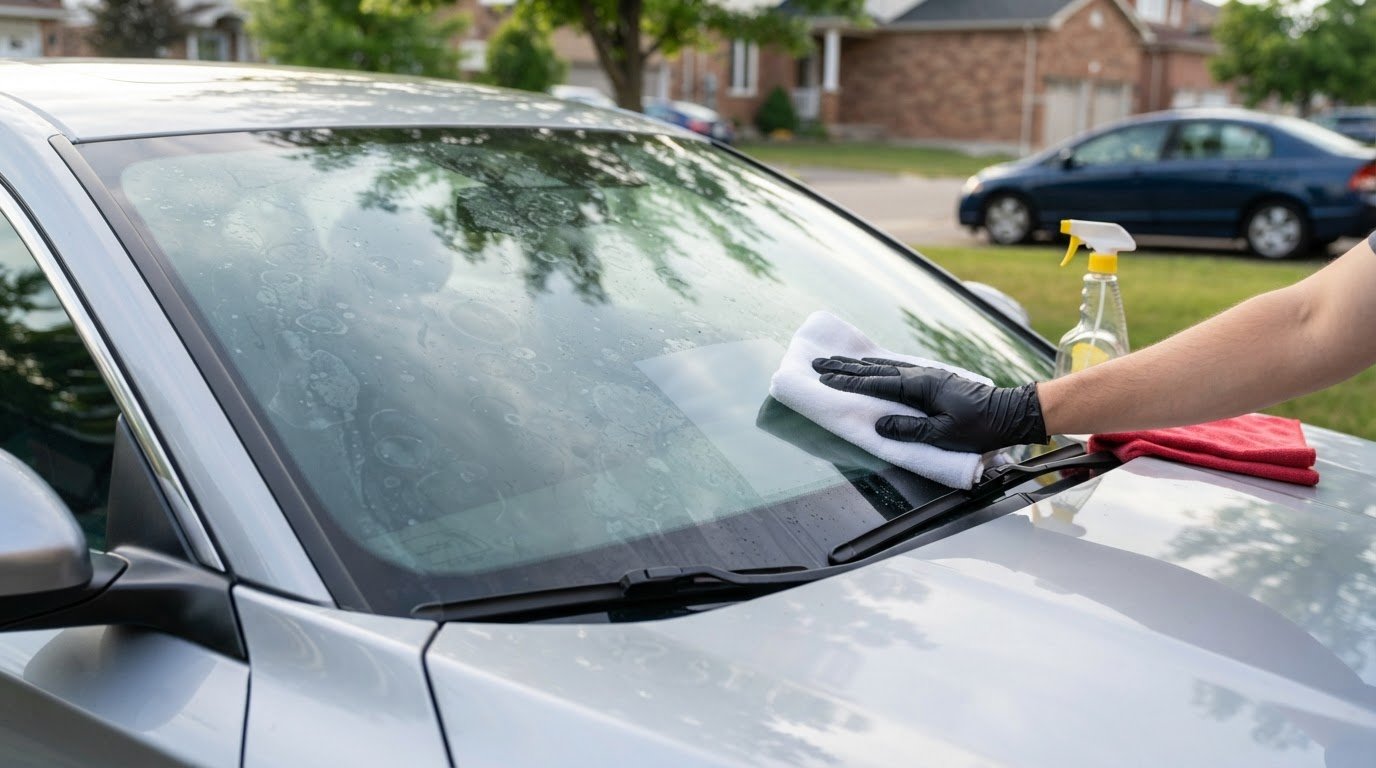
What if the spots that make your freshly washed windshield look dirty aren’t dirt at all? Pale rings and cloudy marks are often mineral deposits left behind as water dries. Stubborn marks, however, may be etching, which won’t wipe away like residue.
If you’re searching for how to remove water spots from car windshield glass, it makes sense to be cautious. The wrong cleaner, an abrasive pad, or rushed scrubbing can damage coatings or leave the glass worse than before. A gentle, step-by-step approach helps you check what you’re dealing with and try the least aggressive suitable method first.
This guide explains how to distinguish removable deposits from possible etching, clean the windshield with suitable materials, and reduce the chance of spots returning. You’ll also learn when to stop DIY attempts and consider professional help. If careful cleaning doesn’t resolve the marks, professional detailing may help with broader exterior cleaning, but it doesn’t guarantee that every stubborn spot can be removed.
Key Takeaways
- Distinguish surface mineral residue from marks that may have etched the glass, so you know when to stop cleaning.
- Learn how to remove water spots from car windshield glass with a careful, least aggressive first approach.
- Use suitable glass-safe cleaning materials and remove loose dirt before treating mineral deposits.
- Reduce repeat spotting by drying the windshield after washing and limiting sprinkler overspray where practical.
- Know when persistent marks may need professional attention, and why seasonal road film around Brampton can resemble water spots.
How to Remove Water Spots from a Car Windshield: Start by Identifying the Marks
Most visible spots on a windshield are surface residue, not permanent damage. Water spots form when droplets evaporate and leave dissolved minerals on the glass. Some marks, however, may be etching, which won’t come off with ordinary cleaning. Assess what you see before scrubbing. A quick check can help you avoid unnecessary abrasion or harsh cleaners.
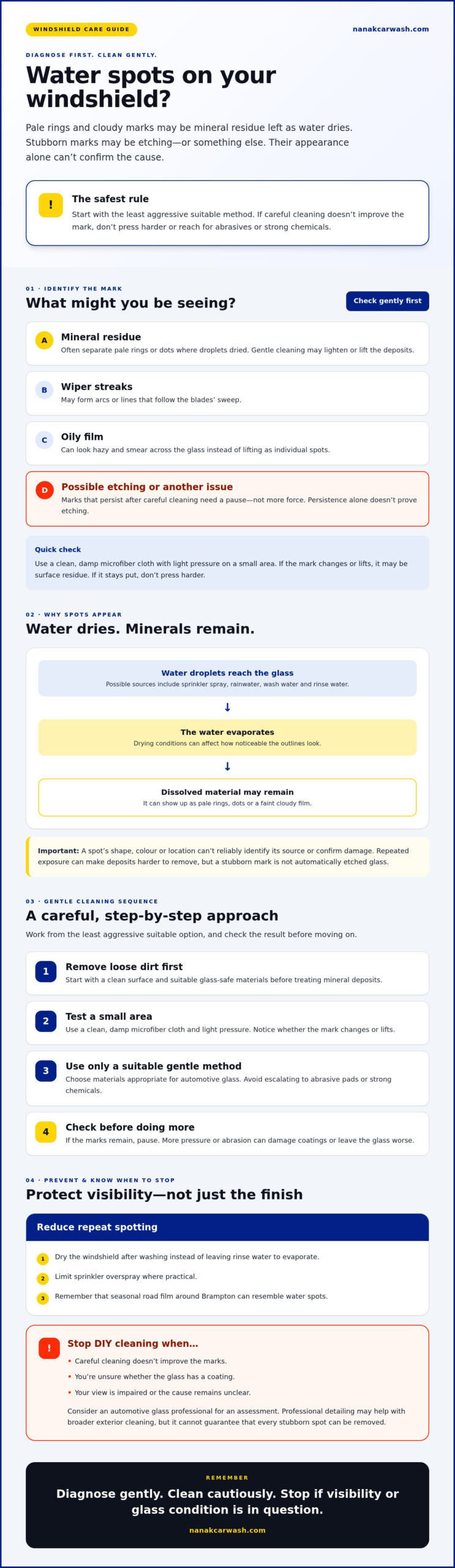
Quick check: Mineral deposits may lighten or lift with gentle cleaning. Wiper streaks often follow the blades’ path, while oily film smears across the glass. Marks that remain after careful cleaning may be etched or have another cause, so don’t try to grind them away.
What causes water spots on a windshield?
Water can carry dissolved minerals. When droplets dry on automotive glass, those minerals may remain as pale rings, dots, or a cloudy film. The visible residue depends on the water source and its mineral content, so spots can look different from one vehicle or wash to another.
Possible sources include sprinkler spray, rainwater, water used to wash the car, and rinse water left to dry. A spot’s appearance alone can’t confirm its source. Windshields are made from laminated safety glass, but knowing that doesn’t tell you whether a particular mark is residue or surface damage. Check the mark gently first.
Are the spots residue, streaks, or etched glass?
Start with a clean, damp microfiber cloth and light pressure on a small area. If a mark changes or lifts, it may be surface residue. Don’t press harder if it stays put.
- Mineral spots: Often appear as separate rings or dots where droplets dried.
- Wiper streaks: May form arcs or lines that follow the blades’ sweep.
- Oily film: Can look hazy and smear rather than lift as individual spots.
- Possible etching: Marks that persist after careful cleaning may involve damage or another issue. Appearance alone can’t confirm the cause.
When considering how to remove water spots from car windshield glass, start with diagnosis, not aggressive polishing. Stop if cleaning doesn’t improve the marks, if you’re unsure whether the glass has a coating, or if your view is impaired. Arrange a professional assessment rather than escalating to abrasive pads or strong chemicals. Use the least aggressive suitable method and check the result before moving on.
Why Windshield Water Spots Form and When They May Etch the Glass
Water spots form when a droplet dries but leaves behind some of what it carried. The residue may be easy to clean at first. If deposits remain or build up through repeated exposure, they can become harder to remove and may affect the glass surface. That doesn’t mean every stubborn mark is etched glass. A careful cleaning check is more useful than guessing by appearance.
Mineral water spots are deposits left on automotive glass when water evaporates and leaves dissolved minerals behind.
How minerals leave visible marks on automotive glass
Water can contain dissolved material, including minerals. As a droplet evaporates, the water disappears while some of that material remains on the glass. For example, rinse water left to dry after a wash may leave pale circles or a faint cloudy layer. Sprinkler spray and rainwater can also leave marks, depending on what the water carries.
Drying conditions matter, too. Droplets that dry quickly in sun or warm weather may leave more noticeable outlines than water that’s removed promptly. Marks can vary in appearance, so their shape or colour alone can’t reliably identify the water source or confirm what’s on the glass.
How to recognize stubborn deposits or possible etching
Surface buildup sits on the glass and may improve with gentle cleaning. Possible etching involves a change to the glass surface, so routine cleaning may not resolve it. Repeated exposure or leaving deposits in place can make them harder to remove, but persistence alone isn’t proof of etching. Don’t diagnose damage solely from a spot’s shape, colour, or location.
If marks remain after careful cleaning, pause before reaching for stronger chemicals, abrasive pads, or polishing tools. More force can create new problems, especially if the glass has a coating or the mark has another cause. Note whether the mark changes after gentle cleaning, then seek an automotive glass professional if it remains unexplained or affects your view. Clear visibility comes first.
For how to remove water spots from car windshield glass, identifying the likely cause helps you choose a sensible next step: clean surface residue gently, but don’t treat suspected damage as ordinary dirt. If careful washing hasn’t resolved the overall exterior cleaning, professional detailing may be worth considering. Nanak Car Wash offers car detailing in Brampton. Contact the business to ask whether a specific windshield treatment is available.
Compare Safe Ways to Remove Water Spots from a Car Windshield
Choose the least aggressive method that fits the mark. For light residue, a clean microfiber cloth and automotive glass cleaner are sensible first options. Distilled water can help rinse away loose material without adding minerals from tap water. If these basic steps don’t shift deposits, consider a remover specifically labelled safe for automotive glass.
Check the product label before use. Test it on a small area, follow the manufacturer’s directions, and keep it off paint, rubber, and trim where possible. Don’t mix cleaners or assume a product is safe for a coated windshield just because it works on household glass.
Compare methods before you start
| Method | Best use | Caution | When to stop |
|---|---|---|---|
| Microfiber cloth and automotive glass cleaner | Light grime, streaks, and early residue | Use a clean, soft cloth and a product labelled safe for automotive glass. | If marks remain after gentle cleaning, don’t scrub harder. |
| Distilled-water rinse | Rinsing loose residue or cleaner from glass | It may not dissolve established mineral deposits on its own. | Move to a suitable glass-safe option only if the product label supports it. |
| Automotive glass mineral deposit remover | Deposits that persist after basic cleaning | Check glass and coating compatibility; follow directions and avoid nearby surfaces. | Stop if the mark doesn’t improve or the glass looks different. |
| Glass polishing | Specialist correction when cleaning methods aren’t enough | Polishing removes material and needs suitable products and careful technique. | Leave it to a professional if you’re unsure whether the glass can be polished safely. |
Which tools and shortcuts should you avoid?
Skip abrasive pads, dry scrubbing, and blades as routine spot-removal tools. They can scratch glass or harm coatings and nearby wipers, trim, or paint. Avoid unverified household remedies, too. A method that seems mild on another surface may not be suitable for automotive glass.
Polishing is different from cleaning. It isn’t the next step to try with a household abrasive or improvised tool. The windshield’s condition and any coating matter, so seek professional guidance before attempting correction.
The safest approach to how to remove water spots from car windshield glass is to start gently, use only products labelled for the surface, and stop if the marks persist. The step-by-step method below applies that low-risk approach.
How to Remove Windshield Water Spots Safely: A Step-by-Step Method
Start with the gentlest cleaning method and use a glass-safe deposit remover only if needed. Don’t rush to scrub harder. A clean surface, suitable products, and a clear stopping point help protect the windshield and surrounding trim.
- Park in shade and let the glass cool. Wait until the windshield feels cool before applying cleaner, since hot glass can cause products to dry too quickly. Safety check: Don’t apply cleaner to a hot windshield or in direct sun.
- Rinse off loose dirt and grit. Use clean water to flush away dust and particles before wiping. This reduces the chance of dragging grit across the glass. Safety check: Don’t dry-scrub a dusty windshield.
- Protect nearby surfaces. Keep cleaner away from painted panels, rubber, and trim, and follow any label precautions around wipers. Safety check: If the product warns against contact with a surface, prevent splashes or choose a suitable alternative.
- Clean a small area with an automotive-glass-safe product. Apply the cleaner as directed and wipe gently with a clean, soft microfiber cloth. Use a fresh section of the cloth if it becomes dirty. Safety check: Confirm the label says the product is suitable for automotive glass, and test it in a small area first.
- Rinse or buff as the directions specify. Some products call for a clean-water rinse; others should be buffed with a dry microfiber cloth. Follow the product instructions rather than adding extra cleaner or leaving it on longer. Safety check: Don’t mix products or improvise the application.
- Inspect the glass before repeating. Check the area from different angles once it’s clean and dry. If the product permits another application, repeat only as directed. Safety check: Stop if the mark persists, the glass appears damaged, or your visibility is impaired. Don’t escalate to abrasive pads or polishing without suitable product guidance; ask an automotive glass professional for advice.
This careful process is a practical starting point for how to remove water spots from car windshield glass without unnecessary force. If the marks remain, they may need a closer assessment rather than more aggressive DIY treatment. For broader exterior cleaning in Brampton, explore Nanak Car Wash car detailing. Contact the business to ask whether a specific windshield treatment is available.
Prevent Windshield Water Spots and Know When to Get Professional Help
A few simple habits can reduce residue and make regular glass cleaning easier. Drying the windshield after a wash limits the time droplets have to evaporate on the surface. It won’t prevent every mark, but it’s a practical way to help keep glass clear.
Simple habits that help prevent water spots
- Dry the windshield after washing. Use a clean, dedicated microfiber towel on clean glass. Replace it if it becomes dirty so you don’t drag grit across the surface.
- Limit sprinkler overspray. If possible, avoid parking where sprinklers repeatedly reach the windshield. Changing your parking spot can reduce repeated exposure.
- Keep wipers and washer fluid in good condition. Clean glass and serviceable wiper blades can help maintain a clear view. Follow your vehicle’s guidance for washer fluid, and clean the windshield when conditions allow.
In Brampton, seasonal road film can leave glass looking dirty, but that haze isn’t always mineral spotting. If a mark doesn’t behave like a deposit during gentle cleaning, avoid repeating the same treatment or switching to harsher products without checking what’s safe for the glass.
When to consider detailing or glass-professional advice
Stop DIY attempts if marks persist after careful cleaning, you suspect etching, or the windshield has cracks or impaired visibility. An automotive glass professional can assess concerns about the glass itself. Don’t keep scrubbing or try abrasive polishing to force a result.
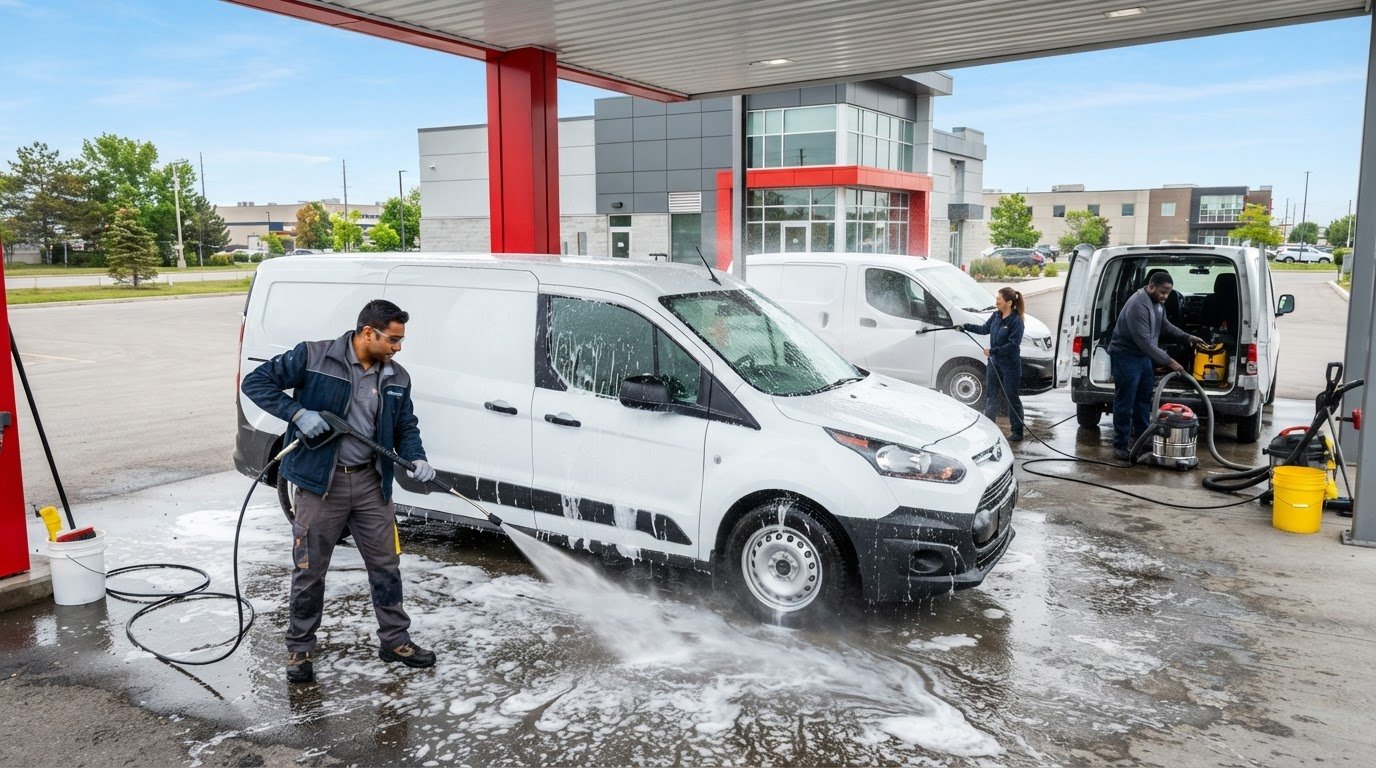
If the windshield is part of a wider exterior-cleaning issue, professional detailing may be a useful next step. Nanak Car Wash serves Brampton with car detailing that includes intensive exterior and interior cleaning, polishing, and waxing. That broader service may help with persistent vehicle-cleaning needs, but it doesn’t promise a specific windshield water-spot treatment. Confirm directly whether that treatment is available.
For more general advice, explore Nanak Car Wash’s car-cleaning guide and car-detailing guide. If careful home cleaning hasn’t resolved the broader exterior buildup, you can also explore Nanak Car Wash services in Brampton and ask which option fits your vehicle’s needs. Meanwhile, for drivers looking to protect and upgrade their vehicle glass with professional window tinting and aftermarket styling, check out PFM Performance Auto Group for specialized automotive enhancement services.
Keep Your Windshield Clear with a Gentle, Safe Approach
Clear glass starts with identifying the marks before reaching for a stronger cleaner. Water spots may be surface deposits, but persistent marks can have another cause, so don’t rely on appearance alone to diagnose etching. Begin with cool glass, rinse away loose dirt, and use a clean microfiber cloth with a product labelled safe for automotive glass.
That’s the core of how to remove water spots from car windshield glass safely: use the least aggressive suitable method, follow product directions, and stop if marks persist or your visibility is affected. Drying the windshield after washing and avoiding sprinkler overspray where practical can also help reduce repeat spotting.
For broader vehicle-cleaning needs, Nanak Car Wash serves Brampton, Ontario, with car detailing and full-service washes. A specific windshield treatment isn’t confirmed, so ask about availability if that’s what you need. Explore Nanak Car Wash services in Brampton for your vehicle’s cleaning needs.
Frequently Asked Questions
Can vinegar remove water spots from a car windshield?
Yes, a diluted vinegar solution may help loosen light mineral deposits. A commonly recommended mix is equal parts white vinegar and distilled water. Apply it cautiously to cool glass, test a small area first, and don’t let it sit longer than needed. Avoid contact with paint, rubber, and trim, and rinse the glass afterward. Skip this method if your windshield has a coating and its care instructions don’t confirm vinegar is suitable.
Will water spots permanently damage a windshield?
Not always. Many spots are surface residue that can come off with gentle cleaning. Deposits left for a long time or repeated exposure may become harder to remove, and some marks may involve etching. You can’t confirm etching just by a spot’s shape or colour. If careful cleaning doesn’t improve the marks, or they affect your view, stop scrubbing and ask an automotive glass professional to assess the windshield.
Can I use a magic eraser or steel wool on windshield water spots?
No. Avoid magic erasers, steel wool, abrasive pads, and blades as routine windshield cleaning tools. They can scratch the glass or affect coatings, wipers, trim, and nearby paint. Even if a mark seems stubborn, don’t press harder or switch to a more abrasive tool. Rinse away loose dirt, then use a clean microfiber cloth and a product labelled safe for automotive glass. Stop if gentle cleaning doesn’t work.
Why do water spots come back after I wash my car?
Spots can return when rinse water dries on the glass and leaves dissolved minerals behind. The water source and its mineral content can affect how much residue appears. To help reduce repeat spotting, dry the windshield promptly with a clean microfiber towel after washing. Sprinkler overspray can also leave marks, so avoid parking where spray repeatedly reaches the glass when practical.
Can I use glass polish to remove stubborn windshield water spots?
Glass polish may be intended for some surface marks, but it isn’t a routine first step for water spots. Polishing is different from cleaning and requires a product suitable for automotive glass and careful technique. Check the product directions and any windshield coating guidance before considering it. If you’re unsure what caused the mark, or it remains after gentle cleaning, seek professional advice instead of experimenting with abrasives.
Should I remove water spots from my windshield before driving?
Clean the windshield before driving if spots, haze, or residue interfere with your view. Visibility matters more than removing every cosmetic mark. Use a suitable automotive glass cleaner and a clean cloth when it’s safe to do so, and make sure the glass is clear before setting off. If marks still obstruct your view after cleaning, don’t keep scrubbing while preparing to drive; get the glass assessed.
Does professional car detailing remove windshield water spots?
Professional detailing can help with broader exterior buildup, but it doesn’t automatically include a specific windshield water-spot treatment. Ask the provider what their detailing service covers and whether it’s suitable for the marks on your glass. Nanak Car Wash serves Brampton with car detailing and full-service washes. Contact the business to confirm whether a particular windshield treatment is available, especially if marks persist or may be etching. For a deeper look at how comprehensive detailing protects automotive surfaces from environmental buildup and wear, guides from D3 Auto Care LLC outline key vehicle preservation practices.



 6600 Finch Ave W, Etobicoke, ON M9V 3Z6
 647-703-8515
 MON – SUN 8 AM to 7 PM