
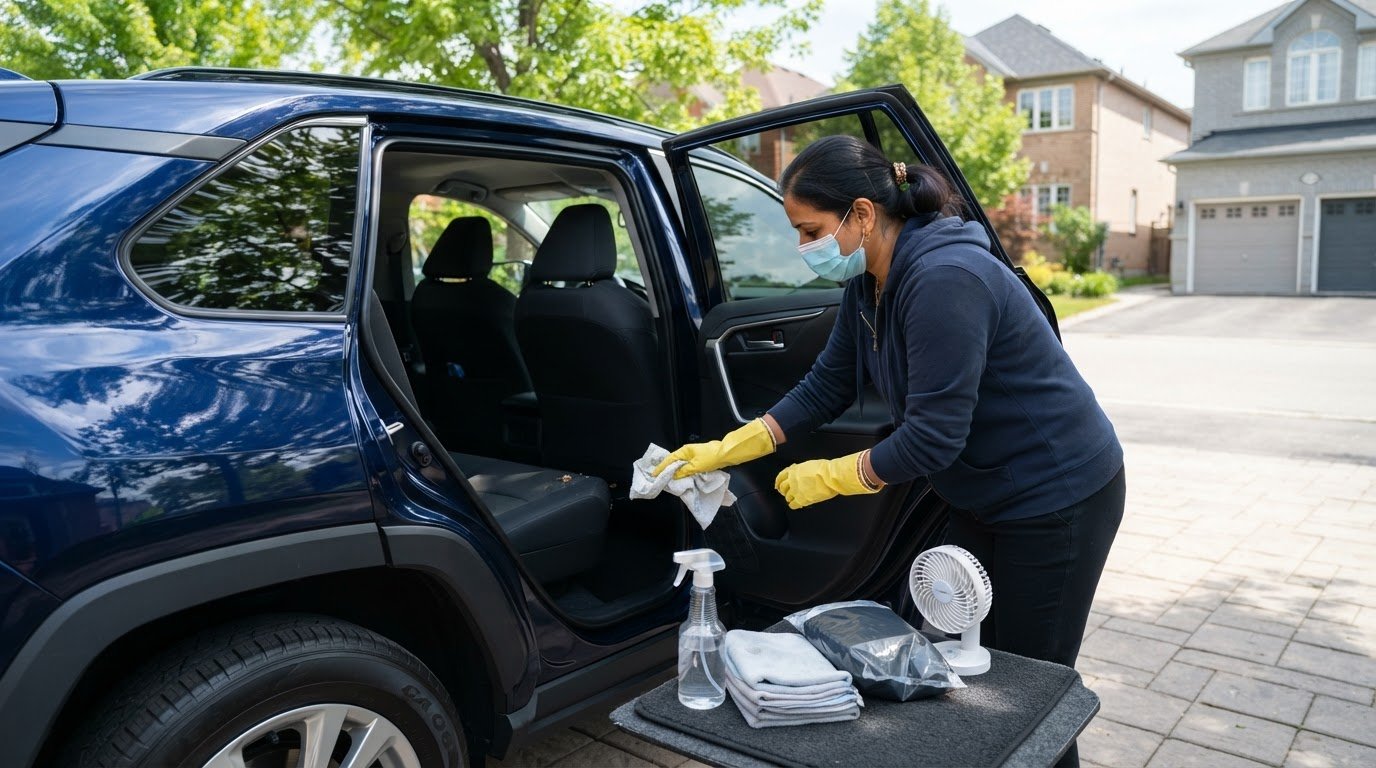
A passenger gets sick in your car, and the first instinct may be to grab a cloth and start scrubbing. But rushing can spread the mess or push it deeper into upholstery. If you’re wondering how to clean up after a sick passenger in car, start by protecting yourself and lifting away visible material. Then clean each surface with products suited to its material.
It’s understandable to worry about lingering stains, odours, or germs, especially when vomit reaches cloth seats, carpet, or a child’s car seat. A careful cleanup has three main stages: contain and remove visible material, clean the affected surface, then consider disinfection only if the product and surface instructions allow it. You’ll also learn why cleaning and disinfecting aren’t the same step, and why car-seat manufacturer instructions matter.
Some messes may be manageable at home; deep saturation or persistent odour can call for professional advice. Interior detailing in Brampton may include seat and carpet shampooing, but illness-related cleanup isn’t automatically suitable for every service. Before booking with Nanak Car Wash, describe the affected surfaces and mess so the team can confirm whether its current detailing service is appropriate.
Key Takeaways
- Lift visible material instead of rubbing it deeper into seats or carpet.
- Follow a clear cleanup sequence and keep other passengers away from the affected area while you work.
- Choose cleaning and disinfecting steps based on the surface, and follow product and vehicle instructions.
- Dry cleaned areas fully and address the source of lingering odour instead of relying on fragrance to mask it.
- If soil or odour remains, describe the mess and affected materials to a detailer first to confirm whether their service is suitable.
How to Clean Up After a Sick Passenger in Your Car: Start Safely
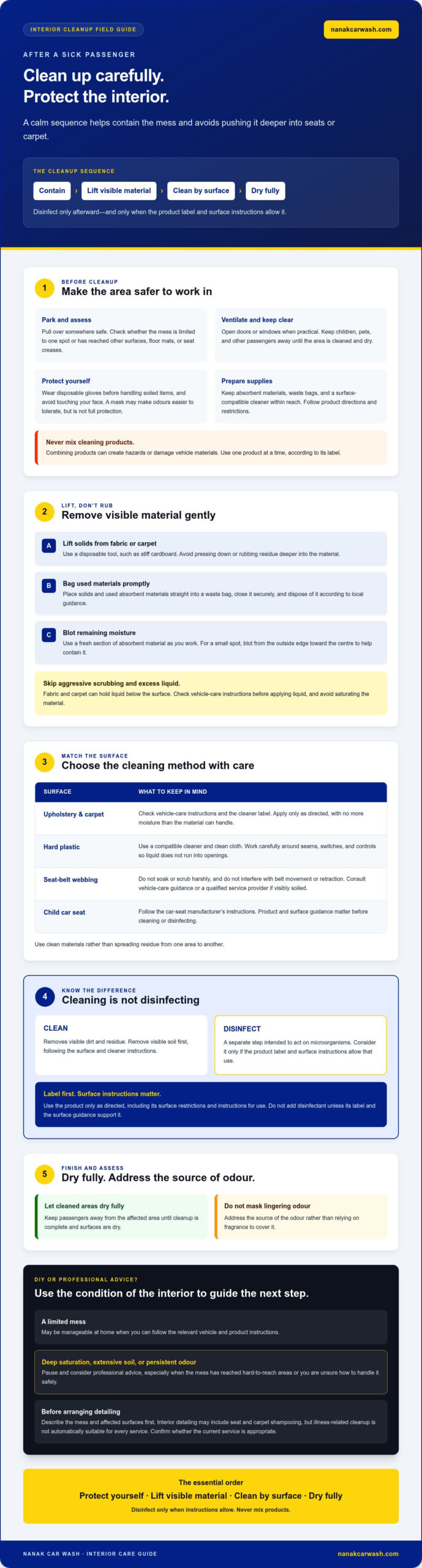
A sick passenger can leave a stressful mess, but a calm, step-by-step response helps limit the spread. Park safely, protect yourself, remove visible material, then clean the affected surfaces. Keep other passengers away until cleanup is complete and the surfaces are dry. If the mess is extensive or has soaked deeply into the interior, pause before tackling it yourself and consider whether you need professional advice.
Keep the order clear: remove visible soil first; disinfect afterward only with a product used according to its label. Cleaning removes dirt and residue, while disinfecting is a separate step intended to act on microorganisms. For a basic explanation of what are disinfectants, see this reference, then check the product label to confirm that it’s suitable for your surface and intended use.
What to do immediately after someone gets sick in the car
Pull over somewhere safe before assessing the mess. Check whether it’s limited to one spot or has reached multiple surfaces, floor mats, or seat creases. Open the doors or windows when practical to improve airflow. Keep children and pets away while you work, and don’t let anyone sit on or touch the affected area until it’s been cleaned and dried.
If the mess is limited, prepare to remove the visible material gently. If it’s extensive, has spread into hard-to-reach areas, or you’re unsure how to handle it safely, don’t rush into a deeper cleanup. The next step depends on how much material there is and which surfaces are affected.
What to wear and prepare before cleaning
Before you begin, gather disposable gloves, absorbent materials, waste bags, and a cleaner that’s compatible with the affected surface. Put on gloves before handling soiled items, and avoid touching your face. A mask may make unpleasant odours easier to tolerate, but it shouldn’t be treated as full protection from exposure.
- Ventilate: Keep doors or windows open when practical.
- Check the label: Follow the directions, including surface restrictions and any instructions for use.
- Use one product at a time: Never mix cleaning products. Combining products can create hazards or damage vehicle materials.
- Keep supplies ready: Place absorbent materials and waste bags within reach so you can contain used items promptly.
Once you’re prepared, focus on the next part of how to clean up after a sick passenger in car: lifting away the mess without rubbing it further into the fabric.
A Step-by-Step Method for Cleaning Vomit from Car Seats and Floors
Start by removing visible material, then clean the surface. Fabric and carpet can hold liquid below the surface, while hard surfaces can usually be wiped without soaking. Use a different approach for each material, and avoid adding more moisture than it can handle.
How to handle fresh vomit on upholstery and carpet
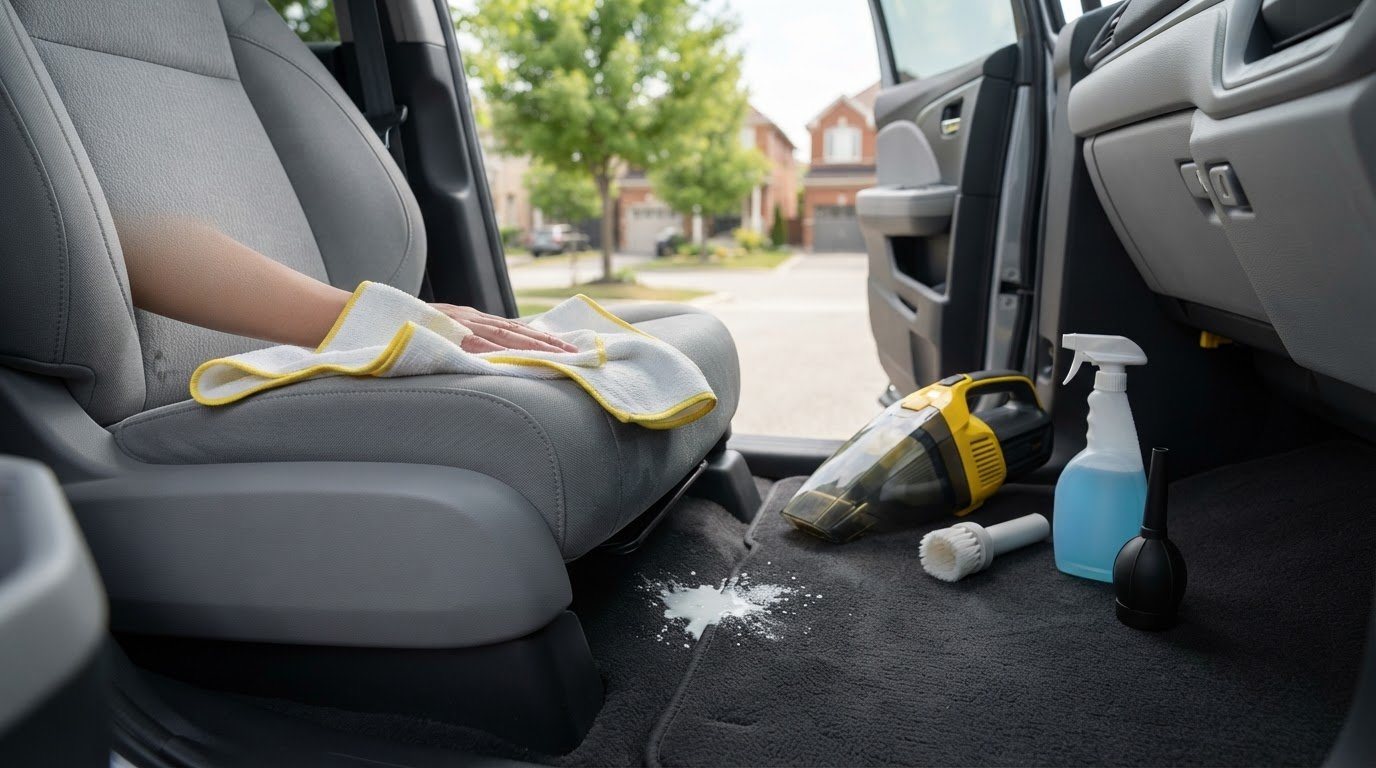
Use a disposable tool, such as a stiff piece of cardboard, to lift solid material gently. Avoid pressing down or rubbing, since that can push residue deeper into fabric. Put solids and used absorbent materials straight into a waste bag, then close it securely. Dispose of the bag according to local guidance.
Blot remaining moisture with absorbent material, using a fresh section as you work. For a small spot, move from the outside edge toward the centre to help contain it. Don’t scrub aggressively. Before applying any liquid, check the vehicle-care instructions for the seat and carpet, then confirm the cleaner’s label allows use on those surfaces.
Apply the compatible cleaner as directed. Use only the amount and method stated on its label, and avoid saturating the material. If the label calls for cleaning before disinfection, remove visible soil before applying disinfectant as directed. Don’t mix products or add a disinfectant unless its label and the surface instructions support that use.
How to clean hard surfaces and seat-belt webbing
For compatible hard plastic, use a clean cloth and an appropriate cleaner, following the product’s directions. Work carefully around seams, switches, and controls so liquid doesn’t run into openings. Use clean materials rather than spreading residue from one area to another.
Seat-belt webbing needs extra care. Don’t soak it, scrub it harshly, or interfere with the belt’s movement and retraction. If it’s visibly soiled, consult your vehicle-care guidance or a qualified service provider before trying a cleaning method that could affect its use.
- Porous upholstery and carpet: Lift solids, blot moisture, and use a compatible product without oversaturating.
- Hard surfaces: Wipe with a suitable cleaner and keep liquid away from openings and controls.
- Used materials: Bag them securely and follow local disposal guidance.
If residue remains in the seats or carpet after safe initial cleanup, interior detailing may be a possible next step. Nanak Car Wash offers detailing that can include seat and carpet shampooing, but confirm that the specific mess and affected materials are within the service’s capabilities first. You can review interior car detailing information and describe the cleanup needed before arranging a service.
Cleaning vs. Disinfecting: Choose the Right Approach for Each Car Surface
Cleaning and disinfecting are different steps. Cleaning removes visible soil and residue. Disinfecting uses a product intended to act against microorganisms, and it must be used according to its label. A surface that looks clean isn’t automatically disinfected, and a disinfectant may harm materials it wasn’t made for.
When considering how to clean up after a sick passenger in car, match the method to the surface first. Porous fabric can hold moisture and residue, while nonporous trim is generally easier to wipe. Check both the vehicle-care instructions and product label before applying anything.
Which car surfaces need different cleaning methods?
Use the comparison below as a starting point, not a substitute for manufacturer directions. Screens, leather, coatings, and sensitive finishes need extra caution. If you’re unsure what a surface can tolerate, don’t apply a product unless its label and the vehicle guidance allow it. Test only as those instructions permit.
| Surface | Practical approach |
|---|---|
| Hard plastic trim | Use a compatible cleaner on a cloth, and avoid letting liquid run into seams or controls. |
| Upholstery | Check the seat-care instructions; use only a compatible product and avoid oversaturating the fabric. |
| Carpet | Follow carpet and vehicle guidance; porous fibres may need careful cleaning without excess moisture. |
| Frequently touched controls | Check the manufacturer’s instructions before wiping buttons, switches, or touchscreens. Keep liquid out of openings. |
When is disinfecting appropriate after a passenger is sick?
Consider disinfection only if the product is suitable for the specific surface and its label supports the intended use. Follow all directions for application, ventilation, and any required wet-contact time. A quick wipe may not meet the label’s instructions. Don’t mix products or assume one cleaner can safely be used across fabric, leather, screens, and trim.
Fragrance can cover an odour without removing its source. A surface that looks clean may still need further attention, while visible cleanliness alone doesn’t confirm disinfection. If the product instructions conflict with vehicle-care guidance, or you can’t confirm compatibility, stop and seek advice rather than risk damaging the interior.
How to Remove Lingering Odour and Decide Whether DIY Cleanup Is Enough
A spot can look clean and still smell. Odour may linger if residue remains in fabric, carpet fibres, seat seams, or another hard-to-reach area. Adding fragrance may cover the smell temporarily, but it won’t remove the source. Focus on appropriate cleaning first, then let the area dry fully according to the vehicle-care and product instructions.
Don’t use an ordinary vacuum on visible wet or solid contamination. It can spread material inside the vehicle or contaminate the vacuum. Follow the cleaning product’s directions, and avoid adding household remedies or extra products unless they’re compatible with the affected surface. No single remedy can be counted on to eliminate persistent odour in every situation.
Why odour can remain after visible mess is gone
Porous materials can hold residue below the surface, and seams or creases can be difficult to reach with a cloth. If the smell returns after the area dries, residue may remain, or the material may need a cleaning method beyond what you can safely do at home. Address the source before using fragrance to mask the odour.
For broader guidance on caring for vehicle interiors, read this interior car detailing guide. General detailing advice isn’t a substitute for product labels or your vehicle’s care instructions.
Signs that a detailer or specialist may be needed
Pause DIY cleanup if the mess covers a large area, has soaked into upholstery or carpet, reached spaces you can’t access, or continues to smell after careful cleaning and drying. Also stop if you can’t identify a compatible product or aren’t confident you can handle the affected material safely. The scale, surface, and location all matter.
- Limited, accessible soil: You may be able to continue with careful, surface-compatible cleaning.
- Deep or widespread contamination: Ask an appropriate professional what service is suitable before proceeding.
- Persistent odour or uncertainty: Explain what happened, how much material is involved, and which surfaces are affected.
Nanak Car Wash offers interior detailing that can include seat and carpet shampooing, but illness-related messes may not be suitable for every service. Contact Nanak Car Wash about cleanup suitability and describe the affected materials before booking. For extensive contamination or uncertainty about safe handling, seek guidance from a provider equipped to advise on that situation.
When to Book Interior Car Detailing After a Sick Passenger
Interior detailing may help with soil or odour that remains after you’ve safely removed the visible mess and cleaned the affected area. It’s a follow-up option, not a replacement for safe initial cleanup or a guarantee of disinfection. Standard detailing shouldn’t be assumed to include biohazard remediation or pathogen elimination. Confirm the service can accept the specific cleanup before arranging an appointment.
What to ask a detailer before booking
Give the provider clear details so they can assess whether the job fits their service. Explain what happened, where it happened, and which materials were affected, such as a cloth seat, carpet, floor mat, or hard trim. Ask whether they can accept this type of cleanup and what cleaning methods are included. Check for any preparation instructions before bringing in the vehicle.
What a regular interior detail can help address
Interior detailing can include vacuuming and shampooing seats and carpets, which may help with remaining interior soil. Results depend on the material, how far the mess spread, and the scope of the service. A detail doesn’t guarantee removal of every stain or odour, and it shouldn’t be treated as medical disinfection. For general context, explore this car detailing guide and car cleaning guide.
If you’re in Brampton, describe the affected surfaces and contamination to Nanak Car Wash before arranging service. The team can confirm whether its current interior detailing is suitable and what the applicable service includes. Use the cleanup steps first, then consider detailing for any remaining soil.
Ask Nanak Car Wash about interior detailing suitability before bringing in your vehicle.
Take the Next Step Toward a Clean, Comfortable Interior
A safe cleanup starts with protecting yourself, lifting away visible mess without rubbing, and choosing products that suit each surface. Cleaning and disinfecting are separate steps, so follow product labels and vehicle-care guidance rather than relying on fragrance or appearance alone. Dry the area fully, and pause DIY efforts if contamination is extensive, hard to reach, or still causing a strong odour.
Knowing how to clean up after a sick passenger in car can help you handle a limited mess carefully, but professional interior detailing may be worth asking about if soil remains. Nanak Car Wash is located in Brampton, Ontario, and interior detailing can include vacuuming and shampooing seats and carpets. Service suitability depends on the mess and affected materials, so describe them before arranging a visit. Detailing isn’t a substitute for biohazard remediation or medical disinfection.
Ask Nanak Car Wash about interior detailing in Brampton and confirm whether the service fits your situation. With careful cleanup and the right next step, you can work toward a fresher, more comfortable car interior.
Frequently Asked Questions
What should I do first if a passenger vomits in my car?
Pull over somewhere safe, then keep passengers away from the affected area while you prepare to clean. Put on disposable gloves, open doors or windows when practical, and gather absorbent materials and waste bags. Lift solid material gently rather than rubbing it into the upholstery, then follow the vehicle-care and cleaner instructions for the affected surface. If the mess is extensive or difficult to reach, pause and seek appropriate professional guidance.
Can I use disinfectant on car seats after someone has been sick?
Only use a disinfectant if its label says it’s suitable for the specific seat material and intended use. Check vehicle-care instructions too, since products can damage some upholstery or finishes. Follow label directions for application, ventilation, and any required wet-contact time. Remove visible soil first if the product instructions require it. Don’t assume that a quick wipe or a surface that looks clean means it has been disinfected.
How do I get vomit smell out of car upholstery?
First address any remaining residue, since odour can linger in fabric, carpet, or seams even after visible material is gone. Use a cleaner compatible with the upholstery, follow its label, and let the area dry fully according to product and vehicle guidance. Fragrance may mask a smell without removing its source. Avoid relying on one household remedy to eliminate persistent odour. If the smell remains, consider asking a detailer whether the affected material is within their service scope.
Can I vacuum vomit from a car seat or carpet?
Don’t use an ordinary vacuum on visible wet or solid vomit. It may spread contamination or soil the vacuum. Lift solids gently with disposable material, then blot moisture rather than rubbing it deeper into fabric. After the area has been cleaned and is fully dry, follow the vacuum manufacturer’s instructions before using it. If residue has soaked into upholstery or carpet, ask a suitable professional for advice rather than vacuuming the contaminated material.
How do I clean a car seat belt after a passenger gets sick?
Check your vehicle’s care instructions before cleaning seat-belt webbing. Avoid soaking it, scrubbing harshly, or using a product that could affect its movement or retraction. If it’s visibly soiled, consult the vehicle guidance or a qualified service provider for an appropriate method. Don’t treat the belt like removable fabric upholstery. If you can’t confirm a safe cleaning approach, leave it alone until you’ve received reliable guidance.
When should I call a professional to clean my car after someone is sick?
Seek professional advice if the mess is widespread, has soaked deeply into seats or carpet, reached inaccessible areas, or leaves a persistent odour after careful cleaning and drying. Also pause if you’re uncertain how to handle the contamination safely or can’t identify a compatible cleaner. Explain what happened, where it happened, and which materials were affected. Ask directly whether the provider accepts this type of cleanup before arranging service.
Can a car detailer remove illness-related stains and odours?
A detailer may be able to help with remaining interior soil, but results depend on the material and the service provided. Nanak Car Wash in Brampton offers interior detailing that can include vacuuming and shampooing seats and carpets. That service shouldn’t be assumed to include biohazard remediation or pathogen elimination, and no result is guaranteed. Describe the mess and affected surfaces first so Nanak can confirm whether its current detailing service is suitable.

 6600 Finch Ave W, Etobicoke, ON M9V 3Z6
 647-703-8515
 MON – SUN 8 AM to 7 PM