
You spot it while wiping road film from the lower fender. The paint looks intact at first, then a small bubble catches the light. Press it with a fingernail and the surface feels soft, as if the metal underneath has started to lift. In Ontario, that tiny blemish may be the visible edge of corrosion already working through a seam, wheel arch, rocker panel, or underbody cavity.
Learning how to stop rust from spreading on a car starts with identifying what you can see, then checking what you can't. Surface discolouration may respond to careful cleaning and repair, while bubbling, flaking, and weak metal require a more serious approach. The wrong product can make the car look better briefly while trapping chloride residue and moisture underneath.
Table of Contents
- Diagnosing the Three Stages of Auto Corrosion
- Executing the DIY Surface Rust Repair Sequence
- Tackling Hidden Undercarriage and Seam Corrosion
- Knowing When to Call in Professional Rust Proofing
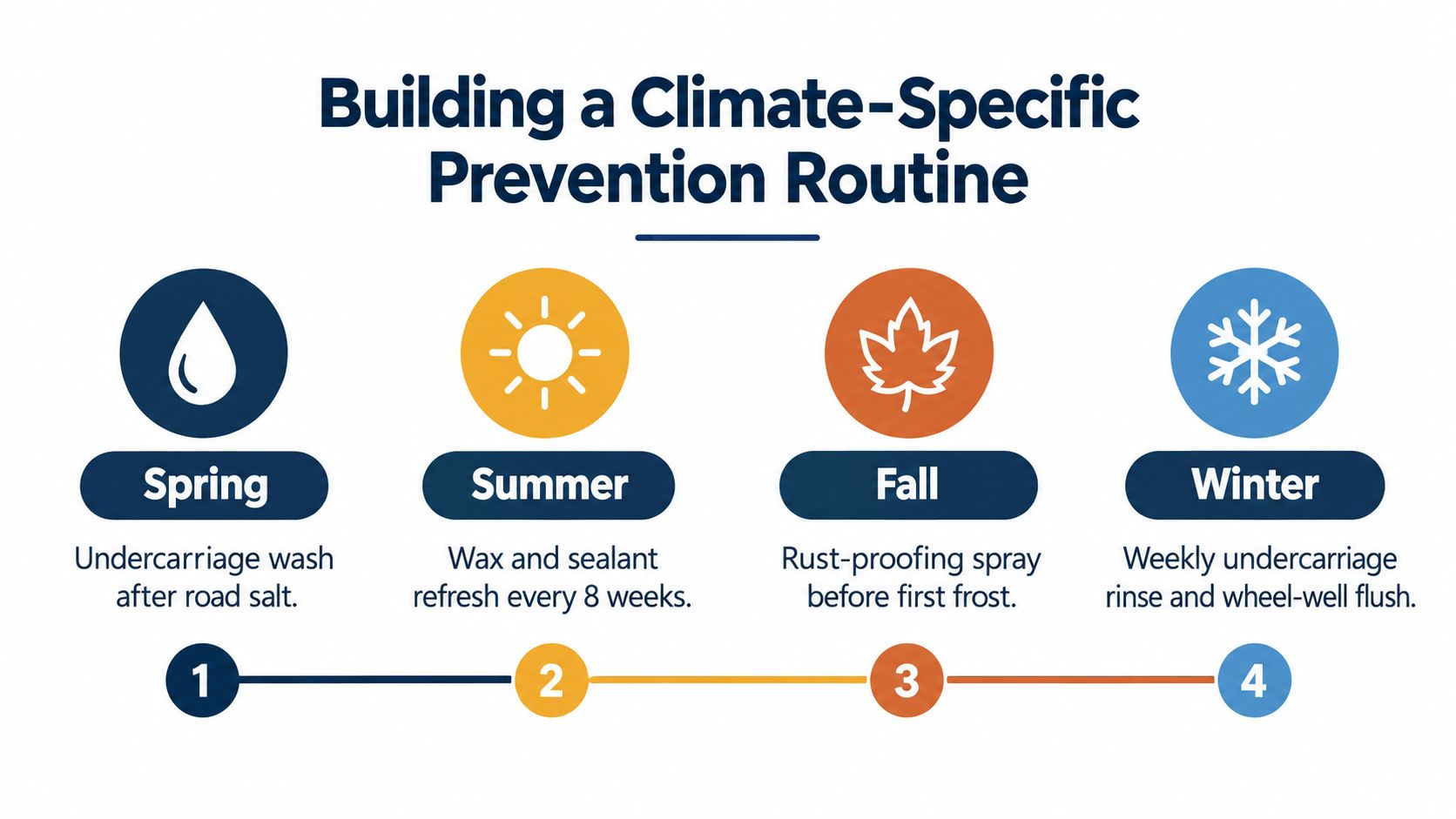
- Building a Climate-Specific Prevention Routine
- Your Complete Rust Management Checklist
Diagnosing the Three Stages of Auto Corrosion
A rust bubble is a warning, not a diagnosis. The paint may be lifting because corrosion has formed directly beneath it, or because moisture has travelled from a damaged seam and emerged at a nearby panel. Before reaching for a converter, clean the area and inspect the metal around the visible mark.
Surface rust
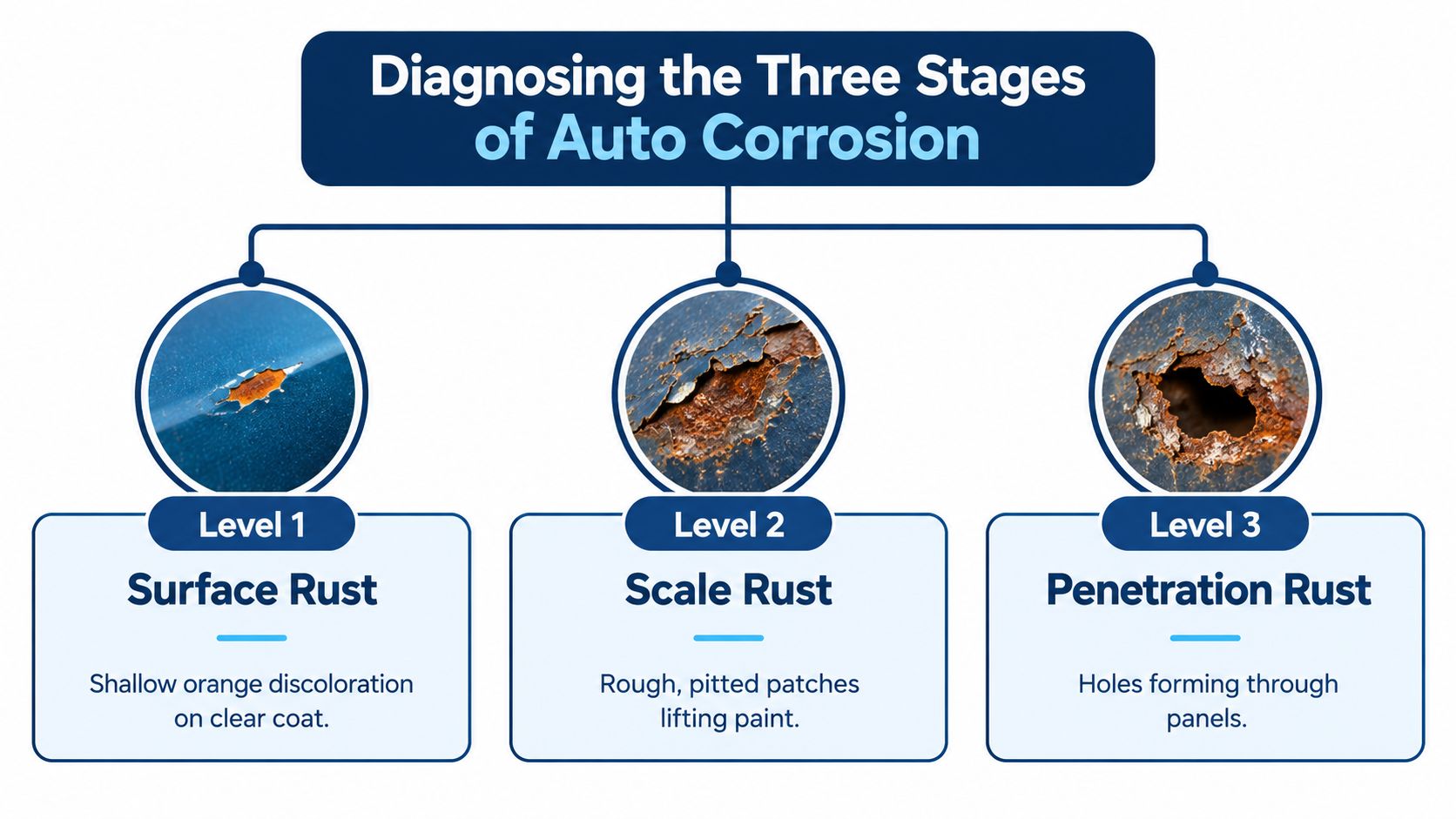
Surface rust is the earliest stage. You'll see shallow orange or brown staining, usually where a stone chip, scratch, dent, or worn coating has exposed the metal. The surface may feel slightly rough, but it should remain firm when pressed lightly. This is the stage most suitable for a careful home repair because the corrosion hasn't yet created deep pits or weakened the panel.
A small chip on a bonnet is usually a paint-repair problem. The same-sized chip on a rocker panel deserves more suspicion because saltwater can enter the seam behind the panel and remain there.
Scale rust
Scale rust has moved beyond simple staining. The metal develops rough, pitted patches, and paint may blister, crack, or flake around the affected area. A wire brush or abrasive pad removes loose material, revealing whether the remaining metal is solid or paper-thin.
Use a pick tool carefully around the edge of the repair. Sound metal resists light pressure. If the tool sinks into a flaky section, opens a pinhole, or causes a larger piece to break away, the visible patch is not the whole repair. Don't seal scale rust under paint or undercoating. Loose oxide will continue to separate from the metal, taking the new coating with it.
Penetrating structural rust
Penetrating rust creates holes, soft sections, or visible distortion. On a cosmetic panel, that may mean cutting out and replacing metal. On a frame rail, subframe, suspension mounting area, rocker structure, or other load-bearing location, it can become a safety issue and needs professional inspection.
Practical rule: If a pick tool finds weak metal in a structural area, stop treating it as a detailing job.
Ontario's salt exposure makes this distinction especially important. Canada uses about 5 million tonnes of road salt each year, and Ontario is repeatedly identified as one of the heaviest-use regions, according to CAA's winter rust prevention guidance. A small exterior bubble can therefore coexist with much more serious corrosion underneath, particularly after repeated freeze-thaw cycles.
Executing the DIY Surface Rust Repair Sequence
A home repair works only when it removes the active corrosion and restores the barrier around the exposed metal. Wiping the panel, brushing on converter, and spraying colour over the top is a cosmetic cover-up if salt, grease, or loose oxide remains underneath.
Start in a dry, well-ventilated area. Wear eye protection and a suitable respirator for dust and coatings, and keep abrasive dust away from brakes, intake openings, and electrical components.
Clean before you abrade
Wash the panel and the surrounding wheel arch thoroughly. If the repair is near the lower body, flush the wheel well and underside first. Allow the area to dry, then use a proper degreaser to remove road film, wax, and oily residue.
This step determines whether the coating bonds to metal or to contamination. Painting over salt residue is particularly risky because the coating can hold salty moisture against the surface.
Remove the loose material
Mask nearby trim and paint. Use abrasive paper, a sanding block, or a wire wheel suited to the panel, and work outward from the visible rust until you reach firm coating and stable metal. Don't aggressively thin a panel just to create a larger shiny area. The aim is to remove the oxide and feather the surrounding paint, not to grind through sound steel.
If the repair exposes a deep pit, clean it carefully and inspect it again. A converter can help with suitable residual oxidation, but it can't rebuild missing metal.
Stabilise and seal
Apply the rust treatment according to its instructions, allowing the required reaction and drying time. For exposed metal, a zinc-rich primer or epoxy rust encapsulator provides a more appropriate foundation than ordinary paint. Follow with compatible primer, colour-matched touch-up paint, and clear coat.
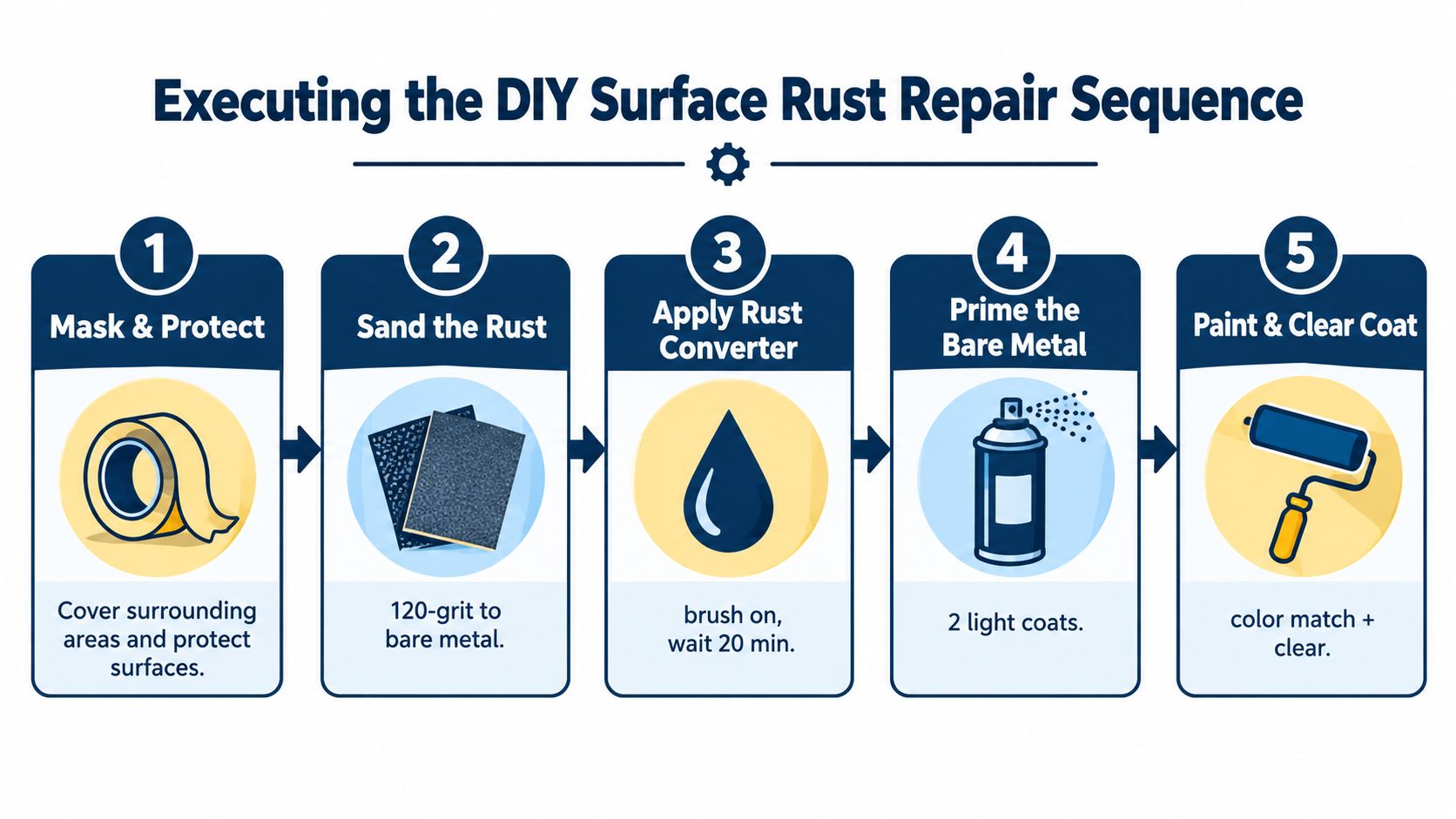
The sequence matters:
- Wash and degrease the surface.
- Sand away loose rust and damaged coating.
- Treat remaining oxidation with a compatible converter where appropriate.
- Prime exposed metal with a suitable corrosion-resistant primer.
- Paint and clear-coat the repair after the underlying layers have cured.
A neat finish is useful, but it isn't proof that the corrosion has stopped. Check the reverse side of the panel, the wheel-arch lip, and any nearby drain or seam. If the bubble returns, the repair has likely missed corrosion behind the visible paint.
Tackling Hidden Undercarriage and Seam Corrosion
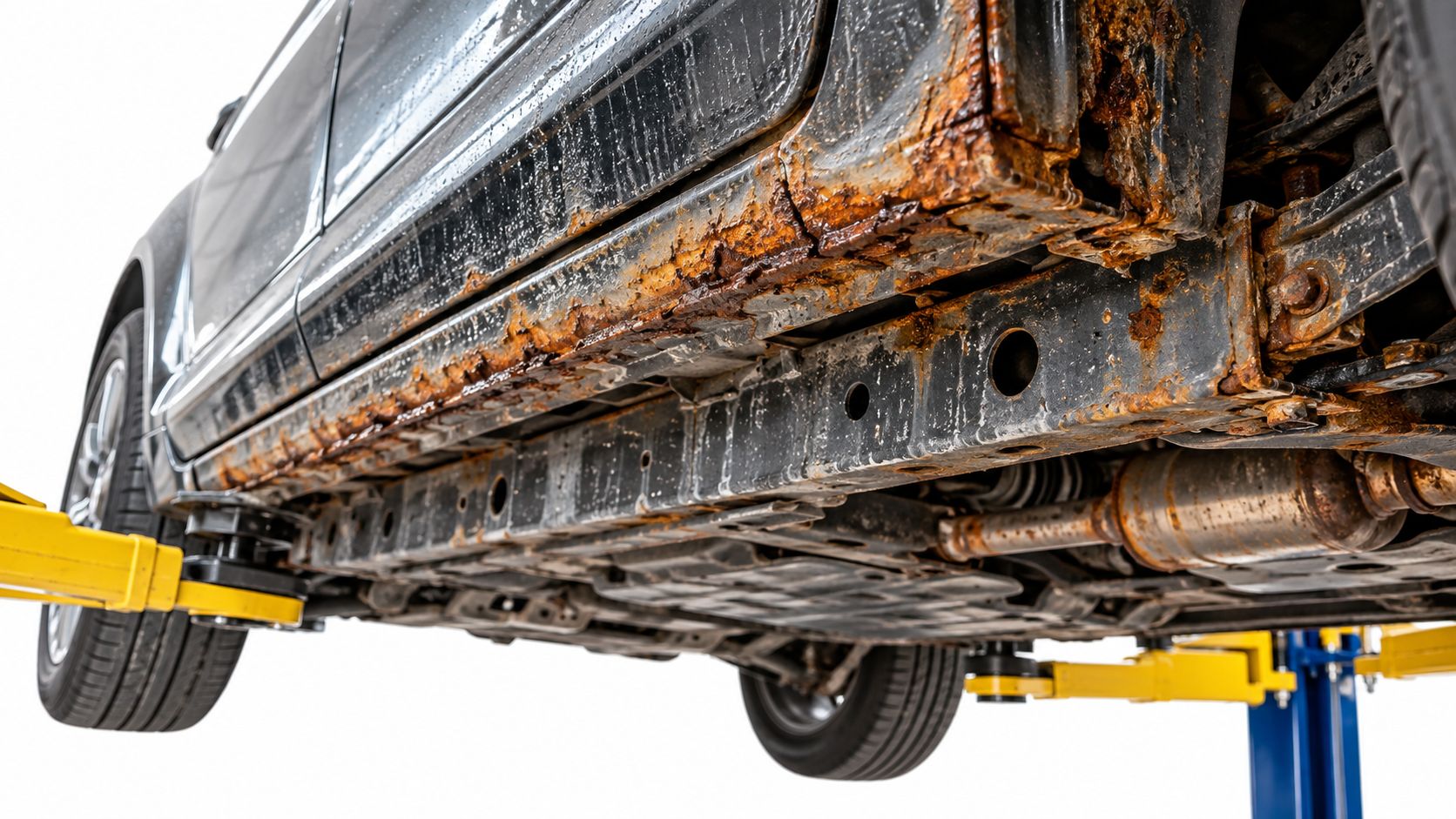
The most dangerous rust often isn't the rust you notice while standing beside the car. Salt-laden water collects inside rocker panels, frame rails, subframes, door bottoms, seams, drain channels, and wheel wells. These locations receive less airflow, stay damp after a wash, and can continue corroding while the exterior panel looks presentable.
Ontario-focused corrosion guidance reports that salt can make the electrochemical rust reaction 10 to 15 times faster than in unsalted conditions. The same regional discussion cites a University of Windsor-referenced comparison in which untreated vehicles had 6.8 times more visible body-panel corrosion and 3.6 times more underbody corrosion than treated vehicles. Those figures are presented in this Ontario winter corrosion overview, and they point to a practical priority: don't spend all your effort polishing a bonnet while the underside remains coated in brine.
Flush the places a normal wash misses
Begin at the lowest accessible areas. Use an underbody spray to rinse frame rails, suspension zones, subframes, rocker seams, and the inside faces of wheel wells. Work around drain holes rather than sealing them with dirt or coating. A blocked drain can keep moisture inside a cavity.
The Automobile Protection Association identifies frequent undercarriage washing and touch-up paint as core precautions for vehicles in high-salt regions. Its corrosion guidance also describes systematically spraying accessible holes and crevices so a creep-type inhibitor can displace moisture and salt and bond to unoxidised metal.
Treat cavities, not just visible panels
A creep-type rust inhibitor needs access to the places where salty moisture hides. Use the product's wand or injection tube to reach seams, holes, and cavities, and start at the bottom of the vehicle so excess product can travel into lower sections. Cavity wax and underbody coatings can add a barrier, but they work best on clean, stable surfaces rather than loose rust and trapped grime.
Avoid spraying brakes, exhaust components, tyres, electrical connectors, cameras, and sensors. If corrosion has already perforated a rocker seam or weakened a frame rail, coating it only conceals the defect. Arrange an inspection before applying anything that could make the metal harder to assess.
Knowing When to Call in Professional Rust Proofing
A small rust spot on a firm, accessible panel is a reasonable home repair. The decision changes when winter salt has worked behind a seam, into a rocker cavity, or across the undercarriage. Perforated metal, soft sections, and corrosion near suspension or frame mounts require inspection before any coating is applied. Paint and aerosol treatment can slow surface oxidation, but neither restores missing steel nor reaches every enclosed cavity.
Professional rust proofing combines inspection, access, preparation, and controlled application. A shop can raise the vehicle safely, examine frame rails and subframes, flush difficult areas, inject treatment into hidden cavities, and shield brakes, exhaust parts, wiring, and sensors. A collision technician can also decide whether the correct repair is local metalwork, section replacement, or complete panel replacement. Covering weakened steel may make the vehicle look better while leaving the hazard underneath.
| Factor | DIY Surface Repair | Professional Rust Proofing |
|---|---|---|
| Suitable damage | Firm metal with surface rust or early scale | Hidden corrosion, perforation, structural weakness, or widespread underbody rust |
| Access | Areas you can safely reach and inspect | Hoist access, cavity wands, inspection tools, and controlled application |
| Preparation | Washing, degreasing, sanding, and masking | Underbody cleaning, inspection, cavity preparation, and component protection |
| Treatment | Converter, primer, encapsulator, touch-up paint, and clear coat | Corrosion compound, cavity treatment, underbody protection, or metal repair |
| Main limitation | Misses corrosion behind seams and cannot restore weak metal | Needs professional assessment, and coating alone cannot make unsafe structure sound |
| Best decision | Repair a small, stable chip or early patch promptly | Book an inspection when metal feels soft or corrosion reaches a load-bearing area |
A sound shop sequence starts with mechanical rust removal or chemical treatment, followed by stabilising exposed metal with epoxy encapsulator or zinc-rich primer. Cavity wax and underbody coating can then reduce renewed moisture intrusion. The Ontario body-shop rust repair workflow for seam and underbody corrosion also places cleaning and degreasing before coating, with attention to rocker panels, frame rails, subframes, door bottoms, and seams.
Arrange an inspection if you find holes, cracking around suspension mounts, soft frame sections, rust that returns quickly, or corrosion extending behind a bonded or welded seam. Professional coating has value after the metal is sound. It cannot replace structural repair, and applying it too early can conceal damage from the next inspection.
Building a Climate-Specific Prevention Routine
A good winter routine starts before the first salted road, not after the brown streaks show up. Ontario chloride gets into wheel wells, drain channels, seams, and the undercarriage, then keeps working even when the car looks clean from the side. The job is simple in theory, wash the salt out fast, fix paint damage before it reaches bare metal, and protect sound surfaces before another season of brine.
Before winter
Inspect the rocker panels, wheel arches, door bottoms, frame rails, and subframes before the first serious exposure. Repair chips and scratches while the metal is dry and easy to reach. Apply a rust-control treatment to clean, stable underbody and cavity surfaces, and keep it off brakes, exhaust parts, and electrical components.
During salt season
Wash the undercarriage often, and rinse it soon after driving on heavily salted roads whenever practical. In severe conditions, Ontario-focused repair guidance recommends flushing the underside every two weeks, and more often after heavy salt exposure, as noted in this rust repair guidance for Canadian winter use. Put the rinse focus on wheel wells, rocker seams, drain areas, and the underside, not just the painted upper panels.
Use fresh water. Nanak Car Wash states that its washes use 100% fresh water, and its service lineup includes underbody washing and rust proofing for vehicles exposed to road salt. For daily drivers, a repeatable wash plan or membership is easier to keep up with than waiting until the vehicle looks dirty.
After winter
Give the underside a detailed flush when salt operations ease, then inspect the lower panels and seams as the vehicle dries. Refresh paint protection on sound exterior paint, and reapply cavity or underbody protection only after cleaning and inspection. Armor All Original Protectant is appropriate for interior and trim surfaces, but it cannot replace a dedicated corrosion treatment on exposed underbody metal.
Your Complete Rust Management Checklist
Rust management becomes much simpler when you separate triage, repair, and prevention. Don't treat every brown mark as a body-shop emergency, but don't treat every bubble as harmless surface staining either.
Use this quick reference before the next wash or garage session:
- Inspect early signs: Look over wheel wells, rocker panels, door bottoms, seams, and underbody areas regularly for bubbling, flaking, or orange spotting.
- Repair exposed paint: Clean and touch up chips and scratches before chloride residue reaches bare metal.
- Flush salted areas: Rinse the undercarriage, wheel wells, drains, and accessible cavities after salted-road exposure.
- Test the metal: Use a pick tool gently. Firm metal may suit a controlled DIY repair, while soft or perforated metal needs inspection.
- Protect prepared surfaces: Apply primer, paint, cavity wax, or underbody treatment only after removing loose rust and cleaning away salt and grease.
- Book a hoist inspection: Get professional help when corrosion reaches frame rails, subframes, suspension mounting areas, rocker structures, or other load-bearing sections.
A coating can slow corrosion only when it reaches a properly prepared surface. If rust has already created weakness, the correct next step is repair and inspection, not another layer of product.
If your vehicle has collected Ontario road salt underneath, visit Nanak Car Wash for an underbody wash that targets salt and grime, or ask about its rust proofing service for vulnerable underbody and cavity areas. Choose a one-time visit, repeat wash option, or detailing appointment based on the condition of your car and how often you drive salted roads.


 6600 Finch Ave W, Etobicoke, ON M9V 3Z6
 647-703-8515
 MON – SUN 8 AM to 7 PM