
You're scraping frost off the windshield before sunrise, but the mess is under your boots. Road salt has dried into a white crust on the floor mats, slush has wicked under the carpet edges, and damp grit is sitting around the seat rails where a quick vacuum can't reach. By the time the heater clears the glass, the cabin already smells faintly of wet fabric.
That's normal GTA wear, not a sign that you've failed at car ownership. Car cleaning interior work is climate-driven maintenance, especially if you commute, carry children or pets, deliver food, or drive passengers all day. The useful question isn't whether your cabin needs cleaning. It's which job needs doing, how often, and when a garage kit stops being worth your Saturday.
Table of Contents
- Why Interior Cleaning Is a Year-Round Job in the GTA
- The Real Frequency and Cost of Letting It Slide
- The Core Interior Cleaning Workflow That Actually Works
- Cloth, Leather, and Vinyl Seats Cleaned the Right Way
- Pet Hair, Spills, and Odours Without the Guesswork
- DIY vs Professional Detail vs Membership
- Your Interior Cleaning Routine and Quick Answers
Why Interior Cleaning Is a Year-Round Job in the GTA
A Toronto winter doesn't leave dirt politely on the outside of the vehicle. Salt slurry comes in on boots, mats hold moisture against carpet, and freeze-thaw cycles leave dampness trapped beneath removable liners. Magnesium chloride residue can leave a tacky film on leather and vinyl, while gritty salt crystals work into carpet fibres and around seat mounts.
Summer brings a different layer of work. From May through September, pollen settles across dashboards and vents, and fine construction dust from downtown cores finds its way into door pockets, console seams, and seat stitching. A cabin can look tidy while carrying several seasonal layers that a quick wipe misses.
A Canadian Tire survey of 1,003 Canadian adults found that 73% cleaned their car interiors less than once every few months, although 84% said they eat and drink in their vehicles and 18.7% didn't immediately clean spills. The survey also found that drivers spent an average of five hours per week in their vehicles, and 23% travelled with pets. Those findings are available through this Canadian Tire survey summary on car interior cleaning, and they describe why crumbs, hair, and small spills become recurring maintenance rather than a once-a-year spring project.
Five jobs determine the right approach
- Routine vacuuming: Remove loose grit before it gets ground into carpet and mat backing.
- Stain and odour removal: Treat the source, not just the visible mark or perfume sitting over it.
- Material-specific upholstery care: Cloth, leather, and vinyl tolerate different levels of moisture, heat, agitation, and cleaner.
- Pet hair removal: Use mechanical lifting before wet cleaning, or hair becomes harder to extract.
- The DIY versus professional decision: Basic upkeep is easy. Embedded hair, set odours, soaked foam, and delicate finishes change the calculation.
Treat this as a decision path you can revisit after a storm, a messy passenger run, or a long family trip. The right sequence matters more than owning a shelf full of products.
The Real Frequency and Cost of Letting It Slide
Interior cleaning follows use, not the calendar. A vehicle that carries one driver on short errands has a different burden from a ride-hail cabin, a delivery car, or an SUV carrying muddy boots and pets. The longer salt, food residue, hair, and moisture stay in place, the more cleaning shifts from removal to restoration.
Ontario's car wash and auto detailing market was estimated at 1,478 businesses and 8,146 employees in 2026, with projected provincial industry revenue of $617.2 million. The broader Canadian industry was estimated at $1.7 billion, according to Canadian car care market sizing from Bonafide Research. Those figures don't tell you what your own cabin will cost to maintain, but they do show that recurring vehicle hygiene is a substantial service category, particularly in a province dealing with winter residue.
A daily commuter can usually manage a short weekly reset and a deeper clean when the mats, seams, and upholstery visibly need it. A two-car household may rotate that work by vehicle and handle a more complete interior clean seasonally. A high-frequency driver needs a tighter loop because every passenger, parcel, drink, and wet shoe adds another contamination event.
| Driver Profile | Recommended Cleaning Cadence | Annual DIY Cost | Annual Pro/Membership Cost | Common Neglect Cost |
|---|---|---|---|---|
| Daily commuter | Weekly tidy-up, deeper seasonal clean | Varies with tools and products already owned | Varies by service and visit frequency | Stained carpet, stale vents, salt residue, worn trim |
| Family SUV | Weekly debris removal, periodic upholstery treatment | Varies, with extra tools for hair and spills | Varies by vehicle size and detailing needs | Embedded food residue, pet hair, damp mats, odours |
| Ride-hail or delivery vehicle | Cabin reset after heavy use, with frequent professional support when needed | Labour time plus replenished consumables | Varies by express service or membership arrangement | Passenger complaints, persistent odours, visibly dirty touch points |
| Fleet or rental vehicle | Organised inspection and repeat cleaning schedule | Labour, equipment, and staff time | Quoted according to volume and service scope | Turnaround delays, inconsistent presentation, material wear |
Don't pretend the cost is only the bottle of cleaner. DIY also consumes storage space, drying time, electricity, replacement microfibres, brushes, and the hours spent discovering that a household vacuum can't lift embedded hair. Professional work carries a direct charge, but it can also include extraction equipment, trained handling, and a faster reset when the cabin has crossed from maintenance into remediation.
Practical rule: If you can keep the cabin dry, remove loose debris promptly, and deal with spills while they're fresh, DIY remains sensible. If the smell returns after cleaning or the carpet stays damp, stop adding product.
The Core Interior Cleaning Workflow That Actually Works
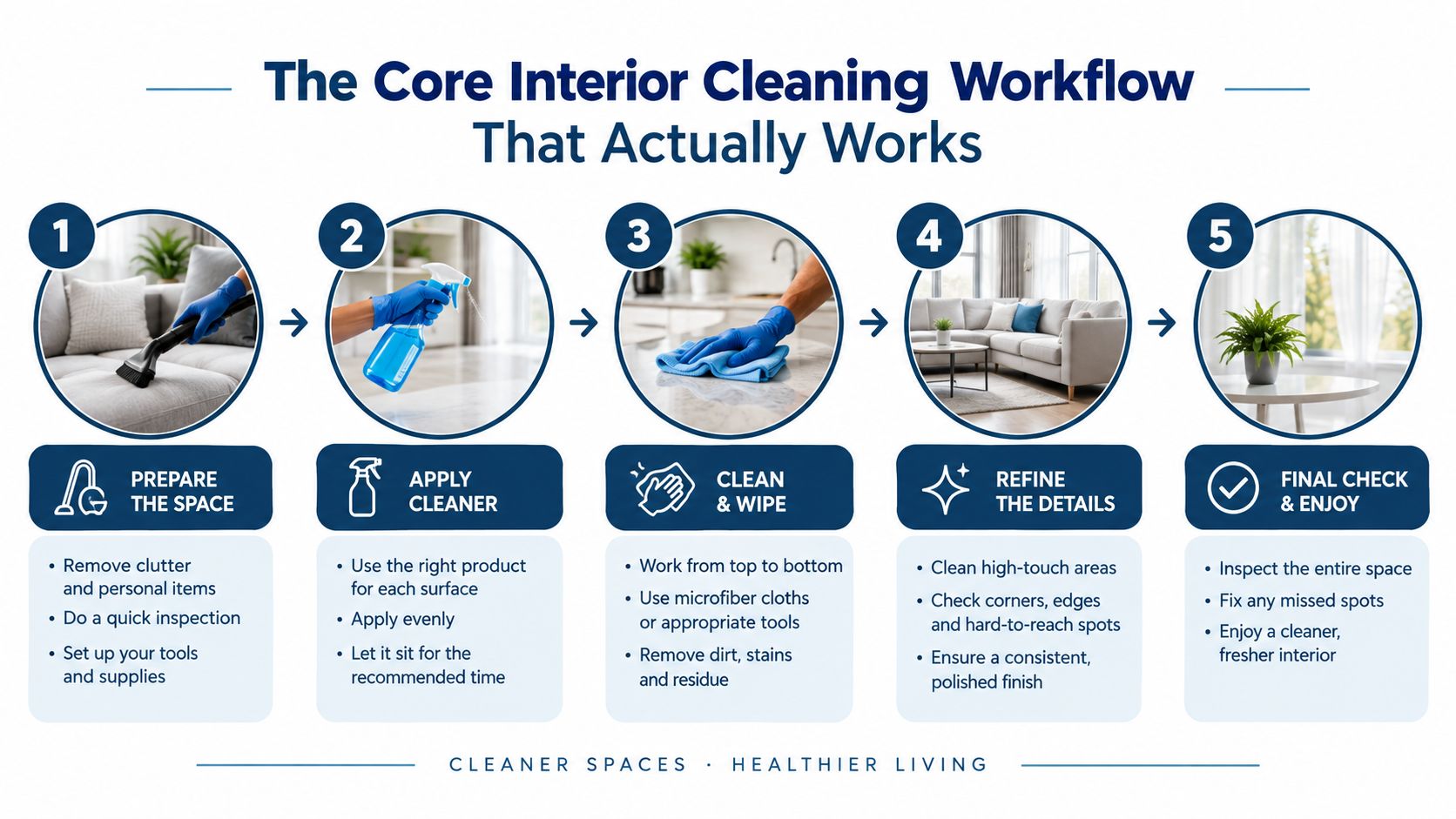
A good interior clean is one continuous downward workflow. Don't start by shampooing the seats, then scatter dust back over them while you attack the dashboard. Prepare the cabin, loosen contamination, vacuum in the right order, clean hard surfaces, and finish with the areas that collect runoff.
Empty the cabin completely. Remove rubbish, child seats where safe and practical, personal items, and floor mats. Move the front seats through their normal range so you can inspect the rails and carpet edges. Never work around a powered seat, airbag connector, or restraint system in a way that could damage it.
Separate the mats from the vehicle. Shake rubber mats outdoors and brush fabric mats before vacuuming. Road-salt brine often sits beneath the mat lip, so lift the mat rather than vacuuming only the exposed centre.
Start with the dashboard and upper trim. Use a clean, water-dampened microfibre on textured plastic and vinyl. A dry detail brush can loosen dust around vents, buttons, and screen edges. Avoid silicone-heavy dressings, which can leave glare, a slippery steering wheel, and a film that contributes to window fogging in warm weather.
Vacuum from high to low
Vacuum the headliner last among the upper surfaces, using very light pressure because aggressive brushing can loosen adhesive or disturb the fabric. Then work through the seats, carpet, and mats. That order lets loosened debris fall down before you collect it.
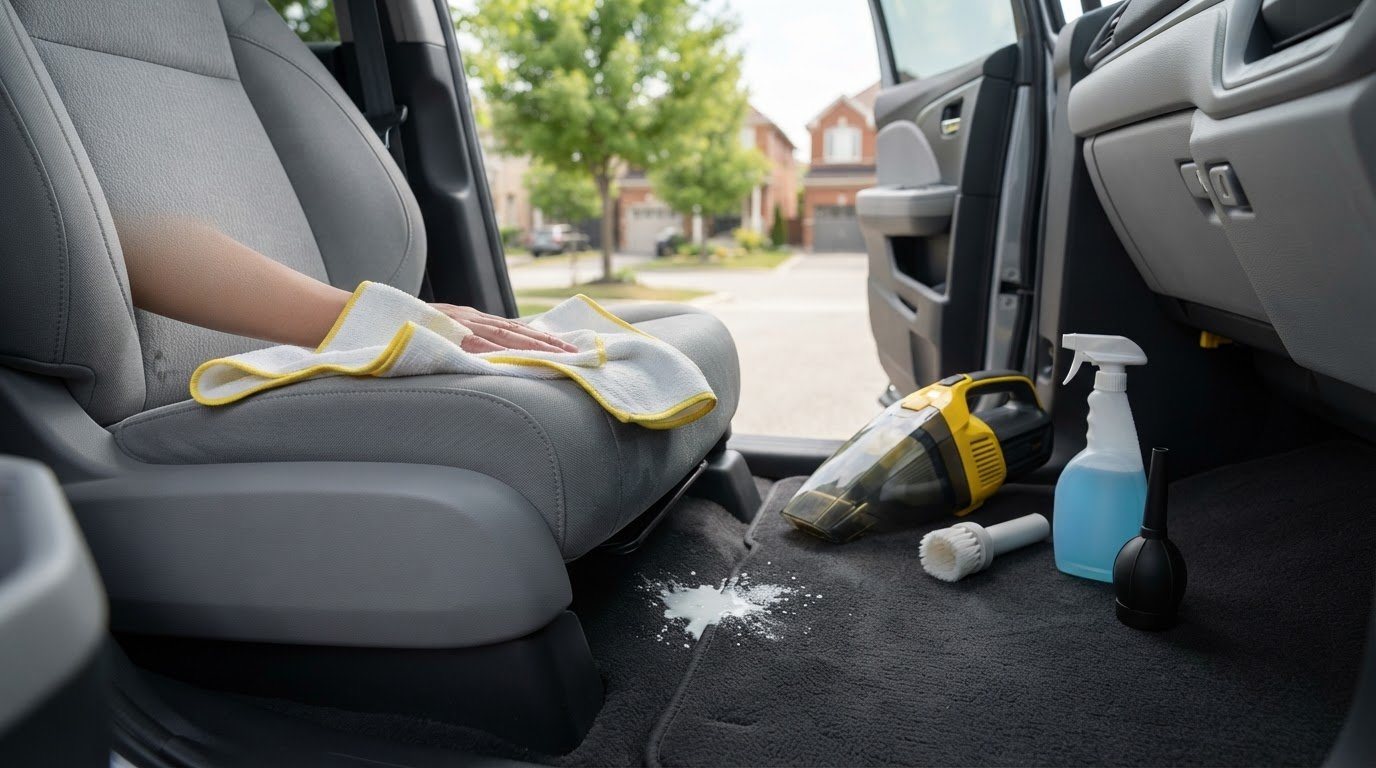
Before vacuuming salt crystals from carpet, run a stiff-bristle brush across the fibres in short strokes. Use a crevice tool around seat rails, belt anchors, door pockets, and the gap beside the centre console. Compressed air can clear HVAC vents and narrow seams, but control the pressure so you don't drive dirt deeper into a switch or screen.
For vent work, set the blower to recirculate and use short bursts while holding the vacuum nozzle near the outlet. If stale air or window fogging keeps returning, material condition may not be the only issue. A practical guide to stop car windows steaming up covers the ventilation side of the problem, which pairs with cleaning the vent faces and checking for dampness.
Finish with door jambs, the lower door panels, cup holders, and seat belt webbing. Wipe the webbing with a lightly damp cloth while it's fully extended, then let it dry before retracting it. Don't flood buckles, switches, screens, or electrical controls.
Cloth, Leather, and Vinyl Seats Cleaned the Right Way
A seat isn't just a seat. Cloth absorbs and holds liquid differently from coated leather, while vinyl and leatherette may look similar but respond poorly to the wrong dressing. Start with a sniff-and-flex check: identify the surface, smell for dampness, and look for cracking, peeling, dye transfer, or a damaged coating before choosing a cleaner.
Cloth needs controlled moisture
For fabric upholstery, vacuum seams and welts first. Apply a pH-neutral fabric cleaner to a microfibre or soft upholstery brush rather than soaking the seat. Work in small sections with overlapping strokes that lift the weave without aggressively rubbing it into a fuzzy or pill-covered finish.
Coffee, ketchup, and road-salt slurry need prompt attention. Blot fresh liquid from the outside toward the centre, then use a clean damp cloth to pick up residue. For an older mark, test colourfastness at the seat welt or another hidden area before treating the visible panel.
Extraction can produce a strong result, but only if you remove the recovered liquid and dry the seat properly. GTA winter conditions make trapped moisture a serious nuisance. Wet fabric over damp foam or a saturated carpet backing can create the very odour you were trying to remove.
Leather is a coated finish, not a kitchen surface
Use a mild leather-safe cleaner with a soft brush, then wipe the loosened soil away with a separate microfibre. Follow with a compatible conditioner that includes UV protection when the finish and manufacturer guidance allow it. This helps maintain suppleness and slows the dry, cracked appearance common in vehicles parked outdoors.
Household disinfecting wipes, strong all-purpose cleaner, and saddle soap are frequent mistakes. They can strip or dull the protective topcoat, especially on heavily touched bolsters and steering wheels. If the leather is already peeling, cleaning won't rebuild the missing coating. It will only remove soil around the damage.
Vinyl and leatherette need restraint
Vinyl is more forgiving than leather, but it still needs a measured approach. A diluted interior-safe cleaner, soft brush, and dry wipe work well on textured grain and seams. A light, non-greasy dressing can prevent a chalky appearance, but don't leave the surface slick where hands, feet, or clothing need stable contact.
| Material | Safe Cleaner | Tool | Conditioning | Common Mistake |
|---|---|---|---|---|
| Cloth | pH-neutral fabric cleaner | Soft upholstery brush and extraction or microfibre pickup | Dry thoroughly, don't saturate foam | Scrubbing hard or shampooing without a colour test |
| Leather | Mild leather-safe cleaner | Soft brush and clean microfibre | Leather conditioner with UV protection when suitable | Household wipes or saddle soap |
| Vinyl and leatherette | Interior-safe diluted cleaner | Soft brush for texture and seams | Light, non-greasy dressing | Leaving a slippery or glossy film |
Pet Hair, Spills, and Odours Without the Guesswork
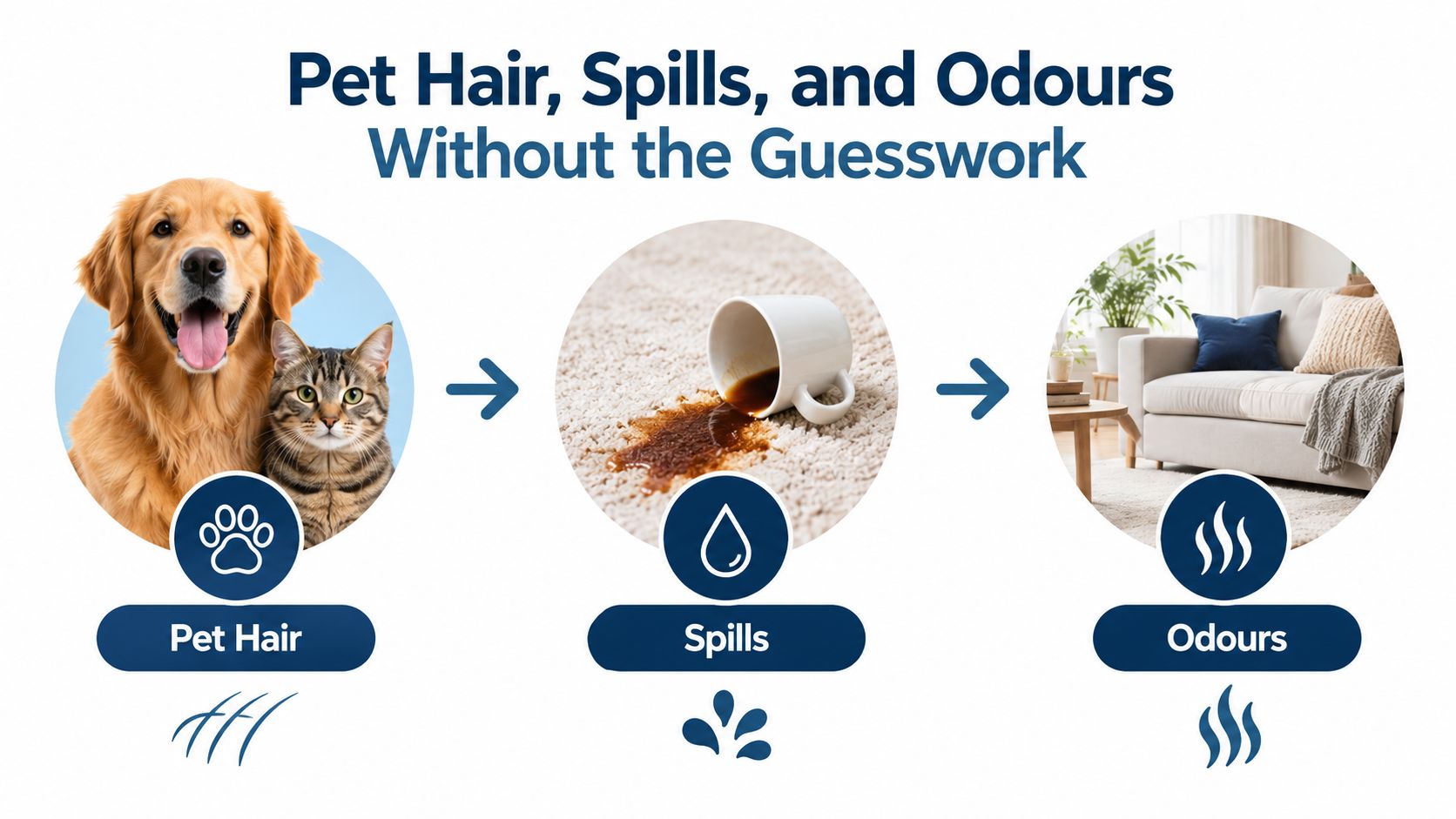
A ride-hail driver can collect a Golden Retriever's undercoat during an early Mississauga pickup, then spend the rest of the shift discovering hair in the seat rails. A family SUV can return from a lake weekend with wet towels, food wrappers, sand, and a cargo area that smells fine at the driveway but sour once the heater runs.
Pet hair is a mechanical problem first. Put on a rubber-bristle glove and work in one direction to gather loose hair into manageable rolls. On carpet, pull a rubber squeegee toward you with short strokes. A damp rubber broom is particularly useful in cargo areas, while a damp microfibre pass over cloth seats can collect fine undercoat that a dry vacuum leaves behind.
A wet/dry shop vacuum with an upholstery tool generally handles embedded hair better than a small household cordless vacuum. Keep the seat and carpet as dry as possible during hair removal. Wet hair clumps into the weave and creates more work.
Deal with spills before they become upholstery projects
Blot, don't rub. Within the first minute, place an absorbent microfibre over the liquid and press straight down, replacing the cloth as it becomes wet. Rubbing spreads the spill across the seat panel and can push it past the fabric into the foam.
For protein contamination such as vomit or blood, a baking soda paste can help lift residue after you've removed the bulk of the material, but test the fabric first and use appropriate protective equipment. Don't shampoo a set stain before testing the welt for colourfastness. A powerful cleaner can leave a cleaner-looking patch with a different colour.
Identify the odour source
- Food and organic odours: Use an enzyme product designed for the material, and remove the residue that feeds the smell.
- Smoke: Clean hard surfaces, glass, headliner edges, seat fabric, and the cabin filter area. Perfume only covers the problem.
- Mildew or wet-carpet odours: Inspect door seals, under-mat areas, the trunk well, and the cabin filter before treating seats again.
Ozone deserves caution. It can be misused, requires an unoccupied vehicle, and doesn't fix a leaking seal or contaminated filter. A baked-in damp smell that returns after drying points to a moisture source, not an under-scented seat.
The common failure is shampooing too late. Saturating an old stain pushes dissolved soil into the foam and can lock the odour below the surface. That's the point where hot-water extraction by a detail shop starts making more sense than another home treatment.
DIY vs Professional Detail vs Membership
This isn't a question of pride or brand loyalty. It's a threshold decision based on soil level, material risk, time, and how often the cabin earns money. DIY is excellent for preventing buildup. Professional service becomes more sensible once you're trying to reverse it.
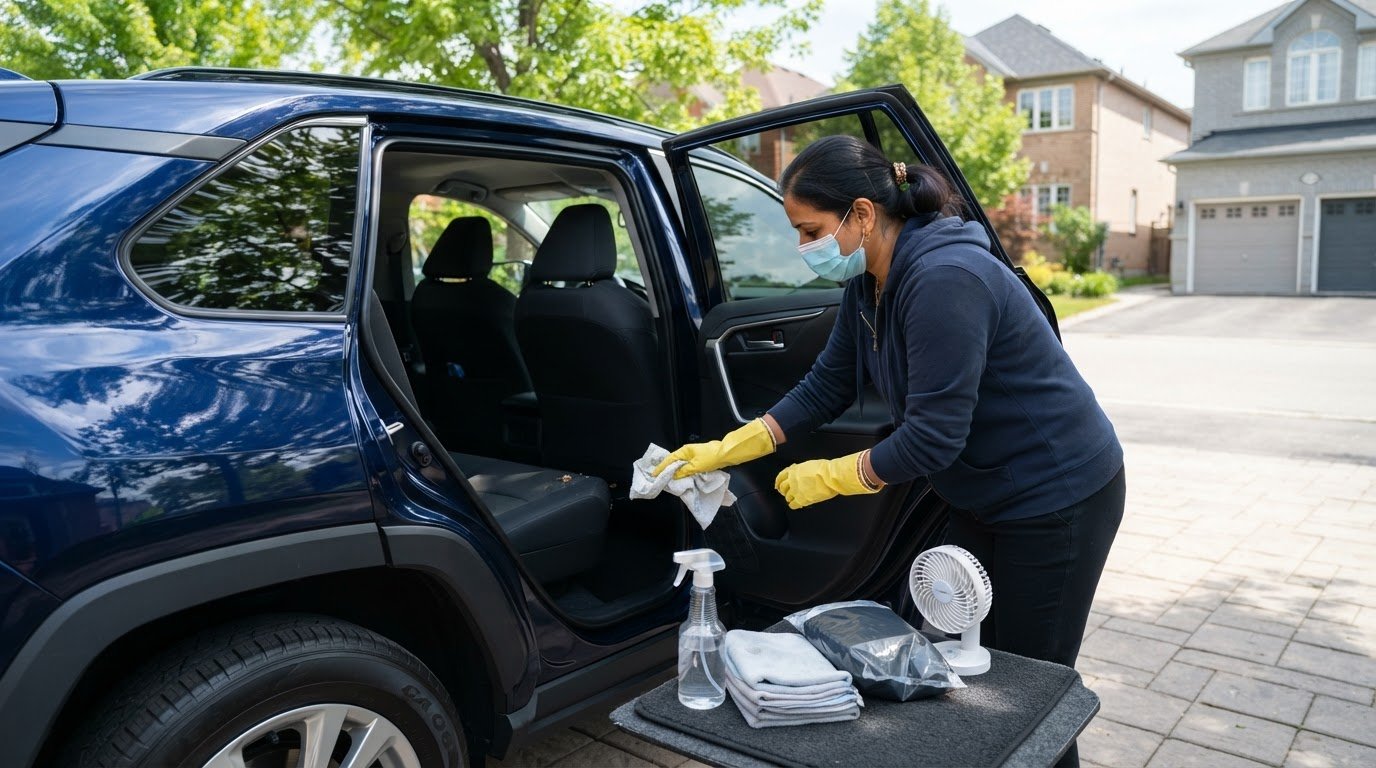
A basic weekly reset under half an hour is an easy win. Shake the mats, vacuum the seats and floor, remove rubbish, and wipe the steering wheel and touch points. Don't buy a collection of specialist tools for that job unless you already enjoy detailing.
The line moves when you're dealing with pet hair woven into carpet, a set odour, extensive salt residue, stained headliners, or leather conditioning that requires more than a wipe-down. A rented extractor or half-used product can look inexpensive until you add drying time, failed spot treatments, and the risk of damaging a seat finish.
| Option | Typical Cost | Time Required | Best For | Break-Even Point |
|---|---|---|---|---|
| DIY maintenance | Product and equipment cost varies | Short, repeated sessions | Clean cabins with fresh, limited contamination | Makes sense while the job stays routine and low-risk |
| One-off professional detail | Quoted by vehicle, condition, and scope | Appointment time, with drying requirements | A neglected cabin needing extraction, stain removal, vents, or leather work | Pays back when restoration would consume a weekend or risk material damage |
| Express interior service | Service price varies by location and vehicle | Shorter turnaround than a deep detail | Ride-hail, delivery, and other high-frequency drivers | Useful when a clean cabin must fit between working shifts |
| Membership or prepaid arrangement | Depends on selected plan and visit pattern | Repeat visits with less planning | Drivers who need predictable upkeep | Makes sense when regular visits cost less than repeated DIY labour and consumables |
Nanak Car Wash offers interior and exterior detailing by appointment, including carpet and seat shampooing, salt and stain removal, vent and crevice blowout, and leather deep cleaning. Its full-service wash packages also include interior vacuuming, dashboard and window cleaning, with higher tiers adding areas such as door panels, consoles, and cup holders. Participating locations provide free vacuums, and the company lists express, prepaid, and monthly options, so compare the exact scope and current terms before booking.
For a ride-hail or delivery driver, the hidden cost is presentation during every passenger interaction. If cleaning takes too long between shifts, a repeat service or membership can be more practical than storing a garage kit and postponing the work until the cabin smells. For a household vehicle, DIY usually wins until contamination becomes embedded or the drying process becomes difficult to control.
Your Interior Cleaning Routine and Quick Answers
Use a small routine often enough that winter recovery never becomes a major rescue job. Keep a few clean microfibres, a soft brush, a crevice tool, and a material-appropriate cleaner in one container. Don't keep a wet towel sealed in the car, because you'll trade visible dirt for stale moisture.
The weekly sweep
- Remove rubbish: Clear food packaging, bottles, tissues, and anything that can hold moisture.
- Shake the mats: Do it outside the cabin, then inspect the carpet underneath.
- Vacuum touch areas: Work across seats, floor edges, pedals, and the space beside the console.
- Wipe the cabin: Use a lightly damp microfibre on the dashboard, steering wheel, door pulls, and cup holders.
- Check the glass: Remove the interior film that contributes to glare and fogging.
The quarterly deep clean
Follow the full workflow rather than jumping straight to shampoo. Remove mats, move the seats safely, brush and vacuum salt or grit, clean vents and crevices, then treat cloth, leather, or vinyl according to its material. Finish by drying everything thoroughly, especially under mats and around seat rails.
The pre-winter pass
Before the first serious freeze, inspect floor mats for damage and confirm that they trap water instead of allowing it into carpet. Flush or wipe the seat rail area, clean the vent faces, and check under the cargo floor for dampness. In a Southern Ontario winter, salt and moisture management matter more than making the dashboard glossy. Ontario-relevant winter detailing guidance recommends dry vacuuming first, followed by targeted moisture removal, and applying leather or vinyl dressing only after surfaces are fully dry.
Quick answers for difficult cabin jobs
Are steam cleaners worth using on cloth seats?
They can refresh fabric with controlled bursts, but vacuum first, test a hidden area, wipe immediately, and avoid saturating seams or foam. Steam isn't a substitute for extraction when the seat contains heavy liquid contamination.
Why do air fresheners fail so often?
They add fragrance without removing food residue, smoke film, pet contamination, or damp materials. If the smell returns, inspect the carpet, cabin filter, seals, and seat foam instead of adding a stronger scent.
What's the safest DIY disinfectant between ride-hail shifts?
Use a vehicle-interior product whose label approves the specific material, apply it to a cloth where appropriate, and follow its contact and drying instructions. Don't flood switches, screens, buckles, or perforated leather.
How should you handle minor cigarette smoke?
Clean glass, plastics, steering surfaces, door panels, seat fabric, and headliner carefully, then ventilate. If smoke remains after surface cleaning, the contamination may be inside porous foam, trim, or the ventilation system.
What does a typical interior detail include?
The scope varies, but it commonly includes vacuuming seats and carpets, cleaning dashboards, windows, door panels, consoles, vents, and crevices, plus shampooing or extraction and leather or vinyl treatment when selected. Ask whether pet hair, heavy salt, oversized vehicles, and drying time change the quote.
A clean cabin isn't created by one heroic Saturday. Remove loose contamination every week, respond to spills immediately, and book qualified help when the problem has moved into foam, carpet backing, or fragile finishes.
Nanak Car Wash provides express and full-service interior cleaning, appointment-based detailing, salt and stain removal, vent and crevice cleaning, and leather care across GTA communities. Use the Nanak Car Wash site to review current locations and service options, then choose a one-off visit, prepaid arrangement, or membership that matches how hard your vehicle works.

 6600 Finch Ave W, Etobicoke, ON M9V 3Z6
 647-703-8515
 MON – SUN 8 AM to 7 PM