
A full car detail is a complete interior and exterior service that goes well beyond a basic wash, covering deep cleaning, decontamination, and a protective finish, and it typically takes 1 to 4 hours. The exact checklist varies by shop, so the safest way to book is to ask whether the package includes both deep interior work and paint-safe exterior protection.
You're leaving a Mississauga shopping centre after a wet drive, and the car is wearing Ontario on every panel. There's a white salt line along the rocker panels, gritty sludge behind the wheels, and perhaps a coffee mark on the headliner that appeared sometime between the 401 and the parking garage. A tunnel wash may remove the obvious dirt, but it won't necessarily reach the contamination hiding in the wheel wells, carpets, vents, or paint surface.
A proper detail follows a sequence. The technician removes dry debris before wet cleaning, lifts bonded contamination before applying protection, and treats winter-exposed areas that a quick wash can't reach. Local service descriptions in Toronto and Ottawa commonly include vacuuming, dashboard and console cleaning, interior glass, wheel and tire cleaning, hand washing, and exterior protection. More intensive packages can add carpet and seat shampooing, hot-water extraction, leather or fabric conditioning, air-vent cleaning, odour treatment, and paint decontamination. Ontario full-detail service descriptions and package examples show why the phrase “full detail” needs a closer look before you hand over the keys.
Table of Contents
- What a Full Car Detail Actually Covers
- The Interior Side of a Full Detail
- The Exterior Side of a Full Detail
- Optional Add-Ons That Change the Result
- Why Ontario Winters Make Some Steps Essential
- How Long a Full Detail Takes
- Choosing the Right Detail Package for Your Car
What a Full Car Detail Actually Covers
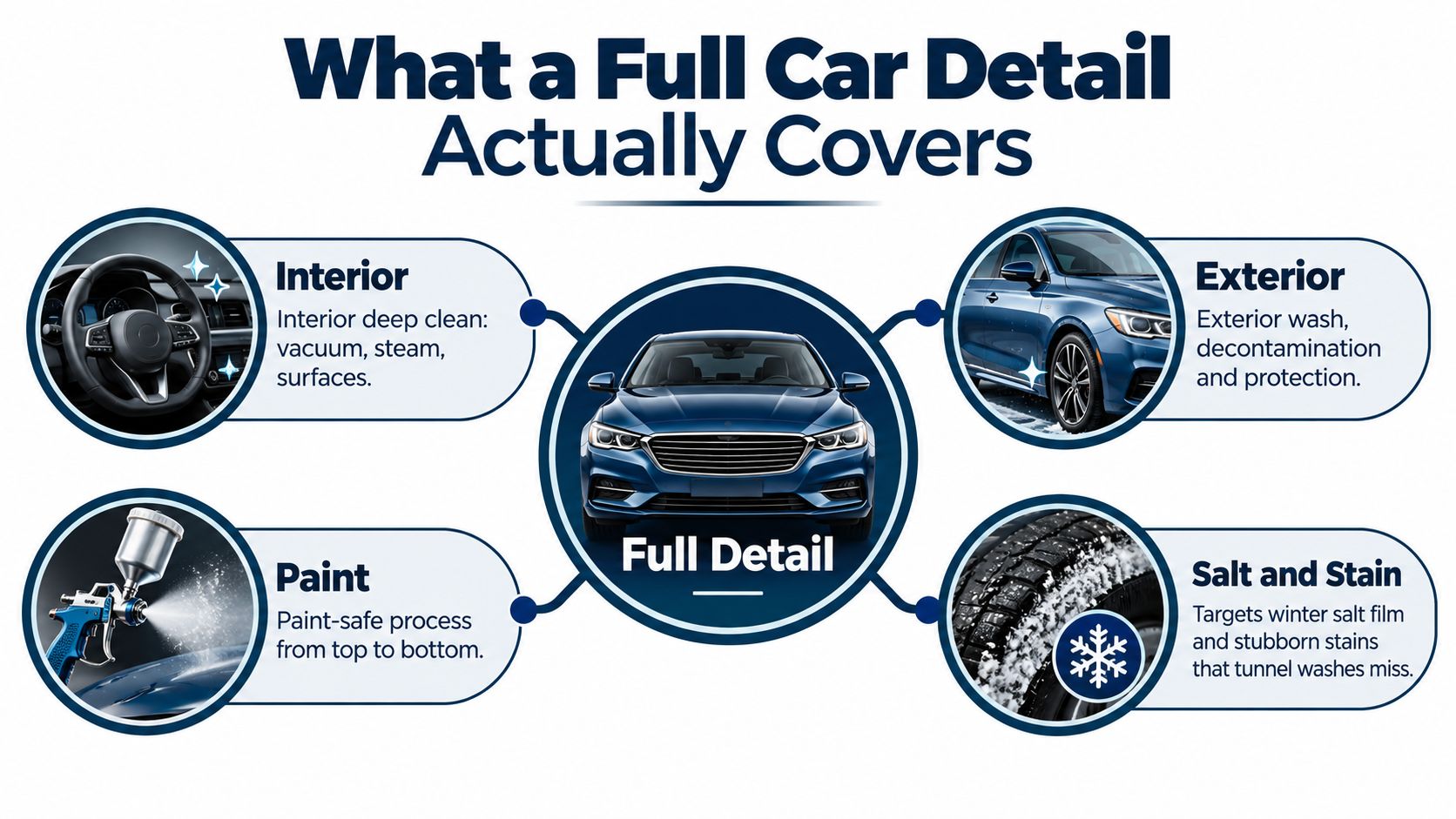
A full detail is best understood as a multi-stage reset, not a faster version of a car wash. The technician works through the cabin, wheels, bodywork, paint surface, and protective finish in an organised order. That order matters because moving grit around too early can create scratches, while applying a sealant over bonded salt or brake dust prevents the protection from working properly.
The three main pillars are straightforward:
- Interior restoration: Vacuuming, crevice cleaning, surface wiping, carpet and upholstery treatment, leather care, vent cleaning, and glass cleaning.
- Exterior decontamination: Pre-washing, wheel and tire cleaning, hand washing, tar or iron contamination treatment, drying, and, where included, clay-bar work.
- Protection: Wax, polymer sealant, or another protective finish applied after the surface is clean and properly prepared.
A basic wash focuses on loose dirt. A detail also deals with embedded contamination, stains, dull trim, salt residue, and the fine film that makes paint feel rough even after it looks clean. The result should be judged by more than the shine under the shop lights. A careful process helps reduce the risk of swirl marks, salt creep, stubborn brake-dust deposits, and premature fading of exterior trim.
What the name doesn't guarantee
“Full detail” isn't a universal package name. One shop may include shampoo extraction and paint protection, while another may mean an interior vacuum, exterior wash, and quick spray wax. Engine-bay cleaning, headlight restoration, paint correction, heavy pet-hair removal, and serious odour treatment are often separate services.
Ask for the checklist rather than relying on the package title. A useful question is, “Does the full detail include shampooing, wheel-well cleaning, paint decontamination, and a sealant, or are those add-ons?” That single question can prevent the familiar pickup-time surprise, when the customer expected restoration and received a tidy wash.
Practical rule: If a service description only says “inside and out,” assume the depth is still unclear until the shop names the actual tasks.
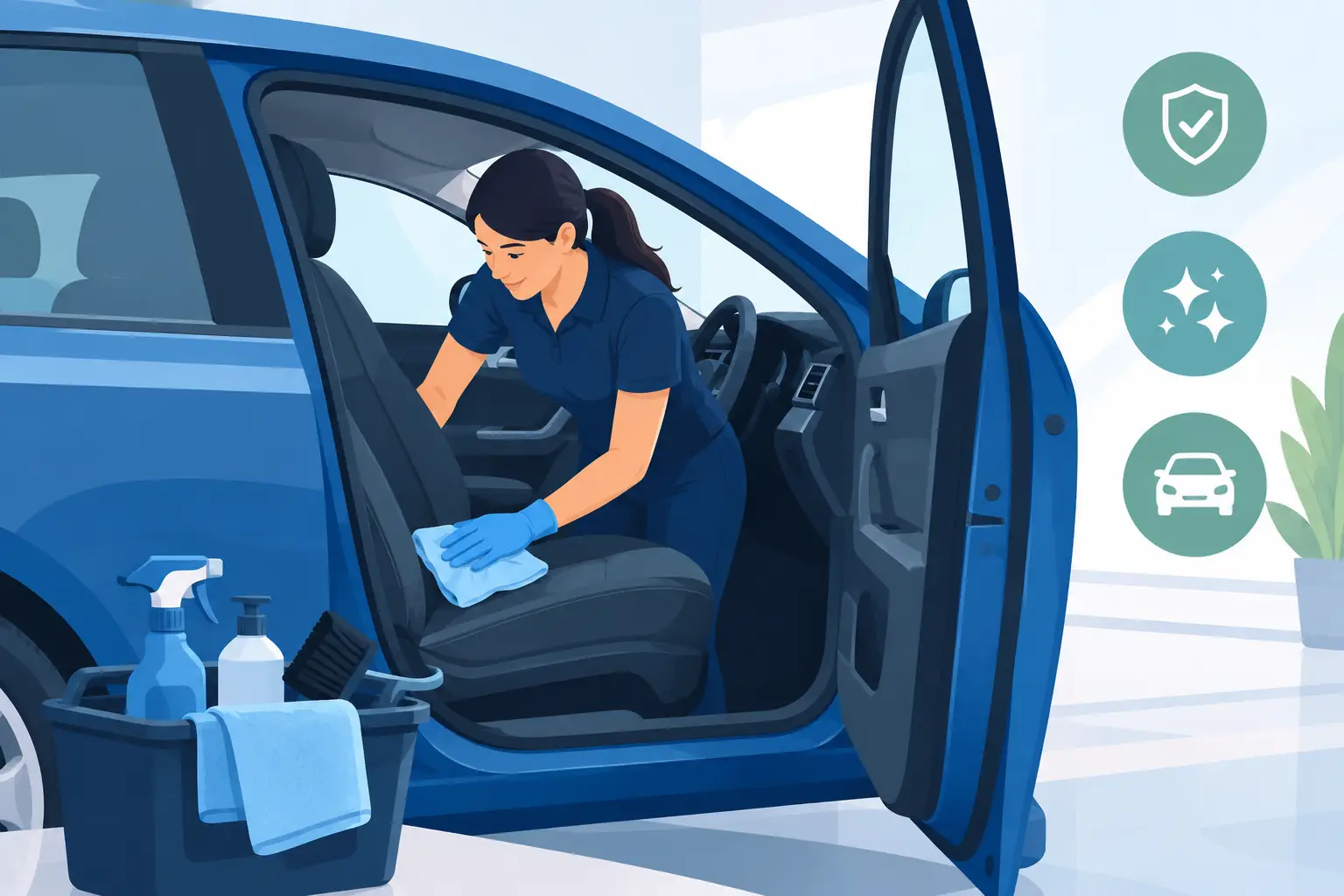
The Interior Side of a Full Detail
The interior should be cleaned from the dirtiest, driest work toward the finishing touches. A technician who sprays cleaner before removing loose grit can turn crumbs, sand, and salt crystals into wet grime that spreads across plastics and upholstery.
Start with dry debris
The first pass reaches the seats, carpets, floor mats, trunk, seat rails, cup holders, and narrow console gaps. A crevice nozzle pulls out the obvious debris, while compressed air can push crumbs from vents, stitching, buttons, and rail tracks into areas where the vacuum can collect them.
This stage is easy to underestimate. Sand trapped beside a seat rail can keep working its way onto the carpet after the car leaves the shop. Pet hair may also need a rubber brush or specialised tool before the vacuum can lift it properly.
Move to fabrics and hard surfaces
Cloth seats, carpets, and floor mats may receive shampooing or hot-water extraction. The machine injects a cleaning solution into the fabric and removes it with loosened soil, helping lift coffee, salt slush, and other stains. The technician still needs to manage moisture carefully, because saturated upholstery needs suitable drying time.
Leather and vinyl require a different approach. A pH-balanced cleaner removes body oils and grime, followed by a conditioner suited to the material. That helps keep the surface supple, particularly in vehicles exposed to strong cabin heat and regular daily use.
Dashboard panels, door cards, consoles, cup holders, and trim are cleaned with soft brushes and trim-safe products. The aim isn't to leave every surface greasy or glossy. A good finish should look clean and feel natural, with dressing used selectively rather than sprayed over dust.
Leave the glass until the end
Interior glass is usually cleaned after the dust and wet work are finished. That prevents fresh cleaner, air-blown debris, or fingerprints from undoing the result. A low-lint glass towel and a suitable automotive glass cleaner should leave the windshield clear without a hazy film.
A full interior detail doesn't automatically remove every stain or odour. Old spills may have reached foam beneath the fabric, while smoke or pet odour can involve materials that need specialised treatment. Ask whether the quoted service covers stain treatment and odour elimination, or only general shampooing and surface cleaning.
The Exterior Side of a Full Detail
Exterior detailing works from the least contaminated areas toward the dirtiest ones, with separate tools for wheels and paint. That prevents brake dust and gritty rocker-panel residue from being carried across the clear coat.
Loosen road film before touching the paint
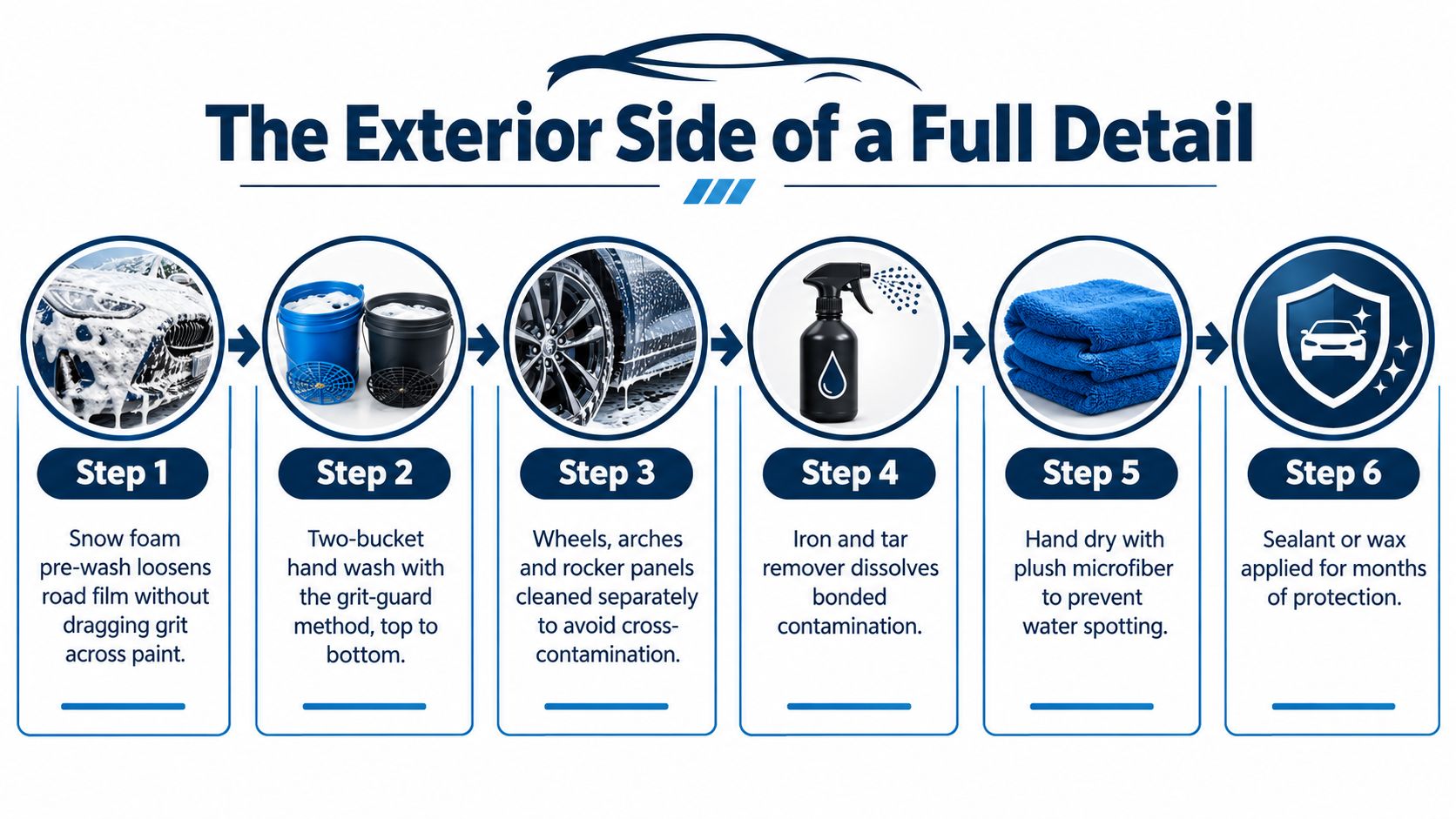
A snow-foam or pre-wash solution softens road film, salt, and loose grit. The technician rinses that material away before using a mitt. This is the paint-safety step that separates a controlled hand wash from dragging a dirty sponge over the body.
Wheels, tires, arches, and rocker panels should be handled with dedicated brushes and products. Brake dust can cling tightly to wheel faces and barrels, while winter sludge gathers behind the spokes and inside the arches. Keeping those tools separate limits cross-contamination.
Wash from the roof down
The hand wash normally starts at the roof and works downward. A two-bucket method, a clean microfiber mitt, and a grit guard help keep loosened particles away from the mitt's working surface. Lower doors and rocker panels receive attention after the cleaner upper panels because they carry more road grime.
After washing, the technician may use an iron remover or tar treatment for bonded contamination. These products target particles that ordinary soap won't remove efficiently. A clay bar can then shear away remaining roughness, leaving the paint smooth enough for a sealant to bond evenly.
Dry before protecting
Drying uses plush microfiber towels, with a blower useful around emblems, mirrors, trim gaps, door jambs, and fuel doors. Removing trapped water helps prevent drips after the car leaves the bay and reduces the chance of water spotting.
A hand wash alone doesn't correct existing scratches or heavy swirl marks. It cleans the surface. Paint correction is a separate polishing process, and it should be discussed before booking if the paint looks dull or marked in direct sunlight.
The complete sequence, hand wash through decontamination and protection, is important because bonded salt, brake dust, tar, and road film can stop a wax or sealant from sitting directly on clean paint. A detailed exterior cleaning guide describes this progression as a combination of washing, wheel and wheel-well cleaning, chemical or clay-bar decontamination, drying, and protective finishing.
Optional Add-Ons That Change the Result
Add-ons aren't just a way to make the invoice larger. Each one solves a different problem, and some are useful only when the vehicle's condition calls for them.
Clay-bar decontamination is helpful when clean paint still feels gritty under your fingertips. The bar removes bonded particles that washing leaves behind, including contamination associated with brake dust, rail dust, industrial fallout, and road film. It prepares the surface for protection, but it doesn't remove deep scratches.
Machine polishing is the upgrade for light swirls, mild oxidation, and small paint defects. A single-stage polish uses controlled abrasion to refine the clear coat and improve gloss. More correction can require multiple stages, more inspection, and a careful discussion about how much clear coat should be removed. Polishing isn't routine washing, so it shouldn't be promised as part of every standard package.
Protection choices
A wax or polymer sealant provides a protective layer after cleaning. A ceramic-type coating offers a more involved preparation and application process, with the coating bonding to properly prepared paint. Paint-protection film is different again. It uses a physical film to protect selected painted areas from impacts and abrasion.
These options shouldn't be treated as interchangeable. Wax suits an owner who wants a refreshed finish and straightforward maintenance. A sealant suits someone seeking more durable protection without committing to a coating. Ceramic coating or paint-protection film makes more sense when the owner wants a longer-term protection plan and is prepared to maintain the vehicle properly.
Condition-specific upgrades
Engine-bay cleaning, headlight restoration, and odour removal are practical add-ons when the problem is visible or noticeable. A dusty engine bay needs controlled cleaning around sensitive components. Cloudy headlight lenses need restoration rather than another coat of tire dressing. Odour treatment must address the source, not just cover it with fragrance.
Ask before upgrading: What defect does this service fix, and what will still be outside the package?
The right choice depends on whether you want a cleaner cabin, smoother paint, corrected defects, or protection against future contamination. Those are related goals, but they aren't the same service.
Why Ontario Winters Make Some Steps Essential
For a driver travelling between Mississauga, Brampton, Whitby, and the rest of the GTA, the most valuable part of a detail may be underneath the vehicle. Salt residue hides behind wheels, under rocker panels, in drain channels, and across the undercarriage. Once slush dries, the car can look reasonably clean while contamination remains in places a regular exterior wash barely reaches.
An Ontario winter-care guide notes that salt is commonly present on GTA roads from November through April and recommends washing at least every one to two weeks during that period. Ontario winter detailing guidance also highlights undercarriage pressure washing, wheel-well flushing, rocker-panel cleaning, drain-hole clearing, and spring degreasing before a fresh wax or sealant.
Match the threat to the treatment
| Winter threat | Where it collects | Counter step in a full detail |
|---|---|---|
| Salt film and brine | Rocker panels, wheel wells, lower doors | Thorough lower-body wash and wheel-well flushing |
| Undercarriage grime | Subframes, suspension areas, exposed metal | Controlled undercarriage pressure rinse |
| Brake dust | Wheel faces, barrels, calipers, lower bodywork | Dedicated wheel cleaning and iron-contamination treatment |
| Salt trapped in seams | Door jambs, drain channels, trim gaps | Crevice cleaning, jamb wiping, and drain-hole inspection |
| Dull, exposed paint | Lower panels and high-spray areas | Decontamination followed by wax or sealant |
The detailer's goal isn't to make the car look wet and glossy for a few hours. It's to remove the material that holds moisture and salts against vulnerable surfaces, then add protection where the environment is hardest on the finish. Undercarriage cleaning, lower-panel decontamination, and a durable sealant therefore deserve more attention than a decorative tire shine.
A spring detail is particularly useful after months of winter driving. The technician can remove accumulated salt, degrease affected areas, clean the arches and rocker panels, and apply fresh protection after the surface is dry. That turns the appointment into a seasonal condition check, not just a cosmetic appointment.
How Long a Full Detail Takes
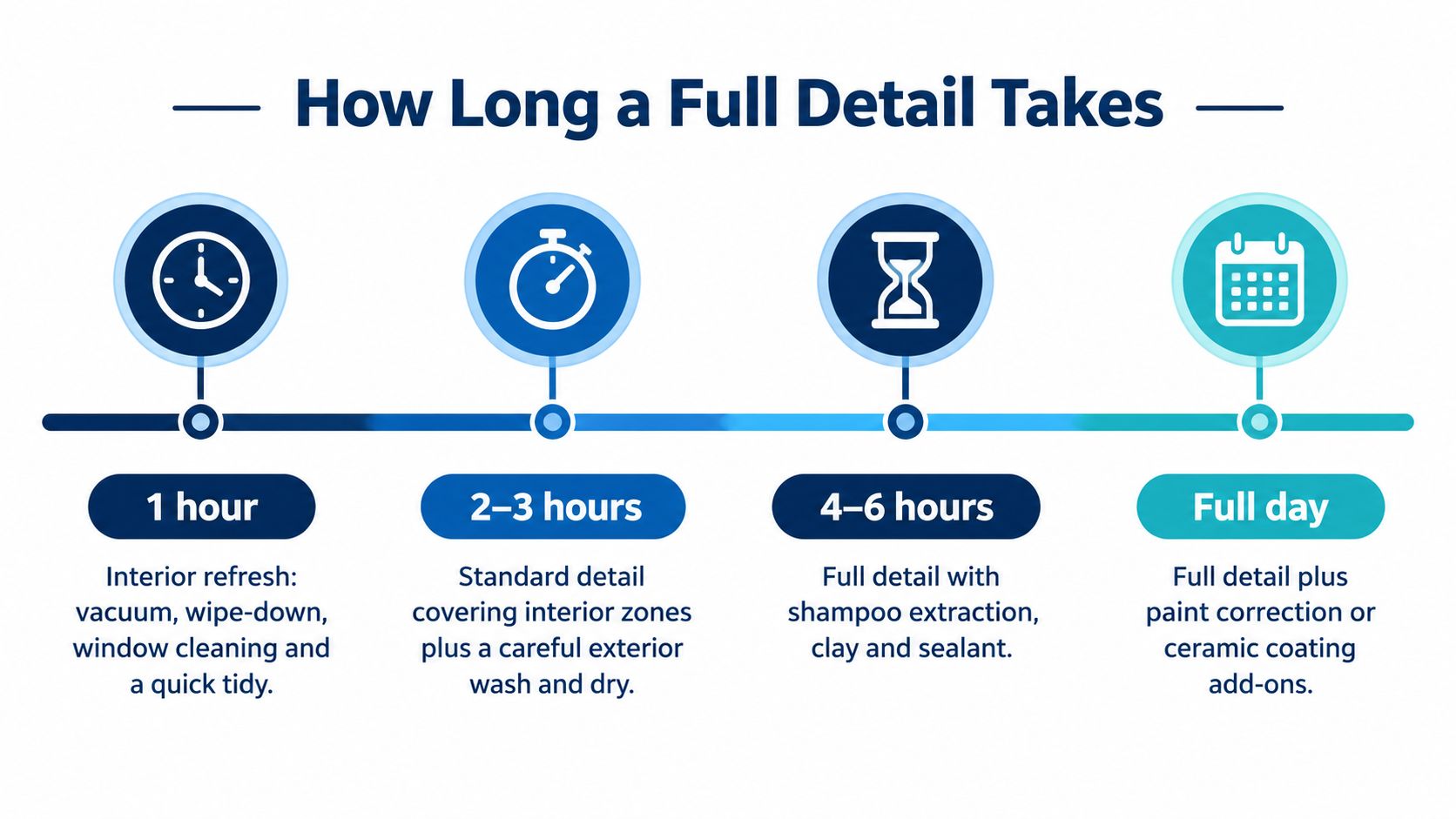
The time depends on the vehicle's condition, the number of technicians, the package depth, and whether the shop needs to wait for wet materials to dry or protective products to set. The car's time in the bay isn't the same as the time you spend waiting beside it, so most full-detail appointments work better as drop-offs.
A quick interior refresh may cover vacuuming, surface wiping, glass cleaning, and a general tidy. It won't provide the same depth as shampoo extraction, leather conditioning, exterior decontamination, and protective finishing.
A standard full detail generally sits in the middle. It combines the interior zones with a careful exterior wash, wheel cleaning, drying, and some form of hand-applied protection. Heavy salt, pet hair, embedded stains, and neglected surfaces can extend the appointment because the technician has to repeat extraction or agitation rather than rushing the work.
What pushes the job longer
- Pet hair: Hair can be woven into carpet fibres and require rubber tools, brushes, and repeated vacuuming.
- Severe salt buildup: The underbody and wheel arches may need several controlled rinses.
- Old leather or vinyl: Dried oils and grime may require separate cleaning and conditioning passes.
- Paint correction: Polishing involves inspection, panel preparation, machine work, and residue removal before protection.
- Coating application: The surface must be clean and prepared, and the product may need controlled curing conditions.
A shop that finishes unusually quickly may be offering a lighter package rather than performing every task customers associate with “full detail.” That isn't automatically bad. It becomes a problem only when the package description doesn't make the limits clear.
When booking, describe the vehicle accurately. Mention whether it has children's spills, pet hair, smoke odour, winter salt, or paint scratches. A foreman can then allow enough bay time and tell you which tasks are included before work begins.
Choosing the Right Detail Package for Your Car
Start with the problem, not the package name. A commuter with a maintained interior needs something different from a family SUV with salt-stained carpets, or a black vehicle covered in wash-induced swirls.
| Service | Basic full-service wash, 1 hour | Standard full detail, 2 to 3 hours | Premium detail, 4+ hours |
|---|---|---|---|
| Exterior cleaning | Wash, rinse, dry, and general wheel cleaning | Hand wash, wheel and tire cleaning, detailed drying | Hand wash, wheel and underbody attention, decontamination |
| Interior cleaning | Vacuum, dashboard wipe, and windows | Deep vacuum, carpets and cloth seats treated, vents and trim cleaned | Extraction, leather or vinyl conditioning, odour or stain treatment where required |
| Paint finish | Quick protective product | Decontamination where included, followed by sealant | Machine polishing, ceramic-type protection, or paint-protection work where selected |
| Best fit | A regularly maintained daily commuter | A vehicle with visible buildup or seasonal contamination | A vehicle needing correction, long-term protection, or several add-ons |
Choose the lighter option when
The interior is tidy, the paint feels smooth, and you mainly need routine upkeep. A basic full-service wash can handle loose dirt, light cabin debris, glass, and general surface cleaning. It won't replace a deep seasonal reset.
Choose the standard detail when
You can see salt stains, carpet marks, built-up grime in the cup holders, dust in the vents, or roughness on the paint. This is the sensible middle ground for many GTA vehicles because it addresses both visible interior wear and contamination from regular road use.
Choose premium work when
The paint has noticeable swirls, the headlights are cloudy, the cabin has a persistent odour, or you want a coating or film rather than a short-term finish. Ask the shop to separate cleaning, correction, and protection on the quote. That makes it easier to understand what you're paying for.
A useful booking script sounds like this: “I have a [vehicle type] that was last detailed [when]. It has [specific stains, odours, salt buildup, or paint marks]. I'm looking for the [basic, standard, or premium] package. Does that include underbody cleaning, paint decontamination, shampoo extraction, and the protective product you've described? How long does the vehicle need to remain in the bay?”
Reputable Toronto-area shops should be comfortable answering those questions and showing the checklist before taking the keys. For a GTA vehicle, don't choose solely by the word “full.” Choose the package that addresses the contamination your car carries.
Nanak Car Wash offers express and full-service exterior washing, interior cleaning, appointment-based detailing, and rust proofing for GTA drivers, with detailing options that include carpet and seat shampooing, salt and stain removal, vent and crevice cleaning, leather care, polishing, and hand-applied protection. Visit Nanak Car Wash to review the available services and choose a package that matches your vehicle's interior condition and Ontario winter exposure.

 6600 Finch Ave W, Etobicoke, ON M9V 3Z6
 647-703-8515
 MON – SUN 8 AM to 7 PM