
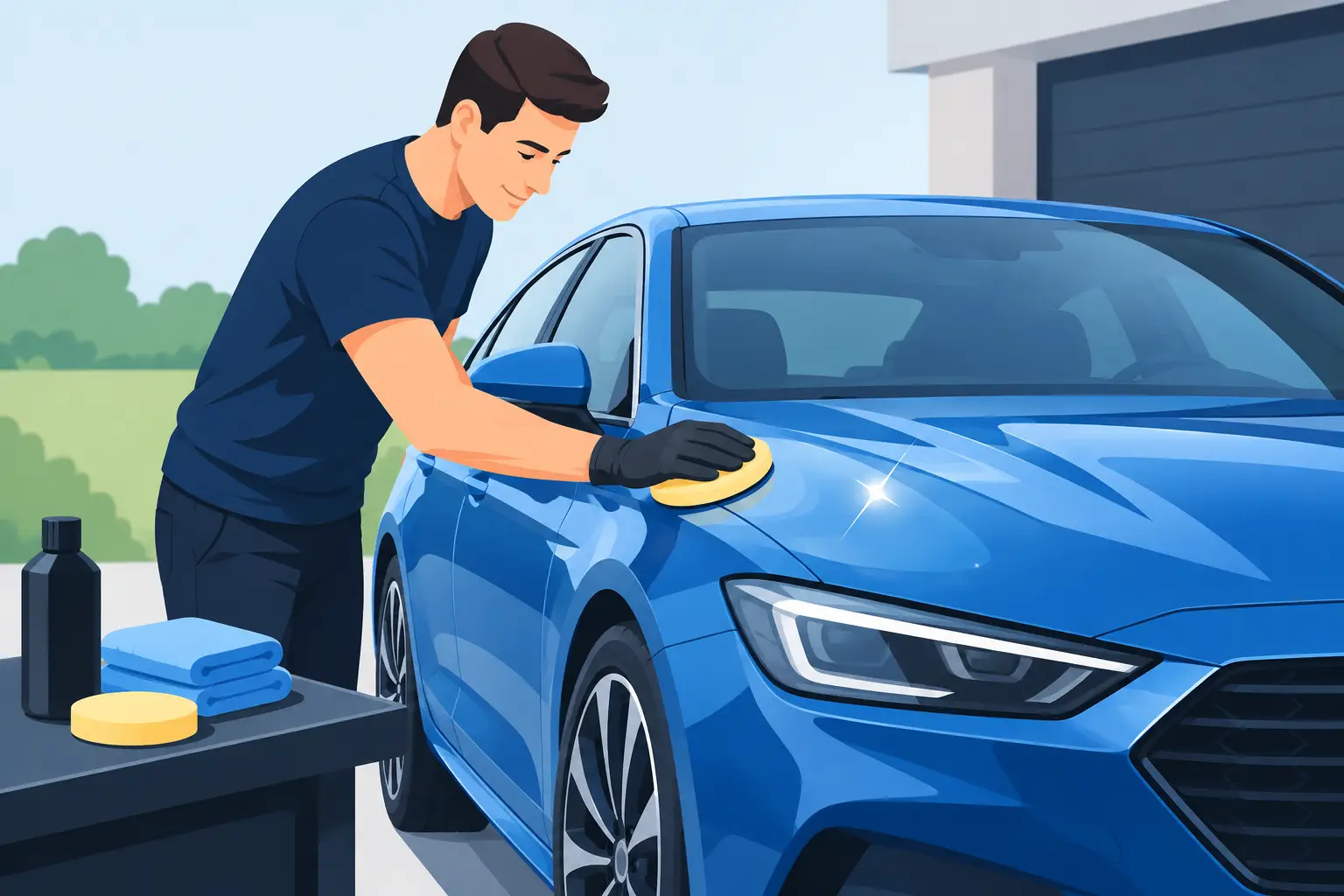
Road salt, sun, bird droppings, tree sap, and regular parking-lot dust can make a clean vehicle look tired fast. Car waxing is one practical way to bring back gloss while adding a protective layer between your paint and the grime your vehicle faces every day.
Wax is not a replacement for regular washing, and it will not fix deep scratches or peeling clear coat. What it can do is make a well-maintained vehicle look sharper, feel smoother, and stay easier to clean between washes. For commuters, families, rideshare drivers, and anyone who wants their vehicle to look cared for without spending all weekend on it, that is a real benefit.
What Car Waxing Does for Your Paint
A quality wax sits on top of your vehicle’s clear coat. It adds shine by helping light reflect more evenly off the paint, which is why a freshly waxed car often looks deeper and glossier than one that was only washed.
More importantly, wax creates a temporary barrier against everyday contaminants. Water beads and rolls away more easily. Dust, road film, and bug residue are less likely to cling hard to the surface. That can make your next wash quicker and reduce how much rubbing is needed to remove dirt.
Wax also helps limit the effects of UV exposure. Sunlight can gradually dull paint and trim, especially when a vehicle is parked outdoors every day. Wax will not make paint immune to fading, but regular protection can help preserve the finish over time.
There is a trade-off: wax protection wears away. Rain, snow, salt, automatic washes, harsh detergents, and frequent driving all reduce how long it lasts. Think of waxing as ongoing maintenance, not a one-time repair.
How Often Should You Wax a Car?
For most drivers, waxing every three to four months is a sensible schedule. That gives the vehicle regular protection without making car care complicated. If your vehicle is garage-kept, driven less often, and washed with mild products, you may be able to stretch that interval.
Vehicles that live outside need more attention. Consider waxing every two to three months if you drive daily, park under trees, commute on highways, or deal with winter road salt. In Toronto, Brampton, Mississauga, Vaughan, Burlington, Cambridge, and Oshawa, winter grime can be especially tough on a vehicle’s finish. A thorough wash before waxing matters because sealing dirt against the paint defeats the purpose.
You may need wax sooner if water stops beading on the paint, the surface feels rough after washing, or the shine fades noticeably. Run clean fingers lightly over the paint after it has been washed and dried. If it feels smooth and water beads well, the protection is likely still doing its job.
Car Waxing Starts With a Proper Wash
Wax should only go on clean, dry paint. Applying it over dirt can trap contamination and create fine scratches as you spread the product across the panel.
Start with a complete exterior wash that removes loose dust, mud, salt, and traffic film. Pay attention to lower doors, rocker panels, wheel wells, and the rear of the vehicle, where grime collects most heavily. Dry the vehicle fully with clean microfiber towels. Water left around mirrors, moldings, door handles, and trim can drip onto the paint while you work and interfere with the finish.
If the paint still feels gritty after washing, it may have bonded contaminants that ordinary soap cannot remove. A clay treatment or professional paint decontamination can help create a smoother surface before wax is applied. This step is not needed every time, but it can make a big difference on vehicles that have spent months outdoors.
How to Apply Wax Without Wasting Time
The best time to wax is in the shade, on paint that is cool to the touch. Hot panels can cause wax to dry too quickly, making it harder to remove and more likely to leave streaks. Avoid waxing in direct sun whenever possible.
Use a foam applicator pad and apply a thin, even layer. More wax does not mean more protection. A thick coat simply takes longer to haze and buff off. Work one panel at a time, such as half the hood or one door, rather than covering the entire vehicle before removal.
Let the product haze according to its instructions, then buff it with a clean microfiber towel. Turn the towel often so you are always using a clean section. If the towel starts dragging or smearing, switch to a fresh one. The goal is a clear, even shine, not a heavy residue around badges, trim, and panel edges.
Do not put traditional paint wax on unpainted plastic trim, rubber seals, tires, or glass unless the product specifically says it is safe for those surfaces. White residue on black trim is frustrating to remove and can make an otherwise clean detail look unfinished.
Wax, Sealant, or Ceramic Protection?
The word “wax” is often used for several different types of paint protection. Traditional carnauba wax is popular for the warm, rich shine it can give darker paint colors, but it generally does not last as long as synthetic options.
Synthetic paint sealants usually offer longer protection and strong water beading. They are a practical choice for daily drivers that face changing weather, frequent washing, and long commutes. Spray waxes are fast and convenient for topping up shine after a wash, although they usually offer less durability than a paste or liquid wax.
Ceramic coatings are another category. They can provide longer-lasting protection, but they cost more and require careful surface preparation. A coating is not a reason to stop washing your vehicle, and it is not a shield against rock chips, dents, or neglect. For many everyday drivers, regular washing and periodic waxing or sealant application deliver the visible results they want at a more affordable cost.
Common Car Waxing Mistakes
The biggest mistake is waxing a dirty vehicle. The second is using old, rough towels or applicators that can mark the paint. Keep your microfiber towels clean, avoid dropping them on the ground, and do not use the same towel for wheels and paint.
Another common problem is trying to hide damage with wax. Wax can improve gloss and make light imperfections less noticeable, but it cannot remove deep scratches, oxidation, or clear-coat failure. Paint correction, polishing, or professional detailing may be needed first if the finish is badly neglected.
Finally, do not overlook regular washing after a wax service. Protection works better when contaminants are removed before they bake onto the paint. During winter, frequent fresh-water washing is especially useful for clearing salt and slush from the body, undercarriage, and wheel areas.
Keep the Shine Going Between Wax Services
A waxed vehicle still needs simple upkeep. Wash it before dirt builds up, clean bird droppings and tree sap as soon as possible, and use touchless or hand-wash methods when appropriate for your schedule. If you use an automatic wash, choose a service that is designed to be gentle on exterior finishes.
For drivers who want consistent results without turning vehicle care into another chore, an unlimited wash membership can make regular exterior cleaning easier to keep up with. Nanak Car Wash can help with quick washes, hand-finished detailing, and protection-focused services based on how your vehicle is used.
A clean, protected finish is easier to maintain than one that has been left to build up months of grime. Give your vehicle a proper wash, add wax when the water stops beading, and enjoy the kind of shine that makes even an everyday commute feel better.

 6600 Finch Ave W, Etobicoke, ON M9V 3Z6

 647-703-8515
 MON – SUN 8 AM to 7 PM