
Wash your vehicle every 1 to 2 weeks during Ontario winters, and take it in immediately after major snowstorms or salt events. If you wait until the car only looks dirty, the hidden salt has already had time to sit on the underside and seams.
Many people assume a clean winter car is one that looks clean from five steps away. That's the trap, because the damage in the GTA usually starts where you can't see it: underneath the vehicle, inside wheel wells, and along rocker seams where salty slush keeps hanging around.
Table of Contents
- The Hidden Truth About Winter Salt Damage
- Understanding Toronto Winter Salt Exposure
- Two-Stage Winter Cleaning Protocol
- Professional Wash vs DIY Approaches
- Interior Winter Maintenance Essentials
- Building Your Winter Cleaning Schedule
- Frequently Asked Winter Car Care Questions
The Hidden Truth About Winter Salt Damage
A shiny exterior can hide a filthy underbody. That's why a clean car in winter is not really about painted panels first, it's about removing the chloride residue that keeps working in hidden places after the obvious grime is gone.
Where the damage starts
Toronto winter driving throws salt and wet road film into the same places over and over again. Wheel wells, rocker panels, brake components, undercarriages, and seams trap that residue, especially after repeated freeze-thaw cycles and runs through slush. The salt doesn't need a dramatic event to cause trouble, it only needs time, moisture, and contact with metal.
Practical rule: if the lower half of the vehicle is dirty, the underside probably is too.
That's why a quick hose-down on the driveway often misses the point. Exterior panels may look better, but chloride-laden residue can stay active in damp crevices and keep attacking exposed metal and painted surfaces. In winter, cleanliness needs to mean removal, not just appearance.
Why winter makes it worse
Toronto's winter conditions keep reintroducing the problem. Snowstorms bring fresh slush, roads get treated again, and the vehicle gets sprayed all over. The contamination doesn't reset after one wash, it comes back with the next commute, the next arterial road, and the next thaw.
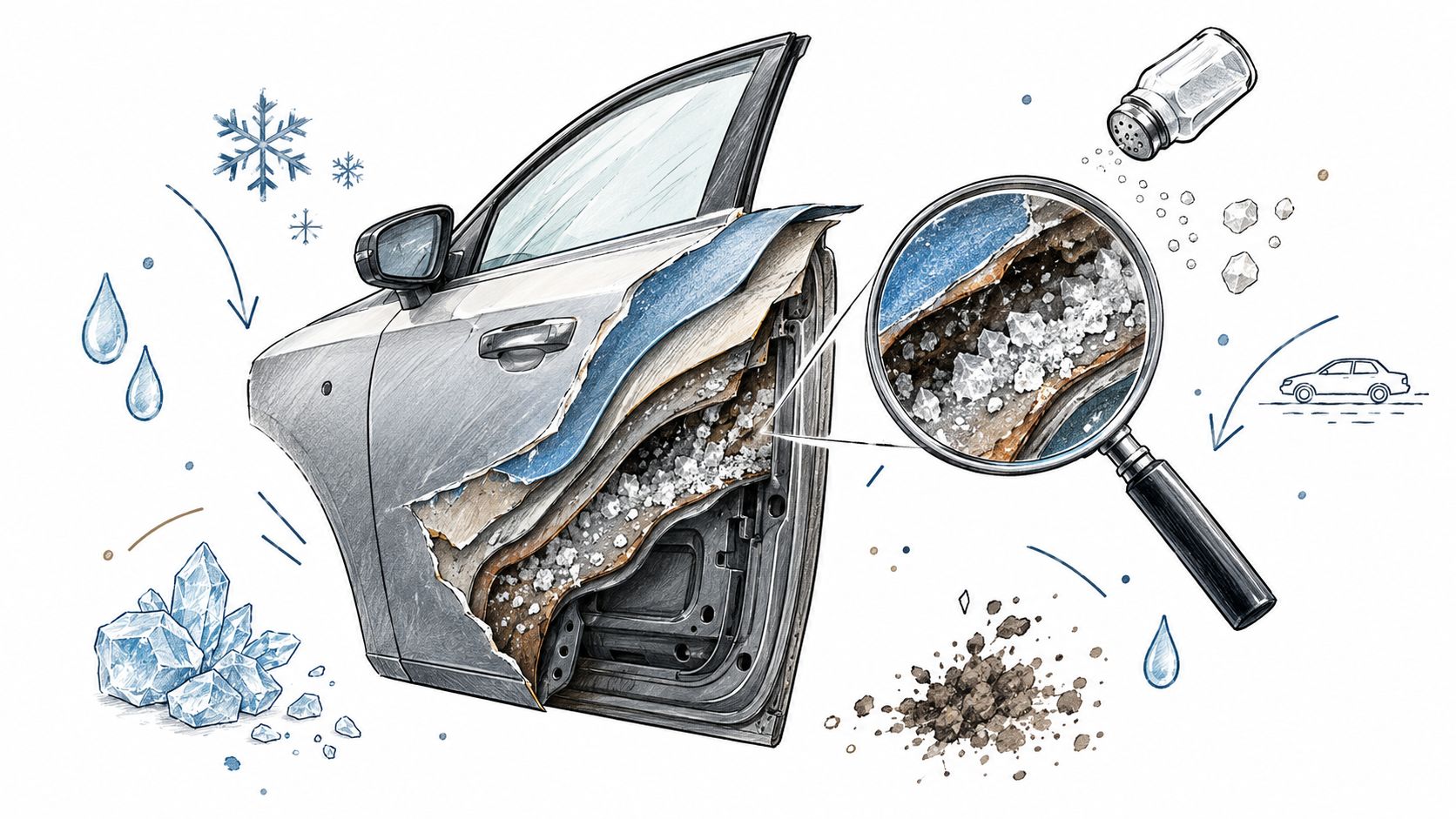
A lot of drivers discover rust too late, after fasteners, brackets, exhaust parts, brake lines, or other hidden metal has already started to go. By then, the car may still look decent on the outside, which is exactly why winter salt damage gets underestimated. The issue isn't cosmetic first, it's mechanical and structural.
Understanding Toronto Winter Salt Exposure
Toronto's winter season typically runs from November through March, with most snowfall concentrated in January and February. The city receives about 130 centimetres of snow in a typical winter, ordinary storms commonly produce 5 to 10 centimetres, and winter maintenance uses roughly 130,000 to 150,000 tonnes of road salt, according to the City of Toronto winter road operations.
What that means for daily drivers
Those figures show how often a vehicle can encounter salty water, slush, and spray. Daily driving on treated arterial roads repeatedly coats the lower body, wheel wells, suspension areas, and underbody. A weekend vehicle sees less exposure, but one trip through wet slush can still leave contamination in places a standard exterior wash does not reach.
The underbody is where many winter routines fall short. Saltwater collects behind splash shields, around subframes, inside wheel wells, and along seams where drying is slow. A clean-looking door or hood says little about those areas.
Delivery drivers, commuters, and fleet operators usually build residue faster because they spend more time on treated roads. Each trip adds another film to surfaces that may already be damp and dirty. Nanak Car Wash focuses on rinsing these less visible areas, giving the vehicle attention that a quick exterior pass cannot provide.
Why the snowstorm matters more than the calendar
Each fresh salting event reintroduces slush to the vehicle, so waiting too long between washes lets contamination stack up. The calendar matters less than the roads driven that week and whether the vehicle has passed through wet, treated routes.
| Driving pattern | Salt exposure risk |
|---|---|
| Daily city commute | High, because of repeated contact with treated roads |
| Delivery or service work | Higher, because of more road time and spray |
| Occasional winter driving | Lower, but still active after storms |
A winter cleaning routine should follow exposure, not convenience. Wash soon after heavy snow, thawing conditions, or several days of wet commuting. Give priority to the underside and wheel wells before judging the vehicle by its paint.
That is the practical GTA baseline. Winter is a prolonged salt season, and each new road-treatment cycle can leave residue on the same vulnerable metal, seams, and drainage points. Standard exterior washing improves appearance, while underbody cleaning addresses contamination that remains hidden.
Two-Stage Winter Cleaning Protocol
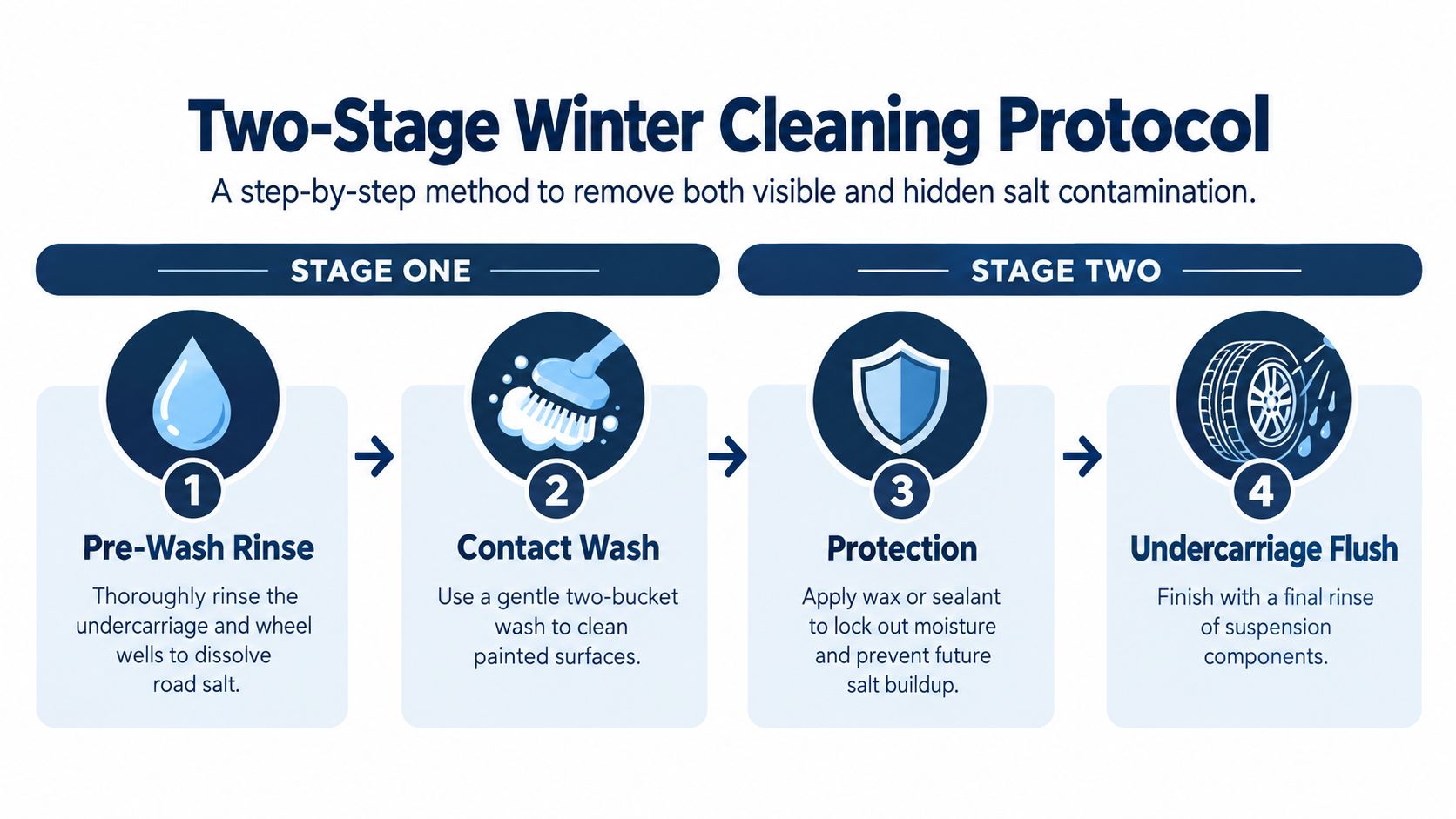
A winter wash that stops at the doors leaves the worst material behind. Salt and slush collect underneath, in wheel wells, seams, and suspension pockets, where corrosion keeps working after the paint looks clean again. Nanak Car Wash is useful here because standard exterior rinses rarely reach those hidden areas well.
Stage one, get the salt out first
CAA advises washing the underside about every two weeks in salt-using regions and notes that high-pressure jets can reach the body, wheels, trim, and undercarriage CAA car care tips. In heavier GTA use, that usually means washing sooner after a major snowstorm, especially if the car has been on treated roads, through slush, or parked with packed salt around the wheel wells.
Start with an underbody-capable wash, touchless if the vehicle is carrying a heavy load of winter grit. Rinse loose material before any contact cleaning, then focus on wheel wells, rocker seams, frame rails, suspension parts, subframes, and the corners where salty sludge hides. The point is to flush out what sits in hidden channels, not just make the panels look presentable.
Stage two, dry it properly
Dry the vehicle before temperatures fall below freezing. Wet saltwater left in seams can freeze in place and stay active through the next thaw, which is how a clean-looking car still keeps rusting from the inside out.
Driveway washing can also create runoff problems if soapy water reaches storm drains, so a plain-water rinse or a professional wash is usually the safer choice. For drivers who maintain work vehicles as well, truck maintenance in Tampa Bay is a useful reminder that underbody care is service work, not just appearance work.
Professional Wash vs DIY Approaches
DIY washing looks cheaper until you count cold hands, poor access, and missed underbody contamination. A driveway rinse can help in a pinch, but it usually doesn't match a commercial wash for reach, consistency, or compliance.
Where DIY works and where it falls short
DIY makes sense for a quick rinse after light exposure, especially if the car only picked up a thin layer of winter grime. It's also useful when you want to knock loose surface salt before a proper wash later. But it tends to miss wheel wells, hidden seams, and the undercarriage, which are exactly where corrosion likes to start.
A commercial wash has the better odds on repeatable underbody rinsing. It also avoids the problem of freezing water in your driveway on a cold night, which is a nuisance for you and a risk for the car. The main trade-off is paying for convenience and access, but in winter that often buys you a cleaner result.
What a GTA wash menu changes
Nanak Car Wash offers express exterior packages starting from $9.99 + tax, and full-service wash packages starting from $29.99 + tax, with options that include underbody wash, hand drying, interior vacuuming, dashboard and window cleaning, and higher tiers for more interior coverage. It also offers unlimited membership plans, prepaid bundles, and rust proofing at its GTA locations. That mix matters because winter cleanup isn't always one service, sometimes it's a wash, a rinse, and a protection step in the same visit.
For drivers comparing wash options more broadly, it helps to find specialty cleaning solutions when standard exterior routines aren't enough for winter contamination Arelli Cleaning specialty cleaning services. The right service is the one that gets to the hidden grime, not the one that only makes the paint look brighter.
Who benefits most from professional service
SUVs, vans, and pickups usually collect more spray because of their size and use patterns. Fleet vehicles and ride-hailing cars also rack up salt exposure quickly because they stay on the road. For those vehicles, membership or prepaid use is often easier to keep consistent than trying to gamble on weather and free time.
Interior Winter Maintenance Essentials
Salt doesn't stay outside. It gets tracked onto carpets, mat edges, pedals, and door sills, then turns into damp residue that lingers through the whole cabin. If you ignore that layer, the car starts to smell like winter long after the roads have cleared.
Clean the cabin like winter lives there
Start with a full vacuum, especially on floor mats and around seat rails where grit settles. Salt stains on carpets and cloth seats need shampooing rather than a casual wipe, because dried residue tends to keep showing up after each thaw. If the car has leather, deep cleaning matters too, since winter heating dries surfaces and can leave them looking rough faster than expected.
Dashboards and windows need regular attention because winter driving already reduces visibility. Dirty glass plus road spray equals more glare and more fatigue on long commutes. Crevice and vent blowouts help remove the fine dust that sneaks into places a cloth can't reach.
The spots that usually get ignored
SUVs and vans often collect pet hair as well as winter debris, so don't just vacuum the visible seat surfaces. Pull mats out, shake them, and clean underneath them too. That hidden layer of damp salt is where odour usually starts.
If the cabin still feels damp after a wash, the problem hasn't been solved yet.
A proper winter interior clean is about more than comfort. It helps keep moisture under control, which reduces the mess that starts forming in the first place. Cleaner glass, dry mats, and cleared vents make a cold commute feel less punishing.
Building Your Winter Cleaning Schedule
The simplest winter schedule is the one you can repeat without thinking too hard. For most GTA drivers, that means regular winter washing tied to driving exposure, not mood or weather forecasts.
Build around how you drive
If you commute daily, especially on salted main roads, plan for frequent washes and don't wait until the car looks terrible. If you drive only occasionally, you still need to wash after major snowstorms because that's when the fresh salt load spikes. The hidden trick is consistency, because salt problems don't wait politely for your weekend.
A sensible pattern looks like this:
- Heavy daily driving: keep the car on a 1 to 2 week wash rhythm.
- Storm weeks: wash soon after the roads have been heavily treated.
- Lower-use vehicles: don't let the car sit all winter without underbody rinsing.
- Spring transition: book a cleanup once temperatures start climbing.
Why spring matters more than people think
Toronto's winter doesn't end cleanly, and spring can be rough on anything left underneath the vehicle. Warm, humid conditions help corrosion move faster when salt and grime are still trapped below. That's why spring cleanup isn't a vanity detail, it's a delayed damage control step.
Rust proofing can help, but it doesn't remove salt that's already built up in seams or underneath the car. Cleaning and protection are different jobs. One keeps corrosive residue from sitting there, the other helps slow the damage after the fact.
Frequently Asked Winter Car Care Questions
Does rust proofing mean I can skip washing? No. Rust proofing helps protect surfaces, but it doesn't remove salt, grime, or chloride residue that keeps collecting during winter travel. A vehicle still needs regular cleaning if you want to keep contamination from sitting in wheel wells, seams, and the undercarriage.
How do I know salt is still causing problems? Watch the lower panels, the wheel wells, and any seam that stays damp or crusted. If those areas keep looking dirty soon after a wash, hidden residue is probably still holding moisture where you can't easily see it.
What if I wash the car and it still seems rough underneath? That usually means the cleaning routine is hitting the visible surfaces but not the salt traps. The fix is a more complete underbody rinse, plus attention to frame rails, suspension parts, and drain areas where slush settles.
When does professional detailing become worth it? When the winter mess goes beyond a simple rinse. If the cabin has salt stains, the undercarriage keeps collecting residue, or the vehicle sees heavy commuting and storm exposure, detailed cleaning becomes the more practical option.
Nanak Car Wash handles the winter mess that standard exterior washes miss, including underbody rinsing, interior cleaning, and rust-focused services for GTA vehicles. If you want a cleaner clean car in winter routine that reaches the hidden salt, visit Nanak Car Wash and book the service that fits how you drive.



 6600 Finch Ave W, Etobicoke, ON M9V 3Z6

 647-703-8515
 MON – SUN 8 AM to 7 PM