
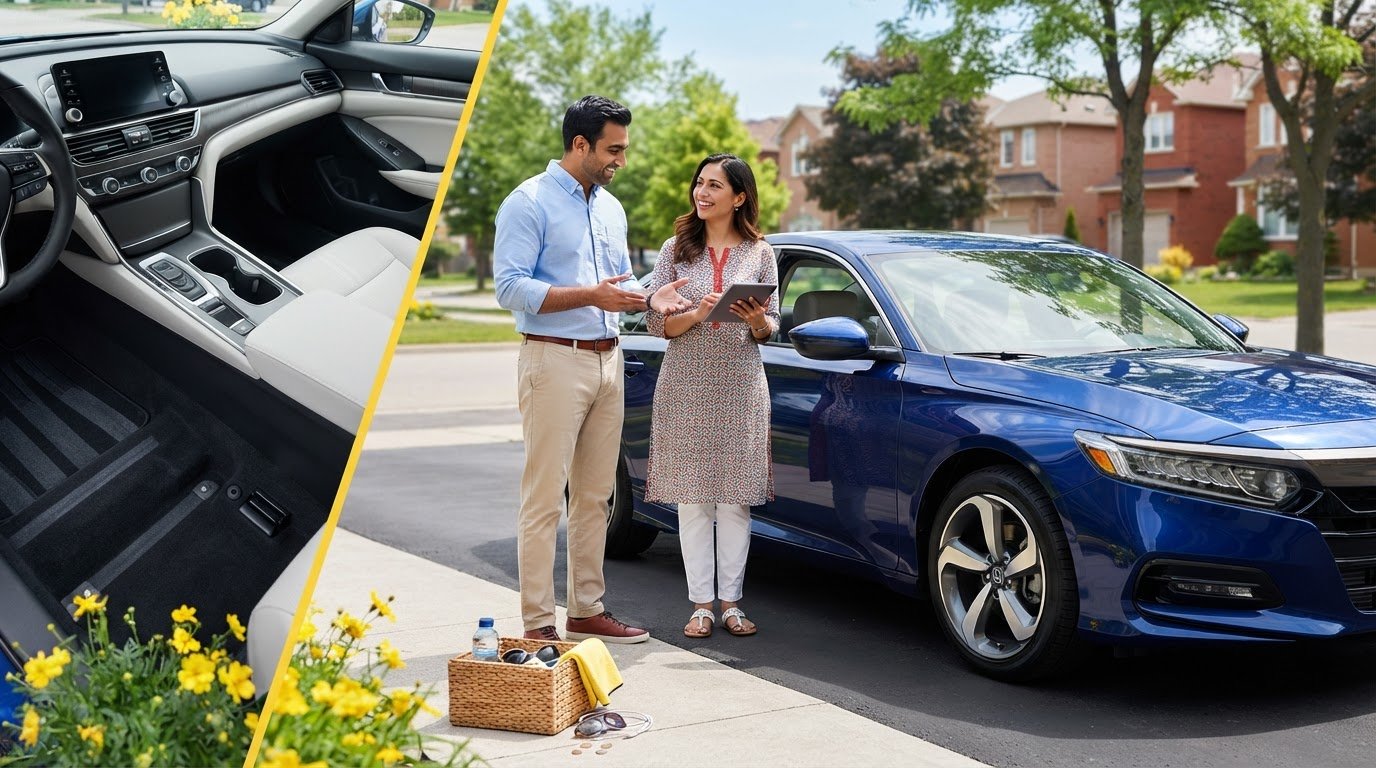
What if asking for a cleaner car could feel like a shared decision, not a criticism? If you’re wondering how to convince your spouse to get the car detailed, focus on what would make the car more comfortable for both of you, not on what your partner has done wrong. A cluttered or grubby interior can be frustrating, but a suggestion made the wrong way can turn a simple conversation into an argument.
It’s also fair to ask whether detailing is worth the time and expense. A full detail takes several hours, so weigh the benefits against your schedules, budget, and the car’s condition. You don’t have to push for a yes. Start by explaining what you’ve noticed and asking how your spouse feels about it.
This article offers practical ways to raise the idea respectfully, explain what a thorough interior and exterior clean involves, and discuss concerns about cost or time. You’ll also find a simple way to agree on a next step, whether that means booking a detail, choosing a smaller task first, or revisiting the conversation later.
Key Takeaways
- Learn how to convince your spouse to get the car detailed by framing it as a shared comfort decision, not a criticism.
- Describe specific cleaning needs without judging your partner’s habits or standards.
- Understand what detailing can involve and weigh the tasks you value against the time required.
- Use a simple conversation plan to hear both perspectives and agree on a practical next step.
- See how Nanak Car Wash’s interior and exterior detailing packages can address shared priorities.
How to bring up car detailing without sounding critical
A suggestion about cleaning can sound like a comment on someone’s standards, even if you’re thinking only about crumbs, dust, or how the car feels on a shared drive. Keep the conversation focused on a common goal: making the vehicle more comfortable for both of you. Choose a calm moment when neither of you is rushing, rather than bringing it up in traffic or just before you need to leave.
If you’re considering how to convince your spouse to get the car detailed, aim for an open conversation, not a sales pitch. You’re raising an option, not announcing a decision. Give your partner room to share their view, including whether detailing feels worthwhile right now.
What can I say to suggest detailing kindly?
Keep your opener short and neutral. For example: “I’ve noticed the car could use a deeper clean. Would you be open to talking about whether a detail makes sense for us?” This focuses on the vehicle and invites a joint decision. An “I” statement makes your reason clear without placing blame: “I’d feel more comfortable if we cleaned up the interior.”
Then pause and listen. Avoid turning the suggestion into a list of everything you think needs fixing. If your spouse is open to discussing it, talk through what each of you wants from the car and whether professional cleaning is a good fit.
How can I avoid making the request personal?
Describe what you’ve noticed, not who you think caused it. “There’s dust on the dashboard” is more neutral than “You never keep the car clean.” Skip jokes, embarrassing examples, and comparisons with someone else’s vehicle, especially in front of family or friends. Those can make a practical suggestion feel like a public judgment.
People have different thresholds for when a car needs attention. One partner may notice crumbs right away; the other may care more about visible dirt or a messy seat. Neither preference is a verdict on the other person. Acknowledge the difference, then ask which areas matter most to each of you.
Be specific without making the conversation feel like an inspection. Name one or two shared-use concerns, such as wanting the seats to feel fresher or the cabin to be more pleasant on daily trips. Leave out claims about your spouse’s habits. For a neutral explanation of the service, you can refer to What is car detailing? and keep the discussion centred on the cleaning itself.
Make it easy to say “not now” or “let’s think about it.” That lowers the pressure and keeps the decision between you. A professional detail is one option, not a demand or a test of who cares more about the car.
Explain what car detailing does, and what it does not mean
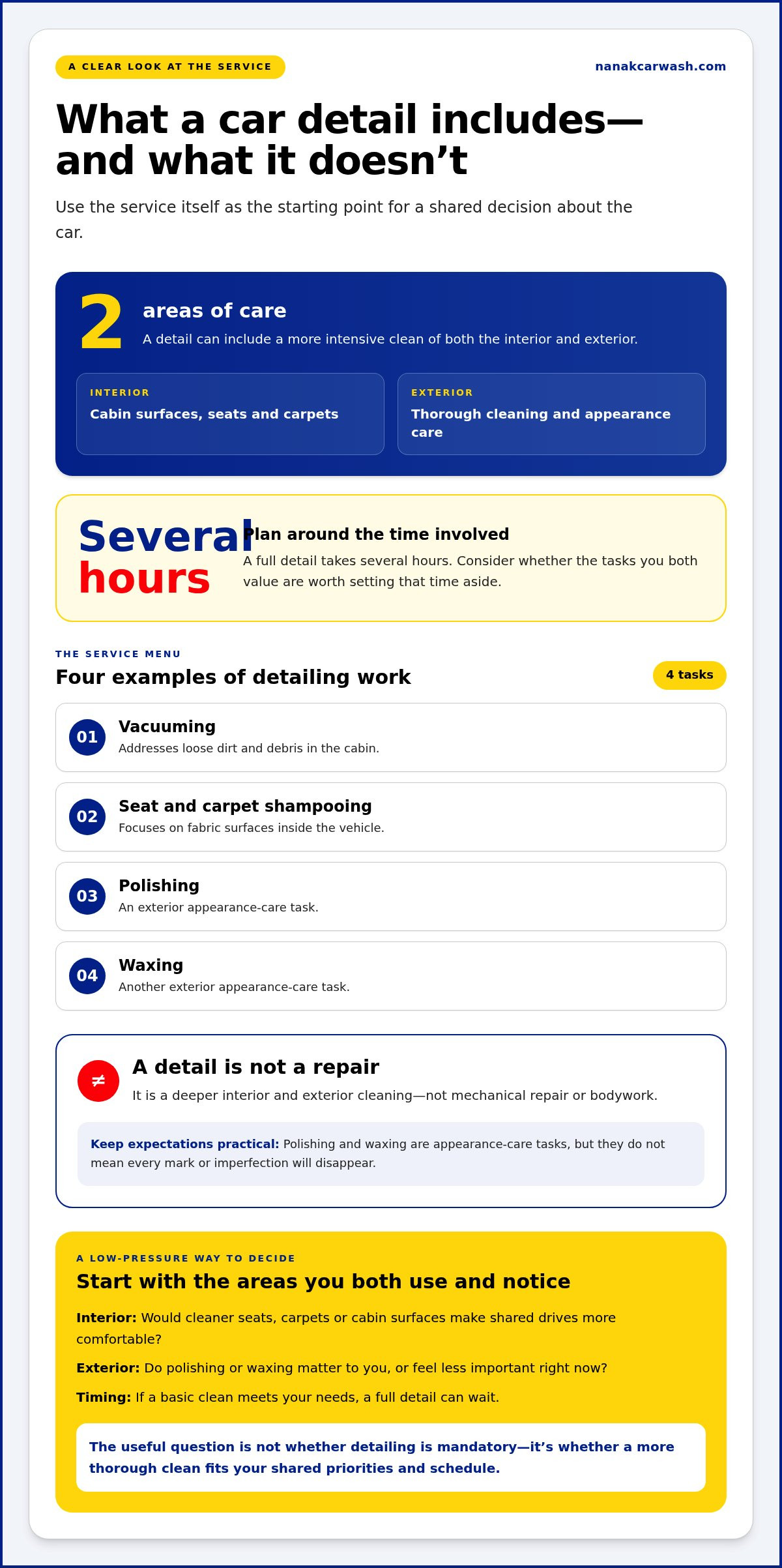
A routine wash and a detail aren’t the same thing. A wash focuses on cleaning the vehicle’s exterior, while detailing is a more intensive clean that can address both the interior and exterior. A concise way to explain it is: Car detailing is a deeper interior and exterior cleaning, not a mechanical repair or bodywork service.
That distinction can make the conversation easier. You’re not suggesting that anything is broken or that the car needs repairs. You’re talking about cleaning and appearance care. For a straightforward overview, What is car detailing? describes detailing and the kinds of processes it can involve.
Which parts of a detailing service may matter at home?
Start with the areas you both use and notice. Vacuuming addresses loose dirt and debris in the cabin, while shampooing seats and carpets focuses on fabric surfaces. These tasks may appeal if you want the interior to feel cleaner during shared commutes or everyday errands. Ask your spouse which areas would make the biggest difference rather than assuming you both care about the same things.
On the exterior, polishing and waxing are appearance-care tasks. They’re part of a more thorough clean, but they don’t mean every mark or imperfection will disappear. Keep the conversation practical: which interior or exterior tasks matter to you, and which feel less important right now?
When might a full detail feel useful to both partners?
A shared vehicle can collect the signs of regular use, including dust, crumbs, and dirt on frequently used surfaces. A full detail is worth discussing if both partners would appreciate a more thorough interior and exterior clean, or if you have an upcoming occasion and want the car to feel tidier. Neither situation makes detailing mandatory. It simply gives you a concrete reason to consider whether the service suits your needs.
The right time depends on the car’s condition and how you use it. You don’t need to treat detailing as a fixed-schedule chore for every vehicle. If the car is comfortable and a basic clean meets your needs, a full detail can wait. If both of you want more attention to the seats, carpets, or exterior, that’s useful information for your decision.
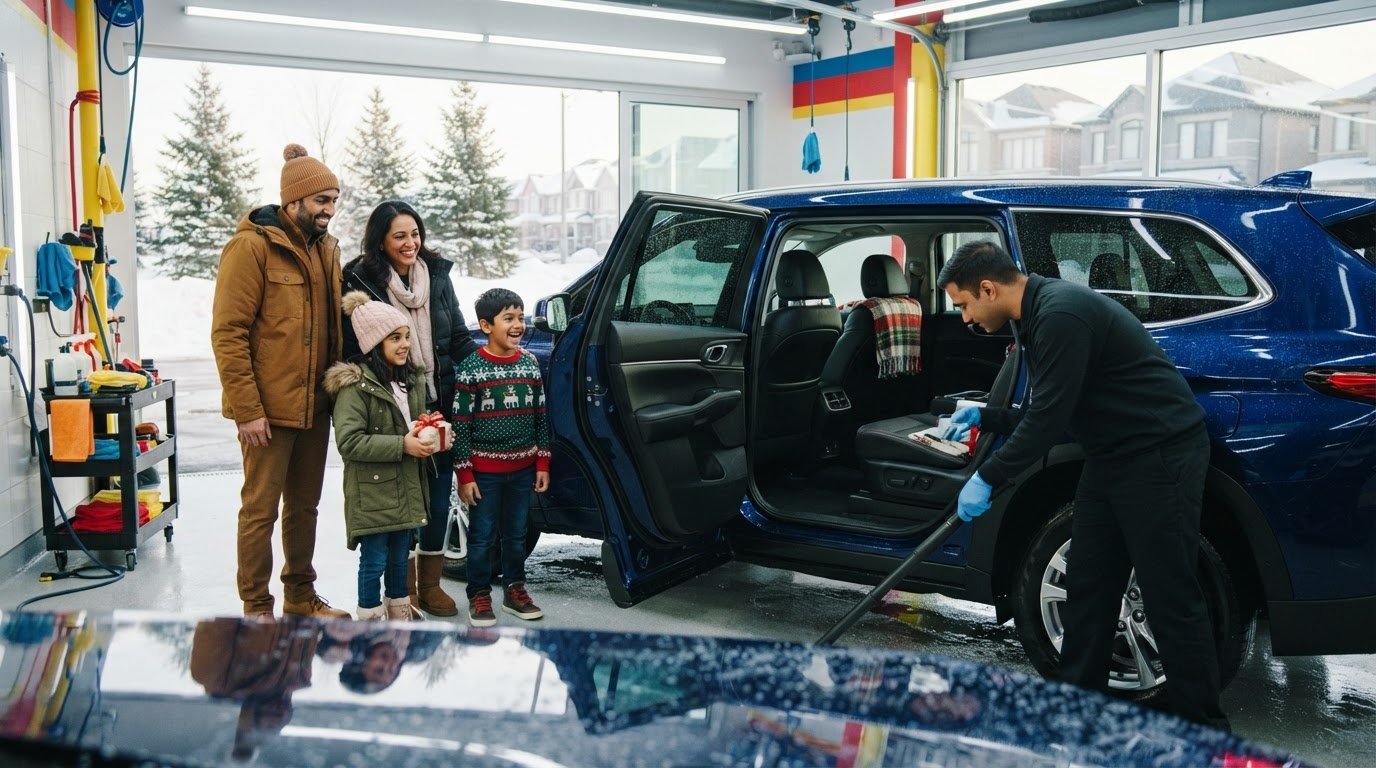
Nanak Car Wash offers detailing packages for intensive interior and exterior cleaning, including vacuuming, seat and carpet shampooing, polishing, and waxing. The work takes several hours, so consider whether the tasks you value justify setting aside that time. If you both agree a thorough clean fits your priorities, Nanak Car Wash detailing is a practical next step.
Address the real objections: time, value, and whether it is necessary
Hesitation doesn’t have to mean your spouse is rejecting the idea or your concerns. It may point to a practical issue: the car seems clean enough, the timing feels inconvenient, or the benefit isn’t clear. Treat the response as useful information. The aim isn’t to win an argument; it’s to work out whether a deeper clean would address something you both care about.
Ask a specific, open question: “Is there anything in the car you’d like cleaned more thoroughly?” The answer can help you decide what, if anything, makes sense. If neither of you wants more than a routine wash, that may be enough for now. There’s no need to describe the car as unacceptable to make the case for detailing.
What if my spouse thinks detailing is unnecessary?
Find out what “unnecessary” means to them. They may be comfortable with the car’s current condition, or they may not see a need for tasks such as shampooing seats and carpets. Listen before responding. If they don’t want a deeper clean, a basic wash may suit your shared needs better right now.
You can explain your preference without turning it into a judgment: “I’d enjoy a more thorough clean, but I want to know what matters to you too.” That keeps the decision centred on comfort and priorities, rather than on one person’s standards.
What if they are concerned about time or spending?
Be upfront about the time commitment. A detail takes several hours, so consider your actual schedules rather than treating the appointment as a quick errand. Discuss which tasks you’d value and whether that level of cleaning is worth setting aside the time. If the answer is no, pause the idea or choose a simpler clean instead.
Talk about spending in the same practical way. Compare the cost with the specific tasks you both want, without assuming detailing is automatically the best value. Don’t rely on guilt, urgency, or unverified savings to secure agreement. The decision should feel reasonable to both of you.
Use this quick concern-and-response guide to keep the conversation balanced:
Concern: “The car doesn’t need a detail.”
Response: “Which areas, if any, would you want cleaned more thoroughly? If none, a basic wash may be enough.”
Concern: “We don’t have time right now.”
Response: “That makes sense. It takes several hours, so we can consider it when the timing works for both of us.”
Concern: “I’m not sure it’s worth the expense.”
Response: “Let’s name the cleaning tasks we’d value first, then decide together whether they justify the cost.”
If you’re thinking about how to convince your spouse to get the car detailed, a fair outcome may be to book later, choose a basic wash, or decide not to detail the car. A shared decision is more useful than agreement pushed through pressure.
Use a simple, low-pressure plan to reach a decision together
A shared decision is easier when you agree on the need before discussing a service. Keep the conversation short and focused. Both partners get a say, and either of you can suggest waiting.
- Ask: “Would you be open to deciding together what kind of cleaning the car needs?”
- Listen: Give each other space to explain what feels useful or unnecessary.
- Name the priorities: Each partner can identify one or two tasks they care about, such as cleaning the interior or washing the exterior.
- Compare options: Consider whether a routine wash would meet those needs or a more intensive detail makes sense.
- Decide together: Choose a next step, or agree to revisit the question later.
Talk about the cleaning tasks before naming a package or service. That keeps the discussion grounded in what you both want, rather than making it feel as though one person has already chosen the answer. If you want help deciding what to look for in a detailing service, this guide to car detailing services and choosing a professional offers useful context.
How can couples compare a wash with detailing?
A routine wash may be enough when the goal is ordinary surface cleaning. Detailing is a more intensive option when the interior or exterior needs more attention than a basic wash provides. The right choice depends on your shared priorities, not on a rule that every car needs a detail. For additional context about wash methods, explore this comparison of car wash cleaning methods.
Match the option to the need. If you both mainly want the exterior cleaned, a wash may meet the immediate goal. If you also want a more thorough interior clean, discuss whether detailing fits. This makes the trade-off clear without assuming the more intensive option is automatically better.
What is a fair next step if you do not agree yet?
You don’t need to settle every detail in one conversation. If one partner isn’t comfortable deciding, pause and revisit the topic later. In the meantime, agree on one practical cleaning priority, such as taking care of the areas you both use most. Keep the choice open, and don’t book or present a decision as final before you’ve agreed.
If you both decide that intensive interior and exterior cleaning suits your needs, Nanak Car Wash offers detailing packages. Explore car detailing at Nanak Car Wash as a possible next step once you’ve reached a decision together.
When you both agree, make car detailing an easy next step
Once you’ve reached a shared decision, keep the next step tied to the reason you agreed. If you both want the cabin cleaned more thoroughly, focus on interior cleaning. If you also want attention to the vehicle’s exterior, choose a service that covers both. This keeps the choice practical and avoids adding tasks neither of you asked for.
Nanak Car Wash offers car detailing packages for intensive interior and exterior cleaning. The tasks include vacuuming, shampooing seats and carpets, polishing, and waxing. Use your agreed priorities to decide whether this kind of service suits your needs. It takes several hours, so consider the time commitment together before moving forward.
How can you choose a detailing option that suits both of you?
Start with the list of tasks you both value. For example, if the shared priority is a cleaner-feeling cabin, discuss vacuuming and shampooing seats and carpets. If the exterior matters too, include polishing and waxing in the conversation. Keep expectations realistic: these are cleaning and appearance-care tasks, not a promise that every surface will look new. For more interior-focused context, see this interior car detailing guide.
Before choosing, make sure the service matches the priorities you named. You don’t need to select every possible cleaning task. A clear agreement about what matters most can make the decision simpler and more comfortable for both partners.
What should the final conversation sound like?
Keep it direct and give each other room to say yes, no, or not yet. You might say, “We both want the seats and carpets cleaned. Are we comfortable setting aside the time for a detail?” If your spouse has a concern, address it before making a decision. Don’t book on their behalf or treat a tentative answer as agreement.
If you’re still thinking about how to convince your spouse to get the car detailed, remember that a good outcome is a decision you both accept, even if that means waiting. If you’re both comfortable proceeding, look at Nanak Car Wash’s detailing service and consider whether its interior and exterior cleaning fits your agreed needs.
Explore Nanak Car Wash detailing together. Review the service with your shared priorities in mind, then decide whether to move forward.
Make your next step a shared one
A good conversation doesn’t need to end with an immediate booking. It can end with a shared plan: decide what matters most, agree on what feels reasonable, and choose when to revisit the decision. That keeps the choice in both your hands.
If you’re still considering how to convince your spouse to get the car detailed, focus less on changing their mind and more on finding common ground. A calm “Would you like to look at the options together?” gives your partner space to take part without pressure. If you’re not both ready, waiting is a valid next step.
Once you agree that detailing makes sense, review what Nanak Car Wash offers and decide together whether it fits your priorities. Explore car detailing at Nanak Car Wash as a next step.
Keep it practical, respectful, and mutual. That way, whatever you decide, you can move forward as a team.
Frequently Asked Questions
How do I ask my spouse to get the car detailed without offending them?
Ask about a shared preference, not your spouse’s habits. For example: “Would a deeper clean make the car more comfortable for both of us?” If you’re thinking about how to convince your spouse to get the car detailed, invite their view instead of building a case against them. Choose a private, relaxed moment, then let them answer without pressing for an immediate yes.
Is professional car detailing worth it for a family car?
It can be worthwhile if the cleaning tasks match what your family wants from the vehicle. Think about how the car is used: children may mean more crumbs on the seats, while regular shared trips may make a tidy cabin more valuable to both partners. Consider what you’d like cleaned and how often you use the vehicle, then decide whether that added attention matters enough to you.
What should I say if my spouse thinks car detailing is a waste of money?
Ask what would make the service feel worthwhile, then compare that with the tasks you actually want done. You could say, “Let’s list what we’d want cleaned before deciding.” Avoid trying to prove the expense is necessary or bringing up savings you can’t verify. If the tasks don’t feel valuable to both of you, it’s reasonable to wait or choose a simpler cleaning option.
Can I convince my spouse to get the car detailed if they do not want to?
You can explain why you’d like a detail, but you can’t make a shared decision on your spouse’s behalf. Ask what concerns them and respond honestly. If they still don’t want to proceed, respect their answer. You might agree to handle one cleaning task yourselves or return to the conversation later, but don’t turn the choice into a test of care or responsibility.
How long does professional car detailing take?
Plan for several hours. The time commitment matters if you share the vehicle or rely on it for errands, work, or family plans. Talk about when the car could be set aside and whether that timing works for both of you before making a decision. Avoid assuming it will fit into a quick stop, since detailing involves more intensive cleaning than a routine wash.
What is the difference between a car wash and car detailing?
A car wash is generally suited to routine cleaning, while detailing involves more intensive attention to the vehicle’s interior and exterior. For example, detailing may include vacuuming and shampooing seats and carpets, along with exterior polishing and waxing. Consider the job you want done: if a routine clean meets your needs, a wash may be enough; if you want more thorough cleaning, discuss detailing.
Should I book a car detail as a surprise for my spouse?
It’s usually better to ask before booking if you share the vehicle, budget, or schedule. A surprise can create stress if your spouse doesn’t want the service, needs the car, or would rather decide how money is spent. Make the invitation part of the surprise instead: suggest looking at detailing together, then let both of you choose whether and when to proceed.

 6600 Finch Ave W, Etobicoke, ON M9V 3Z6

 647-703-8515
 MON – SUN 8 AM to 7 PM