
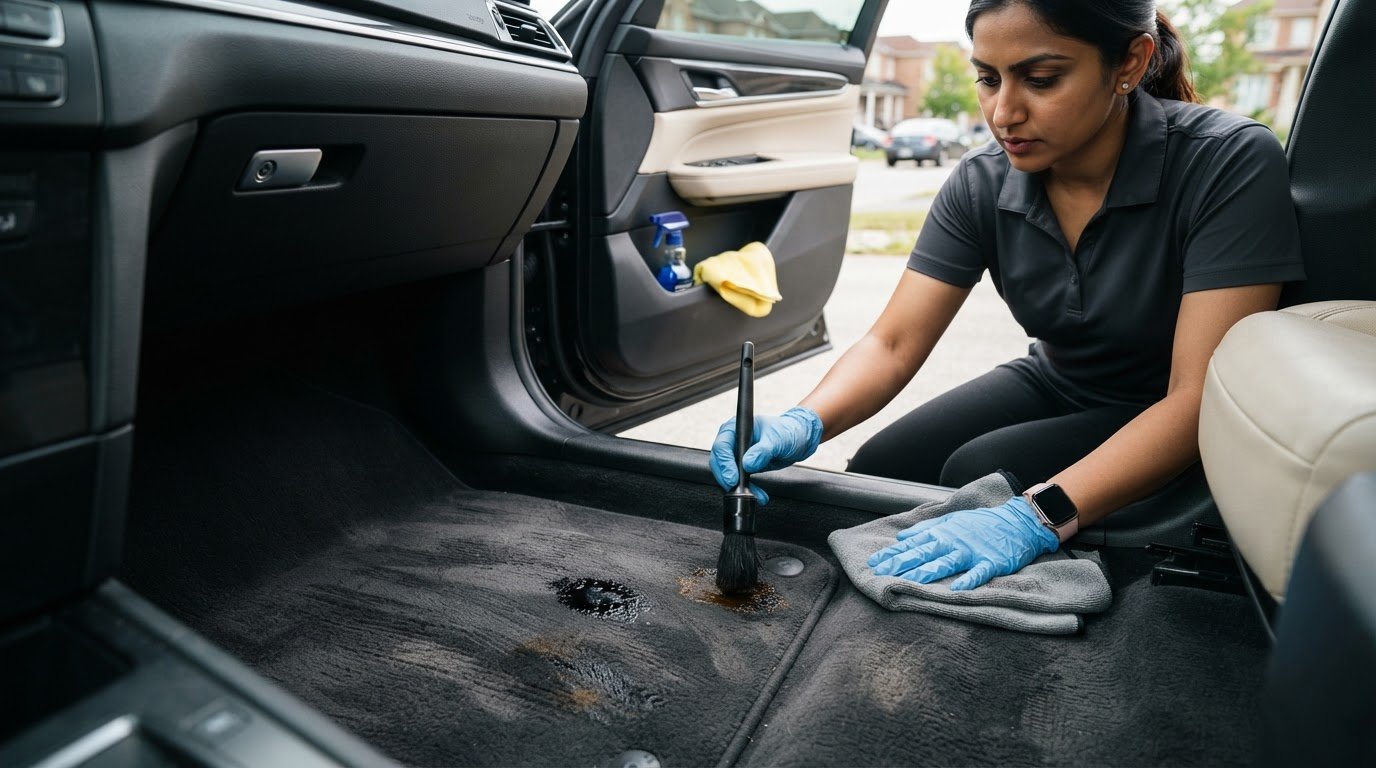
You spot a dark, sticky mark on the car carpet, but is it grease or road tar? The difference matters. The wrong cleaner or vigorous scrubbing can spread residue, push it deeper into the fibres, or discolour the carpet. Knowing how to get grease and tar out of car carpets starts with identifying the stain and choosing a cautious first step.
These marks can be stubborn, especially when embedded in the pile. Rather than reaching for a strong solvent, start with a small compatibility test and a cleaner labelled for the carpet or upholstery you’re treating.
This guide explains how to distinguish grease from tar, choose a suitable cleaning method, and lift residue without making a bigger mess. It also covers when to stop DIY cleaning and consider professional carpet shampooing. Nanak Car Wash’s Car Detailing Packages include carpet shampoo and stain removal, a practical option for persistent or extensive stains.
Key Takeaways
- Use visual and tactile clues to distinguish oily grease from sticky road tar before choosing a cleaner.
- Use separate, gentle methods for each residue, and follow the cleaner’s label.
- Compare cleaner options and test an inconspicuous spot to help avoid spreading the stain or affecting carpet colour.
- Work in a controlled sequence: lift loose debris, blot, and let the area dry without aggressive scrubbing.
- Stop DIY attempts if a stain spreads, remains persistent, or affects the carpet, and consider professional carpet shampooing.
Grease or Tar on Car Carpet? Identify the Stain Before Cleaning
Inspect the mark before you scrub. A useful starting distinction is that grease is oily residue, while tar is sticky, asphalt-based residue. The stain’s feel, colour, location, and condition can offer clues, but no single sign confirms what caused it.
Use good light and look closely without pressing into the fibres. If the mark is dry, don’t rub it to see whether it moves. Rubbing can work residue further into the carpet and spread it. If you need to check its texture, lightly touch the edge with a clean, disposable material. Don’t drag it across the stain.
What does grease on car carpet usually look and feel like?
Grease may leave a slick or oily-looking patch, sometimes darker or translucent. It can come from spilled food, lubricant tracked in on footwear, or workshop residue. Appearance varies, so don’t assume every dark mark is grease. Avoid rubbing while you assess it, since friction may spread the oily film beyond its original edges.
How can you tell whether a stain is road tar?
Road tar may look dark and feel tacky, especially if it was tracked into the vehicle after contact with asphalt. Check whether material is loose on the surface or pressed between carpet fibres. Look for small marks nearby, but don’t pull at the carpet or scrape its pile. Picking at embedded residue can disturb the fibres without lifting the stain.
Stain age and location matter, too. Fresh residue may be closer to the surface, while an older mark may have settled into the pile. A spot in a high-traffic area may be pressed down by shoes, and rubbing or earlier cleaning may have spread it. These details can guide your next step, but they don’t identify the substance on their own.
Think about how the mark may have arrived. A spot near the driver’s footwell could have been tracked in, while residue near a seat may have come from something spilled or carried in the vehicle. Treat these as clues, not proof. Different carpet-cleaning approaches use different agents and techniques, as this overview of carpet cleaning methods explains. Start with the residue, not the strongest cleaner on hand.
If you’re still unsure, pause before applying a product. Note the stain’s colour, texture, location, and spread. This quick check gives you a more deliberate starting point for learning how to get grease and tar out of car carpets without adding unnecessary friction or cleaner.
Why Grease and Tar Need Different Carpet-Cleaning Approaches
Grease and tar can both leave stubborn marks, but they behave differently in carpet. Oily grease can coat fibres and hold dirt, while tacky tar can smear if dragged across the pile. A cleaner that helps loosen one residue may do little for the other, or affect the carpet or nearby trim. Match the approach to the stain and keep treatment controlled.
How grease residue behaves in automotive carpet
Grease can cling to individual fibres and make a spot look darker as it collects dirt. Blotting lifts residue without grinding it deeper; aggressive rubbing can spread the oily film and rough up the pile. Use a cleaner labelled for automotive carpet or upholstery, and follow its directions. For additional context, Removing grease and oil from car interiors outlines practical cleaning considerations for vehicle surfaces.
Don’t assume a household degreaser or a product that worked on another surface is suitable for your car’s carpet. Interior materials vary, and a cleaner can leave a mark or change the colour. Avoid combining products. Different formulas may react unpredictably, and excess cleaner can leave residue that attracts more dirt.
Why tar calls for a cautious, targeted method
Sticky tar may transfer to other parts of the carpet if rubbed. Choose a tar treatment labelled as compatible with carpet or automotive upholstery, and follow its directions for application and removal. Protect nearby trim from splashes. Don’t use an untested solvent, even if it works on another surface, because it could affect carpet dyes, backing, or adjacent materials.
Test any carpet cleaner on a hidden area before treating a visible stain. Apply it as the label directs, then inspect the test spot for colour change, texture change, or residue. Read the full label, including directions about materials, application, and ventilation. Work with adequate airflow and avoid soaking the carpet. Excess moisture can be difficult to remove from the padding beneath the fibres, so use only the directed amount and let the area dry fully.
If the mark remains tacky, spreads, or the carpet colour transfers during testing, stop rather than adding more product or friction. For persistent stains, Nanak Car Wash’s Car Detailing Packages include carpet shampoo and stain removal, a practical next step when careful DIY treatment isn’t enough.
DIY Cleaners Compared: What to Try and What to Avoid
Choose a method based on the residue and the product label, not a generic internet recipe. A carpet-labelled upholstery cleaner may suit some grease marks, while tar calls for a targeted product labelled as safe for carpet or automotive upholstery. Blotting is a cautious first move, but it may not remove residue on its own.
- Carpet or upholstery cleaner: A possible option for grease when the product is intended for compatible fabric surfaces. Follow the label, use the directed amount, and test an inconspicuous spot first.
- Carpet-compatible tar remover: Designed for sticky tar residue. Use only as directed, keep it on the stain, and test a hidden area first.
- Careful blotting: Useful for lifting loose residue or absorbing what transfers to a clean cloth. Don’t rub or drag the cloth across the mark. Dry blotting alone doesn’t require a product test, but test before adding cleaner.
Use this comparison as a starting point, not a replacement for the container’s directions. Product labels explain where a formula can be used and how to apply it. Don’t assume a product is suitable for carpet because it works on hard surfaces, or because a homemade mixture is recommended online. If the label doesn’t identify automotive carpet or upholstery as a suitable surface, choose another approach.
Choosing a carpet-safe cleaner for grease
Look for a product labelled for automotive carpet or upholstery. Apply only the directed amount, then blot with a clean cloth rather than flooding the fibres. Check the cloth as you work and use a clean section to avoid transferring residue back onto the carpet. If the mark remains after careful treatment, don’t keep adding cleaner. Repeated applications can leave extra moisture or product behind.
Using a tar remover without harming carpet
Follow the tar remover’s label and test an inconspicuous patch first. Keep treatment localized and protect nearby trim from contact. Avoid untested solvents near carpet fibres, backing, or surrounding surfaces. Stop if the test area shows colour transfer, a texture change, or spreading. Don’t press or scrub the product through the pile to try to speed up the process.
Some shortcuts create more risk than progress. Avoid bleach, mixing cleaning chemicals, hard scrubbing, and soaking the carpet. Never combine products to make a stronger formula. Use one compatible cleaner at a time, follow its instructions, and let the treated area dry as directed before deciding whether further action is needed. If the stain persists, professional carpet shampooing and stain removal may be more sensible than repeating treatments.
Make the process of how to get grease and tar out of car carpets more controlled: match the product to the residue, test first, and stop if the carpet reacts badly.
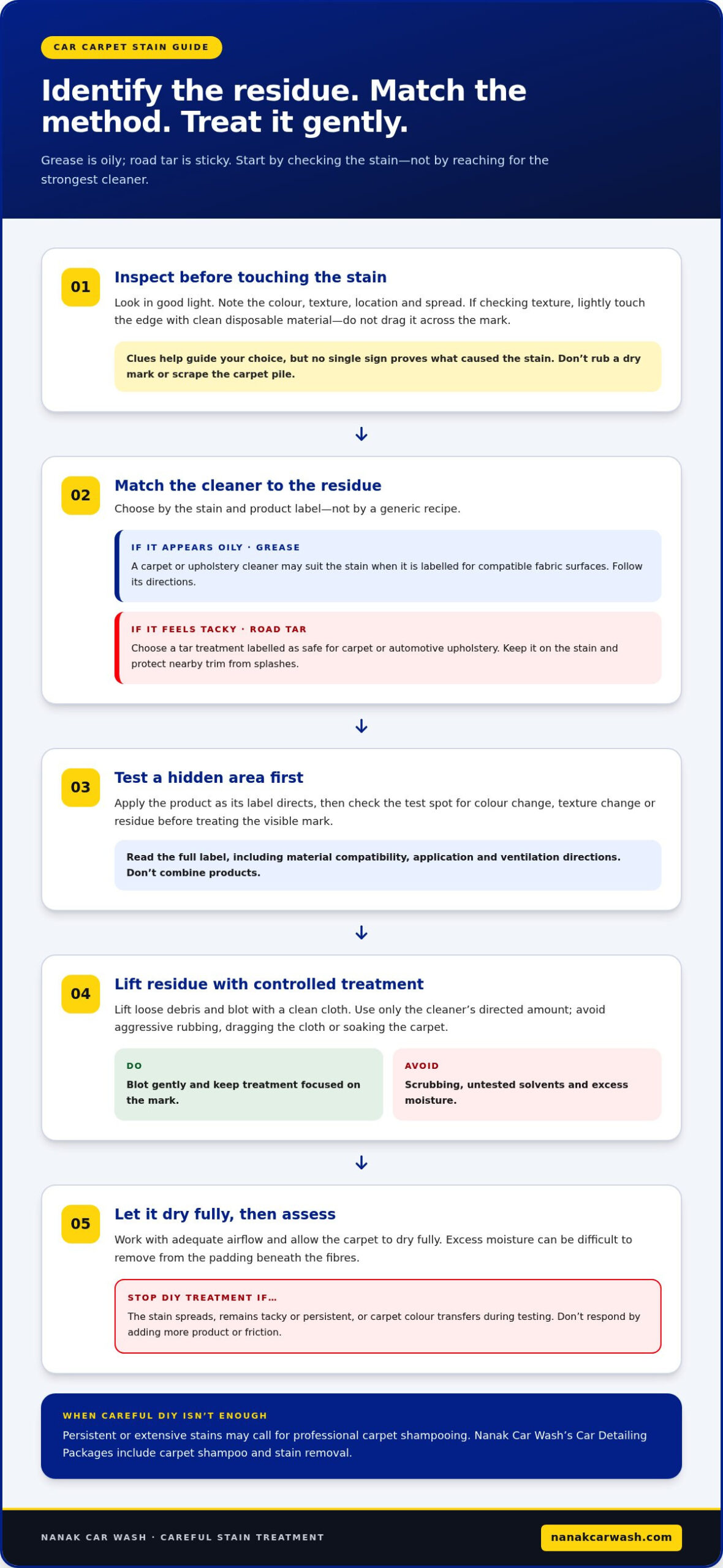
How to Remove Grease or Tar from Car Carpet: Step-by-Step
Work slowly and keep the stain contained. Use clean white cloths so you can see what lifts from the carpet, and switch to a fresh section often. Work from the stain’s outer edge inward to help limit spreading. Don’t use the same cleaner for grease and tar. Follow only the steps that match the residue, and stop if the carpet changes colour or texture.
- Remove loose debris. Gently lift visible crumbs or particles with your fingers or a suitable tool. Avoid pressing debris into the pile or dragging it across clean carpet.
- Blot the spot. Press a clean, absorbent white cloth onto the residue, then lift it straight up. Don’t scrub back and forth. Move to a clean cloth section as soon as residue transfers.
- Test the cleaner. Try it on a hidden area and follow the product label. Continue only if the test spot shows no colour or texture change.
Steps for treating a grease stain
For an oily mark, use a cleaner labelled as suitable for automotive carpet or upholstery. Keep the application controlled and blot rather than rubbing the fibres. Follow the product directions, including instructions for removal and drying.
- Blot visible oil with a clean white cloth, changing cloth sections frequently to avoid putting residue back on the carpet.
- Apply a small amount of tested carpet-safe cleaner as directed. Don’t flood the fibres.
- Blot the treated area with a fresh cloth. Repeat only as the label permits, and stop if the carpet reacts or the stain spreads.
Steps for treating tar residue
Tar can smear if dragged, so keep each movement gentle and localized. Choose only a treatment labelled as compatible with carpet or automotive upholstery. Protect nearby trim, and don’t use an untested solvent on the fibres or backing.
- Carefully lift loose particles without pulling at carpet fibres or moving debris across the surrounding area.
- Apply the tested tar treatment exactly as its label directs. Don’t use more than instructed.
- As residue loosens, lift it with a clean white cloth. Turn to a fresh section after each blot, and stop if colour transfers, texture changes, or the mark spreads.
For either stain, follow the cleaner’s directions for removing any remaining product and drying the carpet. Avoid soaking it. Let the area dry fully before judging the result, since a damp patch can make it hard to see what remains. Don’t keep adding cleaner if the stain persists. Repeated treatment can leave extra moisture or residue.
If careful DIY treatment isn’t enough, book a car detailing package with carpet shampoo and stain removal at Nanak Car Wash.
When to Stop DIY Cleaning and Choose Professional Carpet Detailing
DIY treatment has limits. Stop before another attempt if the stain is large, keeps spreading, remains tacky after careful treatment, or transfers carpet colour to your cloth. More cleaner or scrubbing could affect the carpet without resolving the residue. If you’re unsure whether the mark is grease or tar, pause rather than testing several products on the same spot.
Signs that another home-cleaning attempt is not worthwhile
A test spot that changes the carpet’s colour or texture is a clear reason to stop using that product. The same applies if a mark continues to transfer, spread, or feel sticky after you’ve followed the cleaner’s directions. Extensive contamination can be difficult to treat evenly at home, and repeated applications may leave more moisture or product in the fibres without guaranteeing removal.
- Large or widespread stain: More carpet is involved, making it harder to keep treatment controlled.
- Persistent tackiness: Residue remains after a careful, label-directed attempt.
- Colour or texture change: The carpet looks or feels different after testing or treatment.
- Spreading mark: The stain grows or transfers to surrounding fibres.
Don’t treat these warning signs as a reason to try a stronger solvent. More products can complicate the stain and increase the chance of leaving residue or affecting nearby material. If the carpet is still damp from earlier attempts, let it dry as directed before assessing what remains. For broader cabin-care tips, Nanak Car Wash’s interior car detailing guide covers additional interior-cleaning considerations.
What professional carpet detailing can address
For a stubborn or extensive mark, professional carpet shampooing and stain removal is a practical next step. Nanak Car Wash’s Car Detailing Packages include carpet shampoo and stain removal. The Deal From $99 includes carpet shampoo and stain removal and takes 1-2 hr. The Deal From $120 includes interior and trunk shampoo and takes 3-4 hr, making it an option for drivers who want to address more of the cabin as well as the carpet.
Professional cleaning can be a sensible alternative to repeated DIY treatments when the carpet isn’t responding. If you’re still deciding how to get grease and tar out of car carpets, stop if a product causes a change or careful treatment fails to shift the residue. The car detailing guide provides a broader overview of detailing, while Nanak Car Wash’s carpet shampoo and stain-removal service addresses persistent carpet marks.
For professional carpet shampoo and stain removal, explore Nanak Car Wash.
Keep Your Car Carpet Looking Its Best
Keep your carpet-care plan simple after treatment. Let the area dry fully, then check it in natural light before deciding whether more action is needed. If the stain is gone, avoid unnecessary products and keep an eye on the spot during regular interior care. If a mark remains or cleaning has affected a wider area, choose a next step that addresses the carpet without more guesswork.
Knowing how to get grease and tar out of car carpets also means knowing when to hand the job over. Nanak Car Wash offers Car Detailing Packages that include carpet shampoo and stain removal. The Deal From $99 includes carpet shampoo and stain removal, while the Deal From $120 includes interior and trunk shampoo for drivers looking to care for more of the cabin.
For future trips, shake out floor mats and check footwear after walking through roadwork or greasy areas. These small habits can help keep fresh residue from reaching the carpet. For a persistent mark, book a Nanak Car Wash detailing package with carpet shampoo and stain removal.
Frequently Asked Questions
Can I use dish soap to remove grease from car carpet?
Dish soap may seem convenient, but it isn’t automatically suitable for automotive carpet. If you’re considering it, test a hidden area first and use only a small amount. Blot instead of scrubbing, and don’t soak the carpet. Check the test spot before treating the visible stain. Stop if colour transfers, the texture changes, or the mark spreads. For example, test under a seat rather than beside a visible seam.
Is rubbing alcohol safe for removing tar from car carpet?
Don’t assume rubbing alcohol is safe for automotive carpet. Its effect can depend on the carpet’s fibres, dyes, backing, and nearby trim. Choose a cleaner labelled for the surface you’re treating, test it in an inconspicuous spot, and follow the product directions. If the test changes the carpet or the tar remains after careful treatment, stop. Nanak Car Wash’s detailing service includes carpet shampoo and stain removal, a practical alternative to trying another solvent.
Can a steam cleaner remove grease or tar from car carpet?
Steam isn’t a universal fix for oily or sticky stains. Heat and moisture may spread residue or make the carpet harder to dry, depending on the stain and materials. Follow the carpet-care guidance and the equipment instructions, and don’t steam an untested area. For example, avoid using a steam cleaner just because it’s available for household carpets. Use a suitable labelled treatment or consider professional cleaning for deep-set grease or tar.
Will grease or tar permanently stain car carpet?
Not every grease or tar mark becomes permanent, but the result depends on the carpet, residue, and how long it remains. Rubbing, unsuitable cleaners, and repeated soaking can make the stain harder to address. Test a suitable product on a hidden patch before treating the mark. If it remains or the carpet changes, stop experimenting. Professional carpet shampooing and stain removal is an option when careful cleaning doesn’t shift the residue.
Should I remove car mats before cleaning a carpet stain?
Yes, remove a loose floor mat if it lifts out easily and the stain is on the carpet beneath it. This separates your work area and helps prevent cleaner from reaching the mat. Don’t pull up fixed carpet or disturb vehicle components. Clean removable mats according to their care guidance, and let both the mat and carpet dry fully before putting the mat back in place.
How do I keep a grease or tar stain from spreading while cleaning?
Keep movements gentle and controlled. Lift loose material without dragging it, then blot with a clean cloth and switch to a fresh area as residue transfers. Apply any tested cleaner sparingly and stay close to the mark. This careful approach is central to how to get grease and tar out of car carpets without enlarging the affected area. Stop if the stain grows, colour transfers, or the fibres change.

 6600 Finch Ave W, Etobicoke, ON M9V 3Z6

 647-703-8515
 MON – SUN 8 AM to 7 PM