
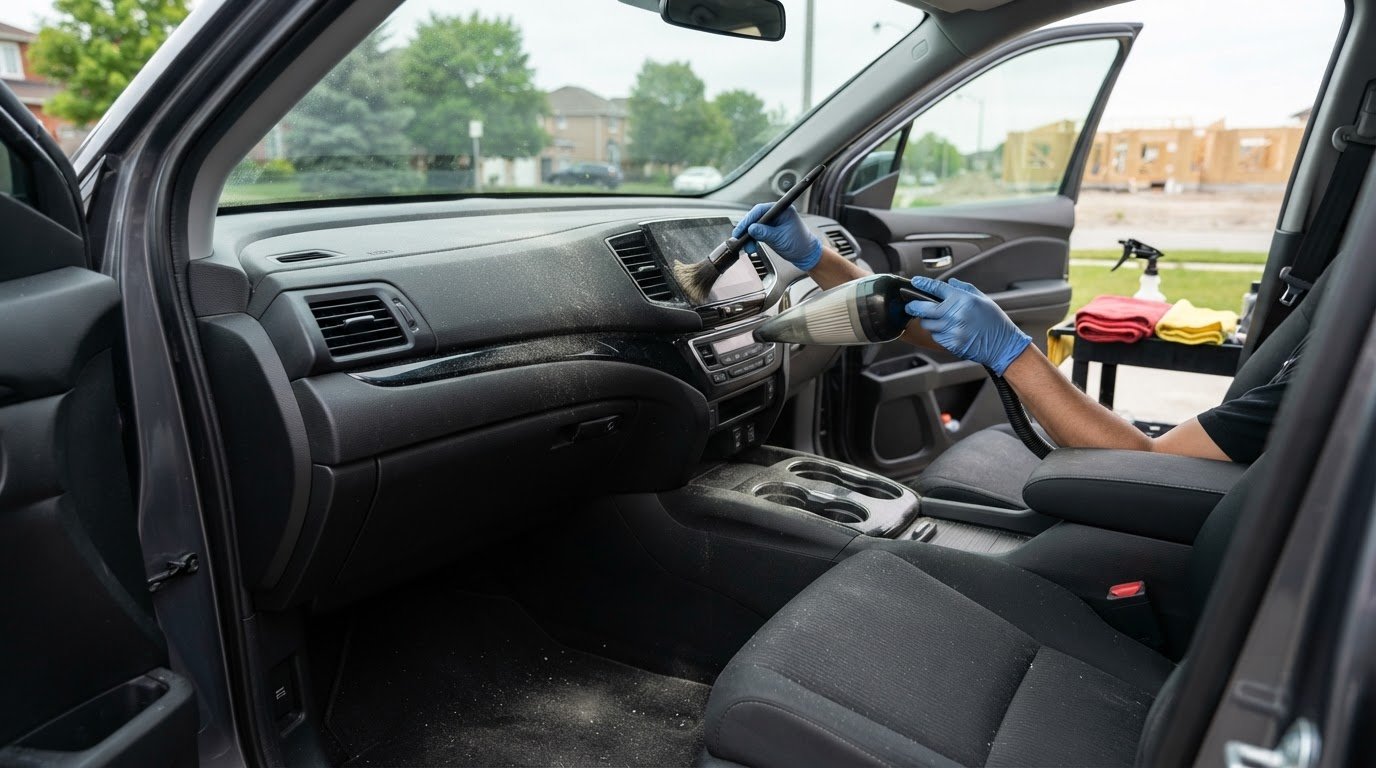
The first wipe can make a dusty car harder to clean. Fine construction particles may include respirable silica, and dry dusting, compressed air or an unsuitable vacuum can send dust back into the air. Effective construction site dust removal from car interior starts with limiting that spread, not chasing every visible trace at once.
If dust keeps returning after you wipe, fine particles may be sitting in vents, seams, carpets or upholstery, where a quick surface clean won’t reach them. The order matters: clean carelessly and you may move dust from one part of the cabin to another.
This guide explains how to contain loose dust, clean the interior in a sensible sequence and avoid methods that can stir particles up. You’ll also learn when careful DIY cleaning may be enough and when professional detailing is a better fit. Nanak Car Wash’s Car Detailing Packages include interior cleaning, with one package also including interior and trunk shampoo. Start with a practical plan, then choose the next step based on how much dust has settled in your car.
Key Takeaways
- For construction site dust removal from car interior, limit dust spread before wiping every surface.
- Clean from top to bottom, and refresh cleaning materials as they collect dust.
- Assess how much of the cabin is affected and whether dust returns to decide if routine DIY cleaning is enough.
- Keep dusty tools and materials contained and separate from passenger areas where practical.
- Nanak Car Wash’s Car Detailing Packages include vacuuming and interior cleaning. One package also includes interior and trunk shampoo.
Construction Site Dust in Your Car Interior: Why It Keeps Coming Back
You finish a workday, open the car door and spot a fine coating on the dashboard. Dust may also be on the seats, carpets or personal items. You wipe one area clean, but another layer seems to show up later. Particles can travel in on everyday work gear and settle in places a quick wipe doesn’t reach.
Construction dust in a vehicle interior is a mix of fine and larger particles generated by building, renovation or demolition work that enter and settle inside the cabin. Its composition and amount depend on the tasks and materials at the worksite. Dust may include particles from soil, wood, drywall or concrete, among other sources.
Not every visible deposit is silica, and you can’t identify a particle’s composition by looking at it. Construction dust can look similar even when it comes from different materials. Treat the deposit as unknown rather than guessing from its colour or texture. A sensible construction site dust removal from car interior plan starts by understanding how particles enter and where they settle.
Dust can seem to return after cleaning because a cloth may shift particles instead of picking them up. Dust left in seams or on floor mats can also become visible again as the cabin is used. That’s why a clean-looking dashboard doesn’t necessarily mean the whole interior is clear.
How worksite dust gets into a vehicle
Particles can hitch a ride on clothing, footwear, tools and materials carried between the worksite and the car. They may fall from a jacket or boots as you sit down, or transfer from equipment placed in the passenger area. Open doors or windows can let dust enter, but everyday movement in and out of the vehicle matters, too.
Consider what travels with you at the end of a shift: a dusty tool bag on the seat, work gloves in a door pocket or a jacket shaken out inside the cabin. General dust control methods focus on limiting how particles spread. In a vehicle, containing work gear and keeping it separate from passenger areas can help reduce what gets carried inside.
Where loose and settled dust tends to collect
Check dashboards, door panels, seats, carpets and floor mats first. Dust may settle on top of these surfaces or work into fabric and textured finishes. Look over personal items left in the cabin, too. Fine deposits along a seat edge or around a floor mat are easy to miss at a glance.
Then look at seams, stitching, narrow gaps and air vents. These spots can hold particles beyond the reach of a quick wipe, making dust seem to return. For a wider overview of cabin care and cleaning areas, explore this complete interior car detailing guide.
How to Clean Construction Dust Without Spreading It Around
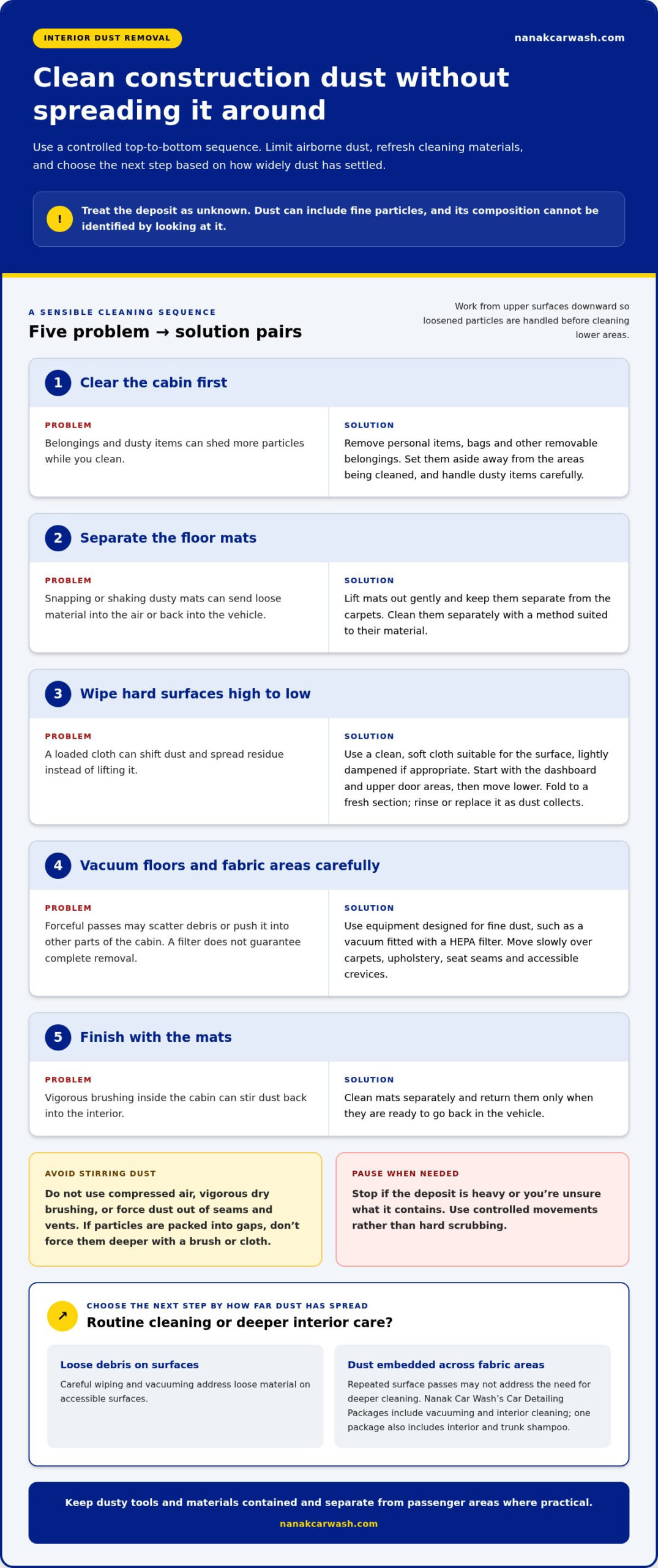
Use a controlled sequence instead of cleaning whichever spot looks dirtiest first. Work gently, keep dust from becoming airborne, and stop if the deposit is heavy or you’re unsure what it contains. Construction dust can include fine particles, and the U.S. Environmental Protection Agency discusses dust control and the health impacts of construction dust. Don’t use compressed air or vigorous dry brushing to clear the cabin.
Clean from upper surfaces downward. That way, particles loosened above are dealt with before you clean lower areas where they may settle.
- Remove loose belongings. Take out personal items, bags and other removable belongings. Set them aside away from the areas you’re cleaning, and handle dusty items carefully so they don’t shed more particles into the cabin.
- Lift out the floor mats. Remove them gently and keep them separate from the carpets. Avoid snapping or shaking dusty mats, which can send loose material into the air or back into the vehicle.
- Wipe hard surfaces from high to low. Use a clean, soft cloth suitable for the surface, lightly dampened if appropriate. Start with the dashboard and upper door areas, then move lower. Rinse or replace the cloth as it collects dust. A loaded cloth can spread residue instead of lifting it.
- Vacuum the floors and fabric areas. Use equipment designed for fine dust, such as a vacuum fitted with a HEPA filter, and move slowly over carpets, upholstery, seat seams and accessible crevices. A filter can help capture fine particles, but it doesn’t guarantee complete removal. Avoid forceful passes that scatter debris or push it into other parts of the cabin.
- Finish with the mats. Clean them separately using a method suited to their material, then return them when they’re ready to go back in the vehicle. Don’t brush them vigorously inside the cabin.
Use a light touch on visible surfaces
A clean cloth and controlled movements are more useful than hard scrubbing. Fold the cloth to expose a fresh section as dust transfers to it, and don’t reuse a heavily soiled side on the steering wheel, console or door panels. Avoid blowing dust out of seams or vents. If particles are packed into gaps, don’t force them deeper with a brush or cloth.
Know when routine vacuuming isn’t enough
Vacuuming loose debris from a surface differs from shampooing carpet or upholstery. If dust is embedded across several fabric areas, repeated surface passes may not address the need for deeper cleaning. Nanak Car Wash’s Car Detailing Packages include vacuuming and interior cleaning. One package also includes interior and trunk shampoo. Explore Nanak Car Wash detailing packages to compare the listed inclusions.
DIY Cleaning or Professional Detailing: Which Fits the Dust?
Choose your next step based on how far the dust has spread and what happens after cleaning, not just how dirty one surface looks. A small, recent deposit on an easy-to-reach area may be manageable with careful routine cleaning. Dust across several materials, or dust that returns after a careful clean, points to a larger interior-cleaning task.
Use this comparison to assess the cabin:
| What you notice | DIY may be a reasonable starting point | Consider professional detailing |
|---|---|---|
| Visible dust | A light, recent deposit on an accessible hard surface or removable mat. | Dust is apparent across several areas, or has worked into fabric and crevices. |
| Surfaces affected | One limited area that you can clean carefully without disturbing the rest of the cabin. | Carpets, upholstery, panels and hard-to-reach areas are all involved. |
| After cleaning | The area looks cleaner, and dust doesn’t quickly reappear during normal use. | Dust remains or returns despite careful cleaning, suggesting more of the interior needs attention. |
When a careful DIY clean may be enough
If dust is limited to a small patch of a hard surface or a removable mat, start with a controlled test area. Use a suitable clean cloth and gentle movements. Check the cloth as you go, and stop if it becomes loaded with dust or particles begin to spread. If the approach works without disturbing nearby areas, continue cautiously. A visible improvement only tells you the surface looks cleaner. It doesn’t identify the dust or establish what it contains.
Keep the scope modest. A clear dashboard doesn’t mean dust elsewhere is gone, but a minor deposit doesn’t automatically require a full-cabin clean. If you know or suspect the dust could be hazardous, don’t rely on appearance to judge risk. Follow the relevant worksite guidance for handling it before deciding whether to clean the vehicle yourself.
Signs it may be time for interior detailing
Dust spread across carpets, upholstery, panels and narrow or hard-to-reach areas takes more than a quick spot clean. The same applies if dust persists or returns after careful cleaning. A broader interior clean may be more practical than repeatedly treating one visible patch while other affected surfaces remain.
Nanak Car Wash’s Car Detailing Packages include vacuuming and interior cleaning. The Deal From $99 includes carpet shampoo and stain removal, with a listed service time of 1-2 hr and one free exterior wash. The Deal From $120 includes interior and trunk shampoo, with a listed service time of 3-4 hr. Extra charges apply for SUVs, Vans and Pick-Up trucks, as well as pet-hair removal. Review the package details to compare the cleaning included. No cleaning method should be assumed to identify unknown dust or guarantee its complete removal. The car detailing guide explains professional detailing more broadly. Use the extent of the dust, its persistence and any worksite handling instructions to decide what fits your vehicle.
Prevent Construction Dust from Settling in Your Car Again
You can’t always control how much dust is present at a worksite, but a few habits can reduce what travels into your cabin. Think of prevention as limiting transfer, not guaranteeing a dust-free car. Small changes before you get in and after you park can help keep work gear and loose particles away from passenger areas.
Reduce dust carried in from the worksite
Keep dusty gear organised and separate from seats and carpets. Before changing clothes or handling dusty materials, follow the site’s instructions. If removing or managing an outer layer is allowed, do it carefully before settling into the vehicle, and avoid shaking it out beside an open door. Planning ahead can help keep particles from travelling with you.
- Contain tools and materials. Store them together in a suitable container or designated area rather than placing them loose on seats. Keep passenger spaces clear for people and personal belongings.
- Use removable floor protection. Place a suitable removable cover where work boots or gear are likely to rest. Take it out carefully and clean it away from the passenger area, following any site-specific handling guidance.
- Manage dusty clothing thoughtfully. If worksite rules allow, remove or contain dusty outer layers before getting in. Don’t shake clothing inside or beside the vehicle.
- Follow site instructions. Dusty clothing and materials may need specific handling. Use the worksite’s guidance, especially when the dust is unknown or may be hazardous.
Keep the routine practical. A work bag kept off the seats, for example, reduces direct contact between dusty equipment and upholstery. It won’t prevent every particle from entering, but it gives dust fewer easy places to settle.
Check the cabin after dusty jobs
A quick look after a dusty shift can help you spot new deposits before they spread. Check the mats, seats, door panels and dashboard, especially where work gear or clothing has rested. If you see fresh dust, clean it in a controlled way instead of brushing or blowing it around.
Use a repeatable check: remove gear carefully, look over the main contact areas, then address any visible deposit with an appropriate cleaning method. If dust keeps returning or is spread across several interior surfaces, consider a more thorough clean rather than relying on prevention alone. General car cleaning advice can help with everyday vehicle care.
Good habits can reduce how often you need construction site dust removal from car interior surfaces, but they can’t guarantee that no dust gets in. If dust has built up across the cabin, Explore Nanak Car Wash detailing as an option for a more thorough interior clean.
Get Construction Dust Cleaned from Your Interior with Nanak Car Wash
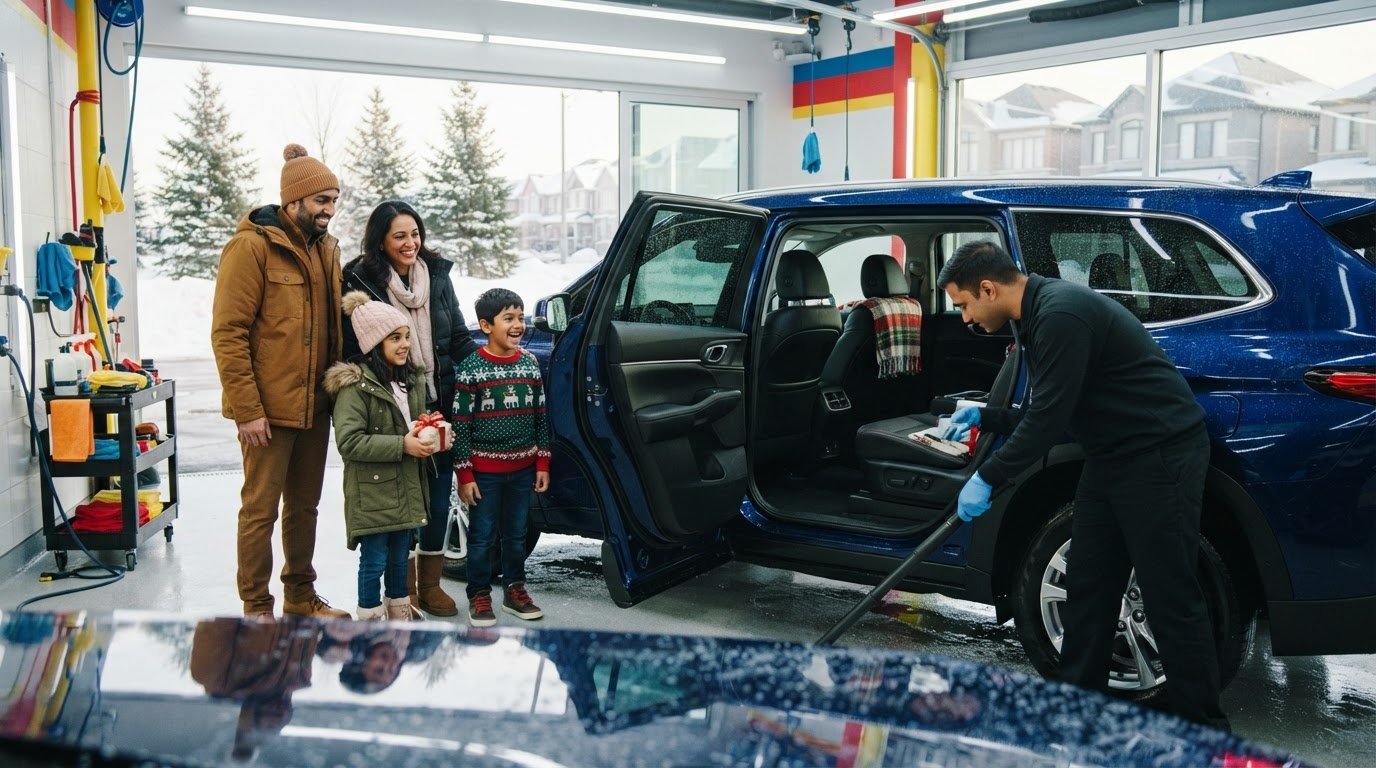
If dust has spread beyond one small spot, cleaning every affected area yourself can become a bigger job. Nanak Car Wash offers Car Detailing Packages for vehicle owners in Brampton. The packages include vacuuming and interior cleaning, making them an option when dust has settled across several interior surfaces and a routine clean hasn’t been enough.
What Nanak Car Wash detailing can address
Vacuuming can address loose debris on carpets, seats and other accessible areas. Nanak Car Wash Car Detailing Packages include vacuuming and interior cleaning, so you can compare them when several parts of the cabin need attention rather than focusing on a single visible patch.
The Deal From $99 includes vacuuming carpet, floor mats, seats and trunk, as well as carpet shampoo and stain removal. The Deal From $120 includes vacuuming seats and carpet, interior and trunk shampoo, thorough door and panel cleaning, and buff and polish by machine. Shampooing is included in these listed packages, not every detailing package. Review the package descriptions to see which inclusions match the areas you want cleaned.
Choose a convenient next step
Professional interior cleaning may be worth considering if dust is spread across carpets, upholstery and hard surfaces, or keeps appearing after careful routine cleaning. It can also be practical if you’d rather have the interior cleaned as a whole than continue treating separate areas yourself.
Think about the scope. A small, recent deposit on one accessible surface may call for careful routine cleaning. Dust across several materials is a broader task. If the dust is unknown or potentially hazardous, follow relevant worksite guidance before deciding how to handle it. Appearance alone can’t identify what the particles contain.
Construction site dust removal from car interior surfaces doesn’t have a one-size-fits-all answer. The amount of dust, where it has settled and whether it returns after cleaning can help you choose your next step. Nanak Car Wash’s listed package inclusions include vacuuming and interior cleaning, with interior and trunk shampoo included in the Deal From $99 and Deal From $120 packages. No package should be taken as a promise of complete construction dust or silica removal.
Review the Car Detailing Packages and choose one that fits the cleaning your cabin needs. Explore Nanak Car Wash services in Brampton.
Make Your Next Cleaning Step Count
A dusty cabin doesn’t need guesswork. Let the extent of the dust guide your next move: take a careful DIY approach for a small, manageable deposit, or choose professional detailing when the job is bigger than a quick routine clean. If worksite dust may be hazardous, follow relevant site guidance instead of judging it by appearance.
For construction site dust removal from car interior, build a practical routine for dusty workdays. Keep gear contained, check the cabin before deposits build up, and avoid cleaning methods that send dust back into the air. A simple, consistent approach can make a useful start.
If your interior needs more attention, review Nanak Car Wash’s Car Detailing Packages and choose an option that suits your vehicle. Explore Nanak Car Wash services and book your next cleaning step.
Frequently Asked Questions
How do you remove construction dust from a car interior?
For construction site dust removal from car interior, work in a calm, controlled way and avoid actions that scatter particles. Take loose belongings out of the cabin, then clean a small test area with a suitable clean cloth. If dust is widespread, embedded in fabric or returns after cleaning, consider a more thorough interior clean. If the dust may be hazardous, follow the relevant worksite instructions before handling it.
Can I vacuum construction dust from car seats and carpets?
You can vacuum loose dust from seats and carpets with equipment suitable for fine particles. Use a steady, gentle pace, especially around stitching and narrow gaps, and avoid pressing hard enough to force debris deeper into the fabric. A vacuum may help with surface debris, but it can’t identify the dust or establish what it contains. Follow worksite guidance if the material may be hazardous.
Should I wipe construction dust with a dry cloth?
A dry cloth can push fine dust across a surface or lift it into the air, so avoid vigorous dry wiping. Use a clean cloth suitable for the material, with light, controlled passes. Switch to a fresh section or cloth as dust transfers onto it. If the surface is delicate, test a small, inconspicuous spot first and stop if the finish changes or the dust spreads.
Can construction dust get into a car’s air vents?
Yes. Dust can settle around vent openings or enter the ventilation system, especially if particles are already circulating in the cabin. Don’t blow compressed air into vents or push a cloth or tool deep inside, since that can move debris further in. Gently clean accessible vent surfaces. If dust appears to be coming from inside the system, avoid guessing at the cause and follow suitable vehicle or worksite guidance.
When should I get professional detailing for construction dust?
Consider professional detailing if dust covers several kinds of surfaces, such as fabric seats, carpets, panels and hard-to-reach areas, or if it remains after careful cleaning. A single light deposit on an accessible hard surface may be manageable at home. If you don’t know what the dust contains or site instructions identify a hazard, follow those instructions rather than treating detailing as a substitute for safe handling.
Does car detailing include interior shampooing?
It depends on the package. Nanak Car Wash’s Deal From $99 and Deal From $120 include interior and trunk shampoo. Other Car Detailing Packages include interior cleaning, but shampooing is not a feature to assume across every package. Review the listed inclusions to find a fit for your vehicle. For dust on fabric, consider whether the affected area needs more than routine surface cleaning.
How can I stop bringing construction dust into my car?
Keep tools and materials contained instead of placing them loose on passenger seats, and use removable floor protection where practical. Before getting in, manage dusty clothing only as worksite rules allow. Keep personal items separate from gear, too. These habits can reduce transfer, but they can’t guarantee a dust-free cabin, especially when work conditions change or materials are handled throughout the day.
Is construction dust in a car always silica dust?
No. Construction dust can come from different work tasks and materials, so not every deposit contains silica. You can’t identify its composition by colour, texture or how easily it wipes away. If the source is unknown or the dust may be hazardous, don’t rely on appearance to judge it. Follow the relevant worksite guidance for identifying and handling the material.

 6600 Finch Ave W, Etobicoke, ON M9V 3Z6

 647-703-8515
 MON – SUN 8 AM to 7 PM