
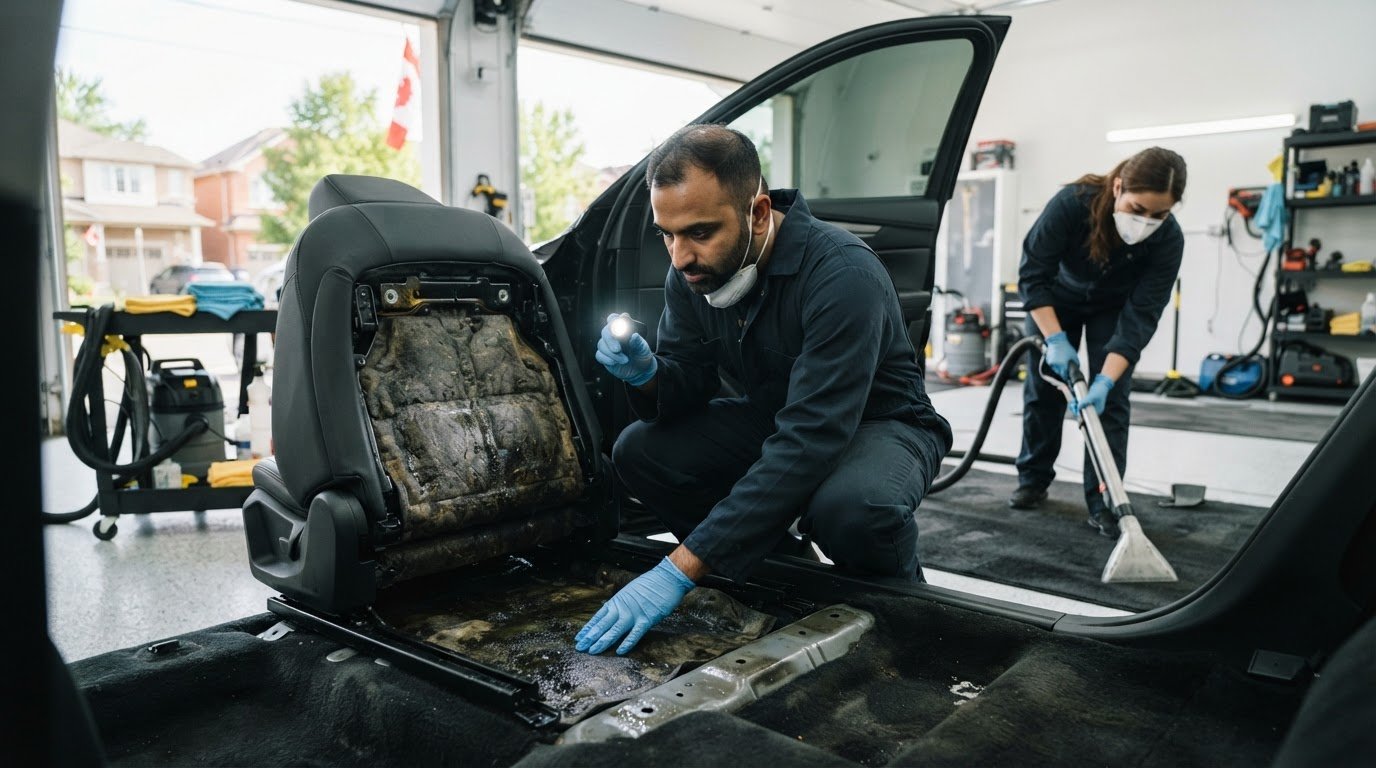
Cleaning visible mold before addressing the moisture can leave the underlying problem untouched. If your car has visible growth or a musty smell, it’s understandable to wonder whether a surface clean will help or damage the upholstery. Professional mold and mildew removal from car interior involves more than cleaning visible marks: the moisture source needs attention, and contamination may extend into carpet padding or other hard-to-reach areas.
This guide explains what professional treatment may involve, how it differs from regular interior detailing, and what to do before arranging an assessment. You’ll learn why identifying and addressing a leak matters, what to share about the affected areas, and when a lingering odour or returning growth may call for more than a cabin refresh.
Once the moisture problem has been addressed, interior detailing can help restore a clean-feeling cabin. Nanak Car Wash’s detailing packages include interior cleaning, with options such as interior and trunk shampoo or carpet shampoo and stain removal. Here’s how to choose a sensible next step without expecting detailing alone to eliminate mold.
Key Takeaways
- Recurring musty smells, visible patches, or damp materials are reasons to investigate, but one sign alone doesn’t confirm the cause.
- Professional mold and mildew removal from car interior should consider affected materials and the moisture source, not just visible marks.
- Learn when an isolated surface spot may be suitable for careful cleaning and when widespread, recurring, or deeply damp areas need more attention.
- Prepare for an assessment by documenting affected areas, removing personal belongings, and noting dampness or recurring leaks.
- After the moisture issue is addressed, Nanak Car Wash’s Deal From $120 includes interior and trunk shampoo as part of its detailing package.
Mold and mildew in a car interior: signs that call for attention
Mold is a growth of tiny organisms that can develop where moisture and suitable conditions are present. “Mildew” is often used for shallow or powdery-looking growth, but appearance alone can’t identify what’s growing. Visible growth is a sign on a surface; the underlying concern is dampness that may allow it to appear or return. Learn more in this general overview of What is mold?
Patches on fabric, carpet, or other interior surfaces may be worth investigating. So may a musty smell that keeps coming back or materials that feel damp when they should be dry. None of these signs, on its own, confirms mold or identifies its type. Look for patterns and areas of concern rather than trying to diagnose the car from one clue. That context can help guide professional mold and mildew removal from car interior.
What can mold or mildew look and smell like inside a car?
Look for unusual spots, patches, or a fuzzy or powdery film on upholstery, carpeting, trim, or other surfaces. Colour and texture can vary, so don’t rely on appearance to identify a specific species. A persistent earthy or musty odour may also draw attention to an area, but smells can have other causes. Note where the smell is strongest and whether it changes over time.
Before cleaning, make a simple record of the location, appearance, odour, and whether the area seems damp. If you’ve already cleaned a spot, note whether it returned and when. This information is more useful than treating one mark as proof of a particular problem.
- Check more than one area, including fabric and carpet.
- Notice whether dampness is isolated or appears in several places.
- Record signs that return after cleaning or drying.
Why does finding the moisture source matter?
Moisture can come from different sources. A drink spill, wet belongings left in the cabin, or water entering through a leak are examples, not diagnoses. Dampness may also be hidden beneath a surface, so an interior can look dry while one area remains affected. Notice patterns, such as whether the same spot gets damp again after rain or after items have been left inside.
Cleaning visible surfaces alone may improve their appearance without resolving recurring dampness. If water continues to enter or wet material remains in place, the conditions that allowed growth may persist. An assessment should consider both where signs appear and whether moisture is still present. Share any history of spills, leaks, or repeated dampness rather than assuming the cause.
Avoid masking a returning odour or covering a damp patch before noting it. Record what you see and where it occurs. This helps focus attention on the affected areas and moisture conditions instead of treating one visible mark as the whole issue.
How professional car-interior mold treatment is assessed and handled
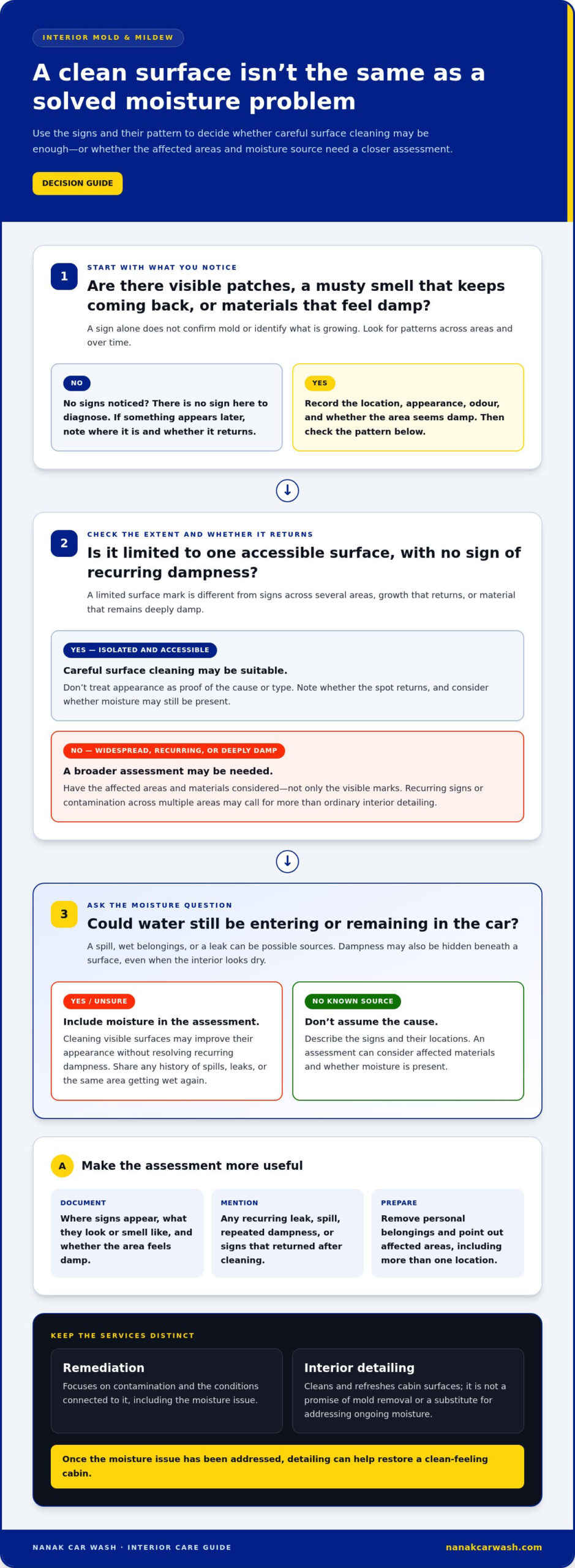
A careful treatment starts with understanding the problem, not choosing a cleaning method by appearance alone. A general sequence is to inspect the interior, identify which areas and materials are affected, consider whether moisture is still entering or remaining, then select an appropriate cleaning or remediation approach. The extent matters: a limited mark on an accessible surface is different from contamination that appears across several areas or keeps returning.
Moisture control is part of addressing recurring interior growth. Cleaning does not stop new water from entering or remove dampness that remains in materials. If the source persists, the same conditions can continue after visible surfaces are cleaned. A treatment plan should therefore consider both the moisture issue and what can be seen. Otherwise, a freshly cleaned surface may not reflect the condition beneath or around it.
What happens during an initial interior assessment?
An initial assessment can include looking over visible areas, noting odours and dampness, and asking about the history of the issue. Details such as where water was noticed, whether the smell returns, and what has already been cleaned help build a clearer picture. Different materials and affected areas may need different handling, so an assessment helps determine the next step rather than assuming one method suits the whole cabin.
Be specific about what you’ve observed. Point out whether dampness appears near one carpeted area or in more than one part of the interior, and mention if signs have returned after cleaning. These details help distinguish a limited surface-cleaning need from a situation that may call for a broader response.
When is interior detailing different from mold remediation?
Interior detailing cleans and refreshes vehicle surfaces. It can address ordinary interior soil and some stains, but it isn’t a promise of mold removal or a substitute for addressing ongoing moisture. Specialist remediation may be appropriate when contamination is extensive, affects multiple areas, or returns despite cleaning. The right response depends on the observed extent and materials, not the service label alone.
Think of the distinction this way: detailing focuses on cabin cleanliness; remediation focuses on addressing contamination and the conditions connected to it. If the moisture problem hasn’t been resolved, a detail may refresh surfaces without stopping recurring dampness. Set expectations accordingly, especially if affected materials extend beyond what’s visible or the problem has returned.
Once the moisture issue and any necessary remediation have been addressed, detailing can be a practical next step for a cleaner-feeling cabin. Nanak Car Wash offers interior car detailing in Brampton, including packages with interior cleaning. Keep that step in its proper place: detailing refreshes the interior, but it is not professional mold and mildew removal from car interior.
DIY cleaning or professional mold removal: how to decide
The right next step depends on how much of the interior is affected, whether the material is still damp, and whether the problem returns. A small, isolated surface mark is different from growth across multiple areas, a persistent odour, or dampness that seems to reach beneath the visible surface. Consider these clues together when deciding whether careful surface cleaning is reasonable or professional mold and mildew removal from car interior needs an assessment.
Use this comparison as a starting point, not a diagnosis. “Detailing” means cleaning and refreshing vehicle surfaces. It doesn’t promise mold removal or resolve an ongoing moisture problem. Specialist remediation may be appropriate for extensive contamination, while detailing can refresh the cabin after the moisture issue has been addressed.
| Option | May suit | Important limit |
|---|---|---|
| Basic DIY cleaning | A minor, isolated surface concern with no continuing dampness. | It may not address growth or moisture beyond the surface. |
| Interior detailing | Cleaning and refreshing vehicle surfaces. | It isn’t a guaranteed mold-removal service or leak solution. |
| Specialist remediation | Widespread, recurring, or extensive contamination. | The approach depends on affected materials and the extent of the issue. |
When might basic cleaning be a reasonable first step?
For a minor, isolated surface concern, basic cleaning may be a reasonable first step if there’s no continuing moisture and the material can be cleaned according to its care instructions. Use a product only as its label directs, and follow the vehicle’s material-care guidance. Don’t combine cleaners or apply an unverified product to upholstery, trim, or carpet. Stop if the material changes, becomes damaged, or the concern returns.
When should a vehicle owner seek specialist help?
Arrange an assessment if growth appears across several areas, dampness keeps returning, or a musty odour persists after cleaning. These signs don’t identify a specific cause, but they suggest a quick surface clean may not be enough. Specialist remediation may be appropriate when contamination is extensive or affects materials beyond easy reach. Share what you’ve observed and any cleaning already tried.
A cleaner-looking surface doesn’t necessarily mean the underlying condition has been addressed, and a detail isn’t a substitute for specialist remediation when the situation calls for it. If the interior has only a small, isolated mark and remains dry, follow material-care directions and watch for changes. If signs spread or recur, stop repeating surface treatments and seek a more thorough assessment.
What to do before and after professional interior treatment
A little preparation can make an assessment more useful. Clear details about where signs appear, when dampness occurs, and what you’ve already tried help explain the situation. Don’t hide a recurring leak, cover a wet area, or use fragrance to mask an odour before an assessment. Those clues matter when deciding what attention the interior needs.
How should you prepare the car for an assessment?
Before arranging professional mold and mildew removal from car interior, document what you’ve noticed without disturbing extensive growth. Take photos of affected areas and record when an odour or dampness appears, such as after rain or following a spill. Remove loose belongings where practical, but don’t handle or spread extensive growth. Be ready to describe known leaks, spills, and previous cleaning attempts.
- Photograph the signs: Capture affected areas and note where each one is located.
- Record the pattern: Write down when odours or dampness occur and whether they return.
- Share the history: Mention spills, leaks, and cleaning attempts, even if you’re unsure whether they’re related.
Preparation and follow-up checklist: Photograph affected areas, remove loose belongings where practical, note dampness and its timing, disclose recurring leaks, then watch for renewed moisture after treatment.
Keep the information straightforward. If the same carpet area becomes damp again, say so; if you noticed water after a spill, include that too. Avoid presenting a guess as a confirmed cause. Clear observations help an assessment focus on the affected materials and moisture history rather than relying on a masked smell or recently cleaned surface.
How can you reduce the chance of the problem returning?
After treatment, watch for new dampness, returning odours, or signs reappearing in the same area. Check the cabin after conditions that previously coincided with moisture, and investigate changes promptly. Don’t rely on air freshener to cover a musty smell. It can hide a clue without addressing what’s causing it. The chance of recurrence depends on controlling the moisture source, so no cleaning step alone can promise prevention.
- Look for changes: Notice fresh dampness or returning signs in previously affected areas.
- Respond promptly: Have recurring moisture investigated rather than repeatedly cleaning the same spot.
- Keep notes: Record when a smell or damp area returns to share useful context.
Once the moisture issue has been addressed, interior detailing can help refresh the cabin. Nanak Car Wash’s Car Detailing Packages include interior cleaning, with the Deal From $120 including interior and trunk shampoo. Explore interior car detailing in Brampton as a practical next step for a cleaner-feeling cabin, not as a mold-removal treatment.
Refresh a cleaned car interior with Nanak Car Wash detailing
Once the moisture issue has been addressed and any necessary remediation is complete, interior detailing can help refresh the cabin. It’s separate from mold assessment or remediation. Nanak Car Wash serves vehicle owners in Brampton with Car Detailing Packages that include interior cleaning. These packages offer practical cleaning options, but they aren’t mold-removal treatments and don’t replace attention to ongoing moisture.
What interior-cleaning work do Nanak Car Wash detailing packages include?
The Deal From $120 includes interior and trunk shampoo. The Deal From $99 includes carpet shampoo and stain removal, plus one free exterior wash. These are specific detailing inclusions for cleaning interior surfaces. They don’t represent a mold assessment, treatment for hidden contamination, or a promise that mold has been eliminated.
Choose an interior-cleaning option based on the surfaces you want refreshed. The package with interior and trunk shampoo covers both areas as a detailing inclusion, while the carpet shampoo and stain removal option focuses on carpets. For more context on what interior care can involve, explore this interior car detailing guide. You can also read the Car Detailing guide for a broader look at vehicle detailing.
When is an interior refresh the right next step?
Think of detailing as a cabin-cleaning choice after the moisture concern has been dealt with. If the interior needs a clean-up after the source of dampness has been addressed, detailing may be a useful next step. If you still notice recurring dampness, visible growth, or a persistent musty smell, don’t treat a detail as a substitute for assessment or specialist remediation. The appropriate next step depends on whether the need is ordinary interior cleaning or attention to an ongoing contamination concern.
Keeping those roles separate sets clear expectations. Professional mold and mildew removal from car interior addresses the mold concern through appropriate assessment and remediation; detailing focuses on cleaning and refreshing vehicle surfaces. After the moisture problem has been handled, Nanak Car Wash interior cleaning can help bring a tidier feel back to your cabin without promising mold elimination.
For vehicle owners in Brampton, Nanak Car Wash Car Detailing Packages offer a straightforward interior-cleaning option. Explore Nanak Car Wash Car Detailing Packages and choose an interior refresh that fits the cleaning your cabin needs.
Give your cabin a practical next step
Base your next decision on the vehicle’s condition, not just how it smells or looks today. If moisture or contamination remains a concern, keep that issue separate from routine cabin cleaning. This distinction helps set realistic expectations for professional mold and mildew removal from car interior and for any detailing that follows.
When the moisture problem has been addressed and you’re ready to refresh the cabin, Nanak Car Wash offers Car Detailing Packages with interior cleaning for vehicle owners in Brampton. Choose detailing for a cleaner-feeling interior, not as a substitute for mold assessment or remediation. A fresh cabin is a practical next step once the underlying concern has been dealt with.
Explore Nanak Car Wash Car Detailing Packages and choose an interior-cleaning option that suits your vehicle. Taking the steps in the right order can help you move forward with clear expectations and enjoy a cabin that feels ready for the next drive.
Frequently Asked Questions
Can mold in a car interior make you sick?
Mold exposure can trigger allergic reactions or respiratory irritation in some people, but symptoms and sensitivity vary. A visible patch doesn’t identify the mold type or predict how anyone will react. If someone feels unwell after time in the vehicle, they should leave the area and speak with a healthcare professional, especially if symptoms are severe or persistent. Don’t rely on smell alone to judge exposure.
How do professionals remove mold and mildew from a car?
Professionals generally assess the interior, determine which areas and materials are affected, consider the moisture source, and then choose a suitable cleaning or remediation approach. The steps can differ depending on whether growth is limited to an accessible surface or extends into materials that are harder to reach. Professional mold and mildew removal from car interior isn’t one universal procedure, and cleaning without addressing ongoing moisture may leave the conditions for recurrence.
Can you remove car mold with household cleaners?
Household cleaners may be suitable for some minor surface marks, but they shouldn’t be assumed safe or effective for every vehicle material. Check the product label and the care guidance for the upholstery, carpet, or trim first. Never mix cleaning products, and avoid applying bleach or an unverified chemical to the interior. If the mark spreads, returns, or the material changes colour or texture, stop and seek an assessment.
What causes mold to return in a car after cleaning?
Mold may return if dampness remains or fresh water continues to enter the cabin. A recurring leak, wet items left inside, or moisture beneath carpet are possible examples, not definite causes. If the same area becomes damp again, note when it happens and where you see it. Cleaning the surface again may not address the underlying issue, so recurring moisture deserves attention.
Is it safe to drive a car with visible mold inside?
There isn’t one answer for every vehicle or person. The amount of growth, its location, and occupants’ sensitivities can affect the decision. Avoid touching or brushing visible growth, which may disturb it. If contamination appears widespread, consider limiting use until the vehicle has been assessed. People with respiratory concerns or symptoms should seek advice from a healthcare professional about their own situation.
Does car detailing include mold remediation?
Not automatically. Car detailing focuses on cleaning and refreshing vehicle surfaces, while mold remediation addresses contamination and the conditions associated with it. A detail may be appropriate for ordinary interior cleaning after the moisture concern has been handled, but it shouldn’t be treated as proof that mold has been removed. If growth is extensive or recurring, seek an assessment suited to that concern rather than relying on a standard detail.
How do I prepare my car for professional mold treatment?
Before the assessment, make a short record of where you noticed signs and when they appeared. Keep receipts or notes from earlier cleaning if you have them, and mention any water event you recall, even if you’re unsure it matters. Clear access to affected areas where practical. Don’t cover a damp spot or conceal a recurring leak; those details can help the professional understand the situation.
Can interior shampooing remove a musty smell from a car?
Shampooing may help with odours connected to soil or spills on the surfaces being cleaned, but it can’t be counted on to remove every musty smell. If the odour comes from moisture or contamination beyond the cleaned area, it may persist or return. Notice whether the smell is strongest in one spot and whether it changes after the area dries. A recurring odour calls for investigating its cause.


 6600 Finch Ave W, Etobicoke, ON M9V 3Z6

 647-703-8515
 MON – SUN 8 AM to 7 PM