
You pulled into the driveway after a slushy stretch of the 401, wipers smearing grey spray, and the car looks almost respectable under the porch light. The paint has a dull film. The wheel arches look packed. Tomorrow might sit well below freezing, and a wash feels like a good way to ice the doors shut.
That hesitation makes sense. Washing a car in winter still pays off, but only when you time it to the salt on the road and treat drying as part of the job. A fixed Sunday habit misses the weeks when brine spray is heavy, and it sends you out on the coldest night for no real gain.
The useful skill is reading the car, picking a wash that reaches the salt, and getting the water off before it turns to ice.
Table of Contents
- Why Road Salt Makes Winter Washing Different
- Knowing When Your Car Needs a Winter Wash
- Picking the Right Wash for Salty Roads
- The Winter Wash Routine from Underbody to Dry
- Drying Doors, Locks and Seals Before the Freeze
- Common Winter Washing Mistakes and Your Next Step
Why Road Salt Makes Winter Washing Different
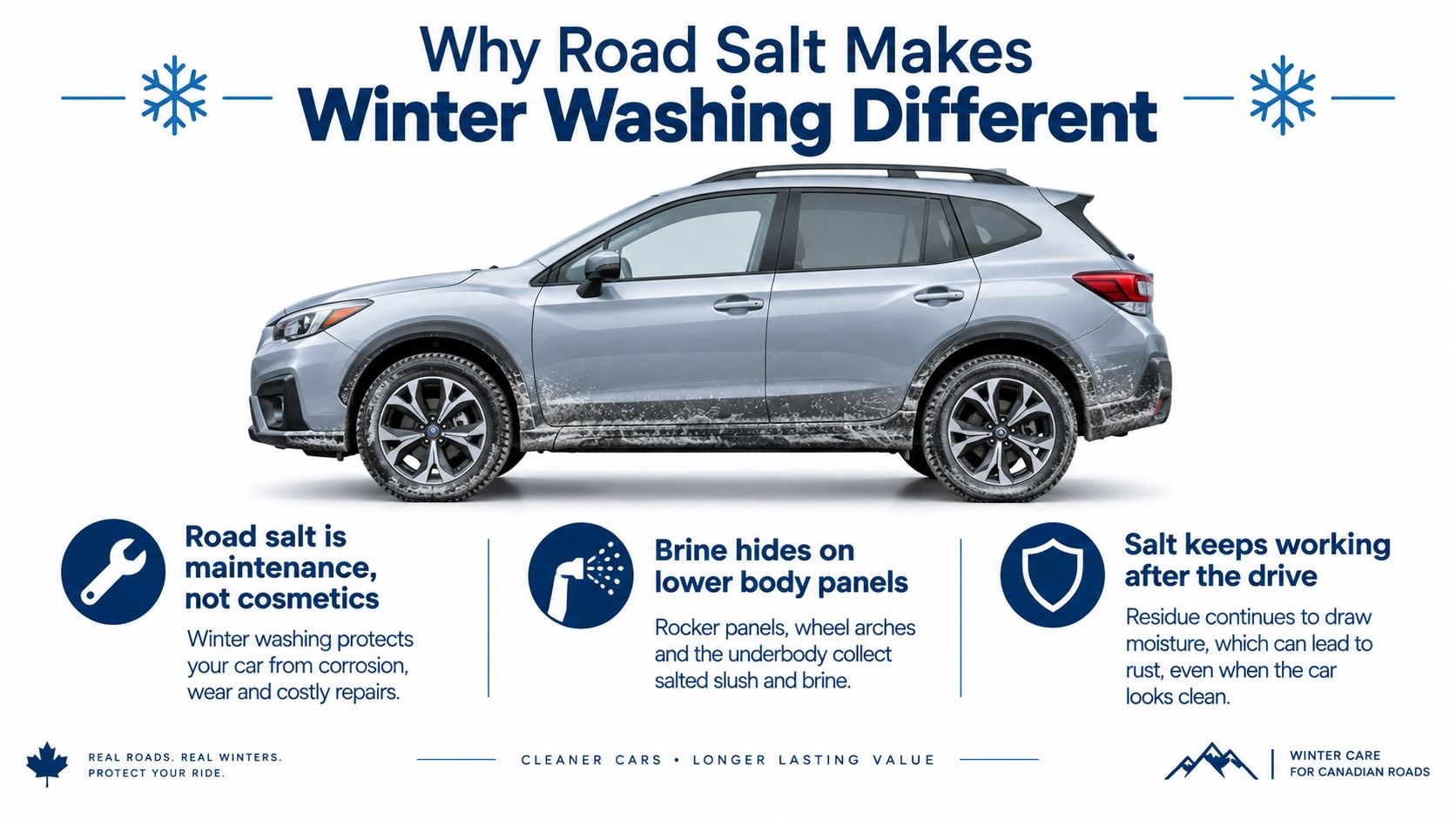
From across the street the car can look fine. Step closer and the lower body tells a different story. A pale crust sits along the rocker panels. The wheel arches hold a damp paste. That film is brine, not ordinary road dust, and it keeps working after you've parked.
Toronto's winter road program puts an enormous amount of salt under your tyres. The city typically uses about 130,000 to 150,000 tonnes of road salt a year, and a City of Toronto background report recorded about 127,000 tonnes in a season, with approved rates of 70, 90, 140, and 180 kilograms per lane-kilometre depending on conditions and road type, according to the City of Toronto's winter road operations note. Those numbers are the scale of what GTA cars meet on major roads, side streets, bridges, ramps, and parking lots.
Where the brine actually sticks
Wet slush doesn't stay on the pavement. Tyres throw it onto body panels, wheel wells, brake parts, and the underside. A rinse that only brightens the doors leaves the worst of it in place. An underbody rinse matters because that spray lands where a sponge never reaches.
Washing in January is maintenance, not a cosmetic treat. Salt plus water speeds corrosion on painted metal and on bare fasteners. Clearing it after a storm or a freeze-thaw stretch shortens the time that film sits on the car. A single tidy-up in April can't undo months of repeat salting. Contamination comes back with every salted drive.
Practical rule: If the rockers look chalky after a commute, the underside is dirtier than the roof, even when the hood still looks acceptable.
What you actually need to decide
You don't need a perfect weekly ritual. You need four calls, made in this order.
- When to go: After real salt exposure, not because the calendar says Sunday.
- Which wash: One that reaches wheel wells and the underside, not a quick shine on the paint.
- How to rinse: High pressure on caked muck before any contact wash.
- How to finish: Dry seams, locks, and seals before the temperature drops.
Get those four right and winter washing stops being a gamble with frozen doors.
Knowing When Your Car Needs a Winter Wash
"Wash every week" is tidy advice and a poor match for GTA roads. A car that sat in a driveway through a dry cold snap barely picked up salt. A car that spent the same week on highways in active brine spray is coated, even if the paint still looks grey rather than white. Exposure beats the calendar.
Ontario organisations in the federal road-salt program used 1,679,395 tonnes of salt and treated 104,187 km of roads in the reported period, based on Environment and Climate Change Canada's road salt data. That volume is why a commuter, a delivery driver, or a small fleet can't copy the rhythm of someone who drives twice a week to the grocery store. Highway spray loads the car faster than neighbourhood errands.
Should you wash if it's below freezing?
Sometimes yes, and often no. Split the job in two.
A quick underbody and wheel-well rinse is the high-value move after a major storm, a day of heavy slush, or a visible salt crust on the lowers. You're cutting residence time, not chasing a showroom finish. Do it when the bay drains and you can dry the car before you park it overnight.
A full exterior wash is worth it when the body is filmed as well as the underside, and when you have time to dry door seams, handles, locks, wipers, and the tailgate. Postpone that longer wash when a sharp drop is coming and water could freeze on those parts. A clean car with a frozen door is a failed wash.
| What you drove through | What to do |
|---|---|
| Highway brine or a white crust on the rockers | Underbody and wheel-well rinse as soon as you can dry the car |
| Major storm or a day of wet slush | Rinse soon, then a fuller wash if the body is filmed |
| Cold snap, car mostly parked, no new salt | Wait. Washing for the sake of the week adds freeze risk |
| Safety parts already wet and the night will be hard frost | Postpone until you can dry locks, wipers, and seals |
Washing during every cold spell is often less useful than washing right after heavy exposure. Waiting until spring leaves salt in place through the wetter, milder spells that keep metal damp.
Track washes by salted trips, not by the date on the phone. Fleets and ride-hailing cars should log a rinse after brine days. Occasional urban drivers can stretch further, as long as they don't ignore a crust that has been sitting since the last storm.
Picking the Right Wash for Salty Roads
Not every tunnel of soap does the same job on salt. Match the wash to where the brine sits, then to how often you drive.
A technically sound target during sustained salting is a salt-removal visit about every one to two weeks, plus an extra wash after a major snowstorm or heavy brine exposure. CAA's winter rust guidance points to touchless systems with undercarriage cleaning for concealed buildup, and it favours real removal over a soak that leaves debris wet. The same guidance flags a quieter risk: wash water that isn't properly treated can carry corrosion problems from one car to the next. Fresh, well-managed water matters more than a fancy foam colour.
Three options, three jobs
| Option | What it reaches | Where it falls short |
|---|---|---|
| Basic exterior pass | Roof, hood, doors, glass | Misses packed wheel wells and chassis spray |
| Touchless with undercarriage | Lowers and hidden spray without a brush dragging grit | Still needs a dry-down of seams if the air isn't enough |
| Full service with hand dry | Exterior plus interior vacuum, with someone on the jambs | Overkill if you only tracked highway brine and the cabin is fine |
Express packages suit a salty commute when you want speed. At Nanak Car Wash, express exterior packages start from $9.99 + tax and include presoak, a foam bath, rinse, drying agent, and air blowers. Underbody wash is an upgrade, which is the add-on that matters after salted roads. Full-service packages start from $29.99 + tax and add hand drying plus interior vacuuming. The business states that it uses 100% fresh water, and it mixes modern equipment with hand-applied steps by trained staff.
Which tier fits your week
- Mostly city hops, light salt: An express wash is enough if the rockers aren't crusted. Add underbody when you can see residue.
- Highway days or a storm: Don't skip the undercarriage. A pretty roof with a salty chassis is a half job.
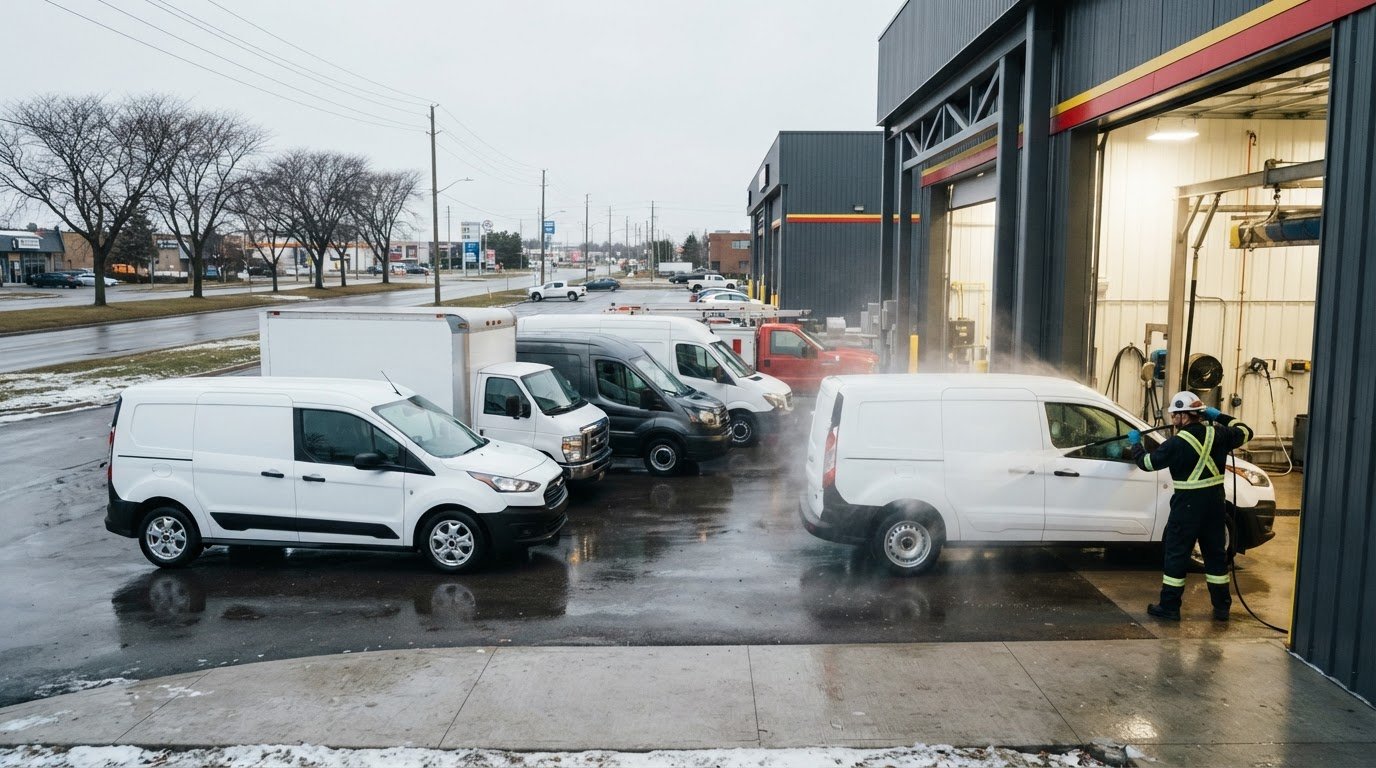
- Family SUV, work van, or a cabin full of slush: Full service earns its price when you also need the jambs wiped and the floors vacuumed.
- Daily salted mileage: A one-to-two-week rhythm, plus a post-storm rinse, beats both "every Sunday" and "we'll do it in April."
Frequent washing still fails if paint chips, exposed fasteners, or trapped mud stay put. Treat the wash as control, then repair chips and look under the car on a milder day. If you only buy one upgrade on a brine week, buy the one aimed at the underside.
The Winter Wash Routine from Underbody to Dry
Order is the whole trick. Salt cakes. If you soap the doors first, you drag grit across paint and you wet the underside without lifting it. Wet debris that stays put holds contaminated moisture against metal. That's worse than leaving the crust alone until you can remove it.
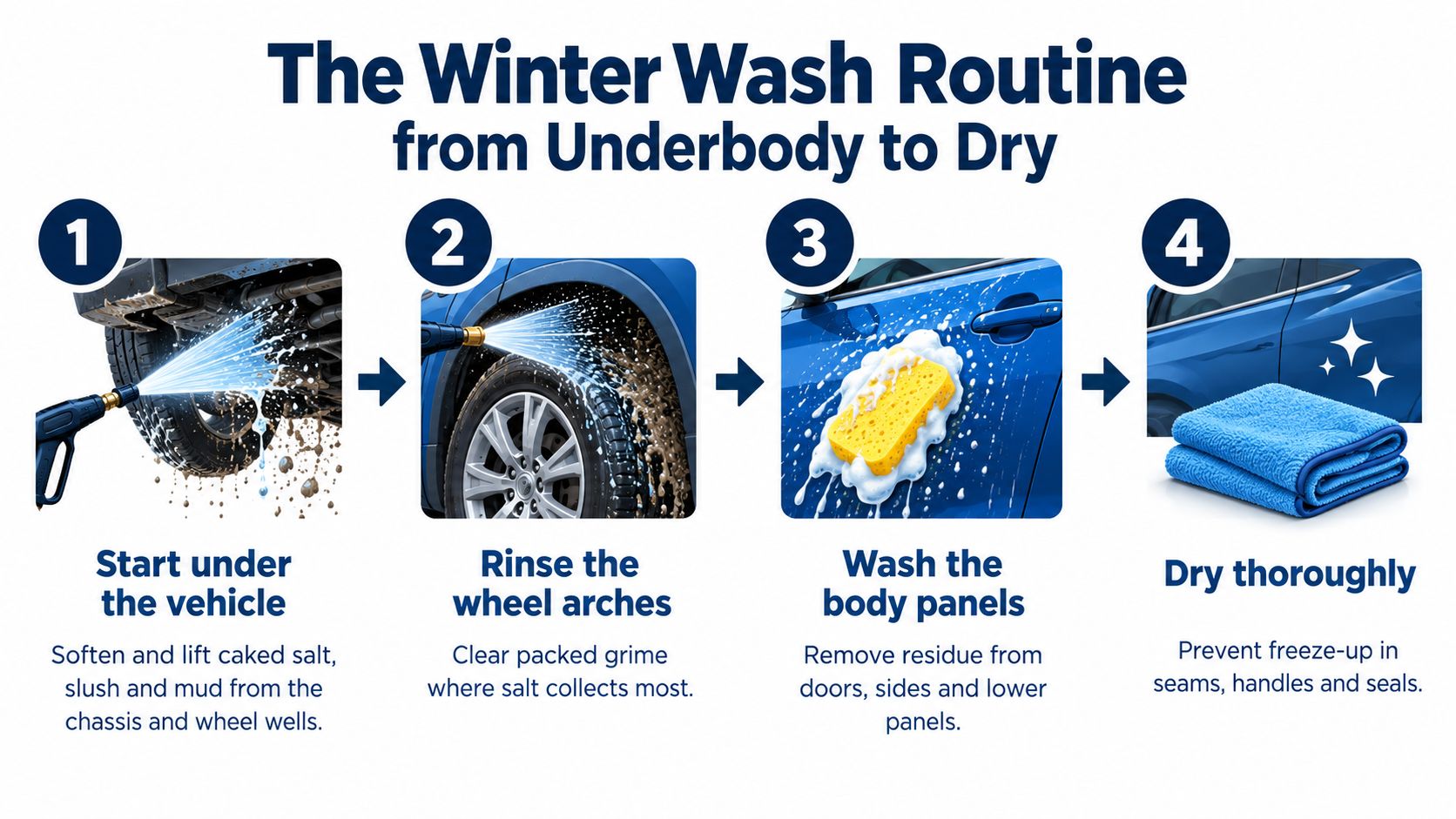
Ontario guidance on winter washing lays out a staged sequence: hit caked salt, slush, and mud on the underside with a high-pressure water jet first, rinse the body until abrasive dirt loosens, and only then do a contact wash with plenty of water. Priority areas named in that guidance are wheel housings, bumpers, the muffler, the tailpipe, and brackets. At minimum, clean the underside once during winter and again after winter. On GTA roads, repeat the underbody and wheel-well rinse after major salt exposure. Melting slush re-wets seams, and dissolved salt makes that water more conductive. Details sit in the Ontario guidelines for snow disposal and de-icing operations.
The sequence that actually removes salt
- Start under the vehicle. Use the pressure jet to soften and lift cake from the chassis, wheel housings, bumpers, muffler, tailpipe, and brackets. Linger where the spray pattern from the tyres hits. A two-second pass doesn't move packed slush.
- Rinse the wheel arches and rockers. Salt collects most here. If a chunk doesn't move, don't smear it. Soften it and rinse again.
- Rinse the whole body, then contact-wash. Loose grit should already be sliding off. Lots of water, light pressure from the mitt, top to bottom. Doors, sides, and lower panels come after the underside, not before.
- Dry on purpose. Seams, handles, and seals are part of the wash. The next section is the whole point of this step.
What people skip
The common miss is a beautiful set of doors and a filthy rocker. After the wash, look at the lower door edges and inside the wheel wells. If they're still chalky, the wash didn't finish.
The same sequence works in a self-serve bay and in a drive-through, as long as underbody coverage is real. If the tunnel doesn't reach the chassis, you're polishing the part of the car the salt barely touched. Steam or high pressure beats a gentle soak. Soaking without removal just gives the brine a longer drink.
Drying Doors, Locks and Seals Before the Freeze
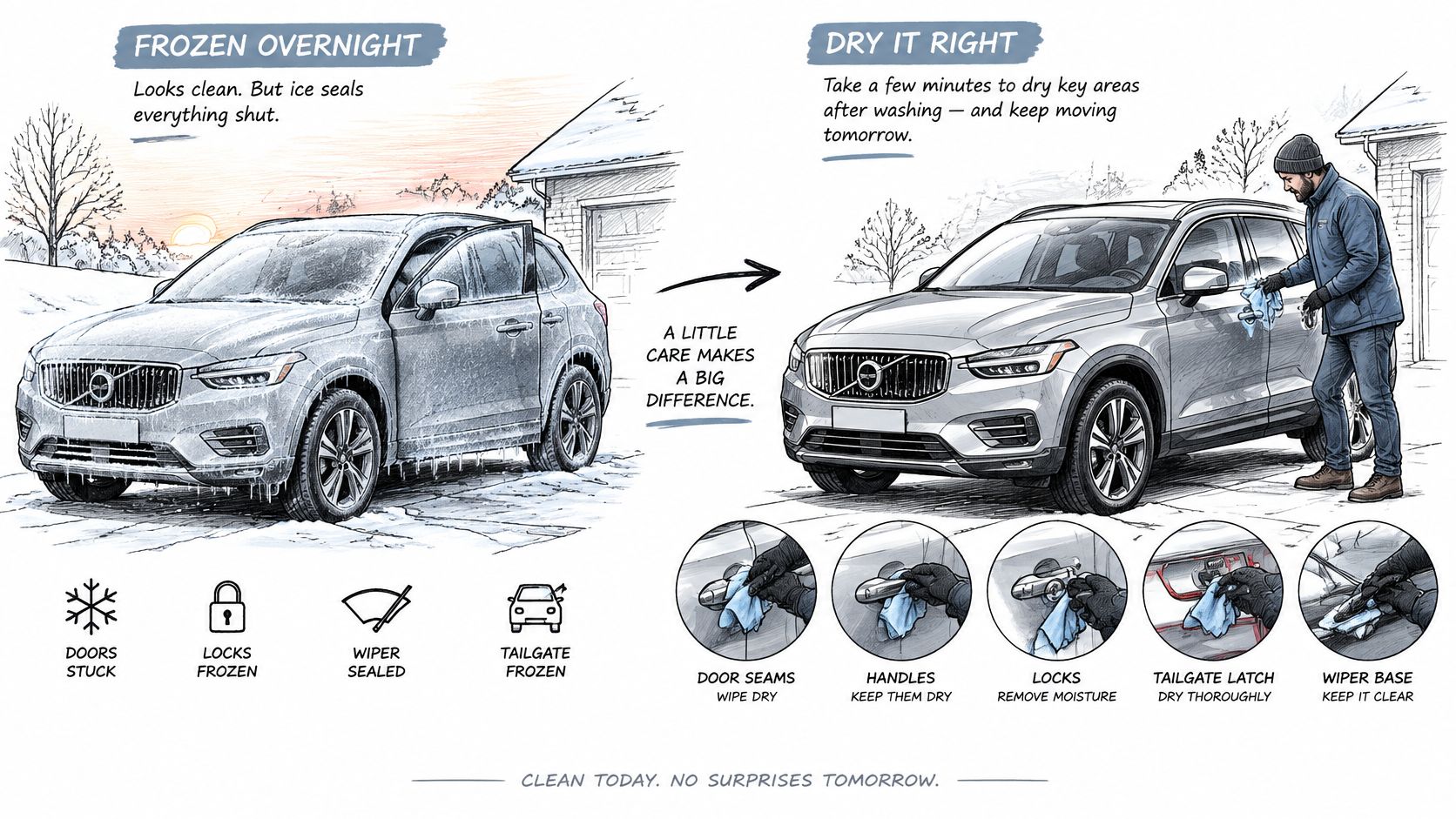
A customer once left a bay at dusk with a shining sedan and a full set of wet door seals. By morning the driver's door was a solid panel. The handle moved. The latch didn't. Pulling harder would have bent the linkage, not opened the car.
Water hides in small places. Door seams and jambs hold a bead. Handles cup it. Lock cylinders take a drop. The tailgate mechanism and wiper pivots do the same. None of that shows up in the glossy reflection people photograph on the way out.
How to finish before the temperature falls
Blow or wipe the jambs. Open each door for a moment so air moves through the seal, then shut it on a dry face, not a wet one. Run a towel around handles. Clear the wiper pivots so the blades don't freeze to the glass. If you use a remote fob, keep it out of the spray. A short read on wet car key advice for motorists is worth it before you learn the hard way that a soaked fob doesn't care how clean the paint is.
If something is already frozen, clear the ice by hand. Warm the cabin if you can. Don't yank doors or wipers. Force is how a small freeze becomes a broken clip.
Why dry metal matters
Corrosion is electrochemical. It speeds up when salt and water stay on steel. Canadian corrosion research estimates that about 50% of vehicle corrosion is tied to road-salt use, a figure reported through NSERC project details on road-salt corrosion. The risk isn't only the panels you see. Frames, bumpers, fasteners, brake-related parts, and underbody structure all sit in that film. Drying doesn't replace a rinse. It shortens how long the leftover moisture stays active.
Before you leave the lot, run a thirty-second check.
- Jambs feel dry, not slick.
- Handles and the tailgate latch aren't beaded with water.
- Wipers lift off the glass instead of sitting in a puddle.
- You're not heading into a hard freeze with wet locks.
If any of those fail, stay another minute with a towel. That minute is cheaper than a door that won't open at 6 a.m.
Common Winter Washing Mistakes and Your Next Step
Winter washing works when you stop doing the things that undo it. Most of the damage people blame on "salt season" is a short list of habits.
Paint-only washes are the big one. The hood looks fine. The rockers, wheel wells, and chassis still hold brine. If you only have time for one zone, make it the lower half and the underside.
Washing into a cold snap is the second. Soap at 4 p.m., hard frost overnight, wet seals. If you can't dry, wait. A delayed rinse beats a frozen latch.
Treating the wash as a cure is the third. Chips, exposed fasteners, and mud packed in a seam keep corroding between visits. Rinse on a salt schedule, then fix broken paint and look underneath when the weather allows.
Spring-only cleaning is the fourth. Salt doesn't pause because you're busy. It sits through thaw days and keeps the metal wet. By April you're removing a season, not a weekend.
Keep three prompts in the car, not a complicated plan.
- After highway brine: Rinse the underbody and arches before the crust hardens for days.
- After every wash: Check door seams, locks, and wiper pivots before you drive off.
- On the log: Count salted trips, not weeks. High-mileage work vehicles need a tighter rhythm than a car that mostly sits.
A wash you can dry is a wash worth doing. A wash you can't dry is a reason to wait until tomorrow afternoon.
This week, after the next heavy salting, book an express wash and add underbody coverage rather than a paint-only pass. If brine days are constant, a monthly unlimited pass is the cheaper way to keep that rhythm than paying full price every storm. Locations across the west and north of the region, including Etobicoke, Brampton, and Concord, are set up for that quick in-and-out pattern.
Nanak Car Wash runs express washes with an underbody upgrade, plus air blowers and drying agent, so you can knock salt off the chassis and leave with drier seams. Full-service visits add a hand dry when the freeze risk is on your mind. Compare current packages and book a salt-removal wash at Nanak Car Wash.

 6600 Finch Ave W, Etobicoke, ON M9V 3Z6

 647-703-8515
 MON – SUN 8 AM to 7 PM