
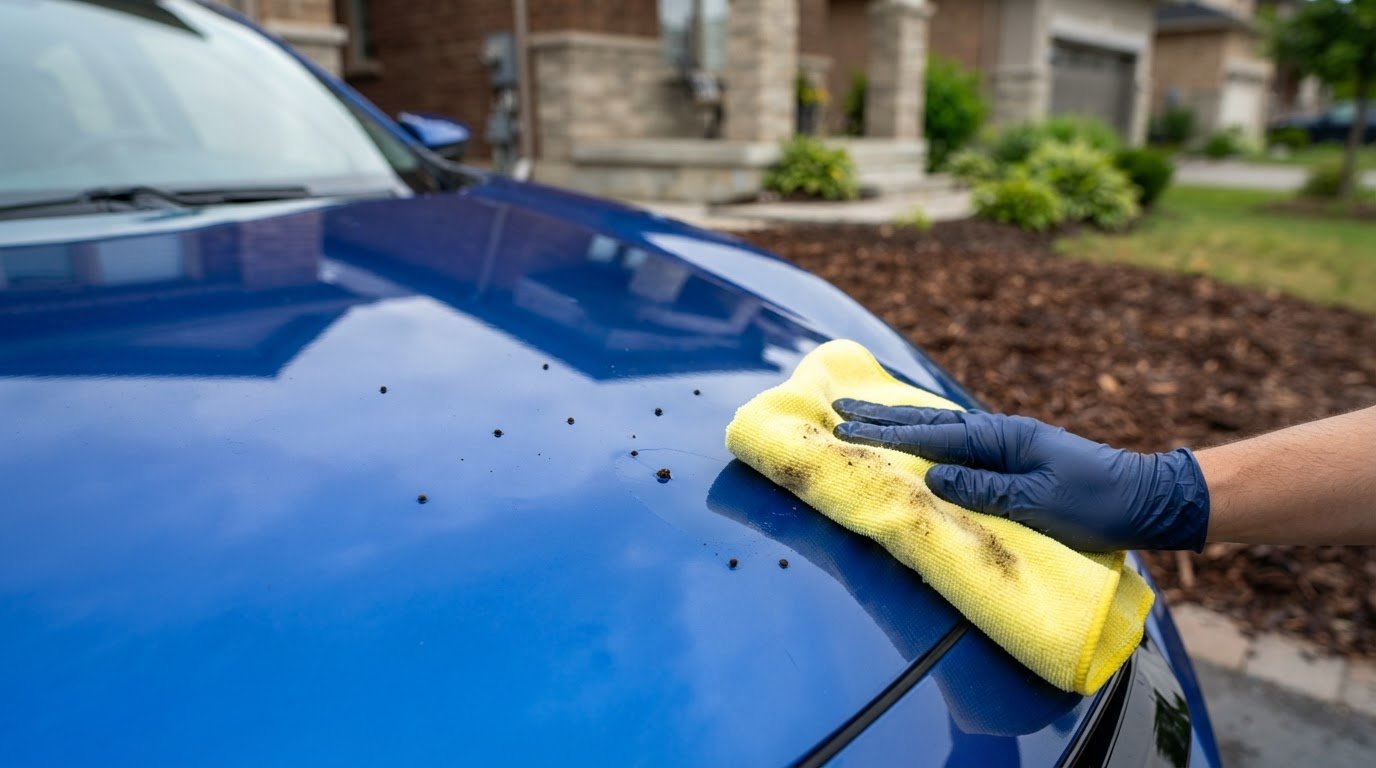
Those stubborn black specks may be artillery fungus, not ordinary road grime. The black or brown sticky spots are mature spores launched by fungus growing on decaying wood, often wood-chip mulch. To learn how to remove artillery fungus from car paint, act early: removal is easiest within the first three weeks, before the spots fully embed.
It’s frustrating to find sticky marks on your car, especially when a regular wash may not lift them. Artillery fungus thrives in spring and fall when temperatures are between 50 and 70 degrees, and its spores can travel up to twenty feet to reach a vehicle.
This guide explains how to identify the spots and approach removal, from gentle scraping followed by soap and hot water to early washing methods. It also covers the suggested bleach-water mixture for non-porous surfaces, including why a method that suits one surface may not be appropriate for car paint. You’ll get a clear starting point and know when professional car detailing may help.
Key Takeaways
- Learn what artillery fungus is and why wood-chip mulch can be a source of the sticky spots found on vehicles.
- Recognize the black or brown marks that may be mature spores, and see what details can help distinguish them from ordinary grime.
- Act promptly: the spots are easiest to remove within the first three weeks, before they fully embed in the surface.
- Compare gentle cleaning steps with stronger methods, and understand why a bleach-water mixture for non-porous surfaces isn’t automatically suitable for car paint.
- Explore whether a clay bar has a place in removal and when car detailing may be a practical next step.
1. What Is Artillery Fungus?
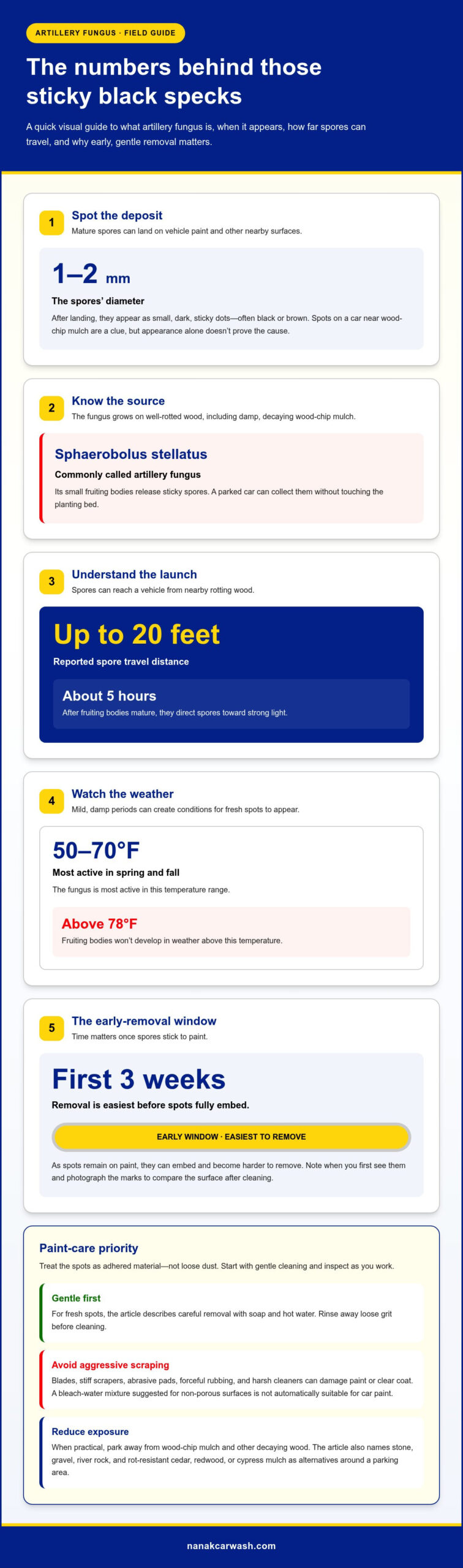
Artillery fungus is the common name for Sphaerobolus stellatus, a fungus that grows on well-rotted wood. Wood-chip mulch is a common source, especially when it is damp and decaying. The fungus forms small fruiting bodies that release sticky spores. Those spores can land on nearby surfaces, including vehicle paint, siding, and windows.
The spores measure 1-2 mm in diameter and appear as dark, sticky dots after landing. They can be propelled up to twenty feet, or discharged up to 6 meters, from the fungus. Mature fruiting bodies direct spores toward strong light about five hours after they mature. A parked car near mulch can therefore collect spots even without touching the planting bed.
Artillery fungus is most active in spring and fall when temperatures are between 50 and 70 degrees. The fruiting bodies won’t develop in weather above 78 degrees Fahrenheit. These conditions help explain why fresh spots may appear during mild, damp periods. Nearby rotting wood, including wood-chip mulch, can provide the growing material.
Time matters once spores stick. They’re easier to clean from surfaces within the first few weeks, and removal from a car is easiest within the first three weeks. The two-to-three-week period after spots appear is especially important. The longer a spot remains on paint, the more it can embed, making removal harder than cleaning a fresh deposit.
Keep track of when you first notice the marks. For example, if dark dots appear after parking beside a mulched garden, photograph them and note the date. This helps you judge whether you’re still within the early removal window. Don’t assume a later wash will work as easily as prompt cleaning.
Artillery fungus can stain car paint. Its spores adhere tightly, and embedded spots may remain visible after ordinary washing. Because automotive paint has a clear coat, aggressive scraping or harsh cleaning can cause separate surface damage. Don’t treat a bleach-water mixture suggested for non-porous surfaces as an automatic choice for vehicle paint. The surface, the spot’s age, and the removal method all matter.
Removing stuck artillery fungus generally means addressing the spots directly rather than relying on a product to dissolve them. Timing is a practical guide when deciding how to respond: artillery fungus spores are easier to clean from surfaces within the first few weeks after they stick to the surface of the paint. A mark noticed soon after it appears may therefore call for a different approach from one that has remained on the vehicle. Keep the focus on physical removal rather than expecting a product to dissolve or prevent the stain.
When assessing a spot, consider how long it may have been present and whether the paint surface appears affected. Avoid making removal a separate source of damage by scraping aggressively or using harsh cleaners. Once the deposit is removed, professional detailing at Nanak Car Wash, alongside polishing and paint protection, can help restore the painted surface.
2. Artillery fungus on car paint
Artillery fungus can leave sticky black or brown dots on a vehicle’s painted panels. A car parked beside wood-chip mulch may collect spots on its hood, doors, roof, or mirrors. Spores attach to surfaces, and deposits can damage paint if they remain or are removed too aggressively. Treat the marks as adhered material, not ordinary loose dust.
To reduce the chance of spores sticking, park away from wood-chip mulch and other decaying wood when possible. Around a parking area, reduce exposure by replacing contaminated mulch with stone, gravel, or river rock, or using rot-resistant cedar, redwood, or cypress mulch.
Placement matters because the fungus launches spores toward strong light. A vehicle parked beside a mulched garden can be exposed even if it never touches the planting bed. If practical, park farther from mulch, especially when the bed contains damp, decomposing wood.
Check the finish in good light before cleaning. Note whether spots appear on one side facing a garden or across several exposed panels. A cluster of small, dark dots after parking near mulch is a useful clue, but appearance alone doesn’t prove the cause. Photograph the marks first so you can compare the surface after cleaning.
Don’t use a blade, stiff scraper, or abrasive pad to pry spots from paint. These tools can scratch the finish while leaving the sticky material attached. Start with a gentle wash and inspect the panel as you work. If residue resists light cleaning, don’t blindly increase the pressure; stronger methods can affect paint and clear coat.
Clear-coat concerns depend on the spot and the removal process. A dark mark may be material sitting on the finish, or the paint may show staining after removal. Don’t assume every remaining mark means the clear coat is damaged. Compare the area with nearby paint and look for scratches or dullness caused by forceful rubbing.
Once spots appear, prompt attention matters because embedded spores become harder to remove. Avoid repeated dry rubbing, which can drag residue across the panel. Use clean materials and work a small area at a time, checking for changes before continuing. For a thorough wash after exposure, explore vehicle cleaning options.
3. Cleaning methods and bleach solution
Start with the gentlest approach because scraping and abrasion can mark automotive paint. For fresh spots, use soap and hot water with careful, controlled removal. Hot water and an all-purpose cleaner may help lift spores caught within the first few weeks. Work on a small panel, rinse away loosened residue, and inspect the finish before repeating.
For a practical first pass, follow these steps:
- Rinse the panel to remove loose grit that could scratch the paint.
- Apply automotive wash soap and hot water with a clean, soft cloth.
- Ease off each spot without digging a sharp edge into the finish.
- Rinse the area and check whether any residue remains.
Use light pressure. A dry scraper or abrasive pad can leave scratches, even if the original spot comes away. If a mark resists gentle cleaning, stop rather than repeatedly increasing force. The spot’s age and how firmly it has embedded affect the effort needed. These steps offer a careful starting point for removing artillery fungus from car paint without turning residue removal into a paint problem.
Hot-water power washing and a car wash are recommended for early removal. Power washing is the stronger option, but use it only on surfaces suitable for that pressure. Keep the nozzle from damaging paint, trim, or seals, and don’t treat pressure as a substitute for checking the finish. A conventional wash is a milder next step for fresh contamination.
The suggested bleach-water mixture for non-porous surfaces is 1 cup of bleach per 1 gallon of water. That ratio is not an automatic recipe for car paint. Vehicle paint has a clear coat, and bleach may be unsuitable for that finish. Don’t apply the mixture to a painted panel just because the surface appears non-porous; prioritize methods intended for automotive finishes.
There is no fungicide to control artillery fungus on the affected surface. Mechanical removal is the available approach, so choose a method suited to the panel and residue. Soap and hot water with gentle scraping are the gentlest option; power washing is stronger and requires a suitable surface.
Which automotive detailing products remove artillery fungus without damaging clear coat? For fresh deposits, start with hot water and an all-purpose cleaner or automotive wash soap, using a soft cloth and light pressure. No cleaner makes forceful scraping safe; inspect the clear coat as you work and stop if the finish changes. To remove artillery fungus from car paint, match the method to the residue and use minimal pressure.
If spots remain after careful washing, a Car Detailing Package can be a practical next step for cleaning and paint care. After removal, polishing and paint protection are recommended to restore painted surfaces.
4. Identifying artillery fungus on cars
Look for small, dark marks that feel sticky rather than loose. Artillery fungus spores are mature, expelled spores, and they commonly appear black or brown on cars and houses. The marks may appear as tiny dots against a painted panel. Their colour and adhesion offer useful clues, but neither detail alone proves their source.
Start by inspecting the vehicle in bright, even light. Check the hood, roof, doors, mirrors, and other exposed panels for dots that remain attached after a gentle rinse. Note their size, colour, and location before attempting removal. A close-up photograph can help you compare the marks later and see whether cleaning changes their appearance.
Location adds context. If the car was parked near rotted wood or wood-chip mulch, artillery fungus is a plausible explanation for clustered dark spots. Spores can travel up to twenty feet from the fungus and attach to vehicles. A pattern on the side facing a mulched bed is a useful observation, not a definitive identification.
Check whether the marks appear as separate, rounded dots or broader smears. Artillery fungus often leaves individual sticky spots, while road grime can form a film across lower panels. For example, small dots on a door differ from a continuous dirty band near the wheel area. Compare several panels before deciding what you’re seeing.
Use this simple inspection sequence:
- Rinse one small area gently and see whether loose dirt washes away.
- Look closely at any dark dots that remain attached after rinsing.
- Compare the marks across panels and note whether one side has more.
- Recall whether the vehicle was parked beside mulch or decaying wood.
Don’t scrape a suspected spot to test it. A blade or abrasive pad can scratch paint, and the resulting damage won’t reveal what caused the mark. Instead, record its location and appearance, then try a gentle cleaning method on a small area. A spot that resists rinsing needs careful removal, not more force.
Artillery fungus spores are aimed toward strong light about five hours after fruiting bodies mature. That behaviour helps explain why a car may collect marks while parked near a source, even without touching mulch. If the marks are black or brown, sticky, and concentrated on exposed panels near decaying wood, artillery fungus is a reasonable possibility. Consider the pattern before cleaning, and protect the paint by avoiding aggressive tests.
Distance can help you consider where the car was parked, but it should guide the search, not settle the identification. Artillery fungus can propel itself up to twenty feet and attach to cars and other surfaces, so a possible source need not be right beside the vehicle. Review nearby decaying wood and mulch within that reach, then consider the marks’ appearance and distribution. If no source is obvious, that alone doesn’t identify what made the spots; record your observations and avoid forceful testing.
5. Can clay bars remove artillery fungus from car paint
A clay bar can lift some bonded surface residue, but it isn’t the best first step for artillery fungus. Start with a thorough wash using automotive soap and water. The sticky spores need to be loosened before you consider clay, which glides across lubricated paint to pick up surface contamination.
Clay is designed for contaminants sitting on top of the finish. It won’t repair staining or clear-coat damage, and it may not remove a hardened artillery spot. Pressing harder can increase friction and leave fine scratches or dull patches. If a spot doesn’t move with gentle washing, don’t treat the clay bar as a stronger scraper.
If you choose to try clay, prepare the panel carefully:
- Wash and rinse the area first, removing grit that could scratch the paint.
- Apply clay lubricant to a small, cool section of the panel.
- Glide the clay lightly over the lubricated surface without pressing down.
- Stop if the clay catches, drags, or leaves a change in the finish.
- Inspect the paint and clay often, folding the clay to expose a clean surface.
Never run dry clay over paint. Lubrication helps it move without unnecessary friction, while clean clay reduces the risk of rubbing trapped dirt across the clear coat. Don’t reuse a contaminated or dropped clay bar on the vehicle. Check the panel after each pass rather than repeating strokes automatically.
Use a clay bar only after washing has removed loose material. For example, if a dark dot remains firmly attached, test a small section with light pressure and lubricant. If the dot stays put, stop. Repeated passes can mar paint without removing the underlying stain. A clay bar also won’t replace polishing when the finish needs restoration after contamination is removed.
For artillery fungus, gentle scraping followed by soap and hot water is the gentlest removal method. Hot-water washing or a suitable car wash can help with early deposits. Power washing is stronger and should be used only on surfaces suitable for it. These options focus on removing the material without turning a small spot into a larger paint problem.
Once residue is removed, polishing and paint protection are recommended to restore painted surfaces. If you’d rather leave stubborn paint contamination to a detailing team, get help with vehicle detailing.
Nanak Car Wash: Car Detailing Packages
Nanak Car Wash offers Car Detailing Packages for drivers whose vehicles need more attention than a routine wash. If artillery fungus spots remain after careful cleaning, detailing is a practical next step for addressing exterior cleanliness while taking care around the paint. Avoid further scraping or harsh chemicals before bringing the vehicle in.
For regular dirt and grime, choose a Full-Service Car Wash or Express Car Wash. The Unlimited Wash Club is another option for drivers who wash their vehicles frequently. These services support ongoing vehicle cleaning, while stubborn adhered spots may need more focused attention than a standard wash provides.
Choose the service that fits your vehicle’s cleaning needs, then contact Nanak Car Wash to discuss the next step.
Keep Your Paint-Care Plan Moving
After cleaning, make paint care part of your regular vehicle routine. Note any stubborn areas and avoid repeating a method that leaves the finish dull or scratched. Knowing how to remove artillery fungus from car paint is useful, but protecting the finish also means choosing a cleaning method suited to the marks you see. In addition to exterior upkeep, routine mechanical inspections and fluid checks from comprehensive service centers like Eagle Transmission & Auto Repair ensure your vehicle remains properly maintained from the inside out.
Nanak Car Wash offers Car Detailing Packages for focused vehicle care, along with Full-Service Car Wash and Express Car Wash options for routine cleaning. Choose based on whether you need attention to persistent exterior contamination or a regular wash. Polishing and paint protection can also be considered after removal to help restore painted surfaces.
For a next step, contact Nanak Car Wash for help choosing a suitable cleaning option. A careful approach can keep your vehicle looking its best.
Frequently Asked Questions
What Is Artillery Fungus?
Artillery fungus is Sphaerobolus stellatus, a fungus that grows on decaying wood, including mulch. The fungus itself doesn’t grow on your car; the visible marks are spores it launches onto nearby surfaces. Think of the fungus as the source and the sticky dots as evidence. This distinction helps separate the cause from ordinary dirt collected during a drive.
What dissolves artillery fungus spores on car paint safely
No dissolving product is recommended for car paint. For fresh spots, use automotive wash soap and hot water with a clean, soft cloth and light pressure; avoid bleach, dry scraping, and abrasive pads.



 6600 Finch Ave W, Etobicoke, ON M9V 3Z6

 647-703-8515
 MON – SUN 8 AM to 7 PM