
It's a grey Tuesday after a highway drive through brine and slush. From across the driveway, your car looks respectable. Up close, the rocker panels wear a chalky crust, and the grit tucked beneath the sill suggests the underside hasn't enjoyed the trip either.
That's the winter-washing problem in the GTA: the roof can look clean while the parts you can't easily see need attention. Washing your car in the winter should be about removing salt where it collects, not buying temporary sparkle before the next snowplow passes.
Table of Contents
- When to Wash Your Car in Winter
- Choosing a Winter Wash That Reaches Salt
- How to Remove Road Salt Step by Step
- How to Dry and Protect Your Car Before It Freezes
- Fixing Frozen Doors, Locks and Fogged Windows
- Booking Your Winter Wash and Saving Money
When to Wash Your Car in Winter
Salt exposure followed by a thaw or a dry weather window is the trigger, not the date on your calendar. During a freeze–thaw week, salty slush can melt into seams and remain wet in poorly drained areas.
The scale matters: Ontario road organizations reported 1,679,395 tonnes of road salt during the 2023–24 winter in Environment and Climate Change Canada's road-salt reporting. You don't need to collect much of it to justify rinsing the places your wash mitt never reaches.
Winter wash timing by situation
| Situation | When to wash | Why it matters |
|---|---|---|
| Salt-heavy storm, then a dry spell | Promptly, once roads clear and washing conditions are suitable | Salt dries into deposits that need thorough rinsing |
| Freeze–thaw week with slush on arterial roads | The first suitable above-freezing window | Salty moisture remains in seams as accumulated slush thaws |
| Forecast snowfall coming soon | Skip an appearance-only wash unless contamination is substantial | Freshly treated roads will quickly coat the car again |
| Long sub-zero stretch | Wait for above-freezing conditions, or use a facility that can wash and dry safely | Residual water can freeze in locks and seals |
| Normal commute, grey road film only | When lower panels develop gritty buildup | Appearance alone doesn't reveal the contamination underneath |
| Daily delivery or ride-hailing on salted roads | At frequent safe opportunities after heavy exposure | Repeated trips continually replenish salt and slush |
The least satisfying advice is also the cheapest: washing just before snowfall can be wasted money. If tomorrow's route will be freshly salted, a cosmetic wash today buys very little. Heavy accumulated salt is a different matter, so don't use the forecast as an excuse to postpone cleaning indefinitely.
A prolonged freeze requires another judgement call. An outdoor rinse that leaves frozen handles and an icy driveway isn't an improvement; choose a suitable facility or wait for a safer window.
Practical rule: Check the forecast and the lower body together. White crust, gritty rocker panels and an approaching thaw deserve more attention than a dusty bonnet.
Choosing a Winter Wash That Reaches Salt
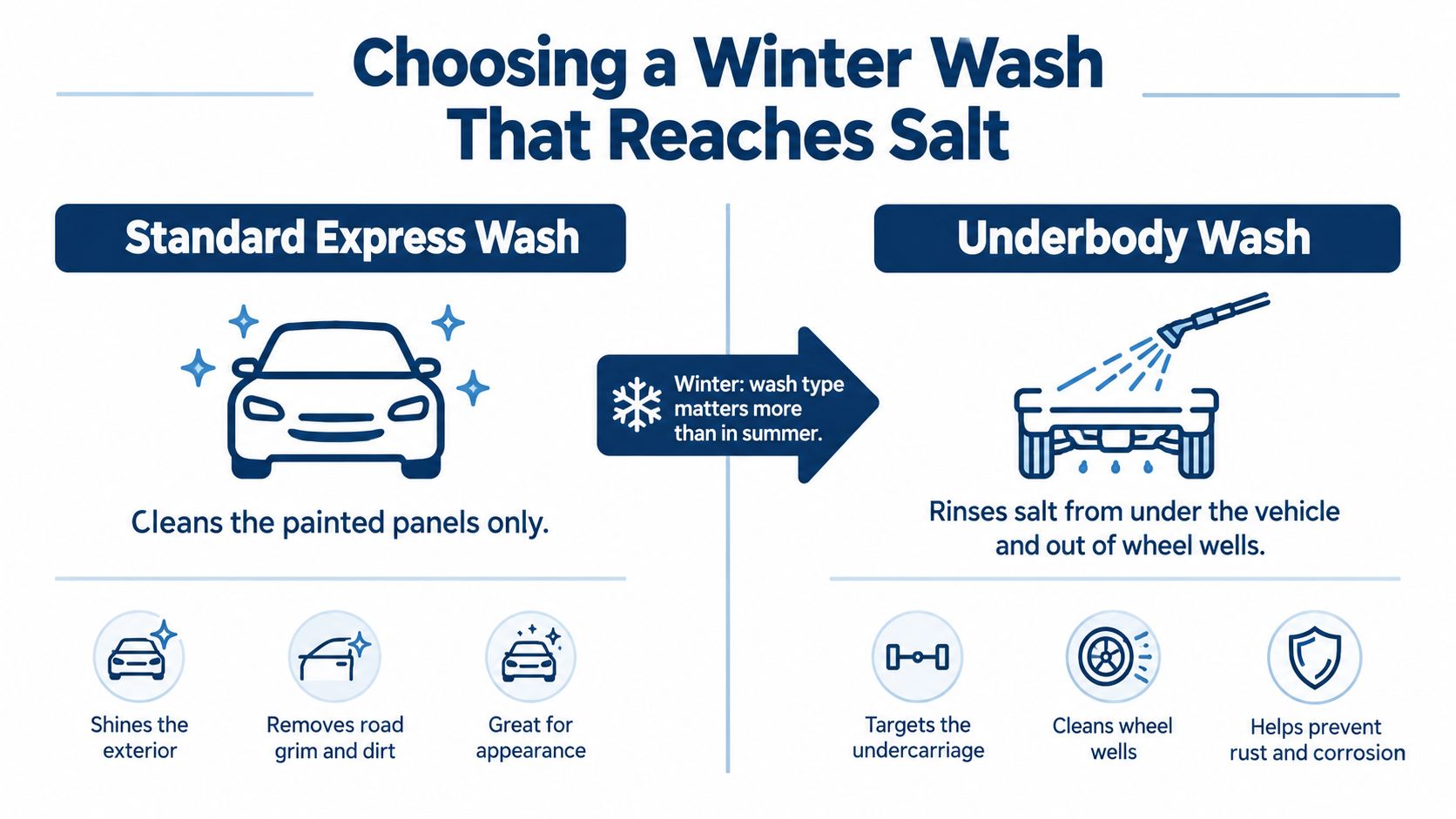
A basic express wash can clean the bodywork while leaving substantial contamination underneath. Salt collects around wheel wells, suspension components, rocker panels and underbody surfaces. The route the water takes matters more than the amount of foam on the windscreen.
The City of Toronto says it typically uses 130,000 to 150,000 tonnes of road salt annually for winter maintenance. That's a useful reason to ask what a wash includes, rather than choosing solely by the sign at the entrance.
Winter wash types compared
| Wash type | Reaches underbody | Starting price | Best for |
|---|---|---|---|
| Express, basic | Not when underbody washing is excluded | Check the current basic-package rate | Quick road-film removal between storms |
| Express with underbody upgrade | Yes, where underbody equipment is included | Basic package plus the listed upgrade | Salt-heavy exposure and high-mileage vehicles |
| Full-service | Only if an underbody rinse is included or added | Check the selected service tier | Exterior cleaning plus interior attention |
| Detailing by appointment | Confirm explicitly before booking | Quote for the vehicle and work required | Salt-soaked carpets and concentrated contamination |
| Rust proofing | Treats accessible underbody areas chemically | Confirm vehicle-size pricing | Longer-term protection, not salt removal |
Don't assume full-service means every hidden surface receives attention. It often describes an exterior wash combined with vacuuming, glass cleaning and hand drying. Those are useful services, but a clean dashboard doesn't tell you anything about the rear wheel wells.
Detailing solves a different problem. Once saltwater has soaked into carpet fibres, vacuuming loose grit won't remove the dissolved residue. Shampooing and extraction, followed by thorough drying, are more appropriate than another pass with the vacuum hose.
Rust proofing is separate again. Ask what product is applied, which areas are treated and how the vehicle should be prepared. A chemical application isn't a substitute for removing packed mud or salt.
For routine winter use, I'd prioritise underbody coverage over decorative wash extras. Wax and sealant options can help with surface maintenance, but they won't compensate for a rinse that never reaches the contaminated area.
How to Remove Road Salt Step by Step
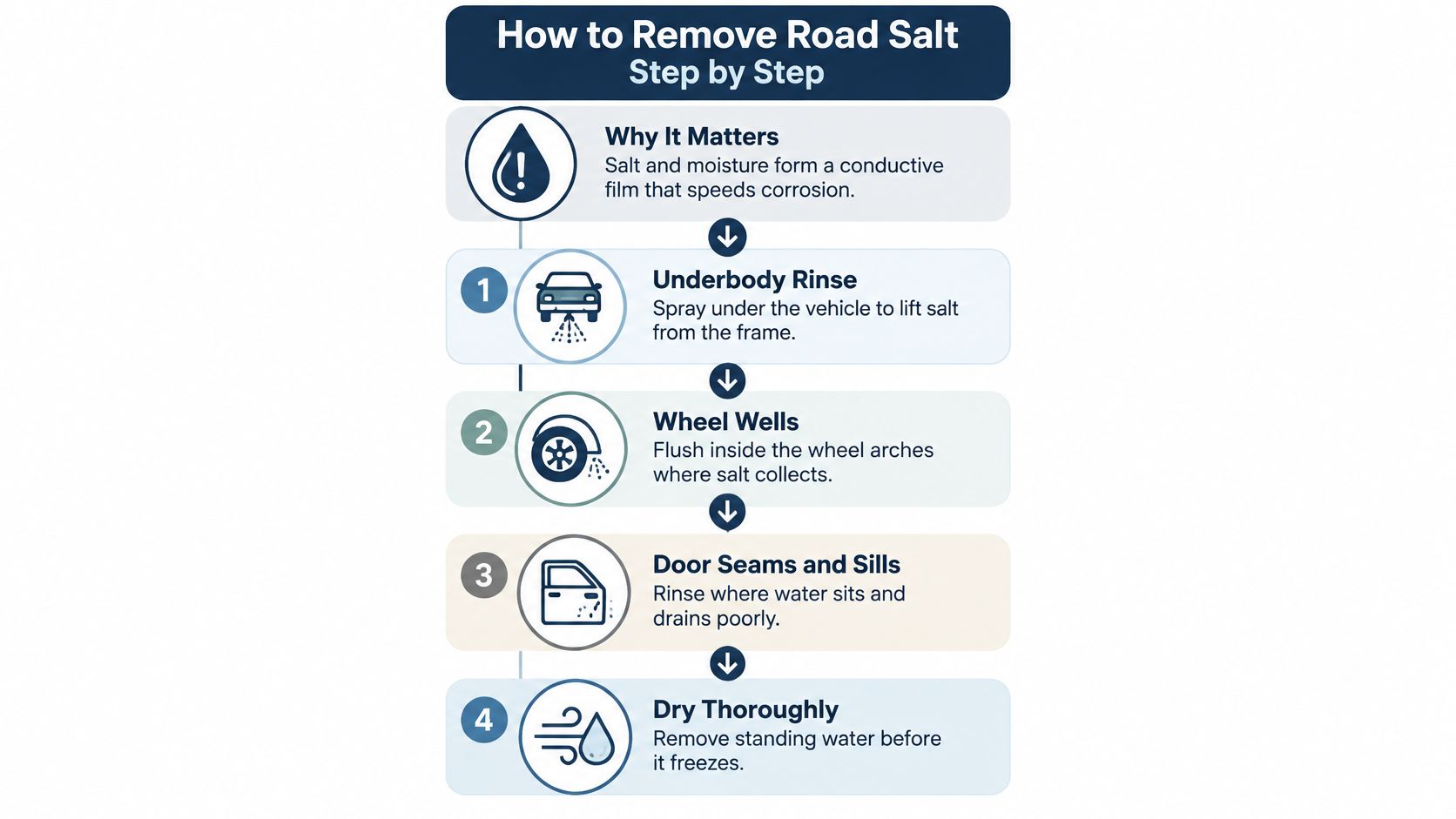
Salt and moisture form an electrolyte that accelerates corrosion on susceptible metal. The awkward areas are the ones that stay damp: seams, mounting points, wheel assemblies and places with restricted drainage.
Environment and Climate Change Canada's road-salt overview records an Ontario dataset covering 104,187 kilometres of salted roads. For GTA drivers, encountering treated pavement isn't an unusual event. The useful response is a repeatable cleaning method, not panic-buying every bottle with “winter” on its label.
A controlled rinse beats aggressive scrubbing
Choose suitable conditions. Check both the temperature and what happens after the wash. You need somewhere to dry the car properly, not merely somewhere to make it wet.
Start underneath and inside the wheel wells. Use the facility's underbody spray where available, then rinse accessible wheel arches to release loose slush and grit. Never crawl beneath a vehicle supported only by a jack, and don't force a pressure-washer nozzle against liners or electrical connectors.
Flush the lower edges and drainage areas. Rinse rocker panels, accessible door bottoms and the channels where dirty water collects. Keep the spray moving and avoid directing high pressure into seals, drain openings or damaged paint.
Wash painted panels from top to bottom. Use a mild, pH-neutral automotive shampoo and a clean wash mitt after the loose grit is gone. Give the lower panels extra attention with a separate mitt, rather than carrying their abrasive muck across the bonnet.
Rinse thoroughly before detergent dries. Work methodically around trim, badges and lower panels where foam can linger. Clean rinse water matters more than producing enough bubbles to obscure the neighbouring postcode.
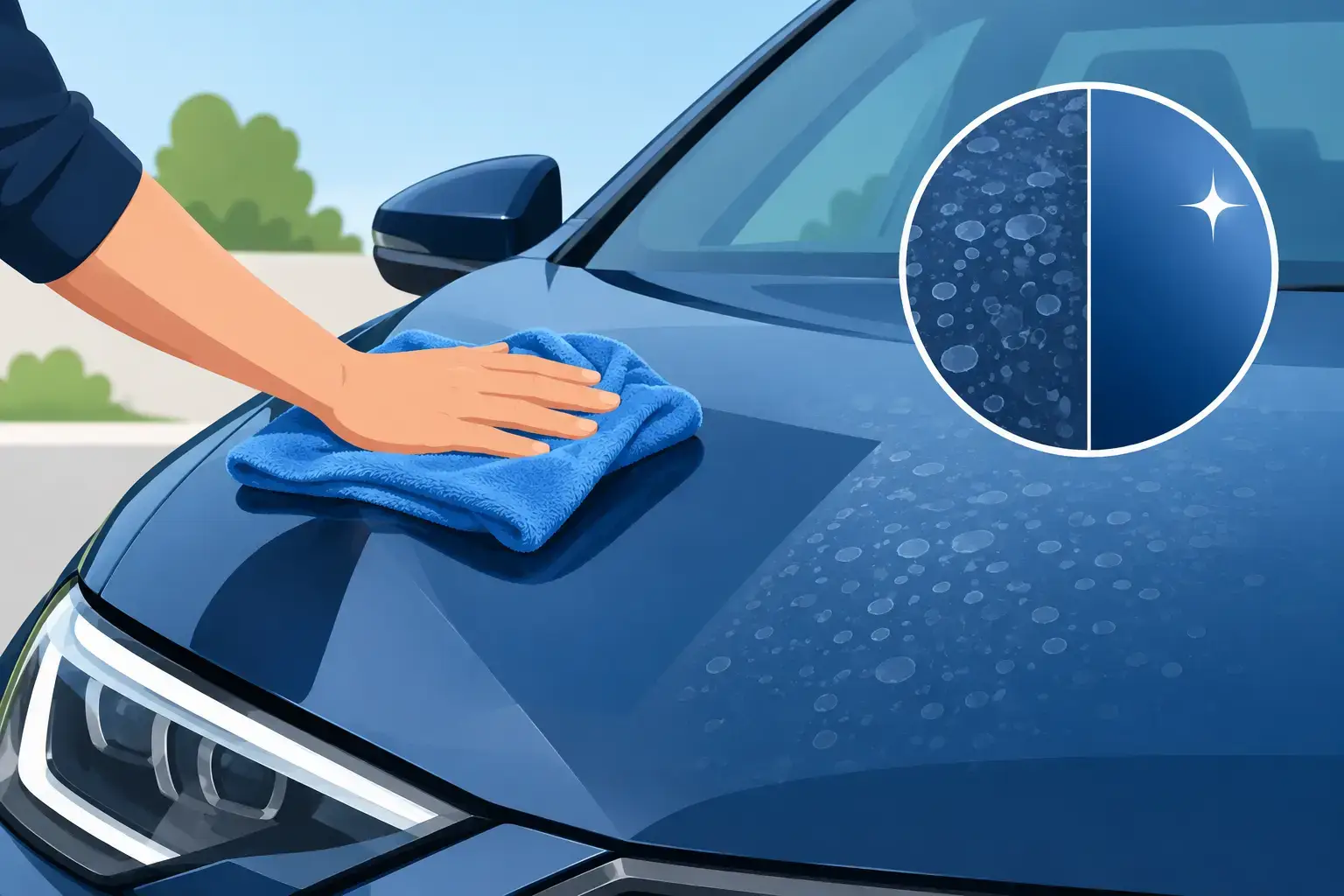
Remove trapped water with air and towels. Use a vehicle dryer or controlled airflow around mirror housings, seams and door jambs, then catch the runoff with a clean microfibre towel. Don't push a nozzle into seals or use oily workshop air on paint.
Finish with a cautious drive. Once the vehicle is dry enough to leave safely, drive gently and check braking response in a safe location. Light brake applications can help clear residual moisture, but a short drive doesn't replace drying the door seals.
An outdoor hose wash can leave pavement dangerously slippery even when the afternoon feels mild. Watch shaded areas and drainage paths, and stop if water begins freezing.
You don't need scalding water to dissolve road salt. Thorough rinsing is the priority; thermal shock, damaged finishes and burnt fingers aren't useful upgrades.
Washing reduces salt exposure. It doesn't rebuild rusted metal or make existing corrosion disappear.
How to Dry and Protect Your Car Before It Freezes
The morning-after problem usually begins with the water nobody bothered to remove. Door weatherstripping, mirror housings and the boot opening can retain moisture after the large panels look dry.
Drying is part of the wash, not an optional finishing touch for unusually enthusiastic owners.
Work around the openings first
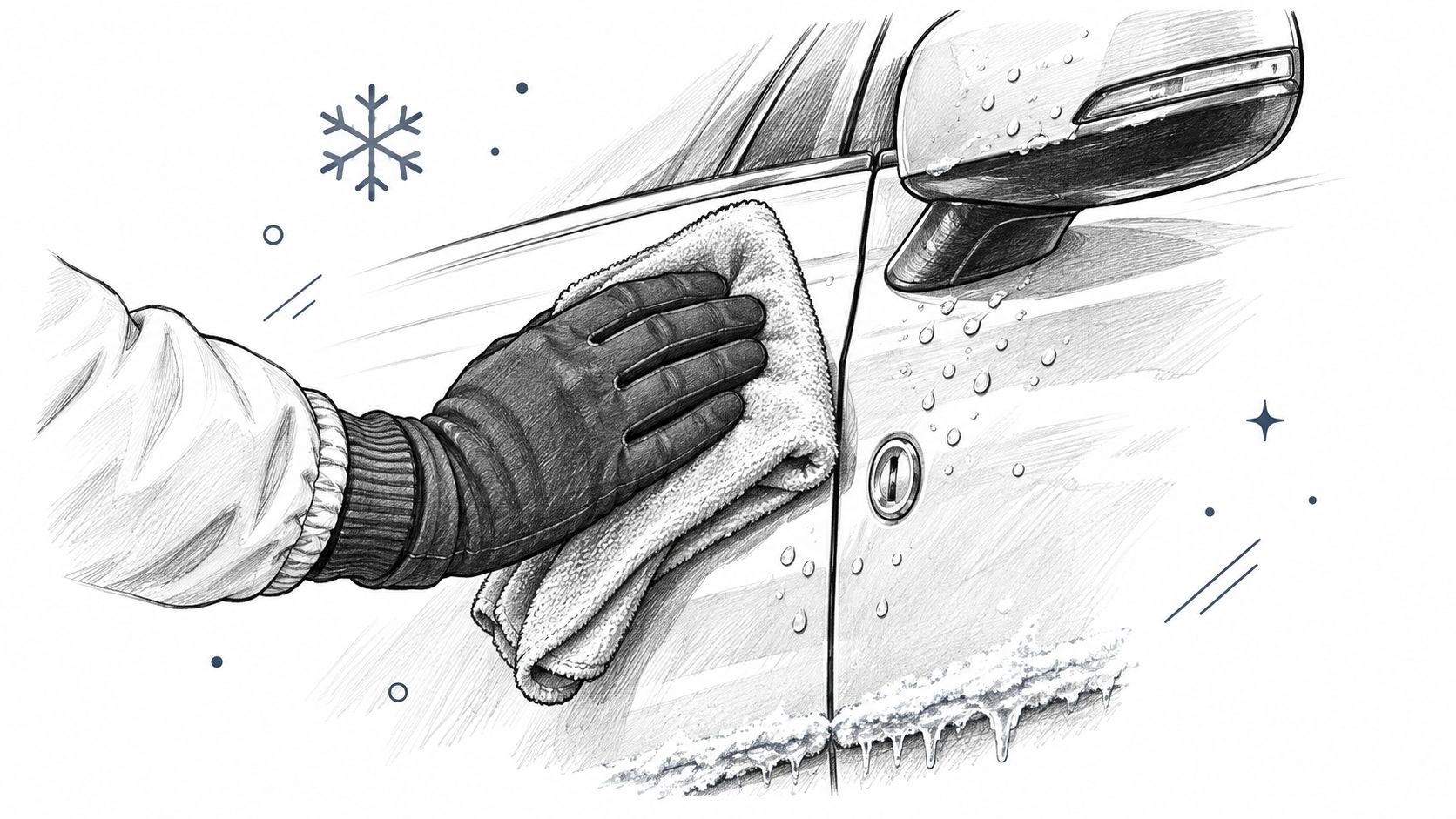
Open each door and towel the shuts and jambs. Fold a clean microfibre towel so you can change to a dry face as it becomes damp. Don't use the gritty towel from the rocker panels.
Wipe the rubber weatherstripping. Follow the whole perimeter, including the bottom edge. This is where a quick wipe across the painted panel misses the point.
Clear mirror housings and the boot seal. Blow out accessible trapped water, then blot the drips. Recheck mirrors after moving them, because another little reservoir may appear.
Protect compatible rubber. Apply a rubber-care product approved for automotive weatherstripping to a cloth, then wipe a thin layer onto clean, dry seals. If using silicone, confirm compatibility and avoid overspray on glass and controls.
Treat a mechanical lock only with an appropriate product. Use the lubricant specified for that lock rather than general-purpose oil. Don't combine graphite with other lubricants indiscriminately.
Check the wipers. Dry the blade edges and the glass where they park. Lift the arms only if the vehicle's design and instructions allow it, and don't leave them exposed where wind could snap them back.
Protection without the unnecessary extras
A synthetic paint sealant can make subsequent cleaning easier, but apply it to properly prepared paint within the product's working conditions. A cold, damp driveway isn't automatically suitable just because you've found the bottle.
A clean electric leaf blower can help chase water from trim. Yes, your neighbour may assume you've run out of leaves and moved on to the hatchback.
Tire dressing is cosmetic and doesn't protect the underbody from salt. If you only have time for one finishing task, dry the door seals.
Fixing Frozen Doors, Locks and Fogged Windows
A frozen door is an invitation to make an expensive mistake before breakfast. Don't yank the handle: if the rubber is bonded to the frame, pulling harder can damage the seal or handle.
Start by identifying what's frozen. A stuck latch, an iced lock cylinder and frozen weatherstripping need different treatment, even if all three produce the same vocabulary.
Frozen-after-wash problems and fixes
| Symptom | Likely cause | Fix |
|---|---|---|
| Door frozen shut | Water frozen around weatherstripping | Gently press the door inward to loosen ice, warm accessible edges with your hands, and try another door. Never pry the rubber or force the handle |
| Key won't turn | Ice in the cylinder, or a separate lock fault | Apply automotive lock de-icer and allow it to work. Warm the key gently in your hands, never with a flame |
| Wipers stuck to windshield | Wet blades frozen onto glass | Run the defroster, loosen surrounding ice with a plastic scraper, then gently free the blades before operating them |
| Inside windows fog up | Wet mats and other cabin moisture | Remove and dry wet mats, select fresh-air defrost and use air conditioning for dehumidification where available |
| Squeal or grinding on first drive | Possible packed ice, brake contamination or a mechanical problem | Stop and inspect accessible areas. Don't assume grinding is harmless or try to drive it away |
Use a plastic scraper on appropriate hard surfaces, not as a wedge between rubber and paint. If you can enter through another door, warming the cabin may help release the frozen opening.
For owners considering cabin preheating, the remote starter advice from Audio Jam, from Audio Jam Inc., offers context before choosing a system. Only operate a combustion-engine vehicle outdoors, never in an enclosed garage.
Avoid the kettle: Very hot water can crack cold glass, damage finishes and refreeze where you least want it.
Persistent grinding, dragging or abnormal braking deserves inspection. A wheel well full of ice is plausible; it isn't a diagnosis you should make from the driver's seat.
Booking Your Winter Wash and Saving Money
Spend according to the contamination, not your irritation with the weather. A routine rinse and a carpet extraction appointment solve different problems, and paying for the wrong one won't make winter shorter.
Check the forecast before leaving, then confirm the package includes the work you need. For a salt-exposed commuter, that means asking directly about underbody washing. If the cabin needs cleaning too, compare full-service options rather than assuming the exterior package covers it.
Match the booking to the job
Book detailing when salt residue has penetrated carpet or upholstery, especially if dampness keeps returning after the surface dries. Ask how the material will be cleaned and dried, and whether vehicle size, pet hair or unusually heavy contamination changes the quote.
If you intend to keep the vehicle long term, discuss rust proofing separately. Ask about existing corrosion, preparation and access to hidden areas before choosing a treatment.
Useful savings come from matching the payment method to how you really use the car:
- Prepaid wash tickets: Compare the effective cost against your usual package, and check whether underbody upgrades remain extra.
- Monthly memberships: Frequent drivers may benefit, but confirm included services, eligible locations and cancellation terms before joining.
- Participating-location vacuums: Remove dry grit before it gets worked deeper into carpet. Let soaked material dry rather than expecting a vacuum to extract water.
- Midday visits: Choose the warmer part of a suitable day, leaving time to finish drying before temperatures fall.
- Targeted interior cleaning: Deal with a salt spill locally before paying for unnecessary work across an otherwise clean cabin.
Keep a clean microfibre towel, a plastic scraper and lock de-icer somewhere accessible. De-icer locked inside the car is a particularly committed form of optimism.
During routine checks, look for packed slush in accessible wheel wells and along lower panels. Don't reach near moving components or climb underneath without proper support. Address wet carpet promptly instead of waiting until the white crust becomes a permanent interior feature.
A manageable routine is more useful than an occasional heroic clean followed by neglect.
Wash after the salt, not before the snow, and dry the seals before the freeze.
For exterior washes with underbody options, interior cleaning, detailing and rust proofing, visit Nanak Car Wash. Check the available services at your preferred location and choose the treatment that matches your winter buildup, whether that's a quick salt rinse or proper attention to soaked carpets.


 6600 Finch Ave W, Etobicoke, ON M9V 3Z6

 647-703-8515
 MON – SUN 8 AM to 7 PM