
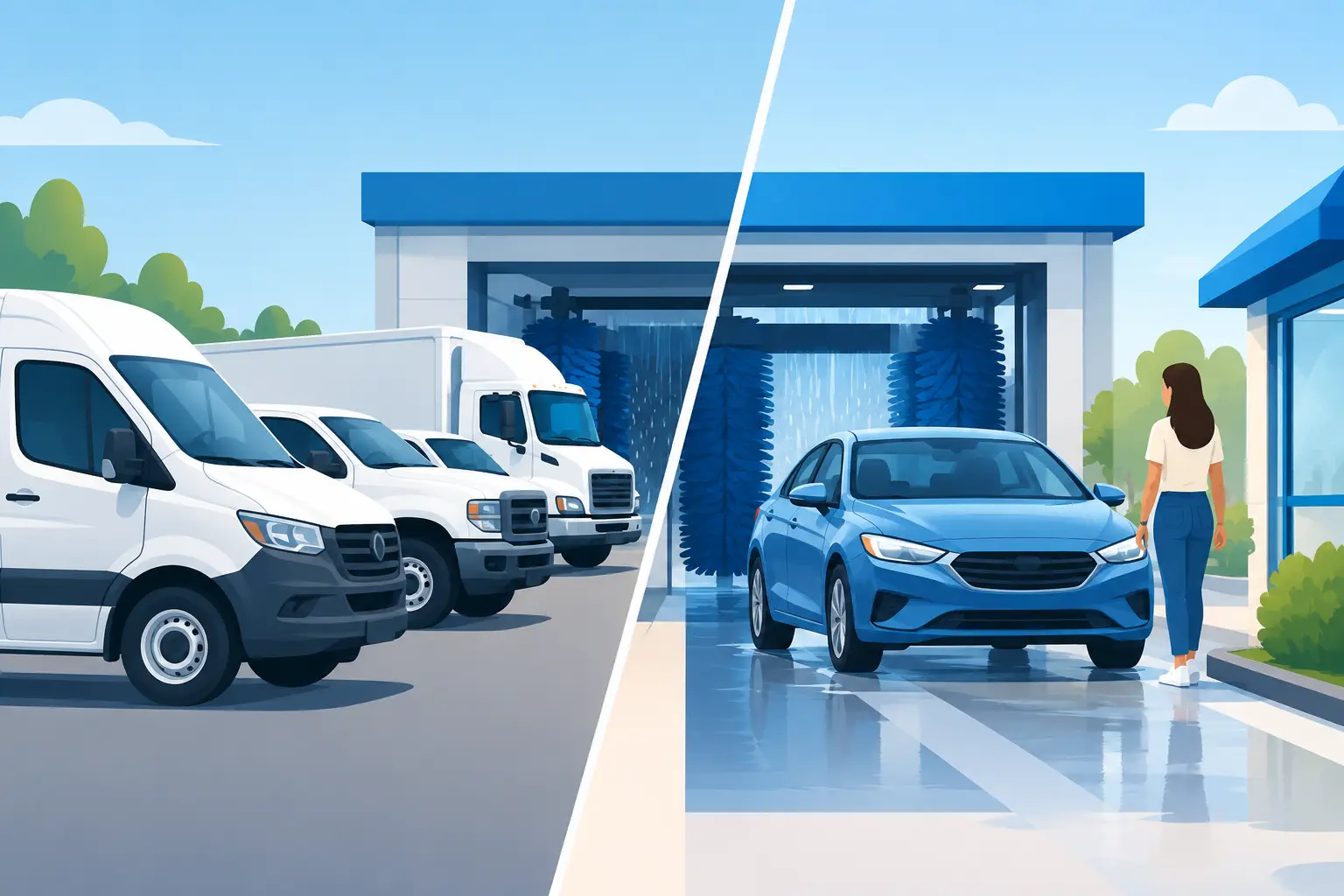
A delivery van with salt on the panels, a rideshare car with a messy interior, or a dealer vehicle sitting on the lot all send a message before anyone opens the door. When comparing fleet contracts versus retail car washes, the real question is not simply which option costs less per visit. It is which setup keeps your vehicles clean, presentable, and ready for work without creating extra admin or surprise expenses.
For many businesses, retail washes are the easy starting point. A driver pulls in when the vehicle needs attention, pays for the service, and gets back on the road. Fleet contracts add structure: agreed pricing, recurring service, and an account built around the number and type of vehicles you operate. Both can make sense. The best choice depends on how often your vehicles get dirty, who uses them, and how much consistency matters to your business.
Fleet Contracts Versus Retail: The Main Difference
Retail service is pay-as-you-go. You choose the wash or detailing package each time, pay at the visit, and adjust based on the vehicle’s condition. This works well for a small business with only a few vehicles, light driving schedules, or irregular cleaning needs. It also gives you flexibility to choose a basic exterior wash one week and a deeper interior service the next.
A fleet contract is designed for businesses with ongoing vehicle-care needs. Rather than treating every wash as a separate purchase, the business sets up a regular arrangement with the car wash. That arrangement may include fixed per-wash pricing, volume discounts, prepaid wash tickets, account billing, or a service schedule based on how the fleet operates.
The biggest difference is predictability. Retail gives you freedom on each visit. A fleet agreement gives you a routine, clearer operating costs, and a cleaner standard across the vehicles carrying your company name.
When Retail Car Wash Service Makes More Sense
Retail is often the better fit when wash volume is low or hard to predict. A contractor with one pickup truck, a small office with two company cars, or a business that uses rentals only occasionally may not need a formal account. Paying only when needed can be the most affordable route if vehicles are not on the road every day.
It also works when each vehicle needs different levels of service. One vehicle may only need a quick exterior wash after highway driving, while another needs vacuuming, mat cleaning, dashboard wipe-down, or shampooing after carrying customers. With retail service, you can select the right package at the time instead of paying for a level of care that is not always necessary.
Retail is not automatically more expensive. If your fleet has long gaps between visits, or if drivers keep vehicles reasonably clean on their own, a contract can become an unnecessary fixed commitment. The key is to look at the number of actual washes your business uses over several months, not just the number you hope to use.
When a Fleet Contract Can Save More
Fleet contracts usually become more valuable when vehicles need frequent, repeat service. This is common for rideshare operators, delivery companies, sales teams, rental businesses, dealerships, security companies, and service fleets. These vehicles are visible all day, often carry customers or equipment, and collect road grime quickly.
A contract can reduce the cost per wash compared with standard retail pricing when you have enough volume. More importantly, it can make spending easier to plan. Instead of collecting individual receipts from several drivers and trying to explain changing expenses at month-end, you have a consistent account process.
For dealer inventory, a clean exterior and tidy interior are part of the sales floor. For a plumbing, electrical, or HVAC company, clean vans reinforce the idea that the crew will respect a customer’s home. For rideshare and rental vehicles, a fresh interior can directly affect reviews and repeat business. In those cases, cleaning is not an extra. It is part of the service customers are buying.
At Nanak Car Wash, fleet-friendly pricing can help businesses that need regular washes without turning every visit into a separate decision. The right arrangement should match your real vehicle count and service frequency, not push you into more washes than you need.
Look Beyond the Price Per Wash
A lower per-wash number is useful, but it should not be the only number in your decision. A fleet plan that is difficult for drivers to use, has unclear service limits, or does not cover the wash types your vehicles need may cost more in lost time and frustration.
Consider the time spent managing retail visits. Are drivers submitting receipts? Are supervisors approving reimbursements? Do vehicles go too long between washes because no one feels responsible for booking them? A contract with simple account access can remove some of that friction.
Also consider what dirty vehicles cost you. A neglected vehicle can make customers question your professionalism. Road salt and grime left in place through the winter can be harder to remove later. Food crumbs, mud, pet hair, and spills in passenger vehicles can build up fast, making a quick exterior wash insufficient. The cheapest option on paper may not protect the appearance of your fleet.
Questions to Ask Before Choosing a Fleet Plan
Before committing to a contract, get specific. A good fleet arrangement should be simple enough that drivers and managers will actually use it. Ask how the account works, what each service includes, and how exceptions are handled.
Make sure you understand these practical details:
- How many vehicles are eligible, and can vehicles be added or removed as your business changes?
- Does the price include exterior washes only, or can you arrange interior cleaning, detailing, and add-on services?
- Is billing monthly, prepaid, or based on completed visits?
- Can drivers use the account easily at the locations most convenient to their routes?
- Are there limits on wash frequency, vehicle size, or specialty services?
These questions matter because fleets are rarely identical. A compact sales car, cargo van, pickup, and passenger shuttle all get dirty in different ways. The best plan leaves room for that reality.
Build a Cleaning Schedule Around How Vehicles Work
A smart fleet program does not mean every vehicle gets the same service every week. It means setting a standard based on use. High-mileage delivery vans may need regular exterior washes to remove road film and winter residue. Rideshare vehicles may need frequent vacuuming and interior touch-ups. Dealer vehicles may need hand-finished detailing before photos, test drives, or customer delivery.
Start by grouping vehicles by use rather than treating the whole fleet as one category. Customer-facing vehicles should have the highest appearance standard. Work trucks may need more focus on exterior cleanliness and protective services. Vehicles that travel through salted roads during winter should be washed consistently, with attention to the underbody when available.
Then assign responsibility. If no one owns the schedule, cleaning slips behind busy workdays. A fleet manager, office administrator, or designated driver can track visits and flag vehicles that need more than the standard wash. That simple accountability often delivers better results than a discount alone.
Do Not Forget Deep Cleaning and Protection
A wash contract is excellent for regular upkeep, but it may not replace occasional detailing. Regular exterior cleaning keeps the fleet looking cared for. Interior detailing handles the buildup that comes from daily business use: stained upholstery, embedded dirt, salt marks, odors, pet hair, and neglected mats.
Rust proofing is another separate decision for businesses keeping vehicles for years, especially where winter road salt is a regular concern. A clean vehicle is easier to inspect, and early care can support a better-looking, better-maintained fleet over its working life.
If your drivers are constantly dealing with dirty interiors or vehicles that represent your business at customer appointments, build those services into your planning. Do not assume a basic wash will solve every presentation issue.
Choose the Option Your Team Will Actually Use
The practical choice between retail and a fleet contract comes down to usage. If your vehicles need occasional cleaning and your needs change week to week, retail service keeps things flexible. If you operate several vehicles, depend on a professional appearance, and want predictable costs, a fleet arrangement can bring better value and less hassle.
Start with your last three months of wash receipts, vehicle mileage, and customer-facing activity. That history will show whether you need flexibility or a regular plan. Clean vehicles are easier to maintain when washing is treated as part of the work schedule, not something to handle only when they start looking bad.



 6600 Finch Ave W, Etobicoke, ON M9V 3Z6

 647-703-8515
 MON – SUN 8 AM to 7 PM