
A musty car smell is usually trapped moisture feeding mould or bacteria, most often on a damp evaporator, a cabin filter, or soaked carpet underlay, not a surface that needs more fragrance.
Say you climb into your car after a rainy commute across the GTA. Your jacket's damp, the windows need clearing, and the moment you start the fan, you get a noseful of cottage basement. The little pine tree on the mirror is doing its best, but now you've got cottage basement with a hint of alpine forest.
The useful clue isn't how unpleasant the smell is. It's when it appears.
Table of Contents
- Why a Musty Car Smells Like a Wet Basement
- Match the Odour to Its Source
- Water Hiding Under Mats and in the Trunk
- Dry the Evaporator Drain and the Cabin
- Habits That Keep the Cabin Dry
- Call a Detailer When the Smell Returns
Why a Musty Car Smells Like a Wet Basement
You park after a short drive through slush, leave your wet boots on the mats, and shut the doors. By morning, the windows look hazy inside. The carpet doesn't seem soaked, so you wipe the dashboard and blame the car's age.
Age alone doesn't explain that earthy odour. Water, dust, pollen and road film collect in enclosed spaces, including the ventilation housing and the layers beneath the carpet. When those spaces stay damp, microbes can grow and produce the compounds you smell.
The Water You Don't See
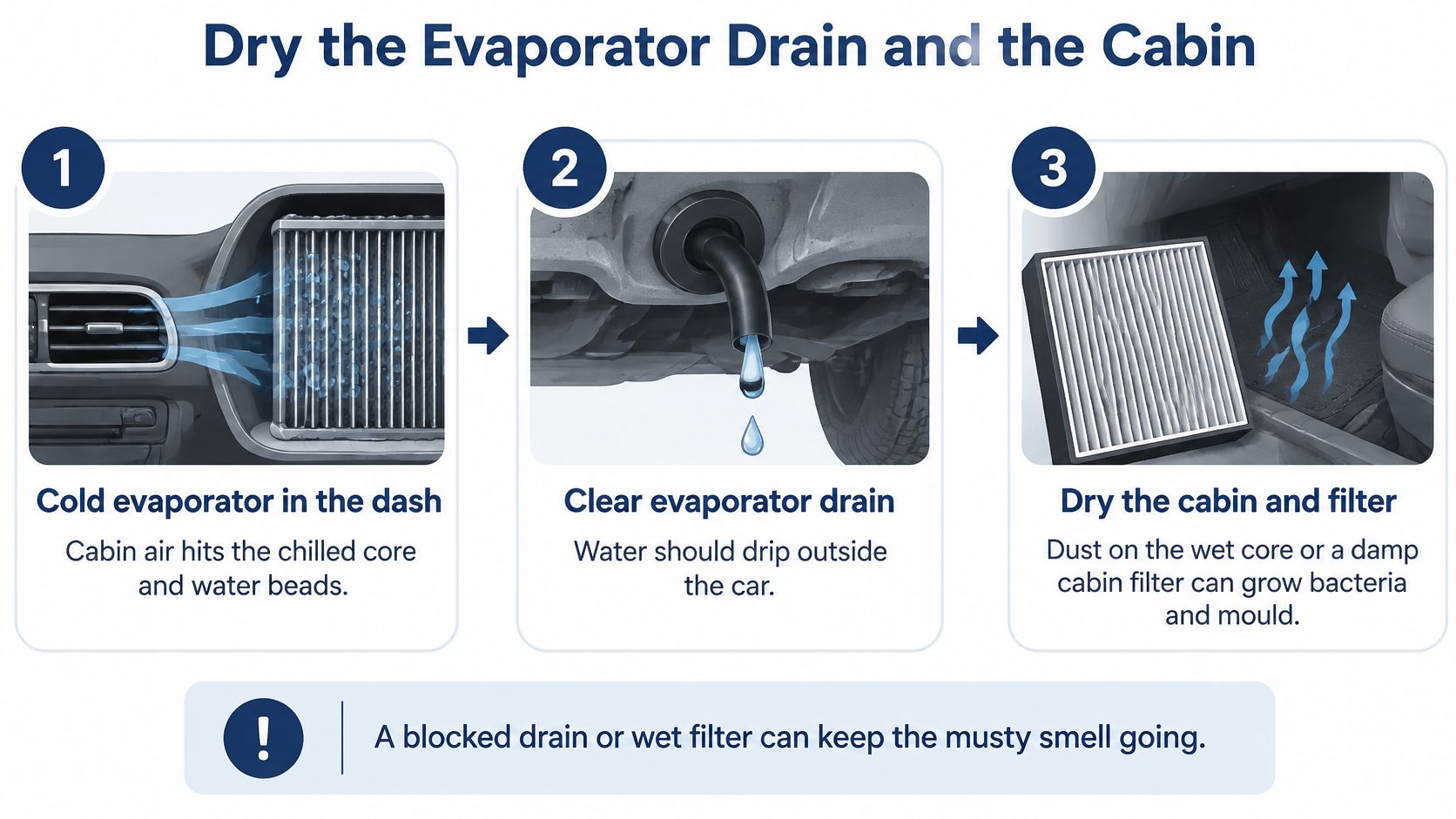
Air conditioning removes humidity by collecting condensation on a cold evaporator behind the dashboard. That water is supposed to leave through a drain. Meanwhile, meltwater from your boots can work its way beneath the visible carpet, where it's much harder to evaporate.
Neither problem announces itself with a dramatic puddle. You might notice only a brief blast from the vents or a stale smell when you open the door.
Practical rule: A smell that returns after cleaning is a reason to look for retained water, not to buy a stronger scent.
The broader moisture-control principle behind mold prevention advice from WipesBlog is useful here: cleaning contaminated material and preventing it from staying wet are separate jobs. Building advice isn't a substitute for vehicle-specific repairs, but the distinction matters.
If you're asking “why does my car smell musty?”, start with the switch on the dashboard, not the spray bottle. The parking-lot checks below help separate water in the ventilation system from water under your feet.
Match the Odour to Its Source
Before buying anything, sit in the parked car with the climate system off. Is the smell already there? Open the trunk, too, because a damp cargo area can make the whole vehicle seem stale.
Next, start the fan. Compare fresh-air mode with recirculation, then switch on the air conditioner. If you need the engine running, do this outdoors, never in a garage.
Let the Trigger Narrow the Search
A blast that arrives from the vents points towards the intake, evaporator housing or cabin filter. Consumer Reports' guide to musty car air conditioners explains that moisture remaining on an evaporator can support bacterial or mould growth.
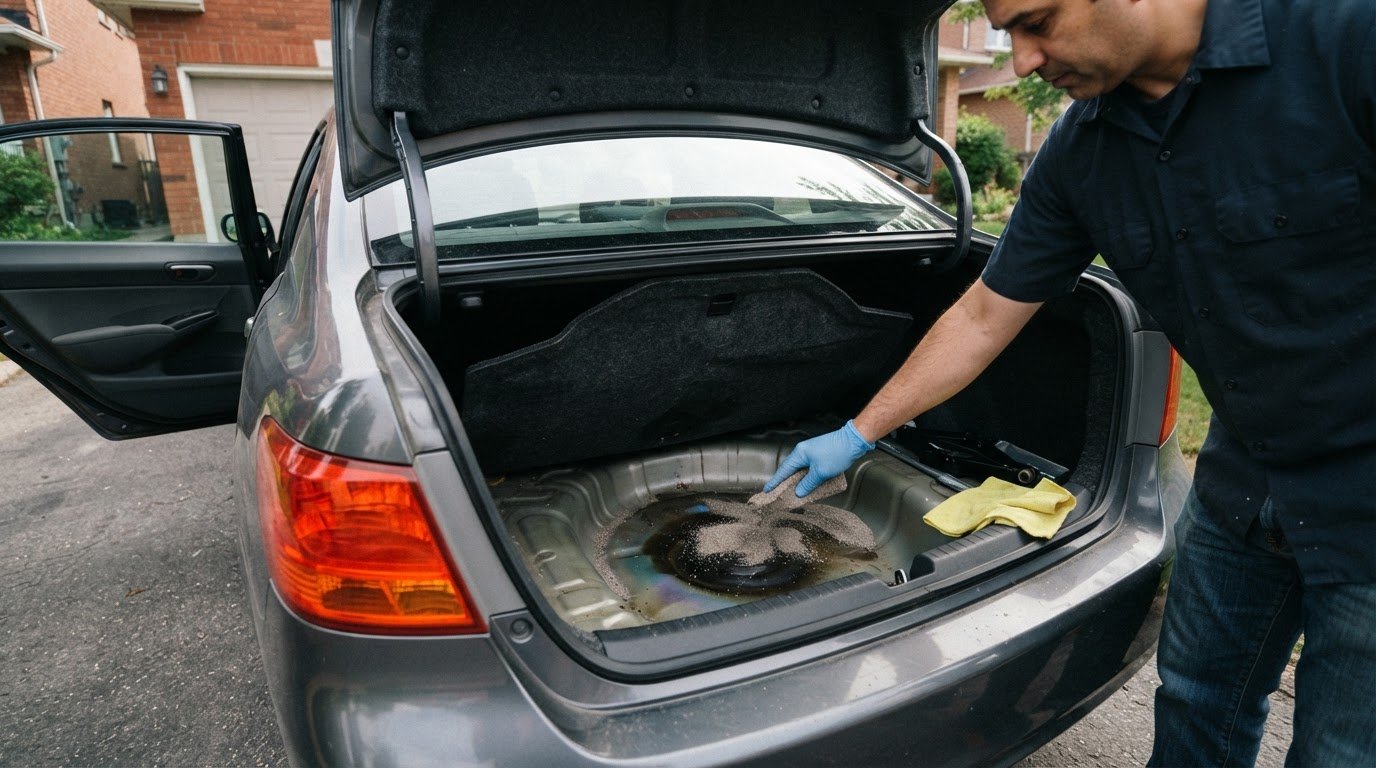
A smell that's present before the fan starts deserves a floor-and-trunk investigation. Lift the mats, press accessible carpet edges and inspect the spare-tire well. Don't let a dry-looking carpet surface end the search.
Changing between fresh air and recirculation provides a clue, not a component-level diagnosis. The modes change the air's route through the vehicle, so a difference in smell can help a technician narrow the search without proving exactly which part is contaminated.
Musty car odour triggers and where the water sits
| When you notice it | Likely source | Check first | Fix that lasts |
|---|---|---|---|
| Strongest as the fan or A/C starts | Damp evaporator, HVAC case or cabin filter | Condensate drip beneath the firewall; damp or discoloured filter; fresh air versus recirculation | Inspect and clear a restricted drain, replace a contaminated filter, clean the HVAC system and use fan-only drying before parking |
| Present with the climate system off | Mats, seat foam, carpet backing or underlay | Lift mats and press accessible carpet edges for hidden dampness | Extract water and dry the padding before deodorizing |
| Worst in the trunk or spare well | Clogged drains, seal leak or wet insulation | Spare-tire well, door drains and sunroof drains | Clear accessible drains, dry the well and repair the leak |
| After rain, slush or snowmelt | Wet footwear, door seals, cowl or floor insulation | Soaked mats, interior window condensation and carpet that feels dry on top | Dry the underlay with airflow and avoid leaving wet materials enclosed |
| Returns within days of cleaning | An active moisture source or retained water | Cabin filter, condensate drain and hidden floor padding | Remove the water source rather than relying on fragrance or ozone alone |
Why Ozone Isn't the Verdict
Fragrance covers the odour without removing wet debris or drying insulation. Ozone is different from perfume, but it still can't repair a seal, unblock a drain or extract water from foam. It can harm people, so treatment requires an empty vehicle and controlled ventilation before re-entry; don't assume the disappearance of an ozone smell proves the car is safe.
For a useful comparison outside the automotive setting, Purified Air Duct Cleaning's guidance to find the source of musty odors reinforces source-finding rather than scent-covering. Keep the actual inspection vehicle-specific.
Choose the row that best matches your strongest trigger. If the car smells before you touch the fan, start beneath the mats; if the vents deliver the first blast, prioritise the HVAC system.
Water Hiding Under Mats and in the Trunk
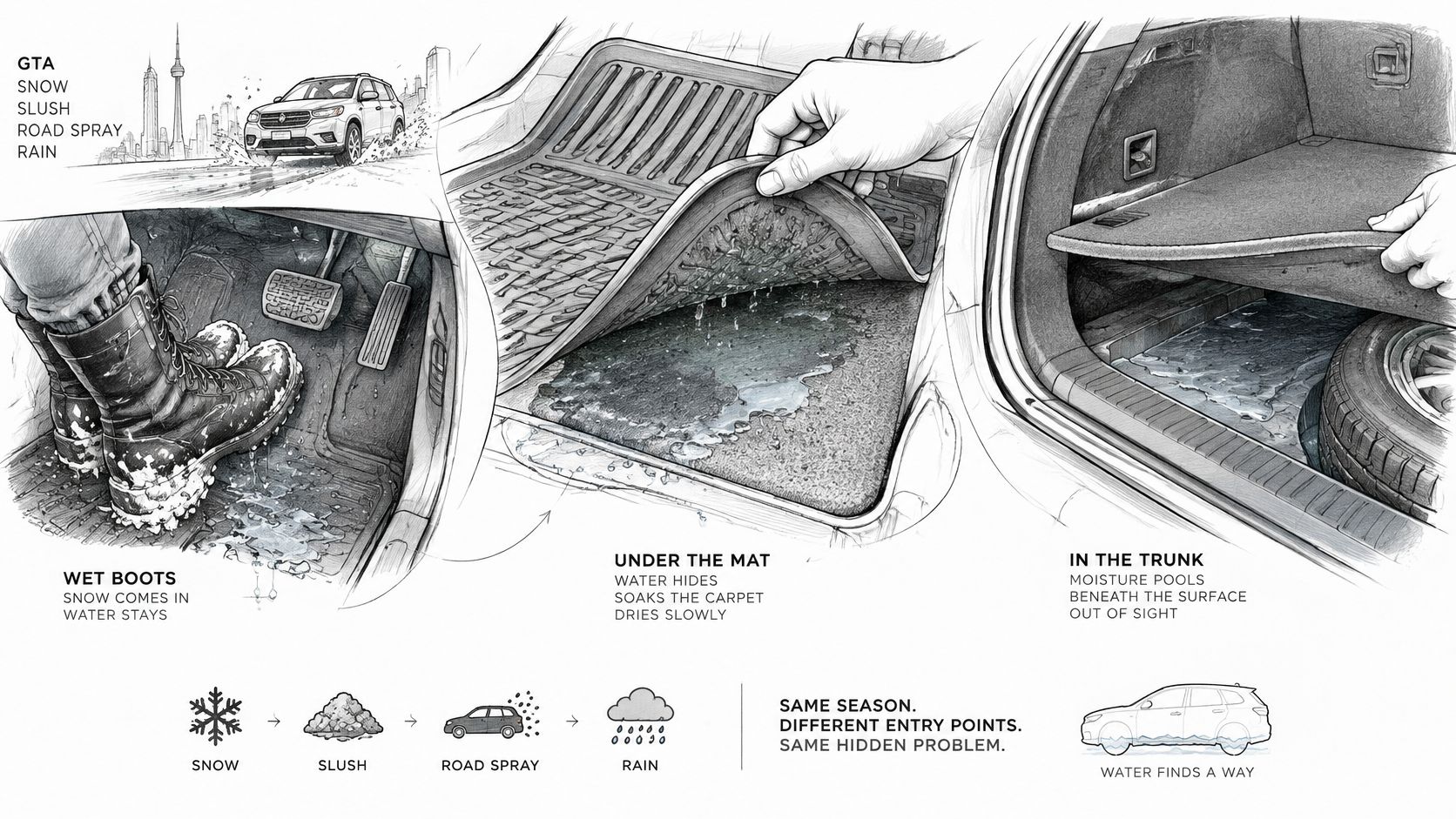
Say your winter mats have raised edges and look perfectly capable of containing a small Ontario lake. You empty them, put them back, and assume the floor underneath is fine. Then you press the carpet beside the seat rail and feel a cool, damp patch.
Carpet underlay is like a sponge beneath a tea towel. The towel can feel nearly dry while the sponge still holds water. Seat foam, floor insulation and trunk liners can do the same, which is why washing the visible surface doesn't necessarily remove the source.
Follow the Damp Patch
Wet clothing and footwear are obvious suspects. Less obvious entry points include tired door or trunk seals, clogged cowl drainage, sunroof drain problems, and leaking heater or air-conditioning components. Repeated interior shampooing can add another load of water if the padding never dries properly.
Use a torch and an absorbent cloth rather than relying on a quick glance.
- Under the mats: Remove every mat and press the carpet at accessible edges, especially beside footwells and seat rails.
- Inside the trunk: Lift the removable cargo floor and inspect the spare-tire well for water, staining and damp insulation.
- Around the openings: Look for damaged seals, debris near drainage paths and water trails on trim.
- On the windows: Repeated condensation inside a parked car is a clue that moisture remains in the cabin, though it doesn't identify the leak.
Don't force wire into sunroof drains or dismantle trim around airbags. If the drain routing isn't clear, have a technician inspect it.
Dry Beneath the Surface
Health Canada's guidance on moisture and mould identifies mould as a potential health hazard and recommends correcting moisture problems. That makes a persistent damp cabin worth investigating rather than tolerating.
Repair the water entry point, extract what you can and move air across the affected material. Use a wet/dry vacuum rated for liquid pickup, not your household dry vacuum. Remove washable mats and dry them separately.
For the carpet-specific part of the job, J.G. Carpet Cleaning's car drying guide is a useful companion when planning extraction and airflow. Soaked underlay may need access beneath the carpet, not another pass over its face.
A clean carpet surface isn't proof that the padding underneath is dry.
If the carpet stays heavy or damp after extraction, stop adding cleaning solution. Washing it again and closing the doors is how you end up doing the same job next weekend.
Dry the Evaporator Drain and the Cabin
The tricky part of a vent-only smell is access. You can wipe every dashboard vent until it gleams and still leave the damp source behind the dash. The evaporator is a finned heat exchanger inside the HVAC housing, not the plastic grille you can reach from the driver's seat.
A wet core coated with debris, a contaminated filter or retained condensate can keep supplying odour to otherwise tidy vents. Drying helps, but established contamination may also require controlled cleaning.
Set Up Before You Start
Gather a torch, gloves, absorbent cloths, a liquid-rated wet/dry vacuum and a portable fan suitable for the work area. Have the correct replacement cabin filter available if inspection shows it needs changing. Your owner's manual should identify the filter location and replacement procedure.
Health Canada's car and garage safety guidance identifies the cabin air filter as a control point for outside pollutants and advises replacement according to the manufacturer's schedule. Don't substitute a universal-looking filter that leaves gaps around its edges.
Work outdoors if the engine needs to run. For stationary interior drying, use a safely positioned portable fan rather than leaving an engine idling in an enclosed space. Keep electrical connections away from extracted water and don't leave improvised drying equipment unattended.
A Practical Weekend Sequence
Record the trigger before cleaning. Note whether the cabin smells with the climate system off, whether the fan produces the strongest burst, and whether fresh air changes it. That gives you a baseline instead of a vague memory after everything smells like cleaning solution.
Remove the mats and vacuum loose grit. Press accessible carpet edges, seat upholstery and trunk lining for dampness, then photograph any water marks before wiping them away. Those marks can help locate an intermittent leak.
Check condensate drainage without guessing. Run the air conditioner outdoors and look for clear water dripping beneath the firewall area. Drip visibility depends on operating conditions, so no visible water isn't proof of a blockage. Combined with vent odour or a wet passenger footwell, however, it warrants drain inspection.
Inspect the cabin filter and its housing. Replace a damp, dirty or discoloured filter with the specified part, observing its airflow arrow, and investigate why the housing got wet. With the replacement fitted, compare fresh air and recirculation again.
Extract retained water, then provide airflow. Use the wet/dry vacuum on appropriate carpet and upholstery surfaces, with repeat suction passes rather than repeated soaking. Aim a fan across accessible damp areas and keep checking the backing, not just the pile. If saturated padding remains inaccessible, arrange professional removal or lifting of the carpet.
Use fan-only drying near the end of a cooling trip. Filterbuy's cabin A/C odour guide recommends running the blower with the air conditioner switched off for about 10 minutes before parking to help dry the evaporator. This is a drying habit, not a substitute for repairing a restricted drain or cleaning a contaminated housing.
Finish with source treatment, not scent. If vent odour persists after drainage and filter checks, arrange appropriate HVAC cleaning. Choose a cleaner specifically intended for automotive evaporators and the access route your vehicle supports; don't pour household disinfectant into dashboard vents or flood the intake.
Clear the Drain Without Creating Another Repair
The drain outlet is often awkward to reach. Consult vehicle-specific service information before touching it, and don't crawl beneath a vehicle supported only by a jack.
A coat hanger pushed blindly into a tube can damage components, dislodge the hose or drive debris farther inside. Likewise, a forceful blast of compressed air isn't a sensible default. If the outlet is accessible, remove loose debris at its mouth gently; leave deeper clearing to a technician using the correct access and equipment.
Be cautious about drain-tube foam cleaners, too. A product designed for that route still needs a compatible vehicle application, and the outlet must be able to discharge the cleaning liquid. More foam isn't better when you don't know where it will collect.
Decide Whether It's Actually Fixed
Don't judge the result while the cabin still smells strongly of shampoo or HVAC cleaner. Once cleaning residues have cleared and the materials are dry, check the vehicle with the fan off, then with it on.
Finish line: Neutral air in both conditions matters more than a freshly perfumed dashboard.
A remaining vent-only smell needs further HVAC attention. A remaining background smell calls for another search of concealed padding or cargo-area insulation.
If both appear together, you may have more than one wet zone. Fixing the filter won't dry the floor, and extracting the floor won't clean an evaporator. Keep the observations separate so you don't repeat the easy task while missing the inaccessible one.
Habits That Keep the Cabin Dry
Prevention means refusing to re-wet a cabin you've just rescued. On a slushy evening, that starts before your boots cross the sill. Knock off what you can, empty collected meltwater and let the mats dry outside the car when practical.
Summer needs a different routine. A short drive with the A/C working hard can end before the HVAC housing has had much chance to dry, while a rain-soaked jacket adds moisture to the seats. Don't leave wet gear in the vehicle overnight because the weather forecast says sunshine.
Treat Humidity as a Warning, Not a Dashboard Target
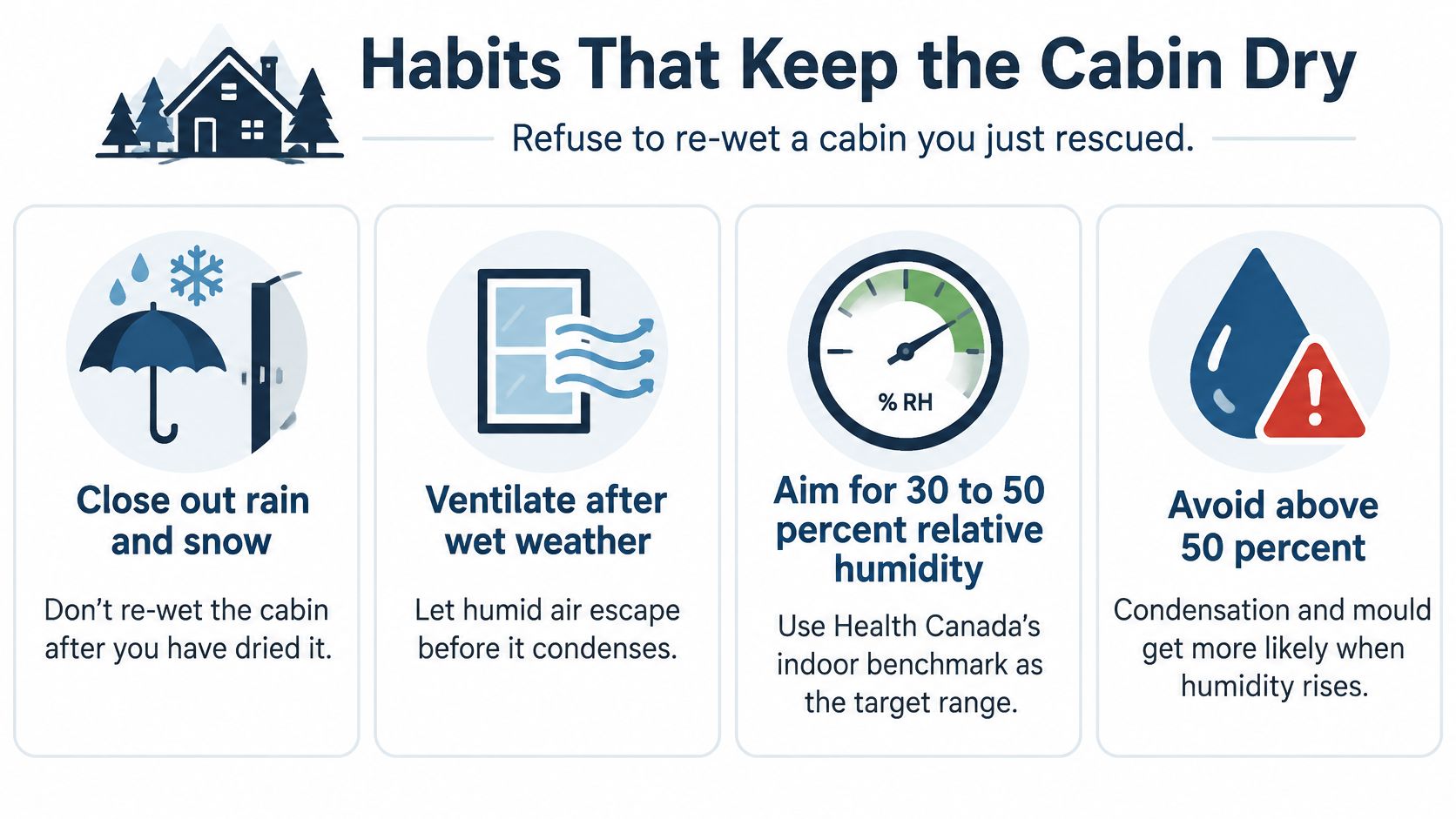
Health Canada's indoor air-quality guidance recommends indoor relative humidity between 30% and 50% and notes that levels above 50% increase the likelihood of condensation and mould or fungal growth. That's an indoor benchmark, not a vehicle-specific operating limit.
A parked car experiences rapid temperature changes, and hidden HVAC spaces can remain wetter than the air at the driver's seat. A cabin that feels comfortable can still contain damp filter material or padding.
The practical response isn't to chase a humidity reading all day. It's to reduce incoming water and give retained moisture somewhere to go.
Make the Habits Fit Ontario Weather
- After wet trips: Remove soaked clothing and umbrellas. Ventilate in a secure, dry place where open windows won't admit rain or create a security problem.
- During humid weather: Build fan-only drying into the end of A/C trips instead of shutting down immediately after cooling.
- When leaves collect: Remove loose debris from the cowl area and inspect accessible drainage openings. Don't push debris into hidden drain tubes.
- At scheduled maintenance: Replace the cabin filter when the manufacturer specifies, even if it doesn't yet smell.
- After an interior wash: Leave time and suitable conditions for full drying. A late shampoo followed by closed doors overnight is a poor plan.
If a seal, heater component or drain keeps admitting water, no cleaning routine will compensate for it. A professional extraction can remove retained moisture from accessible carpets and upholstery, but recurrence still needs an inspection of hidden padding and the vehicle's drainage and sealing systems.
Think of a musty smell as evidence of a wetting event. Perfume can change what you notice; it can't change what's still wet.
Call a Detailer When the Smell Returns
You've checked the drainage, fitted a dry filter, emptied the trunk well and dried the mats. The car smells neutral when you open the door and when you start the fan. That's a sensible place to stop tinkering and see whether it stays that way after wet weather.
Book help if the odour returns soon after cleaning, the carpet stays cool and heavy after extraction, or the damp material is beyond reach. Eye, nose or throat irritation in the cabin is another reason to stop masking the problem and get it assessed.
Match the Appointment to the Job
A detailer can address contaminated carpet, upholstery and interior residue. A mechanic is the right choice for an inaccessible condensate drain, a heater leak or a fault inside the HVAC housing. Some cars need both appointments, and an express exterior wash won't replace either.
At Nanak Car Wash, we do detailing by hand. Our Limited Time Special detailing package is $99 and includes one free exterior wash. SUV, van and pick-up truck detailing costs extra, and pet hair removal or extra effort also costs more.
You can book our detailing appointments online or call 416-749-0202. Tell us whether the smell is vent-only or constant, where you found dampness, and whether a leak has already been repaired.
- Bring the useful clues: Mention wet footwells, trunk water or a filter that was damp.
- Set the right expectation: Interior cleaning addresses residue and soiling, not a mechanical water leak.
The win isn't a cabin that smells freshly sprayed at pickup. It's one that still smells neutral after the next rainy or slushy week.
We offer appointment-based interior detailing to tackle carpet, seat and crevice cleaning once the moisture source is under control. Visit Nanak Car Wash to book, and tell us when the smell starts so the conversation begins with the wet area, not another air freshener.



 6600 Finch Ave W, Etobicoke, ON M9V 3Z6

 647-703-8515
 MON – SUN 8 AM to 7 PM