
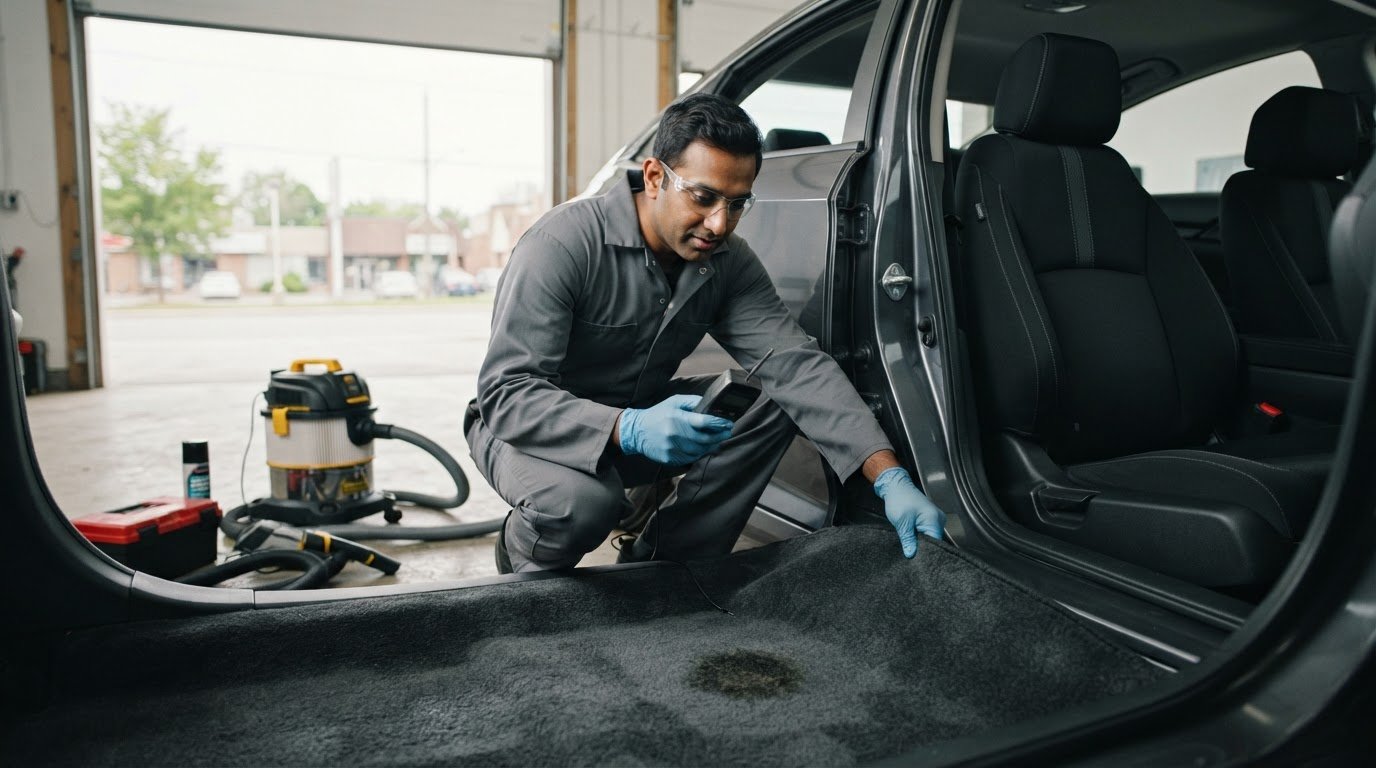
A damp car can require more cleanup than a visible patch suggests. The cost of mold remediation in a car interior depends on how far the growth has spread, the vehicle’s size, and whether hidden materials need treatment.
It’s easy to focus on visible spots, but moisture trapped in carpet, seat foam, or other interior layers can make cleanup more involved. A lingering smell or stain may remain after visible mould is removed, so the right treatment depends on where the moisture and growth have reached.
This guide explains how the affected area influences cost, what can happen to carpets and seats, and how professionals address stains and odours. It also covers service and drying times, along with practical steps to help prevent mould from returning.
Key Takeaways
- Odour treatment and stain removal are different challenges; some stains may remain even after the mould is removed.
- Plan for drying time as well as cleaning: the work can take from hours to several days depending on severity.
- Find and address the moisture source to help reduce the chance of mould returning; saturated underlay or seat foam may also add work.
Car mold removal price ranges by contamination severity
Severity and vehicle size shape the final estimate.
Costs vary with the amount of affected material and the labour involved. A small patch on an accessible surface is different from mould that has spread beneath the carpet or into seat materials. Floodwater can affect multiple areas at once.
DIY car mold removal avoids professional labour charges, but the total cost depends on cleaning supplies and protective equipment. Limit DIY cleaning to small, accessible patches. Extensive growth may involve hidden materials that surface cleaning won’t reach.
There’s no single average inspection and testing cost across Canada. The price depends on the inspection’s scope, the areas examined, and whether testing is included. A visual check of a visible patch differs from tracing mould across carpeting, seats, and less accessible interior spaces.
Vehicle size and type affect the work involved, but there’s no separate price range for each class. A compact car has less cabin area than a large SUV or van, while additional seating or cargo space can mean more material to inspect and treat. The deciding factors are the affected area and contamination severity, not the model name alone.
The cost of mold remediation in car interior depends on how widely the growth has spread, which surfaces are affected, and whether seats or other materials need treatment. The moisture source matters too, since damp conditions can affect multiple interior layers. Ask for an estimate that separates mould removal from any material replacement.
Car insurance coverage in Canada depends on the policy wording and the cause of the moisture damage. A sudden covered event and gradual moisture problems may be treated differently. Review the policy terms for exclusions, deductibles, and covered damage before budgeting for remediation.
Mold-related staining and odour treatment
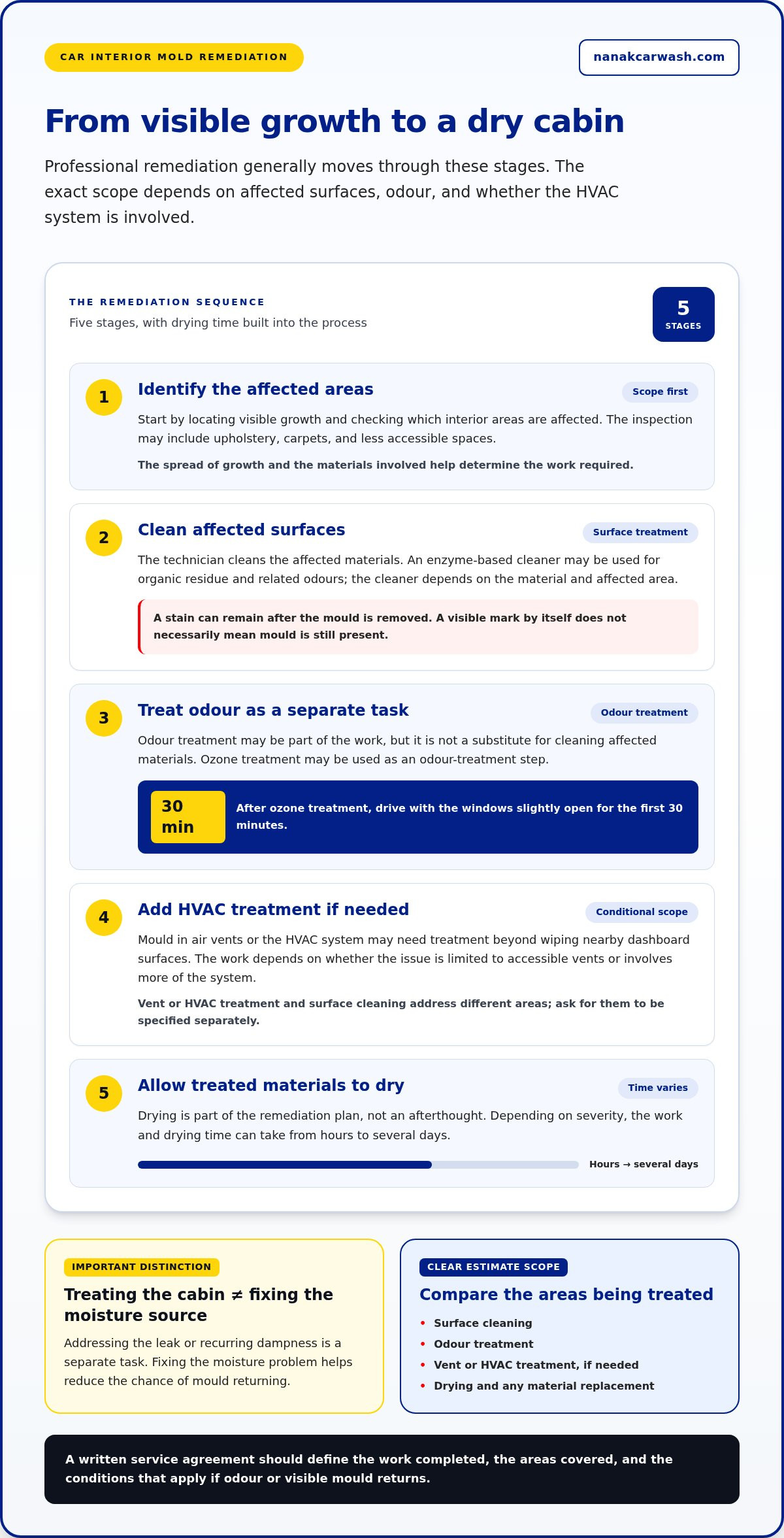
Professional remediation can involve inspecting affected surfaces, cleaning mould, treating odours, and drying the interior. The work depends on whether growth is on upholstery, in the ventilation system, or across other cabin materials.
Cleaning may remove mould without removing every stain. Black mould can leave marks even after the mould itself has been removed.
HVAC and Air-Vent Treatment
Mould in air vents or the HVAC system may require treatment beyond wiping nearby dashboard surfaces. The estimate depends on whether the issue is limited to accessible vents or involves more of the system. Ask for HVAC work to be listed separately from surface cleaning so the scope is clear.
Location affects the treatment plan. The ranges cover different areas, so they shouldn’t be treated as interchangeable prices.
Professional Remediation Steps
Professional work generally starts with identifying visible growth and affected interior areas. The technician then cleans the affected surfaces, addresses odour, and allows treated materials to dry. If the HVAC system is involved, vent treatment may also be included. The scope should specify which areas receive cleaning and which need separate treatment.
An enzyme-based cleaner may be used to treat organic residue and related odours. The choice of cleaner depends on the material and affected area. A stain that remains after cleaning doesn’t necessarily mean mould is still present, since visible marks can persist after mould removal.
Ozone treatment may be used as an odour-treatment step. After ozone treatment, drive with the windows slightly open for the first 30 minutes. Ozone doesn’t replace cleaning affected materials, so ask how odour treatment fits into the remediation steps and drying plan.
There’s no universal guarantee or re-treatment term to assume. A written service agreement should define the work completed, the areas covered, and the conditions that apply if odour or visible mould returns. Treating an interior and resolving the moisture source are separate tasks.
Compare estimates by treatment area, not by the word “detail.” A quote that lists vent cleaning, surface cleaning, odour treatment, and drying separately gives a clearer picture than one broad label. For example, dashboard treatment and HVAC treatment address different areas and have different cost ranges.
Prevention and maintenance costs
After remediation, focus on the moisture that allowed mould to grow. Health Canada says fixing the moisture problem helps prevent mould from returning. Cleaning the cabin without addressing a leak or recurring dampness leaves the original cause in place.
To help prevent mould from returning, identify and fix the moisture source, then keep the interior dry. Check areas where water may collect, including carpets, floor mats, and the trunk. If they become damp, remove the moisture and let the materials dry thoroughly.
Inspect the vehicle after rain, snow, or a spill. Look for damp flooring, wet mats, and moisture in the cargo area. Note where you find water, then investigate that area instead of relying on fragrance or surface cleaning to address the cause.
- Check the cabin: Look beneath floor mats and inspect carpets for dampness.
- Check the cargo area: Inspect the trunk after spills or water exposure.
- Address moisture: Find and fix the source instead of cleaning only the visible area.
- Recheck cleaned areas: Look for dampness after the interior has dried.
Seasonal care can help keep carpets clean, but it’s a cleaning expense, not a substitute for fixing moisture or remediating active mould. If a musty smell or visible growth returns, check for damp materials and the moisture source before scheduling routine cleaning.
An inspection can help you track recurring moisture concerns. Use the findings to focus on areas that repeatedly become damp, such as carpeting or the trunk. The goal is to catch a moisture issue before it spreads through the interior.
Keep a record of what you find: note the affected area, whether it felt damp, and what action you took. For example, recording that the rear carpet became wet after rain gives you a clear reason to inspect it again. A recurring pattern can point to a moisture source that surface cleaning won’t resolve.
After professional cleaning, follow the drying instructions and avoid putting damp mats back into the vehicle. Make sure cleaned materials are dry before covering them. Pairing that step with a moisture-source repair gives you a practical maintenance plan instead of repeatedly treating the same visible patch.
Service duration and overnight drying
Professional car mould removal projects typically take 1-3 days, depending on severity. That timeframe includes the cleaning and drying needs involved in the work. A small surface treatment may take only 4-6 hours, while extensive contamination can keep the vehicle in service longer.
Use the severity estimate to plan around the vehicle’s return. Minor surface treatment takes 4-6 hours. Moderate contamination treatment takes 1-2 days, including drying. Severe remediation can take 3-5 days when seat removal and subfloor treatment are involved.
Drying isn’t a separate detail to ignore. Moderate treatment already includes drying in its 1-2-day timeframe. For more extensive work, materials beneath the visible surface may also need attention, adding steps before the interior is ready to use. Ask how the proposed timeline accounts for cleaning and drying.
- Minor surface treatment: 4-6 hours.
- Moderate contamination: 1-2 days, including drying.
- Typical professional project: 1-3 days, depending on severity.
- Severe remediation: 3-5 days with seat removal and subfloor treatment.
These time ranges aren’t interchangeable. The typical 1-3-day project range describes professional work overall, while the 3-5-day range applies to severe cases involving additional work. A vehicle with visible surface mould follows a different timeline from one requiring seats to be removed and the subfloor treated.
Before booking, plan for the longest timeframe that matches the described work. If the assessment identifies severe contamination, allow for the 3-5-day range rather than planning around a 4-6-hour surface treatment. For moderate work, factor in both the 1-2 days of treatment and drying.
To understand an overnight stay, ask which tasks require the vehicle to remain in service and how drying fits the schedule. “Overnight” alone doesn’t define the job’s duration: moderate treatment is estimated at 1-2 days, while severe work can take 3-5 days. The affected materials and planned steps determine which timeframe applies.
Get the work sequence in plain terms: what will be cleaned, whether seats must come out, whether the subfloor needs treatment, and how drying is included. Those details explain why one job takes 4-6 hours and another takes several days. They also help you arrange transportation without assuming the car will be ready the same day.
Additional charges for severe mold
Replacement may be needed when mould reaches materials that cleaning cannot address. Carpet may need removal if growth has reached the underlay. Wet underlay from a leak may need replacement.
The key question is how deeply contamination has reached each material. Surface growth and mould embedded in seat foam are different situations. The 20 mm threshold applies to seat-foam replacement, not carpet or insulation. Assess each affected area separately, rather than assuming one replacement rule covers the entire cabin.
Carpet removal may be necessary when mould reaches the underlay beneath it. If a leak has left that underlay wet, replacement may also be needed. These are related but distinct issues: mould reaching the underlay can require carpet removal, while leak-related wetness can make underlay replacement necessary.
- Carpet: Removal may be needed if mould has reached the underlay.
- Underlay: Replacement may be needed when it is wet from a leak.
Insulation needs a separate assessment. The available price ranges cover seat foam and reupholstery, not insulation replacement. Ask for any affected insulation, proposed work, and cost to be identified as separate line items. This keeps insulation decisions distinct from documented carpet and seat work.
For example, mould that has reached carpet underlay can change the scope beyond cleaning the carpet’s visible surface. If a seat’s contamination extends more than 20 mm into its foam, the stated foam-replacement range applies per seat. Severe seat contamination may also call for reupholstery, a separate potential charge.
Before approving work, compare the inspection findings with the estimate. Check whether it names the affected material, explains why removal or replacement is proposed, and lists each per-seat charge. A clear breakdown helps distinguish cleaning from material replacement, especially when carpet, underlay, and seat foam are all assessed.
Replacement isn’t a blanket requirement for every mould-affected interior. The decision follows the material and the extent of contamination: carpet removal relates to growth reaching the underlay, wet underlay relates to a leak, and the 20 mm threshold relates to seat foam. Use those distinctions to understand why a severe case may need more than surface treatment.
Nanak Car Wash: Car Detailing Packages
Nanak Car Wash offers Car Detailing Packages for vehicle owners seeking interior care after mould remediation is complete. Detailing can be a practical next step for keeping a vehicle clean, but it isn’t mould remediation and doesn’t replace treatment of active mould or its moisture source.
Choose a Car Detailing Package when remediation is finished and you’re ready for general vehicle cleaning. For routine washing, Nanak Car Wash also offers Full-Service Car Wash Packages and Express Car Wash Packages. The Unlimited Wash Club is another option for customers who wash regularly.
For general vehicle cleaning after remediation, contact Nanak Car Wash at your convenience.
Take the Next Step Toward a Clean, Dry Interior
Before arranging further care, keep a simple record of the affected areas, moisture source, and work completed. These details help you track changes and spot recurring dampness early. A clean interior starts with addressing the cause, not just the visible signs.
Understanding the cost of mold remediation in a car interior helps you plan, but the next step is matching the service to the vehicle’s condition. Active mould and unresolved moisture need attention before routine detailing. Once remediation is complete and the interior is dry, general cleaning can help restore a fresh, cared-for feel.
Nanak Car Wash can help with vehicle cleaning after remediation. Contact Nanak Car Wash to discuss your car’s cleaning needs. Take the next step at your pace and keep your vehicle care plan practical.
Frequently Asked Questions
What causes mold to grow in cars?
Mould grows when moisture remains inside a vehicle. A leak, wet floor mats, spilled drinks, or damp clothing can leave carpets and upholstery wet. If the interior doesn’t dry, mould can develop on or within affected materials. For example, water tracked onto a carpet can stay trapped beneath a mat. Finding and addressing the moisture source is key to reducing the chance of recurrence.
Can you clean mold from just one section, like a seat?
Yes, treatment can focus on an affected seat, but the work depends on how far mould has reached. A visible patch on upholstery may involve less work than contamination inside the seat foam. If contamination extends more than 20 mm into the foam, replacement may be needed. Check whether the assessment includes nearby carpet or other damp areas, since moisture can affect more than the visible patch.
How can I tell if my car has mold?
Look for visible spots on upholstery, carpet, or other interior surfaces, and notice any persistent musty odour. Damp floor mats or carpeting can also signal a moisture problem that needs attention. A single sign doesn’t show how far the growth has spread. For example, an odour that returns after cleaning may mean the affected area or moisture source needs closer inspection.
What health risks does mold in a car pose?
You can’t determine a person’s health risk from mould’s colour or appearance alone. The information available here doesn’t establish a specific health outcome for occupants. If someone has health concerns or experiences symptoms in the vehicle, seek advice from a qualified health professional. Don’t treat a visual inspection as a medical assessment, and address dampness and visible mould rather than masking odours.
How much does professional mold remediation in a car cost in Canada?
These regional ranges aren’t a Canada-wide average. The estimate depends on the affected areas and materials, so compare the work described, such as surface treatment versus seat or underlay replacement.
How can I tell whether mold in a car is a health risk or has spread into the HVAC system?
Appearance alone can’t establish a person’s health risk or confirm HVAC contamination. Notice whether odour is present around the vents or becomes noticeable when the ventilation runs, but treat that as a reason to investigate, not proof. A professional assessment can distinguish visible cabin growth from issues involving the ventilation system.
How long does professional car mold remediation take, and how long should the car dry?
Professional projects typically take 1-3 days, with time depending on severity. Minor surface treatment takes 4-6 hours; moderate treatment takes 1-2 days, including drying. Severe remediation can take 3-5 days if seat removal and subfloor treatment are involved. Ask how drying fits the planned timeline, especially if the work includes materials beneath the visible carpet or upholstery.
How much does DIY car mold removal cost compared with professional remediation?
DIY removal avoids professional labour charges, but the total depends on cleaning supplies and protective equipment.


 6600 Finch Ave W, Etobicoke, ON M9V 3Z6

 647-703-8515
 MON – SUN 8 AM to 7 PM