
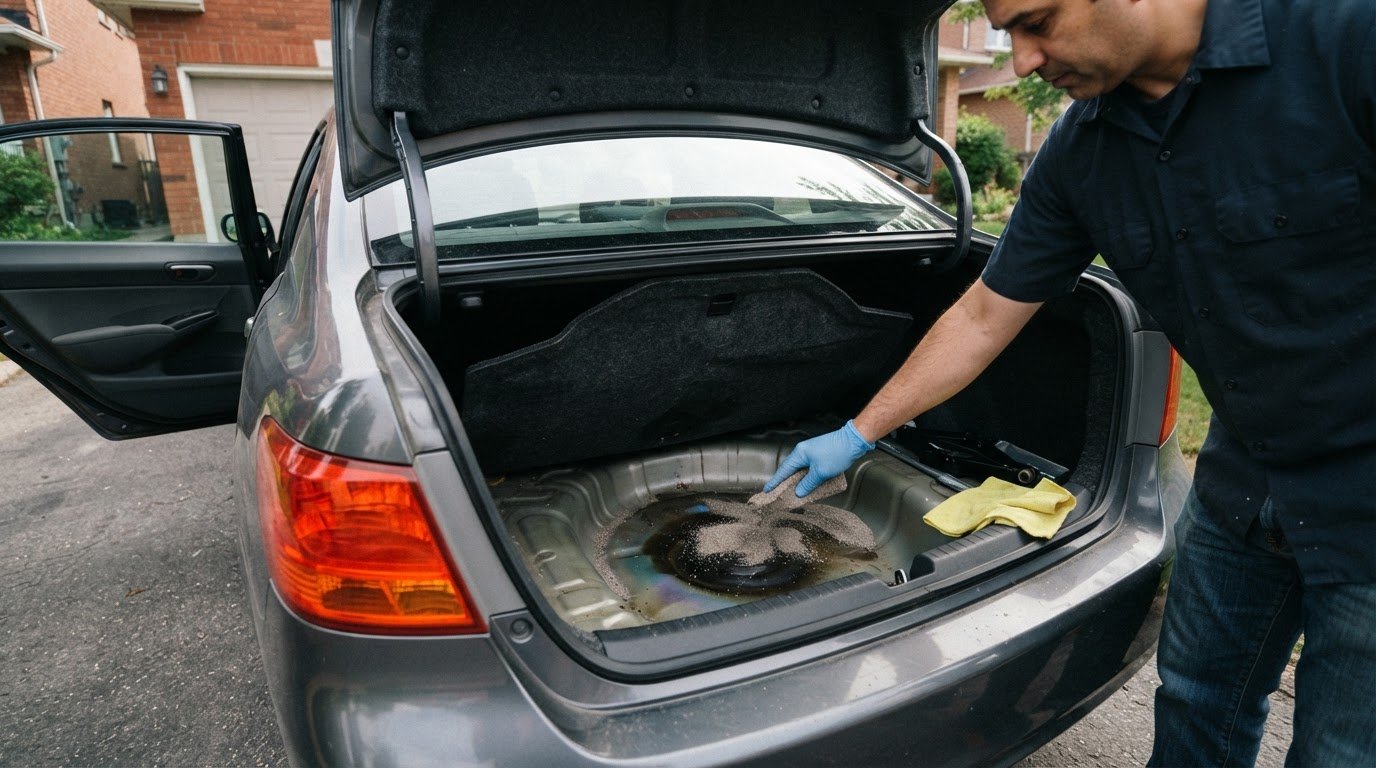
To get rid of gasoline smell in a car trunk, ventilate the vehicle for at least an hour before cleaning, then blot up spilled fuel and use an absorbent on affected materials. Don’t vacuum gasoline-contaminated carpet or padding. Check beneath the spare tire and trunk liner too, as fuel can collect out of sight.
A lingering fuel smell is frustrating, but air freshener won’t remove the spill causing it. Blot gasoline without pushing it deeper, clean removable liners and mats, then use absorbents to tackle residue and odour. The key is to remove the fuel first, avoid vacuuming contaminated materials, and let cleaned surfaces dry with good airflow.
Key Takeaways
- Lift out removable trunk liners and mats so you can clean both sides and dry them fully before putting them back.
- Use a suitable absorbent to help draw up residue, then collect and dispose of the used material carefully.
- Skip the vacuum on fuel-contaminated carpet or padding; deal with the spill and affected material first.
- Check beneath the carpet and padding if the smell lingers, since fuel can remain trapped below the surface.
- For broader interior cleaning after you’ve handled the spill, Nanak Car Wash’s Car Detailing Packages may be a useful next step.
Blotting gasoline from absorbent materials
Ventilate the vehicle first, then blot visible fuel from absorbent surfaces. To get rid of gasoline smell in your car trunk safely, remove the spill rather than masking its odour.
-
Blot the Gasoline Spill
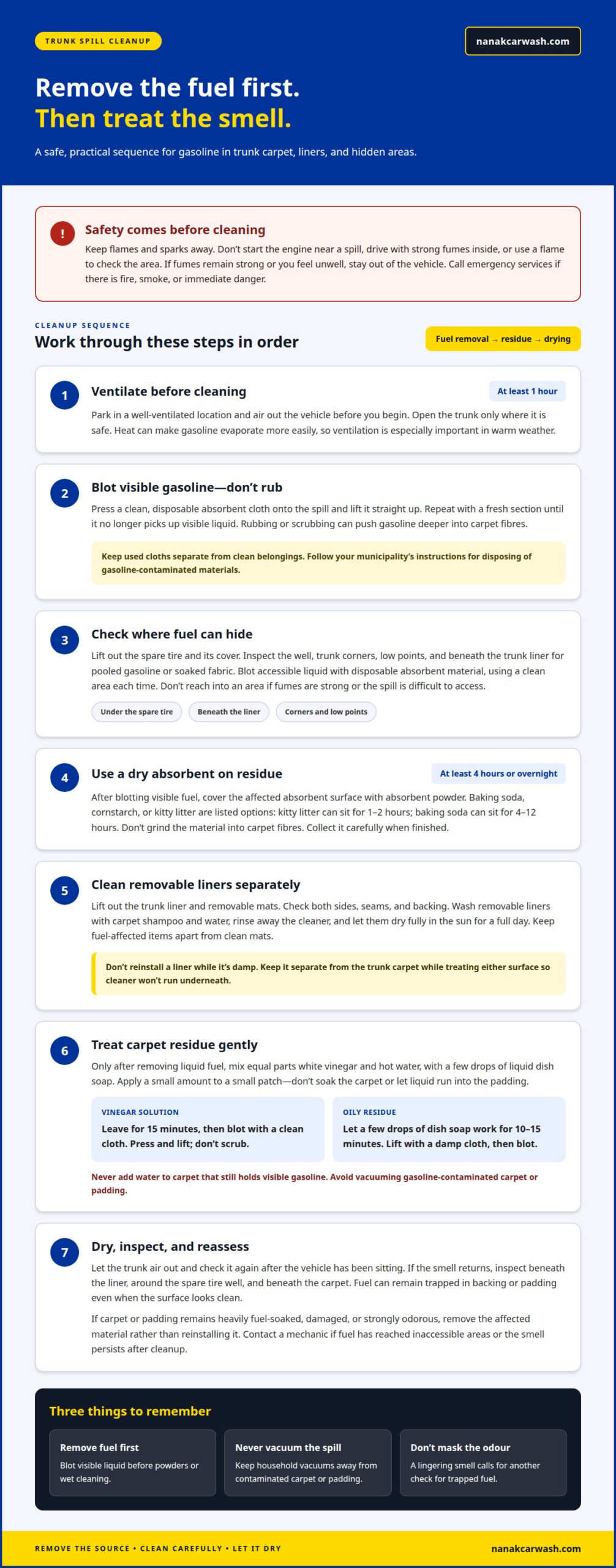
Press a clean, disposable absorbent cloth onto the spill, then lift it straight up. Repeat with a fresh section until it no longer picks up visible liquid. Don’t rub or scrub, as that can push gasoline deeper into carpet fibres. Keep flames and sparks away. Gasoline vapours can contribute to health problems, according to the U.S. Energy Information Administration.
- Air out the vehicle after a spill. Park in a well-ventilated location, and open the trunk only where it’s safe. Don’t drive with strong fumes inside. Gasoline evaporates more easily in warm weather, according to the U.S. Energy Information Administration. Heat makes ventilation especially important, but it won’t remove fuel absorbed below the carpet surface.
-
Check the Spare Tire Well
Remove the spare tire and its cover, then inspect the trunk well for pooled gasoline or soaked fabric. Blot accessible liquid with disposable absorbent material, using a clean area each time. Check corners and low points where fuel may collect. Don’t reach into a space if fumes are strong or the spill is difficult to access.
- After blotting, cover the affected absorbent surface with absorbent powder. Leave it for at least four hours or overnight, then collect it carefully. Don’t grind the powder into carpet or use a household vacuum on contaminated material. If the spill has reached the padding, check whether fuel remains beneath the carpet before continuing with surface cleaning.
- Keep contaminated cloths and powders separate from clean belongings. Follow your municipality’s instructions for disposing of gasoline-contaminated materials. Don’t place them loose in the passenger area or ordinary recycling. The first step in getting rid of gasoline smell in the car trunk is removing fuel safely, not carrying the spill elsewhere.
- Stay out of the vehicle if fumes remain strong or you feel unwell. Gasoline vapours can pose fire and health risks. Don’t start the engine near a spill or use a flame to check the area. Call emergency services if there’s fire, smoke, or immediate danger. Contact a mechanic if fuel has reached inaccessible areas or the smell persists after cleanup.
- Once you’ve addressed the visible spill, let the trunk air out and check it again after the vehicle has been sitting. If the odour returns, inspect beneath the liner and around the spare tire well. This can reveal fuel missed during the first check, helping you target the remaining source instead of covering the smell with fragrance.
Cleaning fuel from carpets and trunk liners
Clean removable liners separately, and treat carpet only after removing liquid fuel. Use a light touch so the cleaning solution doesn’t spread residue into deeper padding.
-
Remove and Wash Trunk Liners
Lift out the trunk carpet liner and any removable mats, keeping fuel-affected surfaces away from clean areas. Check both sides, seams, and the underside for damp spots or lingering fuel. Wash removable liners with carpet shampoo and water, then rinse away the cleaner. Don’t put a liner back while it’s damp. Let it dry fully in the sun for a full day.
- Separate the liner from the trunk carpet before treating either surface. This helps prevent cleaner from running underneath and leaving residue against the vehicle floor. If the liner has a distinct backing, inspect it closely for fuel odour and oily patches. Keep affected items apart from clean mats until washing and drying are complete.
- After removing liquid fuel, mix equal parts white vinegar and hot water to treat remaining carpet residue. Add a few drops of liquid dish soap, then apply a small amount to the affected patch. Avoid soaking the carpet or letting the mixture run into the padding. Treat a small area at a time so you can control where the solution goes.
- Leave the vinegar-and-water solution on the carpet for 15 minutes, then blot it with a clean cloth. Press and lift rather than scrubbing, which can spread residue through the carpet fibres. Replace the cloth as it picks up grime. Work from the outer edge of the affected patch inward, and keep the cleaned area separate from untreated carpet.
- For oily residue, apply a few drops of dish soap and let them work for 10-15 minutes. Use a damp cloth to lift the soap and loosened residue, then blot with a clean cloth. Don’t pour water onto carpet that still holds visible gasoline. If fuel remains in the fibres, return to removing the fuel before using a wet cleaning method.
-
Replace Soaked Carpet or Padding
Inspect the carpet backing and padding after washing and drying. If either remains heavily fuel-soaked, damaged, or strongly odorous, remove the affected material rather than reinstalling it. Padding can hold residue beneath carpet fibres, so a clean-looking surface alone isn’t enough. Keep fuel-contaminated pieces out of the passenger compartment and arrange proper disposal.
- Before reinstalling a washed liner, check that both sides are completely dry and free of cleaner residue. Put it back only after the trunk floor and surrounding carpet are dry too. If the odour returns after drying, inspect the backing and padding again. A lingering smell can point to residue below the visible carpet surface.
Using baking soda, cornstarch, or kitty litter
Use dry absorbents only after removing visible gasoline. Choose the material and waiting time based on the affected surface.
-
Apply Baking Soda, Cornstarch, or Kitty Litter
Cover the affected spot with a dry absorbent after blotting visible liquid. For kitty litter, leave it in place for 1-2 hours. Baking soda can sit for 4-12 hours to absorb moisture and mild odours. Apply enough to cover the patch, but don’t grind the material into carpet fibres or spread it beyond the spill.
- Choose an absorbent based on where the residue remains. Kitty litter works for a contained patch, while baking soda or cornstarch can cover carpet fibres. Keep the material on the affected area, not across the entire trunk. If the spill reaches a seam or carpet edge, apply absorbent there too, without pushing it beneath the fabric.
- Leave the absorbent undisturbed for its full application time. For kitty litter, wait 1-2 hours; for baking soda, allow 4-12 hours. Don’t shorten the wait by brushing or wiping the powder around. If the patch still appears damp or smells strongly afterward, repeat the absorbent treatment after addressing any visible liquid.
- Carefully collect the used powder once the waiting period ends. Lift it from the carpet rather than rubbing it into the fibres. Keep the collected material separate from clean trunk items and inspect the treated area. If residue remains in the carpet, another controlled application may help absorb what’s left.
-
Use Baking Soda and Activated Charcoal
Place an open box of baking soda or a bag of activated charcoal in the car overnight to help reduce residual gasoline odour. Keep either option in the trunk without spilling it onto the carpet. These materials can help with lingering smells, but they don’t replace blotting liquid fuel or treating the spill itself.
- Position the box or charcoal bag near the affected trunk area, then leave the vehicle undisturbed overnight. Remove it before loading groceries, luggage, or other items. Check the trunk after airing it out, and note whether the odour returns. A persistent smell can mean gasoline remains in the carpet, padding, or another hidden area.
- Keep absorbents and odour-reducing materials separate during treatment. For example, use kitty litter on a defined spill, then place activated charcoal in the trunk afterward. Don’t use coffee grounds instead of cleaning up. They can mask the scent without removing fuel residue. Reassess the trunk after ventilation rather than relying on fragrance.
Avoiding vacuuming gasoline-contaminated materials
Keep vacuum cleaners away from gasoline-soaked carpet, padding, and absorbents. Remove contaminated material carefully and handle it separately.
- Leave the vacuum switched off if the carpet smells of gasoline or has damp patches. Vacuuming can draw contaminated residue into the hose, canister, or filter, and may spread particles around the trunk. For example, don’t use a household vacuum to collect used kitty litter from a spill.
- Remove loose absorbent material by hand, using disposable tools where practical. Work slowly over the affected area, and avoid shaking or scattering powder. Keep collected litter, cloths, and other contaminated items separate from clean trunk contents. Don’t carry them through the passenger compartment while cleaning.
- Lift out removable carpet or mats rather than vacuuming their surfaces. Keep fuel-affected pieces away from clean materials as you move them. If the carpet backing or padding feels damp, smells strongly, or has visible fuel, don’t put it through a household vacuum or bring it indoors.
- Blot and carefully remove visible residue instead of using suction. A clean disposable cloth can lift liquid from an accessible surface. Replace it as it becomes soiled. Don’t press contaminated cloths into carpet or use them to wipe another area, as that can spread residue.
- For disposal in Canada, keep gasoline-contaminated materials separate and follow your municipality’s hazardous-waste collection instructions. Local programs provide directions on accepted materials and handling. Don’t assume fuel-soaked cloths, litter, or padding belong in ordinary household waste or recycling.
- After collecting loose material, inspect carpet edges, seams, and the trunk well. Fuel can remain in a hidden spot that vacuuming won’t resolve. If you find damp padding beneath the carpet, stop and remove the affected piece only if you can do so safely.
- Keep children and pets away from contaminated cloths, powders, and carpet pieces. Store collected materials apart from clean belongings while arranging disposal. Don’t leave them loose beside the car, where someone could handle or spread them accidentally.
- Resume ordinary vacuuming only after the spill is removed, affected materials are clean and dry, and no gasoline residue remains. If the smell returns after cleaning, inspect under the carpet and around the spare tire well again. A vacuum can’t remove fuel trapped beneath a surface.
When should gasoline-soaked trunk carpet or padding be replaced
After removing visible fuel, inspect the carpet, backing, and padding separately. Replace any material that remains soaked, damaged, or strongly odorous after cleaning and drying.
- Lift the trunk carpet and inspect its underside and padding. Look for wet patches, oily residue, or a fuel smell that remains after surface cleaning. Gasoline can settle below visible carpet fibres, so a clean top surface alone doesn’t show whether the backing is free of residue.
- Replace padding that remains saturated or smells strongly of gasoline after cleaning and thorough drying. Soft, absorbent padding can hold fuel below the carpet, where surface treatment can’t reach it. Don’t reinstall a piece that still feels oily or transfers a fuel odour to a clean cloth.
- Check whether the carpet backing is separating, stained, or breaking down. If fuel has damaged the backing, cleaning may not restore it. Remove the affected piece instead of covering it with a trunk mat, which can trap the odour beneath another layer.
- Compare the affected area with an untouched section of trunk carpet. Check the texture, backing, and odour once both areas are dry. A noticeable difference, such as a persistent fuel smell in one section, can help identify material that needs further treatment or replacement.
- Inspect seams, edges, and the spare tire well before deciding the job is finished. Gasoline can collect beneath a liner or along a low point. If replacement material would sit over contaminated metal or padding, clean that underlying area first.
- Carefully remove contaminated carpet, keeping it away from clean mats and the passenger compartment. Don’t shake or vacuum the piece. Set it apart from other belongings and follow your municipality’s hazardous-waste instructions for gasoline-contaminated materials.
- Reinstall replacement carpet only after the trunk floor is clean and dry. Check beneath the spare tire cover and around carpet edges before putting everything back. This prevents clean replacement material from resting against residue left on the trunk surface.
- Check the trunk again after installing the new material and airing out the vehicle. If the gasoline smell returns, inspect hidden surfaces rather than adding another liner or fragrance. A lingering odour can point to fuel remaining beneath the carpet, inside padding, or in the spare tire well.
Nanak Car Wash: Car Detailing Packages
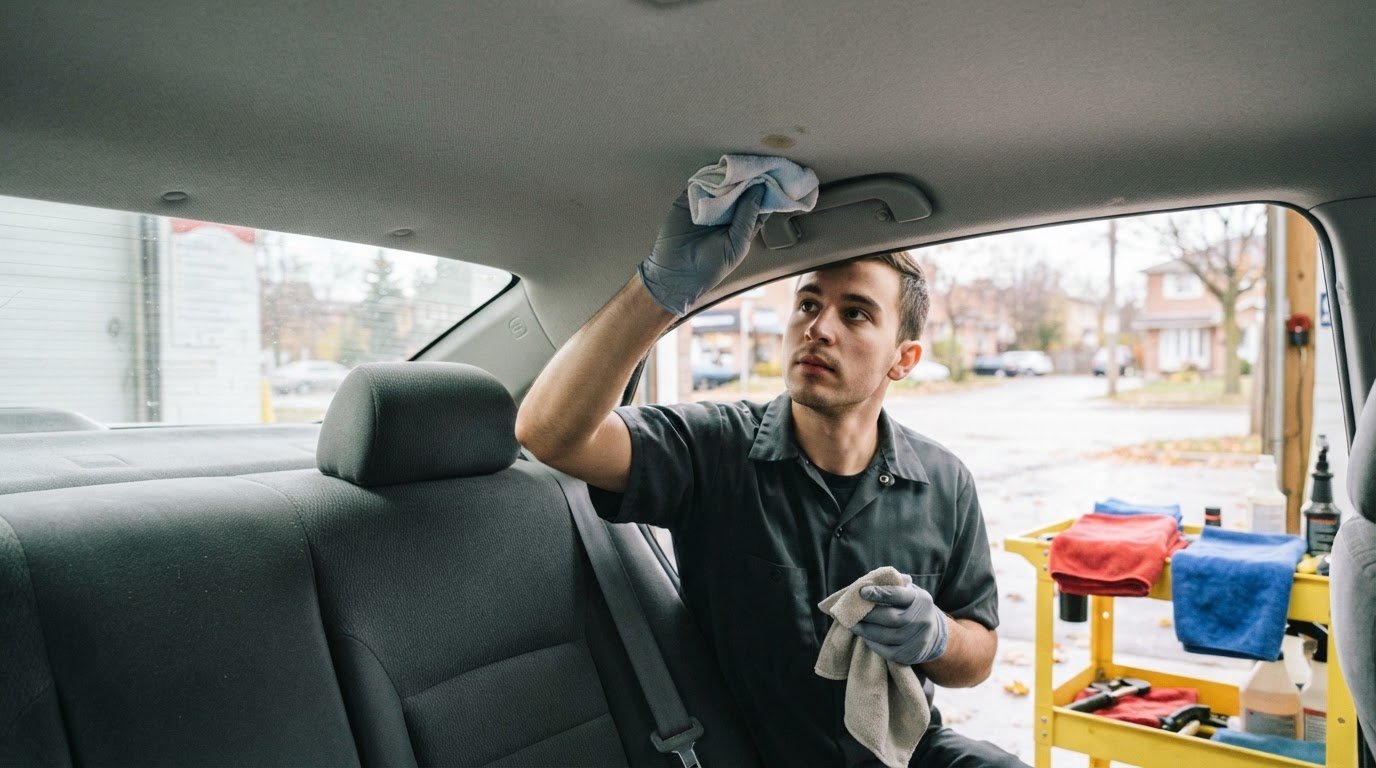
Nanak Car Wash’s Car Detailing Packages are a practical next step after you’ve removed the spill and addressed fuel-soaked materials. Turn to detailing for broader vehicle cleaning when the trunk and surrounding interior need attention beyond the immediate spill cleanup. Detailing can support a clean, cared-for cabin, but it doesn’t replace removing gasoline or contaminated padding. For a general wash, Nanak Car Wash also offers Full-Service Car Wash and Express Car Wash options. Choose the service that fits the cleaning your vehicle needs after the trunk is safe to use. Visit Nanak Car Wash to learn more.
Make your next drive feel fresh again
A cleaned trunk is a good start. Before using the vehicle normally, make sure you’ve dealt with the fuel source and the smell isn’t returning. If you’re still deciding how to get rid of gasoline smell in your car trunk, focus on the cause rather than masking the odour. Persistent fumes or fuel trapped beneath the carpet call for more than fragrance or a surface clean.
Once you’ve handled the spill and contaminated materials, Nanak Car Wash can help with broader vehicle cleaning. Choose Car Detailing Packages for a more complete clean, or opt for a Full-Service Car Wash or Express Car Wash for a wash. These services support routine vehicle care, but they don’t replace removing gasoline-soaked padding or resolving a fuel leak.
Ready for the next step? Contact Nanak Car Wash about the cleaning option that suits your vehicle. Keep the trunk clean, give it time to air out, and enjoy getting back on the road with confidence.
Frequently Asked Questions
Why Does Gas Smell in Your Car Happen?
Gasoline odour often means fuel or vapour has reached the cabin or trunk. A spill, a fuel container that shifted, or a loose or broken gas cap can be responsible. A faulty cap can also trigger the check-engine light, a connection highlighted by repair specialists at Eagle Automotive. Notice where the smell is strongest, then inspect nearby items and surfaces. If it seems to come from the fuel system, don’t treat it as a simple carpet-cleaning issue.
Why The Scent Stays?
The odour can linger because fuel gets below the surface and into absorbent layers. For example, a trunk mat may smell clean on top while its backing still holds residue. Seams, padding, and the spare tire well can also hide a spill. Warm weather can make gasoline evaporate more easily, bringing fumes back into the air. If the smell returns, look for a remaining source rather than masking it.
How to safely clean gasoline from a car trunk step by step
A practical answer to how to get rid of gasoline smell in car trunk starts with locating the spill and keeping ignition sources away. Ventilate the vehicle, blot visible liquid, and inspect beneath removable trunk materials. Use an absorbent on the affected spot, then handle contaminated cloths and powders separately. Don’t use a vacuum on fuel-contaminated material. Follow your municipality’s disposal instructions, as local hazardous-waste programs guide which materials they accept.
How to remove gasoline smell from car trunk carpet and upholstery
Separate removable mats and liners from fixed upholstery to find which surface still holds the smell. Wash removable liners with carpet shampoo and water, then dry them fully before reinstalling. After removing visible fuel, apply a small amount of equal parts white vinegar and hot water with a few drops of dish soap to carpet residue. Avoid soaking upholstery, since liquid can carry residue deeper into the padding.
How to neutralize gasoline odour in a car trunk with household products
After removing visible fuel, use kitty litter on a defined spill area or baking soda on affected carpet. Leave kitty litter for 1-2 hours, or baking soda for 4-12 hours. For residual odour after cleanup, place an open box of baking soda or a bag of activated charcoal in the car overnight. These options help with odour, but won’t remove fuel trapped in padding.
How long does gasoline smell take to dissipate in a car trunk
With proper treatment and ventilation, gasoline odour usually fades in a few days, but untreated fuel can smell for weeks. If you’re figuring out how to get rid of gasoline smell in car trunk after cleaning, check whether the odour returns after the vehicle sits. A returning smell can point to residue in hidden padding or the spare tire well. Don’t drive if strong fumes remain inside.
What are the fire and health risks of gasoline fumes in a vehicle
Gasoline vapours can pose fire risks and contribute to health problems. Keep flames and sparks away, and stay out of the vehicle if fumes are strong or you feel unwell.



 6600 Finch Ave W, Etobicoke, ON M9V 3Z6

 647-703-8515
 MON – SUN 8 AM to 7 PM