

A delivery van can pick up a full day’s worth of dirt before lunch. Cardboard dust in the cargo area, coffee on the console, mud on the floor mats, fingerprints on the doors, and road film on the exterior all add up fast. Delivery van detailing is a practical way to keep that wear from becoming permanent, while helping every driver show up in a vehicle that looks clean, organized, and ready for work.
For fleet owners, contractors, couriers, and businesses making regular customer stops, a clean van is not about luxury. It is about presentation, comfort, resale value, and protecting the vehicle you rely on every day. A quick wash helps, but regular detailing goes further by cleaning the surfaces that drivers touch, customers see, and grime tends to damage.
Why Delivery Van Detailing Pays Off
Your van is part of your business when it is parked at a customer’s home, loading at a storefront, or sitting in a driveway. A vehicle with stained seats, dirty glass, and a muddy exterior can make even a reliable service look less professional. A clean, well-kept van sends a simple message: your team takes care of the details.
There is also a maintenance benefit. Salt, grit, and road grime can sit in wheel wells, door jambs, underbody areas, and painted surfaces. In areas with winter weather, leaving that buildup in place can contribute to corrosion and make rust protection less effective over time. Inside, dust and spills can stain upholstery, wear down plastic trim, and create odors that drivers notice on every shift.
Regular cleaning is usually less expensive than waiting for a major cleanup. Light stains are easier to remove than old, set-in stains. A cargo floor that is washed and vacuumed often is easier to maintain than one covered in months of dirt, loose packaging, and spilled materials.
What a Proper Van Detail Should Cover
Delivery vans need a different approach than a weekend car. The goal is not simply to make the paint shine. The goal is to clean the high-use areas, improve driver comfort, and keep the van presentable without taking it out of service longer than necessary.
Exterior washing and road-film removal
A quality exterior service removes the layer of dirt, salt, bugs, and road film that builds up during daily driving. This includes the paint, wheels, tires, glass, mirrors, door handles, and lower panels where grime collects most heavily. Clean windows and mirrors also help drivers see better, especially during rain, snow, and early morning routes.
For vehicles that run through winter conditions, pay attention to wheel wells, rocker panels, and underbody areas. An express wash is useful between details, but a deeper wash is worth scheduling after heavy salt exposure. If your vans are kept for years, ask about rust proofing as part of a long-term vehicle care plan.
Interior cleaning where drivers work
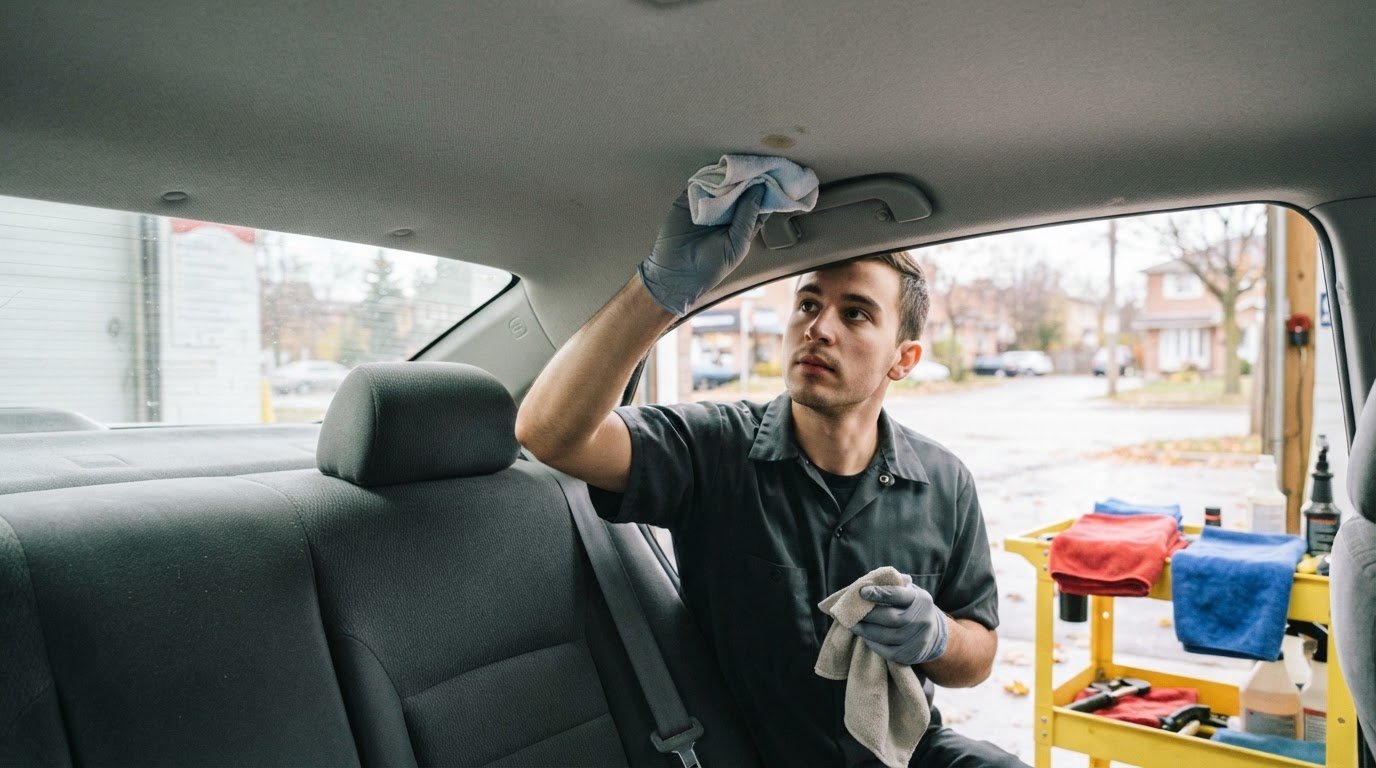
The driver’s area is usually the first part of the van to look worn. It gets constant contact from work boots, gloves, food, paperwork, phones, and drink cups. Interior detailing should include vacuuming the floors and seats, cleaning the dashboard and console, wiping door panels, washing mats, and cleaning interior glass.
Dashboard cleaning matters more than it sounds. Dusty vents, sticky controls, and dirty cup holders make the cabin feel neglected. Clear interior glass reduces glare and smears, which can be especially distracting when driving at night.
If the seats have visible stains or odors, shampooing may be the better choice. It takes more effort than a simple wipe-down, but it can make a major difference in older work vans or shared fleet vehicles. The right level of service depends on how the vehicle is used and how quickly it needs to return to the road.
Cargo area attention
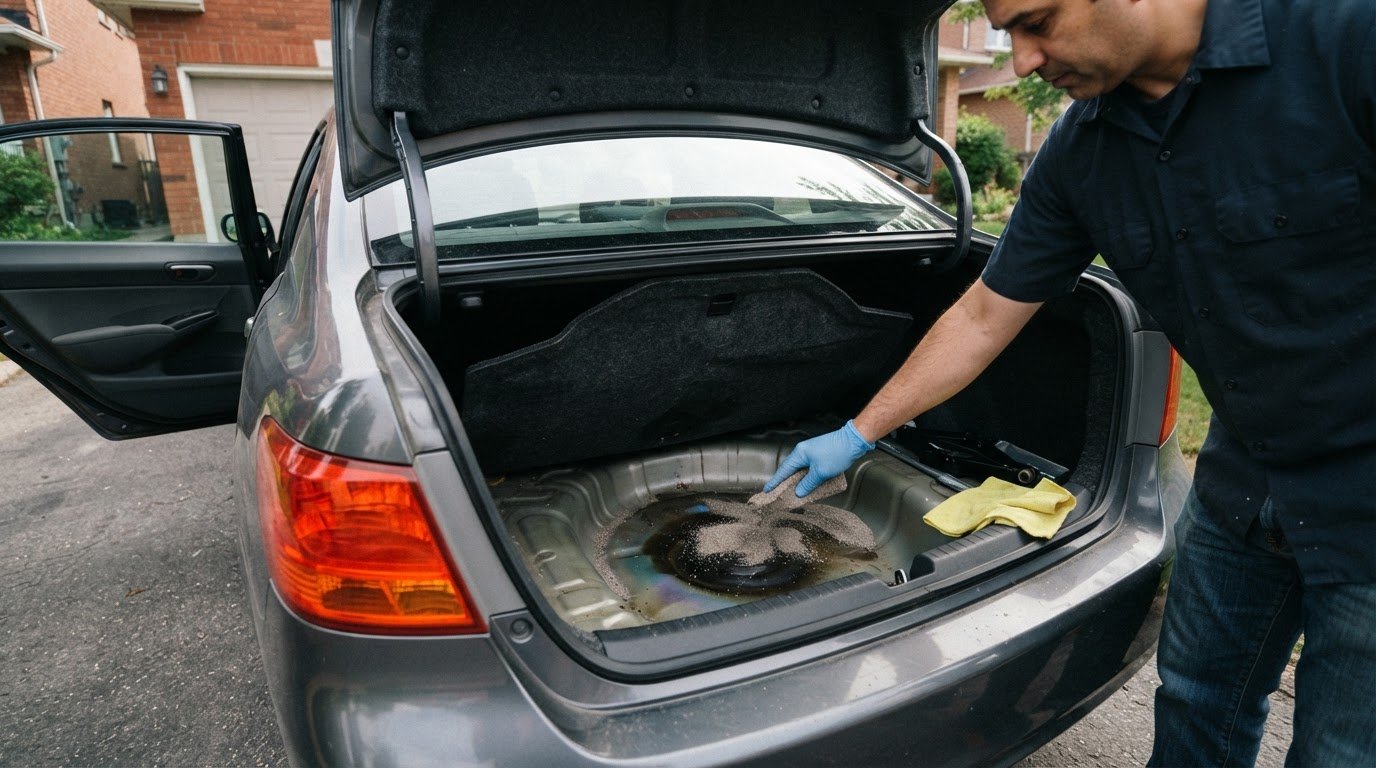
The cargo area is where many delivery vans need the most help. Dirt, cardboard fibers, packing debris, spills, and scuff marks can build up quickly. A clean cargo space makes loading easier, helps drivers spot loose items, and reduces the chance of carrying odors or mess from one stop to the next.
A basic cargo-area cleanup may involve removing loose debris, vacuuming, wiping hard surfaces, and cleaning the floor. For vans that carry food, supplies, equipment, or customer-facing products, more frequent cleaning is a smart move. If there has been a spill, deal with it right away rather than letting it dry into the floor or side panels.
How Often Should a Delivery Van Be Detailed?
It depends on route volume, weather, what the van carries, and whether customers regularly see it. A van making a few local runs each week may only need a full interior detail every few months. A high-mileage courier van, service vehicle, or multi-driver fleet may benefit from a more regular schedule.
For most working vans, a good plan is frequent exterior washes paired with a deeper detail every three to six months. During winter, increase exterior washing to remove salt and slush. During busy seasons, schedule interior cleaning before the cabin becomes difficult to manage.
Businesses with several vehicles often save time by setting one service standard for the whole fleet. For example, every van can receive regular washes, while heavily used vehicles rotate through deeper interior and cargo-area detailing. This keeps costs predictable and prevents one neglected van from becoming a bigger expense later.
Choosing the Right Level of Service
Not every van needs the same package. If the exterior is dusty but the interior is under control, an express wash may be all you need that week. If your drivers are tracking in mud, the seats are stained, or customers ride in the vehicle, full-service cleaning or detailing makes more sense.
A simple way to decide is to look at three things: what customers can see, what drivers touch every day, and where dirt can cause long-term damage. Exterior panels and glass affect your business image. Seats, floors, dashboards, and controls affect driver comfort. Salt-prone areas, wheel wells, and lower body panels affect vehicle condition over time.
Be realistic about downtime, too. A fast wash works well when a van needs to be back on route quickly. A more thorough detailing appointment requires more time, but it is the better value when stains, odors, or heavy buildup need attention. Trying to use a quick wash to solve a deep-clean problem often leads to disappointing results.
Keep the Clean Result Longer Between Visits
A detail lasts longer when drivers have a few simple habits. Keep a small trash container or bag in the cab, remove drink cups and food packaging at the end of each shift, and shake out mats before dirt gets ground into them. Wipe spills immediately, especially coffee, grease, or anything that can stain fabric.
For cargo areas, avoid leaving loose cardboard, damaged packaging, or wet materials in the van overnight. If your team shares vehicles, make cleanup part of the handoff. A two-minute check at the end of a shift can prevent a much larger job at the end of the month.
It also helps to avoid using harsh household cleaners on dashboards, screens, leather, or interior plastics. The wrong product can leave shiny residue, streaks, or surface damage. Professional detailing uses products intended for automotive materials and gives the crew a better chance of getting a clean finish without creating new problems.
A Cleaner Van Is Easier to Run
Delivery van detailing helps protect a vehicle that works hard for your business. It keeps the cab more comfortable, the cargo area more manageable, and the exterior ready for customer-facing stops. For fleets and independent operators across Brampton, Toronto, Mississauga, Vaughan, Burlington, Cambridge, and Oshawa, Nanak Car Wash can help match the service to the condition of the van and the time you have available.
Do not wait until every seat is stained and the cargo floor is covered in debris. Schedule cleaning while the job is still simple, and your vans will be easier to maintain, easier to drive, and better prepared for the next delivery.


 6600 Finch Ave W, Etobicoke, ON M9V 3Z6

 647-703-8515
 MON – SUN 8 AM to 7 PM