
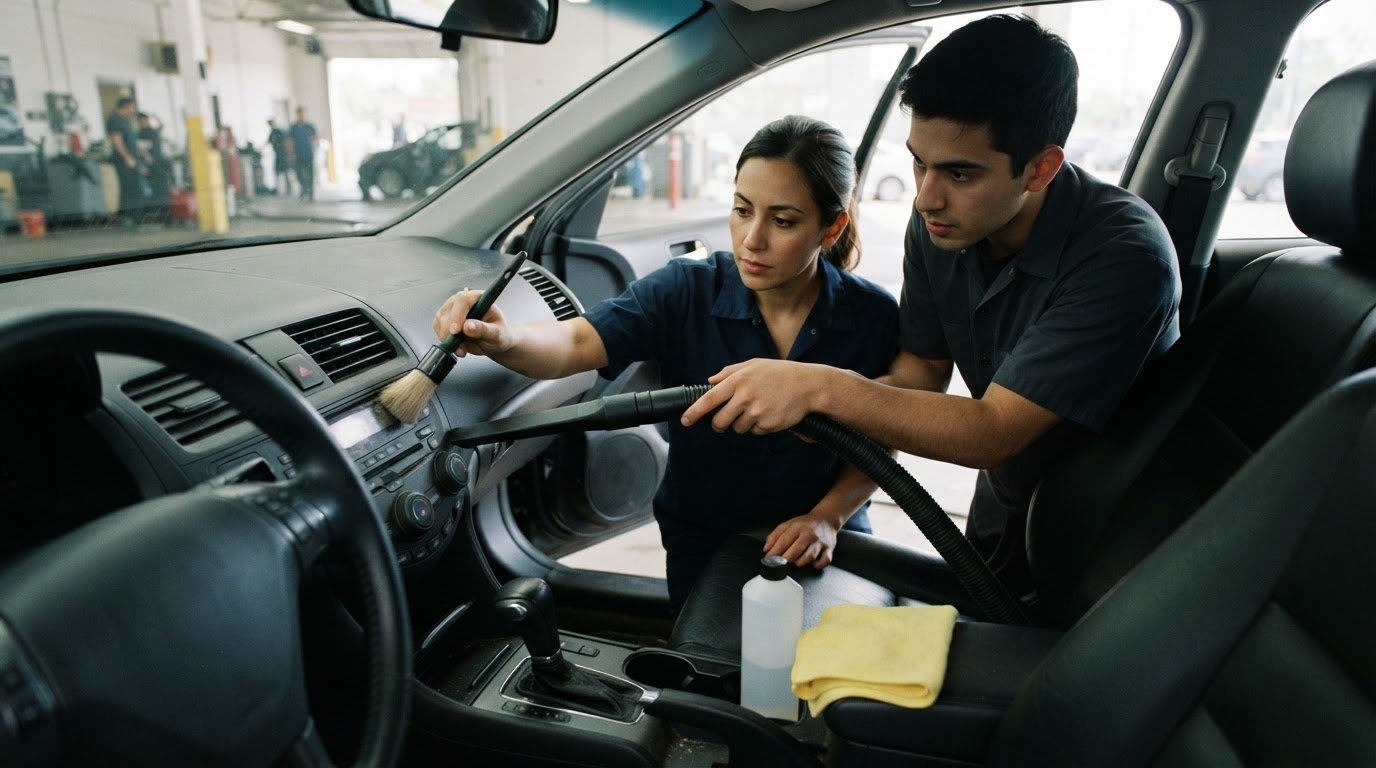
A strong fragrance can make a car smell clean while adding another irritant to the air. Deep interior cleaning for asthma and allergy sufferers starts with unscented liquid or gel cleaners, avoiding bleach where possible, and removing dust and debris from seats, carpets and other surfaces. Clean around the vents, too, where dust can collect and circulate.
If you’re managing asthma or allergies, it makes sense to consider what you use inside the vehicle, not just how it looks. A quick wipe can remove visible dirt, but soft surfaces and overlooked areas need attention, too.
This guide explains how to choose low-irritant cleaning products, where pollen, pet dander, dust mites and mould can build up, and how to clean vents and keep vehicle air fresher between deeper cleans. You’ll also find practical habits to help prevent dust and allergens from building up again.
Key Takeaways
- Choose unscented liquid or gel cleaners, and avoid adding strong fragrances that may irritate sensitive airways.
- Check carpets, upholstery and other soft surfaces for pollen, pet dander and dust that can build up over time.
- Include vents and other overlooked areas in your cleaning routine so settled dust doesn’t keep circulating.
- Use a damp cloth for dust and vacuum regularly to help keep particles from accumulating between deeper cleans.
- When the interior needs more attention, Nanak Car Wash’s Car Detailing Packages offer a practical next step for a thorough vehicle clean.
1. Fragrance-free and low-irritant cleaning products
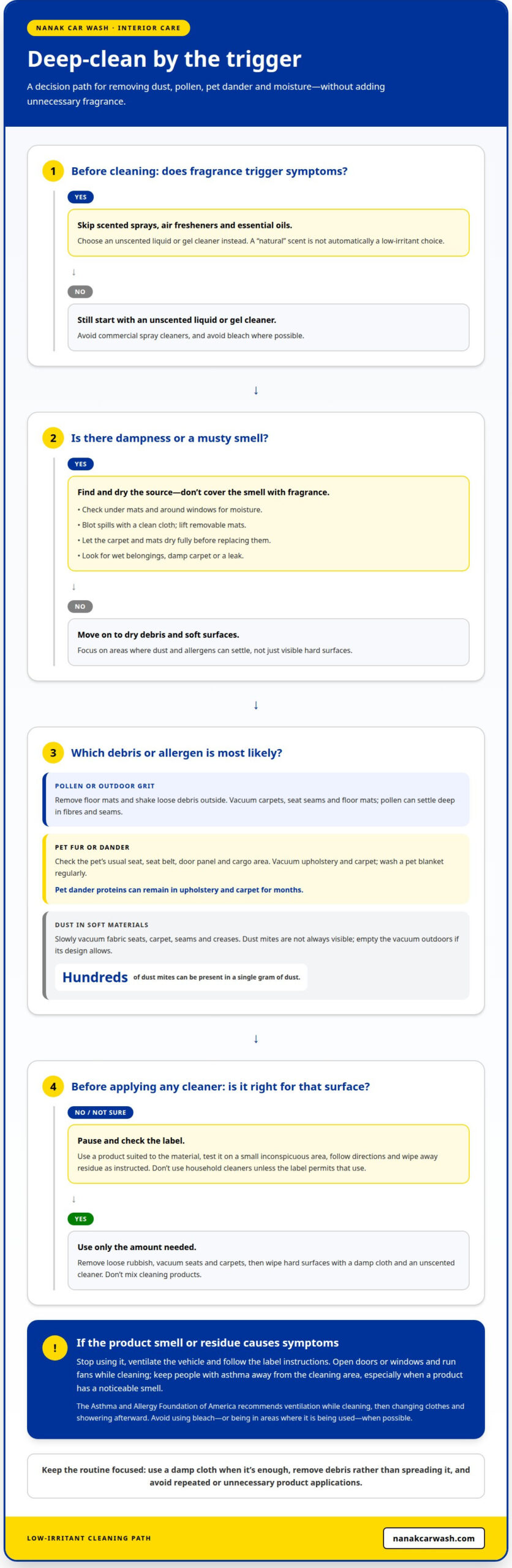
For an asthma- and allergy-aware cleaning approach, choose unscented products and avoid bleach where possible. Use liquid or gel cleaners instead of commercial spray cleaners, and remove dust with a damp cloth or vacuum rather than masking odours with fragrance.
There isn’t a Canadian certification identified here as a measure of allergy-friendly vehicle cleaning. As practical guidance, the Asthma and Allergy Foundation of America recommends unscented products when possible and liquid or gel cleaners instead of commercial sprays.
A deep-cleaning quote is provided after a request; the amount depends on vehicle size, interior condition, stains, odours and the work required.
Read the label before applying a cleaner to any vehicle surface. Choose a product suited to the material and test it on a small, inconspicuous area first. A glass cleaner may not suit upholstery, while a strong product can leave residue on plastic or leather. Follow the directions, use only the amount needed, and wipe away residue as instructed.
Skip scented sprays, air fresheners and essential oils if strong smells trigger symptoms. The Asthma and Allergy Foundation of America notes that essential oils can trigger asthma because of their strong scents and may release volatile organic compounds, or VOCs. A “natural” scent isn’t automatically a low-irritant choice.
Bleach needs particular care. The Asthma and Allergy Foundation of America advises people with asthma to avoid using bleach, or being in areas where it’s being used, when possible. For everyday vehicle cleaning, start with a mild, unscented cleaner and a damp cloth. Don’t mix cleaning products or use a household cleaner on an interior unless its label permits that use.
Reduce airborne exposure while cleaning. Open the car doors or windows and run fans to move air through the cabin. The Asthma and Allergy Foundation of America recommends ventilation while cleaning, then changing clothes and showering afterward. Keep people with asthma away from the cleaning area, especially when a product has a noticeable smell.
Use this simple sequence: remove loose rubbish, vacuum carpets and seats, then wipe hard surfaces with a damp cloth and an unscented cleaner. Work from cleaner areas toward visibly soiled spots to avoid spreading grime. If a product’s smell or residue causes symptoms, stop using it, ventilate the vehicle and follow the label instructions. Fragrance-free products and careful ventilation are a more sensible starting point than perfume or spray treatments.
One study cited on the page found that regular use of cleaning products was as harmful as smoking several cigarettes a day. That comparison supports keeping your routine focused: use only the cleaner needed for the task, avoid repeated applications, and don’t leave unnecessary product in the cabin. If a damp cloth will clean the surface, use it rather than adding another product. For a stubborn mark, choose a suitable unscented cleaner and follow its directions, then stop if its smell or residue causes symptoms.
2. How pollen, pet dander, dust mites, and mould enter and accumulate in cars
Pollen often comes into the car on jackets, shoes, bags and pets after time outdoors. Opening a window near flowering trees or roadside vegetation can also let airborne pollen inside. It can settle into carpet fibres, seat seams and floor mats, where a quick wipe may miss it. Carefully remove floor mats and shake loose debris outside before vacuuming the carpet beneath them.
Pet dander travels on fur, clothing and blankets, even when an animal isn’t riding in the car. Upholstery and carpet can hold pet dander proteins for months, so a single trip may leave material behind for later passengers. Check the usual pet seat, as well as the seat belt, door panel and cargo area. A washable pet blanket can help contain loose fur, but it also needs regular cleaning.
Dust mites and their waste collect in dusty soft materials, including carpet, fabric seats and child-seat covers. A single gram of dust can contain hundreds of dust mites. They aren’t always visible, so inspect seams and creases where crumbs and household dust gather. Vacuum these areas slowly, then empty the vacuum outdoors if its design allows.
Moisture creates a different problem. Wet boots, damp umbrellas, snow-covered floor mats and spilled drinks can leave carpet or padding wet. If moisture stays trapped, mould may develop, especially around a leak or damp mat. After a spill, blot the area with a clean cloth, lift removable mats and let both surfaces dry fully before replacing them.
Notice how each contaminant gets into the car. After a walk through a grassy park, check shoes and trouser cuffs for pollen before getting in. After transporting a dog, look for fur on the seat and cargo liner. Following rainy or snowy travel, inspect mats for dampness and grit. These quick checks help pinpoint the source so you can focus cleaning where it’s needed.
Build a targeted removal routine instead of treating every surface the same way. Remove loose rubbish and floor mats first. Vacuum seat seams, carpet edges and beneath the seats, where dust and dander can settle. Wipe hard trim with a suitable damp cloth, then clean fabric spots according to the material’s care instructions. Don’t brush dry debris across the cabin, as this can spread it to other surfaces.
If a musty smell persists, look for damp carpet, wet belongings or visible growth instead of covering the odour with fragrance. Check under mats and around windows for moisture, and dry wet items outside the vehicle. Removing the source matters: pollen needs physical removal, pet dander needs upholstery attention, and mould requires addressing the damp area. That distinction helps make each cleaning pass more effective.
3. Allergens and air quality inside vehicles
Vehicle air quality depends on both airborne particles and material settled on surfaces. Dust, pollen and pet dander can become airborne when passengers sit down, move floor mats or switch on the fan. More than 80 percent of people with asthma also have allergies, so controlling both sources can matter for cabin comfort.
Cleaning that kills germs doesn’t necessarily remove allergenic proteins. Disinfecting a seat or steering wheel may address germs on that surface, but pet dander proteins can remain in fabric and carpet. Focus on physically removing debris: vacuum upholstery slowly, collect particles from seams, and wipe hard surfaces with a suitable damp cloth.
Pet dander proteins can linger in vehicle upholstery and carpet for months. If a pet rides regularly, focus on its usual seat, the seat belt and the cargo area. Remove loose hair before vacuuming, then clean washable covers according to their care instructions. A clean-looking seat can still hold particles deep in the fabric.
Filtration helps capture particles moving through the cabin. HEPA filters are described as trapping 99.97% of particles that are 0.3 microns or larger. That figure applies to the filter’s particle capture, not a promise that every vehicle’s air will become allergen-free. A filter can’t remove material already settled into carpet or upholstery, so combine filtration with surface cleaning.
Some portable car air purifiers draw power through a vehicle’s 12 V outlet. They may add filtration while driving, but they don’t replace cleaning the cabin or maintaining its ventilation system. Keep the intake and outlet unobstructed, and follow the purifier’s own filter-care instructions. A device circulating air over dusty upholstery won’t remove the source by itself.
Professional-grade cleaning can reduce vehicle allergens by up to 90 percent. Treat that as a potential reduction, not a guarantee for every car or allergen. Results depend on where particles have settled and whether the cleaning method reaches those areas. A thorough clean should address seats, carpet, floor mats and other fabric surfaces, not just visible dust on the dashboard. For broader insights into cabin preservation and thorough vehicle care, automotive guides from Vanguard Motors Dubai highlight how dedicated detailing practices keep vehicle interiors in optimal condition.
After cleaning, check under mats, along seat seams and around the cabin air intake. If dust quickly returns when the fan runs, settled debris or a filter may need attention. If odours persist, look for damp materials or trapped residue instead of masking the smell. Removing the source and capturing airborne particles are separate tasks, and both help the cabin feel cleaner.
4. Cleaning vents and other overlooked areas
Dashboard vents can collect dust that moves when the fan starts. Switch off the vehicle, then use a soft brush or clean microfibre cloth to loosen visible debris around each vent. Wipe the surrounding dashboard, too. Avoid pushing dust deeper between the slats or spraying cleaner directly into the openings.
For narrow vent slots, use a clean, soft detailing brush and work gently from the edges inward. Follow with a vacuum nozzle held near the opening to collect loosened particles. Don’t force a tool into the ductwork. If dust remains out of reach, consult the vehicle manual to identify the appropriate filter or service access.
The cabin air filter can catch particles before air passes through the ventilation system. Its location and replacement schedule vary by vehicle, so consult the owner’s manual for the correct filter and instructions. A clogged or visibly dirty filter needs attention, but it won’t remove dust already settled on seats, floor mats or dashboard surfaces.
Clean carefully around the filter access. Before opening a panel, switch off the vehicle and follow the manual’s directions. Remove loose leaves or debris without pushing them into the housing. Fit the correct replacement in the direction shown by its airflow arrow, if it has one. A poorly seated filter can leave gaps around the edges.
Check less obvious spots during the same pass: centre console seams, seat tracks, door pockets and the space beneath floor mats. Use a vacuum crevice tool around seat rails, then wipe hard plastic with a damp cloth. These areas collect crumbs and dust that can become airborne when seats move or doors open.
Check for moisture separately. Lift floor mats after wet-weather travel and feel the carpet beneath them. Dry damp mats outside the vehicle, and leave the carpet exposed until it feels dry. Persistent moisture around windows or in footwells can point to a leak, which cleaning alone won’t resolve. Don’t cover a musty smell with fragrance.
Humidity in a closed vehicle can rise when wet clothing, snow-covered boots or damp umbrellas remain inside. Remove those items after each trip and let the cabin air out in a safe, dry place. For household heating and cooling filters, the Asthma and Allergy Foundation of America recommends cleaning or replacing small-particle filters at least once a month. That advice applies to household systems, not a vehicle’s cabin filter. Follow the vehicle manual for car-specific maintenance.
5. Habits for maintaining vehicle air quality
A simple schedule helps prevent cabin debris from building up between deeper cleans. The Asthma and Allergy Foundation of America recommends vacuuming at least weekly with a CERTIFIED vacuum that has HEPA filtration. In a vehicle, focus on floor mats, seat seams and the space beneath seats. Move slowly so the vacuum has time to collect settled particles.
Dust hard surfaces with a damp cloth, following the Asthma and Allergy Foundation of America’s recommendation. A dry cloth can shift dust instead of trapping it. Wipe the dashboard, centre console and door panels, rinsing the cloth as it collects debris. Keep it separate from products used on glass or upholstery.
Plan a larger seasonal clean a few times a year. Choose a time after a high-pollen period, a muddy stretch of travel or frequent pet trips. Remove loose rubbish first, then clean the areas that saw the most use. A family car may need attention around child seats, while a vehicle carrying pets may need more cleaning around their usual seating area.
Make short checks part of ordinary trips. After a park visit, shake loose dirt from floor mats outside the car. Following wet weather, remove damp umbrellas and check mats for moisture. If a spill happens, blot it promptly with a clean cloth and let the area dry before covering it. These small steps reduce the debris and damp items left inside.
Track cabin filter maintenance using the vehicle’s owner’s manual. The correct interval and filter type depend on the vehicle, so follow its instructions rather than a household filter schedule. If airflow changes or dust appears around the vents, note the change and inspect the cabin according to the manual. Regular cleaning still matters because a filter can’t remove particles already settled on cabin surfaces.
Adjust your routine when vehicle use changes. During pollen season, clean floor mats and frequently touched surfaces more often after outdoor trips. After transporting a pet, check fabric seats and cargo liners. When the car sits unused, remove food wrappers and damp items instead of leaving them until the next drive. A brief check keeps small messes from becoming a bigger cleaning job. Similarly, when arranging transport for milestone occasions where you want a pristine cabin without the prep work, services like 1Executive Car provide dedicated event and prom travel.
For a practical routine, set a weekly vacuum reminder and schedule seasonal interior cleaning a few times a year. If regular upkeep isn’t enough, explore a full-service vehicle clean as another way to maintain a tidy cabin.
Give high-traffic areas extra attention: vacuuming them daily or several times per week can help control dust and dander. For loose dust on other surfaces, the Asthma and Allergy Foundation of America (AAFA) recommends a damp cloth or a CERTIFIED asthma & allergy friendly® dusting cloth that traps dust particles. Wash washable slip covers and cushions in hot water once a week.
Replace the cabin air filter regularly, or more often during Brampton’s pollen-heavy spring and summer seasons. Keep the vehicle’s manual in mind when checking the filter, and continue professional-grade deep interior cleaning for asthma and allergy sufferers because settled dust and dander still need attention.
Nanak Car Wash: Car Detailing Packages
Nanak Car Wash offers Car Detailing Packages for drivers whose vehicle interior needs more attention than regular upkeep provides. If dust, tracked-in debris or pet hair has built up across seats and carpets, a detailing package is a practical next step after your routine cleaning. Choose a Full-Service Car Wash or Express Car Wash for regular vehicle cleaning, while the Unlimited Wash Club is an option for frequent wash visits. These services support vehicle cleanliness, but they aren’t a substitute for medical advice or a guarantee of reduced allergy symptoms. For a clean that fits your vehicle, contact Nanak Car Wash.
Make cleaner cabin habits part of every drive
Make your next vehicle clean the start of a routine, not a one-time reset. Notice which trips bring in the most debris, then check the cabin while unloading groceries, sports gear or a pet. Small, repeatable actions help you stay ahead of what builds up between deeper cleans.
A deep interior cleaning for asthma and allergy sufferers works best as one part of ongoing vehicle care. Nanak Car Wash offers Car Detailing Packages for more thorough interior attention, along with Full-Service Car Wash and Express Car Wash options for regular cleaning. Choose the level of service that fits your vehicle’s current needs.
Take the next step when your cabin needs more than your usual upkeep. Contact Nanak Car Wash today to discuss a suitable cleaning option. A practical routine and a clean vehicle can make each drive feel more comfortable.
Frequently Asked Questions
What does deep interior cleaning for asthma and allergy sufferers include?
It involves removing debris and cleaning surfaces where particles can settle, such as seat rails, console gaps, door pockets and the cargo area. Vacuuming and material-appropriate cleaning can address carpet, fabric and hard trim. Clear personal belongings before cleaning so tucked-away spaces are accessible. Handle child restraints according to their manufacturer’s instructions, and reinstall them correctly if removed. A stain may need a different treatment from routine soil removal.
Which cleaning methods and products reduce allergens without irritating asthma?
Choose fragrance-free products and physically remove particles. For a small area, apply cleaner to a cloth rather than misting it through the cabin, if the product label permits. Use only enough product for the surface and remove residue as directed. Don’t combine cleaners or add scented treatments to mask lingering smells. If using a product causes discomfort, stop and let the cabin air out.

 6600 Finch Ave W, Etobicoke, ON M9V 3Z6

 647-703-8515
 MON – SUN 8 AM to 7 PM