

You've just washed the car, you're feeling virtuous, and then you grab the first towel in the drawer. One wipe leaves lint on the glass. The next drags on the paint. The third smells like it lost a fight with a damp hockey bag. That's not a bad car. That's a towel drawer with no rules.
Good microfiber towels aren't magic cloths you use for everything until they feel like sandpaper. They're a sorted toolkit. I treat every towel like it has one job, one colour, and one way out when it stops performing. Get that system right and you'll get fewer streaks, fewer swirls, and far less fibre shedding from sloppy laundry habits.
Table of Contents
- Which Microfiber Towel Goes Where
- How to Wash Microfiber Towels Without Ruining Them
- Streaks, Stiffness and Other Towel Problems
- How to Test and Retire a Towel Before It Fails
- Disposal, Filters and Lint Capture
- Winter Bins and Your Starter Kit
Which Microfiber Towel Goes Where
Start at the bench, not the store. You need a lookup you can follow with wet hands and zero patience.
| Task | Towel type | Pile and edge |
|---|---|---|
| Glass and mirrors | Low-pile glass towel | Short pile, tight weave |
| Paint drying | Plush drying towel | Long plush pile |
| Final paint buffing | Plush or edgeless towel | Plush, low drag |
| Removing road film or light dust | Short-pile general towel | Short pile, mid-weight |
| Wheels, tyres and undercarriage | Dedicated grit towel | Looped pile, dark colour |
| Interiors and dashboards | Colour-coded general towel | Short pile, light use |
Weights that actually help you choose
GSM means grams per square metre. It tells you weight, not quality, but it's still a useful shortcut. For glass and mirrors, I want a low-pile towel around 200 to 300 GSM with a tight weave. Loose, fluffy pile is lovely on paint and useless on a windscreen because it leaves lint behind. If you want the glass side explained well, how to care for glass-cleaning cloths covers why tight weave and clean fibres matter more than extra spraying.
Paint drying is the opposite job. Use a plush drying towel at 900 to 1,100 GSM and let weight do the work. Lay it flat, pat or pull slowly, and you'll clear most water in one or two passes without scrubbing. Final buffing sits in the middle. A plush or edgeless towel around 350 to 500 GSM glides over sealant or quick detailer without grabbing.
For road film or light dust, a short-pile general towel at 300 to 400 GSM gives you some bite without a deep nap that traps everything. Wheels, tyres and undercarriage get a dark, dedicated grit towel because brake dust and winter salt will stain it and load it with particles you'd never want near clear coat. Interiors get their own colour-coded general towel for dashboards, door panels, screens and vinyl.
Practical rule: Colour beats brand. If everyone in the house knows blue means glass and black means wheels, you'll prevent more scratches than any premium label will.
The myth is that microfiber is automatically best for every task. It isn't, and construction matters more than the word on the tag. Canadian evidence summarized in an ESE Magazine review of aquatic pollution from microfibers in laundry found polyester samples averaged 161 ± 184 mg of shedding per kilogram per wash, while nylon filament woven textiles averaged 27 ± 16 mg/kg. That gap is why I don't buy the cheapest bulk pack and hope for the best. Plush doesn't always mean safe, and cheap doesn't always mean economical if it sheds, lints and dies early.
The same overview notes a community-scale pilot in Parry Sound where washing-machine microfiber filters reduced final effluent fibre counts by an average of 41%. Keep that in mind for laundry, but selection comes first.
Pick one towel per task today. Label the bins or tags before the next wash, while you still remember which towel wiped the exhaust tip.
How to Wash Microfiber Towels Without Ruining Them
A wheel towel slips into the glass pile, and the next window gets streaks or grit-scratches. Keep the towel drawer sorted through laundry too: separate loads protect the fibres, the finish and the glass.
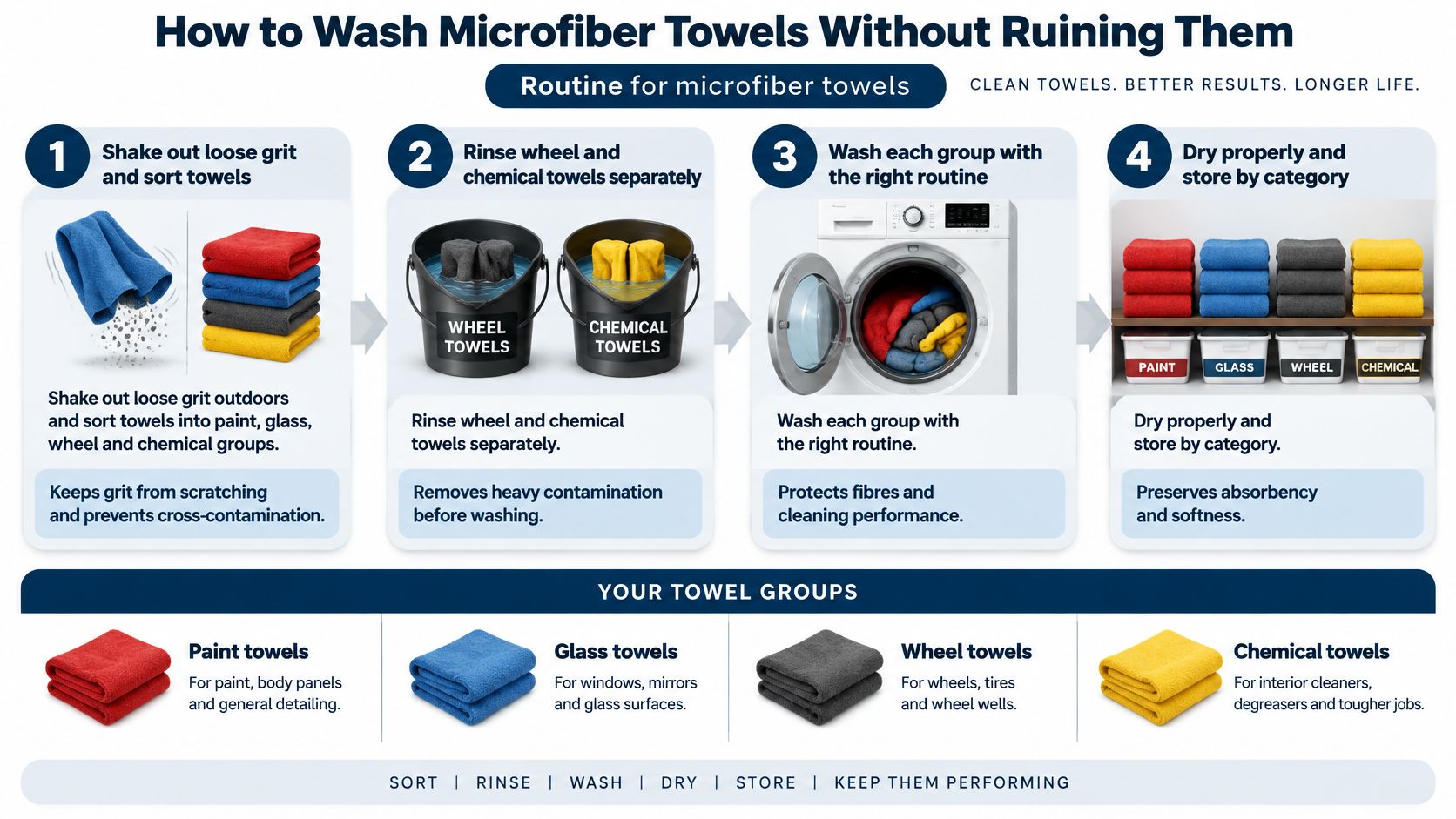
The washing routine
- Shake and sort outdoors. Separate paint, glass, wheel and chemical towels before washing. Grit shared in the drum can scratch paint later; mixed colours and tasks also make fibre shedding harder to spot.
- Rinse the dirtiest towels first. Give wheel and chemical towels a separate plain-water rinse to remove loose brake dust, tyre dressing and road salt.
- Wash each group separately. Choose a cold or cool, gentle cycle and leave room in the drum. An overloaded load holds on to soil, which can transfer to fibres and leave streaks.
- Measure detergent sparingly. A small amount of mild detergent is enough. Residue can stiffen fibres, reduce absorbency and smear across glass.
- Skip softener, dryer sheets and bleach. Softener and dryer sheets coat the fibres, leaving them less absorbent and more likely to streak. Bleach can damage the synthetic pile.
- Air-dry or use low heat. High heat can stiffen or damage fibres, making a towel rougher against paint and more prone to shedding. Clean the lint trap first so old fluff does not cling to the load.
- Check before putting towels away. Feel both sides for roughness, stiffness or trapped grit. A towel that catches on your palm stays out of paint work.
If you use a laundry service such as wash and fold pickup in Singapore, confirm that detailing towels will be sorted separately and washed without softener. Otherwise, a convenient mixed load can send lint onto paint and residue onto glass.
The shedding trade-off
A Canadian and U.S. study summarized by Ocean Wise on microfibres from clothes measured fibre losses ranging from 9.6 to 1,240 mg per kilogram of textile per wash and estimated an average of 131 mg/kg per wash for synthetic fabrics. The summary also reports that the highest-shedding materials released more than 800 times as many fibres as the lowest-shedding materials.
Colder water and front-loading machines can reduce shedding, which gives cold, gentle cycles another practical advantage. They do not make a gritty wheel towel safe for paint, and a clean-looking towel can still shed. Keep those risks separate: wash gently to limit wear, and keep each towel assigned to its own job.
Finish with one controlled glass wipe. If the towel leaves lint, haze, oily film or drag, rewash it if detergent residue seems likely. Do not return it to finish work until it wipes clean.
Streaks, Stiffness and Other Towel Problems
A bad result usually tells you exactly what went wrong if you stop blaming the glass cleaner for five seconds.
| Symptom | Likely cause | Fix |
|---|---|---|
| Streaks on glass | Detergent residue or fabric softener | Extra rinse, no softener, rewash |
| Stiff or crunchy feel | Softener or high dryer heat | Air dry or low heat, half the detergent |
| Lint on paint | Worn towel or mixed cotton load | Move to rough work, sort loads |
| Hazy or oily film | Overloaded wash or saturated towel | Smaller loads, rewash |
| Fine scratches or swirls | Embedded grit | Pre-rinse and inspect before reuse |
| Sour or musty smell | Towels stored damp | Dry fully, store open, rewash |
Fixes that clear in one wash
Streaks on glass usually mean something's coating the fibres. Rewash with a small amount of detergent, add an extra rinse and leave softener out. Then test on one window, not the whole car. For exterior glass habits beyond cars, window cleaning tips for cabin owners reinforces the same boring truth. Clean cloth, light product and a dry finishing pass beat heroic scrubbing.
Hazy film after buffing often means the towel was saturated or the washer was overloaded. Smaller loads rinse cleaner. A sour smell is simpler and more embarrassing. You stored towels damp. Rewash, dry fully and store them where air can move.
Fixes that take a week of better habits
Stiffness doesn't always vanish after one corrected wash, especially if towels have seen repeated high heat or softener. Halve the detergent, dry low for a few cycles and see whether absorbency returns. If the towel still feels like a crispbread, believe it. Downgrade it.
Lint on paint means you mixed loads, the towel is worn, or both. Cotton sheds into microfiber and microfiber happily keeps the souvenir. Sort properly for the next week and move chronic lint producers to interiors or rough work.
Fine scratches are the one symptom you don't negotiate with. If grit's embedded, pre-rinsing may help the next towel, but the suspect towel leaves paint duty now.
That's the difference between saving a drawer and saving one towel. One wash fixes residue. Changed sorting, drying and storage habits stop the same failure from returning every Saturday.
How to Test and Retire a Towel Before It Fails
Wash count is a lazy retirement rule. A towel can survive gentle glass work for ages and die quickly after a winter of salt, wheel cleaner and being dropped on the driveway twice.
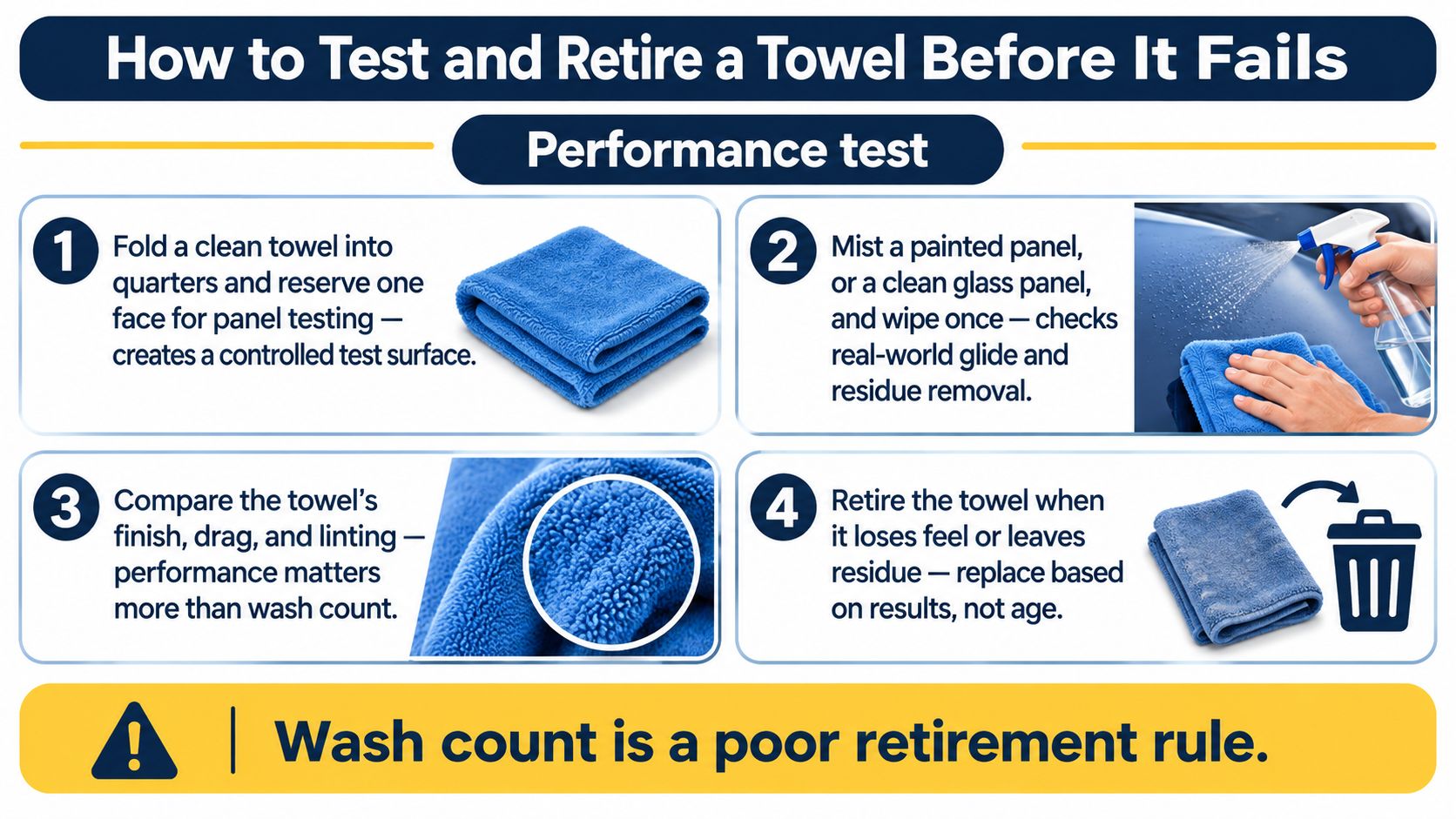
The one-pass panel test
- Fold into quarters. Fold a clean towel into quarters and reserve one face only for the test. That gives you a controlled surface instead of a random swipe with whichever corner feels lucky.
- Mist the panel. Mist a representative painted panel with clean water. For a glass towel, use a clean glass panel. Keep it light. You're testing the towel, not flooding the evidence.
- Make one straight pass. Use light pressure and one straight movement. Don't scrub circles and then declare the towel innocent.
- Grade what's left. Look for remaining film, streaks and lint. Feel for drag. Any one defect matters.
- Downgrade fast. If it fails paint or glass, move it to wheels, door jambs or general non-finish work. Retirement from paint isn't execution. It's a new job with lower consequences.
- Log the result. Record towel type, colour, assigned use, wash date and rejection reason in a simple sheet. It sounds excessive until the same mystery streak returns three weekends in a row.
Microfiber's high surface area is why it picks up soil and liquid so well. It's also why it holds contaminants. Those tiny fibres can carry abrasive grit between zones, and clear coat doesn't care that the towel looked clean under garage lighting.
I pay special attention after winter work. Salt and road film load towels faster than summer dust, so a towel that passed in September can fail badly in February. Test more often when the contamination is heavier.
Read the weekly pattern
Review rejection reasons once a week. Rising streak complaints point toward detergent residue or softener sneaking back in. Rising stiffness suggests dryer heat. Lint across several towels suggests mixed loads. Scratches or grit in multiple groups suggest your sorting system exists only on paper.
That little log turns guesswork into a repair order. Fix the first cause, retest, and only then blame the towels.
Disposal, Filters and Lint Capture
A towel that fails the panel test, holds embedded grit, smells sour after rewashing, or turns stiff and stops absorbing water is done with finish work. Keep it out of the paint bin. A costly towel can still scratch costly paint.
Use the downgrade path
Move retired towels to wheels and rough work until they wear out. Then cut them into smaller rags for engine-bay wipe-downs or tyre dust. Once a towel has handled that work, keep it away from glass and paint, regardless of how thoroughly it was washed.
Reusable towels still create waste. CalRecycle's textile stewardship page reports that California discards approximately 1.2 million tons of textiles each year, about 3% of the state's disposed waste stream. A towel drawer is small beside that total, but extending each towel's useful life means replacing fewer of them. Separate heavily contaminated material, use local textile recovery where available, and follow local rules for anything soaked in chemicals.
Capture fibres without kidding yourself
For frequent laundering, fit a washing-machine lint filter where feasible, or use a fine mesh laundry bag for smaller loads. Wash full batches of the same towel group rather than running constant tiny loads. Cold, gentle cycles help limit fibre loss and protect the pile.
In Canada, high-use owners may need to add fibre capture themselves. Keep that job separate from towel inspection.
A filter can reduce what leaves in wastewater. It cannot remove brake dust from a towel or make a rejected towel safe for clear coat.
Filtration handles fibres in the wash water. Inspection protects paint. Use both, and don't mistake one for the other.
Winter Bins and Your Starter Kit
Ontario winter will expose a sloppy towel system in about nine minutes. Salt dries into crystals, road film turns oily, and one sloppy trunk bin becomes a grit distribution centre.
Three winter bins inside four wash groups
Store winter towels in three bins. Use paint, glass, and winter wheels and undercarriage. Those bins still fit the four wash groups of paint, glass, wheel and chemical when laundry day comes. Keep the winter wheel bin in a sealed bag in the trunk and never shake it out over a clean car. That sounds obvious right up until someone does it.
Rinse salty towels with plain water after each use as soon as practical. Salt left to dry becomes exactly the scratchy residue you've been trying to avoid. Give oily road-film towels an extra rinse before they go anywhere near glass.
Wash the winter bin weekly at peak season. Any towel with heavy embedded grit gets retired from finish work for good. I wouldn't give it one more chance because February was expensive enough already.
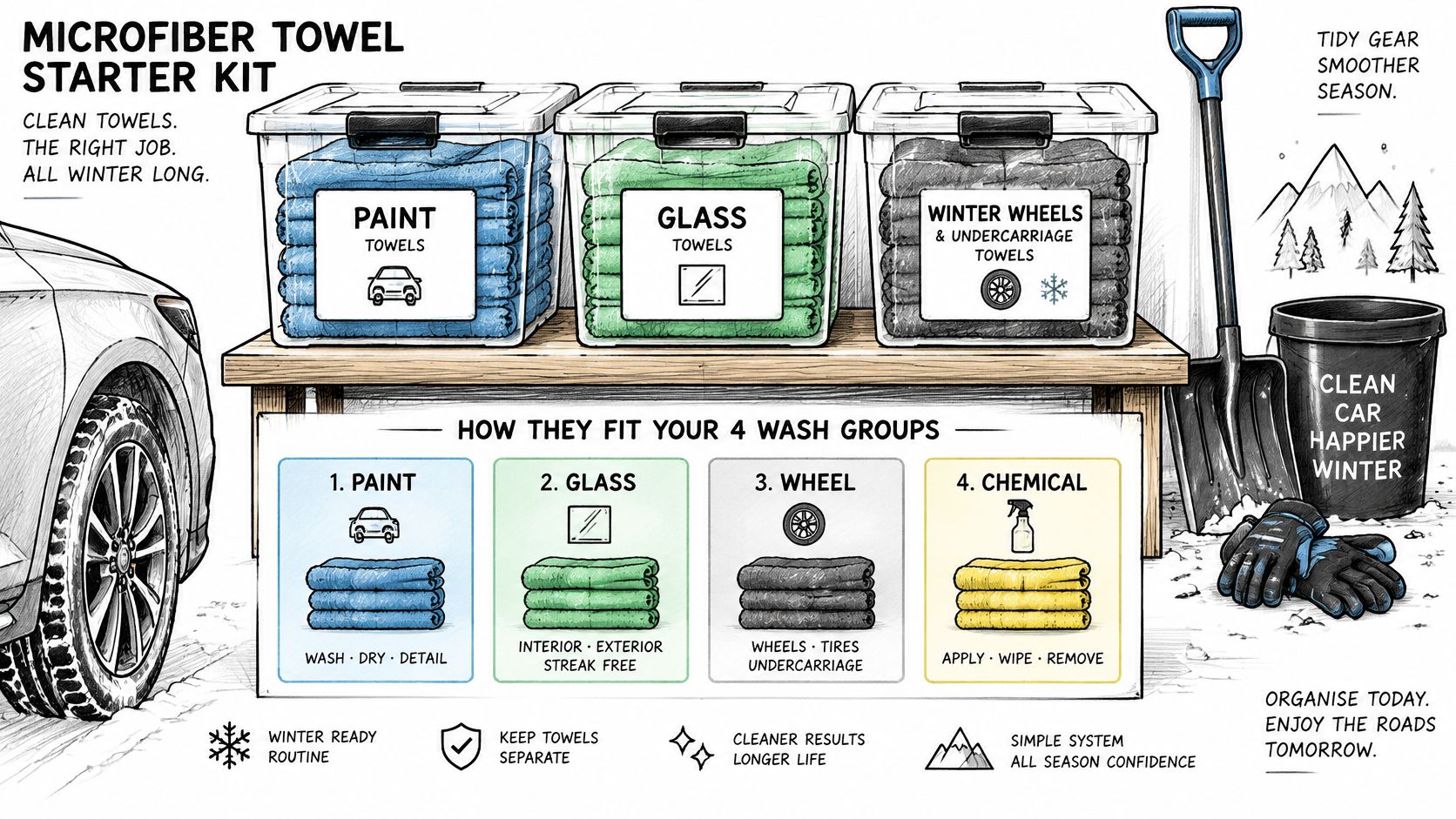
A starter kit you can build this week
- One glass towel: Low pile, tight weave, its own bright colour.
- One plush drying towel: Large enough to lay flat and pull slowly.
- Two general towels: One for interiors, one for light exterior work, different colours.
- One dark grit towel: Wheels, tyres, jambs and undercarriage only.
- Mesh bag per group: Keeps sorting honest between garage and laundry room.
- Mild detergent without softener: Small bottle, clearly labelled for towels.
- Simple log sheet: Towel type, colour, use, wash date and rejection reason.
That's enough to stop improvising. It isn't enough for a full interior shampoo, leather care or machine polish, and pretending otherwise wastes a weekend. Car detailing at Nanak Car Wash is done by hand, and detailing appointments can be booked online or by calling 416-749-0202 when the job needs more time and equipment than a towel kit covers.
Tonight, sort your current towels into bins. Test the paint and glass towels, downgrade the failures and label the survivors before the next wash mixes them all back into chaos.
When your towels are sorted but the car still needs proper interior cleaning, paint care or a thorough hand detail, visit Nanak Car Wash and book the service that fits your vehicle. Bring us the salt, road film and mystery cup holder residue. We'll handle the work that goes well beyond a clean towel and good intentions.

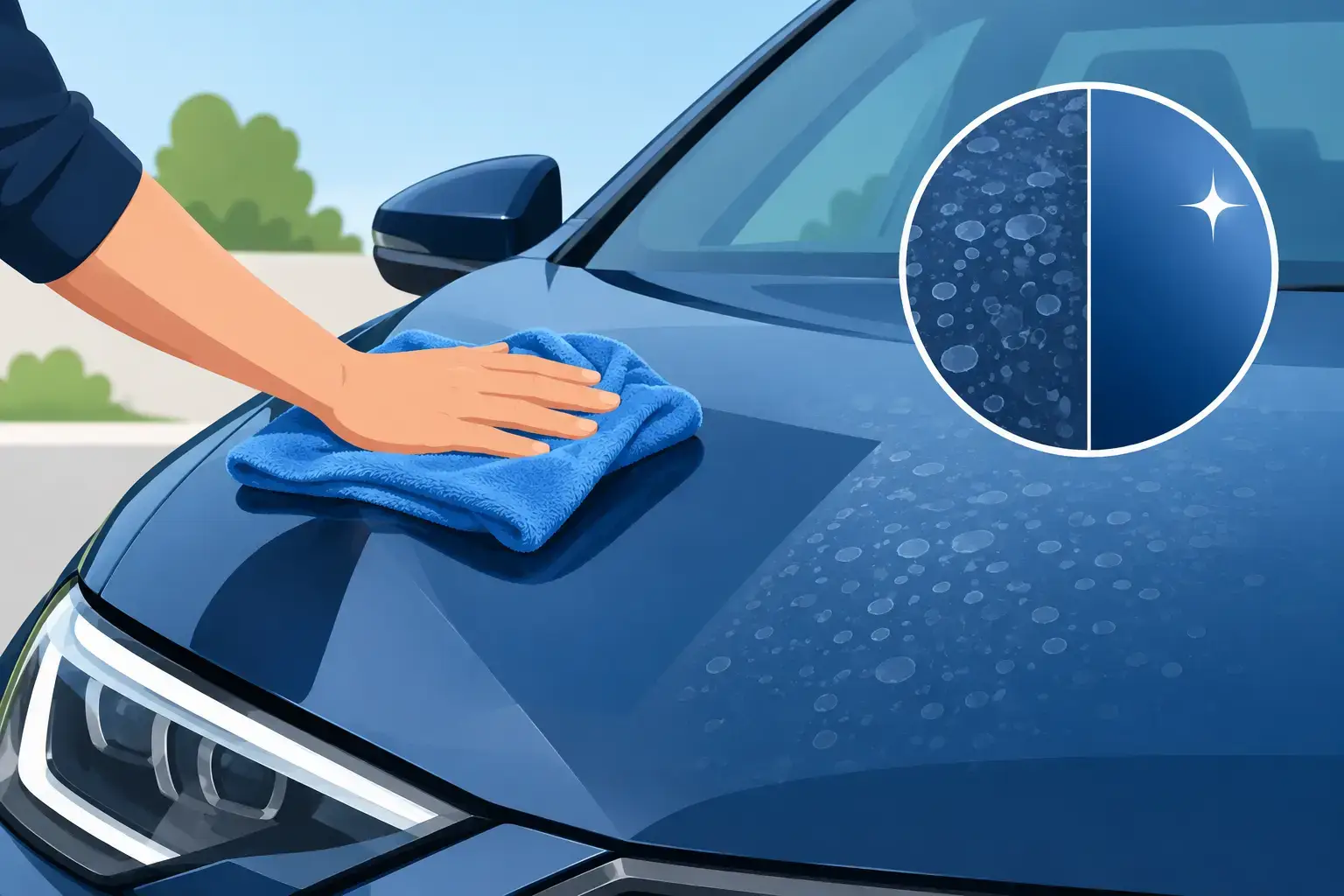


 6600 Finch Ave W, Etobicoke, ON M9V 3Z6

 647-703-8515
 MON – SUN 8 AM to 7 PM