
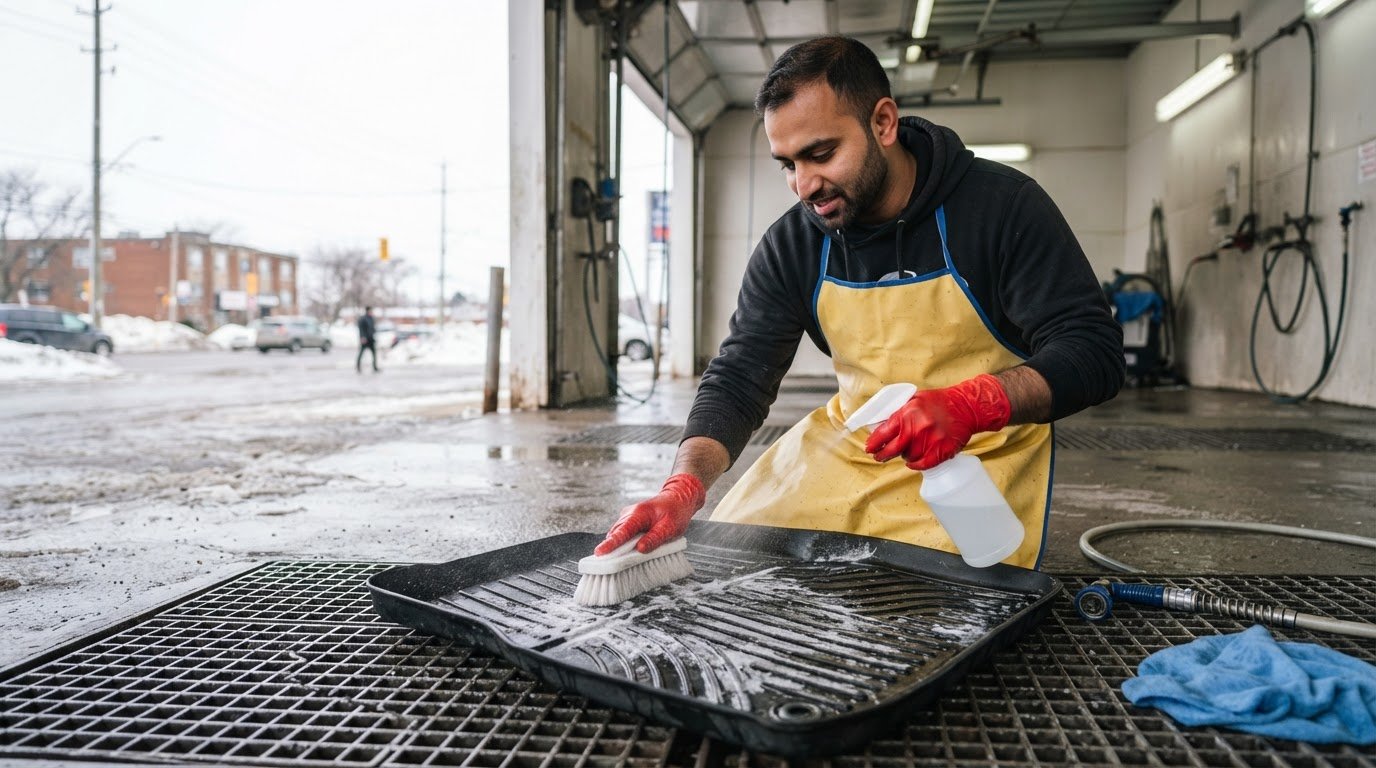
Start with cool water to rinse away loose road salt, then use a mixture of equal parts distilled white vinegar and water for stubborn white marks. Let the solution sit for 3-5 minutes before wiping or scrubbing gently. That’s the straightforward way to clean salt stains from rubber car mats without reaching for a complicated cleaner.
Salt crust can make a car’s interior feel messy, and it’s tempting to scrub hard or reach for a stronger product. A careful rinse and a few basic tools can remove the stains while helping protect the mat’s surface.
This guide explains how to prepare the mats, choose between cool water and vinegar, and remove the residue. You’ll also learn how to dry mats thoroughly to help prevent moisture and odours under the carpet. Simple steps for a cleaner, more comfortable car.
Key Takeaways
- Start by removing loose salt and grit so they don’t get dragged across the mat while you clean.
- Use cool water for a light salt residue, and try equal parts distilled white vinegar and water for stubborn marks.
- Choose a soft brush and clean cloth to lift residue without scrubbing aggressively.
- Rinse away loosened salt and dry each mat fully before putting it back in the vehicle.
- For a more thorough interior clean, Nanak Car Wash offers Car Detailing Packages.
Cleaning salt stains with vinegar and water
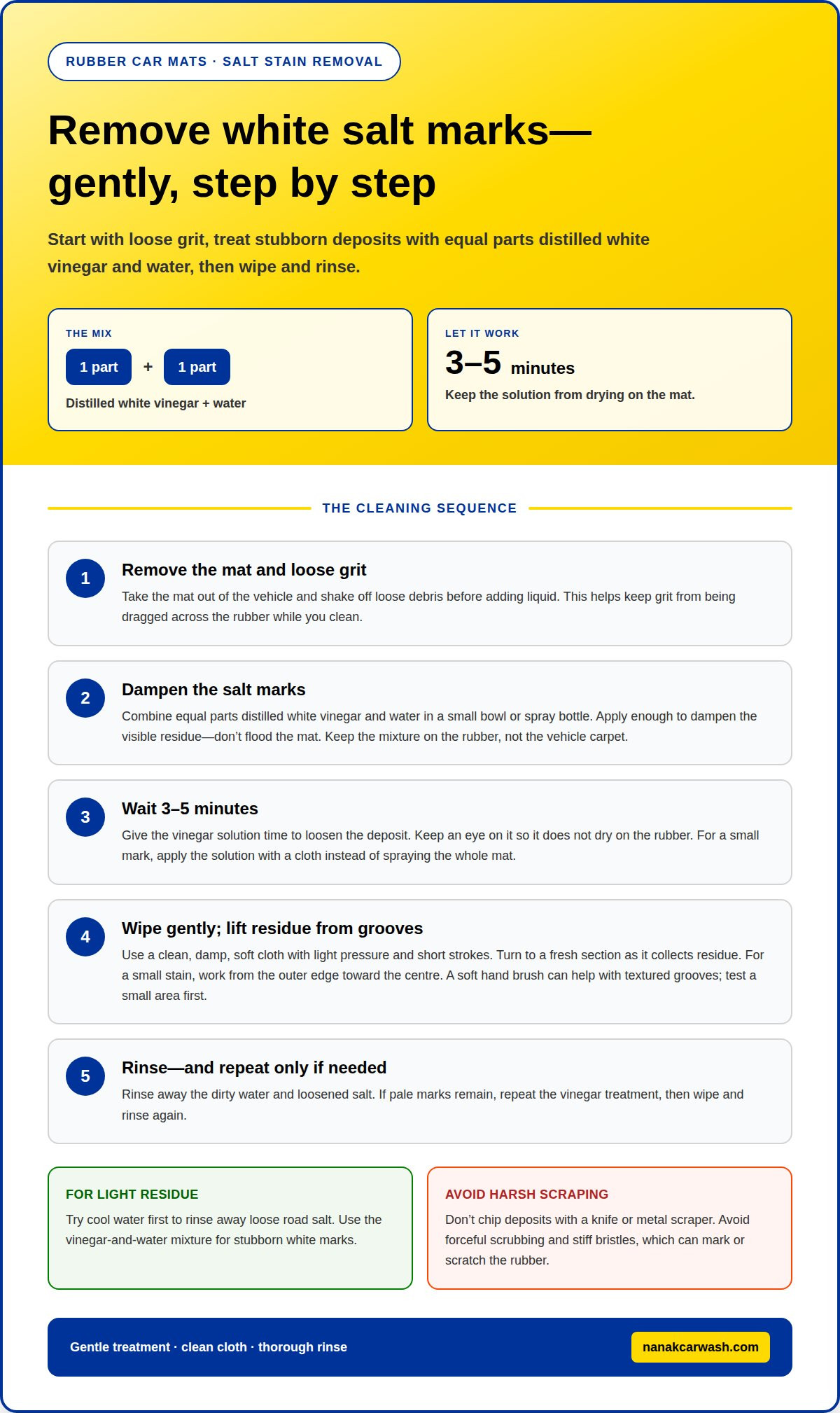
A mixture of distilled white vinegar and water can loosen winter salt; dish soap diluted in water is another household cleaning option. To clean salt stains from rubber car mats, remove loose debris, treat the marks, wipe them away, and rinse off the dirty water.
Apply a Vinegar-and-Water Solution
Mix equal parts distilled white vinegar and water in a small bowl or spray bottle. Apply enough solution to dampen the salt residue without flooding the mat. Let it sit for 3-5 minutes, giving the vinegar time to loosen the deposit. Keep the mixture on the rubber surface, not the vehicle’s carpet.
- Remove the mat from the vehicle and shake off loose grit before adding liquid.
- Combine equal parts distilled white vinegar and water, then apply the mixture to visible salt marks.
- Wait 3-5 minutes; don’t let the solution dry on the mat while it sits.
- Wipe the treated area with a clean cloth, using a fresh section as it collects residue.
- Rinse away the dirty water and loosened salt, adding more solution if residue remains.
For a small mark, apply the solution with a cloth rather than spraying the whole mat. Work from the stain’s outer edge toward the centre so loosened salt doesn’t spread over clean rubber. If a pale outline remains, repeat the treatment, using a clean section of cloth for each pass.
Remove White Salt Residue Carefully
Wipe white residue with a damp, soft cloth after the vinegar solution has had 3-5 minutes to work. Use light pressure and short strokes rather than scraping the rubber. A soft hand brush can help lift salt from grooves, but test a small area first and avoid stiff bristles that could mark the mat.
- Blot the wet salt mark with a clean cloth for a few seconds, then lift the cloth.
- Turn to an unused section of cloth before wiping again, so salt isn’t transferred back.
- Use a soft brush on textured grooves, moving gently over the white residue.
- Rinse the mat until the dirty water and loosened crystals are washed away.
- Repeat the vinegar treatment if white marks remain, then wipe and rinse the area again.
Don’t chip away dried deposits with a knife or metal scraper, which can scratch the rubber. Avoid forceful scrubbing, especially on raised ridges where residue collects. A measured vinegar-and-water treatment, gentle wiping, and a thorough rinse can remove the stain without aggressive abrasion.
Drying mats completely to prevent odours and mould
After rinsing a mat, remove as much moisture as possible before returning it to the vehicle. A wet/dry vacuum, microfiber towel, and airflow outside help dry the mat and reduce moisture trapped beneath the carpet.
- Lift the mat out of the vehicle. After cleaning, set it on a stable surface with the grooved side facing up. Cleaning outside the footwell lets water drain instead of pooling against the vehicle’s carpet. Don’t put a wet mat back while its surface or underside still feels damp.
- Remove standing water first. Use a wet/dry vacuum to draw moisture from the mat’s channels and textured areas. Move the nozzle over the grooves, edges, and underside, where rinse water can collect. Without a wet/dry vacuum, press a clean microfiber towel onto wet areas to absorb the water.
- Wipe the full surface with microfiber. Wipe the top, then turn the mat over and wipe the underside. Switch to a dry section of the towel as soon as the one you’re using becomes damp. Check raised borders and deep grooves, where salt and water can remain even when the main surface looks dry.
- Air the mat outside until fully dry. Place it where air can move around both sides, rather than flat against another surface. Turn it over during drying so air reaches the underside, too. Feel along the grooves and edges. If they’re cool or damp, leave the mat outside longer before reinstalling it.
- Check the vehicle’s footwell before replacing the mat. If rinse water reached the carpet, dry that area as well. Moisture trapped under a mat can contribute to mildew and lingering odours. A dry rubber mat won’t solve damp carpet underneath, so press a clean towel against the footwell and check for moisture.
- Apply mat protector only after drying. If you use a protector, wait until the mat is completely dry after wiping and air-drying. Applying it over moisture can trap water beneath the product. When dry, check the front, back, grooves, and edges again, then return the mat to the footwell.
Finish by checking the mat by touch, especially after rinsing salt from deep channels. Drying the mat and any damp carpet underneath helps limit trapped moisture, musty odours, and mildew after a winter clean.
After cleaning a mat with liquid, use a wet/dry vacuum or air it outside to remove moisture and help prevent mildew under the carpet. Dry the mat with a microfiber towel before applying protector. These steps address moisture left by cleaning and help ensure the mat is dry before it goes back in the footwell.
The page states that EVA car floor mats dry in minutes after a quick rinse and wipe. That claim applies to EVA mats. For other mats, a wet/dry vacuum, outdoor airing, and a microfiber towel are useful drying options before applying protector.
How road salt affects carpet, rubber, and EVA mats
Road salt leaves pale deposits on mats and can contribute to wear on a vehicle’s exterior and rust. Match your cleaning method to the mat material, and keep the carpet dry during cleanup.
A pressure washer can damage a mat if its jet is forceful or held close, so use a gentler rinse. In winter, drivers who use salt-treated roads daily can shake and vacuum mats weekly; do a full vinegar clean every 2-3 weeks or after heavy salting.
- Identify the surface before cleaning. Rubber mats have a non-porous surface, while carpet fibres can hold salt and moisture. EVA mats are another option, often 2-3 times lighter than rubber mats. Check the mat’s material and grooves first, because debris and water can collect differently on each surface.
- Shake loose salt from removable mats. Take the mat out and shake it away from the vehicle so crystals don’t fall back into the footwell. If you drive on salted roads daily, make this part of your weekly winter routine. Vacuum the mat afterward to remove loose grit before wet cleaning.
- Clean carpet without soaking its backing. Use a carpet cleaner’s upholstery attachment on salt marks. Make controlled passes over the affected area instead of saturating the carpet. Excess water can linger in the fibres and backing, so avoid leaving a wet patch beneath the mat.
- Rinse rubber with a controlled stream. Use a hose or gentle flow of water to wash away loosened salt. Don’t aim a close, forceful pressure-washer jet at the mat. Check raised edges and grooves for white residue, then rinse them without directing water into the vehicle’s footwell.
- Use a light touch on EVA mats. Rinse the surface and wipe away remaining deposits, following the mat’s contours. EVA mats can be rinsed in 30 seconds, but dirt in deep channels may need extra attention. Don’t assume a quick rinse removes every embedded mark; inspect grooves before drying.
- Set a winter cleaning rhythm. Shake and vacuum weekly if you drive on roads treated with salt daily. Schedule a full vinegar clean every 2-3 weeks in winter, or after heavy snowfall or salting. If a mat shows fresh residue sooner, remove loose salt promptly rather than letting it build up.
- Keep salt off the surrounding interior. Lift each mat out before cleaning, and avoid brushing crystals onto the carpet. Once the mat is clean, inspect the footwell for stray salt and moisture. This quick check helps prevent residue from being tracked back onto the mat or left underneath it.
Tools and cleaning products for salt removal
Before you start, gather a vacuum, clean cloths, a soft brush, and a suitable cleaner. Remove loose debris first, then choose a method to clean the remaining salt.
- Shake out and vacuum loose debris. Remove each mat from the vehicle and shake it outside to dislodge dry salt and grit. Vacuum both the main surface and its grooves before adding water or cleaner. Removing loose crystals first helps keep them from spreading into damp areas as you scrub.
- Set out separate cloths for wiping and rinsing. Keep a clean cloth nearby for lifting loosened residue, and switch to an unused section as it becomes dirty. A second cloth can help remove remaining moisture after rinsing. Using separate clean areas prevents the salt collected during one pass from being wiped back onto the mat.
- Choose a basic cleaner for the residue. Liquid dish soap mixed with water can clean salt-stained mats as an alternative to vinegar. Apply the mixture to the affected surface and work it over the marks with a hand-held brush. Use enough cleaner to reach the residue, but avoid flooding the mat or the vehicle’s carpet.
- Use a floor-mat cleaner for stubborn marks. Apply the cleaner to the salt-stained area, let it soak, then scrub with a hand-held brush. Follow the cleaner’s directions, and work in controlled strokes over the white marks and textured channels. Add more cleaner as needed to help lift debris, then rinse away the dirty water.
- Consider a store-bought spray when needed. A salt-removal spray can replace the vinegar-and-water mixture in the same cleaning process. Apply it to the stained area, allow it to work as directed, then wipe or scrub and rinse. Don’t combine cleaning products; use one method at a time and rinse away its residue.
- Use a drill brush carefully on broad, tough areas. A household drill fitted with a brush attachment can scrub a mat in circular motions with floor-mat cleaner. Keep the brush moving and use light pressure, especially around raised ridges and edges. A hand-held brush gives more control in narrow grooves or near delicate areas.
- Rinse and inspect the mat before finishing. Wash away loosened salt and dirty cleaner rather than letting it dry on the rubber. Check grooves, corners, and raised borders for remaining white crystals. If residue persists, repeat the chosen cleaning method, then rinse again and dry the mat completely.
Removing dry debris before any wet treatment is an important first step: shaking and vacuuming car mats removes 60-80% of loose salt crystals before wet cleaning. Much of the loose material can therefore be cleared before cleaner or water is applied, leaving the remaining stains to address afterward.
If you choose a store-bought spray, use it instead of the vinegar-and-water mixture and follow the same cleaning steps. Apply it to the affected area, let it work as directed, then scrub or wipe and rinse. Use one cleaning method at a time, and rinse away residue before deciding whether the mat needs another pass.
Cleaning rubber mats with cool water
When cleaning salty rinse water in Canada, collect it rather than letting it flow into a street or storm drain. Use an indoor sink connected to household wastewater, or follow your municipality’s disposal instructions if that option isn’t available.
- Take the rubber mat out of the vehicle. Clean it away from the footwell so runoff doesn’t soak the carpet. Choose a spot where water can be collected and managed, such as a wash basin or a surface beside a drain connected to household wastewater. Keep salty water away from streets and storm drains.
- Remove dry grit before rinsing. Shake the mat outside, then vacuum loose salt and dirt from its surface and grooves. Rinsing with cool water is most effective when loose crystals aren’t being dragged around the rubber. A quick dry clean also makes it easier to see which white marks remain.
- Rinse with a controlled stream of cool water. Direct water across the mat from the higher edge toward the lower edge, guiding salt off the surface. Keep the stream gentle and don’t blast narrow grooves with a pressure washer. The aim is to dissolve and carry away loose salt, not drive water into the vehicle’s interior.
- Work water through textured areas. Use your hand or a soft brush to move cool water across raised ridges and recessed channels. Salt can collect in these details, so rinse each groove, not just the broad, flat centre. Watch where runoff goes and collect it rather than letting it reach a street drain.
- Check the mat before deciding whether to repeat. After the first rinse, look for white deposits around the edges, corners, and tread pattern. If the residue has lifted, keep rinsing until the runoff looks clear. If a white mark remains, cool water may not be enough. Use a suitable cleaner rather than scrubbing harder.
- Blot and inspect after rinsing. Press a clean towel onto damp areas, then check the mat’s underside for trapped grit or salt. Rinse those spots with cool water if needed. Don’t return a wet mat to the footwell, where water can remain underneath and dampen the carpet.
- Manage the remaining rinse water. Pour collected water into an indoor sink connected to household wastewater, where available, or follow your municipality’s disposal guidance. Don’t pour it onto the road, a driveway leading to a storm drain, or soil beside the vehicle. Finish by wiping the basin and any splashes with clean water.
Nanak Car Wash
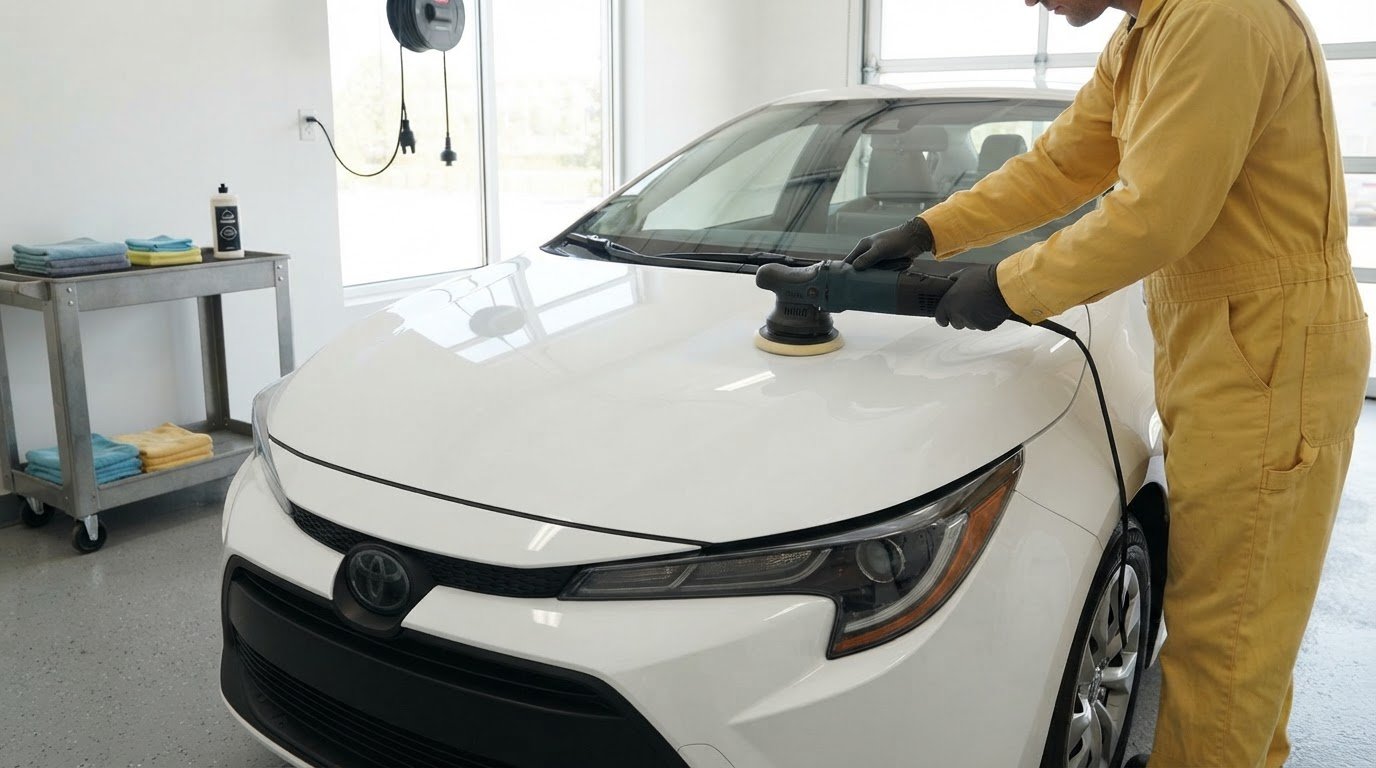
Nanak Car Wash offers a practical next step if winter salt has spread beyond the mats or regular cleaning feels like too much work. Its Car Detailing Packages can suit drivers looking for a more thorough vehicle clean, while Full-Service Car Wash and Express Car Wash offer other cleaning options.
For regular washes, the Unlimited Wash Club may suit frequent visitors. Choose an option that matches your cleaning needs, whether you’re maintaining a tidy vehicle or tackling accumulated winter grime. Visit Nanak Car Wash to explore its car wash and detailing options.
Make winter cleanup part of your routine
Let clean mats be the start of a more comfortable winter driving routine. After snowy or salty trips, notice what gets tracked inside and decide whether a quick clean at home or a broader vehicle wash is the better next step. Knowing how to clean salt stains from rubber car mats gives you a simple way to manage everyday mess, while a more thorough clean can help when grime has spread beyond the footwell.
Nanak Car Wash offers Car Detailing Packages, Full-Service Car Wash, and Express Car Wash for different vehicle-cleaning needs. Choose the level of cleaning that suits your car, then keep mat care manageable throughout the season.
Contact Nanak Car Wash to discuss a suitable cleaning option. Take the next step toward a tidier vehicle and enjoy a cleaner-feeling drive.
Frequently Asked Questions
Can vinegar and water remove road salt from rubber floor mats?
Yes. A vinegar-and-water mixture can loosen road-salt residue on rubber floor mats, including the white film left after winter driving. Apply it to the affected area, let it work, then wipe with a clean cloth. If a mark remains, repeat the treatment instead of scraping the rubber. Remove the mat first to keep the solution off the vehicle’s carpet.
What vinegar-to-water ratio is safe for cleaning rubber car mats?
Use equal parts distilled white vinegar and water, a 50/50 mixture. For a small stained area, measure a small amount of each into a cup instead of mixing a large batch. Apply just enough to dampen the mark, and keep the solution on the rubber surface. Wipe away loosened residue, then rinse the mat so cleaner doesn’t remain on it.
Should rubber car mats be rinsed after cleaning salt stains?
Yes. Rinse the mat after wiping so dissolved salt and any remaining vinegar or soap don’t dry back onto the surface. Use cool, clean water and keep runoff away from the vehicle’s carpet. Check the tread grooves, raised edges, and underside for residue, since these can hold salt even after the flat surface looks clean. Remove excess water and dry the mat before reinstalling it.



 6600 Finch Ave W, Etobicoke, ON M9V 3Z6

 647-703-8515
 MON – SUN 8 AM to 7 PM