
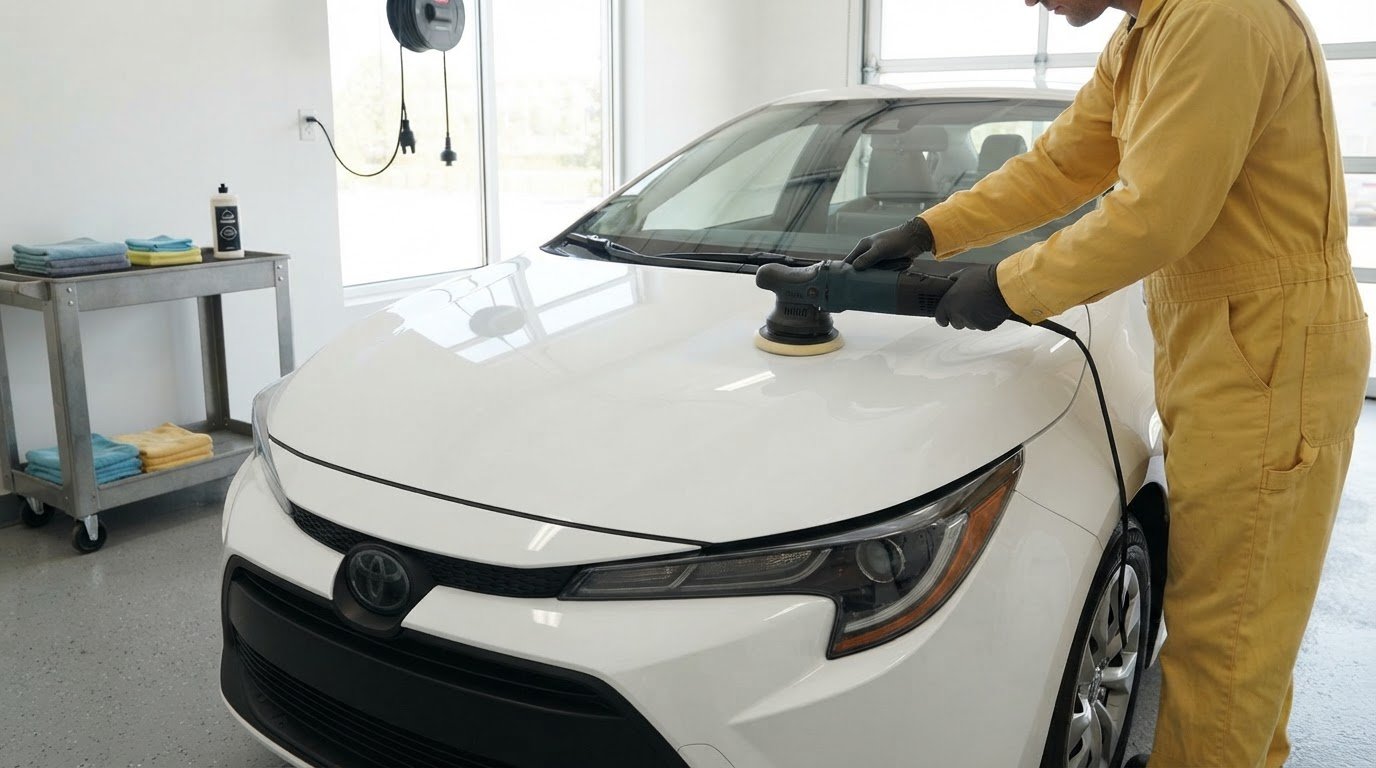
A glossy finish isn’t the only thing that helps a Corolla look cared for. Professional detailing for a Toyota Corolla before selling can include paint cleaning and polishing, removal of environmental residue, interior vacuuming and wipe-downs, wheel cleaning, and undercarriage cleaning. The right focus depends on the car’s visible condition and the areas that need attention.
It makes sense to prepare more than the exterior before a sale. Dust, crumbs, marks, and grime on the wheels can affect the overall impression, even when the paint looks clean. Detailing can refresh the car’s presentation, but it can’t repair paint damage or mechanical problems.
This guide explains what paint polishing and residue removal can address, what a thorough interior detail covers, and how wheels and the undercarriage fit into resale preparation. You’ll also learn what to consider when choosing a professional service, so you can focus on the work that best suits your Corolla.
Key Takeaways
- Prioritize paint polishing and environmental residue removal based on the Corolla’s visible condition; a clean finish can help present the car as cared for.
- Interior detailing can address upholstery, floor mats, seats, cupholders, vents, and hard-to-reach spaces that affect the cabin’s overall impression.
- Tar, tree sap, and bird droppings need focused removal so residue doesn’t distract from an otherwise clean exterior.
- Include wheels and the undercarriage in the resale-preparation plan, not just the paint and cabin.
- Choose detailing work around the car’s needs and your selling plans; professional cleaning improves presentation but doesn’t replace repairs.
Paint polishing and environmental residue removal
A professional can wash the Corolla, remove surface contamination, and assess its paint before polishing. For resale preparation, polishing and a suitable protective finish can improve the paint’s appearance, while the right approach depends on its condition.
Paint Polishing
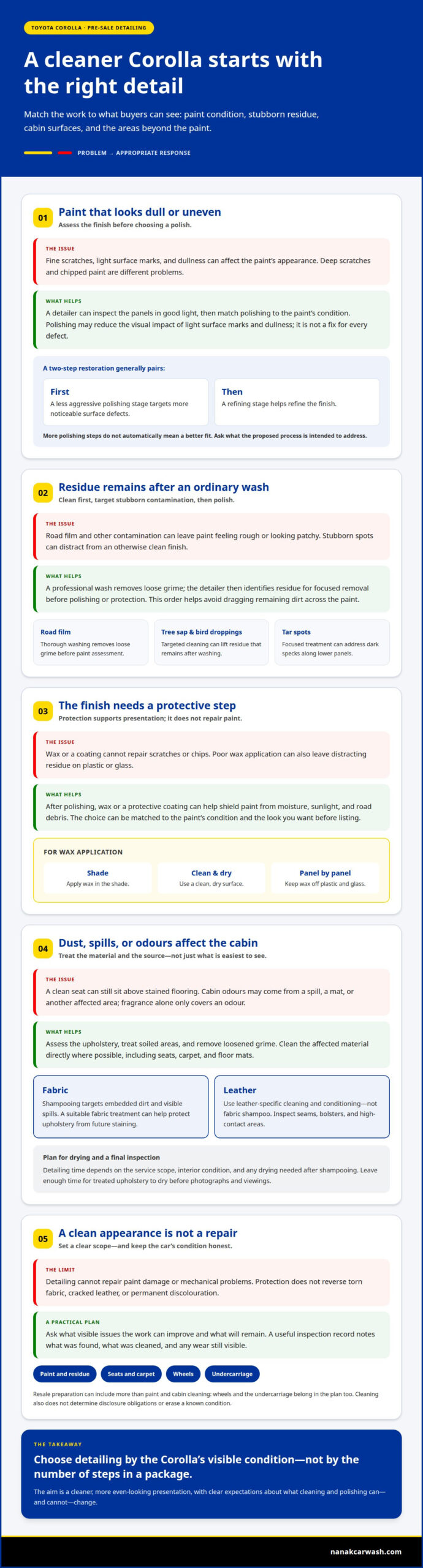
Paint polishing is one part of paint restoration. It improves the paint’s appearance by reducing the visual impact of light surface marks and dullness. Before choosing a polish, a detailer assesses the Corolla’s panels in good light. Look for uneven gloss, fine scratches, and residue that washing alone hasn’t removed. Deep scratches or chipped paint need separate attention.
A two-step paint restoration generally pairs a less aggressive polishing stage with a refining stage. The first targets more noticeable surface defects; the second helps refine the finish. This isn’t a fixed recipe for every Corolla. The paint’s condition guides the process, and polishing should suit the surface rather than be treated as a way to correct every defect.
Some detailing services include a multi-step paint polish process. Additional stages allow the work to be divided into more focused passes, but the number of steps alone doesn’t show whether a service suits a particular vehicle. Ask what the proposed process addresses, and compare that explanation with the marks and dull areas visible on your Corolla.
Paint Protection and Waxing
After polishing, a protective coating or wax can help shield paint from moisture, sunlight, and road debris. Wax is a surface protection step, not a repair for scratches or chips. A coating is another option for protecting the finish. The detailer can match the choice to the paint’s condition and the clean, presentable look you want before listing the car.
Application matters. Wax should be applied in the shade and kept off plastic and glass parts. For example, a detailer can work panel by panel, taking care around trim and windows. This helps avoid distracting wax residue. A clean, dry surface also gives the protection step a proper base.
Environmental residue needs attention before polishing or protection. Road film and other contamination can make paint feel rough or look patchy, even after an ordinary wash. A professional first cleans the vehicle’s exterior, then identifies stubborn residue for focused removal. This order helps prevent remaining dirt from being dragged across the paint during later steps.
- Road film: A thorough wash removes loose grime before paint assessment.
- Tree sap or bird droppings: Targeted cleaning can lift residue that remains after washing.
- Tar spots: Focused treatment can address dark specks along lower panels.
For detailing for a Toyota Corolla before selling, the useful result is a cleaner, more even-looking finish, not a promise that every mark disappears. A detailer should explain which visible issues polishing can improve and which need paint repair instead. That distinction helps you choose suitable work and present the Corolla honestly to prospective buyers.
Interior fabric or leather shampooing and protection
A pre-sale interior detail focuses on the surfaces buyers see and use, from the Corolla’s seats to its carpet. The treatment should match each material and the marks present.
Interior Shampooing
For fabric seats and carpet, shampooing targets embedded dirt and visible spills. A professional assesses the upholstery first, then treats soiled areas and removes loosened grime. Floor mats, seat surfaces, and carpet each need attention because a clean seat can still sit above stained flooring. For example, a drink mark on the rear carpet calls for focused treatment, not just a quick vacuum.
Odours also need a source-focused approach. A lingering cabin smell may come from a spill, a mat, or another area. Cleaning the affected material can improve the interior, but fragrance alone only covers an odour. For a used Corolla, the detailer should identify the affected surface and clean it directly where possible.
Fabric and Leather Treatment
Fabric and leather need different care. After shampooing fabric, a suitable fabric treatment can help protect the upholstery from future staining. Leather seats need leather-specific cleaning and conditioning, not fabric shampoo. The detailer should inspect seat seams, bolsters, and high-contact areas, where wear and residue can stand out during a buyer’s inspection.
Protection doesn’t reverse torn fabric, cracked leather, or permanent discolouration. It can support a cleaner presentation when paired with appropriate cleaning. A practical service plan identifies the affected material, the treatment used, and any visible wear that remains. That gives the seller a clear record of what interior detailing addressed.
There’s no single full-detail duration that applies to every Corolla. Time depends on the service scope, interior condition, and any drying needed after shampooing. Schedule the work before listing, leaving enough time for treated upholstery to dry and for a final inspection. A damp seat or mat can interfere with photographs and viewings.
Does detailing settle what must be disclosed about prior damage or odours in Canada? No. Cleaning doesn’t determine disclosure obligations or erase a known condition. Keep the sale description separate from the detailing work, and describe known damage or persistent odours accurately.
A useful interior and exterior inspection record identifies what the detailer found, what was cleaned, and what remains visible. For example, it can distinguish a cleaned fabric seat from a worn seam that shampooing won’t repair. This helps keep expectations clear without presenting cleaning as mechanical or body repair.
Choose Car Detailing Packages when the Corolla needs coordinated interior cleaning and exterior attention before it’s listed. Specify concerns such as a stained rear seat, a lingering cabin odour, or worn leather. A focused plan makes it easier to prioritize the areas that affect the car’s presentation.
Tar, tree sap and bird-dropping removal
Tar, tree sap, and bird droppings can leave visible marks on a Toyota Corolla’s exterior. Professional cleaning targets each deposit while considering its location, age, and effect on the paint. Interior stains and odours need separate attention because exterior cleaning won’t address them.
Removing Exterior Residue
Tar often collects low on the vehicle, especially behind the wheels and along lower doors. Tree sap may cling to the hood or roof, while bird droppings can mark the roof, trunk, or window edges. A detailer identifies each deposit before treating it. This prevents the work from becoming a broad, abrasive scrub across the panel.
After exterior washing, the detailer can focus on remaining residue with suitable cleaning products and careful techniques. The surface is then inspected for leftover spots, smearing, or paint defects. For example, a dark tar mark near a wheel arch may need targeted treatment, while a dull patch beneath old sap may remain visible after cleaning.
Cleaning can remove residue, but it doesn’t repair every mark underneath. A stain left by a bird dropping, for instance, may have affected the finish. The professional should distinguish surface residue from damage in the paint. That difference matters when deciding whether further paint correction is appropriate before listing the Corolla.
Removing Interior Stains
Stains inside the cabin need material-specific cleaning. A coffee mark on a fabric seat differs from a scuff on a leather bolster or grime on a carpeted mat. The detailer assesses the material and stain before selecting an appropriate treatment. This keeps attention on the affected area instead of masking it with fragrance or a general wipe-down.
Seat seams, cushion edges, and the carpet beneath a mat can hold visible dirt. During interior cleaning, those areas should be included in the inspection. A rear-seat spill may leave a mark on both the seat fabric and carpet, so treating only the most obvious spot can leave the cabin looking unfinished.
Trim Treatment and Odour Removal
Interior trim can collect fingerprints, dust, and residue around door handles, controls, and cupholders. A professional cleans these high-contact areas with care suited to their surfaces. Exterior trim also deserves a visual check; remaining sap or tar near a trim edge can stand out after the painted panel is clean.
Odour removal starts with locating its source. A stale smell may come from a spill on a floor mat, while an odour near a rear seat may point to upholstery. Cleaning the affected material is more useful than simply adding fragrance. Persistent odours and permanent stains should be assessed honestly, so the Corolla’s presentation matches its actual condition.
Toyota Corolla detailing before resale
Hire a professional when the Corolla needs focused paint, interior, wheel, or undercarriage cleaning beyond a routine wash. Detailing can improve presentation, but it doesn’t set the sale price or guarantee a higher offer.
Choosing DIY or professional detailing
DIY cleaning gives you control over the schedule and the areas addressed. A careful wash, vacuum, and wipe-down may suit a Corolla that’s already clean and well maintained. But polishing paint, treating upholstery, and removing stubborn residue call for suitable products and careful technique. Mistakes can leave streaks, marks, or residue that buyers notice.
Professional work can bring consistent attention to areas such as seat seams, wheel faces, and lower body panels. It also saves you from spending your own time on each task. Compare the proposed scope with the Corolla’s actual condition. A car with a stained rear seat needs different work from one with dust and light road grime.
DIY costs include supplies and your time. Professional detailing prices depend on the vehicle’s condition and chosen services, and are given after a quote request. The main cost factors are the amount of cleaning required and whether the work includes paint polishing or interior treatment.
Professional Detailing Value
Professional detailing is useful before selling when visible dirt, stains, or residue distract from the car’s overall condition. A detailer can clean the cabin and exterior systematically, including places a quick wash may miss. For example, cleaning the door sills, cupholders, and wheel faces helps create a more complete presentation.
Consider the work in relation to your sale plans. If buyers will view the Corolla in person, a clean cabin and exterior help them assess its condition. If you’re preparing listing photos, clean windows, tidy seats, and clear surfaces reduce visual distractions. Detailing improves cleanliness; it doesn’t fix worn upholstery, paint damage, or mechanical issues.
Choose a clear service scope that matches your priorities. For a Corolla with clean upholstery but dull paint, exterior work may matter more. A car with a lingering cabin odour or stained carpet needs interior attention. Focusing the service on visible needs makes the decision more practical.
Resale Value Considerations
Cleaning can support a stronger first impression, but it can’t establish a Corolla’s market value. Sale price also reflects the vehicle’s condition, maintenance history, mileage, and buyer interest. Detailing is presentation work, not a way to promise a particular offer or recover a specific amount.
Before listing, separate cosmetic cleaning from repairs. A polished panel may look clearer, but it won’t remove a deep scratch or repair a dent. A shampooed seat may look cleaner, but it won’t restore torn fabric. Keep descriptions accurate, and don’t use detailing as a substitute for explaining known defects.
For a practical final check, review the Corolla in daylight after cleaning. Look at the paint, glass, seats, mats, wheels, and visible lower panels. Note anything that remains, such as a chip or worn seat bolster. That final inspection helps align the listing’s photos and description with the car buyers will see.
Is professional detailing worth it before selling a used car?
Professional detailing can be worthwhile when visible dirt or residue makes a used car look less cared for. For a Toyota Corolla, weigh the cleaning needed against your selling plans. A tidy cabin, clean paint, and presentable wheels help buyers focus on the vehicle’s condition. Detailing improves cleanliness and presentation, but it doesn’t guarantee a higher offer or repair damage.
Start with the areas buyers will see during a viewing or in listing photos. A stained front seat, dusty dashboard, or grimy wheel can draw attention away from a well-maintained vehicle. A professional detail can address those surfaces as part of a coordinated service. If the Corolla is already clean and has few visible issues, an extensive detail may be less useful.
- Prioritize visible needs: Match the service to issues such as stained upholstery, dull paint, or residue.
- Consider the listing: Clean glass, seats, and exterior surfaces support clearer vehicle photos.
- Separate cleaning from repairs: Detailing won’t fix a dent, deep scratch, or mechanical problem.
Professional service can save the time required to clean separate surfaces and hard-to-reach areas. It also brings a consistent approach across the interior and exterior. For example, a Corolla with road grime, seat stains, and residue around trim needs more targeted attention than one that only needs a basic wash. The work should reflect those differences, rather than assuming every used car needs the same treatment.
Before choosing a service, identify the main presentation concerns and set a clear scope. A detailer can then focus on the relevant areas, such as upholstery, paint, wheels, or lower panels. Ask what the service addresses and what visible defects will remain. This keeps expectations realistic and helps avoid paying for work that doesn’t match the Corolla’s condition.
Cost depends on the vehicle’s condition and the selected services. The scope reflects factors such as the cleaning required and whether the work includes interior treatment or paint polishing. The decision is practical: consider the car’s current presentation, your available time, and the value of presenting it cleanly to prospective buyers.
Choose professional detailing when the Corolla needs more than a quick refresh before photos or viewings. A Car Detailing Package from Nanak Car Wash is a relevant next step for focused interior and exterior cleaning. Share the areas that need attention, then select work that fits the car’s condition and your resale plans.
Nanak Car Wash: Car Detailing Packages
Nanak Car Wash offers Car Detailing Packages for sellers preparing a Corolla for viewings or listing photos. Choose professional detailing when the interior, paint, or other surfaces need more than a routine wash. Share the areas you want addressed, such as marked upholstery or visible residue, so the service can suit your resale-preparation needs.
A Full-Service Car Wash or Express Car Wash may suit a Corolla that needs washing rather than broader detailing. The right choice depends on the work the vehicle needs. Cleaning can improve presentation, but it doesn’t replace repairs or change the car’s underlying condition.
Contact Nanak Car Wash to discuss detailing your Corolla before resale.
Make Your Corolla Sale-Ready With a Clear Plan
Set your resale plan before arranging any final preparation. Decide when you want listing photos and viewings, then schedule detailing to support that presentation. Detailing for a Toyota Corolla before selling works best when it fits the vehicle’s condition and your selling timeline, rather than following a one-size-fits-all checklist.
Keep the goal practical: present the Corolla cleanly, describe its condition honestly, and leave repairs separate from cosmetic preparation. That gives you a clearer basis for deciding what work matters before the listing goes live. It also keeps expectations grounded: detailing supports presentation, while the sale itself depends on the vehicle and the buyer.
For a professional next step, contact Nanak Car Wash to book detailing. Share your resale plans and the areas you want addressed, then choose the service that fits. A thoughtful preparation plan can help you approach your Corolla’s sale with confidence.
Frequently Asked Questions
What does a full detail for a Toyota Corolla include?
A full detail can combine interior and exterior cleaning, with the exact work depending on the selected package. Nanak Car Wash offers Car Detailing Packages with vacuuming, seat and carpet shampooing, polishing, and waxing. Full interior detailing can also include leather deep-cleaning. For example, a Corolla with fabric seats may need shampooing, while leather seats call for leather-specific cleaning.
How much does Toyota Corolla detailing cost in Canada?
The cost depends on the detailing package, the Corolla’s condition, and the work selected. Interior shampooing, paint polishing, and other focused treatments affect the scope. Nanak Car Wash offers Car Detailing Packages. Describe the vehicle’s condition and priorities, such as stained upholstery or dull paint, to help identify the suitable service.
Which professional interior detailing services make the biggest difference when selling a Corolla?
Prioritize cleaning that buyers notice during a seat-level inspection: the driver’s seat, steering wheel, door panels, and carpet near the pedals. A clean driver’s area makes the cabin feel cared for, while crumbs between seat cushions or grime around controls can distract. For a Corolla used by children or pets, pay attention to rear-seat seams and the carpet beneath child seats.
How can a professional remove smoke, pet or food odours from a car before it is sold?
A professional starts by locating the source instead of masking the smell with fragrance. Food odours may trace to a spill on carpet or upholstery; pet smells can linger in fabric and trapped hair. Smoke residue may cling to several cabin surfaces. Cleaning affected materials and removing pet hair can help address the source. Nanak Car Wash notes, “Pet Hair Removal or Extra efforts cost more.”
Which cleaning products and methods do professionals use safely on a Toyota Corolla’s interior and exterior?
Professionals match cleaning products to the vehicle’s surfaces. For exterior washing, vehicle-specific soap, a fresh sponge, rinsing before and after washing, and microfiber drying help protect the finish. Interior fabric and leather require products suited to those materials. A detailer can also avoid using one cleaner across unrelated surfaces, such as glass, upholstery, and dashboard trim, where residue may affect the finish.


 6600 Finch Ave W, Etobicoke, ON M9V 3Z6

 647-703-8515
 MON – SUN 8 AM to 7 PM