
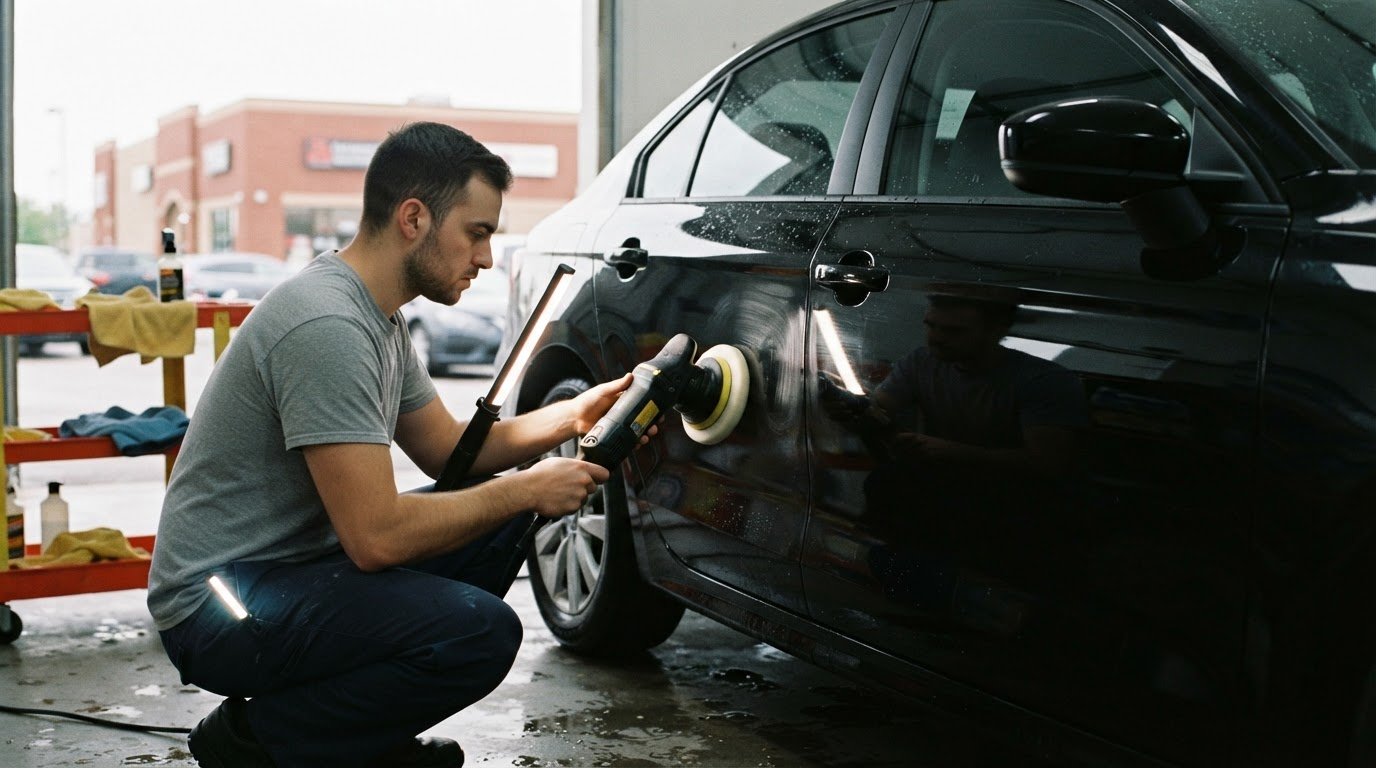
Black paint doesn’t create more swirl marks; it makes them harder to miss. For drivers looking to remove swirl marks from black car paint in Brampton, professional correction results can last 1-2 years with proper care. The dark, reflective finish makes fine marks and other paint defects stand out in bright light.
It’s frustrating to see swirls return after a wash, especially when they stand out on an otherwise clean car. This guide explains why black paint highlights defects, how paint correction can reduce swirls, scratches and oxidation, and what helps keep the finish looking clear.
You’ll also learn what professional correction involves and how ongoing care helps protect the result. Nanak Car Wash offers car detailing packages for Brampton drivers who want to improve their vehicle’s appearance through thorough cleaning and detailing.
Key Takeaways
- Learn why dark, reflective paint makes fine defects easier to see, even when the marks are shallow.
- Understand how paint condition and remaining clear coat guide a professional’s correction approach.
- See what separates one-step from two-step correction and how the paint’s needs shape the process.
- Find out how lighting and inspection help reveal swirls, scratches, oxidation, and holograms.
- Discover how careful washing and ongoing paint care can help preserve correction results, which may last 1-2 years with proper care.
Paint correction for swirl marks, scratches, and oxidation
Paint correction carefully polishes the clear coat to reduce visible defects. On black vehicles, controlled polishing is especially important because the finish makes marks easy to see.
DIY and Professional Correction
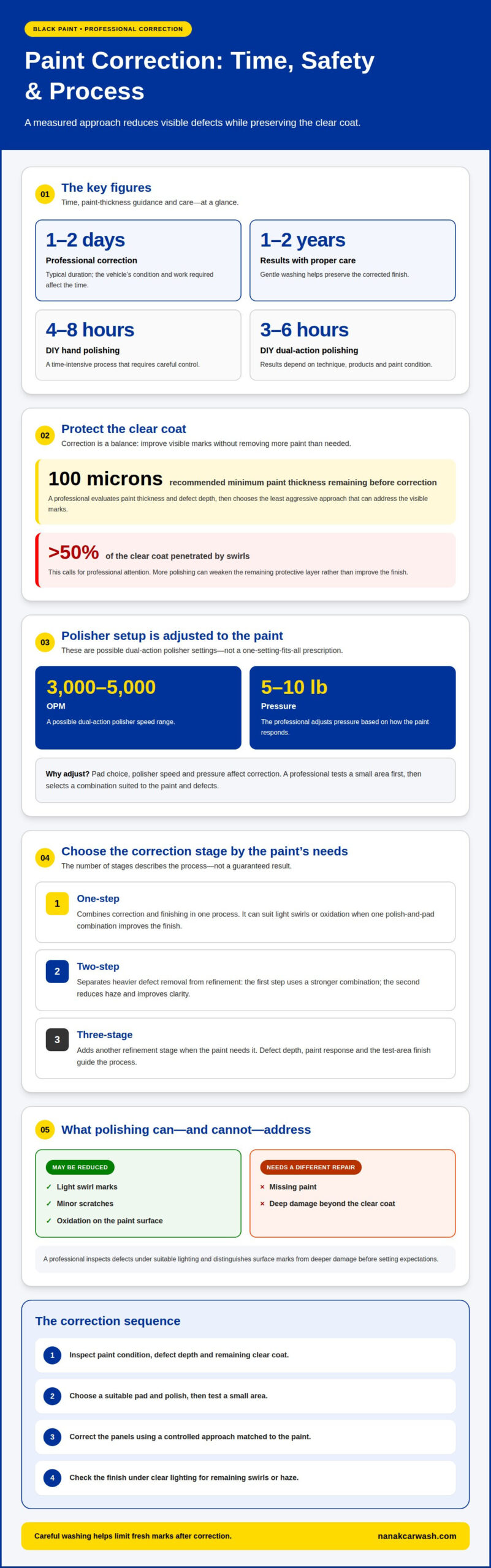
DIY correction takes time and careful control. Hand polishing can take 4-8 hours, while dual-action polishing can take 3-6 hours. A professional assesses the paint first, then matches the polishing approach to its condition. That assessment helps avoid treating every panel as if it needs the same amount of correction.
DIY correction can leave uneven results, new holograms or too little clear coat. These problems can follow unsuitable products, poor technique or repeated polishing. Professionals inspect the finish and use controlled correction to reduce those risks. When reading Brampton shop reviews, look for specific comments about paint correction and finish quality, not only general wash experiences.
Correctable Paint Defects
Paint correction can reduce light swirl marks, minor scratches and oxidation on the paint surface. A professional examines how each defect appears under suitable lighting before choosing an approach. A shallow mark may respond differently from a scratch visible from several angles.
Correction cannot replace missing paint or repair deep damage beyond the clear coat. Those defects need a different type of repair. During inspection, a professional should distinguish surface marks from deeper damage and set realistic expectations for what polishing can improve. This helps avoid unnecessary correction of defects polishing cannot remove.
Clear-Coat Safety
Polishing removes a small amount of clear coat as it levels surface imperfections. The recommendation is to have at least 100 microns of paint thickness remaining before correction. A professional evaluates paint thickness and defect depth, then uses the least aggressive approach that can address the visible marks.
Swirls penetrating beyond 50% of the clear coat call for professional attention. More polishing can weaken the remaining protective layer rather than improve the finish. Safe correction means balancing defect reduction against clear-coat preservation, not chasing every scratch until it disappears.
Professional swirl correction typically takes 1-2 days, depending on the vehicle’s condition and the work required. With proper care, results can last 1-2 years. Gentle washing helps preserve the corrected finish; abrasive contact can create fresh marks and shorten that period.
Correction pricing depends on the vehicle’s size, paint condition, defect depth, and work required; the price is given after a quote request. A Brampton review is most useful when it describes the vehicle’s paint condition, the correction performed, and the visible result. Star ratings alone don’t explain whether a shop handled black paint defects well.
What’s the difference between one-step and two-step paint correction?
Professionals inspect the paint, choose a pad and polish suited to the defects, then test a small area before correcting the panels. They finish by checking the surface under clear lighting for remaining swirls or haze.
Machine Polishing Stages
One-step polishing combines correction and finishing in one process. It can suit light swirls or oxidation when a single polish-and-pad combination improves the finish. Two-step correction separates heavier defect removal from refining: the first step uses a stronger combination, and the second reduces haze and improves clarity.
Three-stage polishing adds another refinement stage when the paint needs it. The number of stages describes the process, not a guaranteed result. A professional considers defect depth, paint response and the finish after each test area. For example, light swirls may need less work than a mix of scratches and oxidation.
Polisher Setup and Technique
A dual-action polisher moves in more than one direction, helping the professional control correction across a panel. Pad choice depends on the paint and defects: a more corrective pad can remove more material, while a finishing pad refines the surface. A professional tests a small area before selecting a combination for the vehicle.
Polisher speed and pressure also affect the result. A dual-action polisher may be set between 3000-5000 OPM, with 5-10 pounds of pressure. The professional adjusts the setup based on how the paint responds, rather than using one setting across every panel. Steady movement helps keep correction controlled.
Wet Sanding and Machine Polishing
Machine polishing uses a powered pad and polish to refine the clear coat. Wet sanding uses an abrasive surface with water to level more pronounced defects. It is more aggressive, so professionals reserve it for cases where polishing alone cannot achieve the needed improvement.
Neither method should be chosen by appearance alone. A professional first assesses the paint, defect depth and remaining clear coat. For example, a scratch that remains after a test polish may need a different approach, while sanding an unsuitable area can remove too much clear coat. The goal is measured correction, not removing every mark at any cost.
After correction, careful washing helps limit new marks. A Full-Service Car Wash can support routine vehicle cleaning, but it does not replace paint correction.
Common causes of buffer swirls and paint holograms
Buffer swirls often start with uncontrolled abrasive contact. A contaminated pad can drag grit across a panel and leave fine circular marks. A dirty towel can cause similar damage when removing polish. Even fresh products can create defects if the pad carries residue from earlier work. The contact pattern matters as much as the machine.
Paint holograms are fine, directional marks that can appear after machine polishing. They’re often associated with rotary polishing that leaves visible trails, especially if the final pass doesn’t refine the finish. A panel may look clear from one angle but show cloudy arcs under another light. Inspecting it from several angles helps reveal the pattern.
Pad condition matters too. An overloaded pad holds spent polish and paint residue, reducing the consistency of its cut. If a professional continues across the vehicle without cleaning or changing the pad, defects can spread from one panel to another. Product residue can also dry on the paint, making removal harder and increasing the chance of extra wiping.
Technique also affects the finish. Uneven movement, excessive pressure or lingering over one area can create inconsistent polishing. A professional works panel by panel and checks the finish as the process progresses. For example, a door polished with a different pad combination from the hood needs its own inspection before the next step.
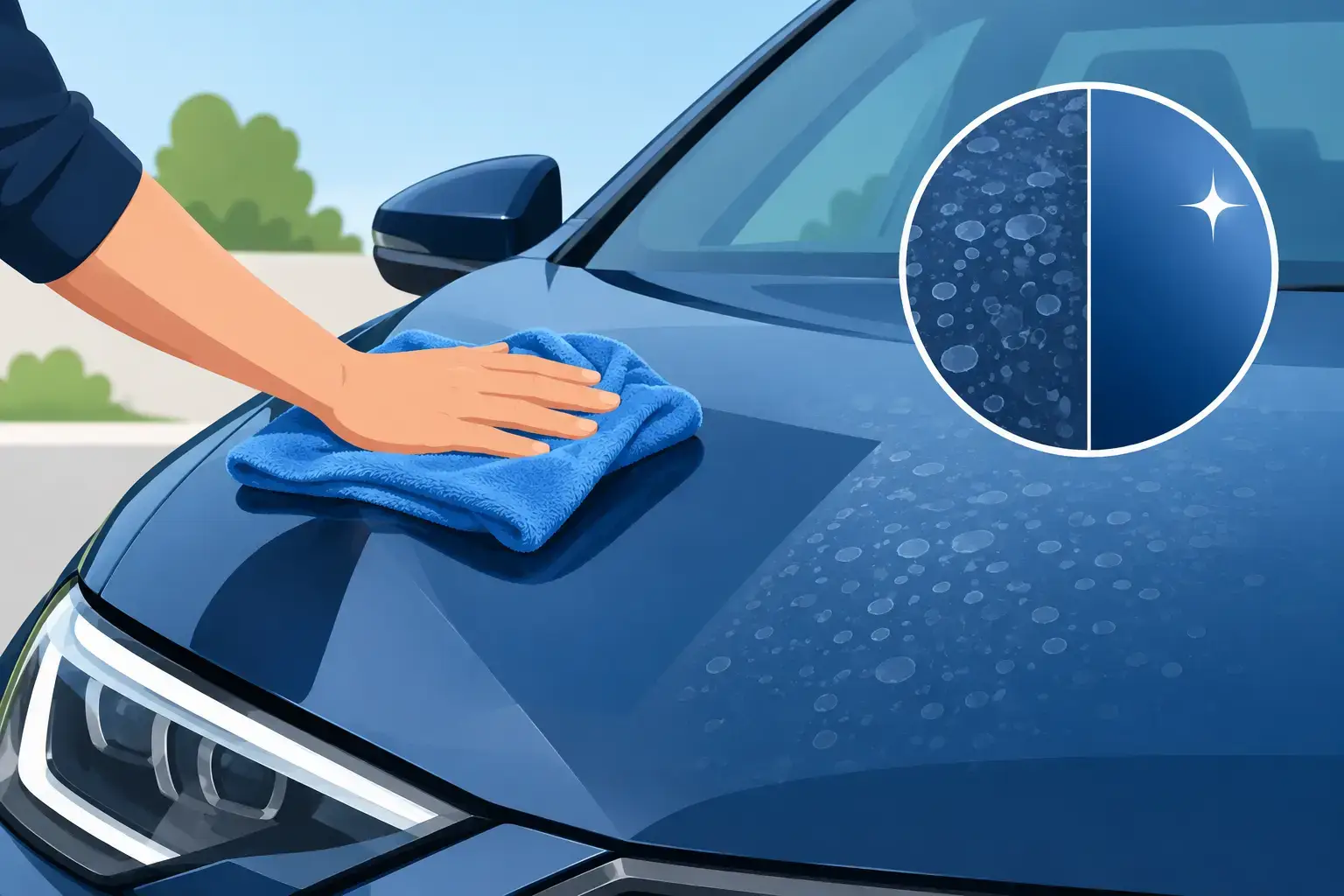
Washing habits can bring swirls back after correction. A gritty wash mitt, dirty drying towel or brushing contact can leave fine marks. Ceramic coating can add a protective layer, but it doesn’t make paint immune to scratches or careless contact. A coated vehicle still needs clean wash materials and gentle handling.
To identify a likely cause, a professional examines the marks’ shape and direction and considers the vehicle’s washing and polishing history. Circular marks across a panel may point to repeated contact during washing or polishing. Straight, directional trails may suggest a different polishing pattern. Neither appearance proves the cause, so inspection under varied lighting is useful.
Prevention starts with clean equipment and controlled contact. Professionals keep pads free of residue, use suitable towels and inspect each panel before moving on. Careful washing after polishing helps avoid fresh marks. If holograms appear, further polishing should suit the defect and paint condition, rather than adding repeated passes without checking the finish.
Paint inspection under professional lighting
Professional lighting reveals defects that broad daylight can hide. Inspection starts with a clean, dry vehicle and proceeds panel by panel. The hood, doors, roof and trunk each need attention. Reflections show where swirl marks, scratches, haze or oxidation interrupt the finish. This baseline helps determine which areas need correction.
A focused light makes fine marks easier to spot against black paint. The inspector changes the light’s angle and viewing position instead of judging a single reflection. A hood may appear clear straight on but show circular trails from the side. Checking several angles helps distinguish surface defects from reflections.
Ambient lighting matters too. Bright overhead lights can reveal broad haze, while a direct inspection light can make tight scratches stand out. The professional compares what appears under each source. A defect visible only under a narrow beam may call for a different correction decision from cloudy oxidation spread across a door.
Inspection also reveals whether defects differ between panels. One door may show wash-induced swirls, while another has deeper scratches or signs of previous polishing. The professional notes these differences and selects a suitable test area. This helps show how the paint responds before the same process is used on larger sections.
A paint thickness gauge can help assess how much paint remains, particularly if the vehicle has a repair history. Readings can vary between panels, so the professional considers the pattern rather than relying on one measurement. A repainted fender, for example, may respond differently from the original hood during correction.
After a test area, the professional checks the finish again under the same lighting. This comparison shows whether polishing reduced the target marks or created haze. If the result looks clear under one lamp but cloudy under another, the process needs further evaluation. Consistent lighting makes before-and-after checks more useful.
Proper inspection also sets realistic correction priorities. A professional can focus on visible swirls while preserving clear coat, rather than pursuing every mark. Some deeper scratches may remain if removing them would require excessive polishing. On a black vehicle, this measured approach balances a clearer reflection with the condition of each panel.
Lighting is part of inspection, not a substitute for it. A professional combines reflected-light checks, panel comparisons, paint readings and a test spot. Together, these steps guide the correction plan and help assess the final finish from the angles where defects first appeared.
Why swirl marks are more visible on black paint
Black paint doesn’t create more swirl marks; contrast makes them easier to see. Fine scratches interrupt the smooth reflection from a dark panel. Against black, these lines can appear pale in direct light. On a lighter vehicle, the same marks may blend more easily into surrounding reflections. The defect may be similar, but it looks different.
Reflective paint acts like a mirror. A smooth hood reflects nearby shapes with clear edges, while a swirl breaks those edges into fine arcs. A ceiling light reflected across a black hood, for example, may look sharp, then appear streaked where surface marks cross it. That interruption makes small defects catch the eye quickly.
Light angle changes what you can see. Direct sunlight can reveal tight circular marks, while overhead lighting may show broader haze. A professional shifts position and light direction to inspect the same panel. One view may reveal a scratch near the door handle; another may show swirls across the rest of the door. Drivers looking to remove swirl marks from black car paint in Brampton benefit from an assessment under varied lighting.
Black paint also makes the difference between corrected and uncorrected areas more obvious. A polished section may reflect a light source clearly beside a hazy section. On a large panel such as a roof, that contrast can reveal uneven correction. Inspect the whole panel, not only the spot that first caught your attention.
Surface contamination can make the finish look dull before correction starts. Dust, road film and residue can soften reflections or disguise fine marks. A proper inspection begins with a clean surface, then checks the paint from more than one lighting angle. This separates removable contamination from defects that remain in the finish.
Compound and pad choice affect how the corrected surface reflects light. A compound can reduce defects through controlled polishing, but an aggressive combination may leave haze that stands out on black paint. The professional checks a test area and refines the finish if needed. This comparison matters: reducing visible swirls shouldn’t create a different pattern of marks.
A coating can change how a vehicle sheds water and how its surface feels, but it doesn’t erase existing swirls. Those marks remain visible beneath a transparent layer. Applying a coating over an uncorrected black hood, for example, preserves its current appearance rather than creating a flawless reflection. Correct the surface first when the goal is clearer paint.
If you want to remove swirl marks from black car paint in Brampton, assess the finish under more than one lighting condition. Check the hood, doors and roof from several angles, then distinguish surface dirt from lasting defects. A professional uses these observations to plan correction and assess the finish afterward. Clear reflections on black paint depend on careful correction and avoiding fresh abrasive contact.
Nanak Car Wash
Nanak Car Wash offers car detailing packages and car washes for drivers looking after a black vehicle’s overall appearance. Paint correction addresses defects in the finish; washing removes surface dirt and keeps the vehicle clean. These are different services, so don’t expect a wash to remove swirls or scratches.
After correction, regular cleaning can help keep dust and road film from dulling the finish. Choose a full-service or express wash for routine vehicle cleaning, or explore the Unlimited Wash Club if you wash frequently. For more comprehensive vehicle cleaning, car detailing packages are another option.
Contact Nanak Car Wash to discuss your vehicle’s cleaning needs.
Choose the next step for your finish
Decide how you want the paint to look in everyday light. A clear goal keeps the discussion practical: do you want to improve the overall appearance, focus on the marks you notice most, or plan ongoing vehicle care? If you want to remove swirl marks from black car paint in Brampton, describe what concerns you and where it shows. That gives you a useful starting point for discussing your vehicle’s needs.
Keep the next step simple. Contact Nanak Car Wash to discuss paint correction and the options that fit your vehicle. Its car detailing packages and wash services support broader vehicle care, while the right approach depends on the service you need. Contact Nanak Car Wash to discuss paint correction, then move forward with a clearer plan for your black paint.
Frequently Asked Questions
How long do the results last?
Swirl-correction results can last 1-2 years with proper care. The finish may need attention sooner if washing or drying creates fresh marks. For example, repeated contact with a dusty cloth can affect a newly corrected hood. Consistent, careful cleaning helps preserve the result. Think of correction as restoring the surface, while ongoing care helps keep it looking clear.
Should I get ceramic coating after paint correction?
A ceramic coating can be considered after correction, but it won’t remove existing swirls. Correction addresses surface defects; a coating is applied afterward as a protective layer. Applying a coating over visible marks won’t make them disappear. If you’re deciding whether to add one, consider how you use and maintain the vehicle and what finish you want.
Will paint correction damage my car’s clear coat?
Paint correction removes a small amount of clear coat, so it must be controlled. A professional evaluates the paint and remaining clear coat before deciding how much correction is appropriate. The aim is to improve the visible finish without removing more material than needed. On a vehicle with previous polishing or repaired panels, those areas deserve particular attention before further work.
What causes swirl marks on black car paint?
Swirl marks usually result from repeated abrasive contact with paint. Examples include wiping dust with a dry cloth, using a dirty wash mitt or drying with a towel that has picked up grit. Black paint makes these fine marks easier to notice because they interrupt reflections. Fresh marks can appear after correction, so clean wash materials and careful contact help protect the finish.
Can a professional remove swirl marks by hand, or is a machine polisher needed?
A professional can polish by hand in some situations, particularly when treating a small area or light mark. A machine polisher can provide more consistent correction across larger panels, such as a hood or doors. The right choice depends on the defect, panel size and paint response. A professional can assess these factors and choose a suitable method rather than applying one approach everywhere.
What products and tools do professionals use to remove swirl marks from black paint?
Professionals typically choose a polisher, polishing pad and compound to suit the paint and defects. They may also use inspection lighting to assess the surface and microfiber towels to remove residue. The combination matters: a more aggressive pad or compound can remove defects faster but may require further refinement. A test area shows how the selected products affect that vehicle’s finish.
How much clear coat does swirl-mark removal remove, and how many times can paint be corrected?
Correction removes a small amount of clear coat, but the exact amount depends on the paint and work required. There isn’t one safe number of correction sessions for every vehicle. Previous polishing, repainting and the depth of remaining defects all affect how much material is available. Professionals assess paint thickness and condition before deciding whether further correction is suitable.
How much does professional swirl-mark removal or paint correction cost in Brampton, Ontario?
Professional paint-correction pricing in Brampton depends on the vehicle, paint condition, defect depth, and work required. The price is given after a quote request. A vehicle with light marks across a few panels may need a different scope from one with widespread defects or previous polishing. Ask for the proposed correction scope alongside the quote, so you understand what work the price covers.


 6600 Finch Ave W, Etobicoke, ON M9V 3Z6

 647-703-8515
 MON – SUN 8 AM to 7 PM