
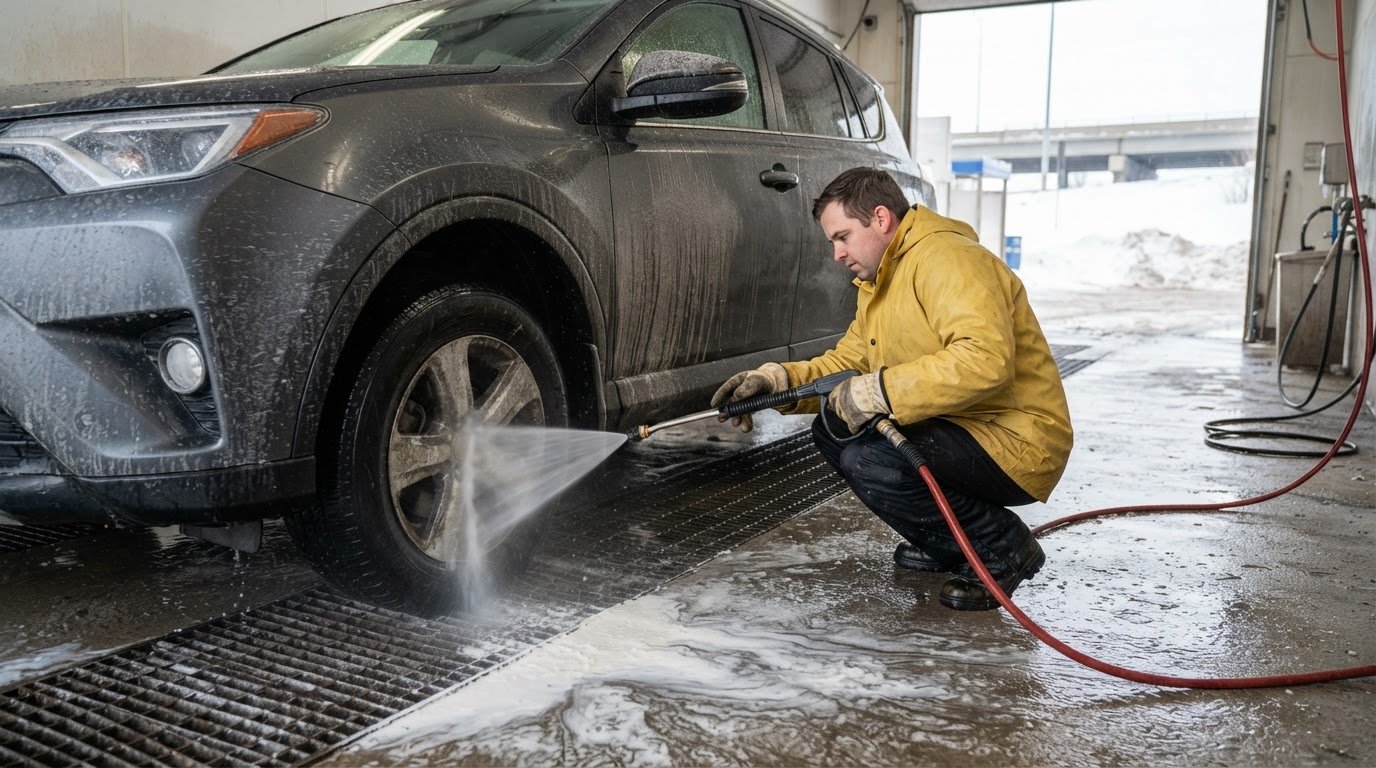
Undercoating isn’t the only way to reduce winter salt buildup beneath your car. To understand how to protect a car’s undercarriage from salt without undercoating, focus on washing road salt and debris from the underside and wheel wells, then choose covered parking when you can. These steps help limit exposure, though they can’t prevent every trace of corrosion.
A straightforward approach can fit Canadian winter driving. Salt and slush collect where you can’t easily see them, so a clean exterior doesn’t mean the underside is clear. Washing the undercarriage helps rinse away residue, while covered parking can shield your vehicle from salty spray and harsh weather.
This guide explains when undercarriage washing matters, how covered parking helps, and what to know about rust-protection options. You’ll learn what these measures can and can’t do without undercoating, so you can choose a sensible care routine for your car.
Key Takeaways
- Choose professional undercarriage washing to help remove salt and debris from hard-to-see areas.
- Learn how salt residue and moisture can contribute to corrosion beneath your vehicle.
- Use winter road conditions to guide when to schedule an undercarriage wash.
- Understand what rust inhibitors can and can’t do as an alternative to undercoating.
- Find out how careful washing can help limit salt buildup around vulnerable underbody components.
Professional washing to remove salt and debris from the undercarriage
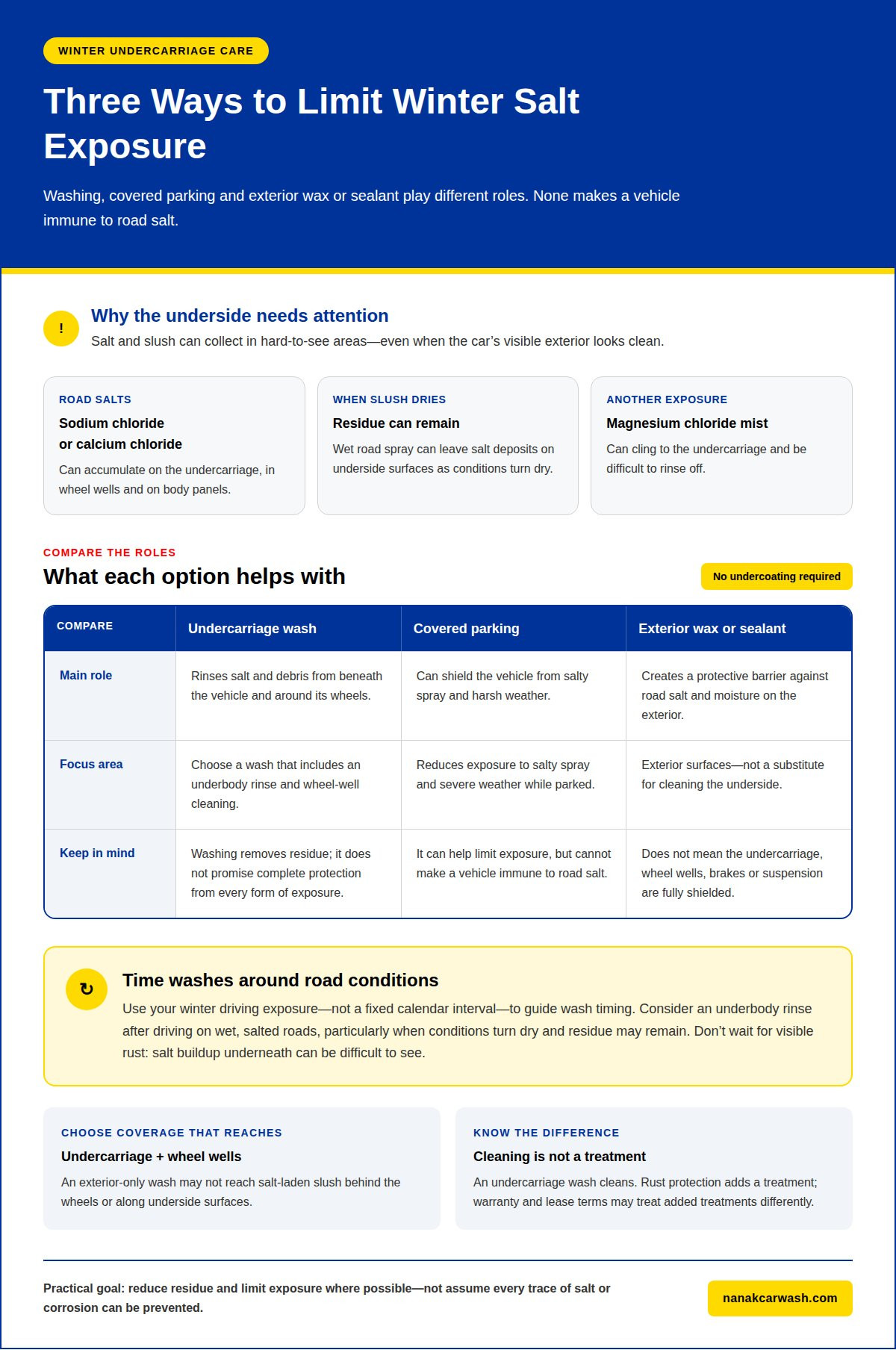
A professional undercarriage wash rinses salt and debris from beneath the vehicle and around its wheels. Washing cleans; rust protection adds a treatment. Warranty and lease terms may treat added treatments differently.
-
Have a Professional Wash the Undercarriage and Wheel Wells
Choose a professional wash that includes an underbody rinse and wheel-well cleaning. Salt-laden slush can collect behind the wheels and along underside surfaces, where an exterior-only wash may not reach. When selecting a service, make clear that winter road residue is your concern and choose a wash with undercarriage coverage. A clean body doesn’t mean the wheel wells and underside have also been rinsed.
-
Choose a Professional Undercarriage Washing Schedule
Base wash timing on road conditions, not a fixed calendar interval. Arrange an underbody rinse after driving on wet, salted roads, particularly when conditions turn dry and residue may remain on the vehicle. Consider how often you drive through slush or on treated roads during winter. Don’t wait for visible rust; salt buildup underneath can be difficult to see.
- Choose a wash that includes undercarriage coverage. The underside includes surfaces outside the visible body, so an exterior wash alone won’t address salt there. For example, after driving on wet, salted roads, select a wash with an underbody rinse rather than relying on cleaning the doors and windows.
- Include the wheel wells in your cleaning plan. These recessed areas sit close to the road and can collect salty debris around the tyres. A professional wash can rinse them alongside the undercarriage, helping clear residue from both in one visit. If slush has gathered behind a wheel, make sure that area is included.
- Use washing to remove residue, not as a promise of complete protection. An undercarriage rinse helps carry away salt and debris, but it can’t address every form of exposure. Keep the goal practical: reduce the residue left on the vehicle after winter driving. That’s why the underside needs regular attention, even without undercoating.
How does road salt damage a car’s undercarriage?
- Prioritise the underside in your winter-care plan. A vehicle’s undercarriage is particularly susceptible to rust damage because it sits close to road spray, where salt and debris can collect during Canadian winter driving. To protect a car’s undercarriage from salt without undercoating, first understand this exposure. The goal is to limit residue buildup, not assume the exterior reveals every affected area.
- Recognise the salts used on winter roads. Road salt is typically sodium chloride or calcium chloride. As vehicles travel on treated roads and through slush, salt can accumulate on the undercarriage, in wheel wells, and on body panels. The residue can contribute to corrosion and rust, and can damage metal components, including parts of the brakes and suspension. These areas show why underside exposure matters beyond the visible finish.
- Consider what happens as slush dries. Wet road spray can reach underside surfaces, then leave salt deposits when conditions turn dry. The residue may be hard to spot from outside the vehicle. Clean-looking doors and windows don’t prove the undercarriage is clear. Include lower body panels and wheel wells in your winter-care decisions, since they can also collect residue during ordinary driving.
- Account for different types of chloride exposure. Magnesium chloride can form a mist that clings to a vehicle’s undercarriage and is difficult to rinse off. A visible pile of slush isn’t the only form of winter road exposure; salt can also remain as residue or airborne mist. Washing helps rinse away salt and debris, but can’t address every kind of exposure.
- Use the damage pathway to set a realistic goal. Salt accumulation contributes to corrosion, rust, and damage to metal parts such as brake and suspension components. To protect your car’s undercarriage from salt without undercoating, limit accessible residue and reduce exposure where possible. Washing and covered parking can help, but neither makes a vehicle immune to road salt.
Wax or sealant can create a protective barrier against road salt and moisture on a vehicle’s exterior. This can be part of a broader winter-care approach, but an exterior barrier doesn’t mean the undercarriage, wheel wells, brakes, or suspension are fully shielded. Salt residue can gather in those areas and contribute to damage. A barrier complements, rather than replaces, attention to underside exposure.
When planning care without undercoating, distinguish exterior protection from removing residue on lower surfaces. Washing and covered parking can help limit residue buildup or exposure, but neither makes a vehicle immune to road salt. Wax or sealant is intended to provide a protective barrier against road salt and moisture on the exterior, not eliminate corrosion. Keeping that distinction in mind clarifies the role of exterior protection.
How often should a professional wash your car undercarriage in Canadian winter?
- Use road conditions, not a fixed calendar interval, to decide when to book a professional wash. Canadian winter driving varies by route and weather. A car often driven on slushy, salted roads gets different exposure from one driven mainly on clear pavement. To protect a car’s undercarriage from salt without undercoating, match washing frequency to actual road exposure. Consider the conditions your vehicle regularly encounters.
- Arrange a wash when salty roads shift from wet to dry. Wet road conditions spread salt across the vehicle, while drying can leave residue behind. Treat that transition as a prompt for an undercarriage wash instead of waiting for a set weekday or interval. For example, if your commute involved wet, salted roads and the weather then clears, schedule a rinse after that exposure.
- Factor in how often you drive through slush. A daily commute on treated roads brings different exposure from occasional trips on clear streets. Frequent winter washing, especially of the undercarriage and wheel wells, helps remove road salt and debris. Regular driving through salty spray is a reason to wash more attentively, especially when protecting your car’s undercarriage without undercoating.
- Don’t rely on a dry forecast or clean-looking body as your only timing cue. Salt from an earlier drive can remain underneath after the road dries, out of sight from beside the car. If your last trip crossed slushy or treated roads, use that exposure to guide your next wash. This makes the decision specific to your driving rather than visible dirt alone.
- Reassess when road conditions change. Wet, treated roads followed by dry weather are a clearer washing cue than a particular date. Consider your driving pattern, including repeated trips through road spray. Washing helps remove accessible salt and debris, but can’t address every form of exposure. Treat it as recurring winter care, not a one-time measure.
Are DIY oil sprays or rust inhibitors safe alternatives to undercoating?
- Distinguish a rust inhibitor from undercoating before choosing a treatment. Undercoating applies a protective coating to a vehicle’s underside to shield it from road salt and other corrosive elements. Rust inhibitors can instead be applied to vulnerable areas to help prevent corrosion. These are different approaches, so don’t assume an oil spray provides the same coverage or protection as an underbody coating.
- Consider rust inhibitors as a targeted option, not a universal solution. Vulnerable areas can include door edges, rocker panels, areas around the wheels, and the undercarriage. A treatment for those locations can help address corrosion exposure without adding a hard coating across the underside. Protection depends on treating vulnerable areas appropriately, not spraying every surface indiscriminately.
- Use a product only according to its directions and intended application. “Oil spray” describes a broad type of treatment, not one standard product or method. Read the label to learn where and how to apply it and what limits apply. Don’t assume every spray suits every vehicle surface. The intended use matters, especially when choosing between an undercarriage application and treatment for door edges.
- Plan for maintenance if you choose fluid rustproofing. Fluid rustproofing products may need touching up or reapplying every year. That upkeep is part of the choice, not a one-time step. Consider whether you can maintain the treatment over time and track areas that need attention. A treatment that isn’t renewed as directed can’t be considered ongoing protection.
- Pair any inhibitor with practical salt removal. A coating or spray doesn’t remove road salt and debris already on the vehicle. Washing remains useful for clearing accessible residue from the underside and wheel wells, while an inhibitor helps protect vulnerable areas. Neither approach makes every part of the undercarriage immune to winter exposure. Choose based on the treatment’s intended use, coverage, and reapplication needs.
Salt exposure isn’t limited to the underside. Road salt can accumulate on a vehicle’s undercarriage, wheel wells, and body panels, where residue can contribute to corrosion, rust, and damage to metal components, brakes, and suspension. An oil spray is only one part of a prevention approach because it doesn’t remove residue from these surfaces. A wash clears accessible salt, while a rust inhibitor is intended to help protect the areas where it’s applied. Keep these roles distinct when deciding whether a spray is an alternative to undercoating or a supplement to cleaning.
A wash doesn’t have to follow a rigid calendar. A forum participant recommends using a car-wash underbody spray when salty road conditions transition from wet to dry, rather than following a fixed schedule. This is a practical timing suggestion, not a substitute for considering the vehicle’s exposure or following product directions. Rinsing helps clear salt residue, while an inhibitor provides targeted protection and may require renewal. If salty conditions have left residue on the vehicle, an underbody wash addresses that immediate concern. Choose a spray for its stated purpose and apply it as directed. Neither step makes every exposed component immune to corrosion.
How professionals protect brake lines, suspension, and electrical parts from salt without undercoating
- Focus the service on removing accessible salt, not coating every component. Road salt can collect beneath a vehicle and contribute to corrosion, including damage to metal brake and suspension components. A professional wash helps rinse salt and debris from exposed surfaces. It doesn’t apply undercoating or treat the inside of a brake line, suspension part, or electrical connection.
- Name the areas you’re concerned about when arranging a wash. For example, explain that winter road exposure around the brakes, suspension, or wiring is your concern. This clarifies that the goal is to remove salt from the undercarriage, not just clean the exterior. Keep the request specific, but don’t treat a wash as a component inspection or repair.
- Distinguish cleaning from corrosion treatment. Rust inhibitors can be applied to vulnerable vehicle areas, including the undercarriage and areas around the wheels, to help prevent corrosion. That doesn’t mean every inhibitor is intended for brake lines, suspension parts, or electrical components. Product purpose and application area matter; don’t assume a general underbody treatment suits every part.
- Keep brake and suspension concerns in perspective. Salt residue on metal components can contribute to corrosion and damage, but washing only addresses accessible residue. It can’t establish the condition of a hidden part or restore a component affected by corrosion. A specific brake or suspension concern is separate from a cleaning service.
- Separate electrical concerns from salt removal. A rinse can clear residue from accessible areas around the underside, but it doesn’t test electrical connections or diagnose a fault. If a warning light, starting problem, or other electrical symptom is present, a wash alone won’t identify its cause. Keep cleaning and electrical diagnosis as distinct tasks.
- Set a realistic protection goal: reduce salt buildup on exposed underbody surfaces. Washing can help limit residue, while a suitable rust inhibitor may help protect selected vulnerable areas. Neither makes brake lines, suspension, or electrical parts immune to winter exposure. A clean underside doesn’t confirm every component is corrosion-free or working properly.
Nanak Car Wash
Nanak Car Wash offers vehicle cleaning options for drivers managing winter road residue. A Full-Service Car Wash, Express Car Wash, or Car Detailing Package can help keep your vehicle clean as part of regular seasonal care. Choose an option that suits the level of cleaning you need and how often you drive on salted roads. Washing helps remove accessible salt and debris, while covered parking can reduce exposure between trips.
For drivers who wash regularly through winter, the Unlimited Wash Club is another available option. These cleaning services support routine vehicle care, but they don’t diagnose corrosion or repair brake, suspension, or electrical components. Keep your goal clear: clean away residue and maintain your vehicle’s appearance. Contact Nanak Car Wash to discuss a suitable cleaning option.
Make Winter Care Part of Your Routine
A practical way to protect your car’s undercarriage from salt without undercoating starts with a repeatable winter-care routine. Treat cleaning as ongoing maintenance, then adjust your approach as your driving and road conditions change. That gives you a clear next step without relying on a coating alone.
Nanak Car Wash offers Car Detailing Packages, Full-Service Car Wash, and Express Car Wash options for vehicle cleaning. Choose the service that fits the care you want for your car, and keep your winter routine simple and manageable.
Contact Nanak Car Wash today to discuss your vehicle cleaning needs. A practical plan is easier to maintain when it fits your routine.
Frequently Asked Questions
How can a professional rinse a car undercarriage safely without a lift?
A professional can use an underbody spray system to direct rinse water beneath the vehicle while it remains on the wash equipment. No lift is needed for this kind of exterior cleaning. The spray reaches exposed underside surfaces without requiring anyone to crawl beneath the car. It’s a practical choice for removing accessible road residue, but it doesn’t inspect hidden components or repair corrosion.
Which professional car-wash services remove road salt from an undercarriage?
Choose a professional wash with an under-body wash, rather than an exterior-only option. Nanak Car Wash offers Express and Full-Service Car Wash packages, and its listed wash features include a low-pressure under-body wash. The car wash uses 100% fresh water, and free vacuums are available at participating locations. The under-body wash is the relevant feature for rinsing accessible road salt from beneath the vehicle.


 6600 Finch Ave W, Etobicoke, ON M9V 3Z6

 647-703-8515
 MON – SUN 8 AM to 7 PM