

Cleaning car windows at home is worth it for routine dust and fingerprints; professional cleaning earns its keep when interior film, winter road salt, stubborn water spots, pet smears or an upcoming sale make the job harder. Pay for a clearer view and a properly finished job, not the promise of magical sparkle.
A windshield can look respectable in the driveway and turn into a greasy light show when you face the sunrise. That's the useful test: does the glass stay clear when the lighting gets difficult?
Table of Contents
- The Short Answer Before You Spend a Dollar
- What Professional Car Window Cleaning Includes
- Cleaning at Home Versus Hiring a Professional
- How to Clean Car Windows at Home Without Streaks
- When Paying for Clean Windows Pays Off
- Questions to Ask Before You Book
- Your Next Step to Clearer Glass
The Short Answer Before You Spend a Dollar
Canadian households spent $14.558 billion on vehicle maintenance and repairs in 2024, representing 5.5% of transportation spending, according to Transport Canada, using Statistics Canada data. That's a substantial maintenance bill, yet drivers can still overlook the surface they look through for the entire journey.
Say your family SUV looks clean after a wash. Then you pull out of a parking garage into low sunlight, and yesterday's attempt at windshield cleaning reappears in stripes. The glass wasn't necessarily difficult to clean. The cloth may have redistributed the oily residue.
Home cleaning is the sensible default. You don't need professional detailing because someone left a fingerprint beside the door handle. You need suitable cleaner, clean towels and enough patience to finish the drying pass.
Pay for the problem you actually have
A professional becomes useful when you're repeatedly cleaning the same haze, struggling to reach the lower windshield or facing contamination that ordinary glass cleaner won't remove. Paying also makes sense when you want the cabin and exterior cleaned together rather than assembling a driveway operation.
For a broader framework, Professional Window Cleaning's guide can help you compare DIY versus expert window washing. Apply the cost-versus-effort logic, but remember that automotive tint, curved windshields and electronic housings need car-specific handling.
Practical rule: If a careful home clean solves the problem, keep your money. If it only rearranges the problem, stop buying more of the same spray.
So, is window cleaning worth it? Yes, when you judge it by visibility, effort and the actual service included. Not every dusty car needs a detail, and not every wash includes interior glass. That's the plain answer, without the sales confetti.
What Professional Car Window Cleaning Includes
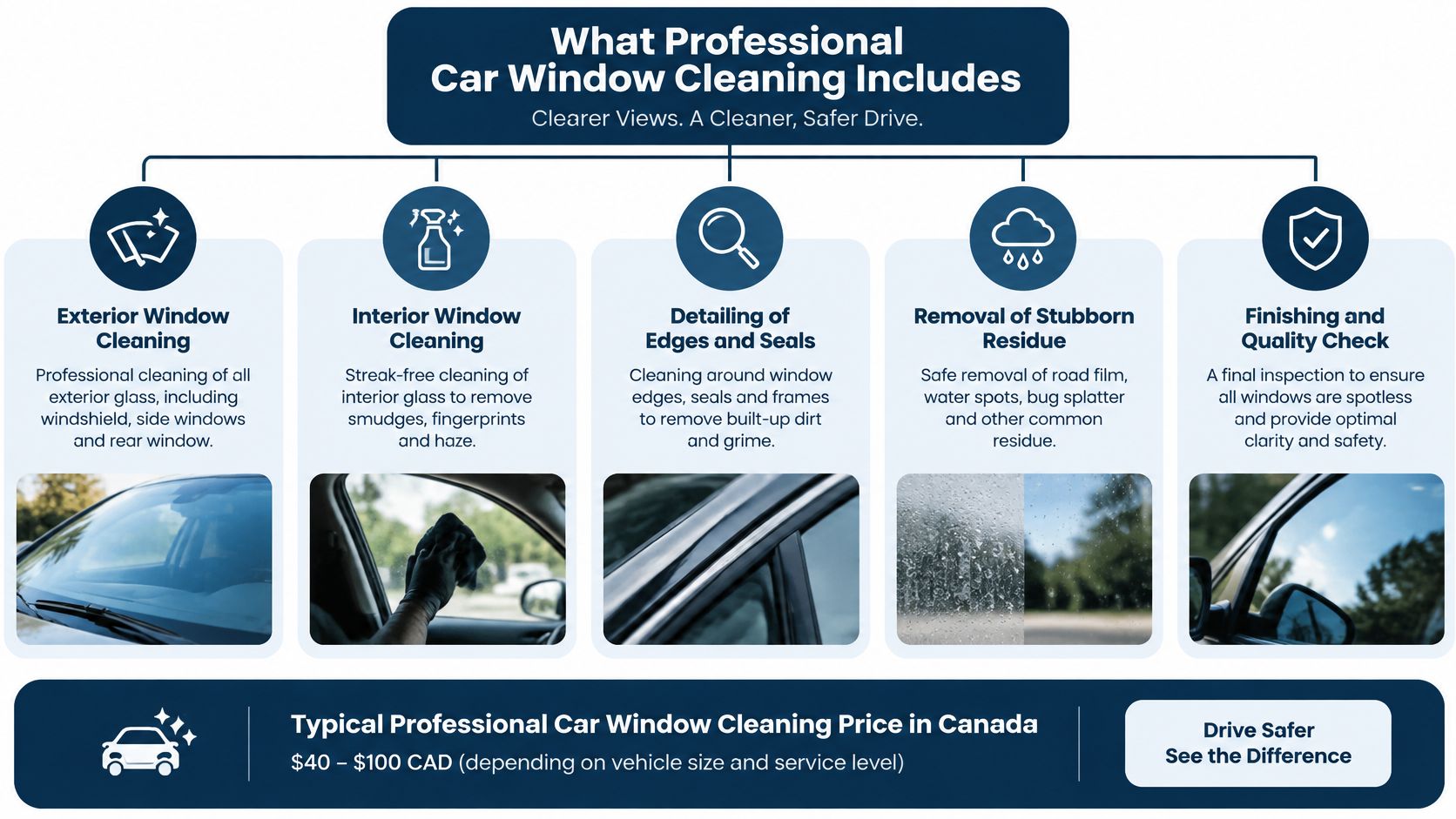
Professional car window cleaning is the glass stage of a wash or detail, not water passing over the windshield. The scope matters: an exterior wash and a hand-cleaned cabin are different services.
Exterior work starts before the towel
A technician should loosen grit, salt residue and bug remains before wiping the glass. Presoak, automotive wash chemistry and a thorough rinse help prevent dragging contamination across the surface.
The wash removes ordinary dirt; persistent deposits need a separate decision. Greasy road film, mineral spotting and etched glass aren't interchangeable problems. A normal wash isn't a promise of water-spot correction, and polishing may be inappropriate around coatings or film.
Drying matters too. Water left around mirrors and trim can run down freshly cleaned glass after the car moves. A careful finish includes checking those drip points rather than declaring victory while the vehicle is still wet.
Interior cleaning is a separate job
Inside, the technician needs to remove residue rather than spread it thinly enough to disappear under workshop lighting. Dashboard-product overspray, fingerprints, smoke residue and pet marks call for clean microfibre and a glass cleaner suitable for the surfaces involved.
- Tinted windows: Use ammonia-free, tint-compatible automotive cleaner and non-abrasive towels. Don't attack a stubborn mark with a razor on film.
- Camera and sensor housings: Keep liquid out of housings around the rearview mirror. Don't remove covers or disturb mounted equipment just to reach an awkward corner.
- Window edges: Lower movable glass enough to expose the concealed upper edge, where a dirty strip can survive an otherwise tidy job.
- Wiper blades and mirrors: Clean accessible blade edges gently and check mirrors for residue, including the corners.
Automotive glass isn't a household picture window. It sits beside delicate trim, may carry aftermarket film, and often curves into places that apparently require an extra elbow.
A good service leaves no removable haze or cleaning residue. It can't promise to eliminate every headlight halo or cure wiper chatter, because worn blades, damaged glass and other faults can produce similar symptoms. The technician should distinguish cleaning from correction, not sell the same wash harder.
Cleaning at Home Versus Hiring a Professional
| Factor | Cleaning at home | Professional service |
|---|---|---|
| Typical cost per clean | Cleaner and washable towels upfront, then replenishment and laundering | Our express exterior packages start at $14.99 plus tax; full-service packages start at $29.99 plus tax |
| Time per clean | Includes gathering supplies, cleaning, inspecting and washing towels | Includes travel, the queue and the booked service; confirm timing before visiting |
| Streak-free finish | Achievable with clean towels, controlled cleaner and cool glass | Should include residue removal and careful drying, but inspect the result |
| Interior film and haze | Manageable with suitable cleaner and fresh towel faces | Useful when access, persistent residue or repeated smearing defeats your routine |
| Road film, salt and water spots | Loose residue is manageable; bonded deposits need compatible treatment | Ordinary washing handles surface dirt; spot removal or polishing may require detailing |
| Best for | Regular upkeep, light dust, fingerprints and budget control | Deeper cleaning, winter contamination, sale preparation and saving personal effort |
Cost and time usually settle it
The cheapest option isn't automatically the most economical for your afternoon. If your cleaner and towels are already organised beside the garage door, a home clean involves little setup. If you're shopping for supplies, carrying water from an apartment and hunting for somewhere suitable to work, the calculation changes.
Professional cleaning also isn't automatically faster door to door. Count the whole trip, not just the time someone touches the car. A wash conveniently on your commute makes a different proposition from a special journey across the GTA.
Keep the comparison fair. An exterior wash isn't equivalent to cleaning both sides of every window, and a full-service clean isn't necessarily a corrective detail. Match the service to the work before comparing prices.
Technique matters more than the badge
A careful owner can produce excellent glass. A rushed professional can leave streaks. Fresh towels, suitable chemistry and proper inspection matter more than whether the person holding the cloth has a uniform.
The strongest reason to pay is removing a bottleneck: an awkward windshield, persistent residue or a car that needs broader attention. It isn't access to a secret spray unavailable to civilians.
Choose the column that solves your biggest inconvenience. If that's spending, clean at home. If it's repeated failure or a neglected cabin, consider professional help.
Don't buy abrasives because standard cleaner didn't work. Identify whether the mark is on the inside, outside or within damaged glass before escalating treatment. An expensive mistake is a poor way to make DIY feel economical.
How to Clean Car Windows at Home Without Streaks
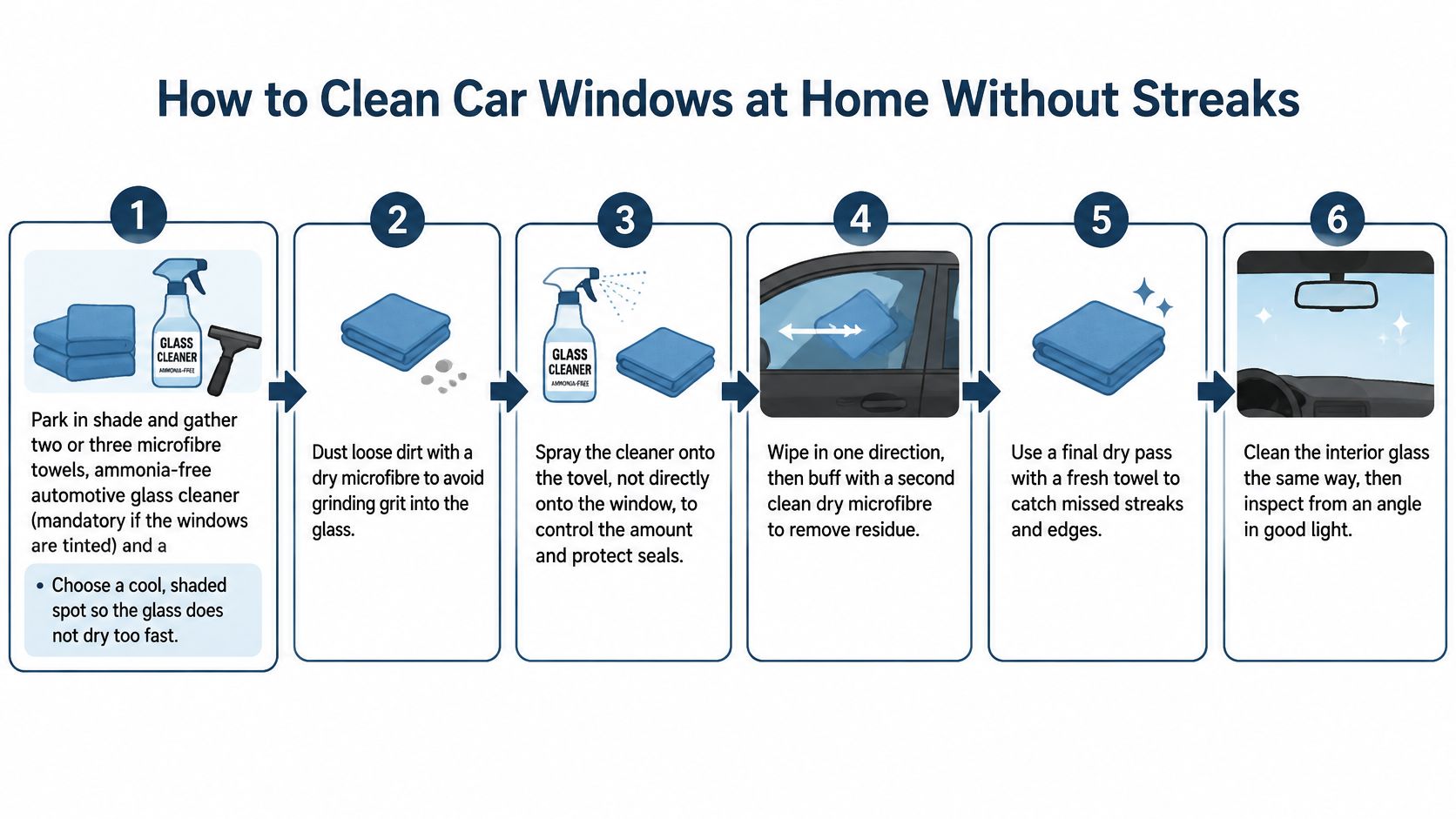
Work on cool glass in shade. Hot glass shortens your working time and encourages cleaner to dry before you can remove it.
Prepare the surface and control the cleaner
Gather separate cleaning and drying towels. Use clean, low-lint microfibre, ammonia-free automotive glass cleaner and a soft detailing brush for suitable trim edges. Keep glass towels away from towels used for wax or dashboard dressing, which can transfer oily residue.
Remove loose contamination first. Rinse gritty exterior glass rather than rubbing it dry. Inside, remove loose dust gently and deal with nearby dirty trim before finishing the windows. If you're dressing the dashboard, apply the product to its applicator away from the glass and complete that work before the final glass pass.
Spray the towel, not the cabin. A lightly dampened cloth gives better control than soaking the window. It also keeps cleaner away from screens, switches and camera housings. For stubborn residue, repeat with a fresh towel face instead of flooding the area.
Finish the edges and check your work
Lower each door window enough to expose its hidden upper edge. Wipe that strip, raise the window and clean the remaining surface. Don't forget the rear corners, where greasy little fingerprints enjoy retirement.
Use different wiping directions inside and outside. Horizontal exterior passes and vertical interior passes make remaining streaks easier to locate. Work in manageable areas, especially across the windshield, and turn the towel before its working face becomes saturated.
Buff with a clean, dry towel and inspect from an angle. Finish the mirrors and gently wipe the wiper-blade edges with a damp cloth. Don't pull blades off the windshield unless the vehicle's instructions permit it; some need a service position.
For the lower interior windshield, work from the passenger side where practical, or use a dedicated glass-cleaning tool with a clean microfibre bonnet. Don't balance awkwardly across the console or press hard around mounted electronics.
The mistakes behind most complaints
- Linting paper towels: They can leave fibres behind and become frustrating around window edges.
- Household ammonia spray on tint: Choose a cleaner explicitly suitable for automotive tint instead.
- Repeated circular rubbing with a dirty cloth: You're moving residue around, not removing it. Switch towel faces.
- Cleaning in full sun: Move the car or wait until the glass cools.
Straight strokes aren't magic, and circles don't automatically scratch glass. Contamination and incomplete removal are the main enemies. When the cloth stops collecting residue cleanly, change it rather than leaning harder.
When Paying for Clean Windows Pays Off
Pay when contamination defeats a proper home clean or compromises your view. Clean at home when the problem is ordinary dust.
That distinction matters in an already expensive ownership budget. Household spending on vehicle maintenance and repairs reached $3.1 billion in the fourth quarter of 2023, up from $2.8 billion four years earlier, according to Statistics Canada. It's a reason to spend deliberately, not evidence that every driver needs more services.
Which scenario are you in
| Your situation | What your windows face | Verdict |
|---|---|---|
| Ride-hailing or delivery driver | Frequent use, fingerprints and interior haze; passenger marks in ride-hailing vehicles | Use professional interior and exterior care when workload makes home upkeep impractical |
| GTA winter commuter | Salt spray, slush residue and interior condensation marks | Consider a full-service reset after winter buildup, then maintain at home |
| Dog owner | Nose prints and dried drool on rear glass | Clean fresh marks at home; consider detailing for persistent residue and broader cabin mess |
| Selling or returning a lease | Visible spots, dirty edges and neglected glass | Clean before photographs or inspection; pay if the car needs wider preparation |
| Weekend car kept in a garage | Light dust and occasional fingerprints | Clean at home and skip the unnecessary visit |
Match the treatment to the trigger
For a working driver, convenience can justify the bill. Passengers sit beside the windows and notice smears at eye level, but there's no need to claim that spotless glass guarantees better ratings or more fares. Presentable is the goal, not showroom perfection between every trip.
Winter commuters should separate exterior residue from cabin moisture. Cleaning condensation marks improves the finish, but recurring fogging calls for attention to moisture, ventilation and demisting. Don't keep polishing a symptom while wet mats are still feeding the problem.
Night drivers need a stricter threshold. Clean both sides of the windshield before blaming the headlights, but don't assume every starburst comes from dirt. If visibility remains poor, investigate the glass, blades and your vision as appropriate rather than repeatedly purchasing washes.
Hard-water spots deserve their own assessment. A glass-safe mineral remover may address deposits; etched marks may require correction beyond cleaning. Keep abrasive products and blades away from tint, and don't experiment on the driver's viewing area.
Pet owners should soften dried marks with compatible cleaner before wiping. If the rear glass is only one part of a cabin full of hair and residue, a detail can be more practical than treating each mess separately.
Spend by trigger, not guilt: Book because the car needs work you can't conveniently complete, not because a calendar says it's dirty.
The useful arithmetic is your actual receipt plus your actual time. Divide the supply cost across the cleans you get from it, then compare that with the appropriate service and the whole visit. There's no honest universal per-wash saving without knowing those inputs, and no guaranteed resale return from clean windows alone.
Questions to Ask Before You Book
A useful quote tells you what gets cleaned and what remains outside the job. Interior glass, bonded-spot removal and polishing aren't interchangeable services.
Get the scope clear
Use these questions before authorising work, especially if your car has aftermarket tint or equipment around the mirror.
- Tint and electronics: Will you use tint-compatible, ammonia-free cleaner and keep liquid out of camera and sensor housings?
- Finishing details: Are concealed window edges and accessible wiper-blade edges included?
- Interior coverage: Does the quoted service cover inside glass, or only the exterior?
- Drying and inspection: How will you check for residue after drying, including the lower windshield?
- Written instructions: Can the work order record the tint, sensitive equipment and any agreed restrictions?
A shop doesn't need a theatrical answer. It needs a clear one. Evasive responses about tint compatibility or a promise that every mark will disappear with a standard wash should make you pause.
Judge the result while parked
Inspect the glass from the driver's seat and from outside at an angle. Check the area behind the mirror, the bottom of the windshield and the edges of rear side windows. Those awkward places reveal whether someone finished the job.
Then assess it after dark while safely parked, using nearby lighting rather than conducting an experiment in traffic. Look for wipe patterns, greasy patches and distracting residue.
If marks remain, photograph them when they're visible and describe their location to the shop. Ask for an assessment, not an automatic second dose of stronger chemicals.
Persistent halos don't prove the wash was poor. They may come from damaged glass or something unrelated to cleaning. A responsible provider should acknowledge that possibility rather than promise a cloth can fix everything.
Your Next Step to Clearer Glass
Handle routine dust and fingerprints at home. Pay for professional help when persistent contamination, access or wider vehicle preparation makes the extra effort worthwhile.
Choose cleaning or repair correctly
Before booking, identify what bothers you from the driver's seat. A removable smear belongs in a cleaning conversation. A chip, crack or permanently damaged surface belongs in a repair assessment.
For readers dealing with an RV rather than a passenger car, Motor Sportsland's guide to RV windshield repair costs in Utah illustrates the separate repair decision. Its location and vehicle context aren't GTA pricing guidance, but the distinction is useful: washing isn't glass repair.
- Start with upkeep: Keep suitable cleaner and dedicated glass towels ready for small marks.
- Escalate deliberately: Describe stubborn spotting or haze before authorising a deeper treatment.
- Use seasonal judgement: Inspect after winter buildup and whenever changing light makes residue obvious, rather than following an arbitrary booking rhythm.
Don't wait for the entire car to become filthy before dealing with a visibility problem. Equally, don't turn an occasional fingerprint into a standing professional appointment.
The practical target is straightforward: glass you can inspect easily, maintain without a production, and look through without a distracting layer of yesterday's cleaning attempt. Driving into the sunrise should involve enjoying the view, not discovering your windshield has developed zebra stripes.
Nanak Car Wash offers full-service packages from $29.99 plus tax, including inside and outside window cleaning, hand drying, seat and carpet vacuuming, dashboard cleaning, power-washed plastic mats and air freshener on request; express exterior packages start at $14.99 plus tax and include presoak soap, foam bath, rinse, drying agent and air blowers. Visit Nanak Car Wash to choose the appropriate service, or book a detailing appointment online or by calling 416-749-0202 if stubborn glass residue is part of a bigger cleanup.



 6600 Finch Ave W, Etobicoke, ON M9V 3Z6

 647-703-8515
 MON – SUN 8 AM to 7 PM