
A January Tuesday, southbound on Kennedy Road, just off the 410. The paint still looks mostly clean. The wheel wells are packed white right up to the arch lip, and when you drop into the driver's seat the floor mat crunches under your heel.
That gap between how the car looks and what it has collected is where most wash advice falls apart. The usual local guidance hands drivers a fixed number: wash every ten days, or stretch to fourteen when the roads are clear. Kennedy Road in February doesn't run on a calendar. It runs on brine, freeze-thaw cycles, a daily 401 commute, and the odd afternoon when the temperature climbs above zero and everything turns to grey soup.
So here's the version built around the week you're having: read the mess, pick the service, then check the next twelve hours before you commit. It's also a frank look at what a wash can fix and what it can't, because a bay with a pressure wand is not a rust inspection, no matter how thorough the rinse looks.
Table of Contents
- Match This Week's Kennedy Road Mess to a Wash
- Why Peel Winter Salt Eats at a Car
- Where Road Brine Hides Under the Car
- A Wash Rinses and a Detail Restores
- Three Kennedy Road Drivers and Their Cadence
- Book the Visit That Matches This Week
Match This Week's Kennedy Road Mess to a Wash
The ten-day rule isn't wrong, it's incomplete. It tells you how often to wash, not what to do after the truck lays brine on the 410 ramp at six in the morning and the temperature drops to −9°C by nine. Two cars on the same street in the same week can need completely different visits.
Which Kennedy Road visit fits this week
Start with what the car is carrying, not with when you last paid.
| This week's mess | Service that fits | Why this level | When to go |
|---|---|---|---|
| Highway slush, paint looks mostly clean, wells packed white | Express wash with underbody rinse | Chloride sits under the car, not on the paint | Same day if water can drain and it will not refreeze |
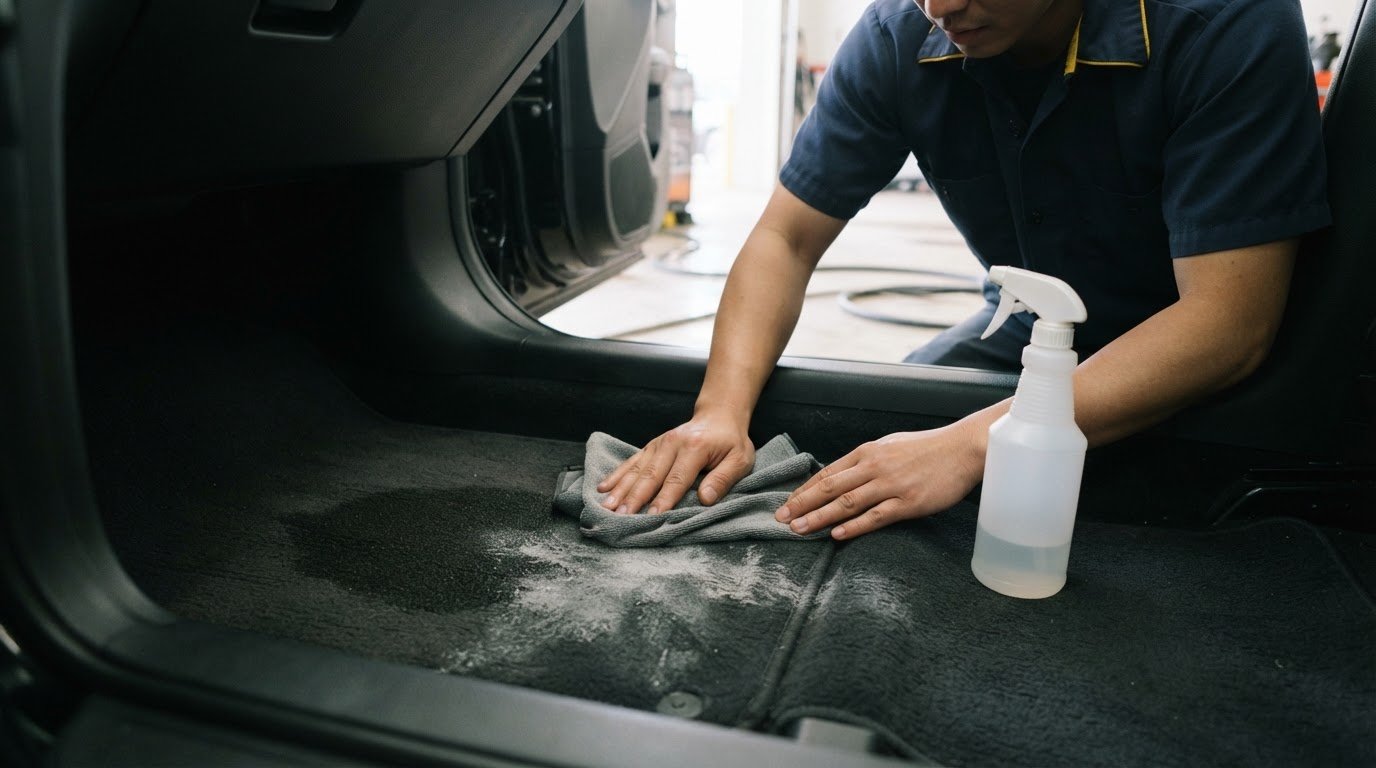
| Salty mats, door sills and filmed dash plus a dirty exterior | Full-service wash | Interior salt and exterior film need one visit | Within a few days of the thaw |
| Embedded carpet stains, dull paint, vents full of grit or pet hair | Booked interior and exterior detail | A wash cannot shampoo, blow out crevices or machine-polish | Appointment, typically 1 to 4 hours |
| Older daily driver heading into winter | Rust proofing plus regular rinses | A barrier helps only if salt is still washed off | Seasonal, not instead of washing |
| Clear roads and light dust only | Express exterior wash | Road film without trapped brine | Stretch toward one to two weeks of commuting |
Six timing moves for the week ahead
- Check the next 12 hours before you commit. If another hard freeze is coming tonight, a wash can push water into door seams and arch lips where it locks in with the salt already on the metal. Wait for a window where water drains and the car dries. If the day stays above freezing, wash it now.
- After salty highway travel, book the express exterior with an underbody rinse, even when the paint looks clean. Neutral reporting on the Highway 401 corridor found roughly 7,600 tonnes of de-icing salt applied to nearby roads each year, with substantial quantities running into groundwater and streams rather than staying put, per reporting on road salt contamination. Dissolved salt stays active in whatever moisture it finds, and on your car that moisture sits behind the arches and along the rockers.
- Step up to full service when the cabin is salty too. Crunchy mats, white tide lines on the door sills, a filmed dash and a dirty exterior are one job, not three. Book it within a few days of the thaw so vacuuming, dash and window cleaning and a hand dry happen in a single visit.
- Dry it, or drive it until the seams stop dripping. A trapped puddle of dilute brine under a door seal is worse than a dry car with a little film left on the paint. Twenty minutes at speed does more than a towel ever will.
- Book a mechanic, not a wash, if you see bubbles or crust. Paint blistering along an arch lip, a suspension mount that looks like it's growing scales, a brake line with flaking coating: that's structural, and no wash package diagnoses it.
- Stretch the interval on clear, unsalted weeks. Mid-July, light dust, no spray off the tires. An express exterior every week to two weeks is plenty, and forcing a full detail into that week buys you nothing.
Judge the week by what's on the road and under the arch, not by the date on your last receipt. A second rinse five days after a storm beats a perfect ten-day record every time.
Hold the long work, meaning shampoo, vent blowout, leather cleaning and a machine buff, for a booked detail rather than squeezing it into a maintenance wash. Rust proofing belongs in the same seasonal slot each year and never replaces rinsing chloride off the metal. That's the whole idea behind car detailing on Kennedy Road in Brampton: a decision about this week's mess, not a subscription to a habit.
Why Peel Winter Salt Eats at a Car
Say a driver leaves Kennedy Road after a thaw with paint that still looks clean. The car has nevertheless crossed wet, salty pavement, and brine can cling beneath it long after the road dries. Dry salt has little effect on its own. Moisture dissolves the chloride into a conductive solution that can sit against exposed steel, while repeated freeze-thaw cycles keep the surface wet again.
The numbers behind that grey film
Peel Region spreads roughly 28,000 tonnes of road salt on regional roads each year, at an estimated cost of about $2.1 million. That is down from just under 40,000 tonnes in earlier years, across more than 1,600 kilometres of roads, according to reporting on Peel Region's winter road salt use. The scale helps explain why a car can pick up brine on an ordinary local drive, even when its paint does not look dirty.
A Kennedy Road commute through a thaw can send salty spray into the wheel arches and along the underside. A quick look at clean paint will not show what has settled out of sight. That is why the timing of a rinse should follow the road: after brine has been on the car, an underbody rinse makes sense even if the exterior still looks tidy. If another freeze is due before the wash, wait until conditions allow the car to dry rather than washing just before temperatures drop.
Exposure, not a prediction
Salt exposure does not mean a particular car will corrode. It does mean vehicles using Peel roads encounter conditions that can leave brine on exposed metal and other surfaces through the winter. Match the service to the mess: an underbody rinse removes road spray, while interior cleaning can lift tracked-in salt from carpet. Wax leaves a protective film on paint, and rust proofing is a separate seasonal service. None of these makes a car immune to corrosion.
A salty-road week calls for a rinse, not automatically the longest package on offer. Choose based on what the car has picked up and whether it can dry safely afterward. A clean-looking exterior is not a reliable reason to skip rinsing the underside after driving through fresh brine.
Where Road Brine Hides Under the Car
By four in the afternoon, Kennedy Road looks dry. Wind, traffic and a bit of sun handle the surface. Your underside is a different country: a maze of pockets holding a salty puddle that the road stopped showing hours ago.
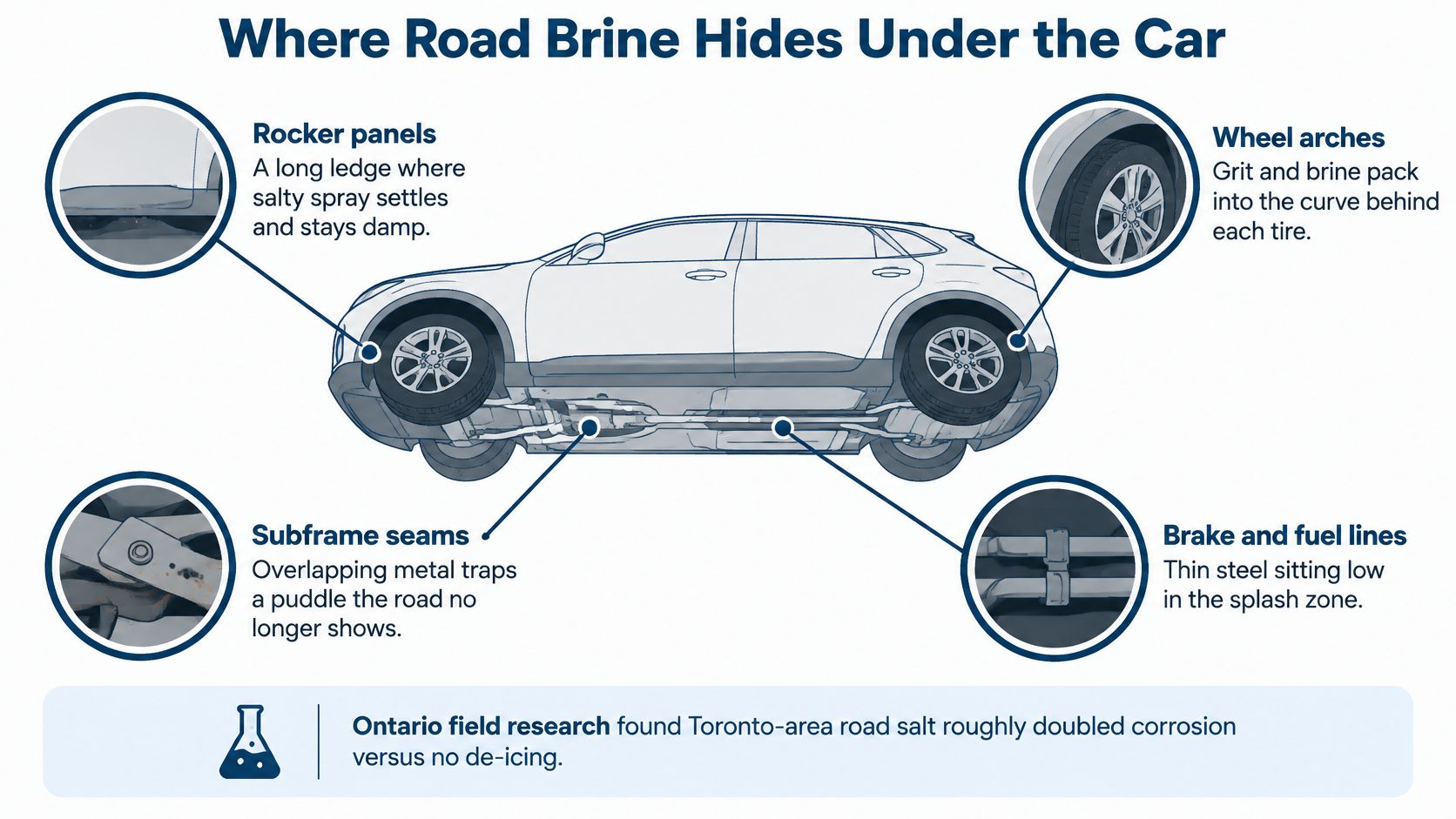
Ontario field research on road salt found that de-icing salt in the Toronto area roughly doubled corrosion compared with conditions without salt, because dissolved chloride raises the electrical conductivity of moisture and speeds electrochemical corrosion on exposed steel, as documented in field research on road salt and vehicle corrosion. Doubling is the part worth remembering. This isn't cosmetic staining.
Follow the spray in the order it lands
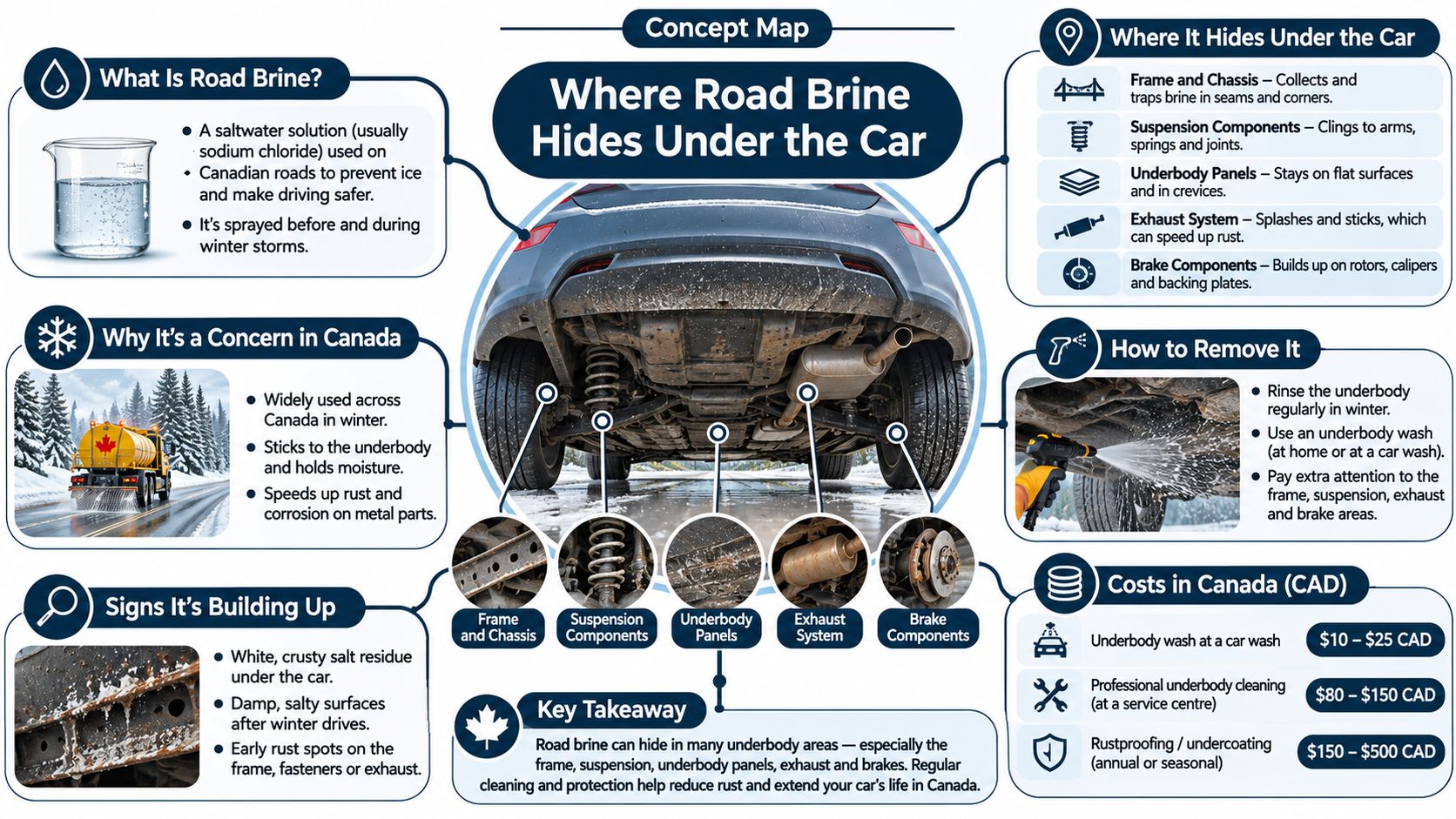
A rinse that only hits the visible paint misses most of the problem. Work the underside in the order the spray travels.
- Wheel wells and arch lips: Grit and brine pack into the curve behind each tire and stay damp for days. Bubbling paint usually starts there.
- Rocker panels and door seams: A long horizontal ledge plus an overlapping seam equals a place where water sits and air doesn't reach.
- Frame rails and suspension mounts: Overlapping metal traps brine the road no longer shows, and mounts sit low in the splash zone.
- Brake and fuel lines: Thin steel running along the floor, coated but not immune, taking everything the front tires throw backward.
- Underbody cavities and floor plugs: The pockets you can't see from standing height, which is exactly why they need a directed rinse rather than a splash.
Drying is half the rinse
An underbody rinse helps most when the car is then dried or driven until the seams stop dripping. Leaving wet salt solution trapped in a seam keeps the conductive electrolyte exactly where corrosion wants it. A rinse followed by a wet night in a cold garage can be close to a no-op.
Practical rule: rinse first, then move air. A wash that ends with a dripping car has done half the job at best.
What proofing can and can't do
Rust proofing is a supplementary barrier, not a substitute for washing. Older Canadian testing found inhibitor treatment reduced corrosion under test conditions, but the achievable reduction in total vehicle corrosion was limited when road salt was only one of several corrosion sources. Read that as a second line of defence that assumes the first one still works. An SUV, a pickup or a delivery van carries more exposed underside than a compact, so the same storm leaves more metal to rinse. A wash still doesn't diagnose structural rust, and if a mount looks scaly, that's a mechanic's call.
A Wash Rinses and a Detail Restores
Rinse a pan tonight and the sauce slides off. Leave that same pan until Sunday and you're soaking, scraping and scrubbing something that has bonded to the surface. Cars behave the same way, and the difference explains most of the confusion around what to book.
Removal and restoration are different jobs
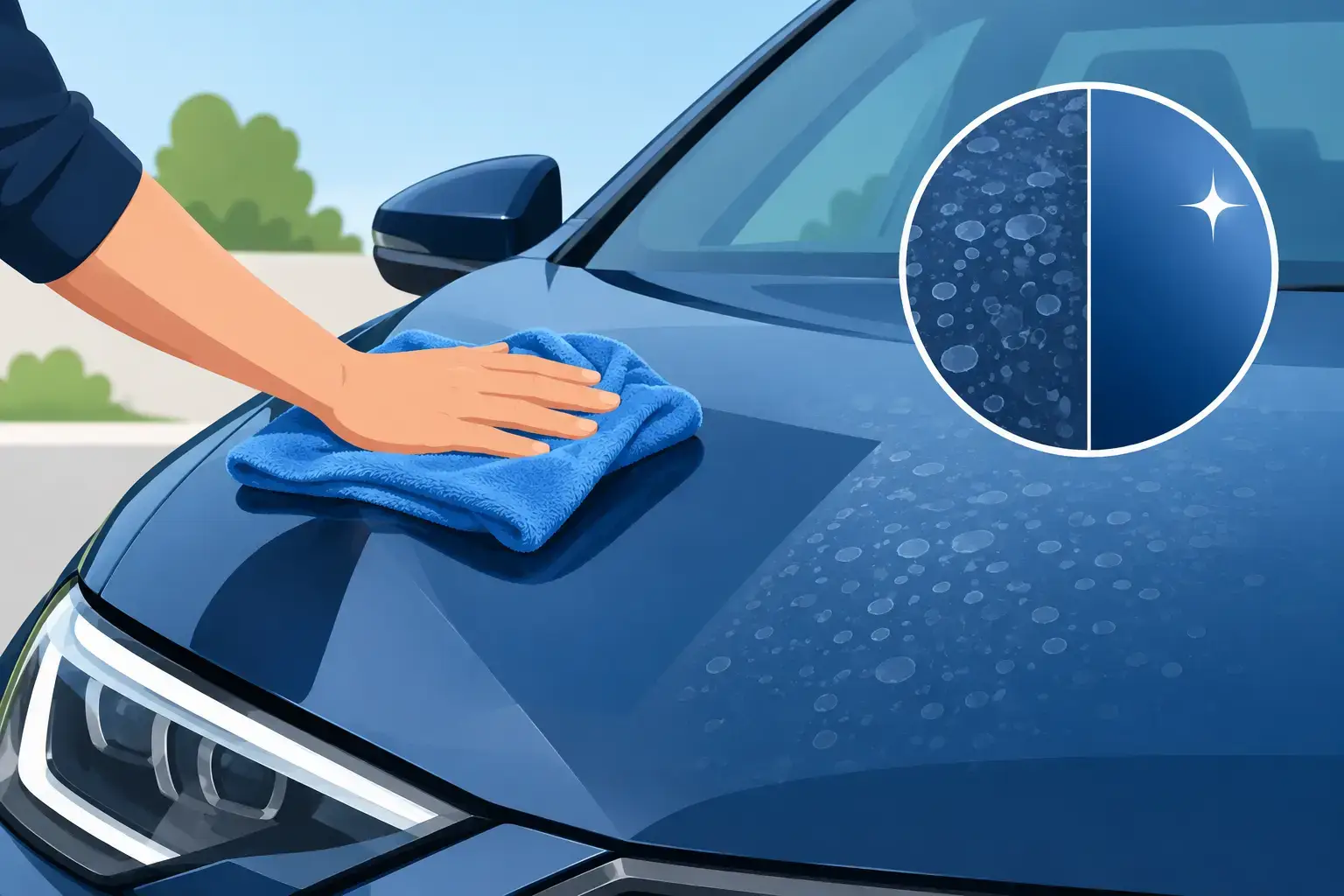
A wash is removal. Express or full service, it takes salt film, road spray and loose cabin grit off while they're still movable. A detail is restoration, the visit for soil that has already set: carpet and seat shampoo, salt stains worked out of the pile, vent and crevice blowout, leather deep cleaning, and a machine buff and polish when the paint has gone dull under a winter of film.
Historical Canadian testing reported that a corrosion inhibitor cut corrosion by roughly 10.5% to 77% across tested samples, a spread that shows how much performance depends on material, exposure and how the product was applied, per testing of corrosion inhibitors on vehicles. That range is why proofing is a supplement and why the wash schedule should follow exposure rather than a fixed calendar.
During active salting, repeat exterior or full-service washes and rinse the underside after heavy slush. Inspect and rust-proof before or during winter. A full-service wash is the right middle step when salt film and a dirty cabin arrive together in the same week. Reserve the longer appointment for embedded stains, gritty vents, pet hair and oxidation.
Size matters more than most drivers expect. A large SUV, a van or a pickup has more surface, more glass and more labour than a compact, so the visit runs longer and costs more. That's not an upsell, it's arithmetic. If the salt has already claimed a set of floor mats or a wiper blade, compare replacement parts and accessories before you order, and fit the new mats before the next brine event rather than after it.
Prepaid tickets and monthly wash habits matter for one reason. They stop brine from sitting on the car for three weeks while you wait for a convenient Saturday.
Three Kennedy Road Drivers and Their Cadence
Say a commuter finishes a slushy drive along Kennedy Road and parks with a car that looks clean. The paint can hide the week's road brine, while the underside has taken the spray. For Brampton drivers, the useful question is what the car collected, not whether another week has passed.
The 2021 Census profile for Brampton recorded a population of 656,480. It also counted 204,435 residents who named a car, truck or van as their main commuting mode, including 183,185 drivers. Those figures describe the city, not traffic at any one Kennedy Road wash bay, but they give a sense of how many local routines depend on a vehicle.
The commuter who does the 410 shuffle
A weekday commute through Peel's salted roads leaves brine around the wheel wells and residue on the mats. After a brine event, an underbody rinse makes sense even if the paint still looks tidy. Add a full-service wash when the cabin starts crunching underfoot. If another freeze is expected, hold off on washing right before it; otherwise, match the visit to the road conditions rather than a fixed weekly rule. A detail can wait until spring if the interior only needs routine cleaning.
The driver who lives in the car
A ride-hail or delivery driver may spend much of the day in a cabin that collects road film, seat wear and coffee spills. Short exterior visits can keep the car presentable, but they do not clean stained fabric or grit worked into the carpet. When those problems build up, one detail appointment can address the shampooing, vent cleaning and leather care together.
The family hauler with the hockey bags
An SUV or pickup carrying a dog, bags and winter gear comes home with more debris in the cargo area and cabin. Rinse the underside after salty slush, then plan a detail when hair, grit and dirt gather in the back seats or cargo space. Allow extra time for those areas rather than expecting a quick wash to remove embedded debris.
| Driver | What piles up | Wash rhythm | Detail rhythm |
|---|---|---|---|
| Daily commuter | Wheel-well brine, lightly salty mats | Underbody rinse after brine, full service when the cabin crunches | When spring brings time for a closer interior clean |
| Ride-hail or delivery | Road film, seat wear, cup-holder grit | Short exterior visits as needed | When stains or cabin grime need more than a wash |
| Family SUV or pickup | Underside exposure, pet hair, cargo debris | Underbody rinse after salty slush | When hair and grit gather, allowing extra time |
The same car can need different care in clear-weather months and during a brine-heavy winter. Let the salt event and the cabin's condition set the cadence.
Book the Visit That Matches This Week
Say your car comes back from a briny Kennedy Road commute with white wheel wells but clean-looking paint. Book an underbody rinse; the salt can collect below even when the body looks fine. If a freeze is due, wait until conditions allow a wash rather than rinsing just before another freeze. A crunching cabin calls for full service, while stains or pet hair may need a booked detail and more time. Rust proofing is another option for added protection, not a substitute for washing away road salt.
Nanak Car Wash has operated since 2004 and has a Brampton location. Detailing is done by hand, and appointments can be booked online or by calling 416-749-0202. Call that number with pricing questions, too. The bays handle vehicles from compact cars to large SUVs.
Choose for the mess in front of you, not the biggest package on the board. Nanak Car Wash offers express exterior washes starting at $9.99 plus tax and full-service packages starting at $29.99 plus tax, alongside detailing and rust proofing. For a closer look at the packages and the nearest location, visit Nanak Car Wash. If you run a shop, the dealership guide to automated service bookings covers appointment scheduling.
Your car does not need a spa day every Thursday. It needs the visit that matches the salt it collected this week.

 6600 Finch Ave W, Etobicoke, ON M9V 3Z6

 647-703-8515
 MON – SUN 8 AM to 7 PM