
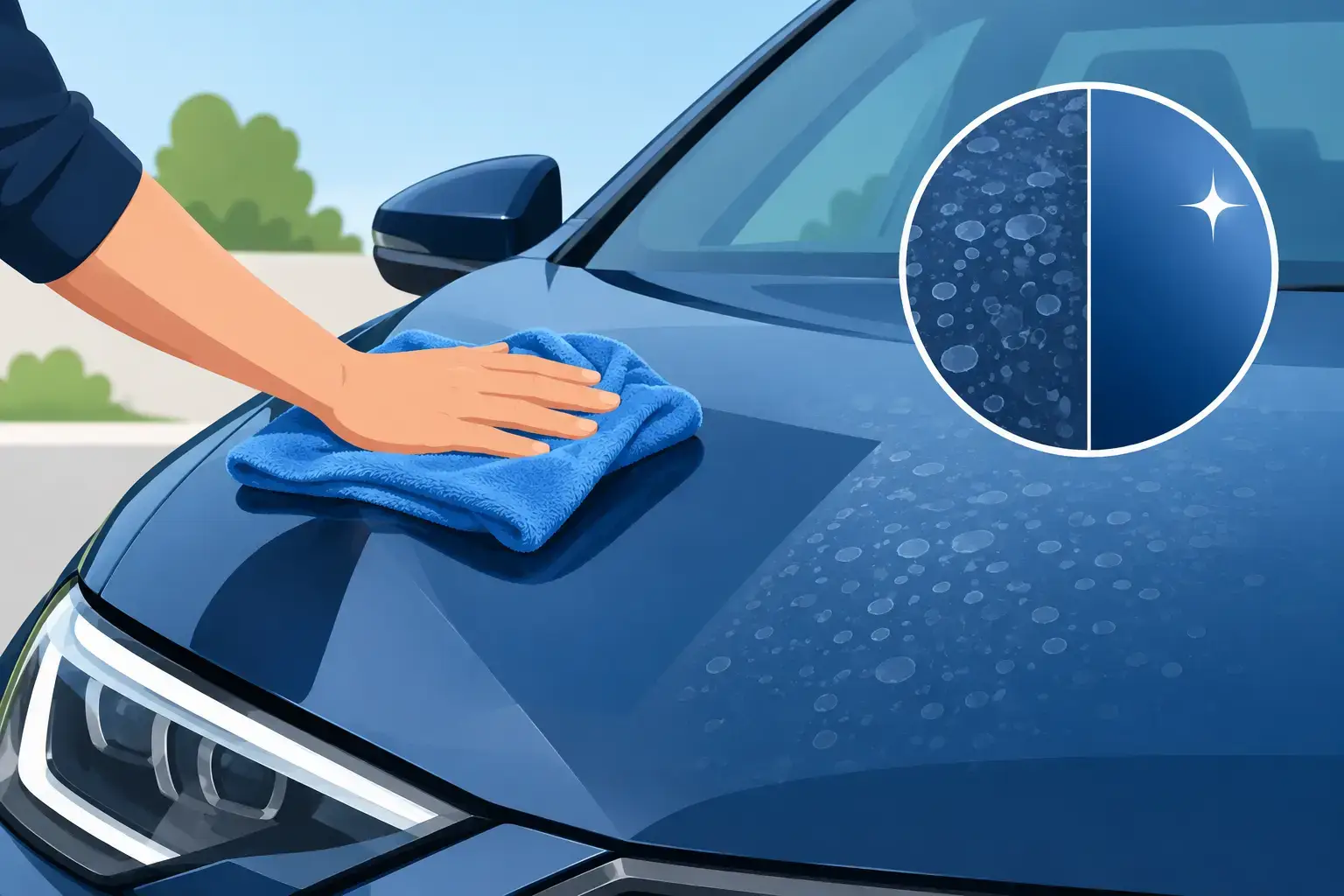
A freshly washed car can look great for ten minutes, then dry into a map of white dots across the hood, glass, and doors. So, does hand drying reduce water spots? Yes – when it is done quickly and with clean, paint-safe towels, hand drying is one of the simplest ways to stop water from evaporating on the vehicle and leaving mineral residue behind.
For everyday drivers, that means the difference between a wash that looks finished and one that still needs attention in the driveway. It matters even more after summer road trips, dusty commutes, or a winter wash when salt and grime have built up. A clean car should look clean when you drive away, not only while it is wet.
Why water spots show up after a car wash
Water itself is not usually the problem. The issue is what stays behind after the water evaporates. Tap water can contain minerals such as calcium and magnesium. When drops sit on paint, windows, mirrors, trim, and chrome, the water dries off but the minerals remain. That is the white, chalky residue many drivers notice in direct sunlight.
Hard water makes the problem more noticeable, but any wash can leave spots if there is enough mineral content and the vehicle dries too slowly. Sun, heat, wind, and dark paint can all make water spots appear faster. A black SUV parked in the sun may show them almost immediately, while a light-colored car in the shade may hide them for a while.
Not every mark is the same. Fresh mineral spots are usually easy to remove with a proper wash and dry. If mineral deposits sit on the surface repeatedly, especially in hot weather, they can become harder to remove. In severe cases, they may leave etching that needs professional polishing rather than another quick rinse.
Does hand drying reduce water spots every time?
Hand drying greatly reduces water spots because it removes the water before evaporation can concentrate the minerals. It is especially effective on flat panels such as hoods, roofs, trunks, and glass, where larger drops tend to sit. It also helps around mirrors, door handles, grilles, badges, and window edges, where trapped water can drip out after the wash.
There is one catch: hand drying only works well when the towel is clean and the paint is reasonably free of dirt. Wiping a dirty car with a dry towel can drag grit across the surface and create fine scratches. The wash comes first. Drying is the finishing step.
A good wash process uses plenty of water to rinse away loose dirt, then a soft microfiber drying towel to lift the remaining water safely. Microfiber absorbs well without needing heavy pressure. You are not scrubbing the paint. You are gently blotting or pulling water off the surface.
Air dryers can help, too. They remove a large amount of water quickly and are useful around tight areas. But air alone may not reach every panel or remove every bead, particularly on vehicles with roof rails, spoilers, trim, and detailed wheels. A final hand dry is often what gives the vehicle that clean, spot-free look.
The best way to hand dry a car
Timing matters. Start drying as soon as the final rinse is complete, preferably before the car is sitting in direct sun. If possible, work from the top down. Water naturally runs downward, so drying the roof, windows, hood, and upper doors first prevents you from re-wetting areas you have already finished.
Use a large, high-quality microfiber drying towel rather than an old bath towel, T-shirt, paper towel, or chamois that has not been kept clean. Rough or dirty materials can leave lint, streaks, or swirl marks. Keep a second towel nearby for glass, door jambs, and lower panels. Those areas often hold more grime than the upper painted surfaces.
For most vehicles, gently lay the towel across a panel and pull it in a straight line. On smaller sections, pat the water dry instead of rubbing in circles. Wring out or switch towels when the microfiber becomes saturated. A towel that is too wet stops absorbing and can start pushing water around.
Pay attention to the places that keep dripping after you think you are done. Open and close the doors, wipe the inside edge of the mirrors, and check around the trunk and fuel door. On a hatchback, SUV, or minivan, water can hide under the liftgate and run down later. A quick pass around these areas saves you from surprise spots at the next stoplight.
When hand drying is most worth the effort
Hand drying is useful after every wash, but it is most valuable in a few common situations. It makes a bigger difference when the sun is strong, temperatures are high, or your vehicle has dark paint that shows every mark. It is also worth doing before a special event, a vehicle sale, or a rideshare shift when appearance affects the impression your car makes.
Toronto-area drivers also see the value after winter washes. Salt spray and road film can make a vehicle look dull even after a rinse. A thorough wash followed by proper drying helps reveal clean paint, clear glass, and better-looking trim. Drying will not replace paint protection, but it helps maintain the clean finish you just paid for.
If you wash at home, avoid letting the vehicle air dry while you put supplies away. Do the drying first, then clean up. If you use an express wash, choose a service that includes strong drying and consider a hand-finished option when you want the best result. It is a small step that can make an affordable wash look far more polished.
Drying is not the only defense against spots
A clean, protected surface sheds water more easily than a neglected one. Wax, sealant, and other paint-protection products encourage water to bead up and roll away. That can make drying faster, but it does not mean the car is immune to spots. In fact, tight water beads can dry into visible circles if they are left in hot sun.
The practical goal is simple: wash regularly, protect the finish when needed, and remove standing water before it dries. Regular washing also prevents dust, pollen, bird droppings, salt, and traffic film from building up. Those contaminants can make spotting look worse and can do more harm than a few fresh mineral marks.
Glass deserves separate attention. Windshields and side windows often show spots more clearly than paint, especially at night or in low-angle sunlight. Use a clean glass towel for the final wipe so you do not transfer wax, grime, or damp residue from the paint. Clean glass improves visibility, not just appearance.
Avoid these common drying mistakes
The biggest mistake is using whatever towel is available. A dirty towel can leave streaks and carry grit across the paint. Another mistake is pressing hard in an attempt to dry faster. Let the towel do the absorbing. Extra pressure does not remove minerals better, but it can increase the chance of marring a surface.
Do not forget the wheels and lower doors. These areas are often the dirtiest parts of the vehicle, so use a separate towel rather than the one you use on the hood and roof. And do not use a drying towel that has fallen on the ground. Even if it looks clean, it may have picked up tiny particles that do not belong on your paint.
Finally, do not wait too long. Once water spots have baked onto hot paint or glass, they may need a specialized cleaner or polishing service. Fast, careful drying is easier and less expensive than correcting stubborn marks later.
For a clean finish without spending all afternoon in the driveway, make drying part of the wash, not an optional extra. A regular wash and a careful hand dry help your vehicle stay sharper between details, protect the look of the finish, and give you a ride you are proud to pull up in.

 6600 Finch Ave W, Etobicoke, ON M9V 3Z6

 647-703-8515
 MON – SUN 8 AM to 7 PM