
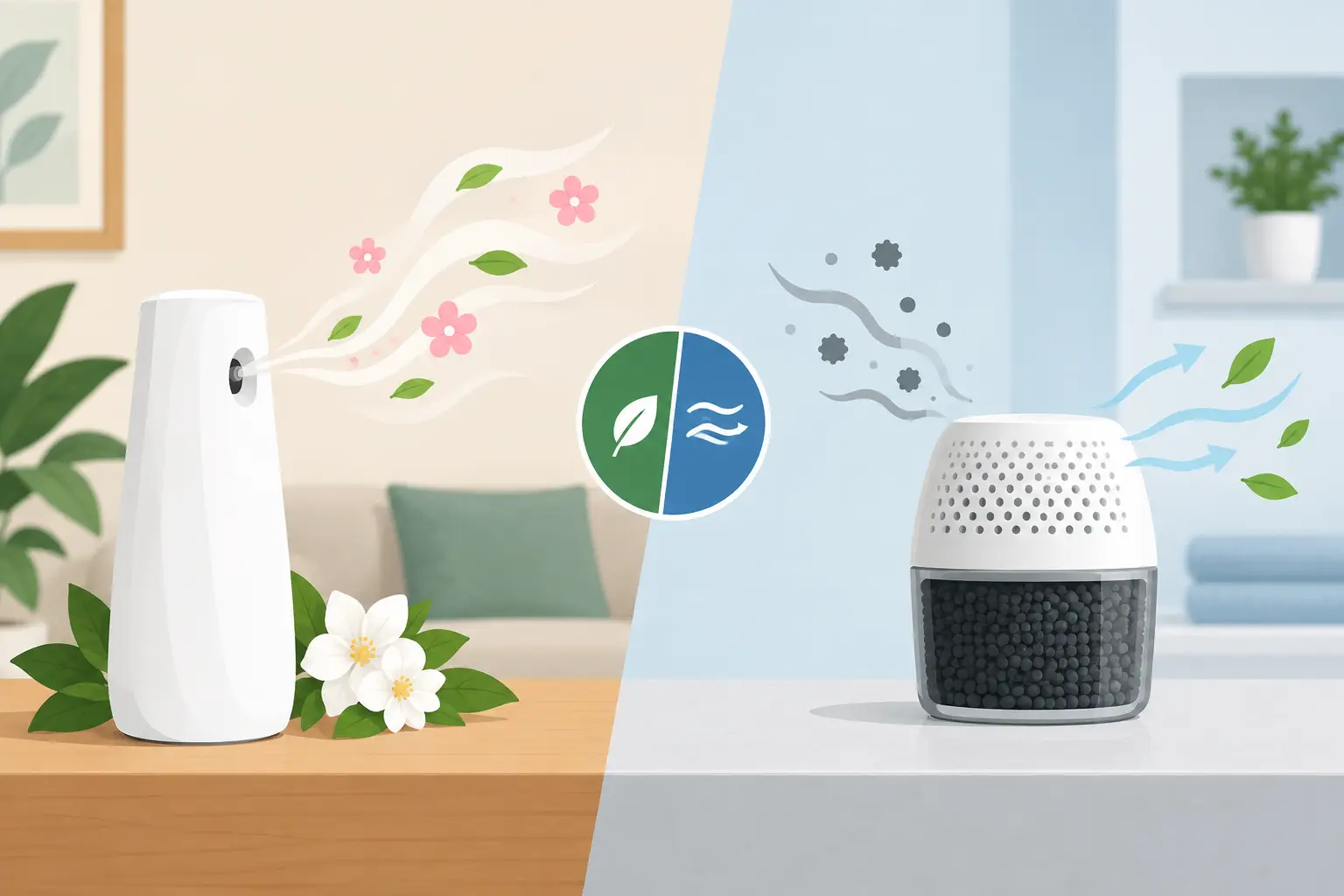
A clean-looking car can still feel dirty the second you open the door and smell old food, wet jackets, smoke, pet hair, or gym bags. The air freshener versus deodorizer question matters because these products do very different jobs. One adds a pleasant scent. The other works to reduce or remove the odor source. If you want your vehicle to smell clean for more than a day or two, knowing the difference can save you money and frustration.
For everyday drivers, the best answer is usually not choosing one over the other. It is cleaning the interior first, using a deodorizer when there is a real odor problem, then adding an air freshener if you enjoy a light, fresh scent.
Air Freshener Versus Deodorizer: The Main Difference
An air freshener is made to change what you smell. It may release a fragrance such as vanilla, citrus, linen, new car, or pine. Hanging cards, vent clips, sprays, gels, and small canisters all fall into this category. They are quick, affordable, and useful when your car is already clean but you want it to smell more inviting.
A deodorizer is designed to deal with bad odors themselves. Depending on the formula, it can absorb, neutralize, or break down odor-causing particles in the air and on interior surfaces. A deodorizer may have little or no fragrance. Its purpose is not to make your car smell like perfume. Its purpose is to make the bad smell go away.
That difference becomes obvious when you have a stronger issue. Spraying a strong air freshener over spilled coffee, damp carpet, cigarette smoke, or pet accidents often creates a mixed smell that is worse than the original problem. It can smell like air freshener and mildew at the same time. A deodorizer has a better chance of helping, but only after the source has been properly cleaned.
When an Air Freshener Is the Right Choice
Air fresheners work best as the finishing touch to regular vehicle care. If you vacuum often, remove trash, wipe down surfaces, and keep food out of the car, an air freshener can keep the cabin pleasant between washes.
They are especially convenient for commuters, families, rideshare drivers, and anyone who spends a lot of time in their vehicle. A mild vent clip or a small freshener under the seat can give a clean interior a consistent scent without taking up space or requiring extra work.
The key is to use less than you think you need. A scent that seems pleasant for the first five minutes can become overpowering in a closed vehicle. Heavy fragrance may also bother passengers with allergies, asthma, headaches, or scent sensitivity. Choose a light option, avoid placing several fresheners in the car at once, and replace it when the fragrance fades instead of piling on more products.
Air freshener is also the better option when there is no odor to solve. You do not need odor treatment every week if your car simply smells neutral and clean. In that situation, fragrance is a preference, not a repair.
When You Need a Car Deodorizer Instead
Use a deodorizer when the odor keeps returning after you remove trash and air out the car. Repeat odors usually mean something has soaked into fabric, carpet, seats, headliners, floor mats, or the heating and air conditioning system.
Common examples include spilled milk, coffee, fast food grease, wet dog smell, cigarette smoke, moldy odors after a leak, and sweat trapped in cloth seats. Even a small spill can leave a large odor problem if it reaches the padding beneath the carpet or seat fabric.
A quality deodorizer can help after cleaning, but it is not magic. If a child spilled milk in the back seat and it dried in the carpet, the stain and affected area need to be cleaned thoroughly first. If wet floor mats have caused a musty odor, they need to be washed and dried completely. If smoke has settled into the headliner and upholstery, it may take detailed cleaning and more than one odor treatment.
For mild odors, an odor-neutralizing spray may be enough. Follow the product directions and test it on a small hidden area if you are applying it to upholstery. For deeper smells, especially smoke, mildew, or pet odors, professional interior detailing can be worth it. Detailers can shampoo carpets and seats, clean hard surfaces where odor residue collects, and treat areas that are easy to miss during a quick cleanup.
Do not forget the cabin air filter
Sometimes the smell seems to come from nowhere, but it starts when you turn on the fan or air conditioning. In that case, the cabin air filter may be dirty or damp. Leaves, dust, moisture, and debris can collect around the filter and ventilation system, creating a stale or musty smell.
Replacing the filter on schedule can make a noticeable difference. If the odor is strong whenever the air starts blowing, have the ventilation system checked rather than covering it with a stronger scent. An air freshener near the vent may hide the issue for a short time, but it will not correct it.
The Best Order for Removing Car Odors
The most effective odor control is a simple process: remove the cause, clean the area, dry it fully, deodorize if needed, then add fragrance only if you want it.
Start by taking everything out of the car. Check under seats, in door pockets, the trunk, and between the seats. Old cups, food wrappers, damp towels, and forgotten takeout are common odor sources. Vacuum the carpets, seats, and crevices because dust, crumbs, and pet hair hold odor longer than most drivers expect.
Next, clean the specific problem area. Use a suitable interior cleaner for plastic and vinyl, and use an upholstery or carpet cleaner for fabric surfaces. Avoid soaking seats and carpet with too much product. Excess moisture can create a new musty smell, especially during humid weather.
Drying is not optional. Leave doors or windows open in a safe location, use fans if available, and make sure floor mats are dry before putting them back. Once the cabin is clean and dry, apply a deodorizer according to the directions. Then, if you like a fragrance, use a light air freshener as the final step.
This order is why a proper full-service interior cleaning often gives better results than a quick spray at home. The scent is not doing all the work. The dirt, residue, and moisture causing the smell are being handled first.
Which Option Saves More Money?
An air freshener costs less upfront, so it is tempting to keep buying one after another. But if you are replacing fresheners because the bad smell returns every few days, it is not the cheaper solution. You are paying to cover an issue that still exists.
A deodorizer may cost more, and deep cleaning may require more time or professional service. Still, it can be better value when it prevents an odor from becoming permanent. This matters even more for vehicles used for rideshare work, family transportation, deliveries, sales calls, or resale. A clean-smelling interior makes the car more comfortable for you and more presentable for everyone who rides in it.
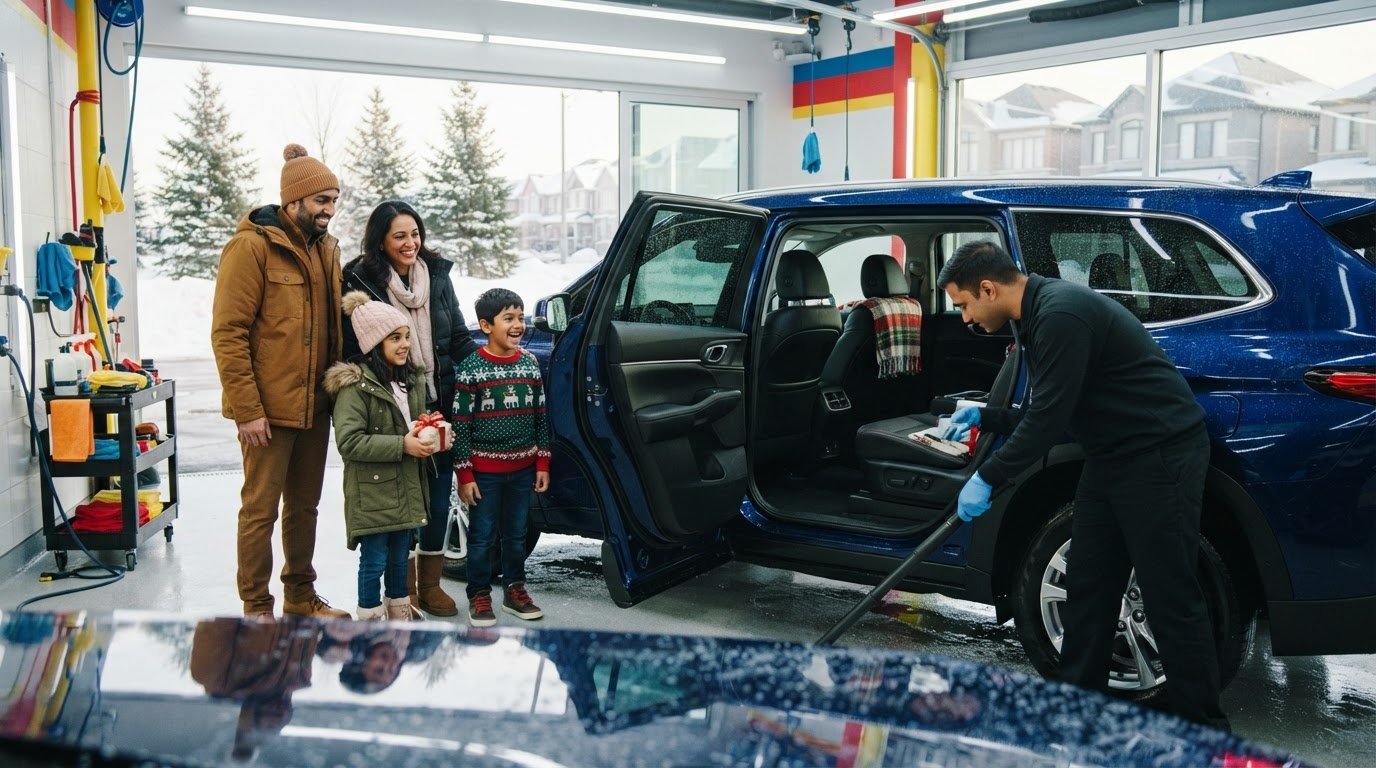
For vehicles with heavy use, regular cleaning is usually less expensive than waiting for a serious odor problem. Vacuuming, mat washing, interior wipe-downs, and occasional shampooing help stop spills and moisture from settling in. At Nanak Car Wash, interior detailing is a practical option when everyday cleaning is no longer enough and you want the cabin to feel genuinely refreshed.
A Clean Car Should Smell Clean, Not Covered Up
There is nothing wrong with liking a fresh scent in your car. Just make sure it comes after the cleaning, not instead of it. Use an air freshener for a pleasant finishing touch. Use a deodorizer when an actual odor needs attention. And when the smell keeps coming back, look for the source before buying another fragrance.
Your car does not need to smell like a perfume store to feel well cared for. A neutral, dry, clean interior is often the best result, with a light scent only if it makes your daily drive more enjoyable.

 6600 Finch Ave W, Etobicoke, ON M9V 3Z6

 647-703-8515
 MON – SUN 8 AM to 7 PM