
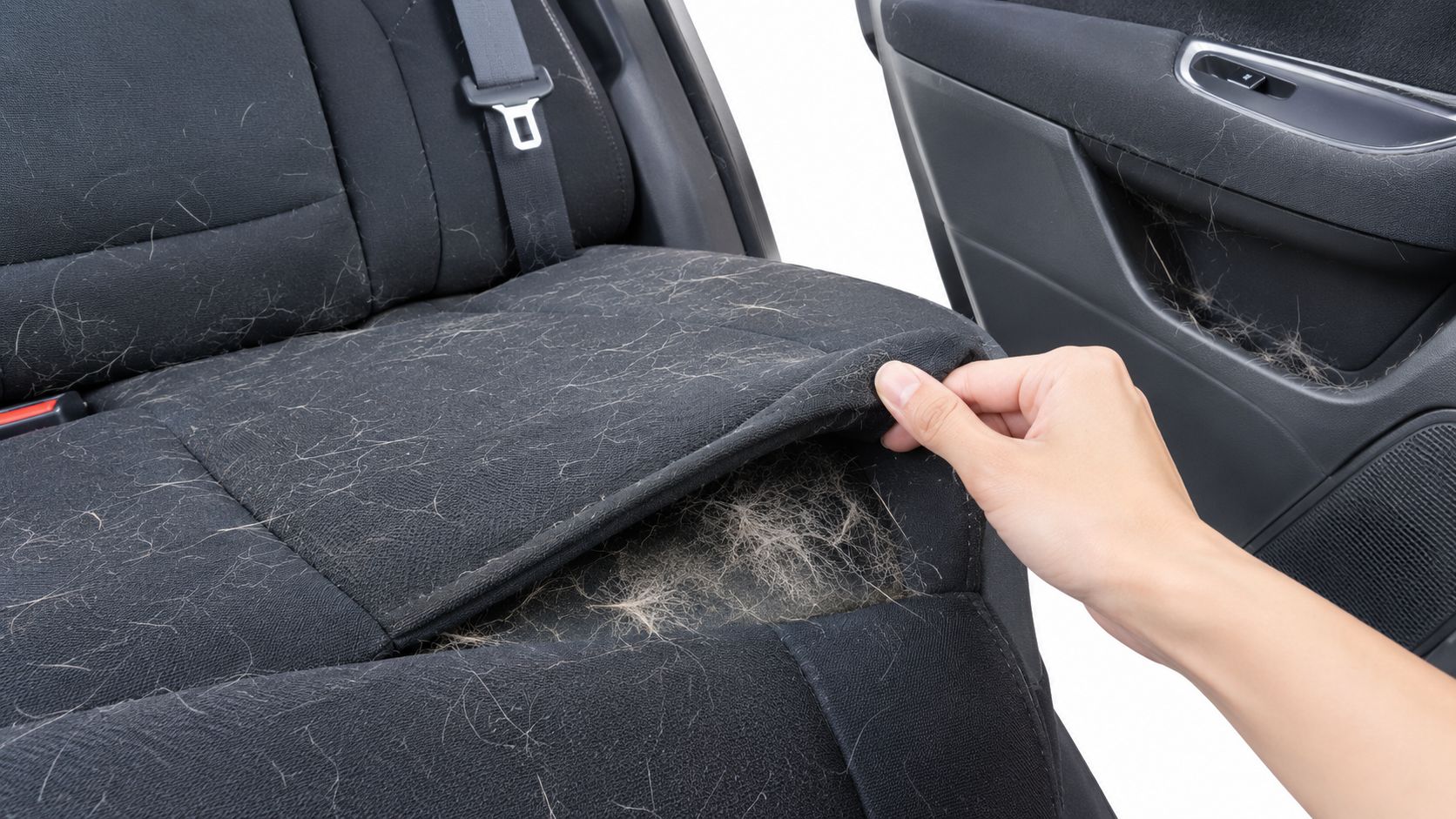
You pull back the rear seat cover before a trip and find a layer of fur woven into the fabric. Some of it lifts in clumps. The rest sits stubbornly in the seat seams, floor mats, and cargo carpet, mixed with the grit Ontario roads leave behind. A quick vacuum pass barely changes the appearance.
The best pet hair remover for car cleaning isn't one universal gadget. A lint brush can be perfect for loose hair on a door panel, while a rubberized mechanical remover works better on fabric carpet. Heavy buildup may need a motorized vacuum, agitation, and professional detailing. The right choice depends on the upholstery material, the amount of hair, and how long it has been sitting there.
| Tool type | Best match | What it does well | Where it struggles |
|---|---|---|---|
| Mechanical remover | Cloth seats, mats, cargo carpet | Loosens and gathers clumped hair without cords or charging | Requires hand work and doesn't replace vacuuming |
| Lint brush or roller | Light surface hair, door panels, leather touch-ups | Fast finishing and spot cleaning | Weak against embedded hair and large carpeted areas |
| Powered pet vacuum | Heavy shedding, floor carpet, SUVs and minivans | Combines suction with a motorized brush and reaches larger loads | Needs power management and more setup |
| Professional detailing | Embedded hair, seams, headliners, severe buildup | Uses specialized equipment and extra labour | Costs more than a basic DIY cleanup |
Table of Contents
- The Frustrating Reality of Pet Hair in Your Car
- Why Pet Hair Becomes a Regular Car Problem in Ontario
- Comparing the Main Tool Types and Canadian Options
- How to Choose the Right Remover for Your Car Interior
- When DIY Tools Fall Short and Detailing Makes Sense
- Smart Maintenance Habits to Keep Pet Hair Under Control
The Frustrating Reality of Pet Hair in Your Car
The search usually starts after a small discovery. You move a child's backpack from the rear footwell, lift the mat, and see a felt-like layer of fur underneath. Or you open the hatch after a wet dog ride and notice that the cargo carpet has changed colour. The hair isn't lying there waiting for a vacuum. It has worked its way into loops, seams, edges, and the narrow gap beside the seat rail.
Ontario winter makes the mess less forgiving. A dog climbs into the vehicle with a damp coat, road salt finds its way onto the floor, and muddy moisture presses loose hair into the carpet. Once the interior dries, the hair can cling more tightly to textile fibres. A strong vacuum may collect the loose top layer while leaving the hooked strands behind.
Why the cheap quick fix often disappoints
Sticky rollers are useful, but only within their lane. They pick up fine surface hair from finished upholstery, door panels, and the last few visible strands after vacuuming. They don't agitate carpet, and their sheets fill quickly when the rear seat has a serious shedding problem.
Rubber brushes and squeegee-style tools solve a different problem. Their edge or textured surface gathers hair into piles, making it easier to remove before vacuuming. They work particularly well on cloth seats, floor mats, and cargo carpet, but they still need patience around seams and tight corners.
Practical rule: If the hair forms visible clumps when you rub the fabric, start with mechanical agitation. Suction alone usually leaves the stubborn layer behind.
The material changes the answer
Leather and synthetic leather are less likely to trap hair than woven cloth, but seams and perforations can still collect it. A soft brush attachment and a dry or lightly damp microfiber cloth are safer choices than abrasive tools. Headliners need even gentler treatment because excessive rubbing can loosen or mark the bonded fabric.
The useful question isn't “Which remover has the strongest claim on the package?” Ask instead, “Is the hair loose, clumped, or embedded, and what surface am I cleaning?” That answer will point you toward a manual tool, a powered vacuum, or professional help.
Why Pet Hair Becomes a Regular Car Problem in Ontario
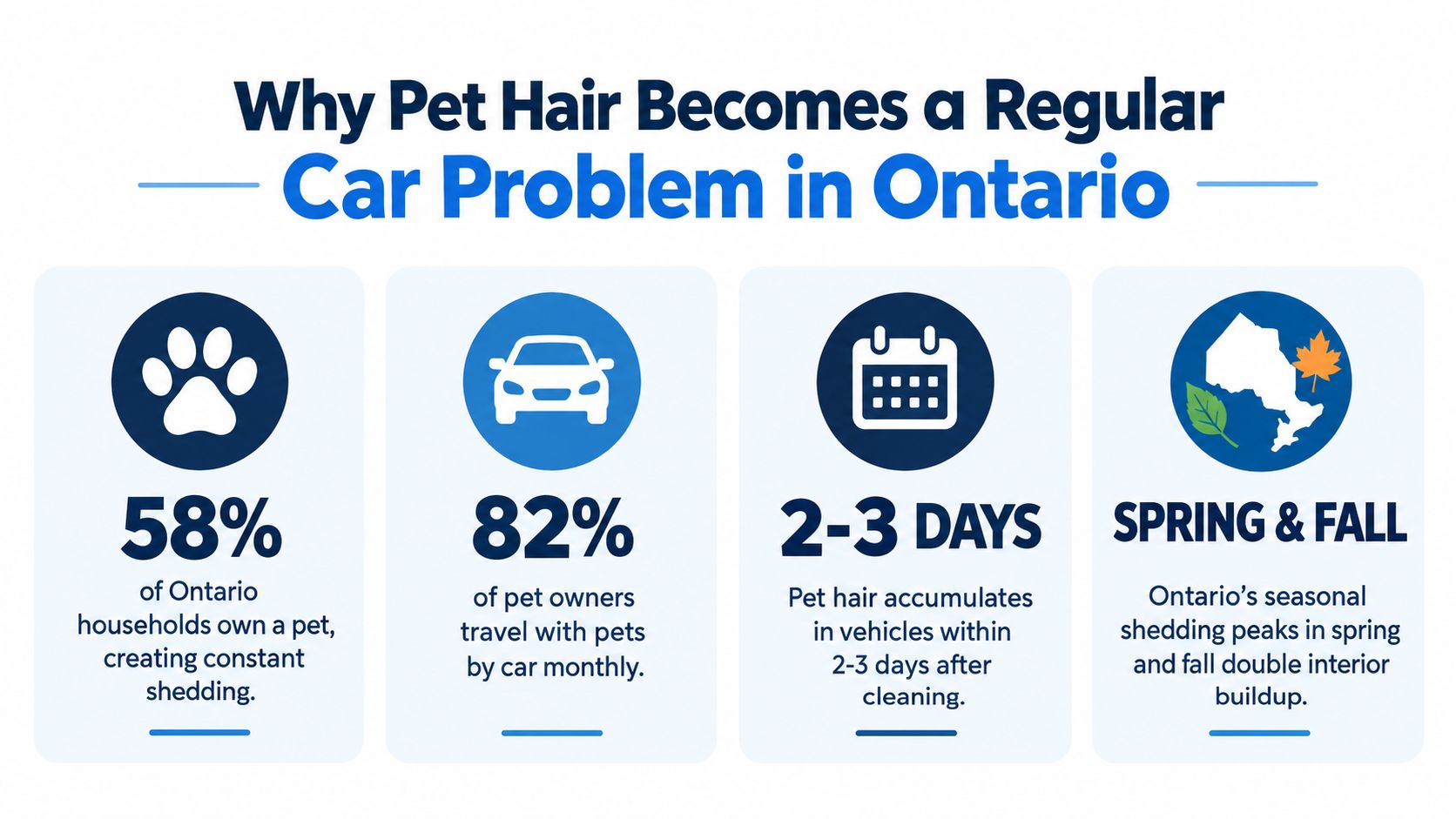
A dog ride across the GTA can leave hair on the seat before the trip is over. Ontario has the household base to make that a recurring vehicle-cleaning problem. A Canadian government sector report lists about 6.4 million households in Ontario. Canadian pet-population figures for 2024 put cat-owning households at around 39.5% and dog-owning households at around 38.1%, with roughly 12.2 million Canadian households owning a cat or dog overall, according to the Canadian Animal Health Institute's pet population figures.
Pet ownership becomes harder to manage once the animal rides directly on the upholstery. A Canadian driver survey from 2012 found that 23% of drivers regularly travelled with pets, while only 14% of those pet-travelling drivers used a travel carrier. The same Canadian government analysis of pet food trends reported that 73 per cent of Canadian drivers cleaned their car interiors less than once every few months, compared with 51% who regularly washed the exterior more than once a month.
Interior cleaning often loses to exterior cleaning
Exterior dirt announces itself after a storm or a salty winter drive. Pet hair builds more stealthily. It settles into cloth seats, floor mats, cargo carpet, door panels, and the gaps beneath seats, then becomes obvious when sunlight catches it or a passenger brushes against the fabric.
A quick lint-roller pass rarely handles that buildup. Hair pressed into damp carpet or woven upholstery needs agitation before vacuuming, while leather and synthetic leather usually need gentler brushing around seams and perforations.
Choose tools around your cleaning routine
Someone transporting a shedding dog every day needs a different system from someone taking a pet to the cottage occasionally. Daily users benefit from a washable seat cover, a reusable rubber tool for gathering loose hair, and regular vacuuming of high-traffic areas. Seasonal cleaners should expect more embedded hair and keep a stronger mechanical remover or powered pet vacuum available.
The practical conclusion is simple: tool selection can't compensate for a completely irregular routine. Remove loose hair before winter moisture and passenger traffic press it deeper into the material. The same interior will then require less aggressive cleaning.
Comparing the Main Tool Types and Canadian Options
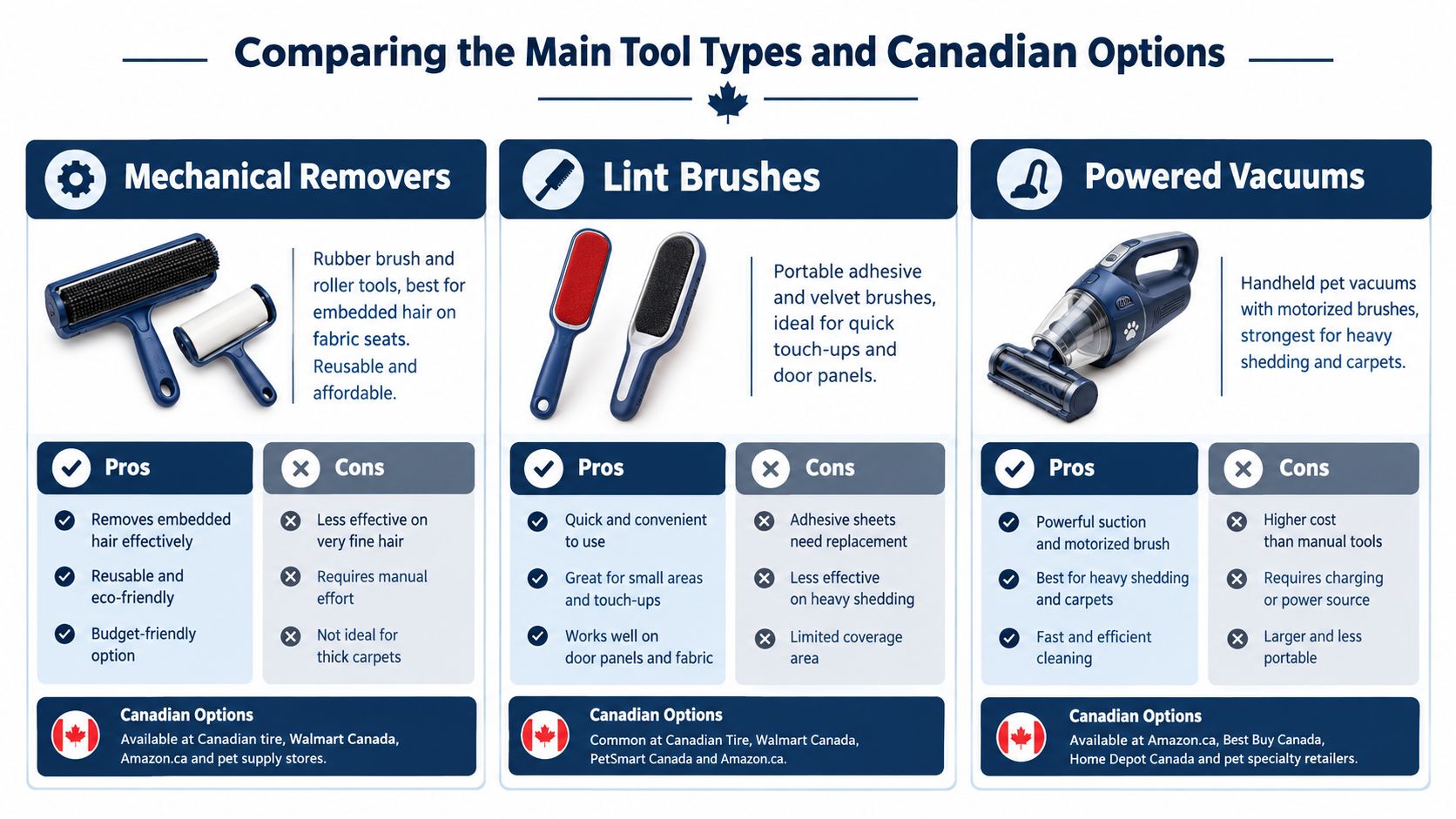
Three tool categories cover most car-interior pet-hair jobs: manual mechanical removers, lint brushes and rollers, and powered vacuums with pet-focused attachments. They overlap, but they don't perform the same task. A good workflow often uses one tool to loosen hair and another to collect it.
Mechanical removers and lint brushes
The Simoniz Pet Hair Remover & Lint Brush, listed by Canadian Tire at $67.96, is a reusable mechanical remover rather than a powered vacuum accessory, as shown on the Canadian Tire Simoniz product listing. Its strength is dry surface agitation. On cloth seats, mats, and cargo carpeting, you can work the tool across the material, gather hair into manageable rolls or clumps, and then vacuum the collection.
That makes it convenient for GTA workflows where you want to deal with a problem quickly, without charging a battery or managing a cord. It isn't a deep-cleaning machine, though. It won't extract grime, loose debris buried beneath the hair, or odour held in the fabric, and large areas still demand physical effort.
A traditional lint brush or sticky roller is more portable. Keep one in the vehicle for a door panel, leather seat, or a few stray hairs after a passenger ride. It delivers a tidy finish, but it becomes frustrating when the roller fills with fur or the brush can't reach into carpet loops.
Powered vacuums for heavier loads
The BISSELL Pet Hair Eraser Pet Pro Corded Stick Vacuum is a higher-spec option because its product listing highlights a pet-specific motorized platform, according to the Canadian Tire BISSELL Pet Hair Eraser listing. A motorized brush can agitate carpet while suction removes the loosened material, which is more useful for floor mats and larger cargo areas than a passive lint brush.
The BISSELL Pet Hair Eraser Allergen Lift-Off Pet Pro Upright adds a HEPA cartridge filter, a Pet TurboEraser tool, a 10 A motor rating, and a bagless lift-away design, all specified in the same Canadian product information. The lift-away format can make footwells, under-seat tracks, and cargo spaces easier to reach. Sealed filtration is also preferable when you want to reduce the amount of disturbed dander returning to the cabin air during cleaning.
| Tool Type | Best For | Limitations |
|---|---|---|
| Mechanical remover | Embedded hair on fabric seats, mats, and cargo carpet | Manual work, no suction, limited on delicate surfaces |
| Lint brush or roller | Quick touch-ups on leather, door panels, and finished upholstery | Poor choice for dense carpet buildup |
| Powered vacuum | Heavy shedding, carpeted floors, and repeated SUV or minivan cleanup | More equipment to store, power, and maintain |
A powered vacuum isn't automatically the best pet hair remover for car use. It becomes the better choice when the vehicle has substantial textile carpeting and the owner will use it repeatedly. For light hair on smooth surfaces, the manual option is faster and less cumbersome.
How to Choose the Right Remover for Your Car Interior
Start with the surface, not the brand. A tool that performs well on low-pile carpet may damage a headliner or create unnecessary friction on leather. Then judge the hair itself. One loose coat after a short trip needs a light touch, while compressed mats of fur need agitation before suction.
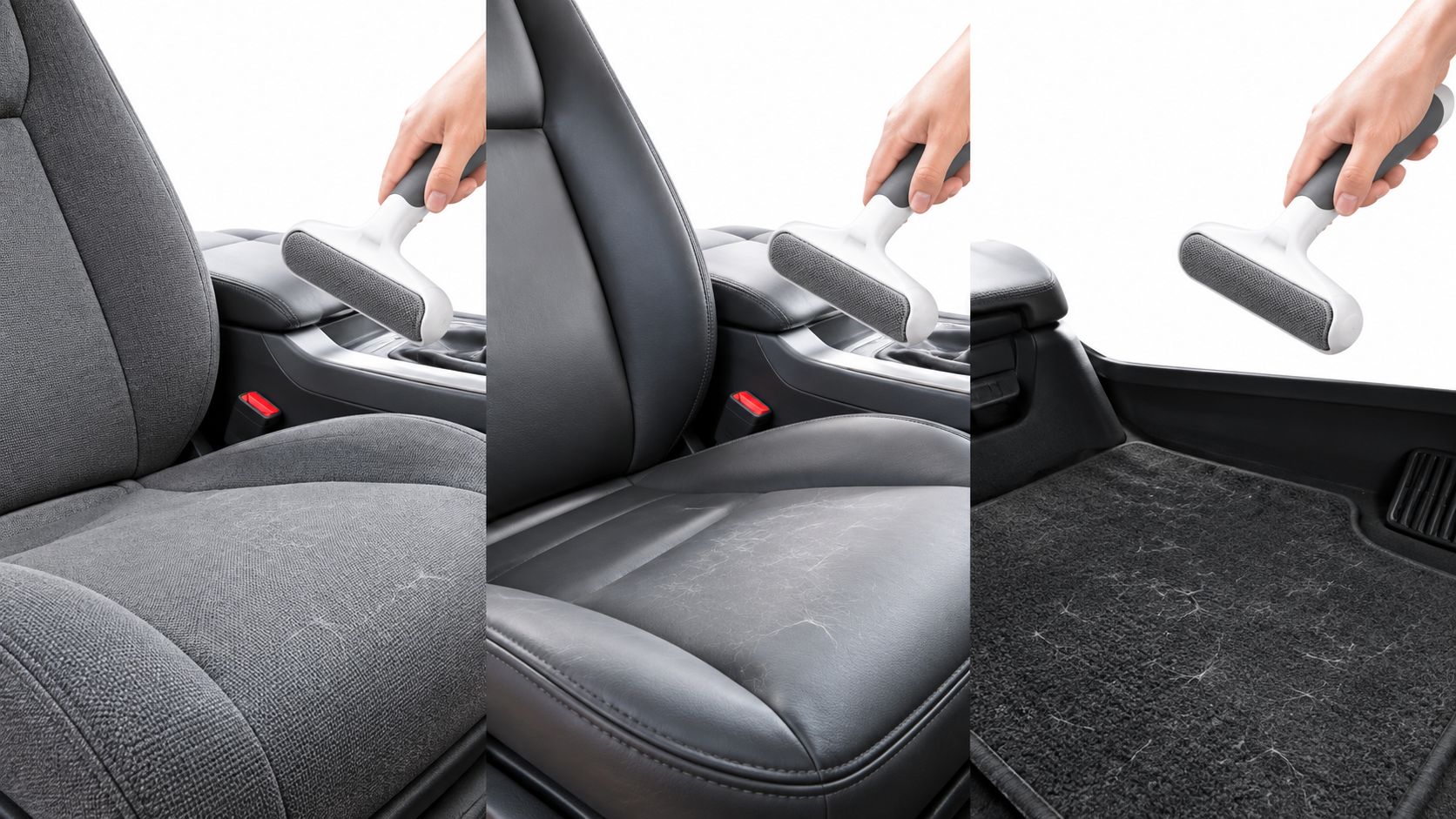
Cloth seats and floor carpet
Cloth is where a rubberized mechanical remover earns its place. Move it in short, controlled strokes so the hair gathers rather than spreading across the seat. On floor mats, work in more than one direction, collect the loosened fur by hand, and finish with a crevice or brush vacuum attachment.
For heavy shedding, use the powered vacuum after agitation. The motorized tool is helpful because it works the fibres while the vacuum collects the debris. Don't press so hard that you grind salt or grit into the textile. Remove the loose debris first, then work on the hair.
Leather and synthetic leather
Smooth upholstery usually needs less aggressive equipment. Use a soft brush attachment to lift hair from seams, then wipe with a microfiber cloth. A lightly damp cloth can collect fine strands, but dry the surface promptly and avoid leaving moisture around stitching or perforations.
A sticky roller can be useful as a final pass on broad, finished surfaces. It won't solve hair packed into seat seams, so use a narrow attachment or a soft detailing brush there. Avoid pumice-style or abrasive tools on leather, synthetic leather, and trim.
Cargo liners and trunk carpeting
Cargo areas often contain the highest concentration of hair because pets enter and turn around there. A rubber tool can gather the visible layer quickly, while a powered vacuum handles the remaining strands and loose grit. Pay attention to the edge where the liner meets the side carpet, since hair tends to migrate into that boundary.
If you use a removable liner, take it outside for the first shake and brush step. That keeps the initial cloud of loose fur out of the cabin. Follow with vacuuming, rather than trying to make one tool perform every stage.
Headliners and delicate surfaces
Treat the headliner as a fragile bonded surface, not as floor carpet. Use a soft brush or low-pressure vacuum attachment with light contact. Don't scrub aggressively, saturate the fabric, or use abrasive collection tools.
Material test: Try the remover in a hidden area first. If the fabric pills, pulls, stains, or changes texture, stop and choose a gentler method.
Your vehicle-use pattern also matters. Daily pet transport calls for a repeatable manual routine, while occasional drivers may prefer a stronger vacuum and a full cleanup when buildup appears. The ideal setup is the one you'll store, reach for, and use before the hair becomes embedded.
When DIY Tools Fall Short and Detailing Makes Sense
DIY cleaning works when hair remains mostly on the surface and you can gather it without damaging the material. It stops making sense when every pass exposes another layer, the hair is woven through carpet loops, or the seats and seams need more time than the vehicle is worth to you.
Ontario detailing providers describe heavy pet-hair work as a specialized task that can require extra time and add-on treatment. The Thunder Auto Detailing service information also illustrates an important local pricing reality, pet-hair removal may be separated from standard vacuuming, vehicle size and complexity can affect the job, and headliners may not be included in a base package.
Use severity as the decision point
A simple DIY cleanup is usually reasonable when:
- Hair is loose: You can lift most of it with a rubber remover and vacuum.
- The material is durable: Floor mats and tough carpet tolerate controlled agitation better than delicate fabrics.
- The affected area is limited: A small rear-seat patch doesn't justify a full restoration workflow.
- Odour isn't established: Hair removal is easier when oils and smells haven't permeated the upholstery.
Professional detailing becomes more sensible when:
- Carpet is visibly matted: Hair remains after repeated agitation and vacuuming.
- Seams are packed: Fur has entered seat piping, stitching, rails, and narrow gaps.
- The headliner is affected: You need careful handling to avoid loosening or marking the fabric.
- The vehicle is large or heavily used: SUVs, vans, and pet-transport vehicles create more surface area and more difficult access points.
- Cleaning has to include more than hair: Stains, salt, odour, and embedded debris require a broader interior process.
The right professional job isn't “a stronger vacuum.” It may involve mechanical agitation, crevice work, carpet and seat shampooing, and extraction. A standard interior vacuum can remove loose debris, but it isn't the same as a pet-hair treatment for embedded fibres.
Know what to ask before booking
Ask whether the provider treats pet hair as part of the quoted service or as a surcharge. Confirm which materials are included, especially headliners, cloth seats, carpet, seams, and cargo areas. For an Ontario vehicle that has gone through wet and salty conditions, ask whether salt and stain treatment is available alongside hair removal.
Nanak Car Wash offers interior and exterior detailing by appointment, including carpet and seat shampooing, salt and stain removal, vent and crevice blowout, leather deep cleaning, and pet-hair work with applicable surcharges. That makes professional service the practical next step when a manual remover has already done all it can.
Smart Maintenance Habits to Keep Pet Hair Under Control
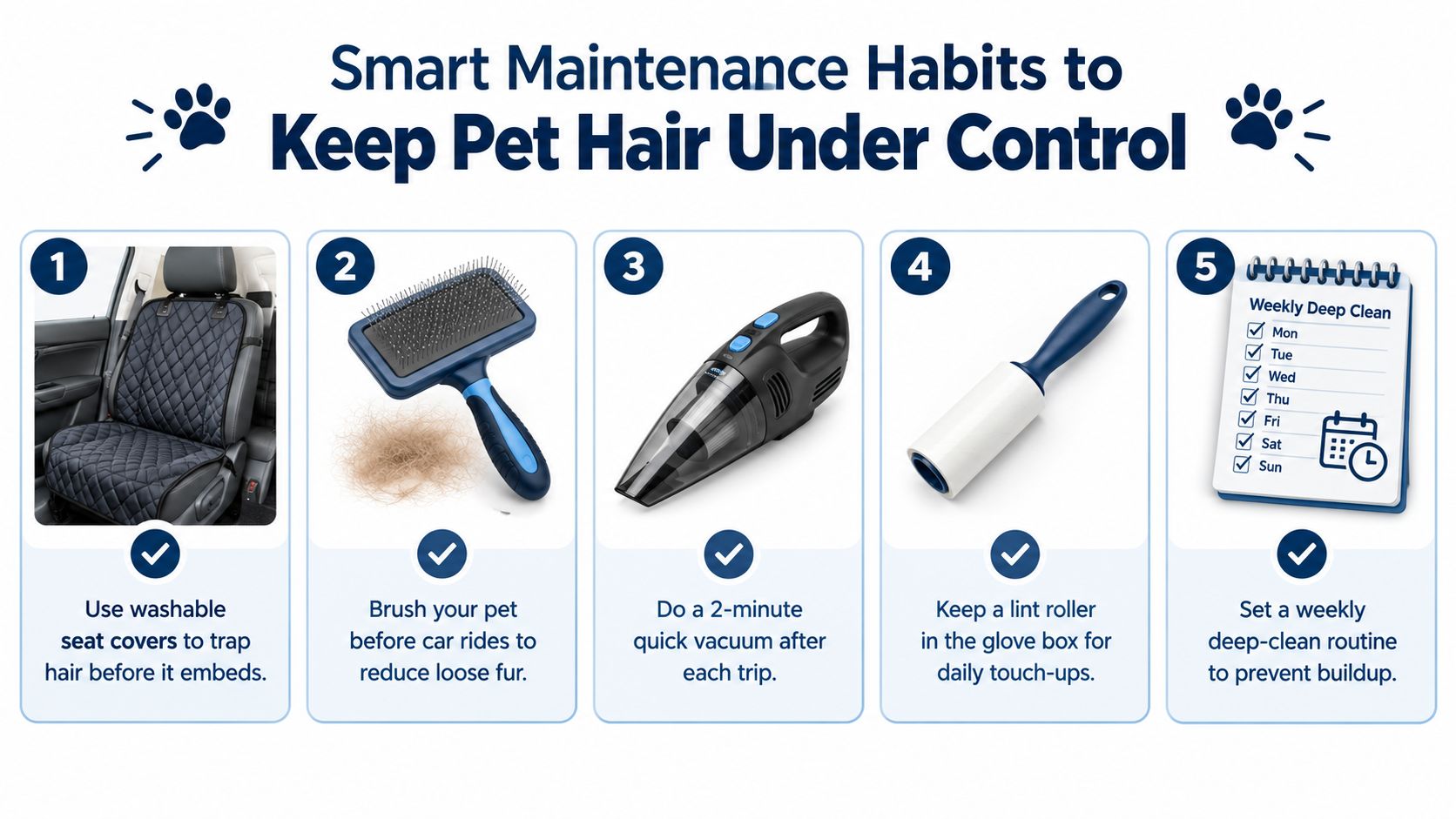
The easiest hair to remove is the hair that hasn't been pressed into the upholstery. A few small habits can keep a full interior restoration from becoming a regular weekend project.
- Use a washable seat cover. Put a barrier between your pet and cloth upholstery, particularly for longer trips or wet-weather rides.
- Brush before the ride. A quick pre-trip brush can reduce the loose coat that would otherwise land in the rear seat and cargo area.
- Vacuum the high-traffic zones first. Focus on the pet's seating area, floor mat, and cargo edge instead of trying to clean the whole cabin every time.
- Keep a lint roller in the glove box. Use it for door panels, leather, and visible stray hairs before they spread.
- Schedule a deeper pass. Use a mechanical remover before vacuuming, and book detailing when hair begins to collect in seams, carpet, or difficult access points.
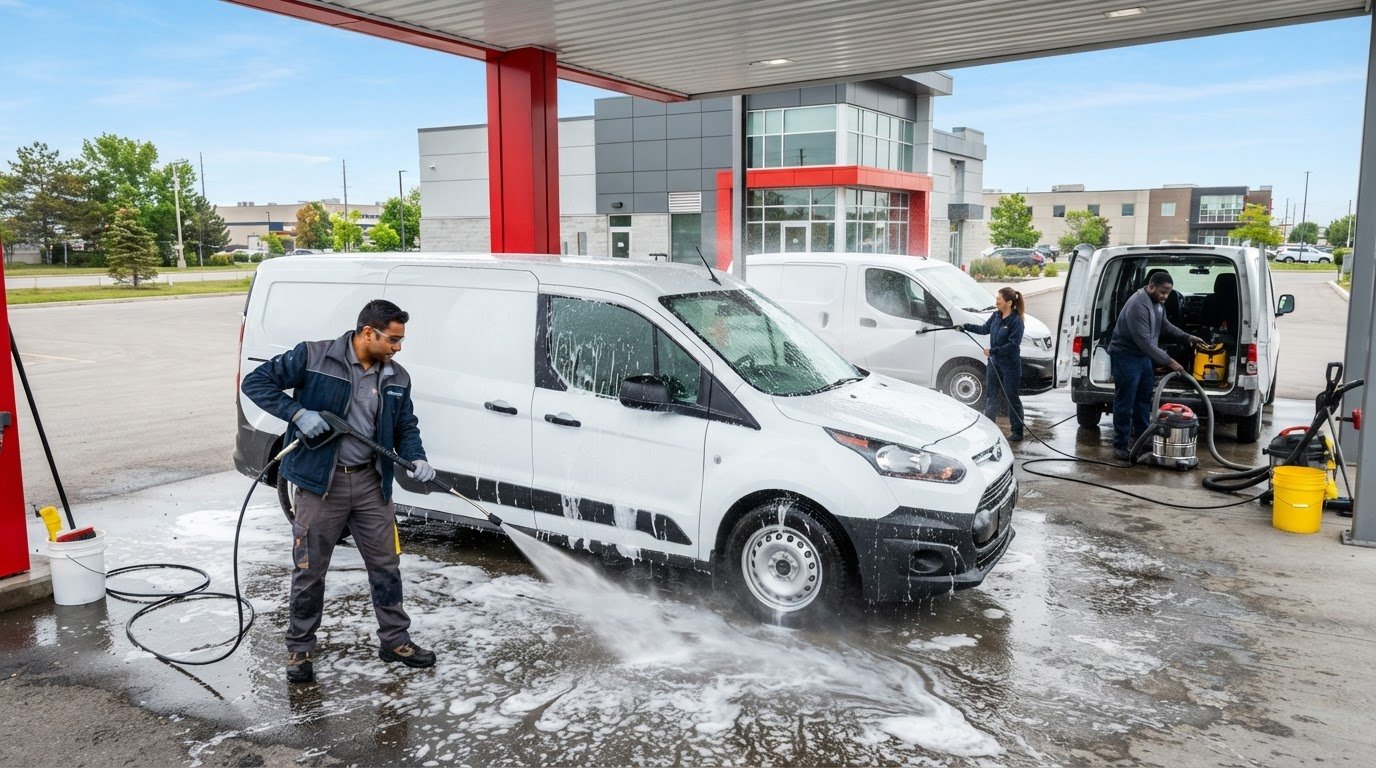
A full-service wash with interior vacuuming can fit between larger detailing appointments, while express washes and available vacuums at participating locations can help with routine upkeep. The goal isn't to replace DIY tools with professional service. It's to use a brush or roller for small jobs, then bring in trained staff when embedded hair, stains, and odour require more involved equipment.
Nanak Car Wash offers express and full-service washes, interior vacuuming, and appointment-based detailing that can address pet hair in seats, carpets, seams, and other embedded areas. Visit Nanak Car Wash to choose a GTA location and arrange the level of interior care your vehicle needs.


 6600 Finch Ave W, Etobicoke, ON M9V 3Z6
 647-703-8515
 MON – SUN 8 AM to 7 PM