
You know the feeling. It's late January, the DVP is a grey slush tunnel, and when you park, there's a crust of white filth packed behind the wheels and along the rocker panels. You kick at it with your boot, tell yourself you'll deal with it on the weekend, and then another storm rolls in.
That's how Ontario salt wins.
Most drivers worry about paint first. I get it. Paint is what you see. But the undercarriage is where your car gets chewed up in this province. Brake lines, suspension bits, seams, floor pans, hangers, frame sections. Salt brine doesn't care if your hood still shines. If it stays wet underneath, it keeps working.
The question isn't whether you need an undercarriage wash. You do. The question is which kind makes sense for your driving, and when you need to do it so you're rinsing off active chloride brine instead of washing away dried dust after the damage has already started.
Table of Contents
- The Salt Problem Every GTA Driver Knows Too Well
- Why Ontario Roads Are a Corrosion Hot Zone
- Three Ways to Wash an Undercarriage and What Each Actually Does
- What Separates a Decent Underbody Rinse From the Best
- Matching the Right Wash to Your Driving Life
- Why the Best Undercarriage Wash Always Pairs With Rust Proofing
- A Practical Ontario Wash Routine With Nanak Upgrades
- Quick Answers for Ontario Drivers on the Fence
The Salt Problem Every GTA Driver Knows Too Well
January in the GTA turns every road into a chemistry experiment. You drive the QEW, the 401, or the Don Valley after a storm, and your car comes home wearing a layer of salty slush from the wheel wells down. The body looks bad. The underside is worse.
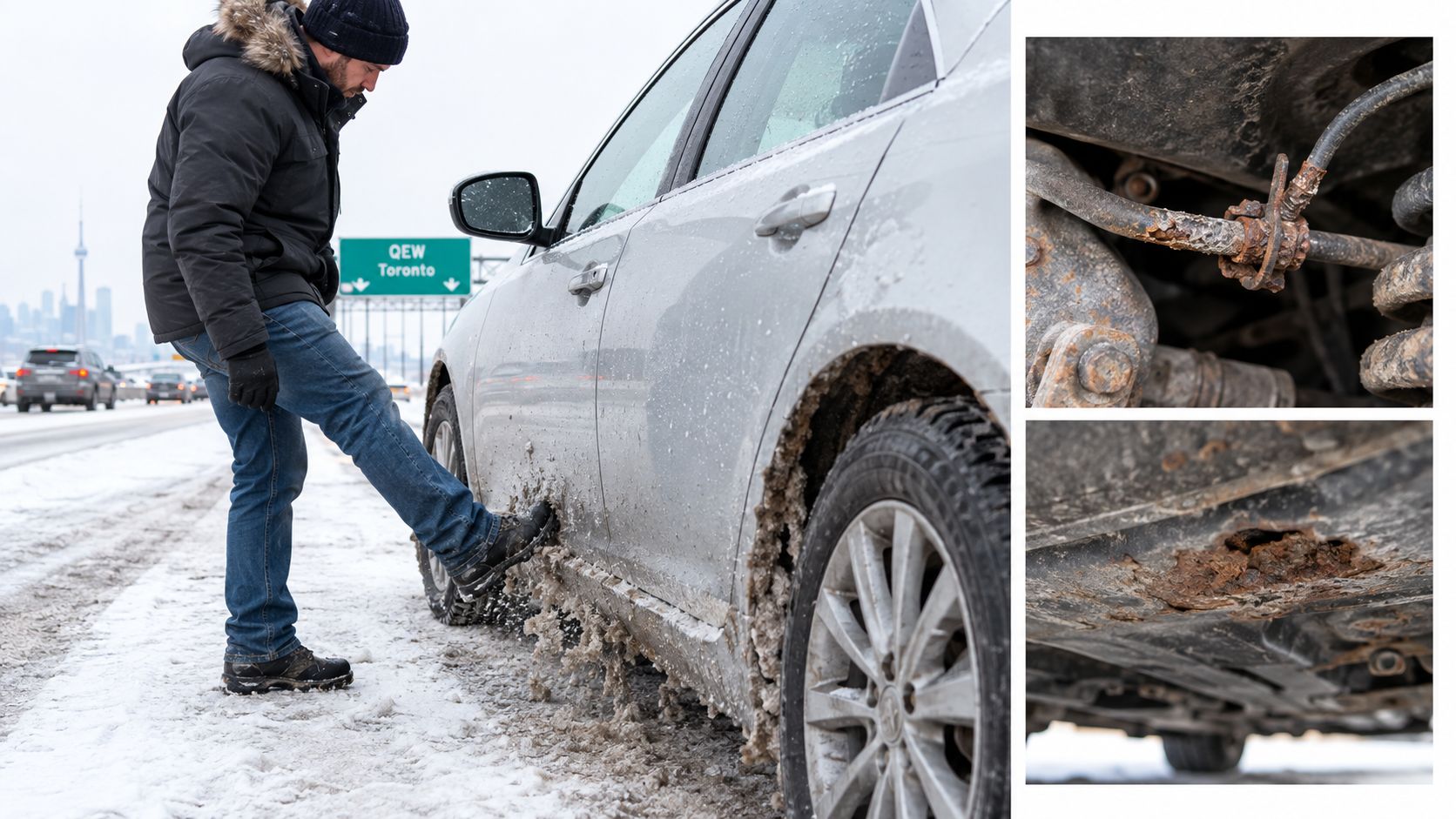
I've seen plenty of owners wait until spring because they think winter washing is just cosmetic. That's backwards. Winter is when the underbody needs attention most. If you leave salty sludge clinging to seams, mounts, and lines, you're not “letting it be until warmer weather.” You're giving corrosion time to work in the dark.
What neglect looks like underneath
The damage usually starts without fanfare. You won't notice it from ten feet away.
- Brake and fuel line corrosion: These are the parts nobody thinks about until a mechanic points at flaky metal.
- Suspension hardware rust: Bolts seize, brackets crust up, and service jobs get uglier than they should.
- Floor pan and seam decay: Once rust gets into seams and trapped moisture pockets, stopping it gets harder.
- Resale headaches: Buyers can forgive a stone chip. They don't forgive crusty frame rust underneath.
One Ontario-focused summary says the province spreads roughly 1.5 to 3 million tonnes of road salt each winter, while the City of Toronto alone uses about 130,000 to 150,000 tonnes annually. The same source says visible undercarriage rust can show up within 2 to 3 winters on older or unprotected vehicles, and serious structural-rust risk commonly becomes a concern after about 8 to 12 years of year-round driving without rustproofing (Ontario road salt and rust summary).
Practical rule: If the roads look wet but the sky is clear, your undercarriage may still be sitting in active salt brine.
The choice every driver ends up making
Most GTA drivers end up in one of three lanes. Rinse it at home. Hit a drive-through with an underbody spray. Or book a proper undercarriage flush and inspection. None of those are automatically wrong. But waiting too long is.
If you want the best undercarriage wash for Ontario, start with timing. Then worry about package names.
Why Ontario Roads Are a Corrosion Hot Zone
A GTA car can look clean on the doors and still be sitting on a salty underbody for days. That is the Ontario problem in one sentence.
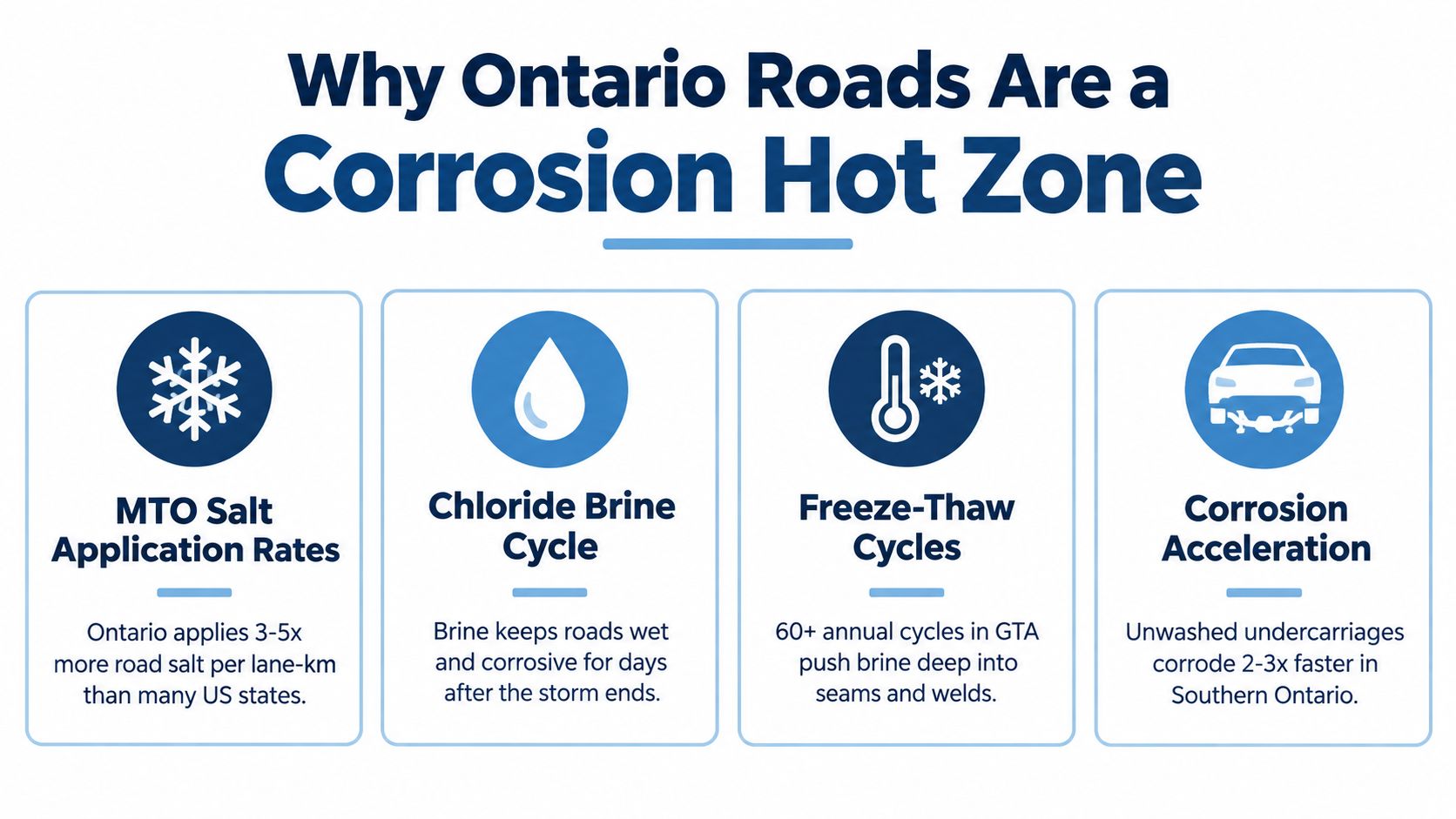
Ontario roads stay corrosive because the salt usually is not sitting there as dry crystals. It is often chloride brine, sprayed or created by traffic, then flung into wheel wells, subframes, brake line clips, rocker seams, and every little shelf underneath the car. That liquid matters. Wet brine creeps farther, sticks longer, and keeps working until you rinse it off.
The part many drivers miss is timing. If the road looks damp after a storm or on a mild winter day, your underbody is probably wearing active salt. That is the window to wash it. Waiting until the weekend, after the brine has dried and packed itself into grime, makes the rinse less effective and gives corrosion more time to start.
Canadian guidance from CAA says regular winter washing helps slow corrosion, and touchless washes can do a better job on the undercarriage and other hard-to-see areas where salt builds up. The same advice says to wash every one to two weeks in heavy winter use, or after major storms, and to rinse the underbody within about 24 hours of heavy salt exposure, with extra attention to wheel wells, rocker panels, frame areas, suspension parts, and seams (CAA winter rust advice).
Why Ontario is harder on vehicles than drivers admit
The province uses a lot of salt every winter, and southern Ontario adds the perfect weather pattern for rust. Snow. Slush. A thaw. Then another freeze. Then a damp day where the roads look merely wet even though they are coated in salt residue again.
That cycle keeps re-wetting the underside of the vehicle. It also keeps feeding salt into spots that do not dry fast, especially around mounting points, overlapping seams, splash shields, and the back side of brackets. The painted body gets attention because you can see it. The underside takes the beating.
Analysts in a Canadian corrosion summary reported that about 50 percent of vehicle corrosion can be tied to road salts. That matches what any Ontario mechanic sees on a hoist every spring. The cars that hold up best are not always the newest ones. They are the ones that get rinsed early, rinsed often, and rust-proofed before the first salt run.
Wash while the chloride brine is still liquid. Then keep that rinse schedule tied to your fall rust-proofing, because rust protection works better when winter salt is not left sitting on top of old buildup.
That is the standard in Ontario. A decent underbody wash is not just about pressure or fancy package names. It is about hitting the vehicle at the right time, then repeating often enough through salt season to keep the brine from settling in.
Three Ways to Wash an Undercarriage and What Each Actually Does
You talk about undercarriage washing like it's one thing. It isn't. You're really choosing between three different jobs.
| Method | How It Works | Typical Coverage |
|---|---|---|
| DIY home rinse | Hose, pressure washer, underbody wand, ramps or driveway angle | Good for exposed areas you can physically reach, limited inside tight seams and enclosed sections |
| Drive-through underbody rinse | Fixed or moving spray jets under the vehicle during an exterior wash | Broad underside rinse, decent for routine salt removal, less precise in wheel wells and hidden pockets |
| Professional undercarriage flush on a lift | Manual or equipment-assisted flushing while the vehicle is raised and visible | Most complete coverage, plus inspection access to trouble spots |
DIY at home
If you've got a driveway, a pressure washer, and some patience, DIY can work. An angled underbody wand does a lot more than a plain garden hose, especially if you take time around the wheel wells, rocker edges, rear subframe area, and suspension arms.
The trade-off is simple. You can't clean what you can't properly reach or see.
A home rinse is best for the owner who likes maintenance and doesn't mind getting wet boots in February. It's weaker for boxed frame sections, hidden ledges, and places where salt cakes behind splash shields. If you rush it, you're mostly just wetting the grime.
Drive-through underbody rinse
This is the practical middle lane for most GTA drivers. You pull in, the car gets a quick underside blast, and you're back on the road without crawling around on concrete.
That convenience matters. A wash you'll do on time beats the perfect wash you keep postponing.
Drive-through systems are strongest when used repeatedly through salt season. They're good at knocking off fresh brine and loose buildup from broad underbody surfaces. They're less impressive when the vehicle is heavily caked or when you need detailed attention inside wheel wells, around hangers, or on stubborn packed sludge.
Professional flush and inspection
A lift-based flush is a different service entirely. With the vehicle raised, a tech can flush, inspect, and spot the areas that always hold junk: seam lips, brackets, frame pockets, fuel and brake line runs, and wheel-well edges.
This is also the only option that lets someone look at the underbody while cleaning it, which matters if you're already seeing orange staining, flaky coating, or heavy buildup.
If you've bought a used vehicle, drive rural highways, or missed most of the winter wash season, a proper lift inspection is worth more than another glossy tunnel wash.
None of these methods is useless. They just solve different problems. The best undercarriage wash depends on whether you need maintenance, catch-up cleaning, or a proper reset.
What Separates a Decent Underbody Rinse From the Best
A decent rinse gets the car wet underneath. The best one gets there before the chloride brine dries, creeps into seams, and starts working on bare metal.
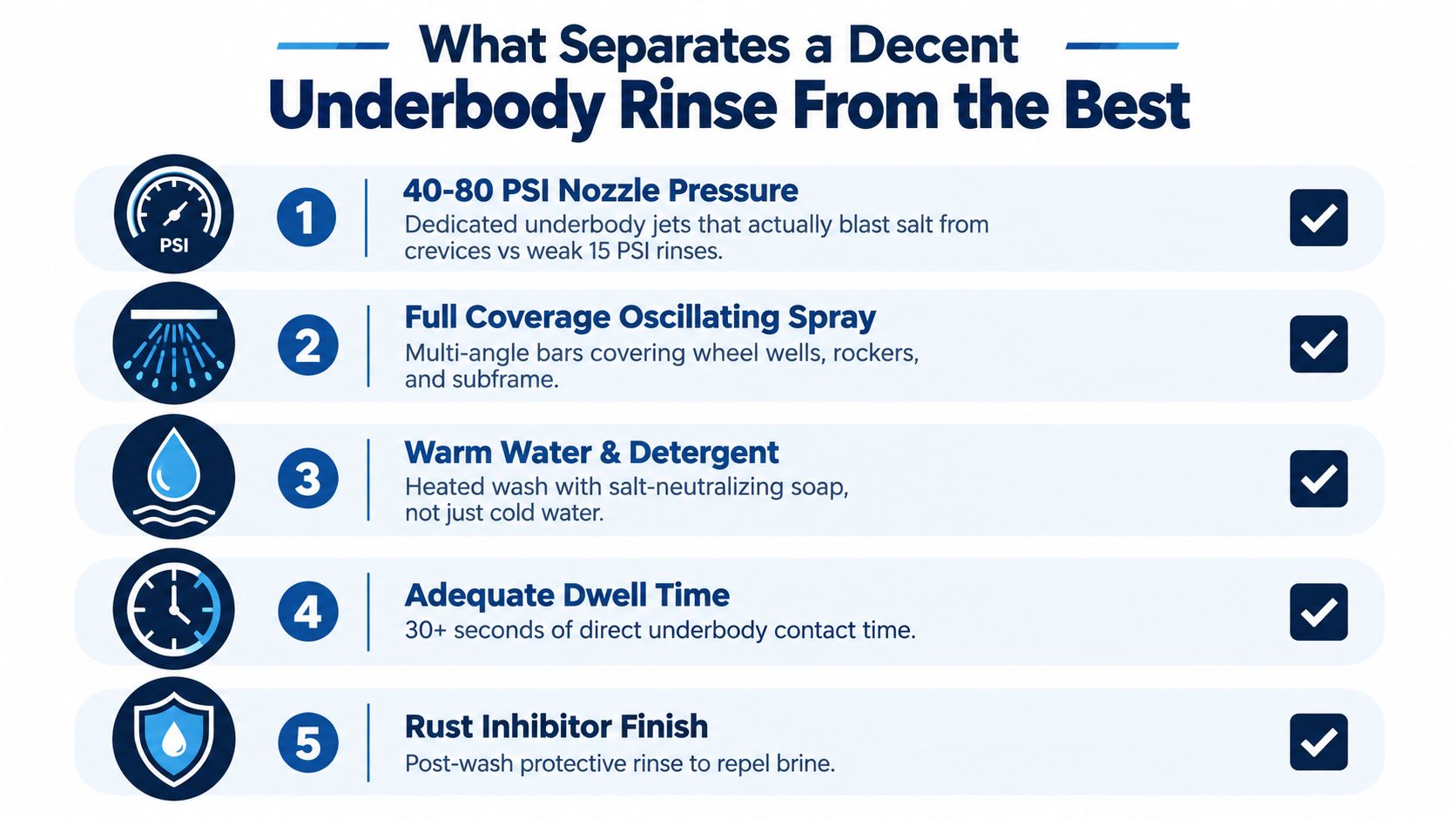
That timing matters more in Ontario than fancy wash menus ever will. After a storm, the roads are coated in liquid salt brine and filthy slush. While that mess is still wet, a proper rinse can strip a lot of it off. Leave it for days, let it dry and pack in, and you are asking a basic tunnel pass to fix a heavier problem than it was built for.
So I judge an underbody wash by three things. Reach, timing, and follow-through.
Coverage has to hit the real rust zones
If the spray only tags the middle of the floorpan, you paid for a half-job. The spots that start rusting first are usually off to the edges and around hardware where salty sludge sits and gets ignored.
A worthwhile underbody rinse needs to reach:
- Wheel wells: They collect slush, grit, and packed salt fast.
- Rocker seams and pinch weld areas: Common starting points for rust in Ontario.
- Subframe corners and crossmembers: Good at trapping grime.
- Brake and fuel line routes: Easy to miss. Expensive to neglect.
- Rear suspension arms, mounts, and exhaust hangers: These hold junk long after the body looks clean.
The best wash is done at the right moment
This is the part plenty of comparison guides miss. You do not just need a better wash. You need the wash at the right time.
The best undercarriage rinse usually happens during thaw periods, right after a storm, or any time the roads were wet with salt brine and the temperature lifts enough that the buildup is still soft. That is when repeated drive-through rinses earn their keep. They remove fresh contamination before it hardens into the corners.
If the underside already has dried crust, packed snow-salt sludge, or old residue from weeks of commuting on the 401, the bar goes up. At that point, a quick spray is maintenance at best. You need a more deliberate flush.
Drying and runoff still matter
A good rinse should move contamination off the vehicle, not just rearrange it. Stronger air drying helps on near-freezing days because it clears some standing water from seams, brackets, and lower panels before you head back into the cold.
No underbody comes out perfectly dry. That is fine. The goal is to reduce what stays trapped.
Ask blunt questions before you pay
Skip the coloured foam and package names. Ask what the wash does.
- Does the underbody spray cover the wheel wells or just the centreline?
- Is the rinse long enough to clear fresh brine, or is it a quick pass?
- Is this a maintenance wash for frequent use, or a more thorough flush?
- Can you wash first, then rust-proof in the fall while the underside is clean?
That last question separates drivers who stay ahead of rust from drivers who react to it. The best setup is a clean underbody going into rust-proofing season, then regular rinses through winter while the salt is still fresh enough to remove easily.
Shiny paint is nice. Getting liquid brine off the underside before it dries is what saves the car.
Matching the Right Wash to Your Driving Life
There isn't one best undercarriage wash for everybody in Ontario. There's the one that fits your mileage, your parking situation, and how much salt your car eats every week.
| Driver Profile | Best Method | Recommended Frequency | Approx. Cost Per Wash |
|---|---|---|---|
| Highway commuter | Drive-through underbody rinse, backed by seasonal rust proofing | Every 1 to 2 weeks through heavy winter use, or after major storms | Varies by wash package |
| Low-mileage city driver | Professional undercarriage flush at intervals, plus rust protection | After major salt exposure and periodically through winter | Varies by shop and package |
| DIY weekend owner | Home rinse with proper tools, plus occasional professional reset | After messy storms or thaw periods | Equipment cost upfront, lower per rinse after that |
| Rideshare, delivery, fleet | Routine drive-through washes with scheduled professional checks | Weekly during active salt stretches | Varies by volume and package structure |
The daily highway commuter
If you're grinding through Mississauga, Etobicoke, Vaughan, or Durham in winter traffic, you don't need romance. You need repetition. A drive-through underbody rinse is usually the smartest play because it's quick enough to become a habit.
You're the driver who should stop waiting for the car to look dirty. If the roads were white yesterday and wet today, go wash the underside.
The low-mileage city driver
Short trips can fool people. They think low kilometres mean low risk. Not always. If the car does lots of cold starts, short errands, and outdoor parking, salt can sit for long stretches because the vehicle never gets a proper dry-out run.
For this driver, fewer but better-timed underbody cleans can make more sense than random cheap washes. Catch the thaw. Wash before the next freeze. Keep the underside from marinating.
The hands-on driveway person
If you enjoy doing your own work, a proper underbody wand setup can absolutely earn its keep. But DIY only works when you do it, and when you're realistic about what it can't reach.
Good DIY owners know when to hand off the car for a professional flush. Pride is fine. Blind spots underneath aren't.
Fleets and rideshare drivers
This group should treat underbody washing like preventative maintenance, not vanity. Your car is a tool. Salt exposure is constant. Missed washes stack up quickly when the vehicle works every day in slush and traffic grime.
If your income depends on the car staying on the road, underbody rinsing belongs on the calendar, not on a “maybe this weekend” list.
Why the Best Undercarriage Wash Always Pairs With Rust Proofing
You wash the underside in January, then drive straight back onto wet brine at the next slushy intersection. That rinse still mattered. It just was never meant to work alone through a full Ontario winter.
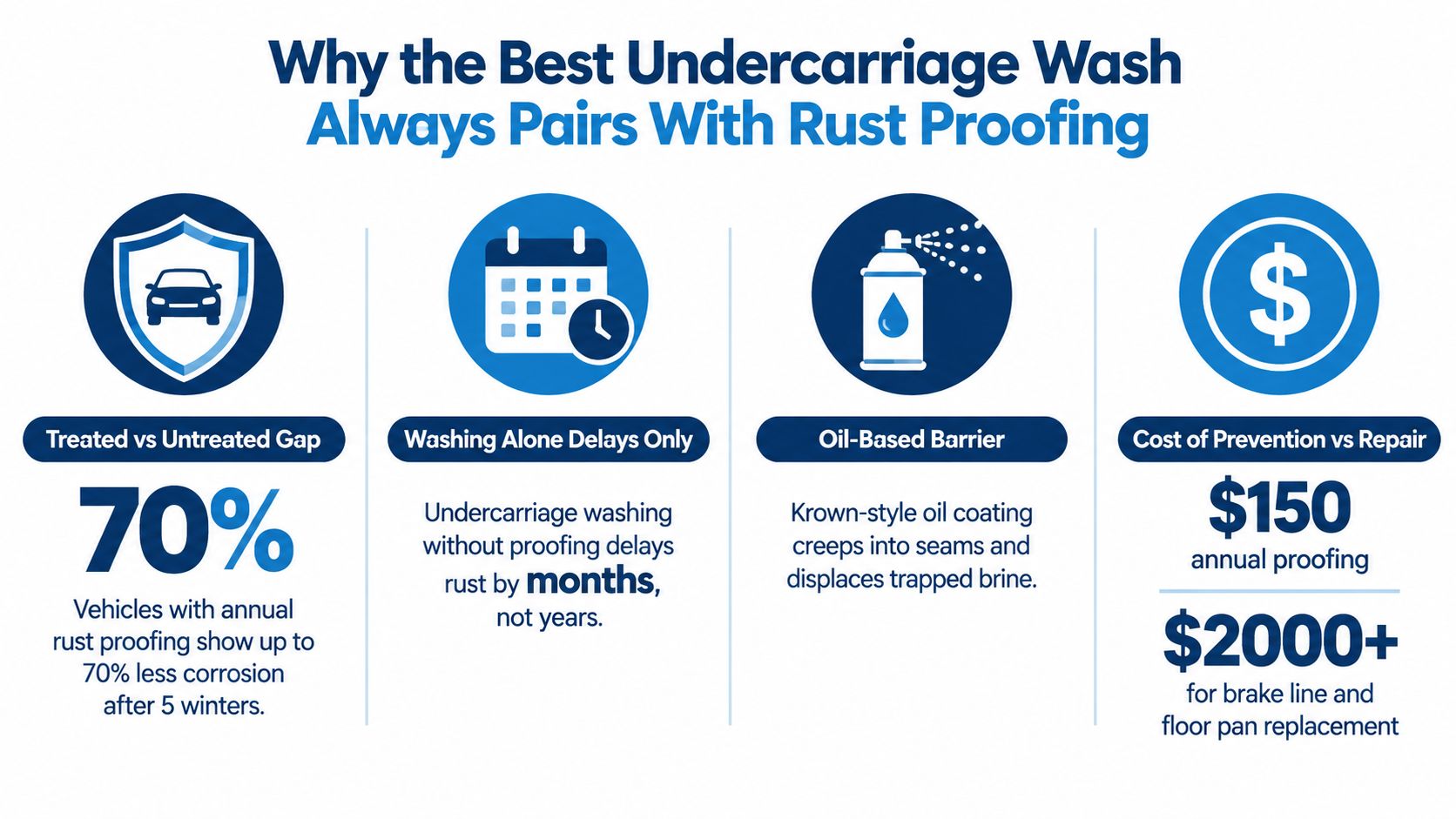
The smart play is pairing a timed underbody rinse with fall rust proofing. That timing is what many guides miss. In the GTA, chloride brine does the most damage while it is still wet and creeping into seams, spot welds, brake line brackets, and subframe pockets. Wash it off during a thaw or right after a wet salt run, then keep a fresh rust-proofing layer on the vehicle before winter gets fully ugly.
As noted earlier, untreated vehicles show far more corrosion than treated ones. That should settle the argument. Washing removes active contamination. Rust proofing gives the next round of salt less bare metal to attack.
Get the order right
A dirty underbody should not be rust proofed. You are paying to seal grime, moisture, and salt residue into the exact places you want to protect.
Use this sequence instead:
- Rinse the undercarriage while the brine is still liquid or during the first decent thaw. That is when removal is easiest and most worthwhile.
- Give the vehicle time to dry so water is not sitting in seams and cavities.
- Apply rust proofing in fall to wheel wells, seams, exposed metal, and enclosed sections the product is meant to creep into.
- Keep rinsing through winter so the protective layer is not buried under months of fresh salt paste.
That last step matters. Rust proofing is not a free pass to ignore washes until April.
Oil- and wax-based products make more sense here than the miracle-coating sales pitch some shops push. Ontario winters are repetitive abuse. You want something that can be renewed season after season, especially after another year of spray, gravel, and ice chunks knocking around underneath.
The same prep-first logic applies outside the car world. The value of hot dip galvanizing ANTS comes down to the same basic truth. Corrosion control works better when the metal is properly cleaned and then protected with a barrier suited to harsh exposure.
Factory coatings help, but they do not stay perfect. They get chipped. They wear thin. They miss hidden cavities. Once salty moisture gets through, rust starts where owners rarely look.
So here is my straight answer. If you plan to keep the vehicle past a short lease term, pair undercarriage washing with annual rust proofing and do them in the right order. Rinse during wet salt periods. Rust proof before winter. That combination gives Ontario drivers the best shot at keeping the underside solid for the long haul.
A Practical Ontario Wash Routine With Nanak Upgrades
You leave work in Mississauga after a sloppy January commute, the roads are wet with brown spray, and the temperature is hovering just above freezing. That is your wash window. If chloride brine is still liquid, get the underside rinsed that day or the next day. Waiting until the weekend is how salt sits in seams, crossmembers, fuel lines, and brake hardware longer than it should.
A routine that actually works
Ontario drivers do better with a simple calendar than with good intentions.
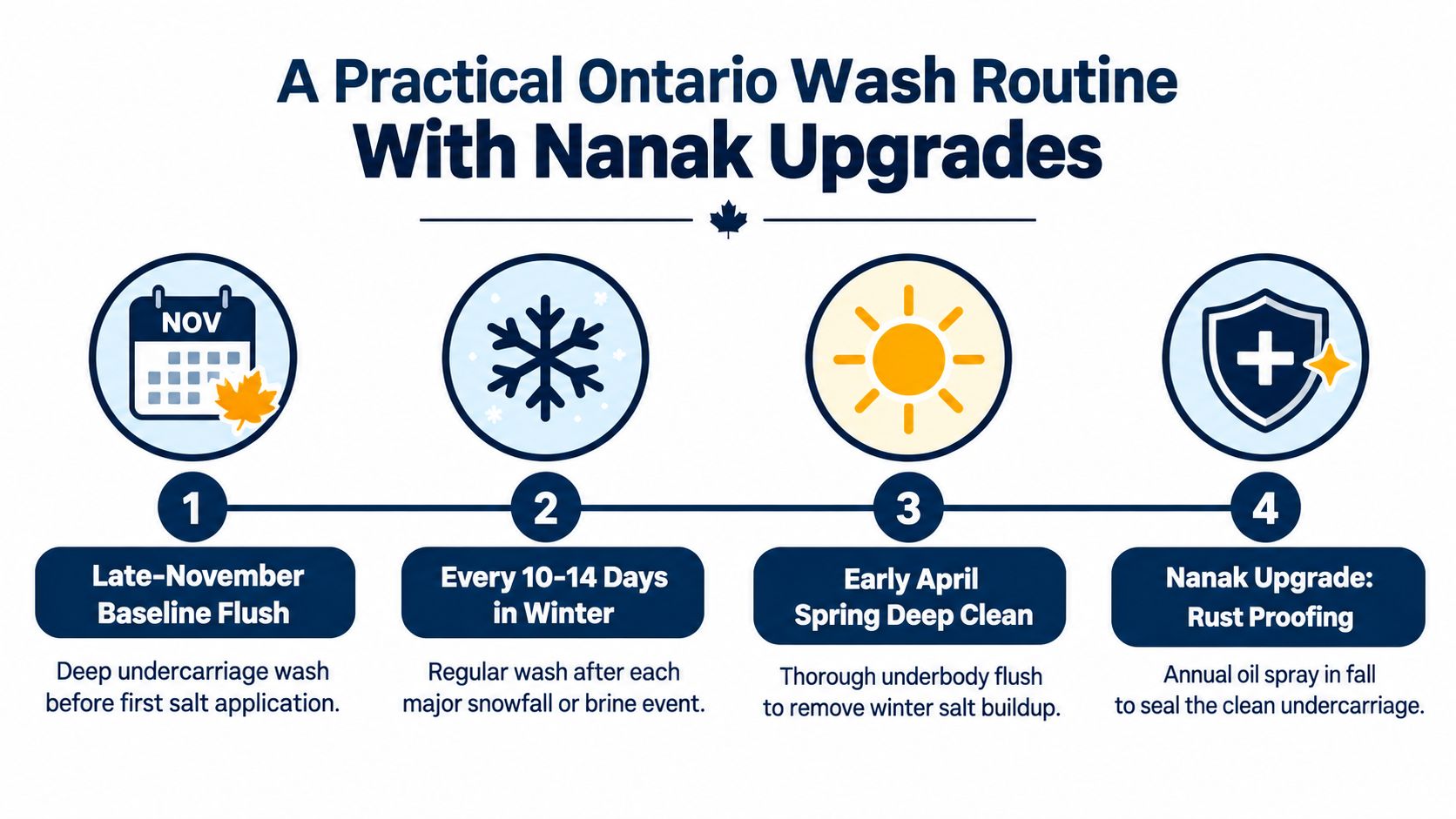
Start with a baseline underbody wash in late fall, before the roads are fully treated and before rust proofing goes on. A clean underside gives the rust-proofing product a fair shot to creep where it needs to go instead of sitting over old grime.
Once winter starts, rinse by road conditions, not by the month. If the roads are dry and cold, you can leave it alone for a bit. If the roads are shiny, slushy, and throwing wet salt all over the rocker panels, book an underbody rinse every week or two and after the messiest storms. The timing matters more than chasing a fancy package. Wet brine does more harm than dry residue because it keeps working.
Use every thaw to your advantage. A mild day in January or February is not a break from salt season. It is your chance to flush out fresh contamination before the next freeze bakes it back onto the underside.
Where a practical service package fits
Nanak offers a straightforward setup for this kind of routine. There are low-cost express washes, full-service options, and fall rust proofing priced by vehicle size, with underbody wash available in the lineup. That matters for busy GTA drivers because the routine only works if it is easy enough to repeat.
Here is how I would set it up.
- Daily commuter: Baseline wash in late fall, rust proof right after, then underbody rinses through every wet salt stretch.
- Outdoor-parked vehicle: Be stricter about thaw-day washes. Freeze-thaw cycles keep salty moisture active longer.
- Rideshare or delivery vehicle: Treat underbody rinses like fuel stops. High mileage on treated roads means more frequent buildup, plain and simple.
- Family SUV kept for years: Spend the money on the fall rust proofing and keep the winter rinse cadence consistent. Long-term owners save real repair grief.
They are designed for repeated winter exposure where salt keeps attacking the underside.
One good wash in March does not fix a whole winter of neglect. The better plan is boring and effective. Clean it before protection goes on in fall, then rinse it while the brine is still wet all winter long. That sequence is what keeps an Ontario vehicle healthier underneath.
Quick Answers for Ontario Drivers on the Fence
Does a touchless drive-through underbody rinse really help
Yes, if you use it at the right time. It's most useful when the salt brine is still fresh and hasn't baked into heavy buildup. It won't replace a lift inspection, but it's absolutely better than letting residue sit.
What should I do during a warm spell in February
Wash the undercarriage. Warm spells keep salty residue wet, and that's exactly when it keeps attacking metal. Don't wait for spring.
Do new vehicles still need rust proofing
Factory protection helps, but it doesn't make the car invincible. If you plan to keep the vehicle long term in Ontario, extra protection still makes sense.
Can you wash a frozen undercarriage
You can, but if everything underneath is packed solid with ice, the wash will be less effective. You want to rinse away brine and salt, not just glaze the ice with clean water.
What about leased vehicles
Read the lease terms and be practical. If you're handing it back quickly, a strict annual rust-proofing routine may not be worth it for you. If you're buying it out or keeping it long term, that changes the math.
How often should rideshare drivers do it
More often than private owners. If the car works daily in winter, treat underbody rinses as routine maintenance during active salt stretches.
If your car spends winter on GTA roads, underbody cleaning can't be an afterthought. Nanak Car Wash offers underbody wash options, regular wash packages, and rust proofing in one place, which makes it easier to stay on top of salt season instead of reacting after the damage shows up. Book the wash before the next storm cycle, not after the rust starts talking.

 6600 Finch Ave W, Etobicoke, ON M9V 3Z6
 647-703-8515
 MON – SUN 8 AM to 7 PM