
You leave Burlington after a wet snowfall, reach the highway, and spend the drive watching grey slush collect behind the wheels. By the time you get home, the car looks dirty, but the bigger problem is underneath. Salt brine has settled into the wheel wells, frame rails, suspension cradles, and exhaust components, where a quick cosmetic rinse may not reach.
A Burlington car wash should be part of your vehicle-maintenance routine, not an occasional response to an ugly exterior. The right service removes winter contamination, supports paint protection, saves time, and can help you follow local water-conservation rules more responsibly than washing on the driveway.
Table of Contents
- Navigating Burlington Car Wash Options
- Choosing the Right Wash Package
- The Ontario Salt Problem and Underbody Protection
- Maximizing Value with Memberships and Tickets
- Local Logistics and Water Conservation Rules
- Solutions for Ride-Hail Drivers and Fleets
- Winter Car Care FAQs and Final Tips
Navigating Burlington Car Wash Options
Burlington drivers deal with a particularly demanding mix of suburban commuting, highway travel, snow, slush, and freeze-thaw weather. The city had a population of 186,948 in the 2021 Census, spread across 186.12 km², according to Burlington's municipal profile and census information. That means vehicle care isn't a niche concern. Many households depend on cars for work, school, errands, and travel across the Greater Toronto Area.
Consider a typical winter commute. You drive along the QEW, pass through treated intersections, park beside a salted shopping-centre entrance, and bring home a film of grit and chloride brine. An express exterior wash can remove the visible layer quickly. A full-service wash adds interior cleaning, while detailing addresses embedded stains, salt residue, pet hair, and neglected surfaces. Rust proofing takes a more targeted approach by adding a dedicated protective compound to vulnerable vehicle areas.
One location, several maintenance jobs
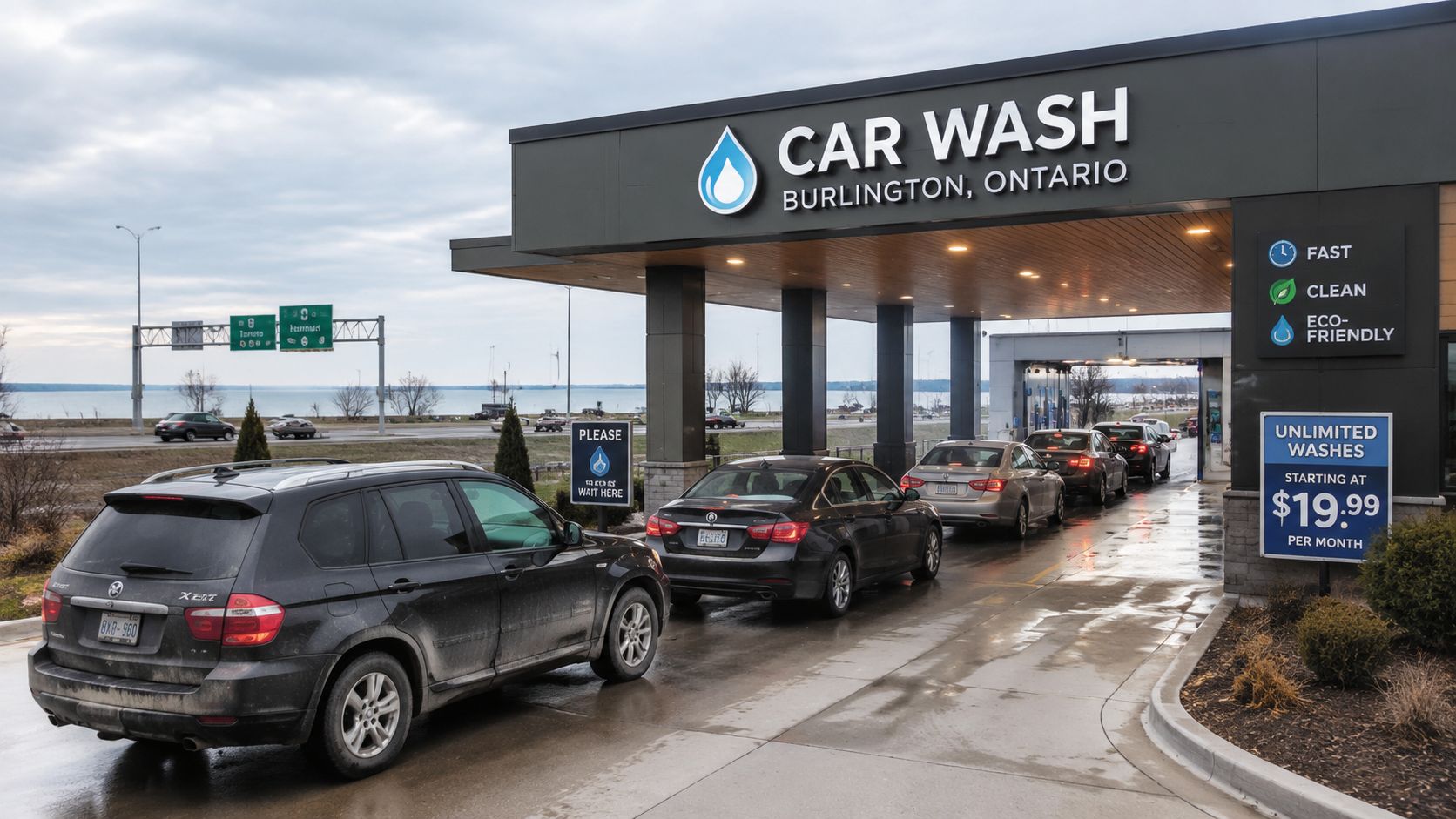
The practical advantage of a consolidated facility is time. You don't need to arrange an exterior wash on one day, interior cleaning on another, and rust protection somewhere else. A Burlington location offering express washing, full-service cleaning, appointment-based detailing, and rust proofing lets you match the treatment to the vehicle's actual condition.
That doesn't mean every visit needs the most expensive package. A commuter with light road film may need an exterior wash and underbody rinse. A family SUV after a messy winter may need interior shampooing and salt removal. A work van carrying tools, mud, and materials may justify a deeper detail because downtime and presentation both affect the business.
Practical rule: Wash for the conditions your vehicle has faced, not simply for how dirty the bonnet looks.
The best routine is usually layered. Use a fast exterior service often enough to remove salt, schedule a deeper interior and exterior detail when grime has settled in, and consider rust proofing when the vehicle's age, exposure, and ownership plans make corrosion prevention worthwhile.
Choosing the Right Wash Package
A low-cost wash earns its place when it removes the problem your Burlington vehicle has picked up. Paying for a surface clean while salt remains underneath or mud stays embedded in the cabin wastes both money and time. Nanak Car Wash lists express exterior packages starting at $9.99 plus tax and full-service packages starting at $29.99 plus tax, as described in its Burlington car wash service information.
| Package Type | Starting Price | Key Inclusions |
|---|---|---|
| Express exterior wash | $9.99 plus tax | Presoak soap, foam bath, rinse, drying agent, and air blowers |
| Full-service wash | $29.99 plus tax | Exterior wash, hand dry, interior vacuuming, dashboard cleaning, and window cleaning |
| Detailing appointment | Price varies by package | Carpet and seat shampooing, salt and stain removal, vent and crevice blowout, leather cleaning, and machine buff and polish |
| Rust proofing | Price varies by vehicle size | Dedicated protective chemical compound applied according to vehicle size |
Match the package to the vehicle
Choose the Express exterior wash while the cabin is tidy and the immediate issue is road film, salt, dust, or slush. During active salting, select the underbody option. It reaches the areas most exposed to Burlington's wet brine and helps remove residue before it settles into seams and components.
Upgrades such as triple foam wax, hot wax, sealer wax, and lava foam can add surface coverage or improve gloss. Choose them for finish protection and appearance. Skip the fragrance and foam upgrades unless you want extra gloss, since they do little for salt trapped beneath the vehicle.
The Full-service wash suits vehicles carrying passengers, children, work gear, or daily dust. Hand drying, vacuuming, dashboard cleaning, and window cleaning save you the finishing work. Higher tiers may include door panels, consoles, cup holders, and tire dressing, useful after a muddy season or before a work event.
Reserve detailing for restoration work
Detailing addresses accumulated contamination rather than routine road film. Appointment-based interior and exterior packages can include shampooing, salt and stain removal, vent and crevice cleaning, leather deep cleaning, machine buffing, and polishing. The listed service duration is typically one to four hours, and SUV, van, truck, and pet-hair surcharges may apply, according to Nanak's package guidance.
Book detailing when a standard wash cannot remove odours, embedded salt, upholstery stains, pet hair, dull paint, or stubborn road residue. A maintained daily driver usually gets better value from regular express washes, with underbody rinses during salt season, than from repeated full details. A neglected family vehicle or a car being prepared for sale benefits from the deeper appointment because it addresses the cabin and exterior together.
The Ontario Salt Problem and Underbody Protection
A Burlington commuter can leave a treated highway with a clean-looking hood and a layer of chloride brine underneath. Ontario road salt is more than a cosmetic nuisance. It combines with moisture and oxygen around exposed metal, accelerating corrosion at the points drivers rarely inspect. Ontario municipalities used 2,218,609 tonnes of salt in 2019, while Ontario recorded 1,679,395 tonnes of total salt use during winter 2023–2024 under the federal Code of Practice, according to this summary of Canadian winter road-salt use.
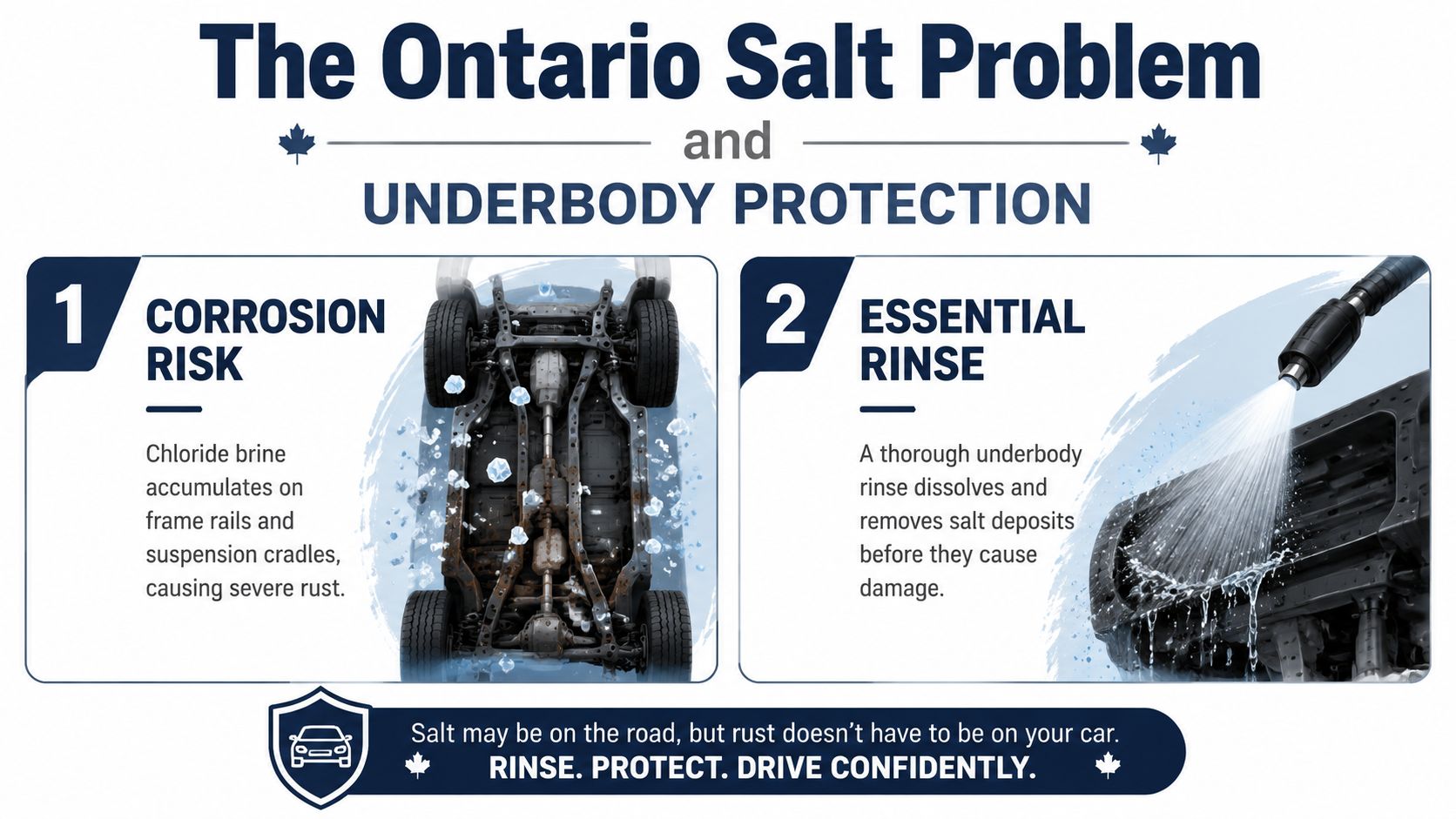
Salt commonly reaches a vehicle as brine, a wet mixture that travels farther than dry crystals. It coats brake lines, exhaust systems, subframes, body panels, wheel wells, and undercarriage interfaces. After drying, the residue can harden inside seams and sheltered cavities. A quick hose spray rarely reaches those areas with the coverage provided by a dedicated underbody rinse.
Why the underbody deserves priority
Painted panels receive attention because they are visible. Frame rails, suspension cradles, wheel-well edges, and exhaust components remain out of sight until rust damages fasteners, brackets, lines, or structural areas.
Expert GTA guidance reports that corrosion can begin within the first winter when salt remains on the vehicle. It recommends a dedicated undercarriage rinse for chloride brine and supports washing about every 10–14 days during active salting, or every 7 days for daily highway commuters, as explained in this Ontario road-salt corrosion guide.
The useful benchmark: Remove salt before it dries and hardens. Waiting until the vehicle looks filthy is the wrong maintenance trigger.
Underbody washing cannot reverse existing rust or replace an inspection after you see flaking metal, damaged lines, or unusual exhaust noise. It limits how long corrosive residue stays against exposed metal, which matters for vehicles driven daily on treated roads, parked outdoors, or used on highways where spray repeatedly reaches the underside.
Rinsing and rust proofing do different jobs
An underbody rinse removes contamination. Rust proofing applies a protective compound that helps shield vulnerable areas. A rinse alone won't protect bare metal from chloride, and a protective compound alone won't remove the salt that traps against the surface. Wash over and around treated areas so grit does not remain at untreated interfaces.
Vehicle size affects rust-proofing pricing. Owners of compact cars, SUVs, vans, and pickups should request the appropriate quote instead of assuming a flat rate. For a larger work vehicle or a car carrying passengers daily, judge the expense against road exposure and potential downtime, not appearance alone.
Maximizing Value with Memberships and Tickets
Frequent washing becomes easier to justify when you plan it as a scheduled winter routine instead of reacting to visible dirt. A membership or prepaid bundle makes the expense predictable during Burlington's salting period, when road residue can return after each trip and repeated cleaning protects exposed surfaces.
The Unlimited Wash Club suits drivers who expect to wash often. Nanak promotes first-month-free offers, discounted interior cleaning for members, and no long-term contracts or activation fees, according to its membership and service information. Those terms make the plan easier to test than one that requires a lengthy commitment.
Pick the payment model that fits your driving
Choose unlimited washing if you commute frequently, drive on highways, transport children, or work in ride-hailing and delivery. Regular access helps you remove salt when conditions demand it, without postponing a visit because another single-wash charge feels inconvenient.
Prepaid multi-wash tickets fit regular customers who want a lower per-wash cost without recurring membership payments. They require more money upfront, so match the bundle to your actual driving schedule. A household that washes consistently can benefit, while an occasional customer may get better control from individual visits.
Use the plan often enough to justify it. Drivers who rarely visit should compare the cost of a single wash or prepaid ticket before enrolling.
Prioritise the underbody option on each winter visit, since protection matters more than gloss during the salting season. Membership value depends on choosing the service that addresses the contamination you need removed. Exterior cleaning alone leaves the areas most exposed to chloride residue outside the plan's practical benefit.
Keep interior cleaning in the calculation
A dirty exterior is visible, but a neglected cabin affects every passenger and driver. Member discounts on interior cleaning can make vacuuming and surface care easier to schedule before grime becomes a restoration job. Families, pet owners, and professional drivers should compare the discounted service with the time required to do the work themselves.
For Burlington drivers, the strongest value comes from matching payment frequency to road exposure, then selecting underbody coverage whenever winter conditions leave salt beneath the vehicle. That approach turns a wash plan into a practical maintenance routine.
Local Logistics and Water Conservation Rules
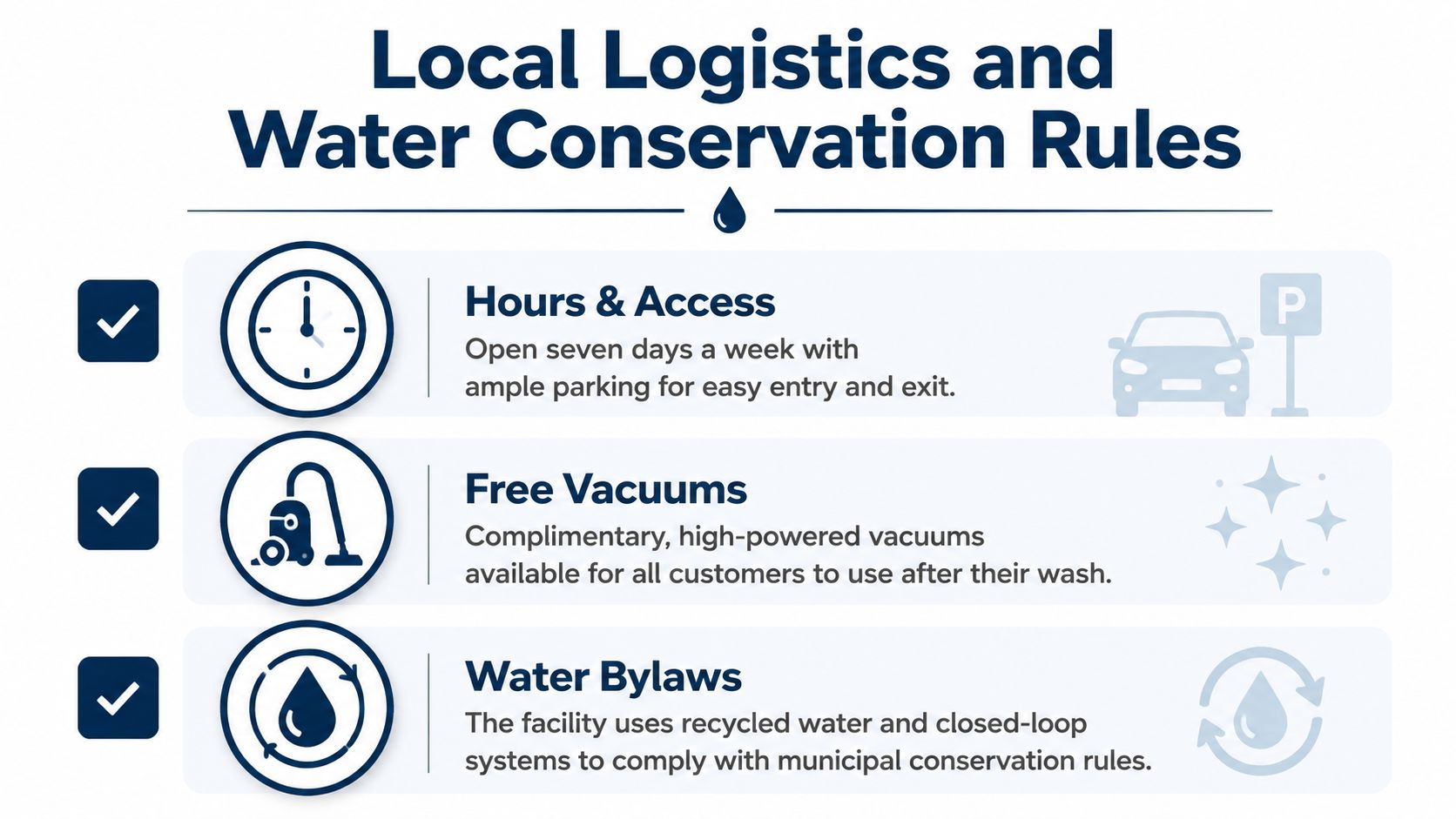
A Burlington wash should fit your route and leave enough time for winter cleanup. Plan around your commute, allow for a queue during poor weather, then use the facility's parking and vacuum area before returning to the road. Nanak's Burlington offering includes free vacuums at participating locations. Confirm availability when you arrive, and remove salt and grit from the floor mats while the vehicle is already being serviced.
Water compliance deserves equal attention. Burlington's conservation bylaw permits car washing only under specific conditions during the first and second stages, according to the Canadian water-conservation bylaw FAQ. Conditions can change with the season and the active drought stage. Check the current rules before using a driveway hose, particularly after a restriction announcement.
Use this practical decision process
Check the current municipal stage. Review Burlington's latest conservation information before washing at home. An old social-media post or a neighbour's assumption is not reliable guidance.
Read the conditions, not just the headline. Restrictions may treat casual hand-washing, commercial services, fleet washing, and permitted uses differently. Follow the specific conditions that apply to your vehicle and location.
Choose a commercial facility during restrictions. Managed commercial facilities handle water runoff, use recapture systems, and apply products in controlled volumes, all of which home washing cannot replicate. A commercial wash also gives you a controlled way to remove salt from the underbody when driveway washing is restricted.
Ask how water is managed. Canadian federal guidance identifies typical consumption of about 230–320 litres per vehicle for a tunnel wash and 90–140 litres for a wand wash, as shown in the federal Canadian water-use document. Ask whether the facility meters or recycles water, especially if you wash frequently.
Conservation and corrosion prevention work together. Use a compliant commercial wash to remove Ontario road salt, then check municipal guidance before unusual restriction periods. Fleet and work-vehicle operators should confirm the rules before scheduling repeated washes.
Solutions for Ride-Hail Drivers and Fleets
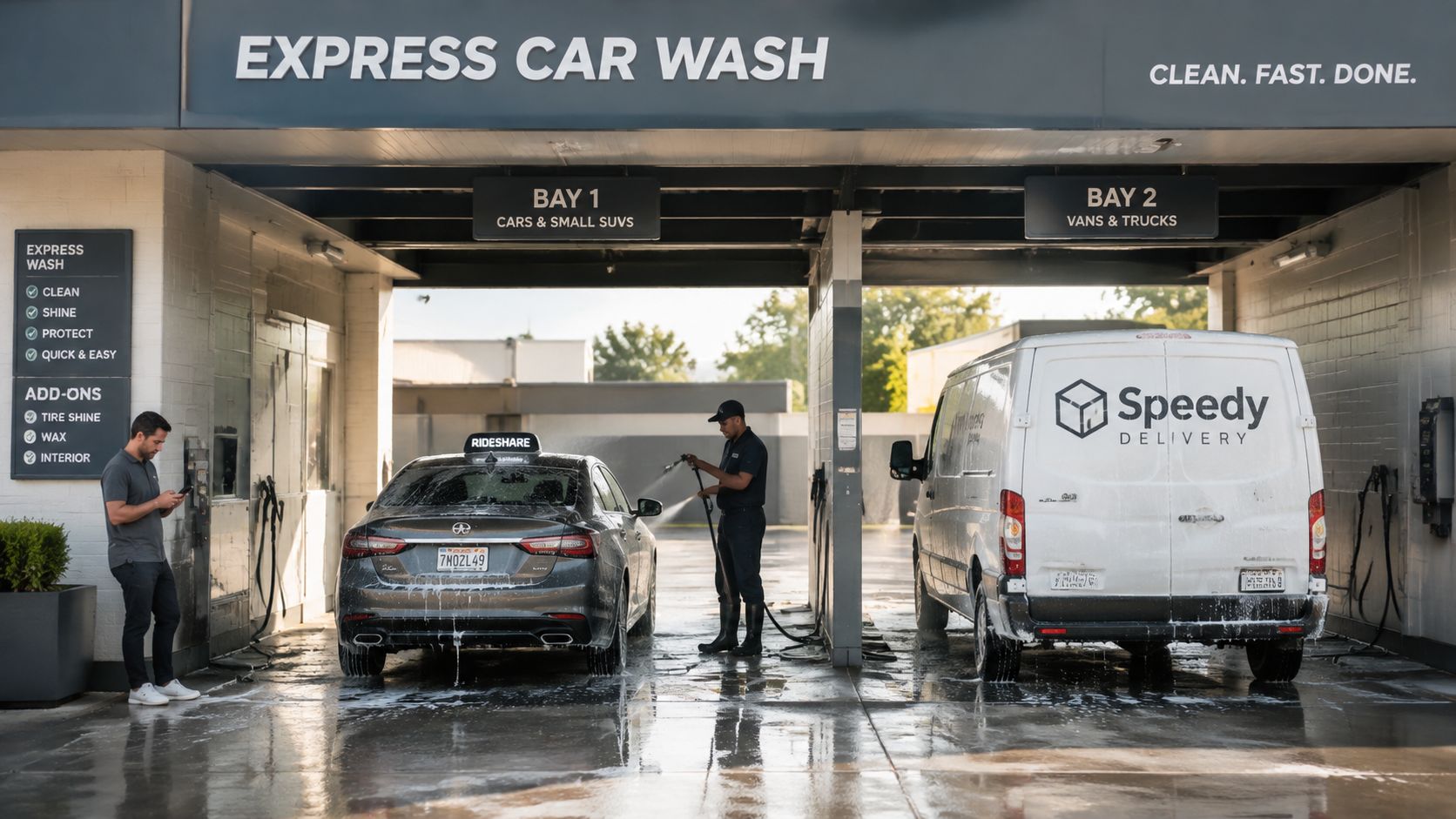
A ride-hail driver can lose valuable trip time to vehicle upkeep. The car faces constant traffic grime, Ontario road salt, food residue, and passenger use, so a repeatable routine matters. Schedule a quick exterior wash often enough to clear winter contamination, then vacuum and wipe the cabin before residue, stains, and odours affect the next passenger.
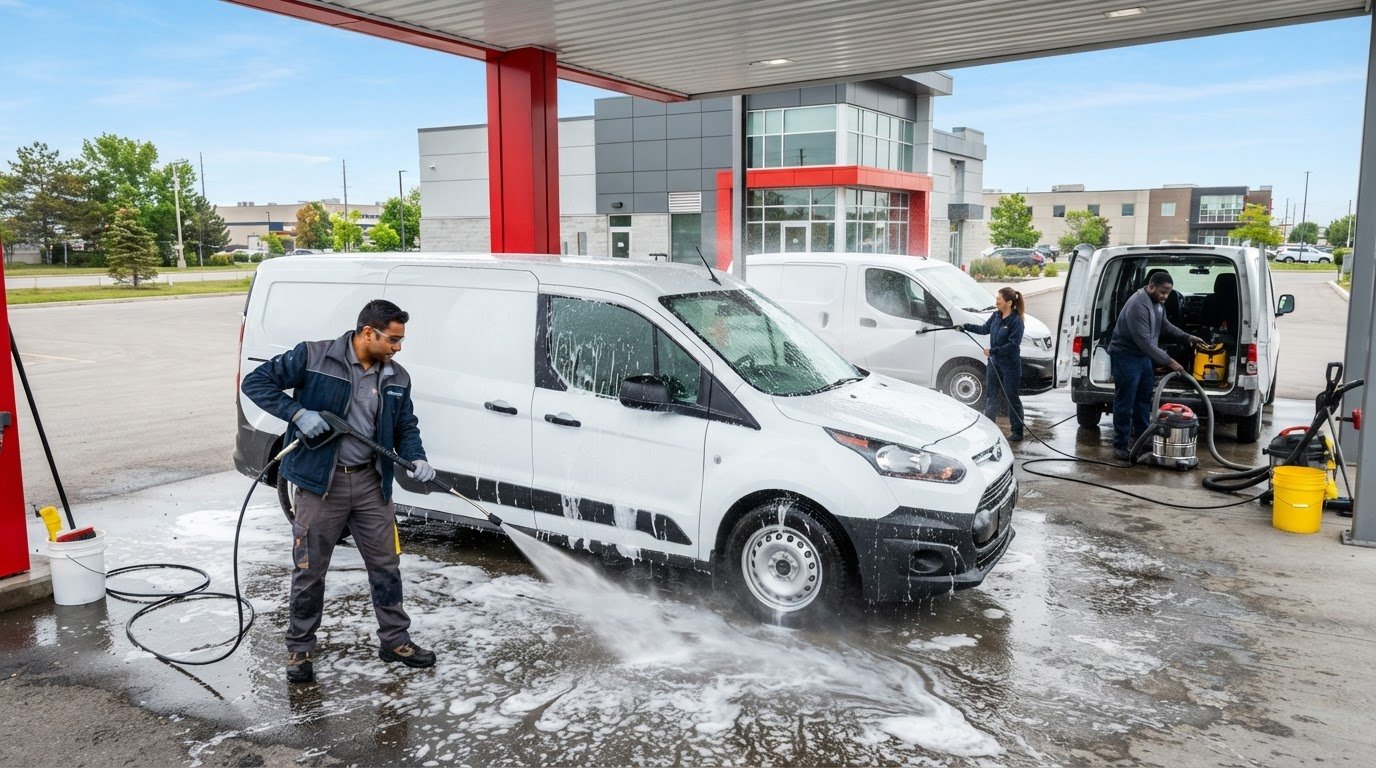
Delivery vehicles follow the same pattern. Packages, boots, road grit, and repeated loading soil sill areas, carpets, and cargo surfaces faster than private commuting does. A full-service visit earns its place when an attendant can clean the interior while the driver keeps working.
Build a repeatable operating routine
Individual drivers should choose the fastest package that includes the exterior and underbody areas their route exposes to salt and road grit. Add interior cleaning as soon as passengers can notice buildup, rather than waiting for stains and odours to settle into upholstery. A membership can simplify budgeting for frequent washing, while prepaid tickets fit a predictable but less intensive schedule.
Fleet managers should set one service routine for every vehicle. Consistent wash standards keep vehicles in a repeatable condition and prevent each driver from deciding independently when cleaning is due. Bundling washing, detailing, and rust-proofing with one provider can also reduce vendor coordination and appointment time.
SUVs, vans, and pickups collect more contamination across larger interiors, cargo areas, and working surfaces. Include vehicle-size and pet-hair detailing surcharges in the operating budget so they do not arrive as surprise costs. Rust proofing is essential for work vehicles that spend extended time on salted roads, where corrosion downtime directly impacts revenue.
Underbody rinsing deserves priority during active salting. It removes brine from areas a basic exterior pass may miss, helping operators protect vehicles while meeting the practical demands of frequent commercial use.
For commercial vehicles, the cheapest visit is the one that prevents a longer interruption later.
Winter Car Care FAQs and Final Tips
Is washing in winter safe?
Yes, provided the facility and staff can dry the vehicle properly and you handle the car sensibly afterward. The greater risk is leaving salt brine on the vehicle because the temperature makes washing inconvenient. Use a service with drying, clear excess water from vulnerable edges, and avoid parking immediately where frozen water could interfere with doors or seals.
Can an automatic wash damage paint?
Any wash system deserves sensible care, but skipping every automatic wash isn't a practical Burlington winter strategy. Choose a maintained facility, remove loose items such as an unsecured antenna where appropriate, and select a package that addresses the contamination present. If your paint has special requirements, ask the operator which wash method and protection options suit it.
Is monthly washing enough in winter?
Not for every Burlington driver. During active salting, the actionable interval is about every 10–14 days, or every 7 days for daily highway commuters, based on GTA road-salt removal guidance. Your route, parking conditions, and weather should determine the schedule.
What should you check after a wash?
- Undercarriage: Confirm that the package includes a dedicated rinse when salt is active.
- Wheel wells: Look for packed slush and residue around liners and suspension areas.
- Interior: Remove wet mats, grit, food residue, and pet hair before they become embedded.
- Protection: Consider wax or rust proofing according to the vehicle's condition and exposure.
- Bylaws: Check Burlington's current water-conservation stage before washing at home.
The winning routine is simple. Wash before salt dries into a hard film, use underbody coverage, choose a payment plan that matches your actual frequency, and treat municipal conservation rules as part of responsible vehicle ownership.
Nanak Car Wash offers express and full-service washing, appointment-based detailing, memberships, prepaid options, and rust proofing for drivers managing Burlington's salt and winter grime. Choose the service that fits your vehicle, check the current local water rules, and visit Nanak Car Wash to make corrosion prevention part of your regular driving routine.

 6600 Finch Ave W, Etobicoke, ON M9V 3Z6
 647-703-8515
 MON – SUN 8 AM to 7 PM