
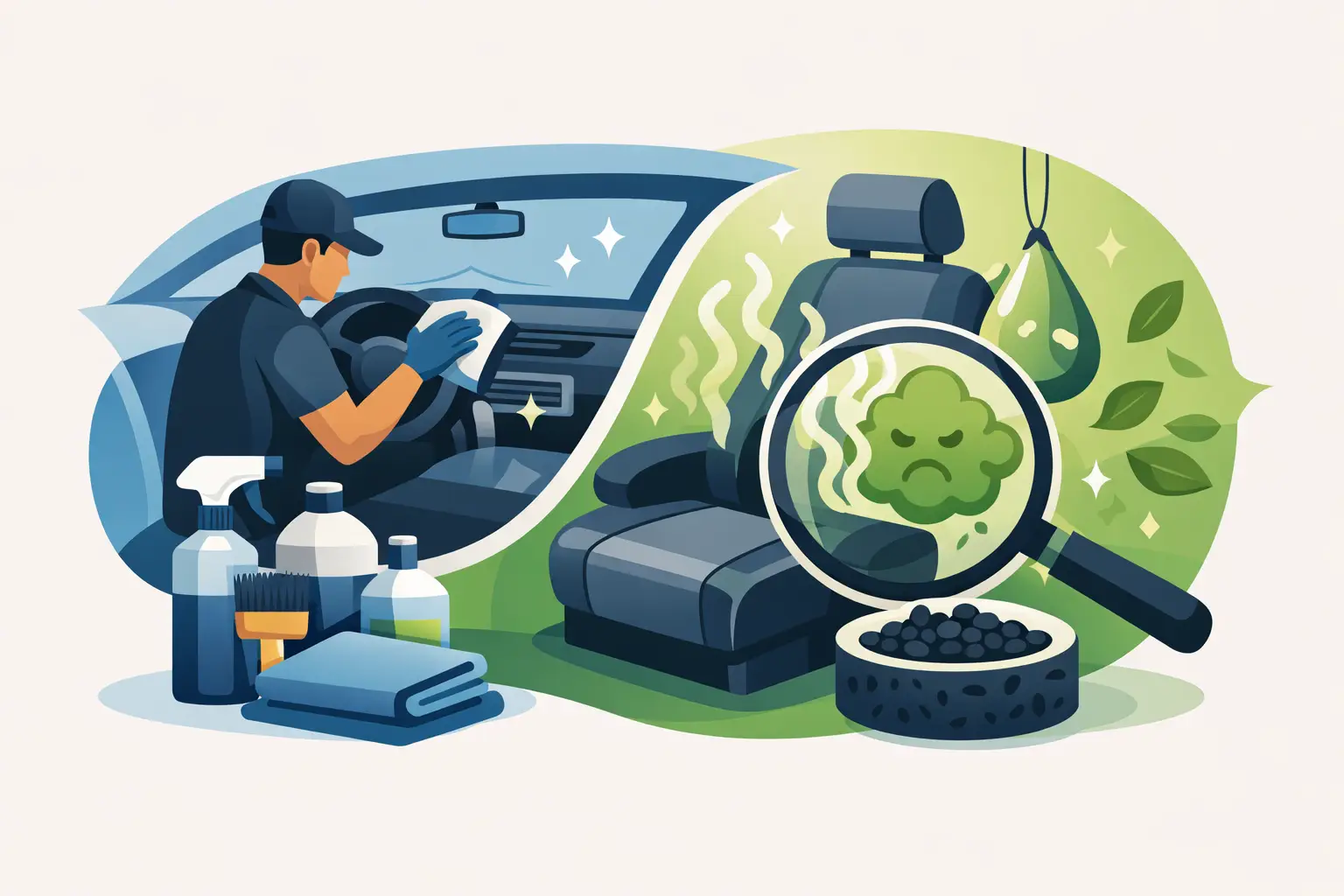
That smell hits you the second you open the door: stale smoke, wet dog, spilled coffee, fast food, or a musty odor that will not quit. Can car detailing remove odors? In many cases, yes. A proper interior detail can remove the dirt, residue, and moisture feeding the smell. But the result depends on what caused the odor, how long it has been there, and whether the source is still hiding somewhere in the vehicle.
A quick air freshener may cover a bad smell for a day or two. Real odor removal is different. It means finding the source, cleaning the affected material, drying it properly, and treating the air system when needed. That is where a thorough detailing service makes a real difference.
Can Car Detailing Remove Odors for Good?
Car detailing can remove odors when the odor is caused by removable contamination in the interior. Food crumbs in the seats, pet hair in the carpet, coffee in a floor mat, body oils on upholstery, and smoke residue on interior surfaces can all hold onto unpleasant smells. Deep vacuuming, shampooing, steam cleaning, and careful wipe-down work can remove much of that buildup.
The key word is source. If the source is cleaned, the odor can often disappear or improve dramatically. If the source remains, the smell usually returns once a fragrance spray wears off.
For example, a milk spill that soaked through the carpet may need more than a surface shampoo. The carpet may have to be treated down to the padding, then dried completely. A smoker’s vehicle may need its seats, headliner, door panels, carpet, glass, and vents cleaned because smoke residue settles nearly everywhere.
Some odors are easy wins. Others take repeat treatment or repair work outside the scope of detailing. A detailer can clean the interior thoroughly, but they cannot fix a leaking heater core, remove a dead animal from a hidden compartment, or stop water from entering through a damaged seal.
What a Professional Interior Detail Does
A full interior detail goes far beyond the vacuum you do at the gas station. The goal is to remove the material that causes odor, not just make the cabin look cleaner.
A careful service generally starts with vacuuming seats, carpet, floor mats, trunk areas, crevices, and under-seat spaces. This matters because crumbs, pet fur, soil, and organic debris often collect where drivers do not see them. Even a small amount of wet debris can create a lingering musty smell.
Next comes cleaning the hard surfaces that hold residue. Dashboards, consoles, door panels, cup holders, seat belts, steering wheels, and interior glass can all retain smoke film, food grease, and everyday grime. Upholstery and carpet may then be shampooed or steam cleaned depending on the material and condition.
The drying step is just as important as the cleaning step. If carpet or seats are left damp, moisture can create a new mildew problem. A good detailing job uses the right amount of moisture and gives the interior time to dry before the vehicle is closed up for long periods.
Odors That Detailing Often Removes Well
Detailing usually works very well for common, surface-level odors, especially when the vehicle is brought in soon after the problem happens. These include food and drink spills, pet hair and pet accidents, sweat and gym bag odors, stale fast-food smells, light smoke residue, and dirty floor mats.
A rideshare vehicle, family SUV, or commuter car can pick up several of these smells at once. In that situation, an interior shampoo and deep cleaning can make the cabin feel fresh again without the cost of replacing carpet or upholstery.
Odors That May Need Extra Work
Some smells are more stubborn because they have moved below the visible surfaces or come from a mechanical issue. Heavy cigarette smoke is one example. Nicotine residue can cling to fabric, foam, the headliner, and the HVAC system. One treatment may improve it significantly, but very heavy smoke odor may require multiple cleaning steps and specialized odor treatment.
Mold and mildew odors also need attention. If a vehicle smells damp after rain, snow, or a spill, the interior must be checked for wet carpet, blocked drain channels, window leaks, trunk leaks, or moisture under the spare tire. Cleaning helps, but the leak must be fixed or the odor will come back.
Chemical smells, fuel odors, exhaust fumes, and sweet coolant smells should not be treated as simple detailing problems. These can point to a vehicle issue that needs inspection. If you smell gas, exhaust, or strong chemicals inside the car, arrange mechanical service before booking cosmetic cleaning.
Why Air Fresheners Do Not Solve the Problem
Air fresheners have their place. They can give a clean vehicle a pleasant finishing touch. They are not a substitute for removing an odor source.
When a fresh scent is sprayed over smoke, spoiled food, or mildew, the result is usually a stronger and stranger combination of smells. More importantly, the bacteria, residue, or moisture causing the problem is still there. Once the fragrance fades, the original odor returns.
The better approach is simple: clean first, deodorize second. After a deep interior cleaning, an odor-neutralizing treatment can help deal with smells left behind in the air or fabric. That gives you a cleaner result without relying on perfume to do all the work.
The HVAC System Can Be Part of the Problem
If the odor gets worse when you turn on the heat or air conditioning, the ventilation system may be involved. Leaves, dust, moisture, and bacteria can collect around the cabin air filter and evaporator area. That often creates a sour or damp smell when the fan starts.
Replacing a dirty cabin air filter can help. In some vehicles, the vents and HVAC system also need a dedicated treatment. This is especially common in cars that sit for long periods, are parked under trees, or have had water intrusion.
A detail can clean visible vents and help freshen the cabin, but a persistent odor from the air system may require a more specialized HVAC service. It is worth mentioning the issue when you book so the cleaning plan matches the problem.
What to Do Before Your Odor Removal Detail
You do not need to clean your car before bringing it in, but a little preparation can help the service focus on the areas that matter most. Remove personal belongings from the trunk, glove box, door pockets, and under the seats if possible. If you know where a spill happened, point it out. If the odor appears only after rain or when the AC runs, mention that too.
Be honest about the cause. A pet accident, milk spill, smoke history, or water leak changes the right treatment. There is no benefit to guessing, and clear information helps avoid paying for a basic cleaning when deeper work is needed.
If you recently spilled something, act quickly. Blot excess liquid instead of rubbing it deeper into the fabric. Keep the windows cracked only when it is safe and weather allows, and avoid sealing a wet car overnight. The sooner the source is cleaned and dried, the better the chance of removing the odor completely.
When to Choose Basic Cleaning vs. Deep Detailing
A standard interior cleaning may be enough if your car has normal dust, light food smells, and dirty mats. It is a practical choice for regular upkeep, especially for drivers who use their vehicle every day.
Choose deep detailing when the odor has been around for weeks, there was a spill, pets ride in the vehicle often, someone has smoked inside, or the carpet and seats need shampooing. Deep cleaning costs more than a quick interior service because it takes more labor, equipment, and drying time. Still, it can be far more affordable than replacing upholstery, trading in a vehicle with odor issues, or living with a cabin that never feels clean.
For busy drivers in Brampton and nearby areas, regular interior care also prevents small odors from becoming big jobs. Vacuuming often, washing mats, cleaning spills quickly, and booking a seasonal detail after winter can keep salt, moisture, and trapped debris from taking over the cabin.
A Clean Car Should Smell Like Nothing
The best result is not an overpowering fragrance. It is a vehicle that smells clean, dry, and neutral when you step inside. Whether the problem is pet hair, lunch on the go, smoke residue, or a mystery smell under the seat, the right detailing service starts by removing what is causing it. Bring the vehicle in before the odor settles deeper, and you will have a much better chance of getting your clean ride back.

 6600 Finch Ave W, Etobicoke, ON M9V 3Z6
 647-703-8515
 MON – SUN 8 AM to 7 PM