
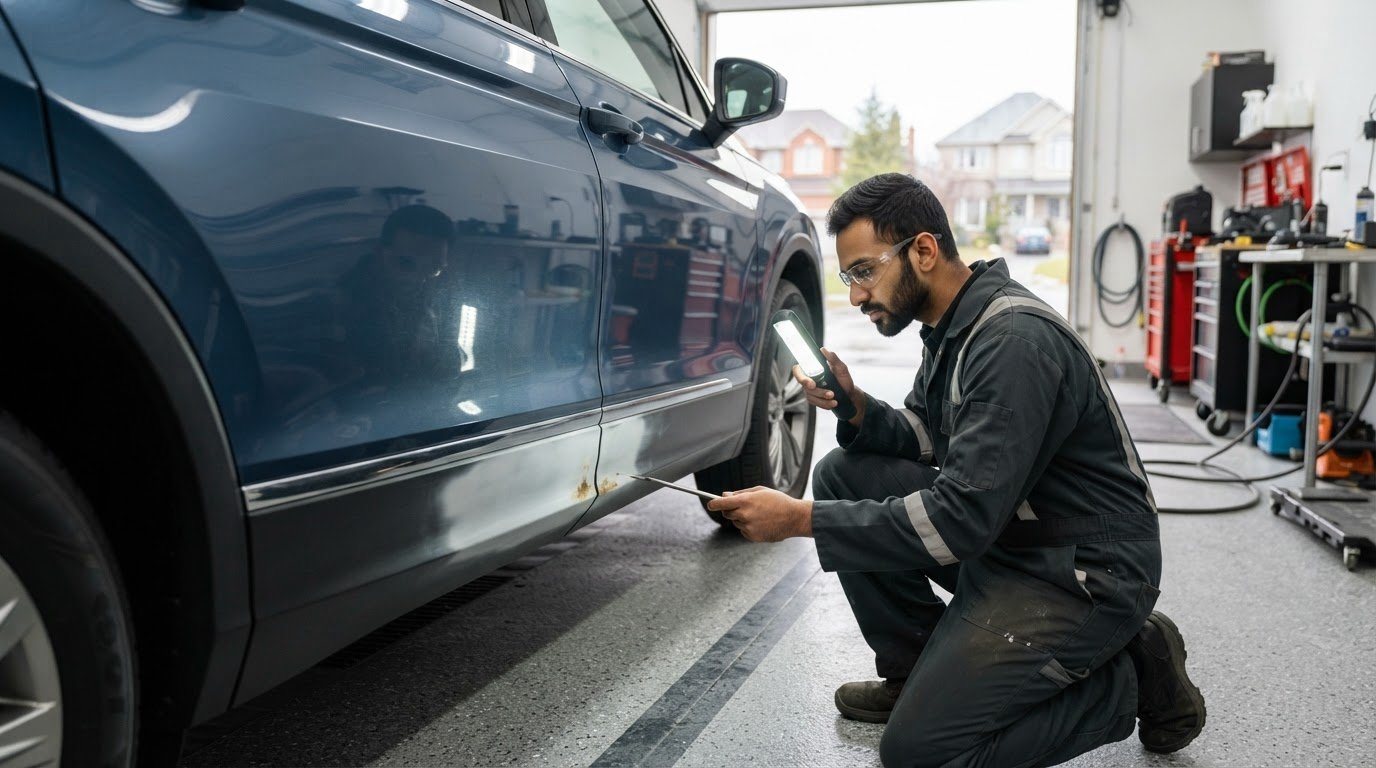
A coat of rustproofing can help protect a car, but it can’t restore corroded metal. So, can you rust proof a car with surface rust? Often, yes, if the rust is light, the metal remains intact, and the surface is properly prepared. Loose, flaky corrosion or rust that has eaten through the metal needs a different response before protective treatment is considered.
It’s reasonable to worry that a coating could hide a bigger problem. Rustproofing is protection, not rust removal or metal repair. The condition of the metal matters, as do the treatment and its application. Covering untreated, loose rust can conceal the affected area without fixing it, and may leave moisture or contaminants underneath.
This guide explains what surface rust can look like, what to inspect before treatment, and when rust removal or repair should come first. You’ll also find practical ways to record what you see and understand the limits of a protective coating. Nanak Car Wash offers Rust Proofing in Brampton, with packages categorized by vehicle size and type.
Key Takeaways
- Can you rust proof a car with surface rust? It depends on how firmly the rust is attached, whether the metal is intact, and whether the surface is properly prepared.
- Early discoloration is different from bubbling, flaking, or holes, which may point to more advanced corrosion.
- Rustproofing, rust removal, and metal repair address different needs. A protective coating can’t replace damaged metal.
- Note affected areas and take clear photos before treatment. Photos can document visible signs but can’t diagnose hidden damage.
- Nanak Car Wash Rust Proofing in Brampton has packages for Small Car, Medium & Full-Sized Car, MiniVan/Compact Pick-Up, and Full-Sized Pick-Up/SUV.
Can You Rust Proof a Car With Surface Rust? Start With What the Rust Means
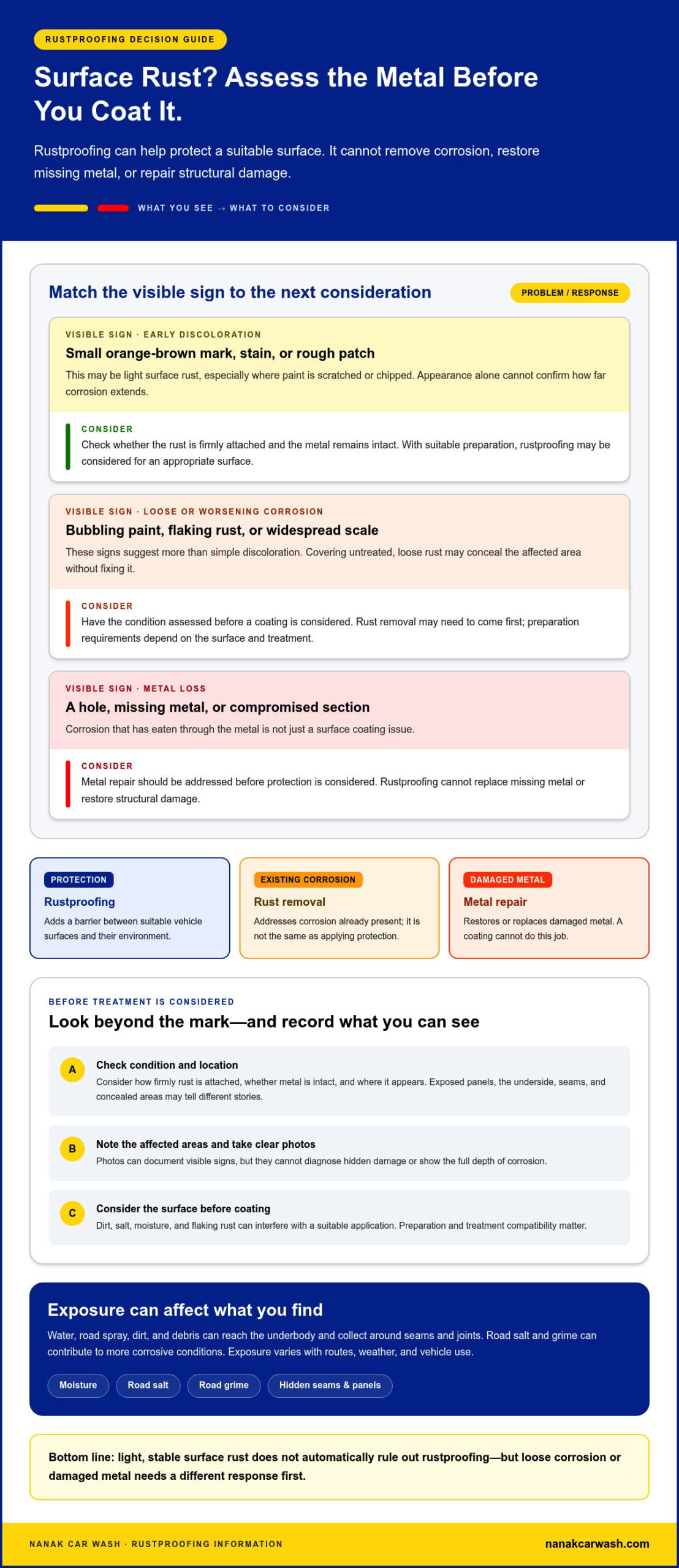
Yes, surface rust does not automatically rule out rustproofing. The important question is what is happening beneath the visible stain. Surface rust is early corrosion that often appears as reddish-brown discoloration on metal. If it is light and the metal remains intact, rustproofing may be considered after suitable preparation. Appearance alone, however, can’t confirm how far corrosion has spread or whether a hidden area is affected.
Rust forms as iron-containing metal reacts with oxygen and moisture. Road salt and other contaminants can contribute to corrosion by creating more corrosive conditions. The process and common forms of rust are outlined in What is Rust? A protective coating can help shield a suitable surface from exposure, but it can’t replace metal that has already corroded away.
Keep the roles clear: rustproofing adds protection, rust removal addresses existing corrosion, and structural repair restores damaged metal. These steps aren’t interchangeable. Applying a coating over loose or untreated corrosion may conceal the area without addressing the underlying problem. The right choice depends on the rust’s location, extent, and condition, not just whether you can see a spot on the body.
What does surface rust look like on a car?
On an exposed painted panel, early rust may appear as a small orange-brown mark, a stain, or a rough patch where the paint has been scratched or chipped. Bubbling paint, flaking rust, and visible loss of metal suggest more than simple discoloration. These signs help you decide what to look at next, but they don’t provide a complete diagnosis on their own.
Hidden areas can tell a different story. Rust may develop underneath the vehicle, around seams, or behind panels, where it can’t be assessed from a quick look at the exterior. A clean-looking painted panel doesn’t prove that concealed metal is rust-free, and a visible mark doesn’t reveal the full depth of corrosion. Record where a mark is and what it looks like, but avoid assuming that what you can see represents the entire affected area.
Does existing rust mean it is too late?
Not necessarily. A small area of light corrosion on an otherwise intact surface is different from widespread scale, bubbling, or a section where metal is missing. Location matters too: corrosion on an exposed panel and corrosion affecting an underside or structural area can have different implications. Don’t assume every rusted car is ready for a coating, or that every rust spot rules one out.
Use what you can see as a reason to assess the condition, not as proof that protection will stop or reverse the damage. Loose flakes, expanding bubbles, or holes call for closer evaluation before a coating is considered. Rustproofing can be part of a protection plan when appropriate, but it won’t rebuild weakened metal or guarantee that existing corrosion stops progressing.
How Surface Rust Develops, and What Rustproofing Can and Cannot Do
Rust develops when iron or steel reacts with oxygen and moisture. The reaction changes the metal into corrosion products that can spread as exposure continues. Road grime and salt can make the environment more corrosive by helping moisture remain on surfaces. The rate and extent of rust depend on several factors, including the metal, its condition, and how long it stays exposed.
That distinction matters if you’re asking, can you rust proof a car with surface rust? A protective treatment may help shield suitable surfaces from further exposure, but it doesn’t undo corrosion already present. Its suitability depends on the condition of the area and whether the surface is appropriate for the treatment. A coating is not a cure for every cause or stage of rust.
Why vehicle underbodies face corrosion exposure
The underside of a vehicle is exposed to water and road spray, as well as dirt and debris kicked up during driving. These contaminants can collect around seams, joints, and other less visible areas. In Brampton and elsewhere in Ontario, winter driving can bring wet, slushy road conditions, so underbody areas may encounter moisture and road contaminants. The exact exposure varies with routes, weather, and vehicle use.
What rustproofing can, and cannot, address
Rustproofing is a protective measure for appropriate vehicle surfaces. It can add a barrier between metal and its environment, but it doesn’t remove corrosion, restore missing metal, or repair structural damage. No coating should be presented as a way to stop every instance of existing rust or prevent all future corrosion.
Protection helps limit exposure; rust removal addresses corrosion, and repair replaces or restores damaged metal. If rust is loose or the metal is compromised, applying a coating without addressing that condition can hide the problem rather than resolve it. Preparation and treatment compatibility matter too. Dirt, salt, moisture, or flaking rust left on a surface can interfere with a suitable application, while different coating types may have different preparation requirements.
Think of the decision as two separate questions: what condition is the metal in now, and what protection is appropriate afterward? A light, stable surface may be a candidate for protection following proper preparation. Bubbling, scaling, or metal loss may call for removal or repair before rustproofing is considered. The visible coating itself can’t tell you whether hidden corrosion is continuing beneath a panel or inside a seam.
- Protection: helps shield suitable surfaces from exposure.
- Rust removal: targets corrosion that is already present.
- Metal repair: addresses damage or missing material that a coating can’t restore.
For Brampton drivers considering protection, Nanak Car Wash rustproofing is an option to explore once you understand the condition of the areas involved. Nanak Car Wash offers Rust Proofing as a protective service. Keep the goal clear: protection may be a useful next step, but it isn’t a substitute for addressing compromised metal.
Rustproofing vs. Rust Removal vs. Metal Repair: Which Addresses Your Car?
These three approaches solve different problems. Rustproofing is for protection, rust removal targets corrosion that’s already present, and metal repair addresses physical damage. The right next step depends on where the rust is and what condition the metal is in. A coating shouldn’t be treated as a substitute for removing compromised material or restoring damaged metal.
Rustproofing
- Purpose: Add a protective barrier to suitable vehicle surfaces.
- Suitable condition: Surfaces that are appropriate for the specific treatment and prepared as required.
- Limitation: It doesn’t remove rust or restore corroded or missing metal.
Rust removal
- Purpose: Address corrosion already present on metal.
- Suitable condition: Areas where rust can be treated without first requiring replacement or restoration of damaged metal.
- Limitation: Removing existing rust doesn’t, by itself, provide lasting protection from future exposure.
Metal repair
- Purpose: Restore or replace metal that corrosion has weakened or eaten away.
- Suitable condition: Areas with material loss or damage that a surface treatment can’t correct.
- Limitation: A protective coating isn’t a repair, and visible signs alone can’t establish the extent of structural damage.
When is protective rustproofing the relevant option?
Rustproofing may be relevant when the goal is to protect suitable surfaces and the existing corrosion doesn’t leave the metal visibly compromised. Suitability depends on the location and condition of the rust, as well as preparation and compatibility with the treatment. A small, stable mark on an exposed area isn’t the same as flaking metal or corrosion around an underside seam.
Nanak Car Wash offers Rust Proofing in Brampton. It’s a protective service, not a rust-removal or metal-repair solution. Keep that distinction clear as you decide what your vehicle needs.
When does rust need more than protective treatment?
Bubbling paint, flaking rust, holes, or apparent damage around an important vehicle structure are reasons to take a closer look before relying on a coating. These signs can indicate more advanced corrosion, but appearance alone can’t confirm the condition or strength of metal beneath the surface. Don’t use a photo as a diagnosis or as the sole basis for choosing treatment.
If metal is weakened or missing, it needs to be addressed as damage, not covered as a protection issue. Rustproofing can’t rebuild that area. Depending on the vehicle, the next step may involve assessing the affected metal and determining whether corrosion removal or repair is needed before protective treatment is considered.
In practical terms, identify the problem you’re trying to solve: protecting suitable surfaces, dealing with existing rust, or addressing damaged metal. That distinction helps prevent expecting one treatment to do a job it can’t do.
How to Prepare for Rustproofing When You See Surface Rust
A little preparation makes it easier to describe what you’ve found and set a realistic goal for treatment. You don’t need to diagnose the rust yourself. Make a clear record of its location and visible condition, then use that information to guide a discussion about whether protection is an appropriate next step.
What should you inspect before deciding?
Look over accessible body and underbody areas for discoloration, bubbling paint, flaking rust, or apparent holes. Note whether the spots seem isolated or appear across several areas. Don’t crawl under a vehicle unless it’s safely supported, and don’t treat a quick visual check as a full inspection of hidden metal.
- Record each visible rust location, such as a panel edge, wheel area, or accessible underside section.
- Describe what you see: a stain, bubbling, loose flakes, or apparent material loss.
- Take clear photos in good light, including one wider view for context and a closer image of each spot.
Photos can help you explain what caught your attention, but they can’t show the full depth of corrosion or confirm whether a structure is sound. Avoid scraping, sanding, or applying chemicals on your own unless you have appropriate guidance. Those steps can disturb the area or complicate later assessment.
What should you understand before treatment?
Set the goal first. If you’re asking, “can you rust proof a car with surface rust,” the answer depends on the rust’s condition, location, and the treatment process. Rustproofing is for protection; it won’t make existing corrosion disappear. Preparation may involve removing loose rust, dirt, salt, and moisture, while the exact requirements depend on the surface and treatment being used.
Be ready to describe what you observed and consider how the condition of those areas affects the treatment plan. Compatibility matters: a process suitable for a stable surface may not be right for loose, flaking corrosion. Bubbling, holes, or apparent metal loss deserve careful assessment rather than simply being covered.
- Note the locations. Make a short list of the spots you can see and whether they appear isolated or widespread.
- Describe, don’t diagnose. Record visible signs and avoid concluding from appearance alone that the metal is sound or damaged.
- Clarify your goal. Decide whether you’re seeking protection for suitable surfaces or need to understand existing corrosion first.
- Discuss the process. Bring your notes and photos to the treatment discussion so the affected areas and preparation needs can be considered.
For added background before making a decision, the article “What is Rust Proofing and Does Your Car Need It?” explains the purpose of protective treatment. Keep your expectations practical: preparation supports a suitable application, but it doesn’t repair weakened or missing metal. Seasonal conditions can affect when a vehicle gets wet or dirty, but they don’t replace inspecting the actual rust on your car.
Ready to consider protection for suitable surfaces? Explore Nanak Car Wash Rust Proofing as a practical next step.
Nanak Car Wash Rust Proofing: A Practical Next Step for Brampton Drivers
Seeing rust doesn’t automatically tell you which treatment your car needs. Start with the condition of the affected area and your goal. If the metal appears intact and you’re considering added protection, rustproofing may be a sensible next step. If you see bubbling, loose flakes, holes, or apparent damage, have the condition assessed before treating a coating as the answer.
How to decide whether to explore rustproofing
Keep the choices separate. Rustproofing is intended to protect suitable surfaces. Rust removal addresses corrosion that’s already present, while metal repair deals with weakened or missing material. These approaches aren’t interchangeable, and a coating can’t restore damaged metal. Visible rust needs assessment, especially when its location or extent raises concern. Don’t choose a treatment based on a photo alone.
- Consider protection when the goal is to protect suitable surfaces and the metal’s condition is appropriate.
- Look into rust removal when corrosion is present and needs to be addressed before protection is considered.
- Seek assessment of damage if you notice holes, significant flaking, or signs that metal may be weakened.
This decision framework helps set expectations before you choose a service. Rustproofing won’t make rust disappear or repair a damaged section. It’s a protective option, not a substitute for work that addresses existing corrosion or compromised metal. If you’re unsure what the visible signs mean, treat them as a reason to learn more about the vehicle’s condition, not as a diagnosis.
Explore Nanak Car Wash Rust Proofing
Nanak Car Wash offers Rust Proofing for vehicle owners in Brampton. Packages are listed by vehicle category: Small Car at $119.95, Medium & Full-Sized Car at $129.95, MiniVan/Compact Pick-Up at $139.95, and Full-Sized Pick-Up/SUV at $149.95. Choose the category that matches your vehicle when reviewing the service.
Before choosing protection, note where the rust appears and what you want the treatment to do. That gives you a practical starting point for considering whether rustproofing fits your needs. If the metal looks compromised, prioritize understanding the damage rather than expecting protective treatment to fix it. Clear expectations help you choose the right next step for your vehicle.
If you’re ready to explore protection for your vehicle, review Nanak Car Wash services and consider Rust Proofing as an option. Choose based on your vehicle category and the condition of the areas you’ve observed. It’s a straightforward way to explore a protection service while keeping rust removal and metal repair distinct from what rustproofing is intended to do.
Take the Next Step With Confidence
If you’re still asking, “can you rust proof a car with surface rust,” let the condition of your vehicle guide what happens next. Note the areas that concern you, keep clear photos for reference, and avoid treating a coating as a fix for damaged metal. A careful decision can help you focus on the protection or assessment your vehicle actually needs.
When you’re ready to explore rustproofing as a protection option, review the service details and consider how they fit your vehicle and goals. Nanak Car Wash lists Rust Proofing packages by vehicle size and type, giving you a practical place to continue your research.
Explore Nanak Car Wash services and take a clear, informed next step for your car. You’re in a better position to choose when you know what you want the treatment to do.
Frequently Asked Questions
Can rustproofing make existing rust worse?
It depends on the rust’s condition, how the surface is prepared, and whether the treatment suits that area. A coating doesn’t remove corrosion. If moisture or loose rust remains underneath, covering compromised metal may conceal an issue rather than resolve it. Before deciding, distinguish a small, stable mark from bubbling paint, flaking material, or apparent metal loss. Those signs call for closer assessment before protection is considered.
Can rustproofing hide rust from view?
A protective treatment can change the appearance of the area it covers, but that doesn’t mean the rust has disappeared. Before treatment, note where discoloration, bubbling, or flaking is visible so you can compare those areas later. A surface that looks different after application isn’t proof that corrosion has stopped. Keep your expectations focused on protection, not cosmetic restoration or confirmation of the metal’s condition.
Is surface rust the same as structural rust?
No. Surface discoloration and corrosion that has caused substantial metal loss are different conditions, but appearance alone can’t reliably show what’s happening beneath the surface. For example, a spot on a panel may look minor while nearby hidden metal needs closer evaluation. A description or photo can’t establish structural condition. Rustproofing adds protection; it can’t restore weakened metal or replace material that has corroded away.
Can you apply rustproofing over paint that has surface rust?
It depends on the condition of the painted area and the intended application of the treatment. Not every coating is suitable for every rusted or painted surface, so there isn’t one preparation method that fits all cases. Rustproofing won’t remove corrosion beneath damaged paint. If the paint is bubbling, peeling, or visibly failing, have the area carefully assessed before treating a coating as the solution.
Is it too late to rust proof a car after rust appears?
Not automatically. Visible rust doesn’t by itself rule out protective treatment, but the location and condition of the affected metal matter. A suitable surface may still be considered for protection, while existing corrosion may need attention first and damaged metal requires a different response. Identify the affected areas and note what you can see. Then decide with realistic expectations: rustproofing isn’t guaranteed to stop corrosion already underway.
Does rustproofing repair holes or weakened metal?
No. Rustproofing is a protective treatment, not a metal repair. It can’t replace material lost to corrosion or restore strength to weakened areas. A small area of surface discoloration is different from a hole or metal that appears thin, flaky, or compromised. If you see those signs, don’t rely on a coating to fix them. The damage needs assessment before protection is considered as a separate step.

 6600 Finch Ave W, Etobicoke, ON M9V 3Z6

 647-703-8515
 MON – SUN 8 AM to 7 PM