
You've just finished driving through a GTA winter. The wheels are grey with brake dust, the lower doors carry a salty film, and the dashboard vents have collected enough dust to make every air blast visible. In the detailing aisle, a wall of brushes offers soft hair, nylon, short handles, long handles, wheel heads, drill attachments, and sets that all look strangely similar.
The cheapest brush can appear to work, right up until it leaves fine marks on gloss trim or pushes gritty salt across paint. A brush that's too soft can be just as frustrating on a salt-caked wheel, where repeated scrubbing adds effort without removing the bonded contamination. Car detailing brushes are precision tools, and the right choice depends on the surface, the soil, the chemical, and the amount of pressure you plan to use.
Table of Contents
- Why the Right Car Detailing Brush Matters More Than You Think
- Understanding Brush Materials and Stiffness Levels
- Matching Brush Types to Vehicle Zones
- Real-World Detailing Tasks and the Brushes That Nail Them
- Sizing and Ergonomics for Comfort and Control
- Caring for Your Brushes to Extend Their Life
- When to Call in the Professionals for a Deeper Clean
Why the Right Car Detailing Brush Matters More Than You Think
Most owners spend more time choosing shampoo than choosing a brush. That seems reasonable until a brush touches a dusty piano-black console, a painted wheel face, or a glossy door panel. Dry grit caught between the fibres and the surface can act like fine sandpaper, while a stiff filament can leave visible marks even when the cleaner itself is perfectly suitable.
GTA drivers also have a local problem that generic detailing advice often misses. Road salt is a recurring exposure in Ontario, and industrial supply listings describe vehicle hand-cleaning brushes as tools for removing dirt, grime, and road salt while helping prevent rust and maintain paintwork. Ontario detailing brush guidance therefore treats the brush as more than a cosmetic accessory. It's part of the process of removing contamination before it sits in seams, badges, wheel areas, and other places where moisture can linger.
The hidden cost of the wrong stiffness
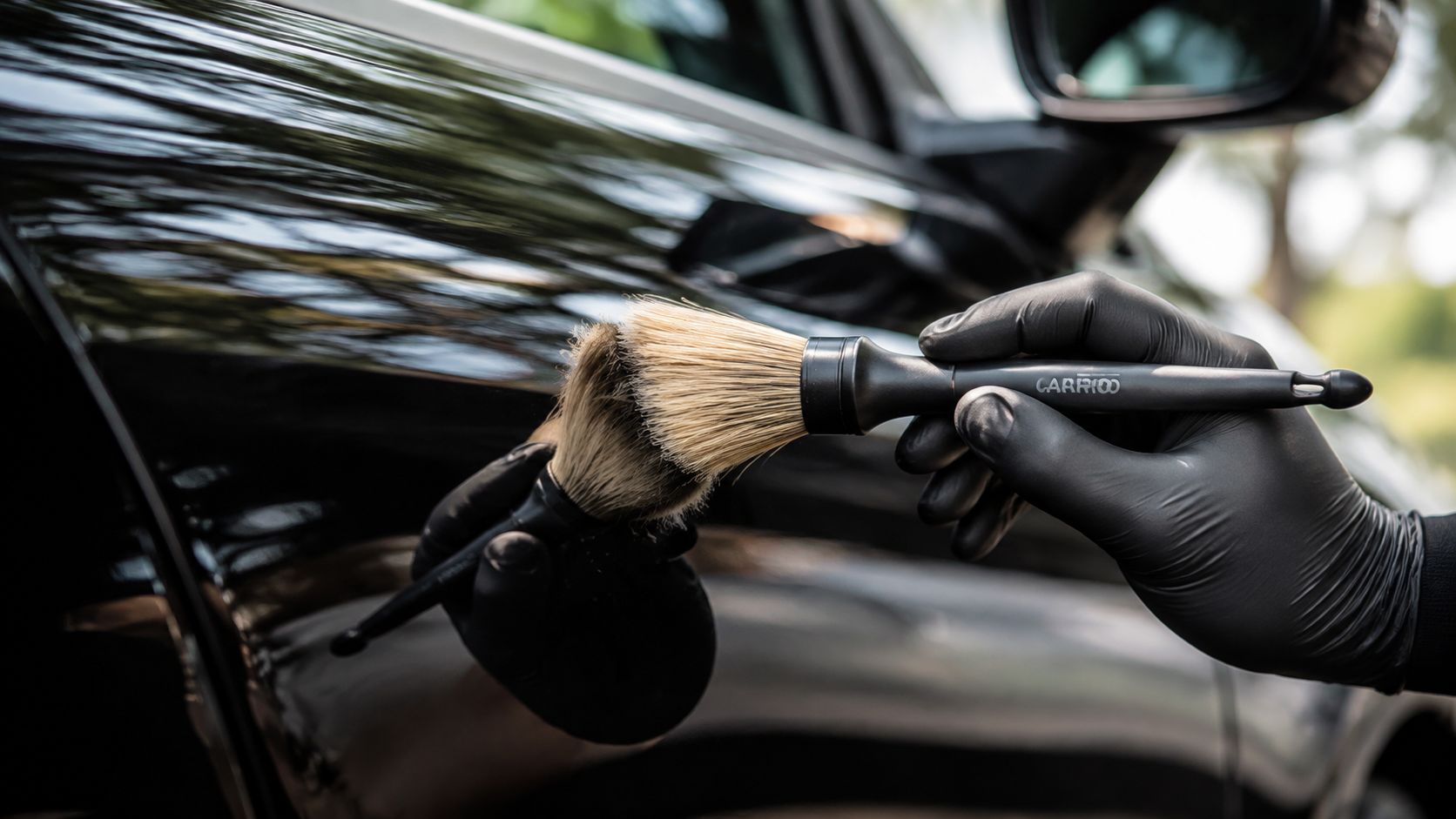
A harsh brush on clear-coated paint can create marring. A firm nylon head on soft leather can roughen the finish or push dirt into the grain. A soft interior brush used on wheel hardware may flex away from the contamination, forcing you to increase pressure and make more passes.
That's why the safest working rule is simple:
Use the softest brush that removes the soil, and increase stiffness only when the surface and contamination justify it.
Brushes reach areas mitts and towels can't clean reliably, including emblems, vents, spokes, lug nuts, door jambs, and narrow crevices. Canadian retail listings show the category has become broad and highly specialised, with products aimed at wheels, dashboards, seats, vents, lug nuts, and engine compartments. Canadian detailing brush collections reflect a mature market, not a single generic tool.
The return comes from control. One appropriate brush can clean a badge recess without scrubbing the surrounding paint, or lift dust from a vent without flooding nearby electronics. The wrong brush may still make the surface look cleaner, but it can leave damage that becomes obvious in direct sunlight.
Understanding Brush Materials and Stiffness Levels
Brush choice comes down to two working variables: what the fibres are made from and how much resistance they offer. Material affects softness, chemical tolerance, recovery, and service life. Stiffness controls how much agitation reaches the soil. In a GTA winter, that distinction matters because salt film on a wheel needs controlled force, while the same firm brush can mark soft interior trim.
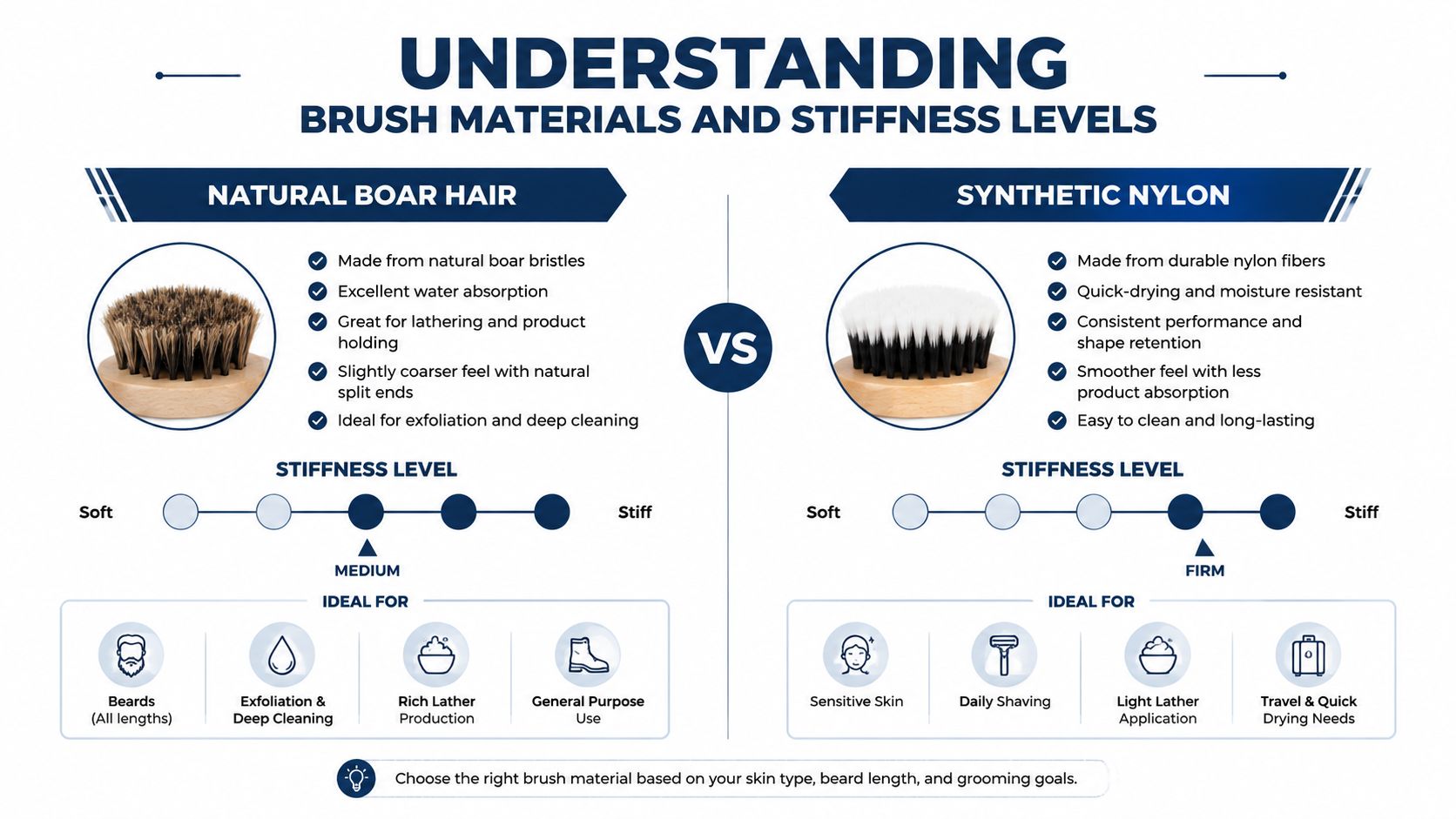
Natural boar hair suits many interior and finishing tasks. Its fine fibres lift dust from vents, emblems, leather seams, and delicate trim without the harsh contact of a firm head. Ultra-fine synthetic fibres can perform similar work, with more consistent shape and easier cleaning after repeated use. Choose either option when surface safety matters more than aggressive scrubbing.
Nylon provides stronger agitation for wheels, engine bays, undercarriages, and metal parts. Nylon filaments work much like a dedicated wheel woolie when loosening bonded grime, but pressing a firm head against painted or gloss surfaces can leave marring. On salt-caked wheels, let the cleaner loosen the deposit first, then use the least-stiff nylon brush that removes what remains.
Read the label before you buy
A brush labelled for delicate interiors should use soft boar hair or fine synthetic fibres. A wheel or engine brush may use nylon, but the head still has to suit the finish. Painted calipers, polished lips, and gloss-black wheel inserts need more caution than textured plastic liners.
Canadian product specifications outline a practical material split. One supplier identifies boar hair for delicate interiors and nylon for engine bays and undercarriage work, linking fibre stiffness to task selection. Canadian soft and firm brush specifications also describes natural hog hair combined with synthetic nylon soft-touch construction and resistance to alcohol and solvents. That resistance can help a brush handle normal detailing chemicals, but it does not protect the vehicle from unsuitable products or excessive pressure.
Use this sequence at the wash bay:
- Identify the surface. Gloss paint, leather, screens, textured plastic, metal, and fabric react differently.
- Identify the soil. Loose dust needs light lifting. Salt, brake dust, grease, and embedded fabric dirt need controlled agitation.
- Start soft. Allow cleaner to dwell, then test a hidden area.
- Increase force gradually. Use a firmer brush only when the softer option leaves contamination behind.
- Match the chemistry. A solvent-resistant brush may tolerate a product, while the vehicle surface may not.
For teams organising product notes, inspection steps, and creative work, browse AI tools for creators. Keep that workflow separate from brush selection. Surface and soil still determine the tool.
Matching Brush Types to Vehicle Zones
A good brush kit works like a small decision matrix. You don't grab the biggest head first. You identify the zone, choose the safest fibre, apply the suitable cleaner, and reserve aggressive agitation for contamination that needs it.
| Brush Type | Best For | Stiffness | Chemical Pairing |
|---|---|---|---|
| Soft boar hair | Dashboards, vents, leather seams, emblems, delicate trim | Soft | Interior cleaner applied to the brush, mild diluted cleaner |
| Fine synthetic interior brush | Screenside seams, vents, controls, stitching, light dust | Ultra-soft to soft | Light interior cleaner, minimal moisture |
| General soft nylon brush | Grilles, exterior trim, badges, wheel faces, valve stems | Soft to medium | pH-neutral shampoo, foam pre-wash, mild cleaner |
| Firm nylon wheel brush | Wheel barrels, textured plastics, stubborn wheel contamination | Medium to firm | Wheel shampoo or non-acid wheel cleaner |
| Engine and undercarriage brush | Engine plastics, brackets, underbody components, metal parts | Medium to firm | Degreaser or cleaner confirmed safe for the surface |
| Upholstery brush | Cloth seats, carpets, floor mats | Medium, selected for fabric | Fabric cleaner, foam detergent, extraction process |
| Drill-attached brush | Heavily soiled carpet and mats | Depends on attachment | Fabric-safe cleaner, controlled moisture |
Exterior paint and trim
For painted panels, badges, and gloss trim, begin with a soft brush and plenty of lubrication. The brush should loosen contamination, not grind it into the surface. A medium or firm nylon head belongs on textured areas or stubborn exterior components, not on dusty piano-black trim.
Emblems and grille recesses benefit from a smaller head because you can work around the edges without dragging a larger tool across the surrounding finish. Rubber-ferrule designs can also help around mirror bases and trim joins because the flexible ferrule follows a contour instead of forcing the bristles sideways.
Wheels and underbody areas
Salt-caked wheels need a different approach. Pre-rinse first, apply a suitable wheel cleaner, allow it to dwell according to its instructions, then agitate with a brush that can maintain contact. Soft brushes work well on faces, logos, and valve stems. Firmer nylon is more appropriate for textured surfaces, wheel barrels, and heavy contamination where the finish can tolerate it.
Separate wheel brushes from interior brushes. Brake dust and road grit have no place near a dashboard, leather seat, or infotainment area.
Interior surfaces
A soft brush is the safer starting point for dashboards, vents, controls, leather, and gloss trim. Spray cleaner onto the brush rather than directly into switches, seams, or electronics. Use short, light strokes, then follow with a clean towel.
Carpet and cloth upholstery can accept more agitation, but a fabric brush still shouldn't be used like a floor scrubber. Work the cleaner into the fibres, extract or wipe away the loosened soil, and avoid saturating areas that can't dry properly.
Real-World Detailing Tasks and the Brushes That Nail Them
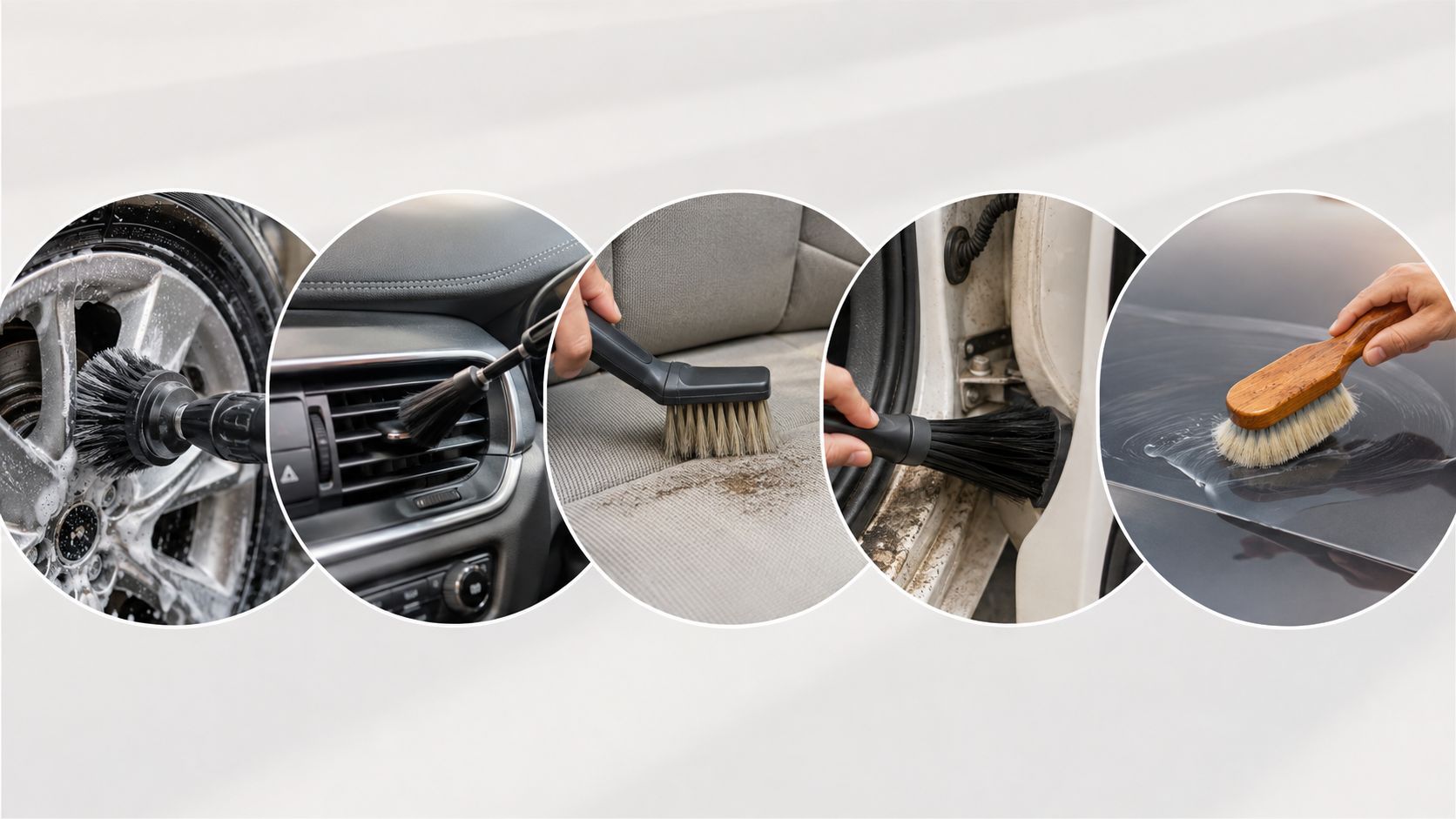
Salt crust in a wheel barrel does not come off with a mitt alone. In a GTA winter, it needs a thorough rinse, suitable wheel cleaner, and a firm nylon brush used in short sections. The wrong stiffness can create hidden damage: a dry, gritty brush drags brake dust across the finish, while excessive force can mark softer coatings and trim.
Salt-crusted winter wheels
Rinse until loose salt and grit are gone. Apply wheel shampoo or a suitable non-acid wheel cleaner, let it work according to its instructions, then choose the brush for the surface. A soft or medium brush suits the wheel face and spokes. Firmer nylon handles textured areas, wheel barrels, and bonded grime when the finish can tolerate more agitation.
Work in short sections and rinse the brush often. Once its bristles hold grey slurry, it can redeposit grit instead of removing it. Keep these brushes separate from interior tools.
Dusty dashboard vents
A compact 7-inch dual-end detail brush with white nylon bristles is sold in Canada with bristle sizes of 0.43 and 0.18 inches, for dash vents, radios, speakers, and tight gaps. Canadian Tire's dual-purpose detailing brush listing shows the practical format for this task.
Use the narrow end with light strokes and hold a towel below the vent to catch loosened dust. Put a small amount of interior cleaner on the brush, never into the opening. Around screens and glossy controls, almost no pressure is enough.
Stained cloth seats
Use a fabric-safe brush firm enough to move through the weave without shredding fibres. Apply foam or liquid detergent, agitate a small area, then remove loosened soil with a towel or extraction equipment. A drill attachment can reduce effort on heavily soiled mats, but its speed requires tighter control.
Grimy engine bays
A firm nylon brush reaches brackets, plastic edges, and metal hardware where soft bristles fold. Control water and cleaner, keep sensitive electrical areas dry, and towel-dry seams so dirty runoff does not settle again.
Delicate chrome emblems
Choose a soft brush, generous lubrication, and a light touch. Trace badge edges and recessed lettering instead of scrubbing across the surrounding panel. Rinse the brush as soon as it catches grit.
Sizing and Ergonomics for Comfort and Control
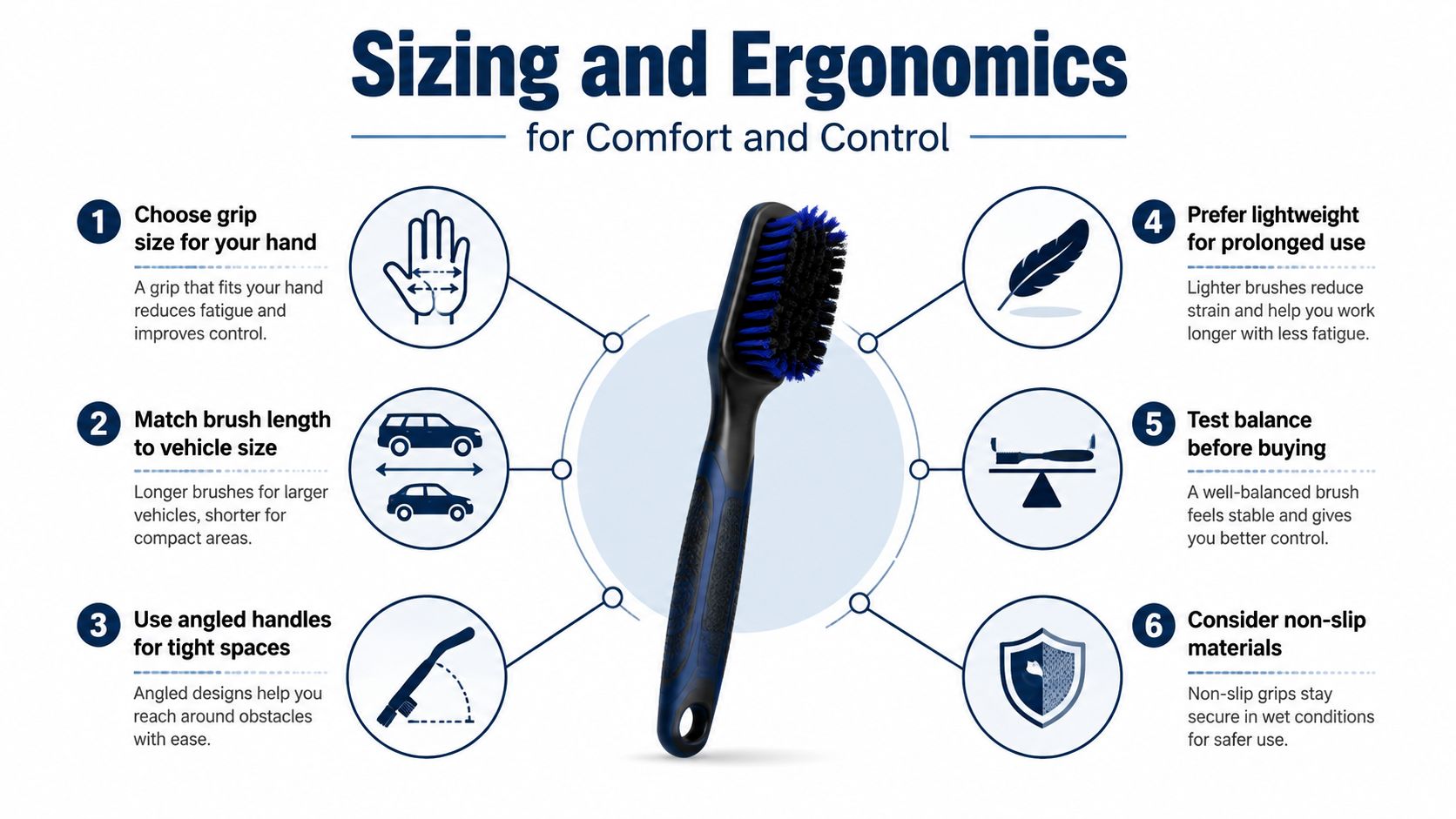
A brush can be technically correct and still be unpleasant to use. Poor balance, an awkward handle, or a head that can't reach the work area encourages excess pressure. That's when a careful cleaning process turns into rushed, uneven scrubbing.
Canadian retail listings provide practical benchmarks. A common multi-purpose kit is a 3-piece set with plastic bristles and handles, a listed assembled weight of 0.21 lb, and dimensions around 9.45 x 3.54 x 1.38 inches. Canadian Tire's multi-purpose brush specifications show the kind of lightweight format that suits repeated general cleaning.
Match length to access
Longer handles help reach wheel barrels, engine recesses, and deep grilles without placing your hand against dirty surfaces. They can feel clumsy in a dashboard vent or around a small emblem, where a short handle gives better fingertip control.
The compact 7-inch format suits confined interior work because it limits force and encourages precise movement. A longer brush may cover more distance, but it also makes it easier to apply unintended pressure.
Reduce fatigue through balance
Light handles help during repeated passes across several vehicles, especially larger SUVs, vans, and trucks. Grip texture matters too. A smooth handle becomes difficult to control with wet hands, while a non-slip surface lets you hold the brush lightly instead of clenching it.
Before buying, check whether:
- The handle fits your hand: You should control the head without pinching hard.
- The balance feels neutral: A heavy head creates fatigue and makes delicate work less precise.
- The profile suits the zone: Narrow heads enter vents and seams; wider heads cover broad textured areas.
- The handle survives wet work: Plastic and soft-touch materials are practical around water and chemicals.
- The brush can dry properly: Hanging loops or storage that allows airflow help preserve the fibres.
A brush that feels comfortable encourages lighter pressure, and lighter pressure is one of the simplest ways to reduce accidental marring.
Caring for Your Brushes to Extend Their Life
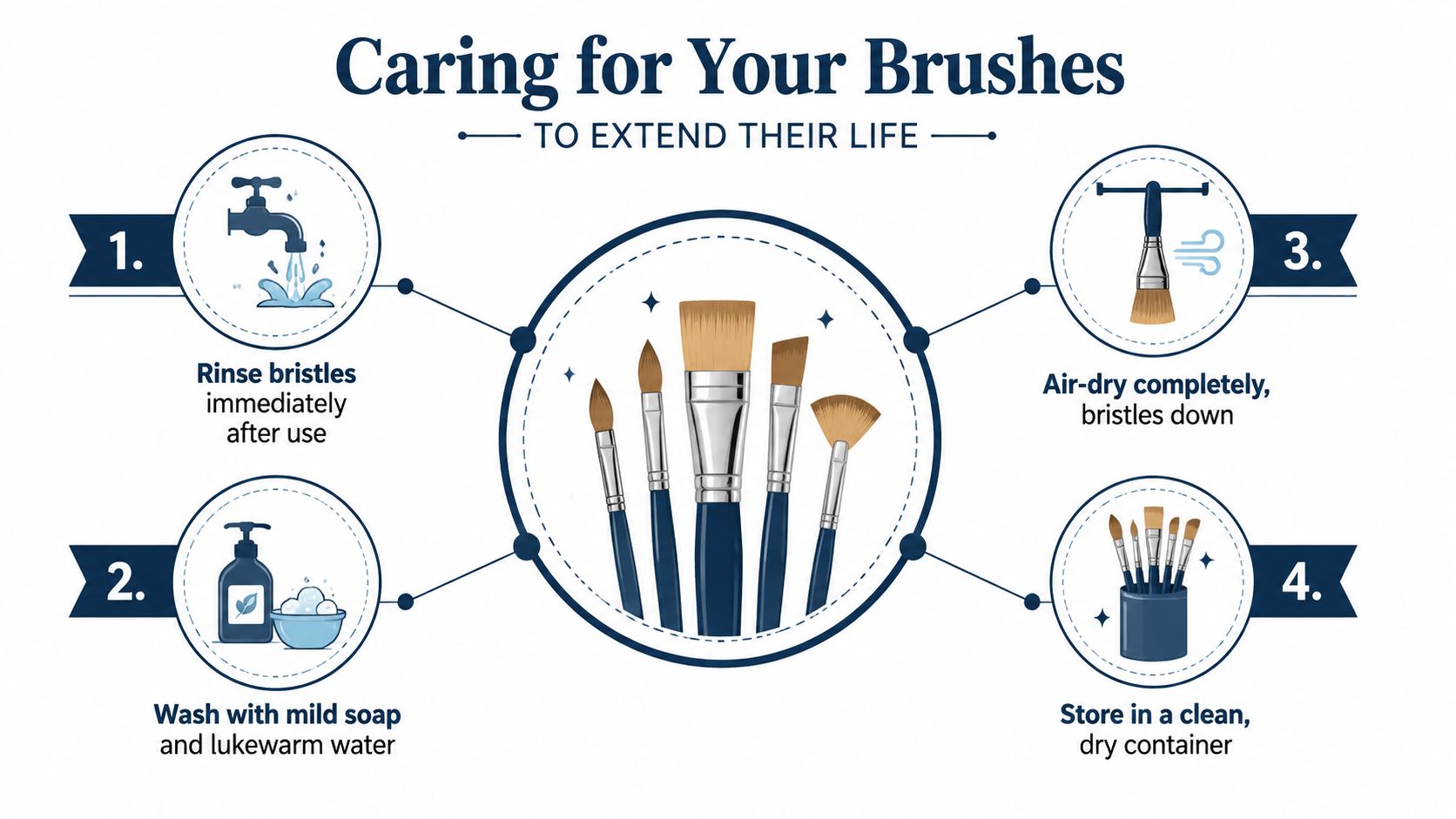
Brush maintenance starts before storage. Rinse the bristles as soon as the job ends, especially after wheel cleaning, engine-bay degreasing, or contact with road salt. Contamination left to dry inside the head makes the next use harsher and can shorten the brush's working life.
Use lukewarm water and a mild detergent for a deeper clean. Work the soap through the tips, rinse until the water runs clear, then reshape the fibres with your fingers. Don't leave a brush submerged in strong chemistry for extended periods, even if the manufacturer describes the fibres as alcohol- or solvent-resistant.
A reliable post-job routine
- Rinse immediately. Flush salt, brake dust, detergent, and loosened grime from the tips toward the ferrule.
- Wash gently. Use mild soap and lukewarm water rather than aggressive solvent for routine cleaning.
- Reshape the fibres. Remove excess water without twisting or crushing the head.
- Air-dry fully. Hang the brush or position it so air reaches the bristles. Suppliers specifically emphasise hanging ultra-soft brushes dry to help preserve their shape.
- Store by purpose. Keep wheel and engine brushes away from interior tools to prevent cross-contamination.
Chemical resistance protects the fibres during normal use, but the adhesive holding those fibres can still suffer from prolonged exposure to harsh wheel chemicals. Leaving any brush sitting in strong acid-based cleaner is poor practice. Clean it, dry it, and put it away rather than treating it like a disposable applicator.
Practical rule: A clean brush is safer than a premium brush loaded with yesterday's grit.
When to Call in the Professionals for a Deeper Clean
When salt has welded into underbody crossmembers, or carpet staining remains after agitation, professional equipment becomes necessary. Extraction machines, steam, pressure-controlled rinsing, and machine polishers handle contamination that brushes cannot. Scrubbing harder can spread grime, roughen leather, or mark paint.
A professional detailer combines careful brush work with equipment suited to larger or deeper problems. Nanak Car Wash provides express exterior washes, full-service washing, interior cleaning, detailing, and automotive rust proofing across GTA communities. Its services include carpet and seat shampooing, salt and stain removal, vent and crevice blowout, leather deep cleaning, and machine buffing and polishing. Appointment-based packages typically take one to four hours, according to the Nanak Car Wash detailing information.
For routine winter upkeep, use an express exterior wash for broad road film, then reserve your brushes for emblems, vents, spokes, and other precision areas. In GTA winters, salt can lodge behind trim and beneath the vehicle where driveway tools cannot reach safely.
Professional help makes sense when contamination is embedded, materials need restoration, or paint correction requires controlled machine work. Nanak Car Wash offers express and full-service washes, appointment-based interior and exterior detailing, and rust proofing for GTA drivers dealing with winter salt and embedded grime. Choose a service suited to the vehicle's condition when hand brushes and driveway cleaning are no longer enough.


 6600 Finch Ave W, Etobicoke, ON M9V 3Z6
 647-703-8515
 MON – SUN 8 AM to 7 PM