

It's Monday morning in Mississauga. You've scraped the windshield, brushed snow from the roof, and now you're staring at a white crust along the rocker panels while your coffee cools in the cup holder. A quick trip through a wash bay will remove the obvious dirt, but it may not reach the salt packed behind the wheel arches, buried in floor-mat fibres, or lodged in the seams around the seats.
That's where a car detailing machine earns its place. The right tool doesn't just make a vehicle look cleaner. It helps remove the contaminants that arrive with GTA winters, supports paint and interior maintenance, and lets you control water, runoff, heat, and recovery instead of relying on an open hose and a bucket.
Table of Contents
- Why a Car Detailing Machine Matters in the GTA
- What a Car Detailing Machine Actually Does
- The Four Main Types of Car Detailing Machines
- Buy, Rent, or Hire a Pro Service
- Maintenance and Safety Essentials
- Where DIY Detailing Quietly Costs More
- Detailing Machines for Fleets and Rideshare Drivers
- Choosing the Right Path for Your Vehicle
Why a Car Detailing Machine Matters in the GTA
A GTA winter changes what “clean” means. Road salt dries into a hard film on rocker panels, gathers around wheel wells, and rides inside on wet boots. Outside, that residue can remain against metal and fasteners. Inside, it becomes grit that gets pressed deeper into carpet fibres whenever passengers step in.
A tunnel wash removes loose road film quickly, so it has a useful place in regular maintenance. Its wash cycle is not designed to extract every contaminant from a floor mat, reach the narrow seam beside a seat rail, or refine fine marks on clear coat. A detailing machine gives each problem a more controlled treatment. Suction can focus on a stained carpet area, heat can loosen greasy trim residue, and a polisher can correct one panel gradually.
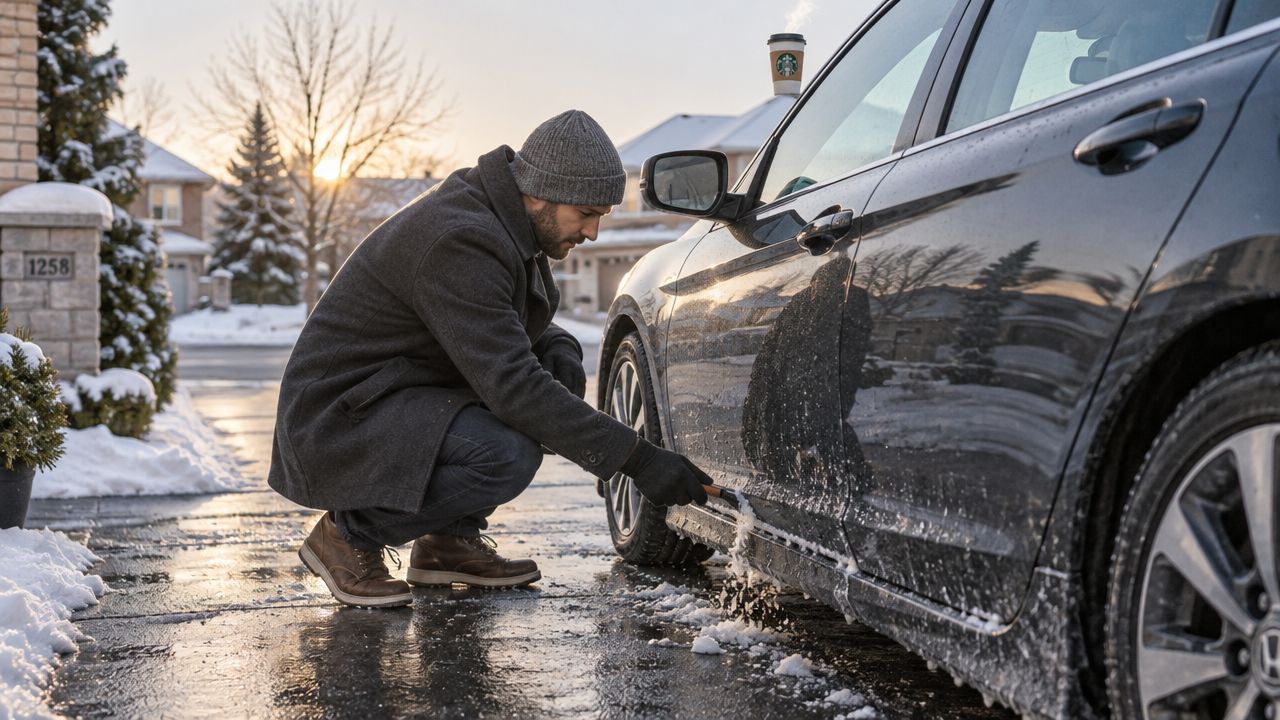
Winter changes the cleaning problem
Ontario wash operators measure water efficiency in litres per vehicle, or lpv. Guidance from the Canadian Carwash Association on saving water in vehicle-wash operations reports that a well-maintained self-serve facility typically uses about 60 litres per vehicle without recycling, while automatic systems with recycling can use less than 30 litres per vehicle. The same guidance reports Natural Resources Canada's estimate of 260 litres of heated water per vehicle for an average commercial car wash, along with about 1,300 gigajoules per year for water heating.
The lesson is practical. Equipment now uses reclaim systems, spray optimisation, and controlled rinse cycles to reduce waste. In the GTA, water use also affects operating cost, runoff management, and whether a mobile operator can work responsibly in a driveway or parking area. Salt-laden runoff should not be treated as ordinary clean water.
Choose the machine for the contamination you need to remove, not for the most impressive specification on the box.
A salted commuter vehicle may need several kinds of attention. An extractor removes embedded grime from fabric. A polisher addresses defects in the clear coat. A steam cleaner reaches vents, seams, and hard trim while using far less liquid than a conventional rinse. Each tool protects a different part of the vehicle, which makes the choice about winter wear as much as appearance.
What a Car Detailing Machine Actually Does
A car detailing machine is any powered tool that cleans, restores, or protects a vehicle more thoroughly than hand washing alone. The label covers several very different machines, so start with the job rather than the brand.
Four jobs, four mental pictures
Wet extraction injects cleaning solution into carpet or fabric and immediately recovers the dirty liquid. Think of it as a carpet shampooer built for a vehicle floor. It's useful when salt, spilled drinks, mud, or odour has travelled below the visible surface.
Mechanical paint correction uses a machine polisher, a pad, and a compound to level a very small amount of clear coat. The closest household analogy is a slow, controlled sander, except the goal is to remove the peaks around a defect and refine the finish without cutting aggressively.
Steam cleaning uses heated vapour to loosen grime in places where a wet nozzle can't comfortably work. Think of it as a pressure washer that trades force and volume for heat and precision. It can help with vents, buttons, door-jamb residue, and tight trim gaps, but electronics still require careful handling.
Interior shampooing combines brush agitation, cleaning solution, and vacuum recovery. It's a vacuum crossed with a wet mop, aimed at fabric surfaces rather than paint.
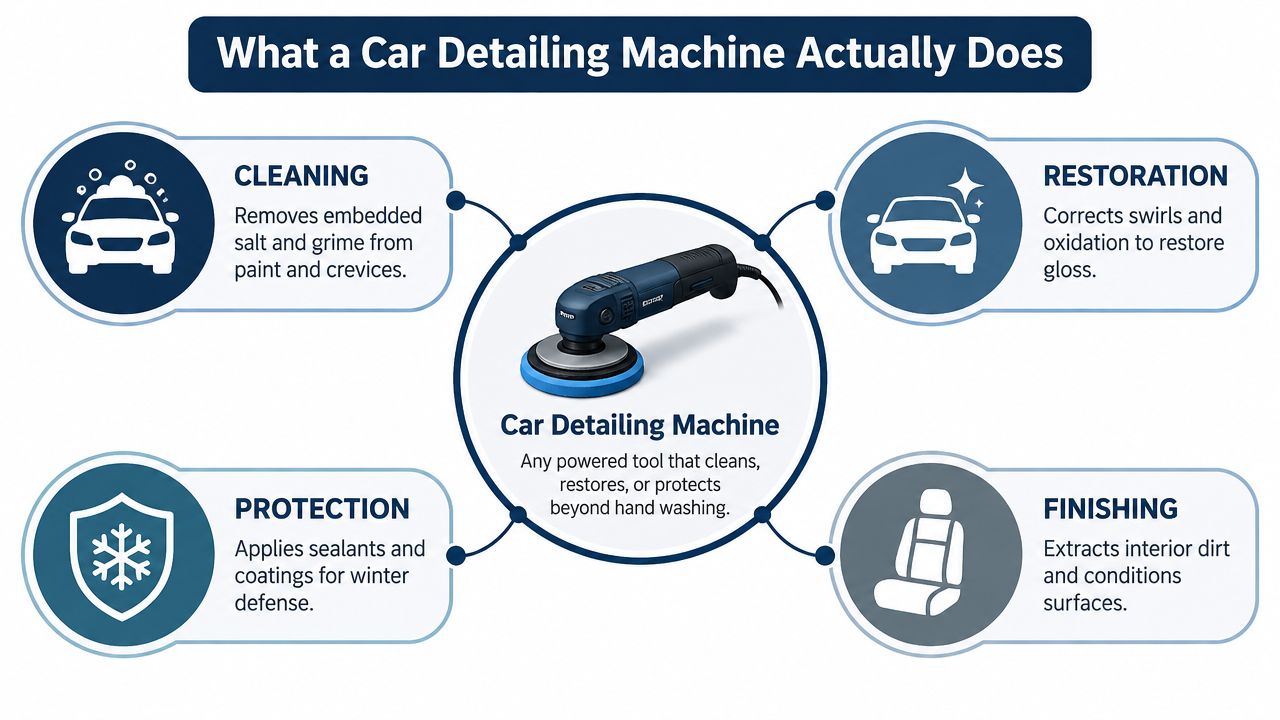
Why a regular wash can't replace all four
A normal wash removes loose material and improves appearance. Detailing equipment adds depth and control. Suction lifts suspended dirt from fibres. Heat softens bonded grime. Pad and compound combinations refine paint. Each action solves a different failure point in the cleaning process.
The confusion usually starts with the word “clean.” A steamer can loosen a sticky cup-holder edge, but it doesn't recover the dissolved residue from carpet. An extractor can clean a fabric seat, but it isn't the right tool for a swirl-marked bonnet. A polisher can restore gloss, but it won't remove salt from a wheel well.
That distinction matters in a GTA winter because the vehicle carries several kinds of contamination at once. Match the machine to the material, the depth of the dirt, and the level of protection you want after cleaning.
The Four Main Types of Car Detailing Machines
The simplest comparison is to ask what has gone wrong with the vehicle. Extractors solve embedded fabric contamination. Polishers solve paint defects. Steam cleaners solve greasy or tightly confined surface grime. Carpet cleaners focus on interior fabric agitation and recovery, often in a more compact format.
| Machine Type | Primary Job | Best For | Entry Price (CAD) | Skill Level |
|---|---|---|---|---|
| Extractor | Injects solution and recovers dirty water | Salted carpets, floor mats, fabric seats, odours | Varies by model and supplier | Moderate |
| Dual-action polisher | Refines clear coat with controlled orbital movement | Swirls, haze, light oxidation, winter wash marks | Varies by model and supplier | Moderate |
| Rotary polisher | Cuts and refines paint with direct rotation | Heavier correction and experienced operators | Varies by model and supplier | Advanced |
| Steam cleaner | Loosens grime with heated vapour | Vents, seams, hard trim, grease, touchpoints | Varies by model and supplier | Moderate |
| Carpet cleaner | Agitates and recovers soil from interior fabric | Floor mats, seats, and smaller fabric areas | Varies by model and supplier | Beginner to moderate |
The table uses qualitative price guidance because the verified information available here doesn't establish reliable Canadian entry-price bands for each category. Online listings vary by configuration, warranty, accessories, and whether a machine includes a heater, automotive nozzle, or recovery system.
Extractors and carpet cleaners
Ontario-sold professional extractors commonly pair a 150 PSI diaphragm demand pump with 3-stage vacuum motors rated at 94 CFM and 125 inches of water lift, according to the Kleen Kuip E-600 automotive extractor specifications. That combination gives the operator pressure to move solution into carpet and suction to pull suspended grime and moisture back out.
A built-in 1,850 W heater, reaching approximately 200°F, can improve work on stubborn stains and caked-on dirt. Use an extractor for the salted mat that has turned grey, not a steamer that merely loosens the top layer.
Polishers
Dual-action machines are usually the friendlier starting point because their movement is more forgiving. Rotary polishers can correct more aggressively, but they demand tighter control of pressure, pad choice, speed, and heat.
Ontario providers describe using multiple stages and machine sizes for different panels. Detailing Windsor's service information notes the use of over a dozen polishers from brands including Rupes, Flex, and Makita. The reason isn't showroom theatre. Pad diameter, machine throw, and machine type affect how quickly an operator removes defects and how safely the tool works around curved or intricate bodywork.
Buy, Rent, or Hire a Pro Service
The right decision depends less on enthusiasm than on repetition. A machine sitting in a damp garage between occasional uses may cost more than a professional service once storage, chemicals, pads, electricity, learning time, and correction work are included.
For a homeowner, buying makes sense when detailing is a regular hobby, when several vehicles need attention, or when the owner wants control over the process. Renting can suit a one-off interior recovery or a small fleet project. Hiring a detailer is often the cleanest option when the vehicle needs several machine types and the owner doesn't have a drain-safe work area.
Compare the three paths
| Option | Upfront Cost | Per-Use Cost | Best For |
|---|---|---|---|
| Buy | Equipment, accessories, chemicals, storage, and electrical setup | Consumables, water, power, maintenance, and time | Frequent DIY users and hobbyists |
| Rent | Rental deposit or daily charge, plus supplies | Rental period, transport, supplies, and learning time | One-off deep cleans and short fleet projects |
| Hire | No equipment purchase | Service price and any vehicle-size or condition surcharge | Busy commuters, rideshare drivers, and owners without suitable space |
The verified brief doesn't provide dependable current Canadian rental rates or consumer equipment prices for the specific figures suggested in the planning notes, so those amounts shouldn't be presented as established facts. Treat any quote from a retailer or rental counter as a starting point, then check what accessories, insurance, cleaning solution, and minimum rental period are included.
A practical decision rule
If you detail only occasionally, hiring usually wins because you pay for a finished result rather than owning a machine. If you enjoy weekend work and have dry storage, a dual-action polisher or compact extractor may earn its keep through repeated use, but only after you learn the technique.
Rideshare drivers should value downtime as carefully as equipment cost. A vehicle off the road for a long DIY session isn't available for passengers, deliveries, or rest. Small fleets should compare the cost of outsourcing against the time a staff member would spend learning, setting up, cleaning equipment, and disposing of wastewater.
Before buying: Confirm the power supply, water access, drainage plan, storage location, replacement-parts availability, and warranty terms. The machine is only one part of the workflow.
Maintenance and Safety Essentials
A detailing machine works around water, electricity, heat, chemicals, and moving parts. Maintenance isn't a ceremonial end-of-day task. It protects suction, prevents contamination, and reduces the chance that a small defect becomes an expensive failure.
Start with the pad on a polisher. Clean it after every session so dried compound and trapped grit don't scratch the next panel. Inspect the backing interface, check that the pad spins evenly, and keep separate pads for cutting, polishing, and finishing.
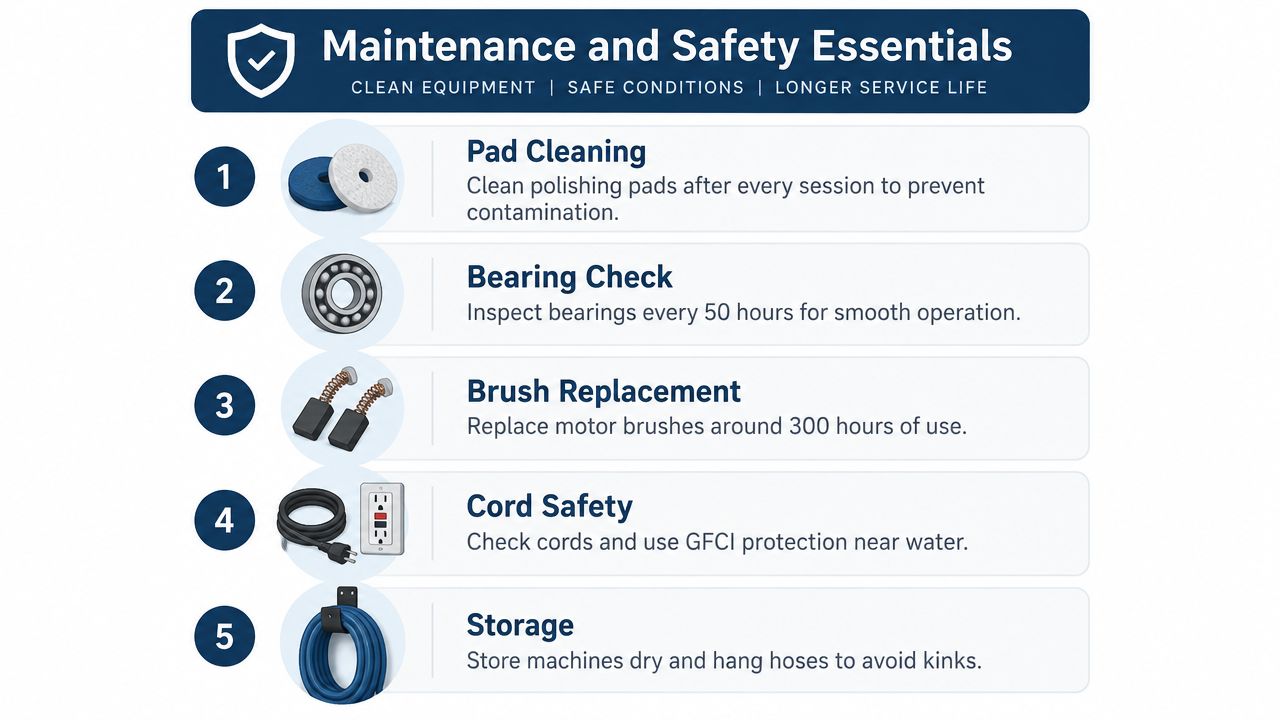
Care by machine type
Polishers: Clean pads, wipe the housing, and inspect the cord before storage. A contaminated or distorted pad can create the very haze you're trying to remove.
Extractors: Empty and rinse recovery tanks after use. Flush the vacuum path, inspect gaskets, and follow the manufacturer's winter-storage procedure before leaving the machine in an unheated garage.
Steam cleaners: Follow the manufacturer's descaling schedule and use suitable water-management practices. Mineral buildup can restrict flow and stress the heating system, especially where local water is hard.
Carpet cleaners: Remove loose debris before wet work, keep brushes free of hair and fibres, and allow tanks and hoses to dry fully. Closing a damp machine creates an unpleasant problem for the next vehicle.
Protect yourself and the vehicle
Use a properly rated, CSA-certified extension cord where one is needed, and connect wet-area equipment through GFCI protection. Wear sealed eye protection when spraying or extracting chemicals, gloves suitable for the product, and respiratory protection appropriate to the task when dry-vacuuming dusty interiors.
Never direct steam into screens, switches, speakers, fuse areas, or exposed connectors. Don't soak leather, headliners, seat electronics, or foam. Before wet cleaning, check for leaks, test a hidden area, and confirm that the dirty water has a legal destination.
Safe workflow: Dry vacuum first, wet clean second, recover thoroughly, ventilate the cabin, and store every component dry.
Where DIY Detailing Quietly Costs More
DIY detailing can look inexpensive when you count only cleaner and water. The cost includes your time, equipment wear, electricity, replacement pads, drying effort, and repairs after a mistake.
A full vehicle can occupy an entire block of personal time once setup, vacuuming, stain treatment, extraction, paint preparation, polishing, cleanup, and storage are included. For a rideshare driver, that time may replace a profitable driving period. For a homeowner, it can displace family time and leave the vehicle in the driveway while wastewater handling is overlooked.
The hidden line items
- Time: Paint correction takes practice. A polisher held at the wrong angle, or paired with the wrong pad, can leave haze or uneven correction.
- Consumables: Compounds, pads, towels, brushes, cleaners, dressings, and protection products must be replaced.
- Utilities: Heated water and powered vacuums add operating cost, even after the machine has been paid for.
- Depreciation: Pumps, hoses, seals, bearings, heating elements, and vacuum motors wear with use.
- Rework: A damaged finish may need a specialist. Repeating the same pass with the same machine can worsen the result.
Water handling changes the calculation, particularly during Ontario's winter season. A driveway wash without water reclaim can turn into higher water and heating costs per vehicle, while salt and slush runoff still need a suitable destination. The Canadian water-efficiency guidance links equipment design with heating demand and responsible runoff practices. That matters because a cheaper wash is not cheaper if it creates a drainage problem or leaves road salt behind.
The machine also has an opportunity cost. Buying a polisher for one correction job, an extractor for one stain, or a steam cleaner for occasional touch-up work may leave you storing equipment that sees little use. Renting reduces ownership cost, but setup time, learning curves, and availability still affect the total.
The honest question isn't “Can I do this myself?” It's “What is my time worth, and can I complete the job safely without creating a second problem?”
DIY still makes sense for owners who enjoy the work, have suitable space, or maintain several vehicles. If the goal is a clean, protected vehicle rather than a new weekend hobby, professional labour can be the lower-friction choice.
Detailing Machines for Fleets and Rideshare Drivers
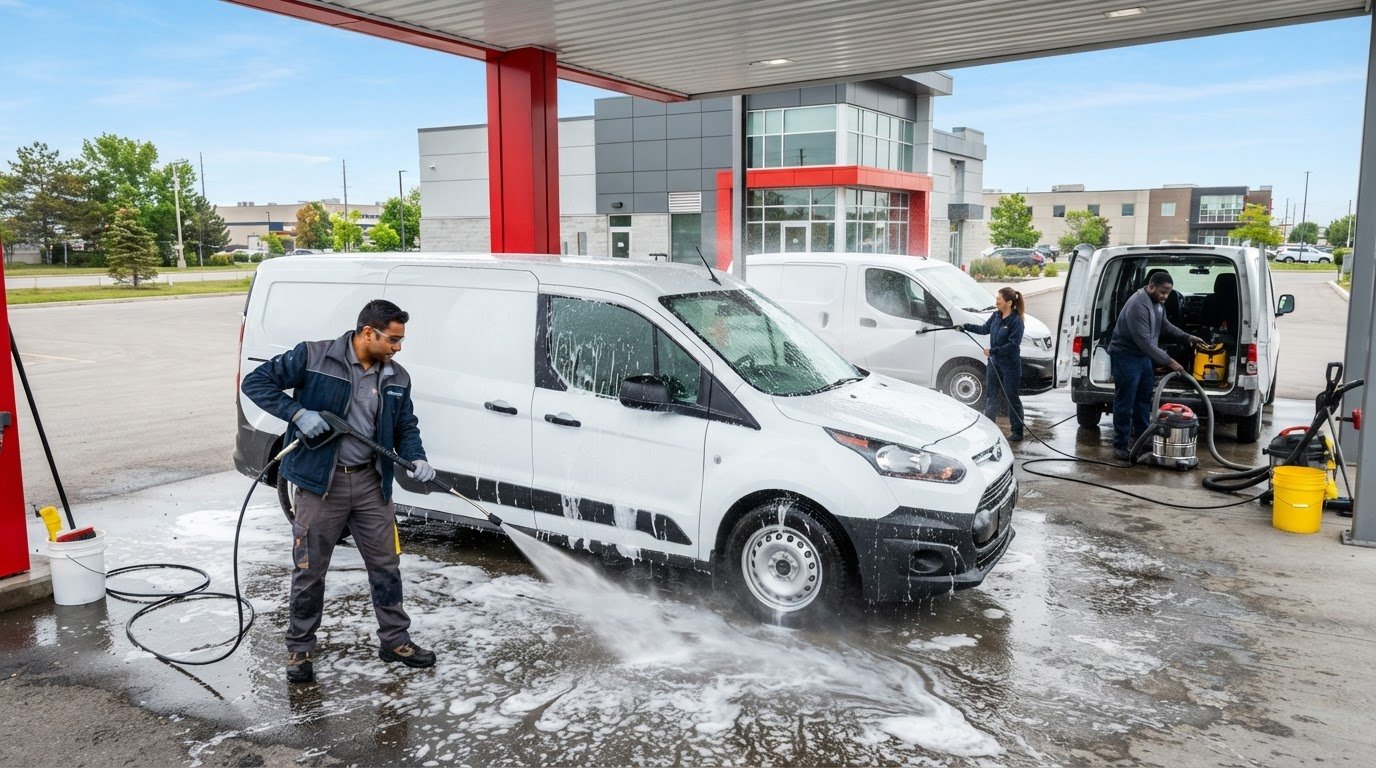
A fleet vehicle doesn't wait for spring. It collects road film, salt, food residue, fingerprints, and glass grime every time it works. Treating detailing as a recurring maintenance task protects presentation, cabin comfort, visibility, and resale condition more reliably than booking a rescue clean after the interior has become unpleasant.
Monday morning checklist
- Review vehicle condition: Flag wet carpets, salt-stained mats, odours, smeared glass, and exterior panels with heavy road film.
- Assign the machine: Use an extractor for fabric contamination, a dual-action polisher for controlled paint refinement, and steam for vents, seams, and hard touchpoints.
- Schedule around shifts: Detail during planned vehicle handoffs so the machine doesn't create surprise downtime.
- Track the result: Record the work completed, product used, visible defects, and any area that needs a specialist.
- Plan runoff: Confirm that collected wash water goes to an approved destination and never into a storm drain.
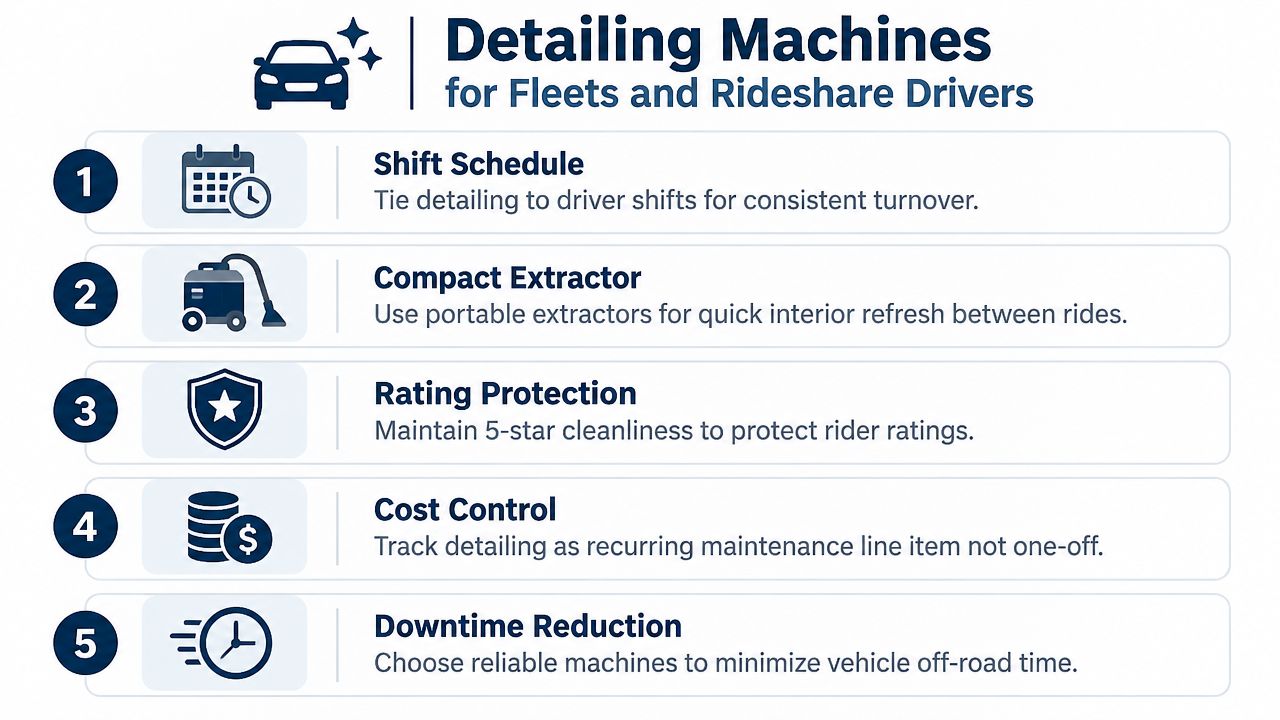
An extractor is often the first machine that makes operational sense for a vehicle group because interior dirt affects the passenger experience immediately. A polisher becomes more relevant when repeated washing has left high-visibility panels hazy or marked. Steam earns its place when operators need quick work on vents, handles, consoles, and narrow seams without saturating the cabin.
The purchase decision should follow actual workload, not a generic “professional setup.” Count how often vehicles need intervention, how much storage and power are available, who will operate the equipment, and how wastewater will be handled. If staff can't perform the work consistently, a reliable service arrangement may protect uptime better than an impressive machine parked unused.
Choosing the Right Path for Your Vehicle
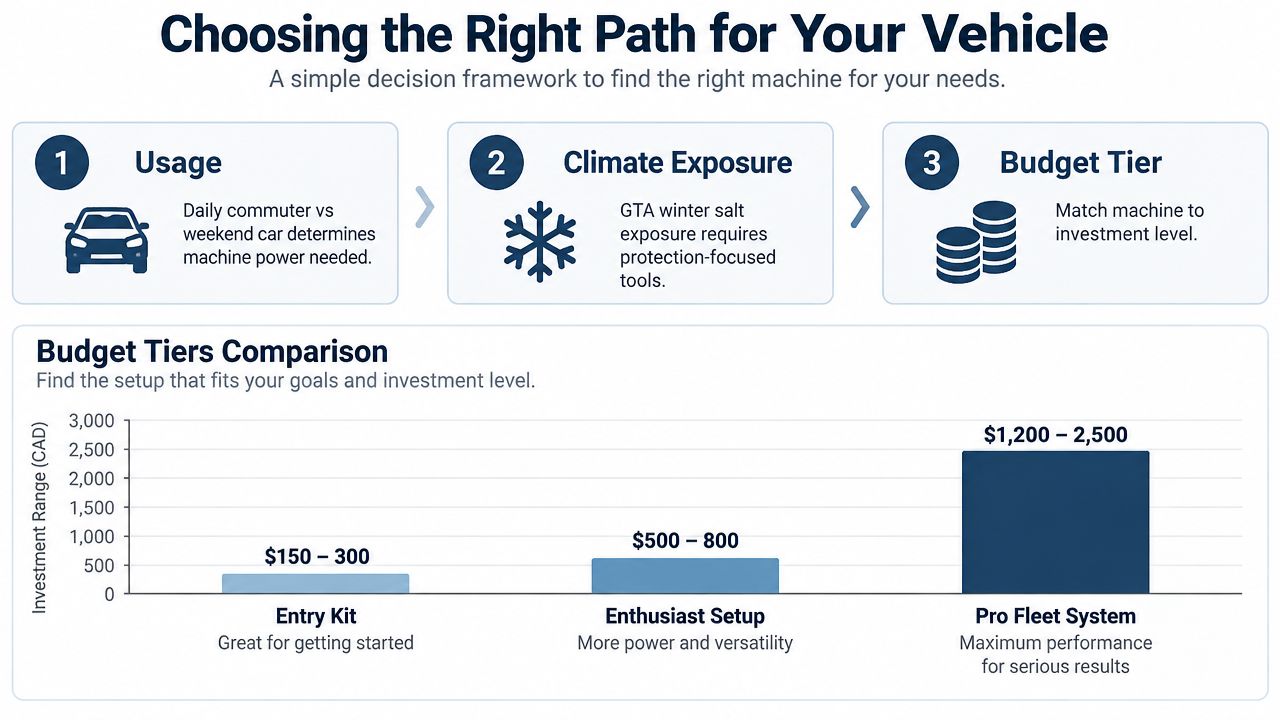
Start with three questions.
Check your use
Does the vehicle commute daily, carry passengers, transport pets, or sit unused for long stretches? Daily use creates a different cleaning burden from a weekend car. High-use vehicles usually benefit from an extractor-led interior routine, while an occasional car may need seasonal professional attention instead of dedicated equipment.
Check winter exposure
Does the vehicle sleep outdoors? Does it travel through salted roads and slush? If yes, prioritise tools and services that remove contamination from wheel areas, seams, carpets, and underbody-adjacent surfaces. Cosmetic gloss matters, but winter protection starts with removing the material that holds moisture and grit against the vehicle.
Check your workspace and budget
Do you have safe power, dry storage, water access, and a runoff plan? If not, a powerful machine won't solve the practical problem. A mobile or fixed-site professional can bring the workflow, recovery equipment, and disposal process instead.
For an older or frequently driven vehicle, checking its background can also sharpen your maintenance priorities. A resource such as the VinCheck Elantra 2022 report can help you think about vehicle value and condition before deciding how much correction or protection work makes sense.
For many GTA commuters, the sensible answer is hybrid. Use regular, controlled washes to manage road film, then book periodic professional interior extraction, paint correction, or rust-protection work when the vehicle needs more than routine maintenance. If time, space, runoff control, or equipment confidence is the bottleneck, Nanak Car Wash offers express and full-service washes, interior and exterior detailing, machine buff and polish, and rust proofing across GTA-area locations.
If winter salt is already building up in your carpets, seams, or wheel areas, visit Nanak Car Wash for a professional cleaning and protection workflow matched to your vehicle. Ask about the right combination of exterior washing, interior stain and salt removal, machine polishing, or rust proofing before the next round of GTA slush.


 6600 Finch Ave W, Etobicoke, ON M9V 3Z6
 647-703-8515
 MON – SUN 8 AM to 7 PM