
Ontario car detailing pet hair removal cost typically ranges from C$25 to C$100 as an add-on, but severe cases in larger vehicles can reach C$220 because the work is priced as a labour variable, not a fixed cosmetic fee. The final bill depends on vehicle size, hair severity, fabric, and how far the fibres have worked into the cabin.
The popular advice says to “just add pet hair removal” to a wash and expect a predictable surcharge. That advice is incomplete. A few loose hairs on rubber mats are a quick cleanup. Hair woven through carpet, seat seams, cargo liners, and headliners is an extraction job that can consume several rounds of brushing, vacuuming, and fabric treatment.
Ontario pricing reflects that reality. Local examples show pet hair removal at C$25–C$75 as an add-on, while another Ontario guide lists C$60 for sedans, C$80 for SUVs and trucks, and C$100 for luxury vehicles. Severe cases on larger vehicles can rise to C$100–C$220 when the technician must spend substantially more time on embedded contamination. (Ontario detailing price guide)
If your vehicle also has winter salt, sand, stains, or persistent odour, buying pet hair removal alone may be the wrong financial decision. A bundled interior recovery package can address the entire cabin instead of charging you to solve only the most visible problem.
Table of Contents
- The Myth of the Flat-Rate Pet Hair Surcharge
- What Actually Drives the Final Detailing Bill
- Standalone Surcharges Versus Bundled Interior Packages
- Navigating Nanak Car Wash Service Options
- Inside the Multi-Step Extraction Process
- Strategies to Minimize Future Detailing Expenses
- Common Questions About Pet Hair and Interior Recovery
The Myth of the Flat-Rate Pet Hair Surcharge
A flat-rate menu price makes pet hair removal look simpler than it is. The price appears beside services such as mat cleaning or tyre dressing, so customers naturally assume it takes roughly the same effort every time. It doesn't.
Pet hair behaves differently depending on where it lands. Loose hair on a smooth leather seat may lift during ordinary vacuuming. Short, fine hair can hook into woven cloth and carpet fibres, especially around seat rails and cargo areas. Static makes the problem worse by holding individual strands against fabric long after the visible surface looks clean.
That means two vehicles with the same model can require completely different work. One may need a targeted brush and vacuum pass. The other may need manual agitation across every carpeted section, followed by repeated extraction and inspection.
The price follows labour, not appearance
Ontario providers commonly treat pet hair as an additional labour charge. One GTA price list advertises pet hair removal extra at C$30 or more, while another lists C$50 for sedans and C$75–C$100 for SUVs and minivans. The latter also uses a 30–45 minute increment for lighter cases, which illustrates the central point, the bill follows working time and vehicle footprint rather than a universal interior rate. (Toronto/GTA detailing pricing)
Practical rule: A quote that doesn't ask about vehicle size and hair severity isn't a reliable quote.
Online estimates fail because they compress several different jobs into one label. “Pet hair removal” might mean a light maintenance cleanup, a full carpet extraction, or a recovery service after years of shedding. Those jobs shouldn't carry the same price.
Why a quick case becomes an expensive case
A light case usually has visible hair sitting on top of the upholstery. A severe case has hair trapped under seat edges, in stitching, inside carpet loops, and around plastic trim. The technician can't solve that with one pass because pulling aggressively can damage delicate fabric or leave hair packed deeper into the pile.
Ontario benchmark pricing shows standard cases around C$25–C$75, with severe work reaching C$100–C$220 for larger vehicles. Some providers also charge by time, including C$30 per additional half hour. (Ontario pet hair removal pricing benchmarks)
The honest way to think about the service is simple: you're paying for the technician's hands, tools, and time. The surcharge isn't arbitrary. It covers work that a normal vacuum pass doesn't complete.
What Actually Drives the Final Detailing Bill
Three variables control the estimate: vehicle footprint, fabric type, and embedment depth. Vehicle class sets the starting point, while the cabin's materials and contamination determine how far the technician must move beyond ordinary vacuuming.
A compact sedan has less carpet, fewer seating surfaces, and a smaller cargo area than a minivan or three-row SUV. Larger vehicles also create more awkward zones, including deep footwells, wide cargo carpets, seat tracks, and additional rows that collect hair.
Vehicle footprint changes the workload
The Ontario market makes the size difference clear. One price guide lists C$60 for sedans, C$80 for SUVs and trucks, and C$100 for luxury vehicles, while another GTA listing places SUVs and minivans at C$75–C$100 for pet hair removal. (Ontario vehicle-class pricing examples)
The following table is a practical estimate built only from those published regional ranges. It isn't a promise of a final quote, because condition still matters.
| Vehicle Class | Light Shedding (Add-on) | Severe Embedment (Add-on) |
|---|---|---|
| Sedan or compact car | C$25–C$60 | C$100 or more |
| SUV or truck | C$30–C$80 | C$100–C$220 |
| Minivan or larger family vehicle | C$30–C$100 | C$100–C$220 |
| Luxury vehicle | Around C$100 | C$100 or more, depending on material and severity |
Fabric decides how stubborn the hair becomes
Woven cloth usually holds hair more aggressively than smooth leather because strands catch between the fibres. Carpet can be even more demanding, particularly in cargo areas where hair mixes with grit, salt, and moisture. Rubber mats are simpler, but hair can still gather around their textured grooves.
Headliners require a careful touch. Excessive moisture or aggressive scrubbing can affect the adhesive or distort the fabric, so a technician may clean it differently from a removable carpet mat. Leather often needs less hair extraction, but seams and perforations still require detail work.
Embedment depth is the hidden variable
Surface shedding can respond to a rubber brush, compressed air, and a commercial vacuum. Embedded hair needs repeated agitation. If the fibres have been pressed into the carpet by passengers, cargo, or regular pet travel, the technician must loosen them section by section before vacuuming again.
The final question isn't “How much hair is in the car?” It's “How many surfaces have hair bonded into them, and how much effort will each surface take?”
Standalone Surcharges Versus Bundled Interior Packages
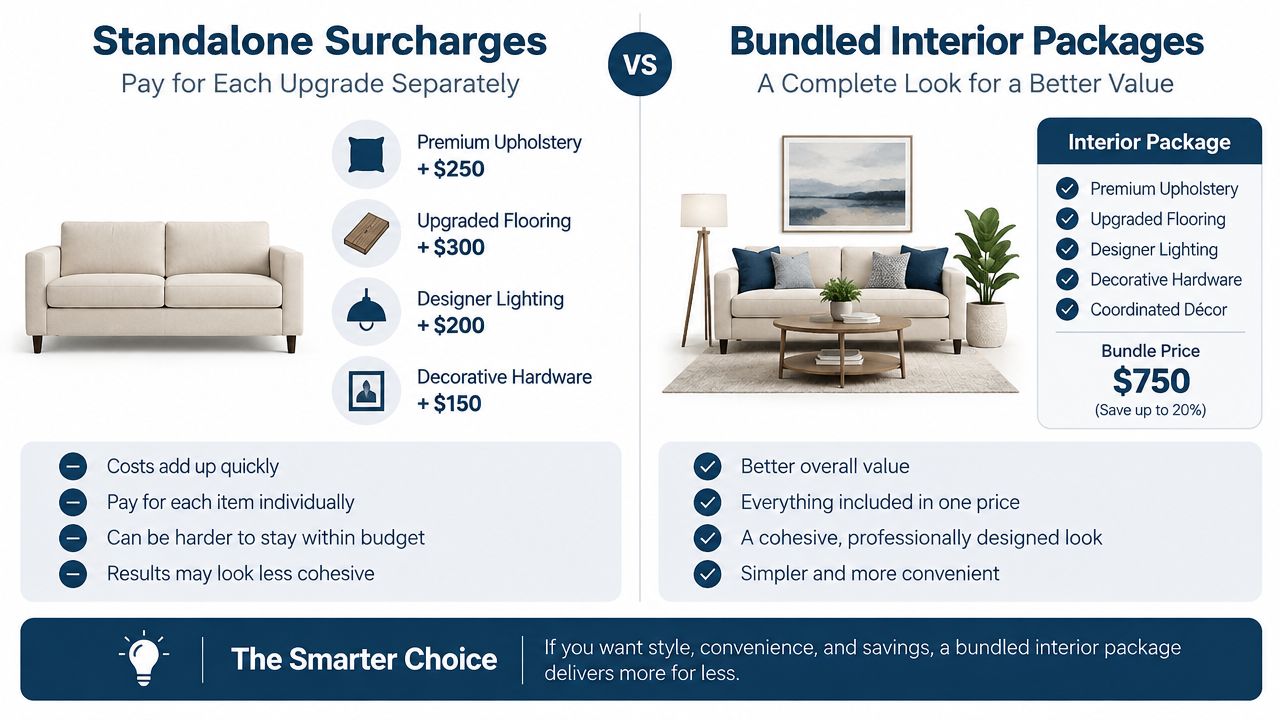
A standalone pet hair surcharge makes sense when the rest of the cabin is already clean. If your seats, carpets, and trim need broader attention, it can be poor value. You're paying to remove hair while leaving the salt film, odour source, stains, and embedded grime that make the interior feel dirty in the first place.
GTA providers often bundle pet hair work into higher-tier interior packages. One local pricing list shows complete detailing packages starting at C$225 for cars and C$285 for SUVs, crossovers, minivans, and trucks, with pet hair removal included in the higher-tier package. The same listing prices headliner cleanup as an additional C$29.95. (GTA complete detailing package context)
Choose the standalone option when the cabin is otherwise healthy
Book the add-on when:
- The seats and carpets are clean: Hair is the main problem, not stains or ground-in dirt.
- The vehicle has light shedding: A technician can remove the visible contamination without broad extraction.
- You maintain the interior regularly: The cabin hasn't accumulated winter debris or lingering odours.
- You need a targeted reset: You're preparing for a passenger, pet-free use, or a quick vehicle handover.
A standalone service is especially sensible for a sedan with hair concentrated on one seat or in a cargo mat. Ask the provider whether the quote includes only surface removal or also covers seams, seat rails, and carpet edges.
Bundle the work when the cabin needs recovery
A family SUV, minivan, rideshare vehicle, or delivery vehicle often has more than one interior problem. Pet hair may sit beside salt stains, sand, food residue, damp fabric, and odour. In that situation, paying a separate surcharge can leave you with a technically hair-free cabin that still doesn't feel clean.
Ontario guides place full interior detailing in a broad range of about C$80–C$630 overall, while pet hair alone commonly falls around C$25–C$100 or more, depending on size and severity. (Ontario interior detailing and pet hair FAQ context)
The right comparison isn't add-on versus package in isolation. Compare the total work your cabin needs. If the detailer will already shampoo, extract, deodorize, and clean crevices as part of the package, the bundle may be the more rational purchase.
Navigating Nanak Car Wash Service Options
Nanak Car Wash separates quick wash visits from appointment-based detailing. That distinction matters because an express wash is designed to keep the vehicle presentable, while interior detailing addresses contamination that needs more time, tools, and hands-on work.
Express services can handle routine exterior cleaning, while full-service wash packages add basic interior attention such as vacuuming, dashboard cleaning, and windows. Those options are useful for maintenance, but don't assume a drive-through visit includes deep pet hair extraction.
Match the booking to the cabin's condition
Use this decision path:
- Light hair on otherwise clean surfaces: Ask whether a pet hair add-on can be attached to the service you want.
- Hair in cloth, carpet, seams, or cargo areas: Request appointment-based interior detailing and describe the affected zones.
- Hair plus salt, stains, or odour: Ask for an interior recovery package rather than a hair-only surcharge.
- SUV, van, or truck: Confirm the size category before arrival, because larger interiors and pet hair surcharges can change the quote.
- Rideshare or delivery use: Explain the vehicle's workload. Frequent passenger traffic can mean the cabin needs broader cleaning than hair removal alone.
Nanak's appointment-based interior and exterior detailing can include carpet and seat shampooing, salt and stain removal, vent and crevice blowouts, leather deep cleaning, and machine polishing. Its listed service information also notes that SUV, van, truck, and pet hair surcharges apply when the work requires additional labour.
Keep maintenance separate from restoration
An Unlimited Wash Club membership, prepaid wash bundle, or routine interior visit can help maintain the cabin between heavier appointments. These options won't replace a proper extraction when hair is embedded, but they can reduce the amount of loose dirt and moisture that gets worked into the fabric.
Ask three questions before you confirm:
- What's included: Does the package cover pet hair, or is it billed separately?
- Where does the surcharge apply: Is it limited to carpets, or does it include seats, seams, and the cargo area?
- How is severity assessed: Will the team confirm the condition before starting?
Those questions prevent the most common checkout surprise, a basic package that was never designed for the condition of the vehicle.
Inside the Multi-Step Extraction Process
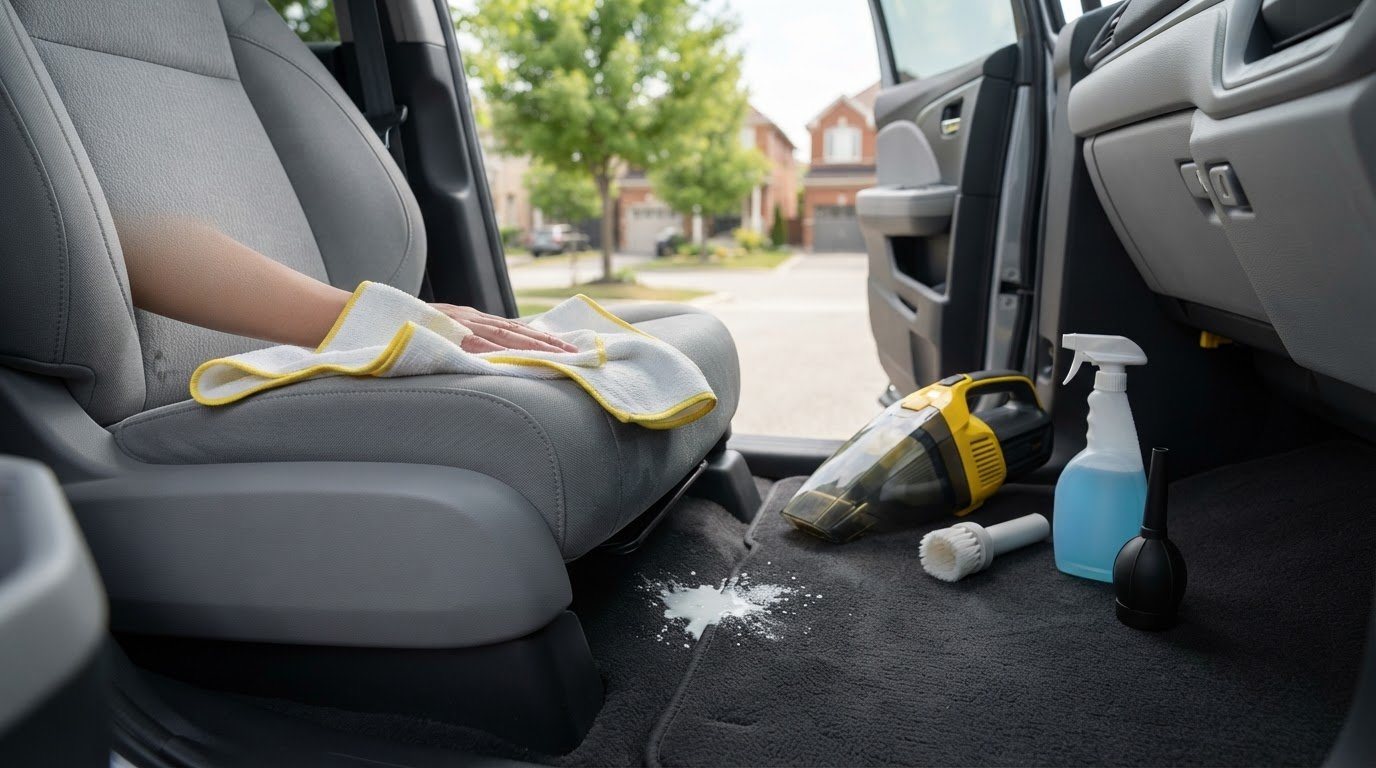
Professional pet hair removal is a sequence, not a single vacuum pass. The technician first inspects the cabin and identifies the worst zones. Hair often hides beneath seat edges, inside carpet borders, between stitching, and around trim where a standard nozzle can't reach.
The first mechanical stage usually combines a commercial vacuum with compressed-air blowouts. Air dislodges hair from seams and crevices, while the vacuum captures what moves. A rubber brush or specialised pet-hair tool then pulls strands upward from cloth and carpet.

Agitation makes the difference
A technician may work in small sections, brushing in different directions to release fibres trapped in the carpet pile. Some surfaces respond to a rubber brush, while others need a more controlled tool to avoid marking delicate upholstery. The operator must balance force with material sensitivity.
A light case can fit within a short time increment because the hair is sitting near the surface. Heavy contamination demands repetition:
- Loosen: Break the bond between hair and fabric with brushing or controlled agitation.
- Lift: Pull the loosened fibres out of the carpet or upholstery.
- Vacuum: Remove the released material before it settles elsewhere.
- Inspect: Use lighting and close checks to find remaining strands.
- Repeat: Rework stubborn sections until further effort no longer produces a meaningful improvement.
Extraction is not the same as hair removal
If the interior also has stains or odour, the technician may need fabric cleaning and extraction after the hair is removed. Wet cleaning before the bulk hair is extracted can turn loose strands into a sticky mess, so sequencing matters.
This is why an advertised 30–45 minute increment is appropriate for lighter work but not a guarantee for a severely contaminated cabin. (GTA time-increment pricing example)
The customer pays for the difficult minutes, not the easy ones.
A good provider should explain what the price covers and whether the service aims for practical removal or near-total restoration. No honest detailer should promise that every microscopic strand will disappear from an old, heavily used fabric interior.
Strategies to Minimize Future Detailing Expenses
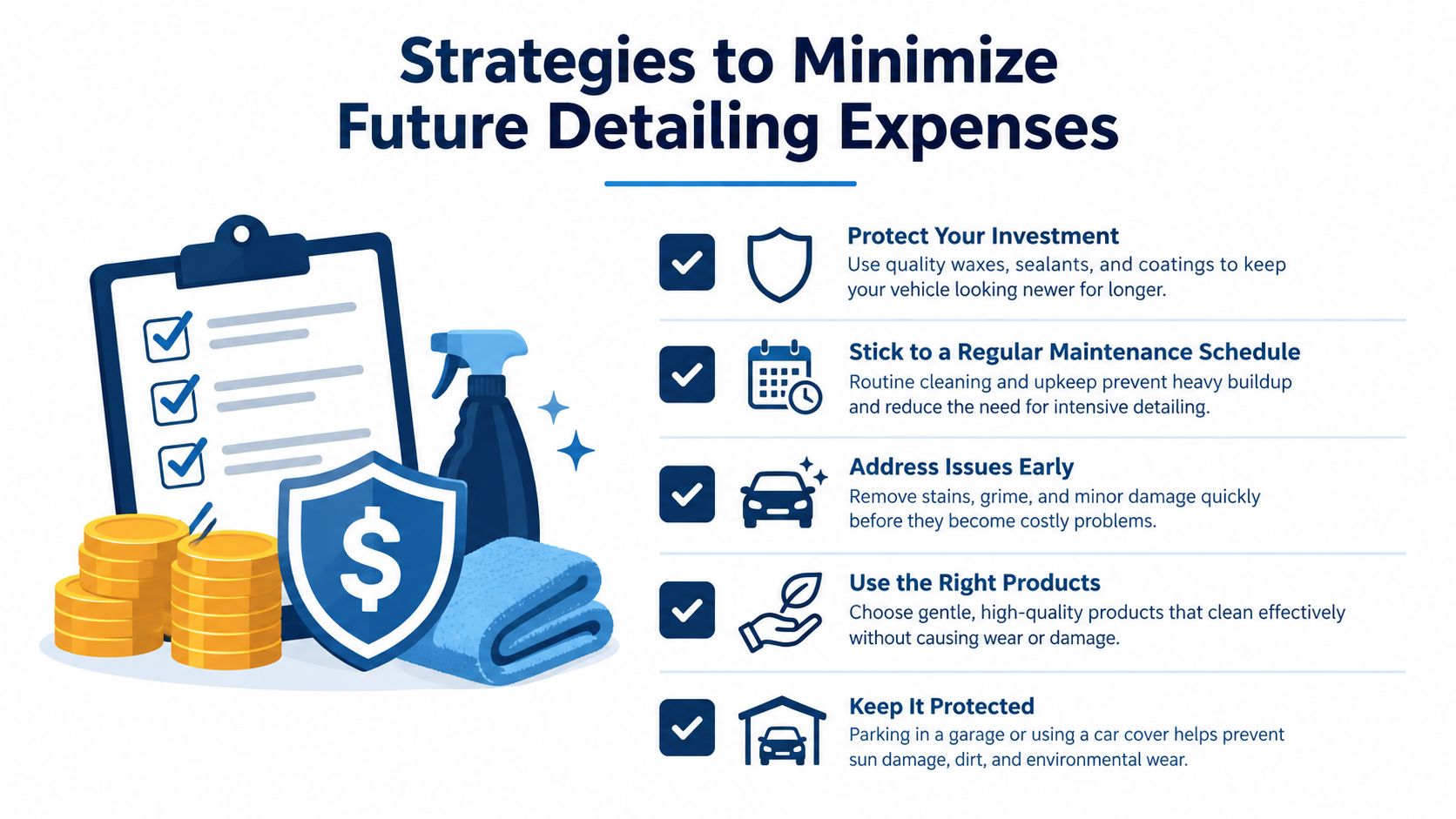
The cheapest pet hair removal is the work you stop from becoming embedded. You don't need a spotless show car every day, but you do need barriers and a short maintenance routine that prevents loose hair from becoming compacted into the upholstery.
Start with the areas your pet uses most. A washable cargo liner protects the carpet in hatchbacks, SUVs, and vans. A durable seat cover protects cloth from direct contact, while a blanket can cover a bench seat during longer trips. Choose products that fit securely and don't interfere with seat belts or airbags.
Build a small maintenance kit
Keep a compact kit in the garage or vehicle:
- Rubber pet-hair brush: Use it on cloth seats and carpet before hair gets pressed into the pile.
- Crevice tool: Work along seat rails, console gaps, and the edges of floor carpeting.
- Lint roller: Reserve it for smooth upholstery and loose surface strands.
- Washable liner: Shake it out and clean it separately instead of allowing hair to collect in the vehicle.
- Microfibre cloths: Wipe hard surfaces after vacuuming so loosened dust doesn't remain on trim.
Vacuum before hair has time to mix with grit and moisture. In Ontario, winter salt and damp debris can make interior contamination cling more firmly, so a quick cleanup after muddy or snowy trips is more useful than waiting for a dramatic seasonal deep clean.
Use memberships for maintenance, not miracles
A monthly wash membership or prepaid bundle can make routine exterior cleaning easier and keep basic vacuuming from being neglected. It won't remove embedded pet hair by itself, but consistent upkeep can reduce the amount of material a detailer must agitate during the next appointment.
Set a simple rule: if hair is visible across multiple fabric zones, stop treating the problem as a normal wash. Book professional help before repeated passengers, cargo, and moisture compress it further.
Common Questions About Pet Hair and Interior Recovery
Can detailers remove hair from the headliner
Yes, but headliner work needs restraint. The fabric is attached to a backing, and aggressive brushing or excessive moisture can create visible damage. Tell the provider about headliner contamination before the appointment so the technician can choose a controlled method rather than treating it like floor carpet.
A headliner cleanup may also be priced separately. One GTA provider lists a C$29.95 headliner cleanup add-on, which shows why customers should ask whether roof fabric is included in the quoted pet hair service. (GTA detailing price list)
What if the odour remains after the hair is gone
Hair removal doesn't automatically remove every odour source. Smell can remain in upholstery, carpet backing, spills, damp padding, or areas where a pet repeatedly travelled. If the cabin has an odour, request odour neutralization and fabric cleaning as part of the same assessment.
Don't ask for an ozone treatment as a substitute for cleaning. A technician should first remove the physical contamination and identify the source, then determine whether an odour treatment is appropriate.
Is an express wash enough
Usually, no, not when the hair is embedded. Express and full-service wash packages are useful for routine surface maintenance, but deep pet hair removal requires focused agitation and inspection. Book an appointment-based detail when hair is trapped in cloth, carpet, seams, or multiple rows.
What should you send when requesting a quote
Give the detailer the vehicle type, the number of affected seating or cargo areas, the interior materials, and whether salt, stains, sand, or odour are also present. Photos of the front seats, rear floor, cargo area, and headliner can make the first estimate more useful.
Ask whether the quote is standalone or bundled. That single distinction often determines whether you're buying a targeted cleanup or paying for a broader cabin recovery that better matches the vehicle's condition.
Nanak Car Wash offers appointment-based interior detailing that can address carpet and seat shampooing, salt and stain removal, crevice cleaning, and pet hair requiring extra labour. Describe your vehicle accurately, ask how the surcharge is calculated, and visit Nanak Car Wash to choose a service that fits the cabin rather than relying on a misleading flat-rate estimate.

 6600 Finch Ave W, Etobicoke, ON M9V 3Z6
 647-703-8515
 MON – SUN 8 AM to 7 PM