

Ontario reported 1,845,329 tonnes of sodium chloride road-salt loading, with 1,716,585 tonnes applied in one later reporting year, so Toronto drivers should buy supplies for salt removal first, shine second. The right shopping channel depends less on brand loyalty than on whether you have running water, an elevator-sized parking spot, and the patience to fight winter grime alone.
You know the scene. It's Saturday morning, your car is tucked into an underground condo garage, the building rules say no hose, and the white salt crust around the mats has already turned into a permanent-looking border. Maybe you've got a short window before work, a rideshare shift, or the kids need the vehicle again. A giant pressure-washer setup and a shelf of boutique coatings won't solve that problem.
This guide is for GTA drivers choosing car detailing supplies in Toronto based on real parking, weather, and time constraints. You'll get a practical kit for condo living, a heavier setup for driveway washing, and a clear answer on when a professional wash makes more financial sense than another bottle under the sink.
Table of Contents
- Why Toronto Drivers Buy Supplies Differently
- The Core Supply Categories Every Toronto Garage Should Stock
- Matching Products to Your Vehicle and Parking Reality
- Where to Buy in the GTA Without Overpaying
- Storage, Quantities, and Safety in Small Toronto Spaces
- DIY Supplies Versus a Pro Wash in the GTA
- Memberships, Bundles, and the Smart Way to Lower Cost Per Wash
- Putting Together Your Toronto Detailing Plan
Why Toronto Drivers Buy Supplies Differently
Toronto car care starts with logistics. A product can be excellent and still be useless if your condo garage has no drain, your building bans washing, or your storage locker freezes hard enough to change the product's consistency.
Ontario's salt exposure makes that decision more urgent. Health Canada's assessment reported 1,845,329 tonnes of sodium chloride road-salt loading, with 1,716,585 tonnes applied in one later reporting year. Long-term monitoring in Highland Creek also recorded chloride concentrations rising from 150 mg/L in 1972 to more than 250 mg/L by 1995. Those figures come from the Transportation Association of Canada road-salt corrosion investigation. For your vehicle, the practical result is more residue in wheel wells, on brake hardware, below the doors, and under the floor mats.
Your parking arrangement determines the kit:
- Underground condo sedan: Prioritise rinseless or waterless maintenance products, multiple microfibre towels, interior cleaners, and a small decontamination kit. Skip equipment that needs a hose, drainage, or noisy ventilation.
- Driveway DIY owner: Add a pressure washer, foam cannon, two buckets with grit guards, an underbody wand, and larger chemical sizes. You can remove salt properly instead of disguising it with a glossy spray.
- Rideshare or delivery driver: Buy durable, quick-use supplies. A compact vacuum, glass cleaner, interior APC, odour neutraliser, and frequent exterior wash access matter more than a show-car polish.
- SUV or pickup owner: Spend on underbody access, wheel brushes, de-salter, drying towels, and corrosion protection. More exposed surface area means more places for slush and road film to settle.
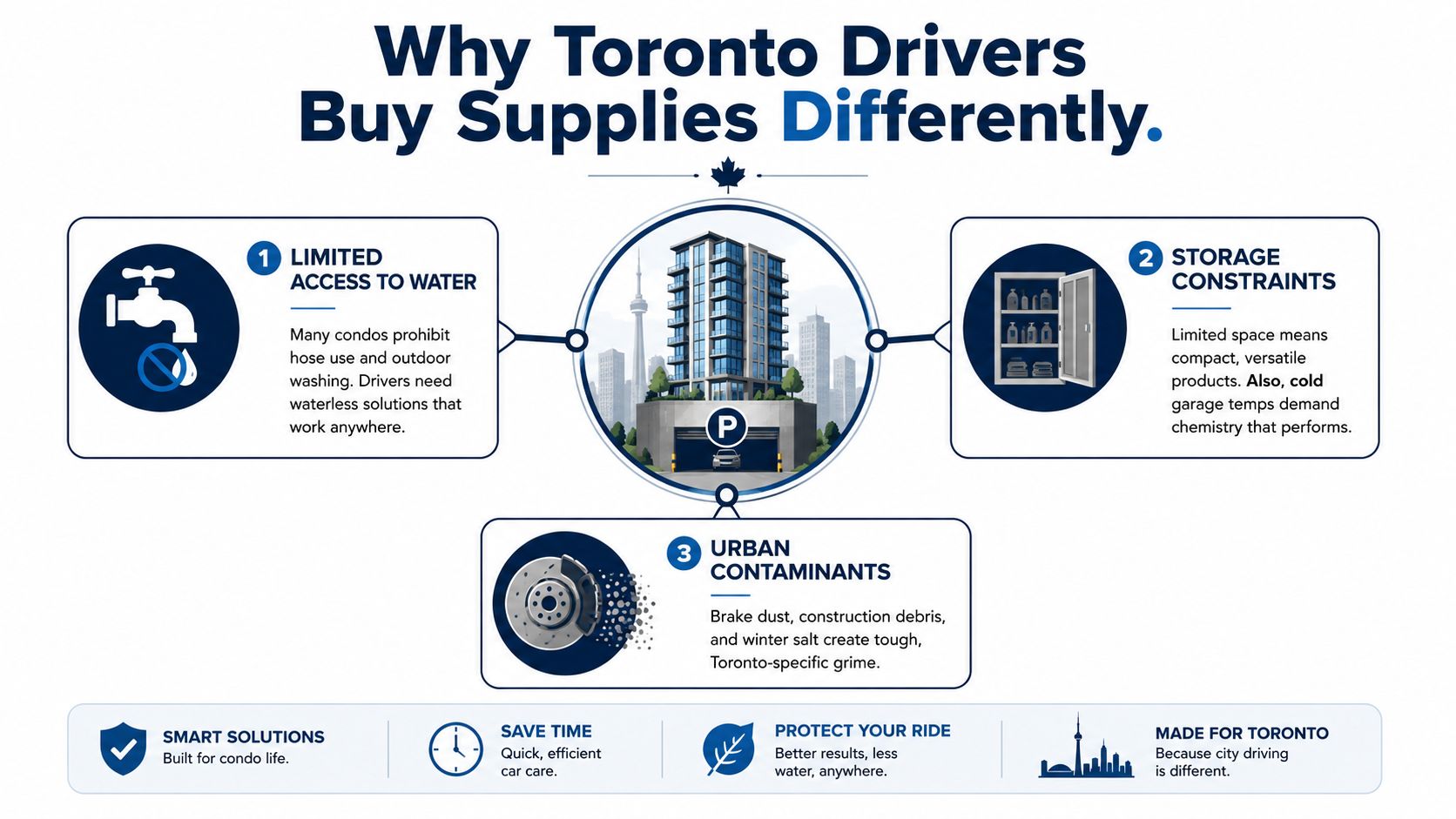
Toronto's vehicle base supports recurring cleaning rather than occasional vanity work. The Centre for Urban Research and Land Development reports that car-owning households in the GTHA increased by 355,000 since 2006, including 88,000 more in the City of Toronto and 26,000 more in the Toronto Core. Its vehicle-ownership report also records GTHA car-owning households rising from 1.3 million in 1986 to 2.3 million in 2016. More vehicles, more salt, and tighter urban parking create a very different buying brief from a suburban garage stocked with unlimited water.
Practical rule: Decide where you'll wash before deciding what you'll buy. Half the products advertised online fail at the parking spot.
The Core Supply Categories Every Toronto Garage Should Stock
A Toronto starter kit should remove contamination without stripping every layer of protection. That means buying by function, not by attractive labels or influencer hype.
Exterior cleaning and salt removal
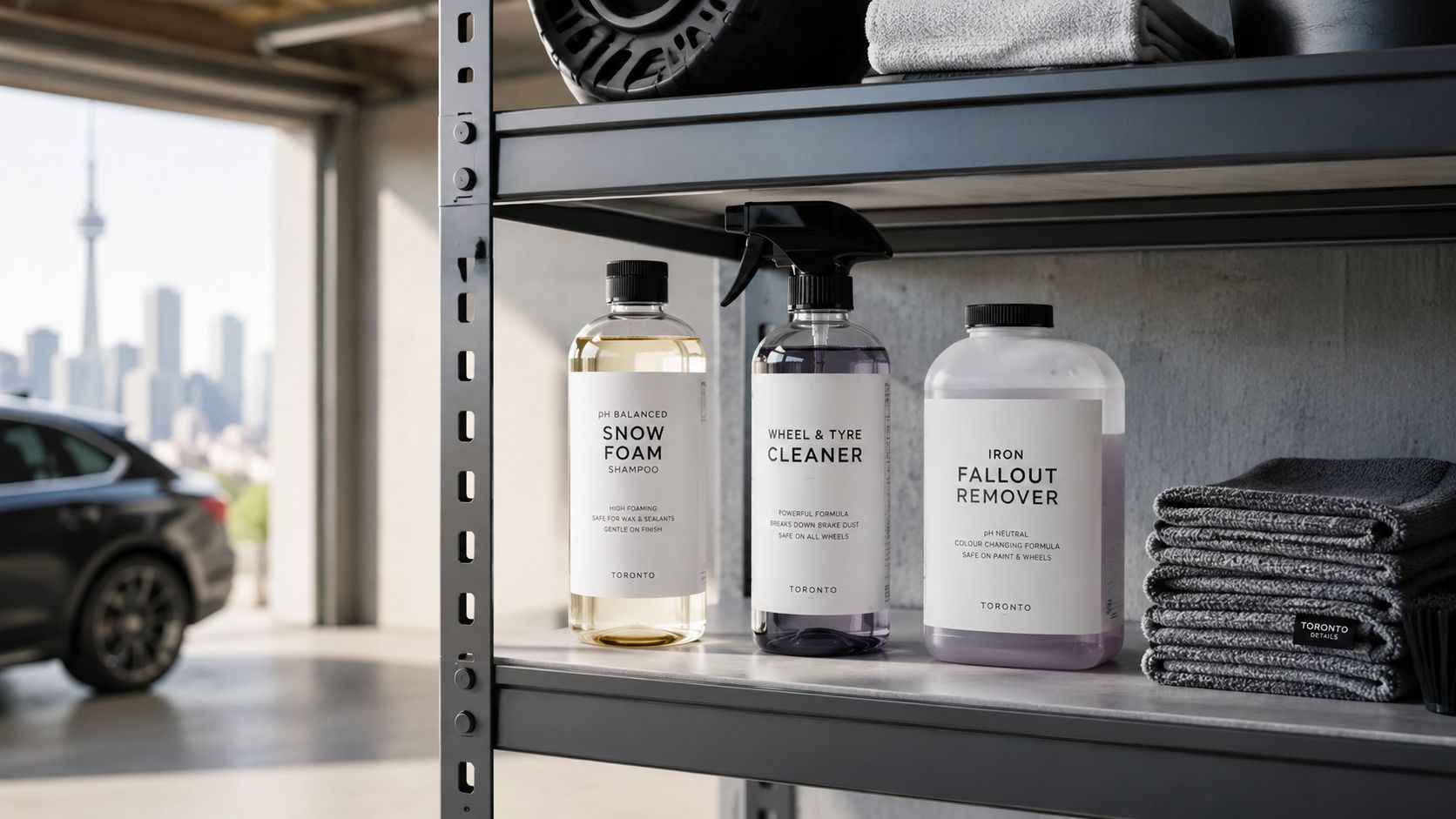
pH-balanced shampoo: Choose a lubricating snow-foam or bucket shampoo that lifts road film while leaving wax and sealant alone. A harsh household detergent may look powerful, but repeated use can leave paint unprotected.
Wheel and tyre cleaner: Use a non-acidic wheel cleaner on painted, clear-coated, or alloy finishes. Keep a separate stiff brush for tyres and a softer barrel brush for wheels. Brake dust sits where a normal wash mitt shouldn't go.
Iron fallout remover: This dissolves embedded ferrous particles that ordinary shampoo leaves behind. Use it occasionally on cool wheels and paint, rinse thoroughly, and don't let it dry.
Underbody de-salter: This is the category most Toronto shoppers underbuy. Look for a product and nozzle designed to break down chloride residue and road film in wheel arches, suspension areas, and the underside. A surface gloss product can't protect hidden steel from salt exposure.
Toronto and Halifax recorded the highest atmospheric corrosion figures in a Transportation Research Board study, while an Ontario corrosion study found traditional sodium chloride caused the greatest steel weight loss. The same research found treated Ontario-market salt produced about 0.2117% average weight loss, compared with 0.074% to 0.110% for several alternative ECOST products, as detailed in the Transportation Research Board corrosion paper. That's why I'd buy a proper underbody rinse before buying a premium tyre dressing.
Towels, glass, and interior care
- Microfibre wash mitts and drying towels: Use plush, clean towels for paint and separate low-pile towels for wheels, door jambs, and interiors. A towel that touched gritty rocker panels shouldn't return to the bonnet.
- Cold-weather glass cleaner: Choose a low-streak formula and use a dedicated glass towel. Interior haze becomes especially irritating during dark winter commutes.
- Interior APC: A controlled-dilution all-purpose cleaner handles vinyl, rubber, plastic, and door panels. Test first on an inconspicuous area.
- Leather or vinyl conditioner: Use a restrained, non-greasy conditioner. Shiny dashboards and slippery steering wheels are signs of overapplication, not quality.
- Spray sealant or paste wax: A sealant is the sensible Toronto choice for quick application and repeatable protection. Paste wax suits hobbyists who enjoy the ritual, not drivers rushing between shifts.
For commercial wash operations, chemistry also affects wastewater. Canadian federal guidance identifies suspended solids, oil and grease, detergents, chlorides, metals, and organic matter in car and truck wash wastewater, with sampled suspended solids ranging from about 140 to 300 mg/L and pH moving from about 7.9 to roughly 6.5 to 7.2 at different stages. The Canadian pollution-prevention guidance supports a practical buying principle: use low-residue shampoos, controlled-dilution APCs, and products compatible with reclaim or drainage requirements.
Starter list: pH-balanced shampoo, non-acidic wheel cleaner, iron remover, underbody de-salter, two wash mitts, separate wheel brushes, plush drying towels, glass cleaner, interior APC, leather or vinyl conditioner, and a spray sealant. Add a rinseless wash concentrate if your building bans hose use.
Matching Products to Your Vehicle and Parking Reality
The right kit for a downtown sedan is not the right kit for a pickup parked outside in January. Buying the full catalogue creates clutter, waste, and products you can't safely use where the car lives.
Sedan in an underground condo spot
Choose a rinseless wash concentrate, pump sprayer, multiple microfibre towels, interior APC, glass cleaner, and a compact vacuum. Work panel by panel, using fresh towel sides and a separate towel for the lower doors. For salt-heavy contamination, book or visit a facility that can rinse the underbody properly rather than dragging gritty residue across the paint in a cramped stall.
Skip a pressure washer, foam cannon, and large buckets unless your building expressly permits them. Also skip machine polishing in a shared garage. Noise, water, lighting, and ventilation make it a poor weekend experiment.
House with a driveway and pressure washer
This driver can justify a foam cannon, pressure washer with a gentle vehicle-wash tip, two buckets, grit guards, wheel brushes, an underbody attachment, and a longer drying towel. Start with a thorough rinse, foam to soften the road film, contact wash from the top down, then rinse the wheel wells and underside separately.
Spend on water control and drying before ceramic-coating kits. A sealant applied to clean, dry paint is useful. A coating applied in a cold, dusty driveway can become an expensive uneven layer that needs correction later.
SUV or pickup parked outdoors
Prioritise the underside, wheel wells, running boards, tailgate seams, and floor mats. Buy a de-salter, long-reach underbody tool, durable wheel brushes, rubber-mat cleaner, and absorbent drying towels. Keep a small winter maintenance kit in the vehicle, but don't leave liquid chemicals exposed to repeated freezing and thawing.
The sharpest kit is the one you'll actually use after a salt storm, not the one with the most bottles.
Ceramic coatings, paint correction, machine polishing, and heavy odour extraction belong on the professional side for most owners. They demand clean working conditions, controlled application, and equipment that rarely earns its shelf space in a condo.
Where to Buy in the GTA Without Overpaying
Use different retailers for different jobs. Big-box stores are convenient for replacement towels and basic shampoo. Dedicated detailing suppliers are better when dilution ratios, finish safety, and professional-size containers matter.
| Channel | Typical Price Tier | Best For | Watch Out For |
|---|---|---|---|
| Canadian Tire or Walmart | Low to mid | Shampoo, brushes, glass cleaner, emergency replacements | Inconsistent selection and generic accessories |
| Dedicated detailing shop | Mid to high | De-salers, iron removers, sealants, pro chemistry | Buying concentrated products without reading dilution instructions |
| Wholesale club | Low per item | Bulk microfibre and household-style interior supplies | Large quantities that can age before use |
| GTA online retailer | Mid | Niche products and scheduled replenishment | Delivery minimums and impulse bundles |
| Amazon | Low to high | Specialty tools and hard-to-find accessories | Counterfeits, unclear sellers, and misleading reviews |
Buy staples locally
For a new kit, start with a local big-box shop if you need the basics today. Buy only enough towels and chemicals for your actual storage space. More product doesn't equal better value if it freezes, dries out, or sits unused.
A dedicated detailing shop makes sense for decontamination products, professional sealants, specialised brushes, and advice on paint compatibility. Ask whether the product is safe for your wheel finish, trim, coating, and wastewater setup. The answer matters more than the label's promise.
Use online shopping selectively
Online retailers are useful for replacement towel packs, pump sprayers, interior brushes, and niche no-hose equipment. Amazon can fill a gap when you need an unusual nozzle or tool, but check the seller, packaging, and dilution instructions before putting an unknown chemical on paint.
The sensible cost snapshot is not a fake universal total. A starter kit's price changes with bottle size, towel count, tools, and whether you already own a vacuum or pressure washer. Compare the cost per usable wash, not the checkout total. A concentrated shampoo used at its stated dilution can beat a cheaper ready-to-use bottle, while a bulk towel pack can be wasteful for a driver who cleans only occasionally.
The same logic applies to professional service. If you'll use an expensive product four times a year, a wash or detail may be cheaper than owning it, storing it, and learning to use it.
Storage, Quantities, and Safety in Small Toronto Spaces
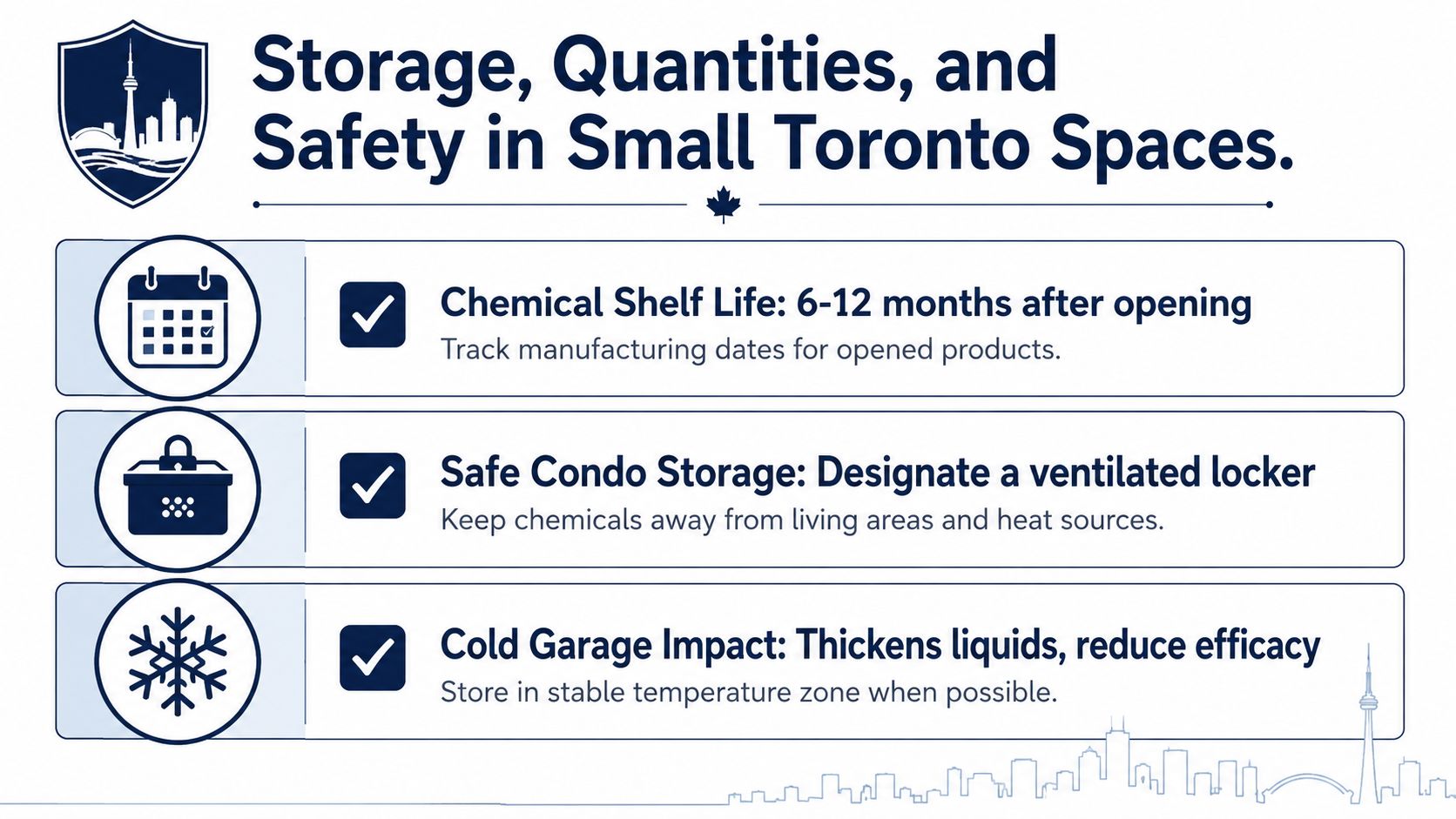
Detailing chemicals don't belong beside food, children's toys, or a furnace. Condo storage demands a small, organised system, not a leaking tote full of half-labelled bottles.
Keep products upright in a ventilated, lockable container away from heat and living areas. Don't leave them in a vehicle through repeated freeze-thaw cycles, and don't assume a frozen chemical returns to full performance after thawing. Follow each product's label, especially for concentrates, solvents, acids, and wheel cleaners.
A compact storage system
- Small chemical crate: Keep shampoo, APC, glass cleaner, sealant, and conditioners together in labelled bottles.
- Separate tool bin: Store mitts, brushes, applicators, and towels away from chemical leaks.
- Dirty-towel bag: Use a breathable laundry bag or open-sided container. Sealed damp towels become a sour, contaminated mess.
- Winter access tote: Keep rinseless concentrate, towels, glass cleaner, and an interior brush together for no-hose maintenance.
If you're planning a larger commercial setup, principles from warehouse auto parts storage are useful for thinking about labelled zones, spill prevention, access paths, and stock rotation, even though a condo locker needs a much smaller version of that system.
Don't create a chemistry problem
Never mix cleaners unless the label specifically permits it. Keep acids away from alkaline products, don't combine bleach with other cleaners, and avoid spraying solvent-heavy APCs in a closed underground garage. Wear nitrile gloves, use eye protection when diluting concentrates, and provide ventilation.
For disposal, keep unused chemicals in their original labelled containers and follow Toronto's current household hazardous-waste guidance rather than pouring product into a storm drain or sink. Used wash water can contain oil, metals, detergents, and road residue, so condo rules and municipal requirements matter.
Buy modest quantities. A serious home kit can fit in one chemical crate and one towel bin. That's enough for most drivers. Inventory it before shopping, rotate older products first, and replace towels that no longer rinse clean.
DIY Supplies Versus a Pro Wash in the GTA
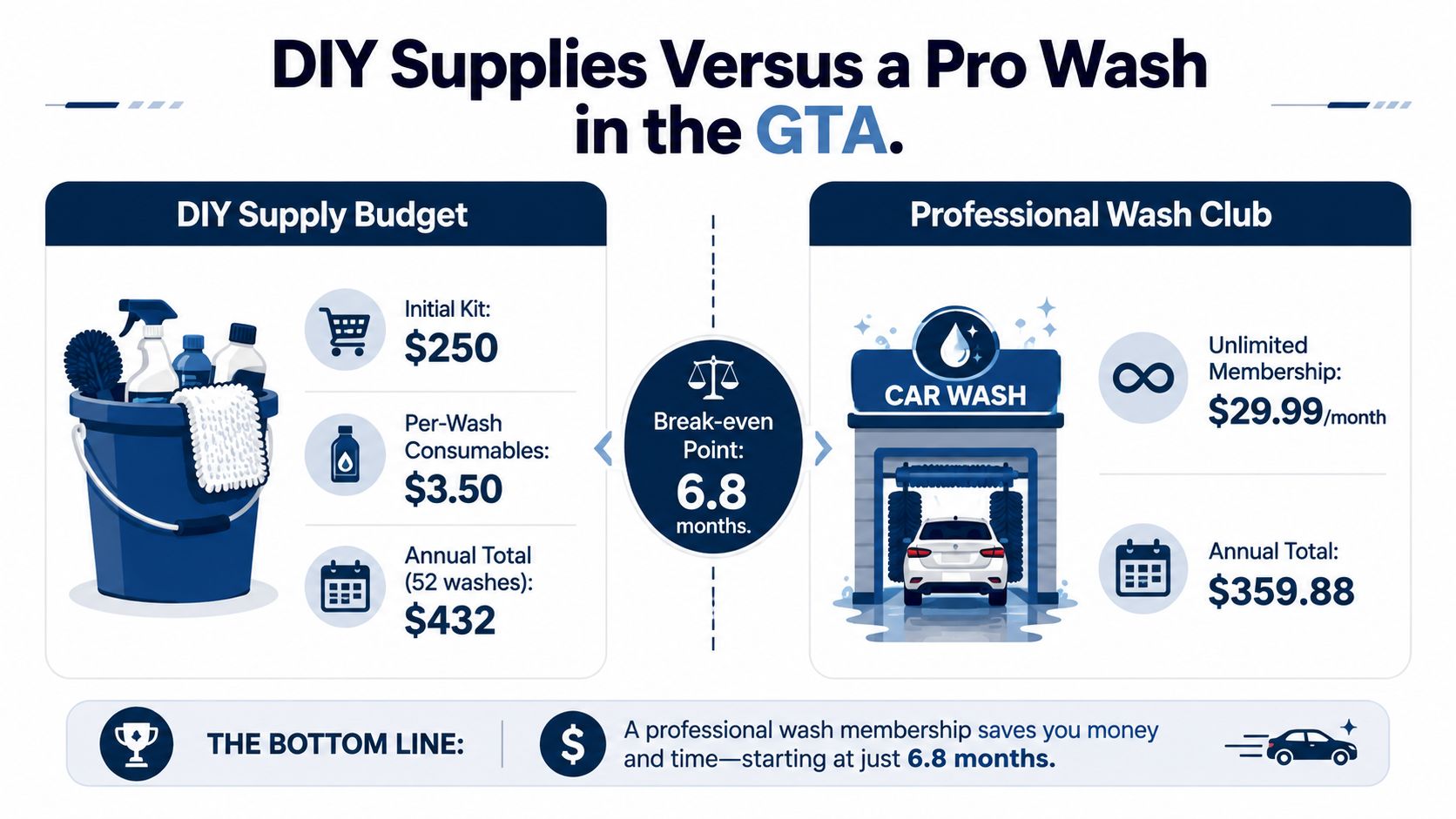
DIY washing wins when you enjoy the work, have legal access to water, and clean often enough to use your products. It loses when every wash requires a complicated trip, the car needs equipment you don't own, or your weekend time is worth more than the savings.
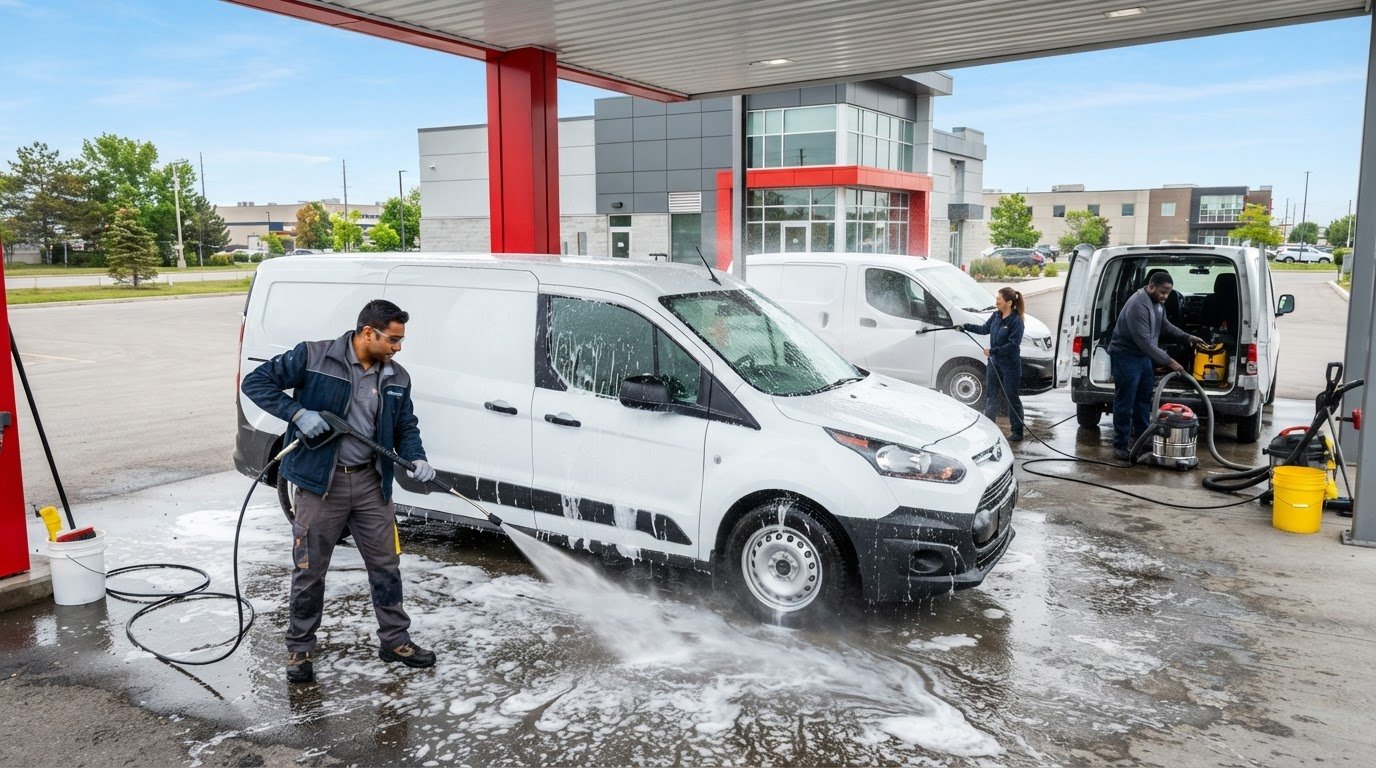
Nanak lists an express exterior wash starting from $9.99 plus tax and a full-service wash starting from $29.99 plus tax on its service information. Its options include exterior washing, hand drying, interior vacuuming, dashboard and window cleaning, with higher full-service tiers adding door panels, consoles, cup holders, and tyre dressing. That makes a professional visit a realistic baseline, not a luxury comparison.
Your DIY cost includes more than shampoo. Count chemical use, water, towel and mitt wear, replacement brushes, equipment maintenance, and the time spent setting up, washing, drying, and packing everything away. Don't convert that time into a precise wage unless you know your own value. Ask a simpler question: would you pay the available wash price to reclaim that block of Saturday?
Where DIY makes sense
- The hobbyist: You enjoy the process, already own the equipment, and want control over every panel.
- The driveway owner: You can rinse the underside and manage wastewater responsibly.
- The frequent cleaner: Regular use spreads the cost of towels and chemicals across many washes.
- The enthusiast: You want to maintain a coating or carefully protect a special finish.
Where professional washing wins
- The condo driver: No hose, drainage, or permission means DIY may be awkward or non-compliant.
- The rideshare driver: Fast repeat washing protects availability and removes the need to carry a full kit.
- The neglected interior: Salt-stained carpets, pet hair, odour, and deep shampooing need extraction equipment.
- The winter reset: Underbody rinsing and corrosion-focused cleaning are difficult to do thoroughly on the street.
Nanak also offers interior and exterior detailing by appointment, including shampooing, salt and stain removal, leather cleaning, polishing, and related reconditioning. It has listed locations in Etobicoke, Brampton, Concord, Oshawa, North York, Burlington, Cambridge, and Guelph. Use a professional service for the jobs that require specialist equipment, then maintain the result with a smaller home kit.
My recommendation: Own supplies for maintenance. Pay for the difficult reset. Don't buy a machine polisher to solve one winter-stained interior.
Memberships, Bundles, and the Smart Way to Lower Cost Per Wash
A membership works only when you use it. Daily commuters, rideshare and delivery drivers, two-car households, and families with permanently messy interiors are the strongest candidates because repeat visits turn a fixed monthly charge into a lower effective wash cost.
Nanak promotes an Unlimited Wash Club with a first-month-free promotion, plus prepaid multi-wash tickets and combo deals. Check the current terms before joining, then compare the membership against your actual wash history, not an optimistic plan to wash every day.
Use this calculation:
- Add last year's wash receipts.
- Add DIY chemicals, replacement towels, and equipment purchases.
- Divide the total by the number of washes.
- Compare that result with the current membership or ticket price.
- Add the value of your time and the convenience of a nearby location.
A membership won't replace carpet shampooing, pet-hair removal, leather deep cleaning, or machine polishing. Those are occasional restoration services. Use the club for maintenance, then book a detail when the vehicle needs extraction, correction, or a proper seasonal reset.
The best bundle is the one that matches your routine. A prepaid ticket can suit a moderate user who doesn't want a monthly commitment. Unlimited access suits someone washing repeatedly through salt season. DIY suits someone who values control and already has the space.
Putting Together Your Toronto Detailing Plan
Start with the parking spot, not the product shelf. Confirm whether you have water, drainage, ventilation, and permission to wash. Then choose a small kit for maintenance, add underbody and de-salting tools if you can use them safely, and store everything upright in a labelled, ventilated container.
Your screenshot checklist:
- Water and drainage confirmed
- Salt-removal plan chosen
- Wheel and underbody tools separated
- Towels divided by task
- Chemicals labelled and stored safely
- DIY time compared with wash or membership cost
- Deep interior work assigned to a professional
Toronto's salt load means frequent light cleaning beats rare heroic cleaning. Nanak locations across Etobicoke, Brampton, Concord, Oshawa, North York, Burlington, Cambridge, and Guelph can replace the home kit for jobs that need professional equipment, not merely complement it.
Nanak Car Wash offers express and full-service washes, interior and exterior detailing by appointment, rust proofing, prepaid options, and an Unlimited Wash Club for repeat cleaning. If your condo setup can't handle a proper rinse or your vehicle needs salt removal and deep interior work, visit Nanak Car Wash and choose the service that fits your actual routine.

 6600 Finch Ave W, Etobicoke, ON M9V 3Z6
 647-703-8515
 MON – SUN 8 AM to 7 PM