
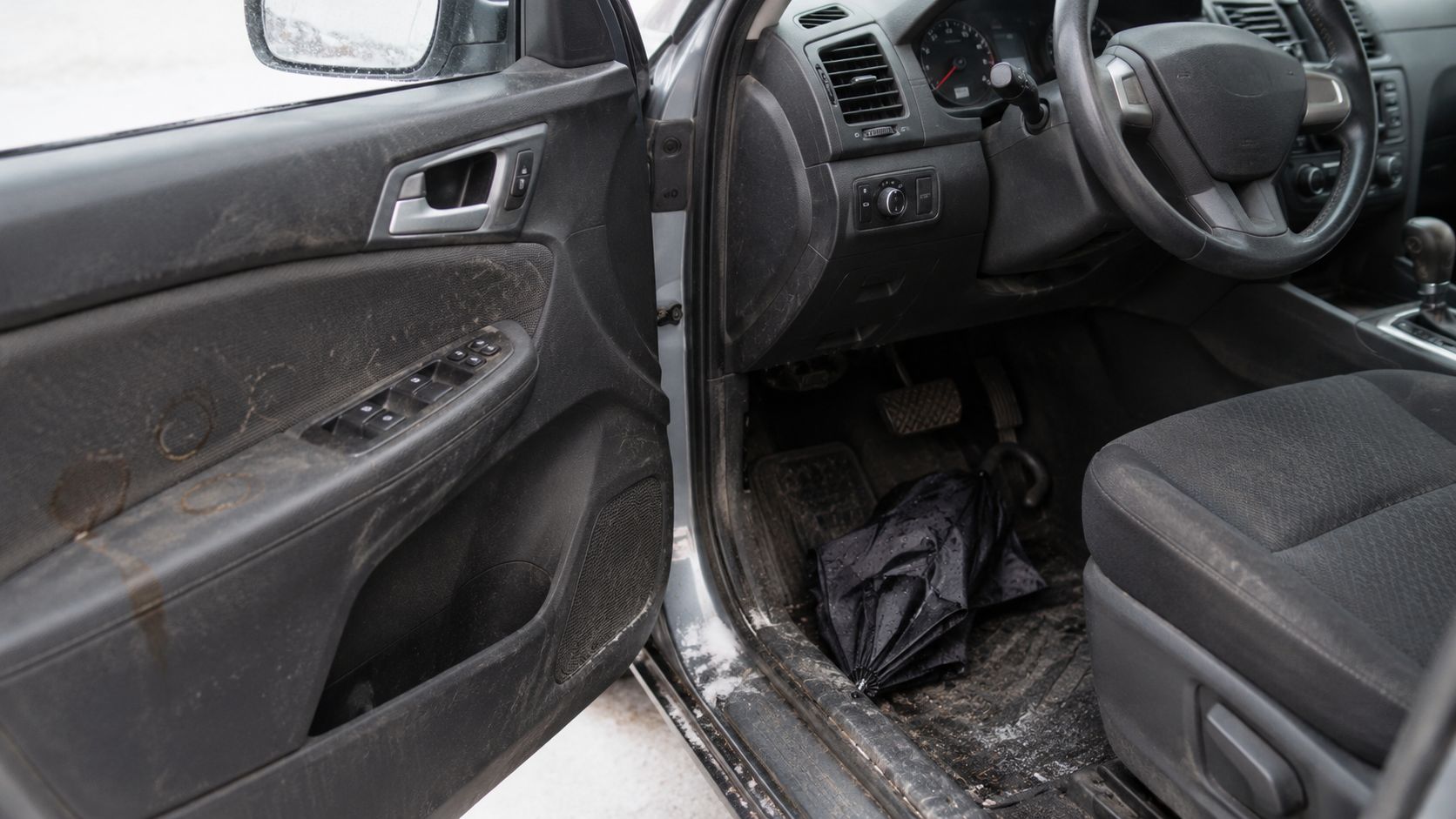
You open the driver's door after a wet GTA commute and get the full Ontario welcome: stale coffee, damp floor mats, wet umbrellas, road salt, and a smell that no air freshener can quite defeat. The carpets look merely dirty, but the underlay may be holding moisture and bonded salt from several weeks of winter traffic.
That's why car interior restoration is more than vacuuming and wiping the dashboard. It's a controlled process of removing embedded contamination, managing moisture, treating materials correctly, and drying the cabin before odours and stains settle back in. A clean-looking interior can still be damp underneath.
Table of Contents
- Why Standard Cleaning Falls Short in the GTA
- Diagnosing Your Interior Before You Start
- Step-by-Step Deep Cleaning and Stain Removal
- Deciding Between DIY and Professional Help
- When to Book Nanak Car Wash Services
- Maintaining Your Restored Interior
Why Standard Cleaning Falls Short in the GTA
A Toronto commuter may start with the most reasonable-looking solution: shake out the mats, spray an all-purpose cleaner, wipe the seats, and leave the doors open for a little while. The result often looks better from the driver's seat. Then the next rainy day arrives, the heater warms the carpet, and the familiar odour returns.
The problem is usually below the surface. Snow carried into the cabin melts into floor mats and carpet. Road salt mixes with that water, food crumbs absorb moisture, and dirt works its way into carpet fibres and seat seams. Vacuuming removes loose debris, but it doesn't remove bonded salt or liquid contamination trapped deeper in the material.
Salt is more than a white stain
Winter salt is hygroscopic, which means it can pull moisture back into the footwell after the original snow has melted. GTA detailing guidance explains that this is why a vehicle can continue to feel damp weeks after winter traffic, and why extraction is more effective than vacuuming when salt residue has bonded to carpet.
That dampness also gives odours a place to persist. In the Toronto and Lake Ontario climate, moisture can remain in carpet and upholstery instead of evaporating quickly. A quick deodorizer may cover the smell briefly, but it doesn't remove the source. Persistent odour is usually a moisture-management problem, not a fragrance problem.
Practical rule: If the smell returns after the cabin warms up, stop adding scent and inspect the carpet, underlay, mats, seat rails, and other areas where moisture can hide.
The cabin takes a daily beating
Canadian drivers have plenty of reasons to need recurring interior care. A Canadian Tire survey found that 84% of Canadian drivers eat and drink in their vehicles, while 73% clean their car interiors less than once every few months. Drivers also spend an average of five hours per week in a vehicle, according to the Canadian Tire survey on vehicle cleaning habits.
That combination produces more than an untidy cabin. Coffee rings, milk residue, greasy fingerprints, pet hair, salt, and damp fabric each require a different response. Treating all of them with the same spray bottle is how stains spread, fabrics become over-wet, and odours survive the cleaning.
Ontario's market is large enough that interior care shouldn't be treated as a niche add-on. IBISWorld projects 1,478 car wash and auto detailing establishments and 8,146 workers in Ontario in 2026, with projected provincial revenue of about $617.2 million. The IBISWorld Ontario car wash and auto detailing profile also reports that the industry accounts for roughly 40.2% of the province's GDP contribution in the report, underlining the scale of the local automotive appearance sector.
Diagnosing Your Interior Before You Start
Good restoration begins with inspection, not chemicals. Before reaching for a brush or extractor, open every door, remove the mats, and check where the contamination sits. A material-safe process can solve a difficult interior. The wrong process can turn a manageable stain into dye loss, water marking, or a permanently flattened fabric.
Start with the materials
Identify each surface before choosing a product:
- Cloth and carpet: Look for loose fibres, worn patches, seat seams, and areas that may conceal moisture beneath the surface.
- Leather: Check whether the surface is coated, cracked, dry, shiny from body oils, or already losing colour.
- Vinyl: Inspect seat bolsters, door panels, and dashboards for fading, brittleness, or chemical residue.
- Plastic: Note textured trim, glossy panels, touch points, and areas where old dressing has built up.
- Rubber and foam: Examine pedal areas, mat backing, weather seals, and seat gaps for trapped grit or dampness.
Never assume a black seat is leather or that a textured panel can tolerate an aggressive brush. Material identification determines agitation, moisture level, dwell time, and the type of protectant you can safely use.
Classify the contamination
Use a simple three-level triage:
- Light maintenance soil means loose dust, crumbs, minor fingerprints, and surface grit. A thorough vacuum, gentle wipe-down, and targeted spot treatment may be enough.
- Moderate contamination includes visible food stains, pet hair, salt rings, greasy touch points, and odour that returns after basic cleaning. This usually needs pre-treatment and controlled agitation.
- Heavy contamination includes saturated carpet, embedded salt, smoke, biological contamination, mould, deep staining, or padding that remains damp. This is restoration work, not a tidy-up.
Pay special attention to the footwells. Lift the mats and press a clean towel into the carpet. If the towel picks up moisture or salty residue, vacuuming alone won't solve the problem. Check under the front seats, along seat rails, beneath cargo liners, and around the edges of the centre console.
Record what cleaning can't reverse
Take photographs before starting, especially if you're hiring a detailer or preparing a vehicle for sale. Note dye loss, torn upholstery, melted plastic, cracked vinyl, smoke residue, and stains that appear to have penetrated the padding.
GTA interior detailing guidance warns that dye loss, chemical damage, old staining, padding contamination, mould, smoke, biological sources, and material deterioration may not be fully reversible. Restoration should improve a material where possible, not promise to make damaged components new.
Step-by-Step Deep Cleaning and Stain Removal
The work starts with the material, then the mess. Ontario cabins collect dry grit, salt dust, and damp residue in the same week, so the first job is to remove loose contamination before any cleaner touches the surface. If you skip that order, dirt turns into slurry and gets pushed deeper into carpet and trim.
1. Dry vacuum before wet cleaning
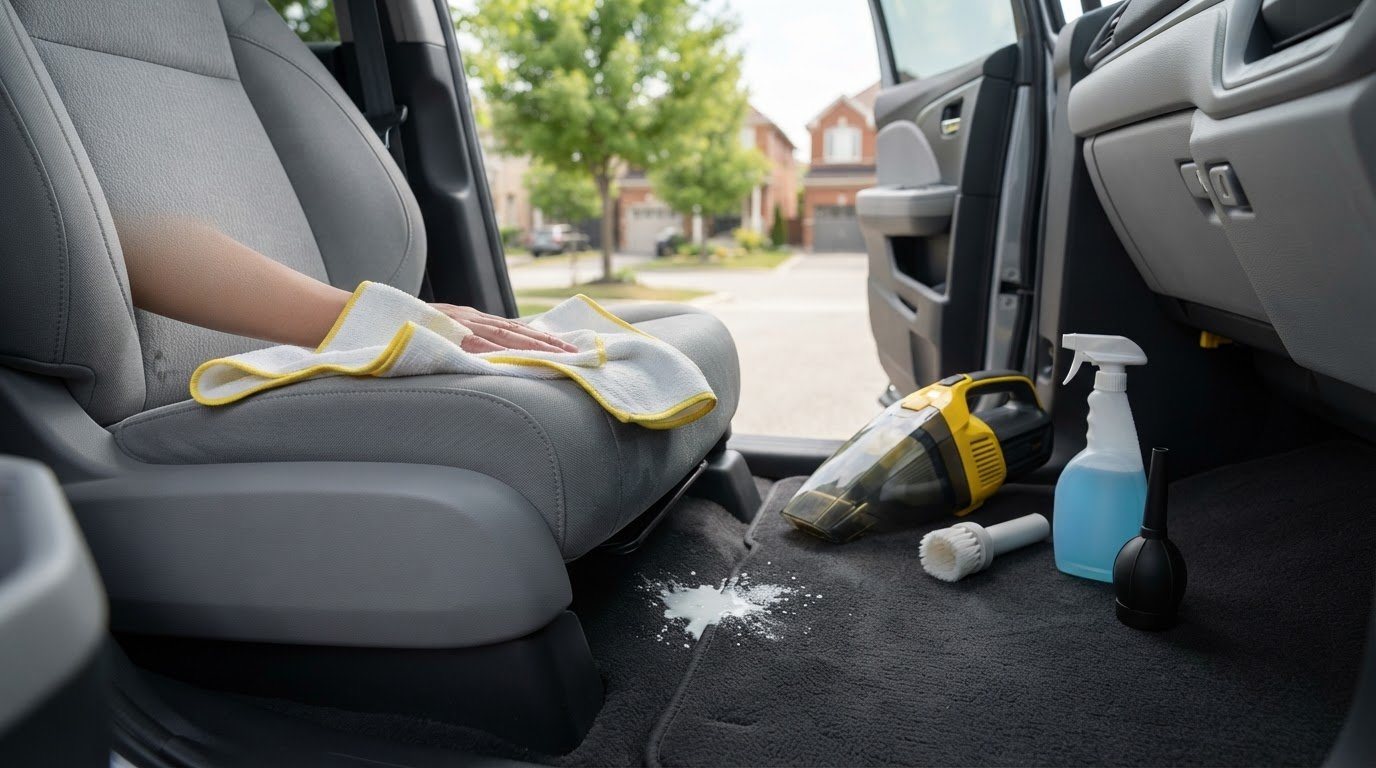
Clear the cabin first. Take out child-seat accessories, cargo items, floor mats, and anything loose in storage bins. Use a crevice tool around seat rails, a soft brush on vents, stitching, and textured plastic, and a rubber brush or pet-hair stone when fur has worked into the fibres.
Vacuum slowly in overlapping passes. A quick sweep lifts crumbs and leaves the abrasive grit behind, which is how carpets start looking tired long before they should. Work under the seats and around the pedals, but keep tools away from wiring and electrical connectors.
The Ontario interior detailing workflow described by Venom Detailing puts material triage and full dry vacuuming ahead of pre-spotting, agitation, extraction, and protection. GTA service descriptions usually put a lighter interior refresh at about 1.5 to 3.5 hours, a full deep clean at 2 to 5 or more hours, and severely neglected vehicles at 5 to 8 or more hours, depending on the condition and vehicle type.
2. Pre-spot instead of scrubbing blindly
Match the cleaner to the stain. Coffee, grease, milk, ink, makeup, and road salt behave differently, and they need different handling. Test any product on a hidden area first, then apply a small amount to the towel or brush, not straight onto the seat.
Blot liquid stains from the outside toward the centre. Use controlled agitation with a soft or medium brush that suits the fabric. Hard scrubbing roughens fibres, spreads the mark, and can leave a clean patch that stands out more than the stain itself.
Salt needs a dry start. Vacuum it first, then use a fabric-safe treatment and extraction if the residue has worked into carpet or mat edges. Even after the surface looks dry, salt can stay visible in seams and around footwell joints.
3. Match moisture to the material
Light soil does not always call for extraction. On plastics, vinyl, and lightly marked fabric, a low-moisture cleaner and controlled agitation may handle maintenance dirt without soaking the cabin.
Heavily soiled carpet and upholstery usually need hot steam extraction plus shampooing to recover appearance and reduce odours. The Excelsior Detailing interior detailing guide separates quick tidy-up work from deep cleaning that includes extraction and stain removal. That split matters. If embedded soil stays in the fibres, it stays in the vehicle.
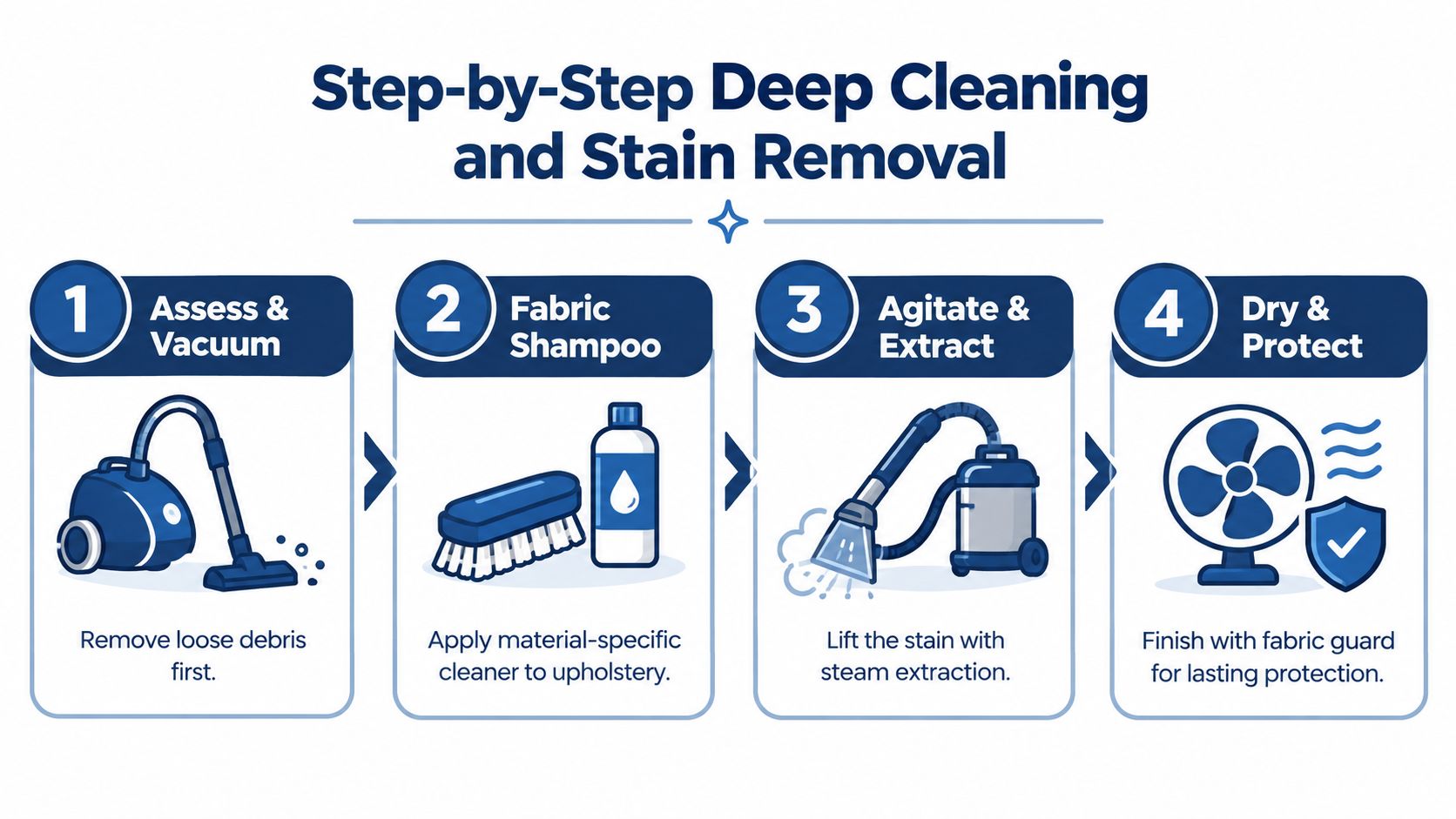
Use steam or low-moisture agitation carefully around plastic vents, switches, and seams. Do not force moisture into electronic controls. On cloth seats and carpet, extract in measured passes and remove as much water as the equipment allows.
The common failure: Over-wetting a fabric interior, then closing the doors before it has dried. That extends drying time and can encourage re-soiling.
4. Treat leather, vinyl, and plastics separately
Leather needs cleaning that removes body oils without stripping the finish. Work in small sections with a soft brush or dedicated leather tool, wipe away residue, and let the surface dry before applying a compatible conditioner. Conditioner will not repair cracked coating or replace missing dye.
Vinyl and plastic need a cleaner that does not leave a greasy film. Use a soft detailing brush for grain and seams, then wipe the surface dry. On faded or damaged plastic, a specialist coating or repair may be the right answer instead of another layer of dressing. Heavy spray products can hide texture, peel, or crack on flexible interior parts.
Finish by cleaning the places people skip, seat-belt edges, cup-holder bottoms, door-pull recesses, HVAC vents, seat seams, cargo-area corners, and the underside of mats. Those spots hold the contamination that keeps an odour alive.
Deciding Between DIY and Professional Help
A DIY interior job makes sense when the mess is isolated, the materials are still in good shape, and you can control drying. A coffee mark on one cloth seat, dusty plastics, or loose debris under the mats are all fair home projects. The work takes patience more than special skill.
Once the cabin has winter salt, damp carpet, heavy pet hair, or contamination that keeps coming back, the job shifts. You need a vacuum, the right brushes, fabric-safe chemicals, towels, ventilation, and, ideally, an extractor. You also need enough time to check the results after everything dries. Renting tools adds cost, and a rushed job can leave more moisture behind than you started with.
Use the condition, not pride, to choose
| Interior condition | DIY approach | Professional advantage |
|---|---|---|
| Loose dirt and crumbs | Vacuum, wipe, and clean mats | Faster if the vehicle is used heavily |
| Localised cloth stain | Pre-spot, agitate, and blot carefully | Better control over difficult or spreading stains |
| Pet hair throughout the cabin | Rubber brush, vacuum, and repeated passes | Dedicated tools and more efficient removal |
| Salt and damp carpet | Remove mats, extract, and dry thoroughly | Commercial extraction and controlled drying |
| Smoke, mould, or biological contamination | Avoid improvised chemical treatment | Proper assessment and clearer limits |
| Cracked vinyl or dye loss | Cleaning won't replace missing material | Repair, recolouring, or replacement assessment |
GTA detailing workflows describe heavier-soiled vehicles as needing longer service windows and more intensive stain work. That is not sales talk. A vehicle with years of food spills and winter moisture holds more contamination, more damp padding, and more surfaces that need attention.
Know the red flags
Stop the DIY project if you see mould, persistent dampness beneath the carpet, strong smoke odour, biological contamination, dye transfer, chemical burns, or staining that returns after extraction. Those problems often reach into padding or the backing layer. More cleaner will not fix damaged material, and added moisture can make the mess harder to control.
DIY also stops making sense when the vehicle has to stay on the road for work. Rideshare and delivery drivers, family vehicles, and small fleets cannot always sit unused while seats and carpet dry. A professional appointment brings the right equipment and a repeatable process, while the owner avoids buying products that may only come out once a year.
The honest answer is sometimes partial restoration. A good technician should tell you which marks can be removed, which can be improved, and which need repair or replacement. Anyone promising that every old stain will disappear is selling a fantasy with a spray bottle.
When to Book Nanak Car Wash Services
A professional appointment makes sense when the problem involves salt removal, carpet extraction, seat shampooing, pet hair, vent and crevice contamination, or leather deep cleaning. It also makes sense when you've tried surface cleaning and the odour keeps returning. The question isn't whether a home towel can wipe the dashboard. It can. The question is whether your equipment and drying plan can reach the contamination beneath it.
A practical decision matrix
| Your priority | DIY cleaning | Professional detailing |
|---|---|---|
| Quick surface refresh | Suitable for dust and light marks | Efficient for a complete cabin reset |
| Winter salt in carpet | Limited without extraction equipment | Better suited to deep extraction and stain removal |
| Leather maintenance | Suitable for gentle routine care | Useful when oils, grime, and wear need deeper assessment |
| Pet hair and embedded debris | Possible, but labour-intensive | Dedicated vacuuming and agitation can reduce the effort |
| Family or work vehicle | Works when time is available | Helpful when downtime needs to stay predictable |
| Ongoing upkeep | Requires your own tools and routine | Memberships, prepaid bundles, or repeat appointments may simplify maintenance |
Nanak Car Wash offers express and full-service washes, appointment-based interior and exterior detailing, carpet and seat shampooing, salt and stain removal, vent and crevice blowout, and leather deep cleaning. Its published service information also lists one-time services, prepaid bundles, monthly wash memberships, and discounted interior cleaning for members. SUV, van, truck, and pet-hair surcharges may apply, so confirm the vehicle-specific scope before booking.

Match the appointment to the contamination
An express service suits a vehicle that needs routine vacuuming and surface cleaning. A full detailing appointment is more appropriate for a cabin with visible salt, stained carpet, pet hair, odour, or neglected seats. Ask what the package includes, whether extraction is part of the process, how long the vehicle may need to dry, and whether severe contamination changes the appointment length.
Nanak's published detailing information describes typical appointment durations ranging from 1 to 4 hours, with the final time affected by vehicle size and condition. That range is useful for planning, but it isn't a guarantee for a heavily contaminated vehicle. A salt-loaded SUV and a lightly dusty sedan shouldn't be treated as the same job.
Book sooner if moisture is persistent, the vehicle carries passengers daily, or the interior is being prepared for sale. Waiting allows stains and odours to become more established, while repeated quick cleans can mask the problem without removing it.
Maintaining Your Restored Interior
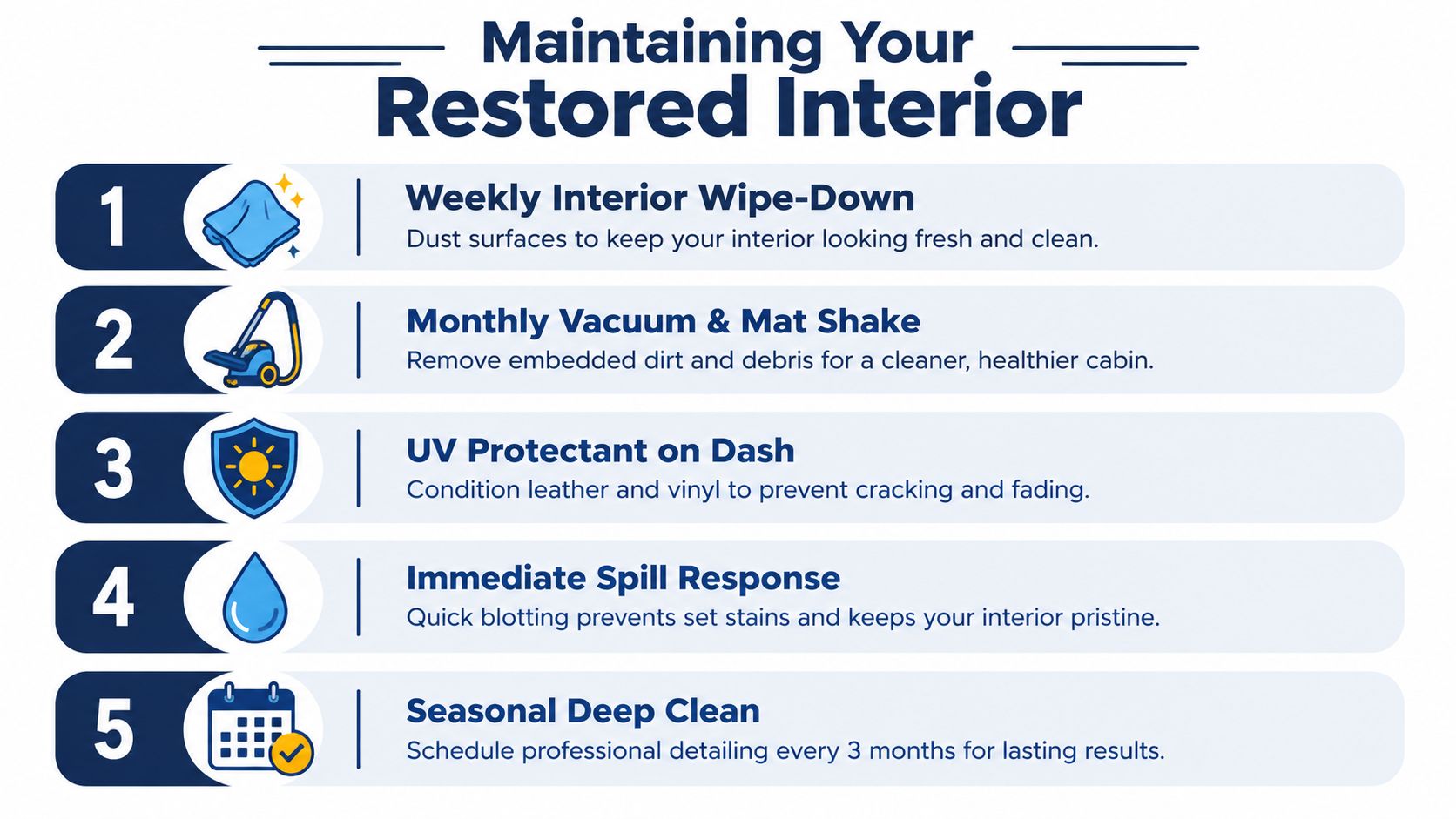
Restoration only lasts when the cabin stops receiving the same contamination that caused the original problem. Keep wet boots, umbrellas, food containers, and pet hair under control, and the next deep clean becomes smaller and easier. Ignore them, and even a professionally cleaned interior can slide back into winter misery.
Build a routine around moisture
Shake out mats before salt dries into them. Remove wet items from the cabin instead of leaving them in the footwell overnight. After a spill, blot immediately with a clean towel, then leave the affected area open to dry rather than sealing moisture under a mat.
Use a soft brush and vacuum around seat seams, under the front seats, and in cargo areas. Pet hair becomes much harder to remove after it works into fabric, while crumbs beneath a child seat can attract moisture and odour.
Protect the surfaces without making them greasy
Use a compatible protectant on vinyl and plastic, applied lightly and wiped down so the finish isn't slippery. Leather benefits from gentle cleaning and suitable conditioning, but conditioner won't reverse cracking, dye loss, or material breakdown.
Keep food and drinks in stable containers, and use washable pet covers where needed. If long drives leave you adjusting your seating position or dealing with pressure points, this guide to car seat comfort for long trips offers practical ideas that can make regular travel easier without adding more strain to the cabin materials.
A seasonal deep clean is sensible for vehicles exposed to repeated winter traffic, family use, or daily passenger turnover. The right interval depends on soil and moisture, not a calendar alone. Inspect the footwells, mats, seat seams, and cargo area whenever the odour changes or the carpet feels damp.
The maintenance test: If you can spot salt, feel dampness, or smell the same odour after the heater runs, the interior needs attention before another quick wipe-down.
Nanak Car Wash provides express and full-service washing plus appointment-based interior detailing for salt, stains, carpets, seats, vents, crevices, and leather. Visit Nanak Car Wash to choose a GTA location and book the level of service your vehicle needs.

 6600 Finch Ave W, Etobicoke, ON M9V 3Z6
 647-703-8515
 MON – SUN 8 AM to 7 PM