
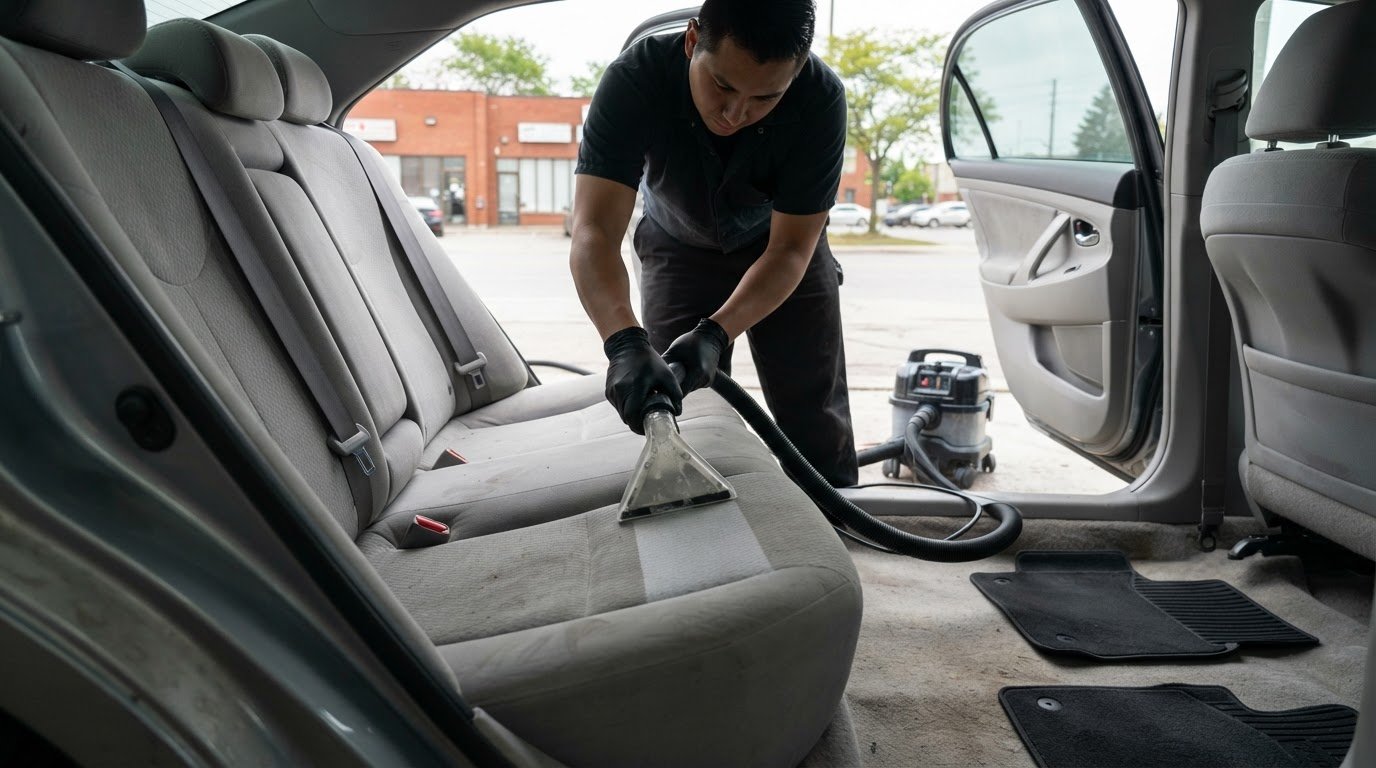
A quick wipe-down can leave dust and debris tucked into upholstery, floor mats and tight interior seams. For allergy sufferers in Brampton, car interior sanitization can combine thorough vacuuming with suitable fabric-cleaning methods to help reduce allergen buildup. Most interior or exterior detailing services take about 1 to 2.5 hours, depending on the work involved.
It makes sense to want a cleaner cabin without expecting one treatment to prevent allergy symptoms. The right approach depends on where dust and residue have collected and which surfaces need attention.
This guide explains how vacuuming, steam cleaning, shampooing, and vehicle sanitation can help keep an interior clean, and what can affect service time. You’ll also learn how to maintain a fresher cabin between visits and when professional detailing can help with built-up dirt beyond a quick clean.
Key Takeaways
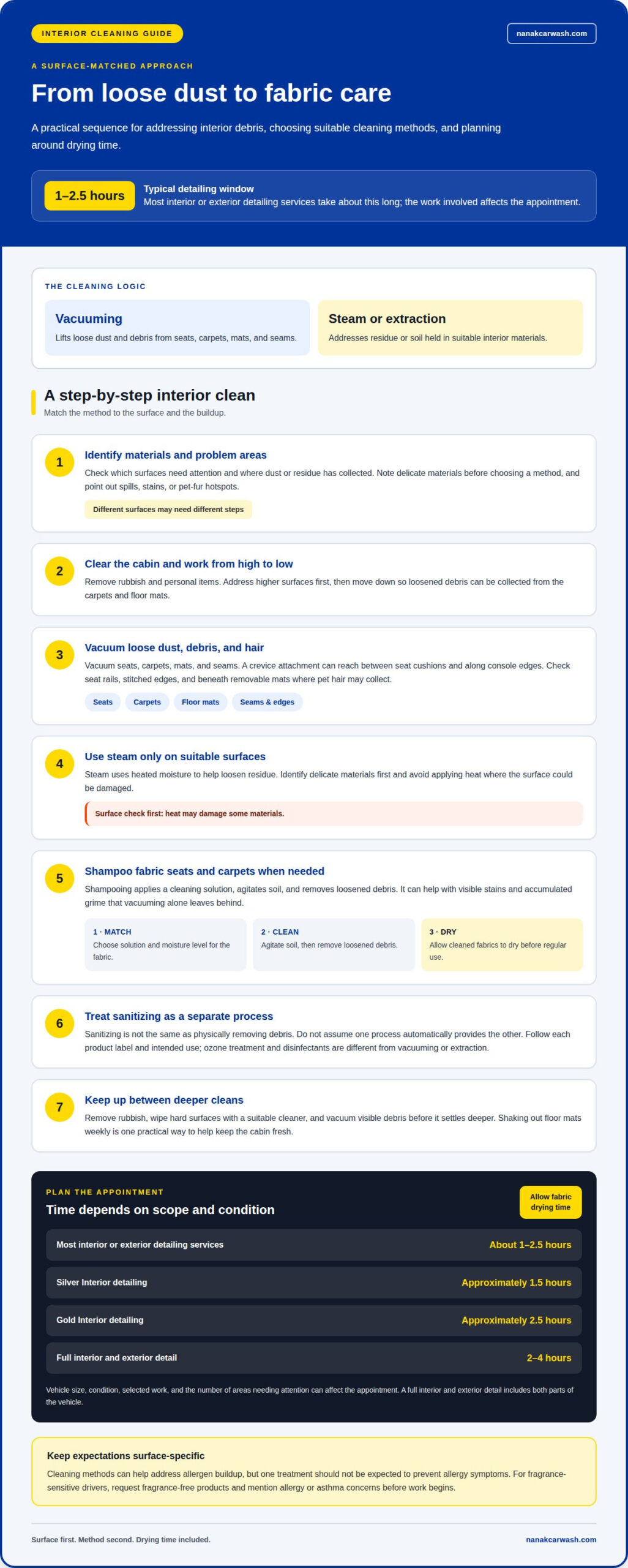
- Vacuuming reaches loose dust and debris, while steam cleaning and shampoo extraction address soil embedded in suitable surfaces.
- Cleaning floor mats regularly can help keep the cabin fresher; shaking them out weekly is one practical maintenance step.
- Appointment time depends on the vehicle’s size, condition and the interior work required. Most interior or exterior detailing services take about 1 to 2.5 hours.
- Fabric seats and carpets may need a different cleaning approach from hard surfaces, so the method should suit the material and the type of buildup.
- Learn what vehicle sanitation and interior detailing can include, and when a more thorough clean may suit your car’s needs.
Vacuuming, steam cleaning, and shampoo extraction
Vacuuming removes loose debris, while steam cleaning and extraction address dirt held in interior materials. For allergy-conscious cleaning, the method should match the surface and the buildup.
Vacuuming and Steam Cleaning
Vacuum seats, carpets, floor mats, and seams where dust gathers. A crevice attachment can reach between seat cushions and along console edges. Steam cleaning uses heated moisture on suitable surfaces, helping loosen residue without relying on the same method as dry vacuuming. Before steam is used, identify delicate materials and avoid applying heat where the surface could be damaged.
Shampoo Extraction for Interior Fabrics
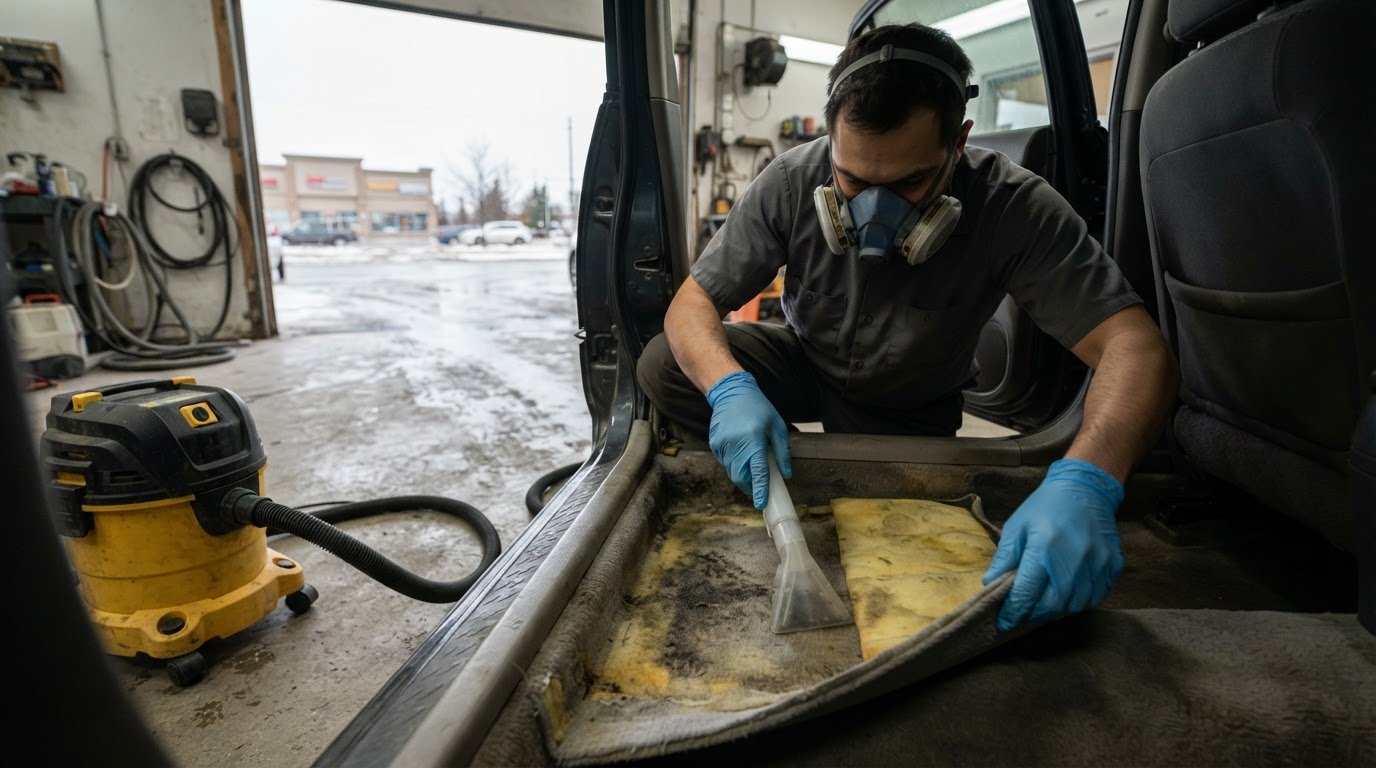
Shampooing cleans fabric seats and carpets by applying a cleaning solution, agitating soil, and removing loosened debris. It can help with visible stains and accumulated grime that vacuuming alone leaves behind. Match the solution and moisture level to the fabric. Cleaned areas need time to dry before regular use, so factor that into your plans.
Dust, Pollen, and Pet Allergen Removal
Dust, pollen, and pet hair can collect on mats, upholstery, and hard-to-reach edges. Work from higher surfaces downward, then vacuum carpets and mats to collect loosened debris. If a pet rides in the vehicle, note its usual seating area and any fur caught in seat seams. Shake out floor mats regularly to help keep the interior fresh between cleanings.
For day-to-day upkeep, remove rubbish, wipe hard surfaces with a suitable cleaner, and vacuum visible debris before it settles deeper. Detailing can address stains and built-up soil; sanitizing is a separate process from physically removing debris. Follow each product label and intended use. Cleaning and sanitizing serve different purposes, so don’t assume one process automatically provides the other.
Car interior sanitization costs in Brampton depend on vehicle size, condition, and the cleaning required; pricing is provided after a quote request. For fragrance-sensitive drivers, request fragrance-free products and state any allergy or asthma concerns before work begins. There is no single product choice that suits every person and surface.
To find allergy-focused interior cleaning in Brampton, look for detailing that addresses upholstery, mats, seams, and the specific buildup in your vehicle. Before service, remove personal items and identify problem areas; afterward, allow cleaned fabrics to dry fully before use. Ozone treatment and disinfectants are different from vacuuming or extraction. Improper use can create exposure concerns, so ask what process is used and follow its product directions, including any instructions for re-entry.
Appointment duration
Most interior or exterior detailing services take about 1 to 2.5 hours. A full interior and exterior detail takes 2 to 4 hours, depending on vehicle size and condition. These ranges help with planning, but the selected work and cabin condition affect the appointment. A compact car needing light cleaning differs from a larger vehicle with several spills or heavily soiled surfaces.
Scope matters. An interior appointment focuses on the cabin, while a combined service also includes exterior cleaning and finishing. The number of areas needing attention affects the work involved. Seats, carpets, mats, and high-touch surfaces may need different steps. Several visible stains require more attention than a quick refresh.
For drivers arranging car interior sanitization for allergy sufferers in Brampton, the appointment window depends on the cleaning required. Silver Interior detailing takes approximately 1.5 hours, while Gold Interior detailing takes approximately 2.5 hours. A full interior and exterior appointment has a 2-to-4-hour range because both parts of the vehicle are addressed.
Plan the appointment around your day. Remove personal belongings before service and point out spills or priority areas. This gives the cleaning team a clear view of the cabin and the work involved. If fabrics are cleaned, allow them to dry before regular use. Damp upholstery can affect when the interior is ready.
For a routine schedule, consider how the vehicle is used and how quickly interior soil returns. Regularly carrying pets, tracking in outdoor debris, or frequent passenger use can mean more upkeep. Address fresh spills promptly. A car wash handles exterior upkeep, but it doesn’t replace interior cleaning when the cabin needs attention.
Planning car interior sanitization for allergy sufferers in Brampton also means allowing time for the vehicle’s condition to guide the service. Avoid placing another commitment immediately after drop-off, especially when the interior has heavy soil or several problem areas. Choose whether the priority is a cabin clean or a more complete vehicle service. You can review vehicle cleaning options when planning an appointment.
Fabric seat and carpet shampooing
Fabric seats and carpets trap soil differently from hard cabin surfaces. Shampooing targets embedded grime, food marks, and residue that routine vacuuming may leave behind. The cleaning approach should suit the fabric’s condition, the stain, and the amount of pet hair. A dried coffee spill, for example, needs different attention from loose fur on a floor mat.
Before shampooing, the affected areas should be checked for fabric wear, colour changes, or delicate trim. This helps guide the cleaning solution and method. A worn seat bolster may need gentler handling than a durable carpet section. Point out old stains to help distinguish them from marks that appear during cleaning.
Pet hair often clings to carpet fibres and seat seams, so remove loose fur before wet cleaning where possible. Otherwise, hair can mat into damp fabric and become harder to lift. Check seat rails, stitched edges, and the area beneath removable mats. Nanak Car Wash’s detailing packages include vacuuming, shampooing seats and carpets, and other interior cleaning tasks.
- Inspect: Identify stains, worn spots, and the fabric type.
- Prepare: Remove loose debris and pet hair from seams and carpets.
- Clean: Apply a suitable shampooing method to the affected fabric.
- Dry: Allow cleaned upholstery and carpets to dry before regular use.
Moisture control matters. Excess water can leave fabric damp longer, while insufficient extraction can leave cleaning residue behind. The right approach depends on the material and its condition, not just the stain’s appearance. After cleaning, check that carpets and seats feel dry before putting mats or belongings back inside. Drying time varies with airflow and the amount of moisture used.
For allergy-conscious upkeep, address fresh spills promptly and vacuum pet areas regularly. Keep floor mats clear, and don’t cover damp carpet with a rubber mat. Shampooing removes soil from fabric, but it doesn’t replace routine cleaning or guarantee relief from allergy symptoms. If your vehicle has heavy pet hair or several stained areas, describe them when arranging a detailing package so the work can suit the cabin’s needs.
These figures provide a starting point for discussing your vehicle’s cleaning needs, but the listed package details determine which fabric-cleaning tasks are included.
Before arranging service, describe the seats or carpet that need attention and ask whether shampooing those areas is part of the selected work. Clarify whether the requested cleaning covers stains, pet hair, or both, and identify any worn fabric that may need gentler treatment. It is also useful to ask what preparation and moisture extraction the work includes, and how the cleaned areas should be checked before the vehicle is used again. If several areas need attention, give a clear description of each so the scope can be discussed before work begins. Confirm the applicable charges and the agreed cleaning scope rather than assuming that a general interior service covers every fabric concern. This helps align the requested work with the condition of the cabin.
Vehicle sanitation service
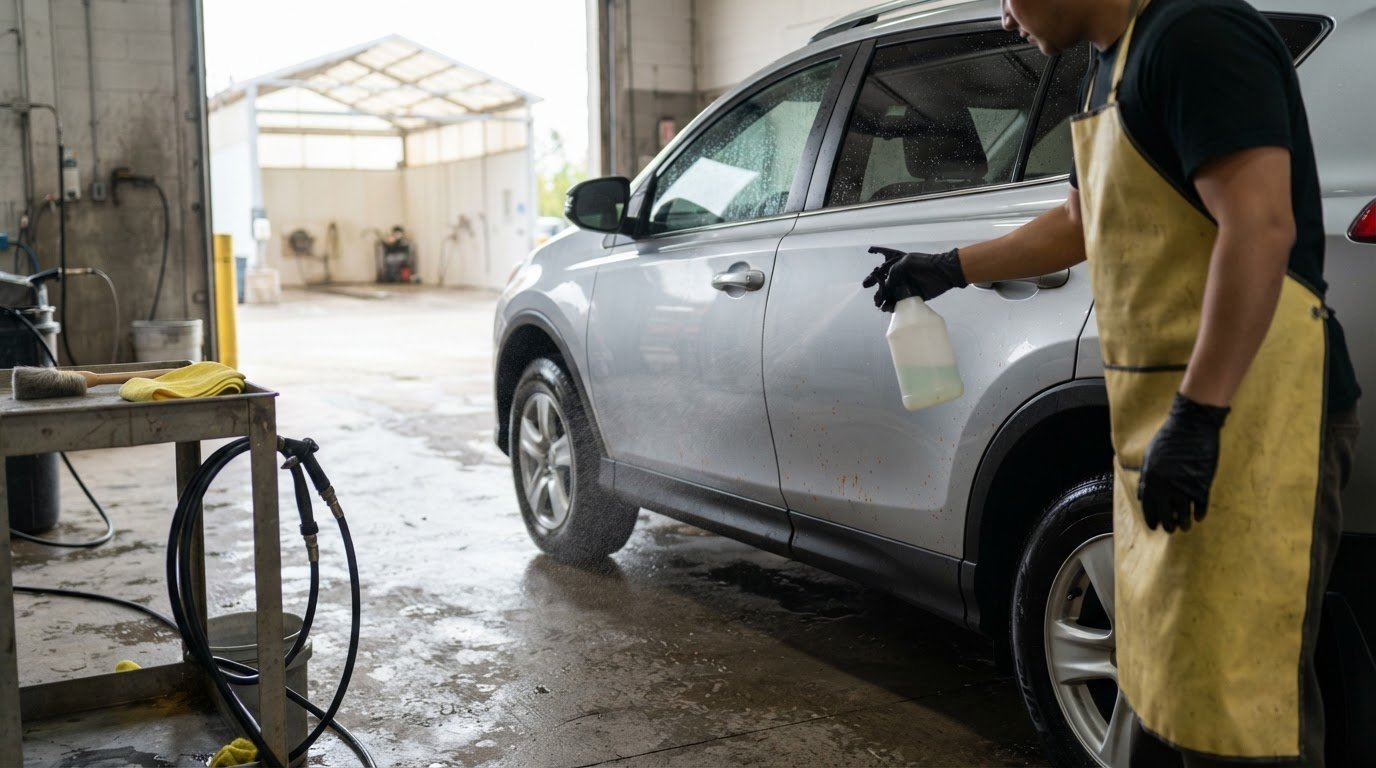
Vehicle sanitation and interior cleaning address different concerns. Vacuuming and fabric cleaning remove physical debris, while sanitation uses products intended to sanitize surfaces. Neither term means every allergen has been eliminated. For allergy-conscious car detailing, identify the priority: visible soil, dust, odours, or surfaces requiring sanitation.
A clear process starts by identifying high-touch areas, such as door handles, the steering wheel, seat-belt buckles, and controls. Select a product suitable for each surface and follow its directions. A product intended for hard plastic may not suit leather, touchscreens, or coated trim. Matching treatment to the material helps avoid residue or surface damage.
Ask what the sanitation step covers and which areas receive ordinary cleaning instead. Wiping a steering wheel, for example, differs from removing soil from carpet. A sanitation product cannot replace vacuuming when the concern is pet hair or loose dust. If allergen removal is your priority, make sure the cleaning plan includes carpets, seats, and crevices.
- Identify: Note the surfaces and concerns, such as controls or odour.
- Separate: Distinguish surface sanitation from dust and debris removal.
- Match: Use a product suitable for the material being treated.
- Finish: Follow product directions before using the vehicle again.
Leather needs material-specific care. A harsh or unsuitable cleaner can affect its finish, so treatment should follow the product’s intended use. For a leather seat, sanitation and conditioning are not interchangeable steps. Describe the surface and your concern clearly, especially if the vehicle has leather alongside fabric seats or carpet.
Winter driving can bring wet footwear, road residue, and slush into a vehicle. Mats may collect that debris while door panels and handles receive frequent contact. A practical plan separates mat and carpet cleaning from wiping high-touch surfaces. This directs attention to cabin cleanliness and the specific areas you want treated.
After service, follow product directions for any drying or re-entry instructions. Keep the vehicle ventilated as directed, and avoid adding scented sprays that may introduce another fragrance. For ongoing comfort, remove wet mats to clean and dry them, then wipe visible residue from hard surfaces. These steps help maintain a cleaner cabin between professional visits, without treating sanitation as a substitute for routine detailing.
The service operates from a self-contained unit with its own water tank and generator, so customer hookups are not needed.
What does car interior sanitization for allergy sufferers include?
A practical service starts by identifying the cabin’s materials and problem areas. Consider fabric seats, leather trim, carpets, floor mats, and frequently touched surfaces. Visible dust, pet hair, food residue, and spills each call for a suitable cleaning step. This helps define the work before products or tools are used.
Next, remove loose debris from seats, seams, mats, and carpet edges. A vacuum attachment can reach narrow areas around seat rails and beneath cushions. Treat fabric or carpet soil with a method suited to the material. Steam or shampooing may suit some surfaces, while leather needs material-specific care.
Hard surfaces need separate attention. The steering wheel, door handles, console, and controls can be cleaned with products intended for those materials. Sanitizing is distinct from removing dust and hair, so a complete plan should account for both tasks. Follow product directions for application and any drying or re-entry instructions. If you’re fragrance-sensitive, state that concern before cleaning begins.
- Inspect: Identify materials, visible buildup, and priority areas.
- Remove: Vacuum loose debris from seats, seams, carpets, and mats.
- Treat: Clean fabric, leather, and hard surfaces with suitable methods.
- Finish: Follow product directions and allow treated areas to dry as instructed.
For car interior sanitization for allergy sufferers Brampton drivers should describe the cabin’s main concerns clearly. A vehicle used by a shedding pet may need focused attention on seat seams and cargo carpeting. A car exposed to spring pollen may need careful cleaning of mats and frequently touched surfaces. Interior cleaning addresses cleanliness; it shouldn’t be presented as a cure or guarantee of allergy relief.
Before service, remove personal items that block seats, cupholders, or footwells. Point out areas needing attention, such as a stained passenger seat or debris beneath a child’s car seat. Afterward, follow care instructions for treated surfaces and wait until damp fabrics are dry before replacing mats or belongings. These steps help keep the work focused and the cabin ready for everyday use.
To plan a cleaning visit around your vehicle’s materials and priority areas, review interior cleaning options. A clear description of the cabin helps define which steps matter most, from debris removal to treatment of specific surfaces.
Nanak Car Wash
Nanak Car Wash offers Car Detailing Packages for drivers who need a more thorough interior clean than a routine wash. Choose detailing when dust, pet hair, or marks have built up across several cabin areas. A Full-Service Car Wash suits regular cleaning inside and out, while an Express Car Wash provides a quicker exterior clean. The Unlimited Wash Club is an option for drivers who wash frequently.
For allergy-conscious cleaning, describe the cabin’s main concerns, such as fabric seats, carpet buildup, or fragrance sensitivity. This helps clarify your priorities and the difference between removing debris and sanitizing surfaces. Contact Nanak Car Wash to discuss the right vehicle-cleaning option for your needs.
Make your next cabin clean count
A more comfortable drive starts with a clear cleaning plan. Choose the cabin areas that matter most, and explain concerns such as dust, pet hair, or fragrance sensitivity before service. This helps match the work to your vehicle’s surfaces and priorities. Interior cleaning can remove accumulated soil, but it shouldn’t be treated as a promise to prevent allergy symptoms.
For car interior sanitization for allergy sufferers Brampton drivers can start by matching the service to the condition of the cabin. Nanak Car Wash offers Car Detailing Packages, Full-Service Car Wash, and Express Car Wash options for different cleaning needs. Choose detailing when the interior needs more attention, or a wash for routine vehicle upkeep.
Contact Nanak Car Wash to book and discuss the cleaning your vehicle needs. A cleaner cabin is a practical step toward a fresher-feeling drive. You can make that step at your own pace.
Frequently Asked Questions
Which car interior cleaning methods remove dust mites, pollen, and pet dander?
Vacuuming and fabric cleaning remove loose and embedded debris from carpets, seats, and mats. Use a crevice tool around seat rails and seams where pet hair collects. Wipe hard surfaces separately to pick up settled dust and pollen. Cleaning reduces debris inside the cabin, but it doesn’t guarantee allergy relief or remove every particle. For recurring buildup, focus on the areas used most by passengers or pets.
Are HEPA vacuuming and steam cleaning safe and effective for car interiors?
A vacuum fitted with a HEPA filter can collect debris during cabin cleaning, while steam cleaning uses heat and moisture on suitable surfaces. Safety depends on the material and the tool’s directions. Steam may be unsuitable for some electronics, leather, adhesives, or delicate trim. Keep it away from sensitive areas and choose a method suited to each surface. Neither method guarantees prevention of symptoms.
How long does car interior sanitization take and how often should it be repeated?
Most interior or exterior detailing appointments take about 1 to 2.5 hours; a full interior and exterior detail takes 2 to 4 hours, depending on vehicle size and condition. The repeat schedule depends on use, visible soil, and exposure to pets or seasonal pollen. A general detailing interval for Brampton drivers is every 3-6 months. Clean sooner if spills or heavy debris build up between visits.
How can you reduce pollen and allergens in your car between professional cleanings?
Reduce buildup by limiting what enters the cabin and removing debris regularly. Keep windows closed during visibly dusty conditions, store reusable bags outside passenger footwells, and shake out mats regularly. After a park visit, remove loose pollen from clothing before sitting down. Vacuum pet areas and wipe hard surfaces as needed. These habits help manage cabin debris between deeper cleanings, without replacing them.
What products are fragrance-free and safe for people with allergies or asthma?
Request fragrance-free products and mention any allergy or asthma concerns before work begins. The product should suit the surface and intended use.

 6600 Finch Ave W, Etobicoke, ON M9V 3Z6

 647-703-8515
 MON – SUN 8 AM to 7 PM