
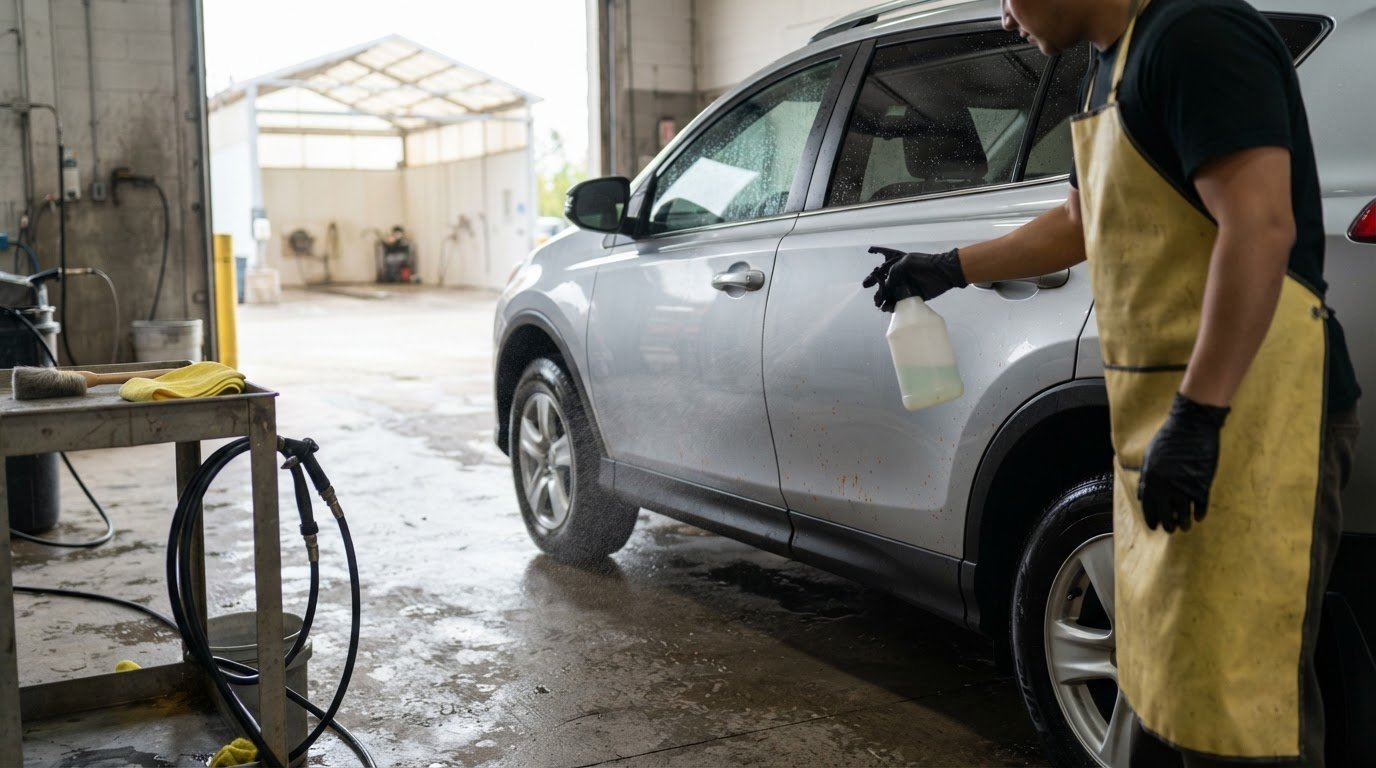
A new car can collect industrial fallout before it reaches your driveway. Learning how to protect car finish from industrial fallout starts with removing bonded metal particles, then washing away surface contamination and applying wax. These steps help limit how long particles remain on the paint, where they can oxidize and leave rust-coloured dots.
It’s easy to assume a new vehicle arrives with a spotless finish. But contamination can build up during factory production, transport, open-yard storage and dealership handling. Tiny metal fragments from factories, train stations and shipping yards can settle on paint and resist a routine wash.
This guide explains how to protect car finish from industrial fallout through removal, regular washing and waxing. You’ll learn how contamination affects paint, why decontamination matters before paint protection, and when more thorough cleaning may help. The goal is practical: understand what’s on your vehicle and choose care that helps keep its finish clean.
Key Takeaways
- Learn how friction between metal surfaces creates particles that can settle on your vehicle’s paint.
- Spot the small orange rust-coloured dots that may signal embedded iron contamination.
- Understand why fallout removal helps prepare paint for a ceramic coating and supports a smoother, more even finish.
- See how a clay bar or fallout remover can address particles that a routine wash may leave behind.
- Find out how detailing and regular wash options can fit into a practical paint-care routine.
How Does industrial fallout affect your vehicle?
Industrial fallout can settle on paint as tiny metal shards, even before a new vehicle reaches its owner. A practical plan for how to protect car finish from industrial fallout starts with recognizing contamination and removing bonded particles.
Professional paint decontamination costs in Canada depend on the vehicle, the contamination and whether paint correction is needed. The price is provided after a quote request.
Common Sources of Paint Contamination
Vehicle paint contamination comes from airborne particles and debris that settle on the surface. Factories, train stations and shipping yards are common sources of industrial fallout. Rail dust, brake dust, metal particles, overspray and other environmental debris can also reach a vehicle.
These sources matter because contamination can occur during everyday use or before delivery. A car transported by rail or stored in an open yard, for example, can collect particles despite looking clean from a distance. Exposure is not limited to older vehicles.
Identifying Industrial Fallout on Paint
Industrial fallout consists of tiny metal shards dispersed through the environment that bond to vehicle paint. Small orange or rust-coloured dots are a common visible sign. They may appear across painted panels rather than in one obvious impact area.
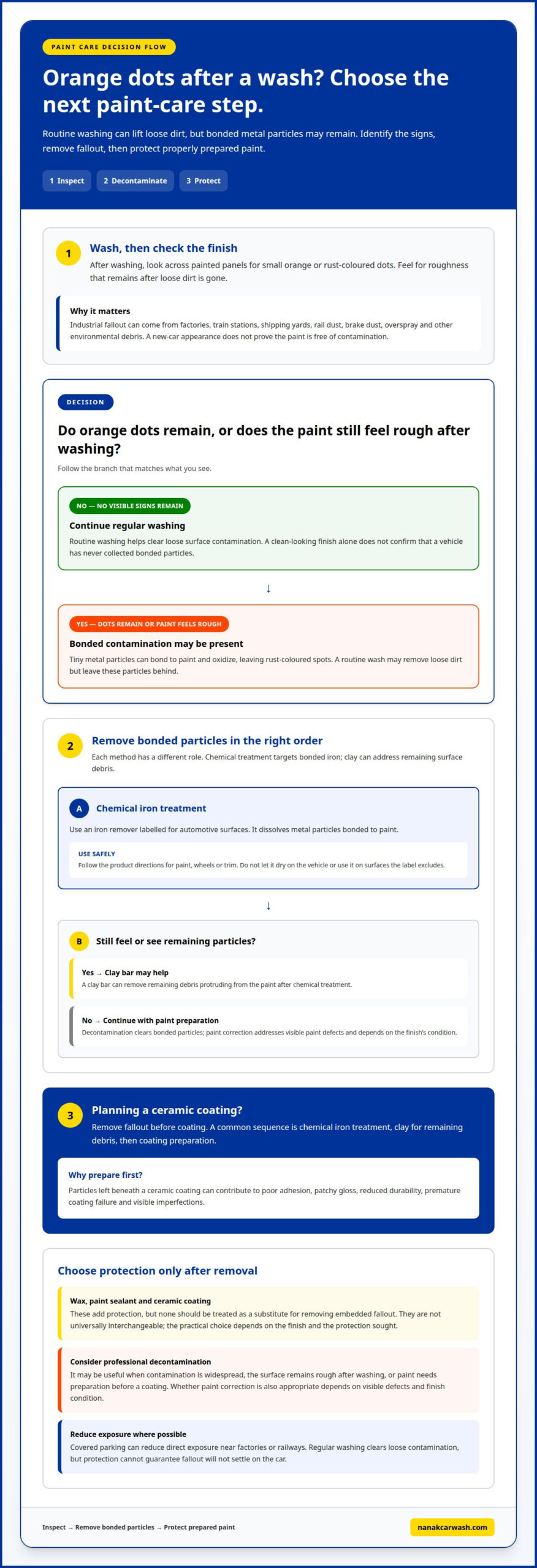
A routine wash can remove loose dirt but leave bonded particles behind. After washing, look for orange dots that remain or a rough-feeling surface. For owners learning how to protect car finish from industrial fallout, recognizing these signs helps distinguish embedded contamination from ordinary road grime.
Damage from Embedded Iron Particles
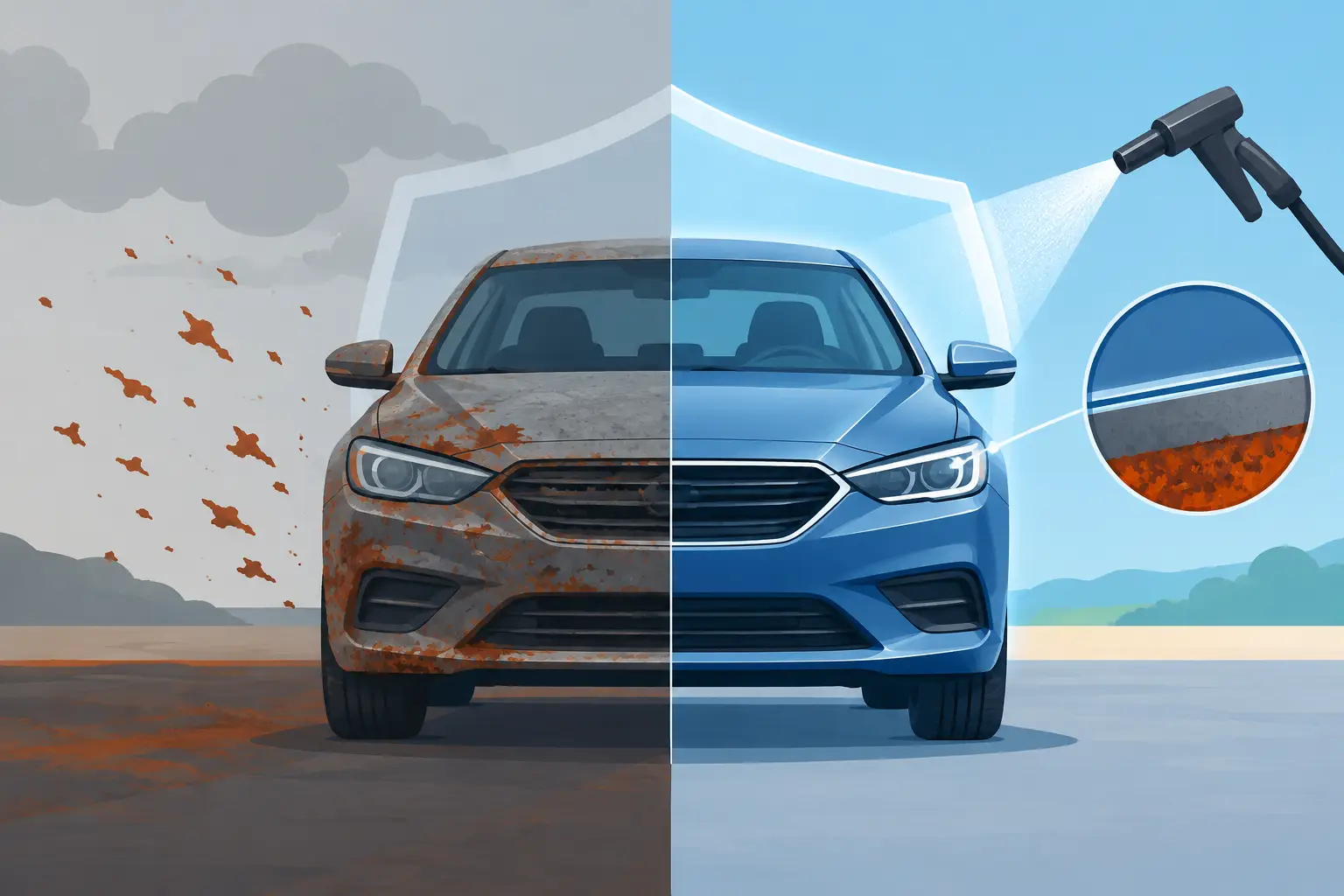
Embedded iron particles can oxidize and rust while lodged in paint. Hot metal shards may attach to the surface and develop into visible orange spots. As oxidation continues, the marks can make a clean finish look speckled or dull.
Iron decontamination uses a chemical process to dissolve metal particles bonded to paint. Removing them addresses the source of rust-coloured dots. If particles remain in place, contamination can persist even after surface dirt has been washed away.
How New Vehicles Acquire Contamination
A new vehicle can collect debris during factory production, transport, open-yard storage, and dealership handling or washing. Rail dust, metal particles, overspray and environmental debris may reach its paint at these stages.
A new-car appearance doesn’t prove the finish is free of contamination. Decontamination before paint protection can clear bonded particles. A chemical iron treatment targets metal contamination, while a clay bar can remove remaining debris.
Paint Correction and New-Car Protection
Paint correction and decontamination address different issues. Decontamination removes bonded particles; paint correction works on visible paint defects. The finish’s condition helps determine whether correction is also appropriate after contamination removal.
Remove fallout before applying a ceramic coating. Particles left underneath can contribute to poor adhesion, patchy gloss, reduced durability, premature coating failure and visible imperfections. A clean, decontaminated surface gives the coating a better foundation.
What Is Iron & Industrial Fallout Removal?
Iron fallout removal targets metal particles bonded to a vehicle’s exterior. Chemical decontaminants dissolve iron, while a clay bar can help remove remaining surface debris. The aim is a clean surface before applying protection, not a promise that future contamination won’t occur.
Choosing Protection for the Paint
Wax, paint sealant and ceramic coating add protection, but none should be treated as a substitute for removing embedded fallout. A ceramic coating is a protective layer applied to prepared paint. It can help guard the finish, but it doesn’t remove particles already bonded underneath.
Wax, sealant and coating aren’t universally interchangeable. The practical choice depends on the finish and the type of protection sought. For fallout, removal comes first; a coating belongs on clean, properly prepared paint.
Why Decontaminate Before a Ceramic Coating?
Fallout left beneath a ceramic coating can contribute to poor adhesion, patchy gloss, reduced durability, premature coating failure and visible imperfections. Decontamination helps clear particles from the surface before coating application. This matters for a new vehicle too, since production, transport, storage and dealership handling can expose paint to contamination.
A common sequence is chemical iron treatment, removal of remaining debris with a clay bar, then preparation for the coating. The chemical step dissolves bonded iron; the clay step addresses remaining protruding particles. Each step serves a different purpose.
When to Use an Iron Remover or Clay Bar
An iron remover is suited to bonded metal contamination. A clay bar can help with remaining particles that protrude from the paint after chemical treatment. Professional decontamination is useful when contamination is widespread, the surface remains rough after washing, or the paint needs preparation before a coating.
Product choice matters. Use an iron remover labelled for automotive surfaces, and follow its directions for paint, wheels or trim. Don’t let the product dry on the vehicle or use it on a surface the label excludes. Compatibility and safe use depend on the specific product and finish.
Reducing Fallout Exposure
For a car parked near factories or railways, covered parking can reduce direct exposure when available. Regular washing helps clear loose surface contamination, while prompt attention to bonded particles helps keep them from remaining on the finish. Protection can reduce exposure, but it can’t guarantee that fallout won’t settle on the car.
For Canadian use, choose products labelled for automotive care and follow their stated directions and surface limitations. Product labels are the practical guide to use; this overview does not identify a specific Canadian regulation or endorse a particular remover.
Sources of iron fallout and brake dust
Iron fallout and brake dust can reach paint from different sources. Industrial fallout comes from metal particles released through friction between metal surfaces. Brake dust forms as vehicle braking components create friction during braking. Both can settle on nearby vehicles, but their origins help explain where contamination may appear.
Factories are a source of industrial particles when metal is handled or processed. Train stations and rail equipment can also contribute particles as metal surfaces interact. Shipping yards add another exposure point, with vehicles and equipment moving through areas where metal debris can settle. A parked car near these settings may collect fallout without direct contact.
Brake dust has a more direct road connection. As a vehicle slows, friction in its braking system produces dust that can settle on nearby surfaces, including wheels and body panels. A car travelling through stop-and-go traffic may encounter this residue repeatedly. Dust from another vehicle’s brakes can also become airborne around busy roads and parking areas.
Common sources and examples include:
- Factories: airborne metal particles from industrial activity.
- Rail settings: rail dust associated with train stations and metal-on-metal friction.
- Shipping yards: particles around vehicles, equipment, and open storage areas.
- Road traffic: brake dust released as vehicles slow and stop.
These sources don’t leave identical contamination patterns. Brake dust may gather around wheels, where it’s released and settles nearby. Industrial fallout can affect broader painted areas because airborne particles travel beyond their point of origin. Orange specks on a body panel or stubborn residue near a wheel can therefore have different sources.
Other debris can mix with iron particles. Rail dust, overspray and environmental debris may reach paint during vehicle production, transport, open-yard storage or dealership handling. A new car parked in an open yard, for example, can encounter contamination before its first owner drives it. Vehicle age alone doesn’t identify the source.
Location and use offer useful clues, not a definitive diagnosis. A vehicle regularly parked near a train station or shipping yard has potential exposure to industrial particles. A car used in dense traffic may collect brake dust from nearby vehicles. Washing removes loose dirt, but bonded particles can remain, so persistent specks may call for dedicated decontamination.
Recognizing the likely source helps explain why contamination appears in different places and why a basic wash may not clear every mark. Whether particles came from a factory, rail activity or road braking, the key distinction is whether they remain loose or have bonded to the paint. That difference guides the next paint-care step.
Chemical decontaminants dissolve iron particles without harming the clear coat beneath. That distinction matters when persistent specks remain after washing: the treatment targets iron contamination while leaving the clear coat beneath unharmed. It offers a specific response to bonded iron particles rather than relying on ordinary washing alone. Removing the particles does not require harming the clear coat beneath them.
Washing and waxing after fallout removal
After fallout removal, washing clears loosened residue, while wax adds a protective layer to the finish. The order matters: remove contamination first, then wash and wax.
Waxing After Decontamination
Waxing after decontamination adds a layer over clean paint and helps maintain the finish. Wax doesn’t remove bonded iron, so applying it before fallout removal can leave particles trapped underneath. For example, if orange specks remain after washing, address those particles before waxing. A clean surface lets the wax sit over the paint rather than visible contamination.
Wash and Decontamination Frequency
Routine washing can minimize surface contamination, while vehicles should undergo decontamination at least twice a year. Exposure matters: a car regularly parked near industrial activity may collect particles more readily than one kept away from those areas. Washing and decontamination serve different purposes, so a wash doesn’t replace treatment for particles bonded to paint.
A useful sequence is:
- Wash the vehicle to clear loose dirt from the surface.
- Use a clay bar or fallout remover to address protruding particles.
- Wash the vehicle again after removal, then apply wax.
The order helps prevent ordinary dirt from complicating the removal step. A clay bar or fallout remover targets particles that remain on the vehicle; the follow-up wash clears residue from the process. Wax comes last, after the paint has been cleaned.
Choose the removal method based on the contamination you can see and feel. A fallout remover dissolves metal particles, while a clay bar can lift remaining protruding debris. If the paint still feels rough after a routine wash, that difference can help explain why another wash alone may not be enough.
Wax supports ongoing care, but it doesn’t stop new fallout from settling on the car. For example, a vehicle parked near a railway can collect fresh particles after waxing. Continue routine washing to minimize surface contamination, and keep the twice-yearly decontamination schedule in mind for bonded particles.
After removal, inspect the finish before applying wax. Check whether orange specks or rough areas remain, especially across exposed painted panels. If contamination is still visible, repeating a basic wash won’t address the underlying particles. Further decontamination is the right follow-up, then wash and wax once the surface is clean.
One described preparation for a powder fallout remover used 20ml of shampoo in a 10-litre bucket of warm water. That is a specific preparation, rather than a universal mixing instruction for every product. Keep the preparation detail distinct from the removal step: the described process also includes follow-up mechanical treatment with a clay bar to remove remaining debris. In this sequence, the clay-bar step comes after the remover, and washing and waxing follow once the surface has been treated.
A forum participant reported using an acid-based fallout remover for 12 months without problems. That account records one person’s experience; it does not establish that every product or use will produce the same result. Treat it as an individual report, not a substitute for product-specific directions. Mechanical follow-up remains part of the described process: use a clay bar to address debris left after the remover, then finish with the wash and wax steps. Keeping chemical removal and mechanical cleanup as distinct parts of the sequence helps clarify what each step is intended to do.
How new vehicles acquire iron and industrial fallout
A new vehicle can collect contamination before it reaches its first owner. Factory production, transport, open-yard storage and dealership handling each create opportunities for particles and debris to reach the paint. A clean-looking delivery doesn’t necessarily mean every panel is free of bonded contamination.
During production, a vehicle moves through a factory environment where metal particles and other debris may be present. Friction between metal surfaces produces iron particles, which may become airborne and settle on painted areas. Overspray and environmental debris are additional contaminants that can reach the finish during production.
Transport adds another exposure stage. Vehicles may travel by rail, where rail dust can settle on their surfaces, or move through settings where brake dust and other metal particles are present. These particles don’t need to leave a large mark immediately. Small fragments can bond to paint and become more noticeable later.
Open-yard storage leaves vehicles exposed to surrounding conditions before dealership delivery. A vehicle parked outdoors can collect airborne industrial fallout and environmental debris. Shipping yards and other open storage areas are among the settings where metal particles may reach new-car paint.
Dealership handling and washing are further stages when contamination can reach a vehicle. A wash may remove loose dirt but leave bonded particles behind. So a vehicle can look clean after preparation and still have tiny contaminants attached to its finish.
Common contaminants and exposure stages include:
- Factory production: metal particles, overspray, and environmental debris.
- Transport: rail dust, brake dust, and other particles that settle on paint.
- Open-yard storage: industrial fallout and airborne environmental debris.
- Dealership handling and washing: further exposure, with bonded particles potentially remaining after washing.
The important distinction is between a vehicle’s age and its exposure history. A newly delivered car may have passed through all these stages, while a used vehicle may have spent more time around traffic or industrial sources. Neither “new” nor “used” alone tells you whether its paint needs decontamination.
Inspecting the finish before applying protection can reveal why delivery-day paint care matters. Tiny orange rust dots may indicate iron particles that have embedded and begun oxidizing. A routine wash can clear surface dirt, but bonded metal contamination needs removal before a ceramic coating is applied. Otherwise, contamination can remain visible beneath the coating or interfere with its finish.
The practical takeaway is simple: assess a new car’s paint condition rather than assume it is clean. Factory production, rail transport, open storage and dealership preparation are all possible exposure points. Removing contamination before coating gives the paint a cleaner starting surface.
Nanak Car Wash
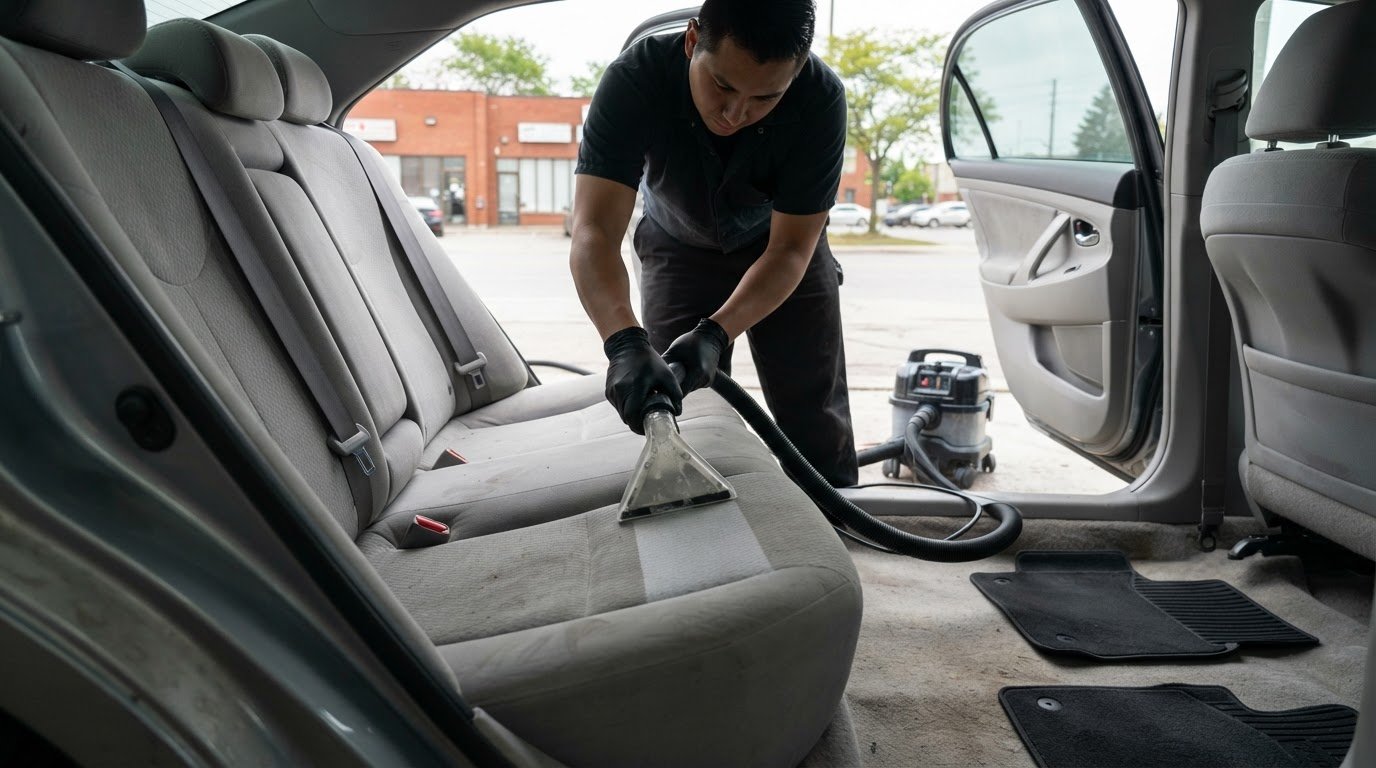
Nanak Car Wash offers vehicle cleaning options for keeping your car cared for after fallout removal. Choose an Express Car Wash or Full-Service Car Wash for routine washing, or consider Car Detailing Packages for more comprehensive cleaning. The Unlimited Wash Club is another option for drivers who wash regularly.
Washing can clear loose surface dirt, but embedded metal particles may need specific decontamination before waxing or applying a coating. Keep those steps distinct: remove bonded fallout first, then maintain the clean surface with regular washing and appropriate paint care.
For help choosing a vehicle cleaning option, contact Nanak Car Wash.
Make Paint Care Part of Your Routine
Build paint care around where you park and how you use your vehicle. If you regularly leave it near industrial activity or busy roads, make surface checks part of your regular cleaning routine. A consistent plan helps you notice changes early and decide when ordinary washing no longer meets your needs.
Knowing how to protect your car’s finish from industrial fallout also means choosing care that fits the task. Nanak Car Wash offers Car Detailing Packages, Full-Service Car Wash, and Express Car Wash options for different vehicle-cleaning needs. Choose the type of care that suits your next step, without treating a routine wash as a substitute for decontamination when particles remain bonded to paint.
For help choosing a cleaning option, contact Nanak Car Wash. A practical care routine can help you keep your vehicle looking its best.
Frequently Asked Questions
What Can be Done?
Start by washing away loose dirt, then assess whether stubborn specks or rough patches remain. If they do, use an automotive iron remover or clay-bar treatment suited to the paint, following product directions. For example, a vehicle that looks clean after washing but still feels rough needs more than another routine wash. Once the surface is clean, apply wax as part of ongoing care.
How does industrial fallout damage a car’s paint and clear coat?
Metal particles can bond to the painted surface and oxidize, creating orange or rust-coloured specks. Those spots can interrupt the smooth appearance of the clear coat and make the finish look dull or uneven. For example, sunlight may make small marks across a hood easier to notice than they were in a shaded parking area. Removing bonded particles addresses the contamination before it remains on the finish.
 6600 Finch Ave W, Etobicoke, ON M9V 3Z6

 647-703-8515
 MON – SUN 8 AM to 7 PM