
You've just driven home through a GTA slush mix that looked harmless from the driver's seat. Open the door and there's a white crust along the sill, gritty paste behind the front wheels, and a salty mist drying across the lower panels. The car looks dirty, but the bigger problem is hiding underneath.
That residue doesn't wait politely for spring. Car salt removal works best when the salt is wet and mobile, particularly after a thaw, not only when winter finally gives up. The right rinse at the right time can reach the places a quick drive-through wash misses, from rocker panels to brake-line brackets.
Table of Contents
- Why Road Salt Eats Your Car Faster Than You Think
- What You Need Before You Start Removing Salt
- How to Remove Road Salt From Exterior Paint and Glass
- Deep Cleaning Wheel Wells and the Underbody Where Rust Starts
- When to DIY and When to Book a Professional Wash or Rust Proofing
- Your Simple Winter Plan to Keep Salt Off for Good
Why Road Salt Eats Your Car Faster Than You Think
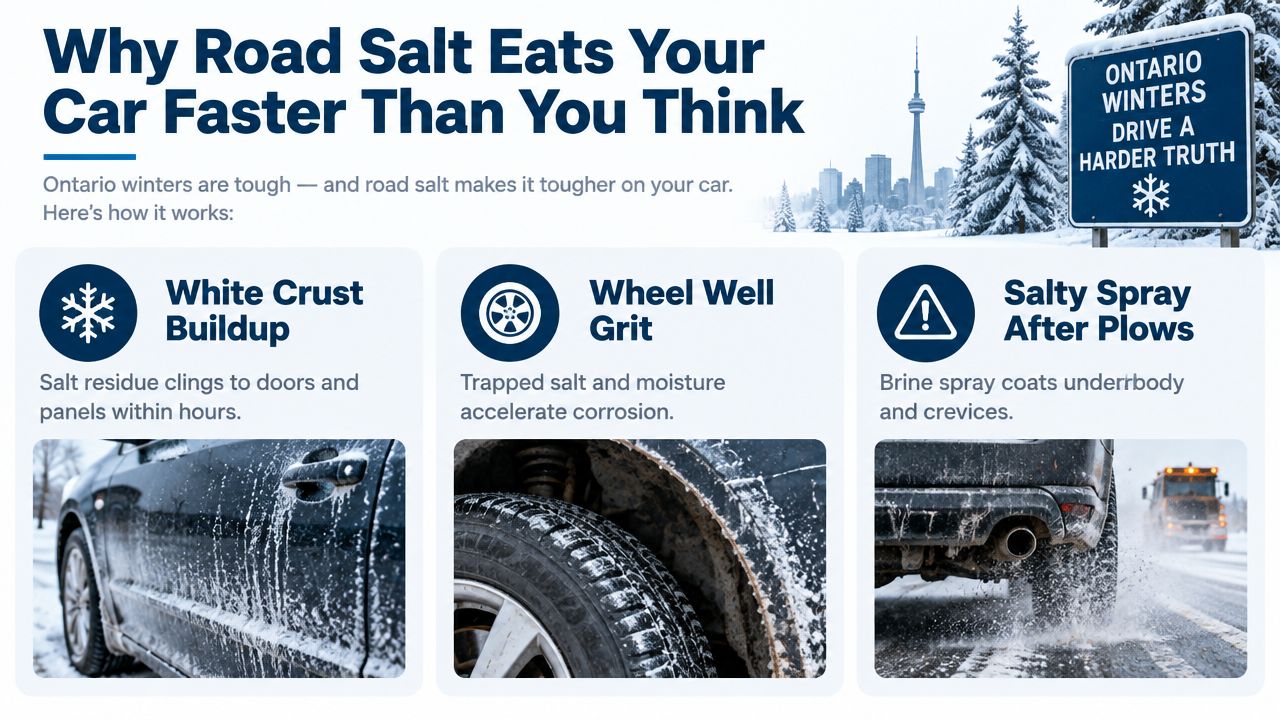
A GTA commuter can collect several layers of winter contamination in one trip. The plow passes, traffic throws brine onto the underbody, and the spray settles into wheel wells, seams, suspension mounts, and the lower edges of the doors. Later, temperatures drop and the residue dries into a crust. Then a thaw arrives, turning that crust back into a mobile chloride solution that creeps into gaps and stays against metal.
Toronto typically uses 130,000 to 150,000 tonnes of road salt each winter, while its 2025 winter maintenance budget was about $160 million, according to the federal road-salt information summarised by Environment and Climate Change Canada. The city also identifies road salt as the most cost-effective de-icer across Canada, so drivers shouldn't expect exposure to disappear during an ordinary winter.
The damage starts where you aren't looking
Paint can show salt film quickly, but visible dirt is only the easy part to find. The stubborn material packs into wheel-well liners and sits against rocker panels, frame rails, and fasteners. Moisture gives the chloride a path to bare or weakened metal, while repeated driving adds more spray before the previous layer has fully gone.
Federal reporting shows Canadian salt use under the national road-salt code peaked at 4.972 million tonnes in 2017, fell to 2.153 million tonnes in 2010, and reached 4.2 million tonnes in 2018. The same federal publication says roughly 90% to 95% of Canadian salt consumption serves de-icing and chemical production. For a Southern Ontario vehicle, that means recurring exposure is part of the operating environment, not an unusual event.
A spring wash still helps, but it arrives after months of wet-dry cycles. Daily commuters, delivery drivers, ride-hailing vehicles, and anyone regularly using salted highways need a timing-based routine that gets chloride off while it's still moving. The rest of this guide focuses on that defence plan, without pretending a bottle of wax can rescue a vehicle that never gets rinsed underneath.
What You Need Before You Start Removing Salt
The first mistake in DIY car salt removal is touching the paint too soon. A dry mitt dragged across gritty salt can turn a cleaning job into a polishing job, and your paint won't appreciate the upgrade.
Gather the equipment before you turn on the hose:
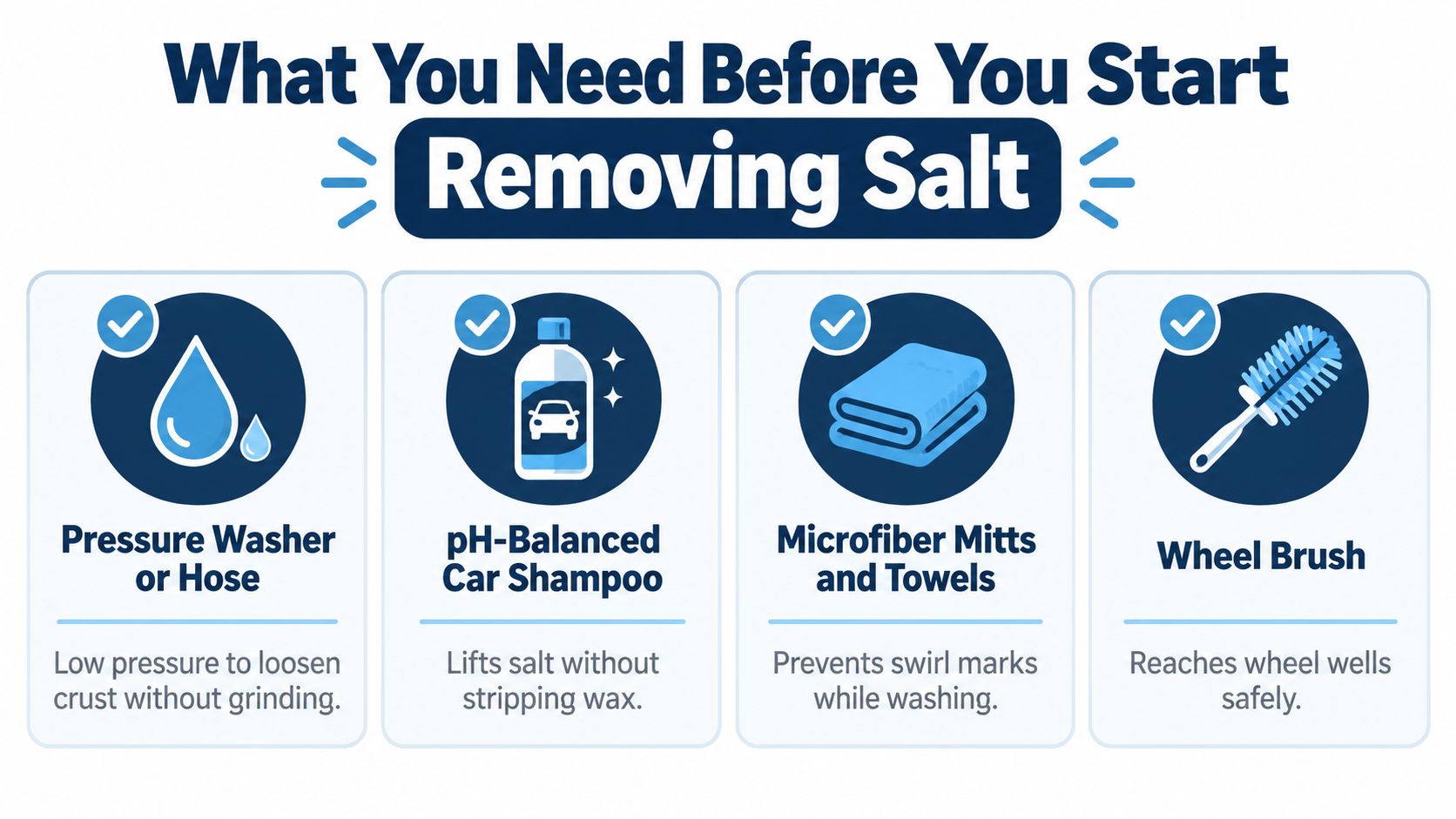
- Hose or pressure washer: Use generous water volume and moderate pressure to loosen crust. A low-pressure underbody attachment helps reach beneath the car without forcing spray into sensitive areas.
- pH-balanced car shampoo: Choose a dedicated automotive shampoo that lifts road film without needlessly stripping existing protection.
- Microfiber mitts and drying towels: Keep separate wash media for paint and wheels. Microfiber helps trap loosened grit instead of pushing it across the clear coat.
- Wheel brush: A flexible wheel and wheel-well brush reaches behind spokes, around liners, and along mud flaps without requiring your hand to enter cramped spaces.
- Protection product: Keep a spray wax or paint sealant ready for the clean, dry finish. Protection won't remove salt, but it can make the next contamination layer easier to wash away.
Set up the wash so drainage works
Park on a surface that lets water leave the vehicle, preferably with a slight incline rather than a flat puddle. Work in shade where possible, because hot panels dry water and shampoo before they've had time to do their jobs.
Don't use dish soap as a shortcut. It's designed for kitchen grease, not a vehicle's painted surfaces and existing protection. Hot water also isn't a clever answer for frozen panels. Let ice soften naturally, then use water that won't shock cold glass or frozen surfaces.
Before washing, check that doors, windows, and the fuel door are closed. Remove loose mats if you're also dealing with salty interior residue, and place a clean towel or mitt where it won't pick up driveway grit.
Practical rule: If the car is visibly crusted, water comes before contact. Never start with the mitt.
How to Remove Road Salt From Exterior Paint and Glass
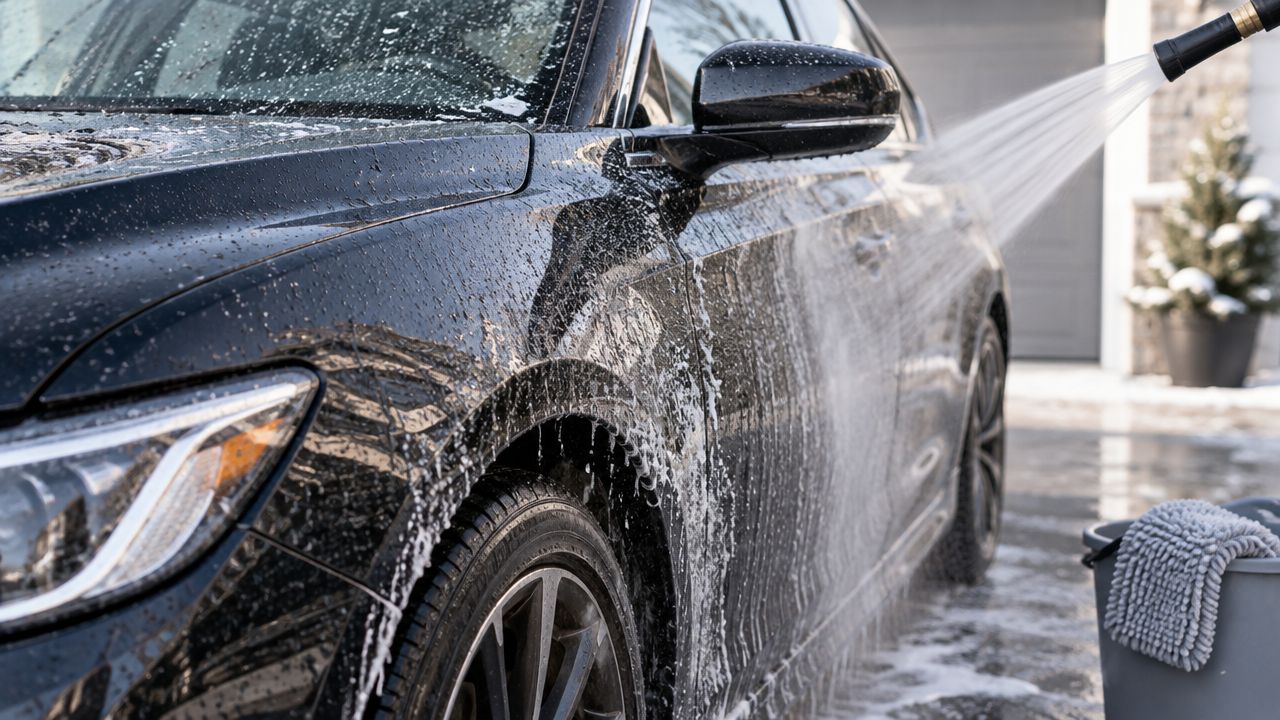
Start with the roof and let gravity help. Rinse the entire car thoroughly, allowing water to soften the white film before you introduce shampoo or a mitt. Spend extra time on the lower doors, rear bumper, rocker panels, and the back of the vehicle, where passing traffic throws a concentrated mix of salt, sand, and dirty water.
The pre-rinse should be more than a decorative mist. Move the hose or pressure-washer wand slowly enough to carry loosened residue away, and angle it toward the wheel wells and lower seams. Keep the nozzle at a sensible distance, especially around trim, badges, weather seals, and damaged paint.
Let the wash media lift, not grind
Use a two-bucket method if you're washing by hand. One bucket holds shampoo solution, and the other holds rinse water for the mitt. Work in small sections from the cleanest upper panels downward, rinsing the mitt frequently so the grit doesn't travel from a rocker panel to the bonnet.
Foam can help soften road film, but foam alone doesn't replace rinsing. Let the product dwell according to its instructions, then glide the mitt lightly over the panel. Don't scrub aggressively at a stubborn salt line. Rinse it again, and repeat only after the residue has softened.
Avoid this: A fast splash through an automatic wash may improve the appearance while leaving packed salt behind the liners and underneath the car. Exterior cleanliness and underbody salt removal are related, but they aren't the same job.
Rinse from top to bottom once more. Open the doors after the main wash and clean the jambs, sills, and lower edges where brine often dries into a chalky line. Those areas need a gentle mitt or microfiber towel after the loose material has been rinsed away.
Glass comes last. If you clean it before the body, the final body rinse can redeposit dirty water across the windows. Use a dedicated glass towel and a suitable automotive glass cleaner, then inspect at an angle for a cloudy salt film. If the glass still looks hazy, don't keep adding product. Rinse and wipe again with a clean towel.
Dry without trapping winter moisture
Use a clean drying towel or air blower, starting at the roof and moving downward. Patting is safer than dragging a towel across a panel that may still contain grit. Pay attention to mirrors, handles, trim edges, badges, and door seams, because trapped water can freeze after you leave.
Once the paint is clean and dry, apply a spray wax or sealant if the surface and product instructions allow it. That layer is a convenience, not a corrosion treatment. It can help the next round of grime release more easily, but it won't compensate for skipped underbody rinses.
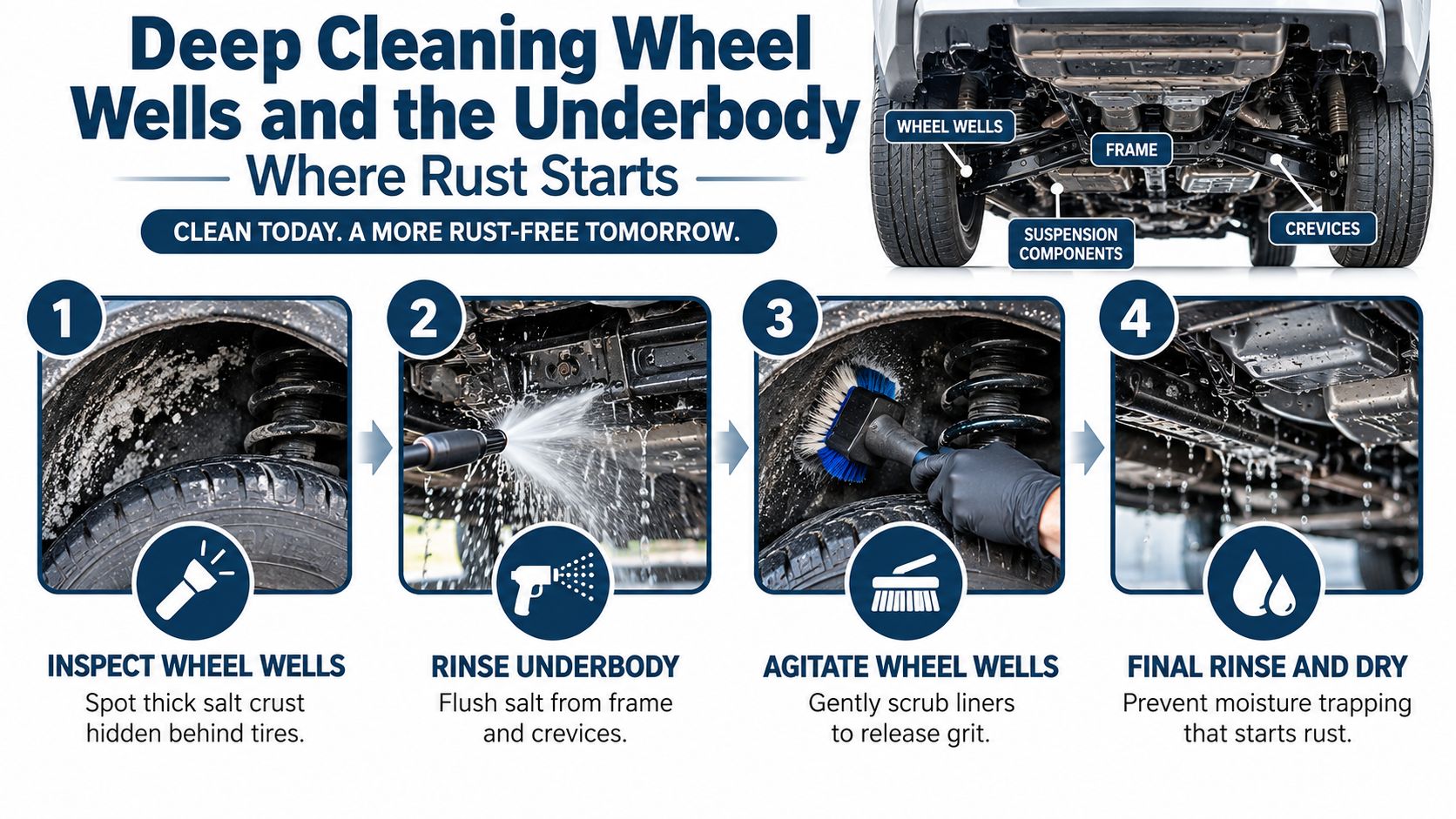
Deep Cleaning Wheel Wells and the Underbody Where Rust Starts
A car can look clean while carrying a winter's worth of salt underneath. In Ontario, wheel wells catch spray from the tyres, and mud flaps or liners hold damp grit against the body. Salt settles on rocker panels, frame rails, suspension mounts, brake-line brackets, fuel-tank straps, and seams where a quick exterior rinse cannot reach.
Older Ontario corrosion research found that road salt could account for about 50% of vehicle corrosion. The Transportation Research Board document also describes heated storage as a particularly severe condition for salt-driven corrosion. Remove chloride before applying protection, and avoid turning a wet, salty vehicle into a warm corrosion chamber.
Flush the hidden zones deliberately
Turn the front wheels to open up the wheel wells, then inspect with a flashlight. Check behind the tyre, along the liner, around the mud flap, and through the rear section of the wheel well. A soft brush can loosen salt and mud from plastic liners. Keep stiff, abrasive tools away from painted or coated metal.
Use plenty of water under the vehicle rather than relying on aggressive pressure. Sweep across the underside and change the spray angle so water reaches both the exposed and sheltered sides of each component. Follow seams and brackets until the runoff changes from grey and gritty to clear.
Salt removal works best after a thaw, when wet brine is mobile and can travel into seams and pockets. A dry, powdery layer still needs rinsing, but rising temperatures make timing more important than counting washes.
Inspect the result for flaking coating, swollen seams, fresh orange staining, damaged liners, and crust that returns after drying. Never crawl beneath a vehicle supported only by a jack. If access is unsafe, use a wash bay designed for underbody cleaning.
Compare the options honestly
DIY cleaning gives you control and costs less in cash, but it requires safe space, drainage, equipment, and patience. An express wash with an underbody option is faster and easier to repeat. A full detail makes more sense when salt has reached carpets, seats, door panels, and tight interior crevices.
| Approach | What it does well | Where it falls short |
|---|---|---|
| DIY hose wash | Lets you target specific seams and wheel wells | Requires safe access, equipment, and time |
| Express wash with underbody rinse | Handles routine exterior contamination quickly | May not provide detailed inspection or hand drying |
| Full-service wash | Adds hand drying and interior salt cleanup | Costs more than a basic exterior visit |
| Rust proofing after cleaning | Adds a protective treatment once bulk residue is gone | Won't replace regular washing or repair existing corrosion |
During salt season, an underbody wash every 1 to 2 weeks, plus an extra rinse after a thaw, is a practical Ontario routine. The thaw rinse matters because brine spreads while temperatures rise above freezing. Washing only after snowfall can miss the period when liquid residue is moving into crevices.
Don't park a freshly salted, wet vehicle in a heated garage and call the job finished. Dry accessible areas, allow water to drain, and give trapped moisture a chance to leave.
When to DIY and When to Book a Professional Wash or Rust Proofing
A thaw changes the job. A light commuter may manage with regular rinsing and occasional targeted cleaning, while a highway commuter, ride-hailing driver, delivery vehicle, or work truck collects more spray and brine in less time. Salt is most mobile when it becomes wet, so schedule cleaning around Ontario's freeze-thaw cycle rather than snowfall alone.
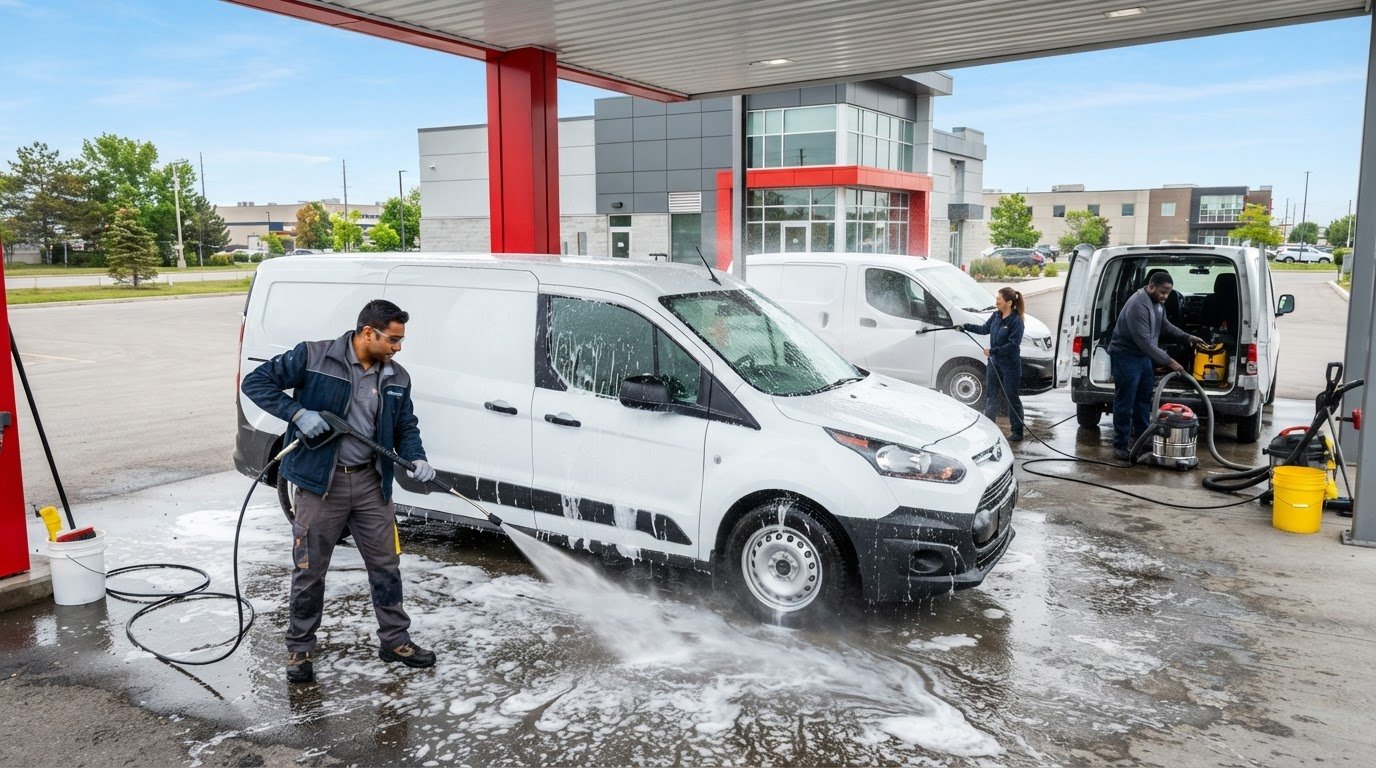
Nanak Car Wash lists express exterior washes with underbody options, full-service washes with hand drying and interior cleaning, detailing for salt and stain removal, and automotive rust proofing. Published starting prices are $9.99 plus tax for express packages, $29.99 plus tax for full-service packages, and approximately $119.95 to $149.95 plus tax for rust proofing, as shown in the Nanak Car Wash service information. These are package starting points. Vehicle size and selected services affect the final cost.
Use the calendar, not guesswork
A wash after every snowfall is not automatically the best use of time. Dry, powdery salt still deserves a rinse, but a thaw often deserves priority because liquid brine can travel into seams, wheel wells, and other concealed areas. If the roads turn wet after a freeze, clean the vehicle while that residue is mobile, before it dries into another crust.
| Service option | Best for | Salt removal strength | Typical time and cost signal |
|---|---|---|---|
| DIY rinse and wash | Hands-on owners with safe space and equipment | Strong when the owner targets the underside | Lower cash cost, higher personal time |
| Express exterior with underbody add-on | Busy commuters and frequent washers | Good for routine surface and underside rinsing | Starting at $9.99 plus tax at Nanak Car Wash |
| Full-service wash | Drivers needing exterior and interior attention | Stronger overall cleanup, including hand-dried areas | Starting at $29.99 plus tax at Nanak Car Wash |
| Detailing appointment | Deep salt, stains, odours, or neglected crevices | Thorough surface and interior decontamination | Appointment service, duration and vehicle size vary |
| Rust proofing | Owners seeking an added protective layer after cleaning | Protective follow-up, not bulk salt removal | Approximately $119.95 to $149.95 plus tax by vehicle size |
DIY suits an owner who has safe access, suitable equipment, and time to reach the underside. A professional wash makes more sense when the vehicle is used daily, the salt has dried into tight areas, or the interior has picked up brine and stains. An express underbody wash is the practical middle ground for routine maintenance. Detailing is better for neglected crevices, odours, or contamination that a quick rinse cannot remove.
Protection comes after decontamination
Corrosion research presented through the Transportation Association of Canada found that de-icers can produce different corrosion results. An Ontario-market treated sodium chloride sample showed about 0.2117% average mass loss in tested rebar samples, while field tests reported inhibitor-related corrosion reductions ranging from 10.5% to 77%. The research also noted that effectiveness declined as corrosion severity increased. The practical sequence described in Canadian corrosion research is sound: rinse first, inspect the cleaned surfaces, then apply protection.
Book rust proofing once the underside is clean enough for the compound to contact the intended surfaces. For a fleet or ride-share car, a membership or prepaid wash bundle can make repeated underbody rinsing easier to maintain through changing weather. The useful plan is the one that gets repeated when the next thaw turns salt wet again.
Your Simple Winter Plan to Keep Salt Off for Good
A GTA thaw can turn a salt-caked car into a moving brine project. Plan the rinse for the temperature swing, not just for a convenient weekend. Once salt becomes wet and mobile, water can carry it out of seams, wheel wells, and underbody pockets before the next freeze leaves another hard crust.
Use this routine during salted-road conditions:
- Light local use: Rinse the exterior and underside regularly, prioritising days when temperatures rise above freezing.
- Daily commuting: Schedule an underbody-focused wash every 1 to 2 weeks through the salt season, following the Ontario protocol cited earlier.
- Highway, ride-hailing, delivery, and fleet use: Wash sooner after heavy spray, slush, or a thaw. Frequent exposure puts more brine into tight areas.
- After each wash: Inspect door sills, wheel-well liners, rocker panels, and visible brackets. Dry handles, mirrors, seams, and jambs before the next freeze.
- After deep cleaning: Apply spray wax, sealant, or rust proofing only after bulk salt is gone and the surfaces are suitably dry.
The target is not a spotless vehicle every day. Keep chloride from sitting against metal for long periods. A rinse during a thaw usually earns more than a delayed spring scrub, especially when the spray reaches the underbody instead of stopping at already-clean glass.
Set a thaw-day wash reminder and adjust it when driving conditions change. If safe access, equipment, or time is limited, book an underbody wash rather than postponing the job until corrosion is visible.
For GTA drivers, Nanak Car Wash offers express washes with underbody options, full-service cleaning, detailing for salt and stains, and automotive rust proofing. A visit after the next thaw can remove mobile brine before it dries back into the seams of the vehicle.

 6600 Finch Ave W, Etobicoke, ON M9V 3Z6
 647-703-8515
 MON – SUN 8 AM to 7 PM