
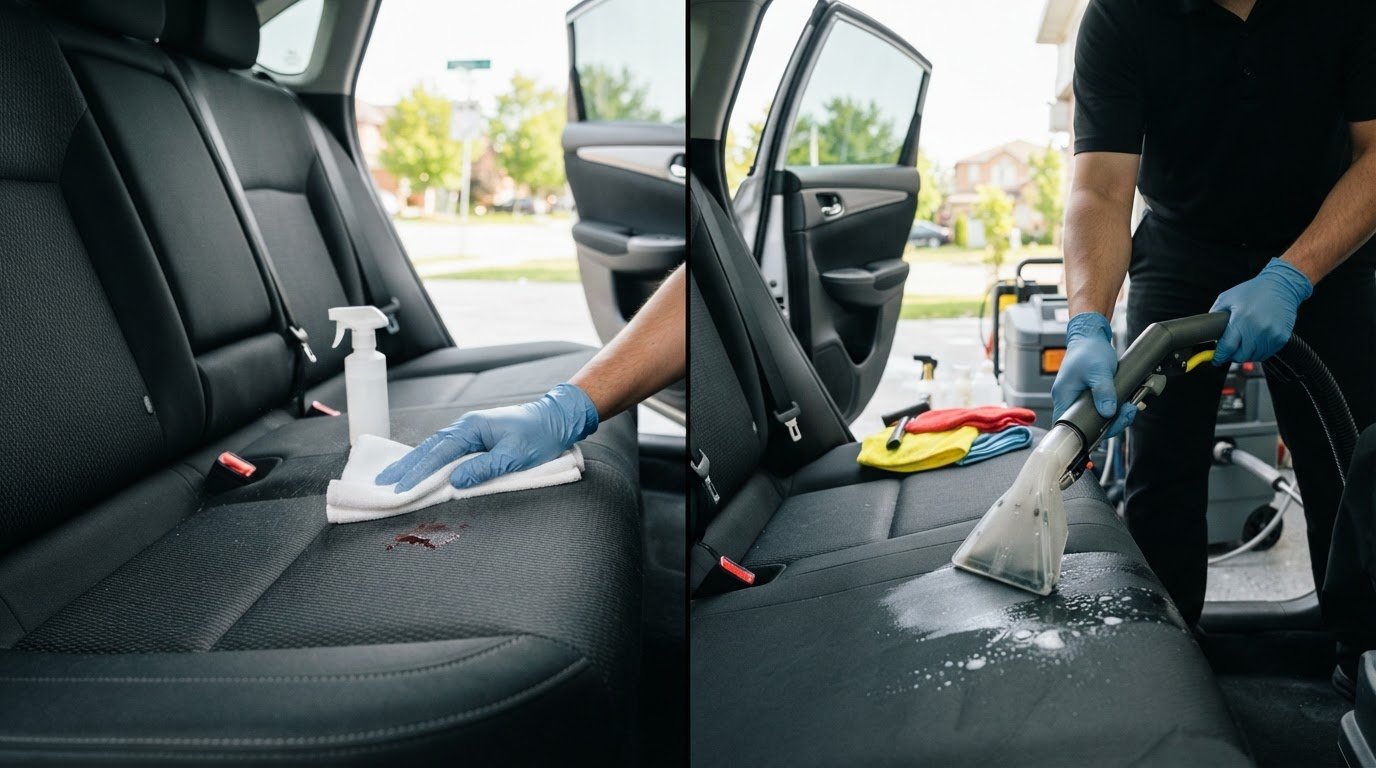
Scrubbing a blood stain can make it harder to remove, not easier. If you’re wondering whether you can clean your car upholstery without damaging it, the answer depends on how fresh the stain is and what the material can safely handle. Professional blood stain removal from car upholstery may be worth considering when the mark is dried, the fabric is delicate, or you’re unsure which cleaner to use.
It’s understandable to want to act fast, but hot water, harsh products, and aggressive rubbing can worsen the mark. Start gently: blot rather than scrub, use cool water sparingly, and check the care instructions before applying a cleaner. Test a suitable product on a hidden area first, if the instructions allow. This guide explains what to do when you spot a stain, how cleaning considerations differ across upholstery materials, and when to stop DIY attempts and ask a detailer. Nanak Car Wash in Brampton offers car detailing that includes shampooing seats and carpets. Ask about your specific upholstery and stain before choosing a service.
Key Takeaways
- Identify whether your upholstery is fabric, leather, or synthetic before choosing a cleaning approach.
- Check the vehicle’s care guidance and follow a discreet spot test to help avoid damage from an unsuitable product.
- Consider when cautious DIY care may be reasonable and when professional blood stain removal from car upholstery is worth discussing.
- Before contacting a detailer, note the stain’s age and location, the upholstery material, and any products you’ve already tried.
- Nanak Car Wash in Brampton offers detailing that includes shampooing seats and carpets. Ask whether your upholstery and stain can be assessed.
Blood on Car Upholstery: First Steps and What to Avoid
A blood stain on a car seat can be stressful, but careful first steps may help limit spreading. The right approach depends on the upholstery material and whether the stain is fresh or dried. There’s no single method for every seat, and complete removal can’t be promised.
What should you do immediately after blood gets on a car seat?
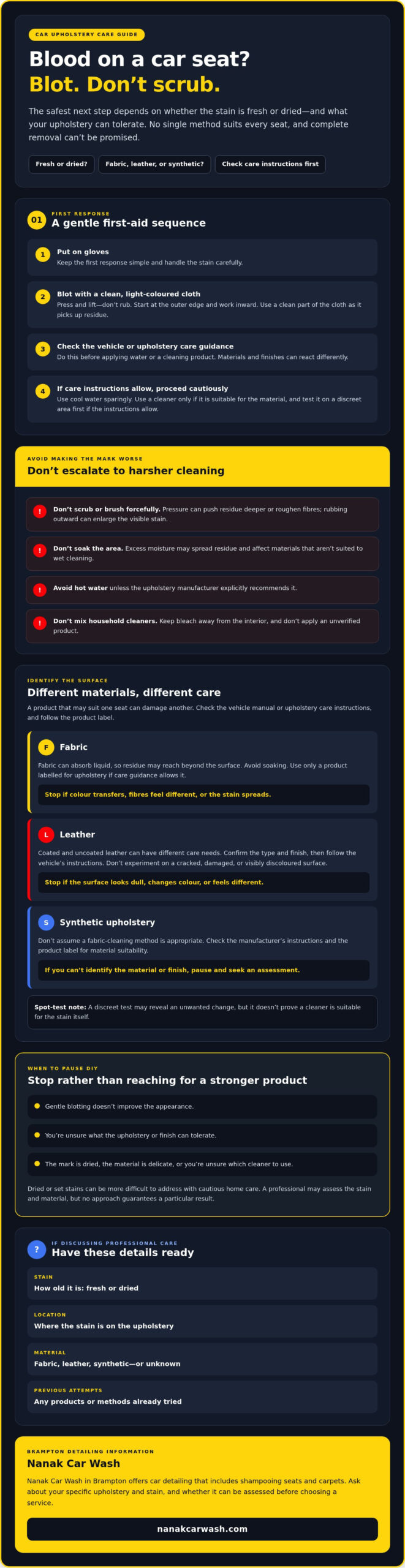
Keep the first response simple. Put on gloves, then gently blot the stain with a clean, light-coloured cloth. Press and lift rather than rubbing. Start at the outer edge and work inward to reduce the chance of spreading the mark. Use a clean part of the cloth as it picks up residue.
Before applying water or a cleaning product, check the vehicle manual or upholstery manufacturer’s care guidance. Materials and finishes can react differently to moisture and cleaners. General explanations of how stain removal works can provide context, but they aren’t a substitute for instructions specific to your seat.
Which first-aid cleaning mistakes can make the stain worse?
Don’t scrub or brush forcefully. Pressure can push residue deeper into fabric or roughen its fibres. Rubbing outward can also enlarge the visible stain. Avoid soaking the area, since excess moisture may spread residue beyond the original mark and affect materials that aren’t suited to wet cleaning.
- Skip hot water unless the upholstery manufacturer explicitly recommends it. Don’t assume heat is suitable for the stain or your seat material.
- Don’t mix household cleaners. Combining products can have unpredictable effects and may damage the upholstery.
- Keep bleach away from the interior. It can discolour or harm vehicle materials.
- Don’t apply an unverified cleaner. Check the care guidance and test an approved product on a discreet area first, if the instructions allow.
Fresh and dried stains may respond differently, and a stain that has set can be more difficult to address with cautious home care. If gentle blotting doesn’t improve the appearance, or you’re unsure what the upholstery can tolerate, stop rather than escalating to stronger products. Professional blood stain removal from car upholstery may start with an assessment of the stain and material, but no approach guarantees a particular result. Note when the stain appeared and what you’ve tried so a detailer has useful information when discussing next steps.
How blood stain removal changes across car upholstery materials
A cleaner that may be appropriate for one seat can damage another. Fabric, leather, and synthetic upholstery vary in texture, finish, and care requirements, so identify the material before choosing a product or method. Check the vehicle manual or upholstery care instructions first. Use a product only if its label says it’s suitable for that material.
The safest cleaning approach depends on the upholstery material and its care guidance. If the instructions permit a cleaner, test it on a hidden area and check for changes before treating the visible stain. The University of Illinois Extension stain guide offers general stain-care information, but your vehicle’s material instructions should take priority.
Can you clean blood from fabric car seats?
Fabric can absorb liquid, so residue may reach beyond the surface. Avoid soaking the area or using a product unless the care guidance permits it and the label identifies it as suitable for upholstery. Apply cautiously, and don’t assume a method that works on household fabric is right for a car seat. Stop if colour transfers to the cloth, the fabric’s texture changes, or the mark spreads.
Is leather or synthetic upholstery cleaned the same way?
No. Coated leather, uncoated leather, and synthetic surfaces can have different finishes and care needs. Don’t default to a fabric-cleaning method on these materials. Follow the vehicle manufacturer’s instructions, and avoid experimenting if the surface is cracked, damaged, or visibly discoloured. If you can’t identify the material or its finish, pause and seek an assessment before applying a cleaner.
Use this quick check before trying a product. A discreet spot test can reveal an unwanted change, but it doesn’t prove that a cleaner is suitable for the stain itself.
Fabric: Use only a product labelled for upholstery if the care guidance allows it. Stop if colour transfers, fibres feel different, or the stain spreads.
Leather: Confirm the type and finish, then follow the vehicle’s care instructions. Stop if the surface looks dull, changes colour, or feels different.
Synthetic upholstery: Check the manufacturer’s guidance rather than assuming it can be cleaned like fabric or leather. Stop if the finish changes or you can’t confirm the material.
If the stain remains or you’re unsure how the seat should be treated, professional blood stain removal from car upholstery may be worth discussing with a detailer. Nanak Car Wash in Brampton offers car detailing that includes shampooing seats and carpets. You can learn about Nanak Car Wash detailing and ask whether your upholstery and stain can be assessed before choosing a service.
DIY cleaning or professional blood stain removal from car upholstery?
DIY care may be reasonable for a small, recent mark on upholstery you can identify, especially if the manufacturer’s instructions allow a suitable product. If a stain is dried, spread, has returned after cleaning, or is on material you can’t identify, pause before trying another treatment. Stain age, upholstery type, and previous cleaning attempts all affect the next step.
More product and harder scrubbing don’t necessarily lead to a better result. Extra moisture can spread residue, and forceful rubbing can affect fibres or a surface finish. Healthline’s guide to removing blood stains offers general fabric advice, but vehicle upholstery has its own care requirements. Follow your vehicle or upholstery manufacturer’s guidance first.
When is careful at-home treatment reasonable?
Consider cautious home care only if the mark is small and recent, you know the material, and its care instructions permit the approach. Keep treatment limited to gentle blotting and an upholstery-labelled product that the manufacturer’s guidance allows. Test it on a hidden area first, following the product directions. Don’t continue if the test or stain area reacts badly.
- Stop if colour transfers to your cloth.
- Stop if the surface becomes rough, sticky, or otherwise changes.
- Stop if discolouration worsens or the stain spreads.
If there’s no visible improvement, pause rather than adding more cleaner or increasing pressure. Repeated attempts can make it harder to tell how the material is reacting.
When should you ask a professional detailer for help?
Ask about professional blood stain removal from car upholstery if the stain is dried, widespread, recurring, or has already been treated with products. A detailer may be able to assess the upholstery and discuss an approach suited to its material and condition. An assessment doesn’t guarantee the stain will disappear, so describe what you see and ask what the service can assess before choosing it.
Share when the stain appeared, where it is, what the seat is made of if you know, and which products or methods you’ve already tried. These details help the detailer understand the situation before discussing a next step. If the upholstery is damaged or the stain has visibly changed the surface, avoid further DIY treatment until you’ve asked for advice.
A careful stain-removal plan for Brampton drivers
A clear sequence can help you avoid guesswork. Before choosing another cleaner or method, work through these steps:
- Identify the upholstery. Check whether the seat is fabric, leather, or synthetic, and look for care information in the vehicle manual.
- Check the care guidance. Use only products and methods permitted for that material. If the instructions are unclear, don’t experiment on the visible stain.
- Blot gently. If home care is appropriate, use a clean cloth and avoid scrubbing or soaking the seat.
- Assess the result. Stop if the mark spreads, the surface changes, or you see colour transfer. Don’t keep adding products in search of a quick fix.
Cleaning carefully also means avoiding excess moisture and leftover product. Follow the product directions and vehicle maker’s care advice, including any guidance for after cleaning. If the appearance changes or you’re unsure whether residue remains, pause before treating the area again.
What should you tell a detailer before bringing in your car?
Give a straightforward description: whether the blood is fresh, dried, or previously treated; where the stain is; and what the upholstery is made of, if known. Mention any manufacturer care restrictions and every product or method already used. Then ask whether the material and stain can be assessed, what approach may be suitable, and what outcome is realistic. Professional blood stain removal from car upholstery depends on the stain and seat condition, so don’t assume every case can be accepted or resolved.
For Brampton drivers, checking service suitability directly is a sensible step before choosing detailing. Nanak Car Wash offers car detailing that includes shampooing seats and carpets, but discuss the specific upholstery and blood-stain request with the business first. For broader interior-care planning, look for guidance on interior detailing and general car cleaning as well as advice for the specific seat material.
To discuss whether your upholstery and stain can be assessed, contact Nanak Car Wash about detailing. Be ready to share the stain’s age, location, material, and any products you’ve tried. That gives the team useful context without assuming a particular treatment or result.
Professional car detailing in Brampton: ask Nanak about your upholstery
After identifying your seat material and checking its care guidance, confirm whether professional interior detailing is suitable for the specific stain. Nanak Car Wash serves Brampton, Ontario, and offers car detailing that includes interior cleaning and shampooing seats and carpets. This may be an option for broader interior cleaning, but it isn’t a promise that a blood stain can be treated or fully removed.
What does Nanak Car Wash offer for interior cleaning?
Seat and carpet shampooing is part of Nanak’s car detailing. The appropriate service can depend on the upholstery material, stain condition, and current package scope, so ask the team before choosing. Confirm whether your seat material and blood stain can be assessed, and whether the detailing options are appropriate for the care instructions. If you’re unsure what the upholstery can tolerate, avoid applying additional products before asking.
How can Brampton drivers take the next step?
Make your enquiry more useful by sharing a few clear details:
- Upholstery type: fabric, leather, synthetic, or unknown.
- Stain condition: fresh, dried, or previously treated.
- Previous attempts: products or methods already used, and any changes you noticed.
- Care restrictions: relevant instructions from your vehicle manual or upholstery guidance.
Then ask whether the team can assess the material and stain, what interior-cleaning options may be suitable, and what result is realistic. Professional blood stain removal from car upholstery can’t be assumed as part of a detailing package, and no particular outcome should be expected without discussing the specific case.
If you’re comparing options for broader interior care, read the guide to choosing professional car detailing for help matching a service to your needs. For the stain itself, speak with Nanak directly before booking. Ask Nanak Car Wash about professional interior detailing and include your vehicle, upholstery type, stain age, and any cleaning attempts. A clear description makes it easier to confirm whether the request is suitable.
Choose a careful next step for your car upholstery
Blood-stain care starts with restraint. Blot gently, identify the upholstery, and check its care instructions before using a cleaner. Fabric, leather, and synthetic surfaces need different care, so don’t scrub harder or add more product if the mark doesn’t lift. The stain’s age and your earlier cleaning attempts can also affect what to try next.
If the upholstery is delicate, the stain is dried or widespread, or you’re unsure what’s safe, professional blood stain removal from car upholstery may be worth discussing with a detailer. Ask about your specific material and stain first, and keep expectations realistic. No treatment can be assumed to remove every mark.
Nanak Car Wash is located in Brampton, Ontario, and its car detailing includes seat and carpet shampooing. Contact the team to confirm whether your upholstery and stain can be assessed, and which detailing option may suit your needs. Contact Nanak Car Wash about interior detailing. Share the stain details and any products you’ve tried when you enquire.
Frequently Asked Questions
Can professional cleaners remove blood stains from car upholstery?
What should I do immediately when blood gets on a car seat?
Wear gloves if available, then gently blot the spot with a clean, light-coloured cloth. Don’t rub, since friction may spread the stain or work residue further into the upholstery. Check your vehicle’s care instructions before using a cleaner. If you don’t know the material, or colour transfers to the cloth as you blot, stop and ask a professional for advice before applying anything else.
Can dried blood be removed from car upholstery?
Dried blood may be more difficult to treat than a fresh mark, but the outcome depends on the upholstery and any previous cleaning. Don’t scrape aggressively or apply an untested product. Check the care guidance for the seat material before taking another step. Consider asking a professional to assess the stain, especially if it covers a large area or earlier attempts have changed the fabric’s appearance or texture.
Does hot water remove blood stains from car seats?
Don’t assume hot water is suitable for a car seat. Heat and excess moisture may complicate cleaning, while fabric, leather, and synthetic upholstery can have different care requirements. Follow the vehicle manufacturer’s instructions and avoid saturating the seat. If you’re unsure about the material, or you’ve already tried hot water, stop before doing more and ask a detailer whether the upholstery and stain can be assessed.
Can I use household cleaner or bleach on a blood stain in my car?
Avoid bleach and don’t mix household cleaning products. They may discolour upholstery, damage its finish, or leave residue. Use a cleaner only if its label says it’s suitable for the specific material and the vehicle’s care guidance allows it. Test the product discreetly first, following its directions. Stop if the surface changes, colour transfers, or the mark spreads. Don’t add another product to try to reverse a reaction.
When should I take my car to a professional for a blood stain?
Ask a professional about a dried or widespread stain, unknown or delicate upholstery, or a mark that hasn’t improved with cautious care. Stop if the fabric discolours, its texture changes, or the stain spreads. In Brampton, Nanak Car Wash offers car detailing that includes shampooing seats and carpets. Contact the team to confirm whether your specific upholstery and blood stain can be assessed before choosing a service.


 6600 Finch Ave W, Etobicoke, ON M9V 3Z6
 647-703-8515
 MON – SUN 8 AM to 7 PM