
You leave Oshawa after a wet snowfall with a clean-looking car, then notice the familiar grey film across the doors, wheel wells and rear bumper. By the next commute, slush has worked into places you can't see. The problem isn't just a dirty exterior. It's what winter road treatment leaves behind on the metal underneath.
Choosing among car washes in Oshawa should therefore begin with a maintenance question, not a price question. Does your next wash remove salt from the undercarriage, protect the paint, clean the cabin, or just make the vehicle look presentable for a few days? In Durham Region, the right answer changes with the weather, your mileage and the condition of the vehicle.
Table of Contents
- Navigating Oshawa Car Washes and Winter Road Salt
- The Oshawa Car Wash Market at a Glance
- Comparing Express Exterior and Full-Service Washes
- Deep Cleaning with Professional Auto Detailing
- Rust Proofing and Undercarriage Protection Strategies
- Maximizing Value with Memberships and Prepaid Bundles
- Specialized Care for Electric and Modern Vehicles
- Operational Standards and Water Efficiency Practices
- Building Your Seasonal Car Care Calendar
Navigating Oshawa Car Washes and Winter Road Salt
A short Oshawa commute can expose a vehicle to several winter treatments before the day is over. Durham Region uses plows, salters and anti-icing brine during snow and freezing-rain events, leaving wet grit and salt on the body, wheel wells and underside. That local pattern makes wash timing a corrosion-control decision, not a cosmetic one. Durham Region's winter road-maintenance information explains the road treatments drivers encounter across the Region.
Ontario spreads roughly 1.5 to 3 million tonnes of road salt each winter, and vehicle corrosion costs more than $3 billion annually across Canada, according to the Ontario road-salt and corrosion reference. Those figures justify paying for the service that removes the contaminant, especially an undercarriage rinse. A cheaper exterior-only wash can leave the most exposed areas untouched.
What salt does after the road dries
Salt remains active after the visible slush disappears. Chloride-laden moisture settles around undercarriages, seams, brake-line mounts, suspension brackets and other concealed metal surfaces. Freezing, thawing, wetting and drying then keep those deposits in contact with the vehicle. Canadian winter corrosion guidance recommends washing every one to two weeks during winter and after major snowstorms, with undercarriage cleaning given priority during heavy salt exposure.
Practical rule: After heavily salted roads, buy the underbody rinse before paying for extra shine on the roof.
Wash frequency should follow exposure rather than a fixed calendar. A driver covering salted roads daily should stay near the one-week end of that range. Someone driving less often can wash closer to every two weeks, then book a rinse promptly after a major storm. Choose a service that reaches wheel wells, rocker panels and the underside instead of judging value by gloss alone.
A quick exterior wash still helps when road film affects visibility or salt sits on painted panels. The growth of EV ownership does not remove this requirement. EV drivers should still prioritise salt removal beneath the vehicle, while avoiding unnecessary services that target engine components their vehicle does not use. The smart purchase in Oshawa is the wash that removes winter residue from vulnerable areas, not just the package with the most cosmetic add-ons.
The Oshawa Car Wash Market at a Glance
Oshawa gives drivers real choice, which makes price alone a poor buying guide. A Canada-focused directory lists 28 car washes in Oshawa and 2,003 across Ontario as of 2026, placing Oshawa at about 1.4% of the province's listed locations. Those figures come from the Ontario car-wash location directory.
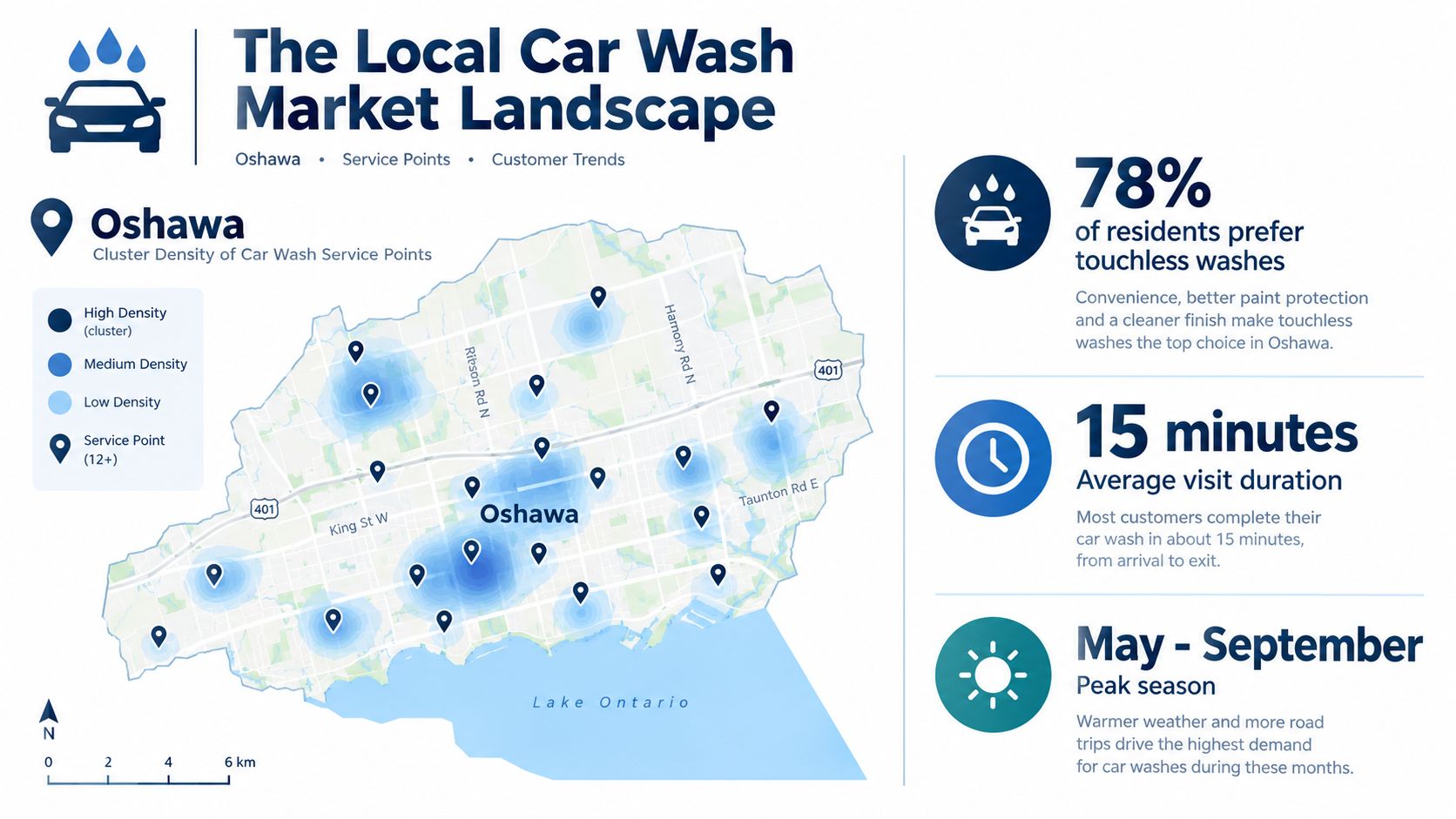
Ontario also has a large, competitive car-wash and auto-detailing sector, with many operators competing for repeat customers. That choice benefits drivers, but it creates a quality problem: a cheap wash can become expensive if it leaves salt in wheel wells, rocker panels or beneath the vehicle. Judge the service by corrosion protection and useful coverage, not by the lowest posted price.
What competition should mean for your choice
Operators compete on speed, location, package design and repeat-visit value. A commuter may need a fast exterior service after frequent highway travel. A family SUV, delivery vehicle or high-mileage commuter may need a repeatable package that also addresses interior grit and winter residue. EV ownership changes the service emphasis, not the need for regular salt removal.
Prioritise operators that clearly describe:
- Underbody coverage: Confirm that the package includes an actual undercarriage rinse, not only a lower-body spray.
- Interior scope: Check whether vacuuming, mats, windows and console cleaning are included or sold separately.
- Protection options: Sealer wax, hot wax and similar upgrades protect the finish, but they do not replace salt removal.
- Vehicle-size policies: SUVs, vans and trucks may have different pricing or appointment requirements.
- Membership conditions: Read wash limits, vehicle restrictions, cancellation terms and included services.
The right local operator matches the vehicle's exposure and your winter routine. A lightly used sedan may need a basic maintenance package, while a daily commuter needs dependable underbody access. Pay for the service that removes corrosive residue consistently. Cosmetic extras should come after that requirement is covered.
Comparing Express Exterior and Full-Service Washes
An express wash is the right tool when the vehicle mainly needs its exterior reset. A full-service wash earns its higher price when the cabin has accumulated salt, grit, food debris or winter moisture and you don't have the time or equipment to clean it yourself.
Express packages commonly use presoak soap, foam, rinse, drying agent and air blowers. Winter upgrades should focus on the underbody, wheel wells and a protective wax or sealant. Full-service packages add hand drying, interior vacuuming, dashboard and window cleaning, with higher tiers often covering door panels, consoles, cup holders and tire dressing. The precise inclusions vary by operator, so read the package board rather than relying on the label.
| Feature | Express Exterior | Full-Service |
|---|---|---|
| Presoak and foam bath | Included in most packages | Included |
| Exterior rinse and drying | Machine drying and air blowers | Exterior wash with hand-dry options |
| Undercarriage rinse | Select an underbody upgrade during salt season | Choose it when listed, don't assume it is included |
| Interior vacuuming | Usually not included | Included in full-service tiers |
| Dashboard and windows | Usually not included | Commonly included |
| Door panels, consoles and cup holders | Not normally included | Available in higher tiers |
| Best fit | Fast maintenance between storms | Dirty cabin, family use or winter reset |
Make the decision from the vehicle's condition
Choose express when the body is dirty but the interior remains orderly. This is especially sensible after a light salt film, before a longer trip or when you need a fast underbody rinse after a storm. Add a protective product when the paint feels rough or the vehicle has been exposed to repeated road spray.
Choose full-service when floor mats are white with salt, seats carry visible grime, or the driver's area has become difficult to clean with a quick vacuum. The same applies to vehicles used for ride-hailing, deliveries or regular client visits. A clean cabin is part of the vehicle's working condition, not merely presentation.
A low-cost exterior wash is poor value if the real problem is salt packed into the mats and lower cabin.
Don't confuse wax with corrosion protection. Wax can support the painted finish, but it doesn't replace an undercarriage rinse or dedicated rust-proofing treatment. For Oshawa winters, the sensible express package is the one that reaches below the body, not necessarily the one with the most dramatic foam.
Deep Cleaning with Professional Auto Detailing
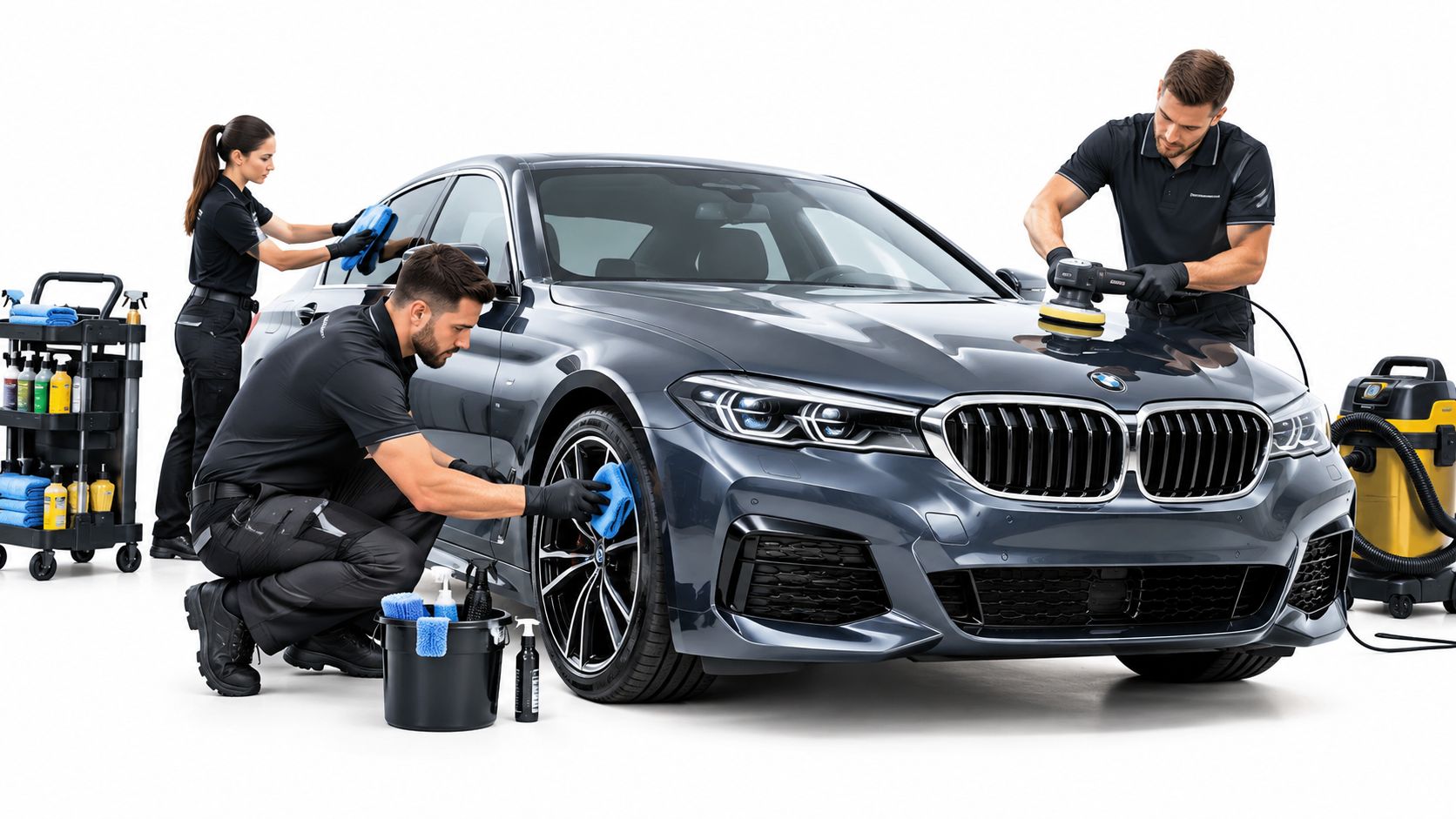
A detail is a reset, not an upgraded drive-through wash. Book one when regular maintenance has stopped removing the problem, especially after a winter of salt, wet footwear, food spills, pet hair and embedded road grime.
Start with an honest inspection
Before booking, remove personal items and photograph existing scratches, stains or damaged trim. Tell the detailer about leather, delicate electronics, pet hair and any odour source. That information helps the team choose between extraction, shampooing, steam, leather treatment and targeted stain work.
A thorough interior process may include:
- Vacuuming and blowout: Technicians use air to move debris from vents, seat rails, seams and crevices before vacuuming.
- Carpet and seat cleaning: Shampoo or extraction lifts salt lines, drink marks and embedded dirt from fabric.
- Leather care: Cleaners remove surface grime before applying a suitable conditioner, rather than leaving a greasy coating.
- Glass and trim work: Windows, dashboards, consoles, door panels and cup holders receive separate attention.
- Odour treatment: The operator should identify and clean the source, not just cover it with fragrance.
Exterior detailing can include a hand wash, decontamination, machine buffing and polishing. Those steps address bonded grime and dull paint more effectively than a standard tunnel cycle. If the vehicle has significant scratches or clear-coat damage, ask what polishing can realistically improve before approving the work.
Prepare for the booking
Detailing takes longer than a routine wash because technicians work through the vehicle in stages. Larger SUVs, vans and trucks can attract surcharges, as can heavy pet hair, excessive debris and severe staining. Ask for those conditions in writing before the appointment.
Use detailing strategically. A spring interior reset removes winter contamination, while an exterior polish before selling can improve presentation without pretending to repair damaged paint. Regular washes should handle ordinary salt removal. Detailing should handle accumulated contamination that routine service can't reasonably remove.
Rust Proofing and Undercarriage Protection Strategies
A vehicle can look clean while salt remains packed behind its wheel liners and beneath the floor. In Oshawa, the right question is not whether the cheapest wash removes visible dirt. It is whether the service reaches the areas that create future repair costs. Local road-maintenance practices make undercarriage access a winter priority, as shown in this regional road-salt reference.
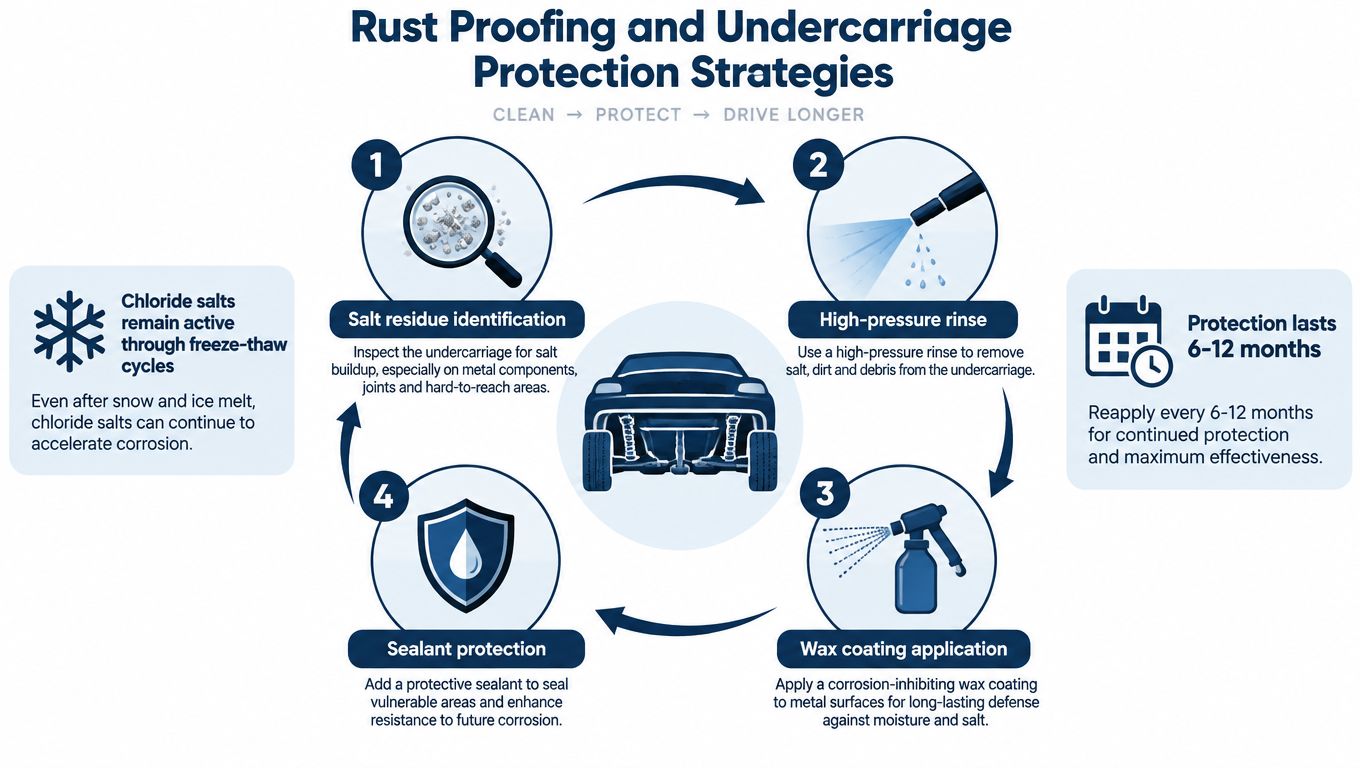
Use a clear protection sequence:
- Inspect first: Check wheel wells, lower seams, suspension parts, brake-line mounts and exposed fasteners for packed salt, wet grit or early surface rust.
- Rinse underneath: Select a wash with dedicated underbody coverage. A side spray alone will miss areas shielded by rocker panels, liners and suspension components.
- Allow drainage and drying: Rinse before treatment, then give trapped water time to run off. Applying a compound over dirty, wet surfaces reduces the value of the service.
- Apply the right product: Use a rust-proofing compound made for underbody metal and vulnerable seams. The operator should identify the product and explain where it will be applied.
Match treatment to exposure
Daily commuters, outdoor parkers, work-truck owners and drivers using heavily salted corridors should pay for underbody access before another paint or shine upgrade. Older vehicles and cars with visible surface corrosion also need an inspection before any treatment. Rust proofing slows exposure. It does not repair structural damage or guarantee that corrosion will stop.
Electric vehicles deserve the same salt-removal discipline, with correct treatment around approved underbody areas. Ask the operator to avoid sealed electrical components, high-voltage hardware and manufacturer-protected panels. EV adoption does not eliminate winter corrosion concerns. It makes careful service selection more important.
Ask three direct questions before booking: Where does the underbody rinse reach? Does rust proofing require a separate appointment? Which product suits this vehicle's age, condition and underbody design? Clear answers matter more than a long package menu.
Spend first on access: Pay for the rinse that reaches the undercarriage before paying for a cosmetic upgrade that leaves salt underneath.
Maximizing Value with Memberships and Prepaid Bundles
Frequent winter washing can feel wasteful when every visit is purchased separately. The better approach is to calculate your expected use before joining a club. If you need regular exterior rinses after storms, an unlimited pass may make repeat cleaning easier to justify. If your washing is occasional, prepaid multi-wash tickets can provide structure without a recurring commitment.
Use a simple break-even test
Write down the price of one comparable wash and the monthly membership fee. Then ask how many visits you realistically expect during salt season. The membership only makes financial sense if you use the included service often enough to beat the equivalent pay-per-visit cost.
Don't compare unlike packages. An exterior-only pass isn't equivalent to a full-service wash with interior work, and a membership may not include rust proofing, detailing or every premium protection upgrade. Compare the service you need, not the largest package on the sign.
A practical plan looks like this:
- Frequent commuter: Choose a repeatable exterior package with underbody access.
- Family vehicle: Combine regular exterior washing with occasional interior cleaning.
- Ride-hailing or delivery vehicle: Prioritise fast access, consistent presentation and predictable spending.
- Seasonal driver: Consider prepaid tickets instead of paying for a membership during months when the car rarely moves.
Read the conditions before paying
Check whether the pass applies to one specific vehicle, whether premium upgrades cost extra and whether there are wash restrictions. Confirm cancellation terms and whether interior services are discounted for members. A low monthly price is irrelevant if the plan excludes the service that protects your vehicle.
Prepaid bundles work well when you want to commit to winter maintenance without automatic billing. They also encourage drivers to wash after a storm instead of postponing the visit because the car was cleaned recently. In Oshawa, that timing matters more than chasing the lowest single-ticket price.
Specialized Care for Electric and Modern Vehicles
Electric vehicles still collect salt, grit and road film. Their powertrain may differ from a petrol vehicle, but the exterior, glass, wheels, suspension components and underbody still face Durham's winter conditions. The assumption that an EV needs less cleaning is wrong.
EV adoption in Durham municipalities rose 47%, and Oshawa was among the leaders at 56%, according to the Durham Region technical report and appendices. That growth makes EV-specific wash guidance more useful, especially for drivers who rely on cameras and driver-assistance systems during poor weather.
Clean the systems that help you drive
Salt and grime can collect around:
- Front cameras: Clean the lens area gently so driver-assistance functions aren't obstructed.
- Parking sensors: Remove packed dirt without scraping or using an aggressive tool.
- Radar and grille areas: Follow the vehicle manufacturer's cleaning guidance for sensor locations.
- Charging-port doors: Keep the surrounding area clean and dry, and don't force water into an open connector.
- Undercarriage panels: Ask for an appropriate rinse that removes salt without careless pressure against vulnerable components.
A wash operator should know where sensors and cameras are located and should avoid treating every modern vehicle like an older bare-metal design. Touchless cleaning can reduce contact, while trained hand-drying helps staff notice contaminated sensor areas that an automated system may miss.
Follow the manufacturer's limits
Read the owner's manual before using a pressure washer around charging equipment, seals or sensor modules. Tell the operator that the vehicle is electric, especially if it needs underbody cleaning or detailing. A proper wash doesn't require fear, but it does require awareness of where water and pressure belong.
EV owners should also clean more deliberately after heavy storms and on vehicles that use camera-based parking or driving functions daily. Clean glass and sensors support visibility. The road salt problem hasn't disappeared because the fuel source changed.
Operational Standards and Water Efficiency Practices
Water use is part of the car-wash decision, but the headline claim on a sign doesn't tell you enough. Canadian municipal guidance places self-serve wash-bay use at about 60 litres per vehicle without water recycling, while automatic systems with recycling can reduce consumption substantially. The Canadian vehicle-wash water-efficiency reference provides those benchmarks.
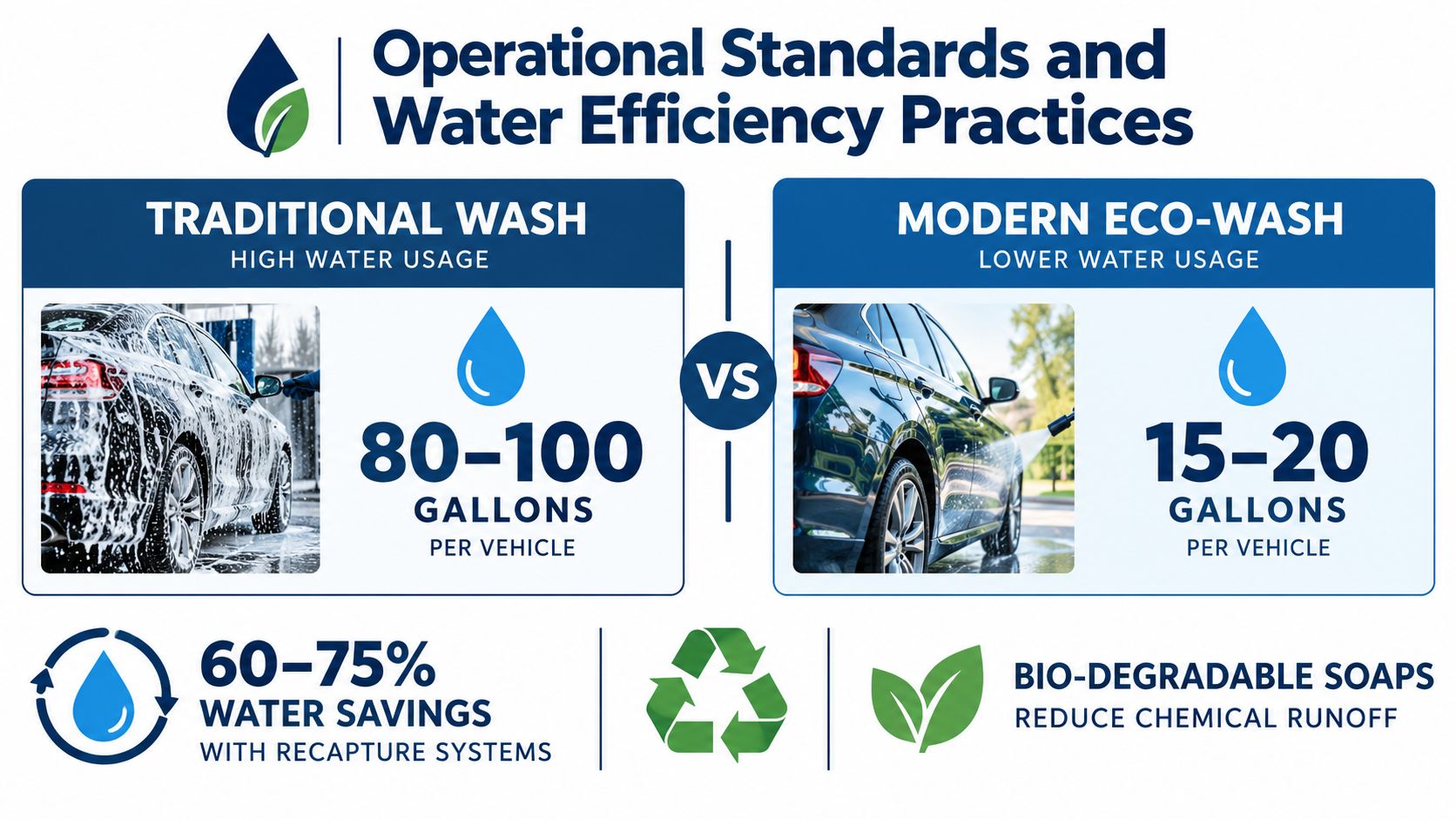
A high-throughput site using fresh water may deliver a consistent rinse, but the operator still has to manage discharge, chemical runoff and equipment efficiency. Recycling systems can reduce consumption, although they require proper filtration and maintenance. Consumers should ask practical questions instead of assuming that “automatic” or “eco” tells the whole story.
Build a winter wash routine
Use this operating framework:
- After heavy salting: Choose an underbody-focused rinse as soon as conditions allow.
- During freeze-thaw periods: Wash when salt becomes visibly wet and sticky, then allow the vehicle to dry in a suitable environment.
- For self-serve bays: Use the wand deliberately on wheel wells and lower components instead of spending the entire cycle on the roof.
- For automatic service: Ask whether the system recycles water and whether the package includes undercarriage coverage.
- For frequent drivers: Select a service that balances reliable salt removal with responsible water handling.
Canadian benchmarks cited in local Oshawa material estimate roughly 230 to 320 litres per vehicle for a typical tunnel wash and 90 to 140 litres for a wand wash, as outlined in this Oshawa car-wash water-use reference. Those figures show why equipment design and customer technique both matter.
A responsible operator should be able to explain its rinse-water management, discharge handling and recycling policy. A responsible customer should choose the service that removes contamination efficiently rather than repeating poorly targeted washes.
Building Your Seasonal Car Care Calendar
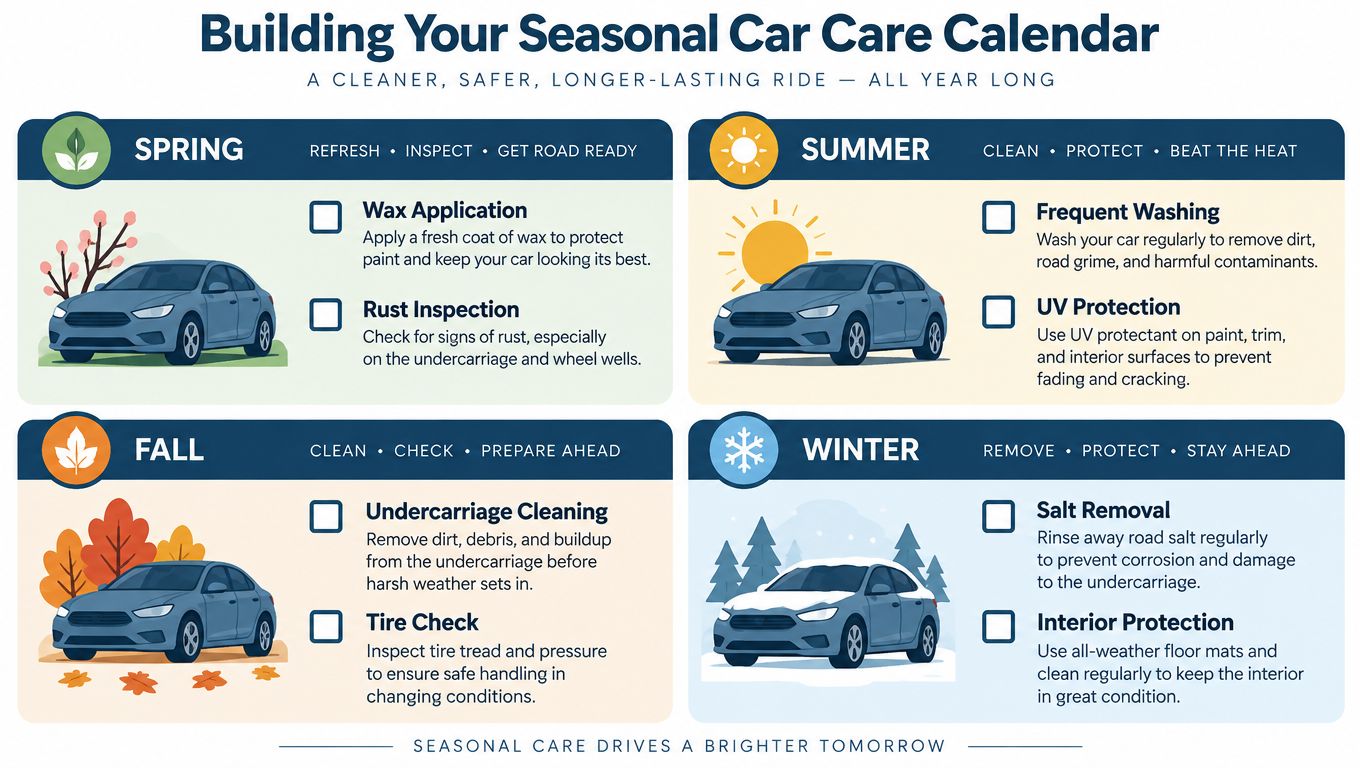
Oshawa vehicle care should follow a calendar, not a panic response after rust appears. Match each service to the season, road conditions and vehicle workload. A lightly used sedan needs less attention than a daily commuter, work truck or ride-hailing vehicle. EVs also deserve the same salt-control discipline, especially around exposed lower components and wheel areas.
Spring
Book a thorough underbody rinse once winter salting declines. Check for packed debris, flaking coatings, surface rust and damage around brake lines, suspension mounts and wheel wells. A spring detail makes sense when mats and seats still hold salt, or when the cabin smells damp.
Protect the paint only after cleaning and decontamination. Wax or sealant should not trap winter grime against the finish. Have visible corrosion assessed before applying a cosmetic product.
Summer
Summer gives you the best chance to maintain the vehicle properly. Remove dust, insects, tree residue and bird droppings before they bond to the paint. Use an exterior package for routine upkeep, then reserve detailing for stains, dull paint or neglected trim.
Inspect the cabin after road trips and outdoor activities. Sand, food debris and sunscreen residue build quickly in high-use vehicles.
Fall
Clean the undercarriage before winter brine returns. Inspect tyres, wheel wells and lower body panels, then schedule rust proofing if the vehicle needs dedicated protection. Confirm that your winter wash plan includes genuine underbody access, not just a quick exterior rinse.
Prepare before the first major storm. Waiting until roads turn white means crowded facilities and fresh salt already sitting on the vehicle.
Winter
Continue the winter rinse interval established earlier, prioritizing underbody cleaning after heavy salting. The same corrosion-control principle is outlined in this winter corrosion guidance for Canadian drivers. Choose express service for a quick exterior and underbody reset. Choose full-service when the interior has absorbed salt, moisture and grime.
A membership or prepaid bundle helps only when its included service matches the vehicle's needs. Treat each storm as a maintenance trigger, and calculate the cost of corrosion before choosing the cheapest wash.
Nanak Car Wash offers express and full-service washes, interior cleaning, detailing, rust proofing, prepaid options and monthly memberships. Visit Nanak Car Wash to review Oshawa service options and choose the wash that reaches the areas salt affects most.


 6600 Finch Ave W, Etobicoke, ON M9V 3Z6
 647-703-8515
 MON – SUN 8 AM to 7 PM