
A February drive through the GTA can leave a vehicle looking fine from the driver's seat, right up until you lift the floor mats. Underneath, there may be chalky white salt rings, grey slush marks, damp carpet backing, and one mysterious brown patch that seems to have arrived with the last snowstorm. You vacuum, spray, scrub, and feel optimistic. Then the mark comes back when the carpet dries.
That's the part many generic stain guides miss. GTA vehicle carpets deal with a repeating winter cycle, not just the occasional coffee spill. A professional carpet stain removal service can often make a dramatic difference, but the honest question isn't just, "Can you remove it?" It's, "What exactly is included, how far has the contaminant travelled, and is the remaining colour a removable stain or permanent fibre damage?"
Table of Contents
- Why GTA Winters Make Carpet Stains Everyone's Problem
- What a Professional Carpet Stain Removal Service Actually Covers
- Common Stain Types and Your Realistic Odds of Success
- The Professional Process from Vacuum to Extraction
- When to Call a Pro and When DIY Is Enough
- What Carpet Stain Removal Costs in the Greater Toronto Area
- How to Choose a Local Provider and Save with Memberships
Why GTA Winters Make Carpet Stains Everyone's Problem
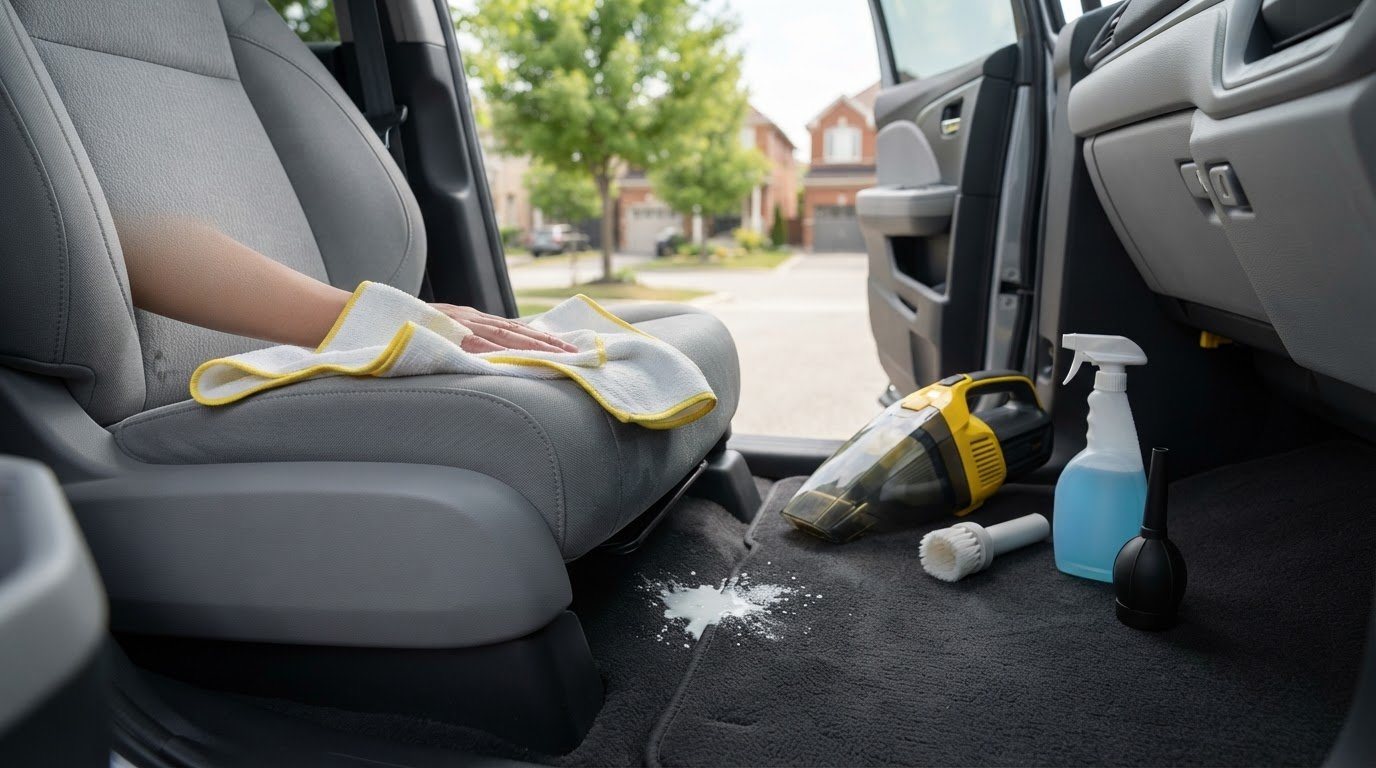
A white ring on a floor mat often starts with an ordinary winter drive. Snow clings to your boots, slush gathers near the pedals, and road salt dissolves into that moisture. The car gets parked in a heated garage or underground condo space, the water evaporates, and the salt is left behind.
Ontario's winter maintenance creates a steady supply of that residue. Regional detailing references describe winter road-salt use at roughly 1.5 to 3 million tonnes each season, and vehicles may stay exposed to salt for five to six months of the year, as described in this Ontario-focused winter car detailing guide. That does not mean every carpet ends up permanently marked, but it does explain why salt stains are such a familiar GTA problem.
The trouble is what happens after the stain sinks in. Salt crystals do not just sit on the surface. They can work into mat fibres and carpet backing, where slush keeps the material damp. If someone sprays more cleaner, adds more moisture, and does not extract it properly, dissolved residue can travel back upward as the carpet dries. The mark seems to return, but it is often the same contamination moving back to the surface.
Practical rule: If a white salt mark returns after drying, stop adding spray and start thinking about extraction.
Timing changes the odds too. Winter contamination is repetitive. A driver who cleans the interior once in early winter may still track in more salt for months after that. Canadian maintenance guidance commonly recommends removing salt every 7 to 10 days during active salt season, with weekly undercarriage cleaning used as a practical benchmark. Interior care follows the same logic. Fresh residue is usually easier to deal with than material that has been wet, dried, and pressed deeper into the backing again and again.
The GTA detailing market reflects how common this problem is. IBISWorld's Canadian car wash and auto detailing industry data lists 3,399 businesses in 2026, with the industry growing at an average annual rate of 3.5% from 2021 to 2026. Ontario accounts for 2,734 car detailing businesses, or about 37.5% of the national total, while the Canadian market is placed at $1.6 billion in 2025. For drivers, that means plenty of operators, and plenty of service pages that promise results without explaining the fine print.
That fine print matters. A good carpet stain removal service has to answer a few plain questions: how far did the stain travel, is it still removable, and what parts of the job are really included when access is tight, time is limited, or the textile is already worn?
What a Professional Carpet Stain Removal Service Actually Covers
A useful way to understand detailing scope is to compare it with a dental appointment. A standard cleaning removes routine buildup and checks the obvious problem areas. Cosmetic or restorative work takes more time, uses different techniques, and may carry a separate charge.
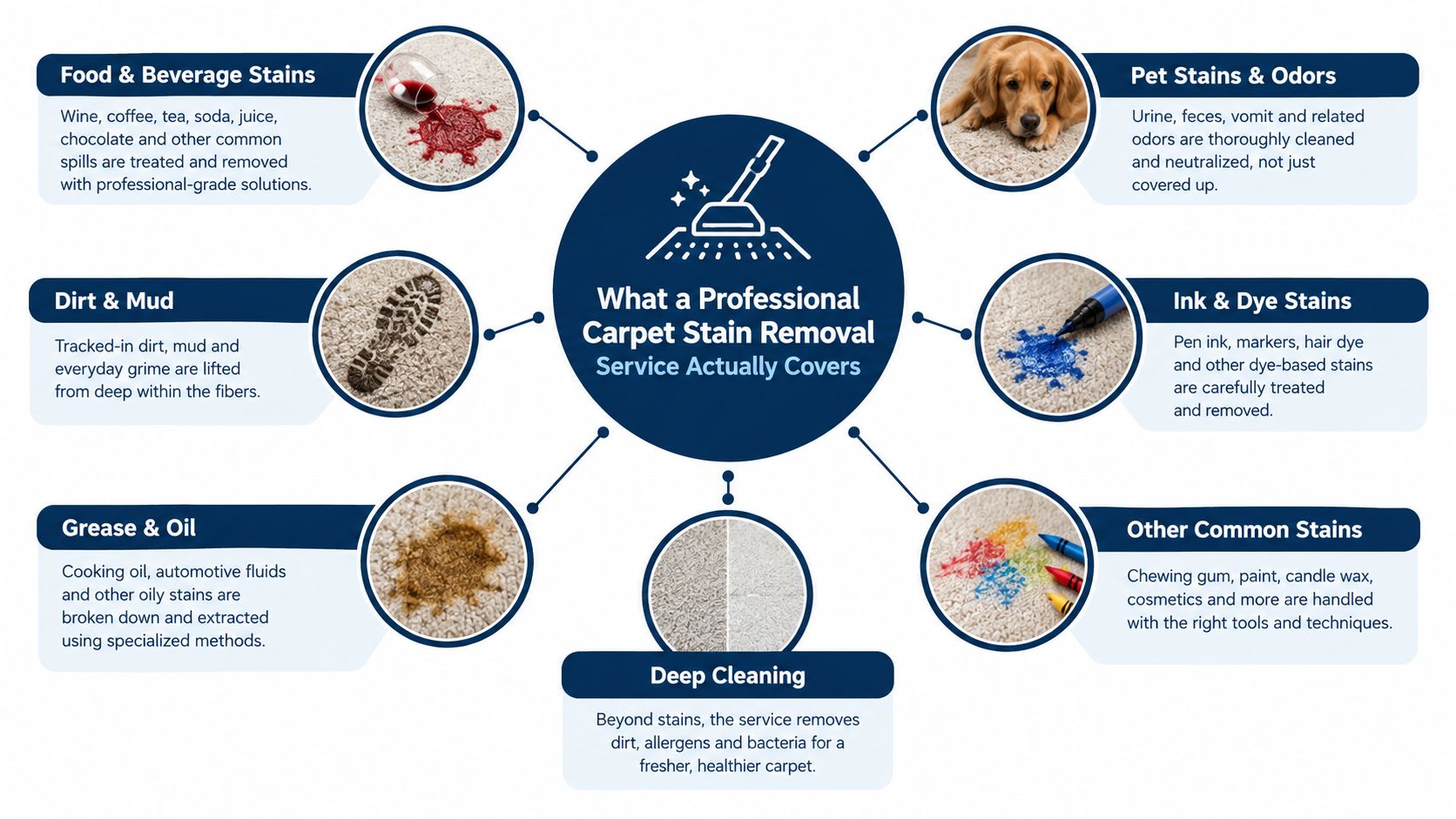
Vehicle carpet cleaning works much the same way. A base interior package may include vacuuming, surface cleaning, spot pre-treatment, shampooing, and extraction. That can be enough for loose soil, ordinary winter grime, and small marks. It doesn't automatically mean every old stain receives a dedicated restoration treatment until the colour disappears.
The basic service layer
A professional workflow usually begins by removing loose debris. Technicians then identify visible stains, salt residue, heavily soiled zones, and areas where moisture may have reached the backing. Pre-treatment loosens the contaminant before shampooing and extraction do the heavier work.
For GTA interiors, hot water shampoo and extraction are commonly bundled because the method is designed to pull mud, salt, and embedded soil from carpet fibres rather than just wipe the surface. GTA detailing service descriptions also present extractor-based carpet and upholstery cleaning alongside salt-stain treatment, which reflects how regional providers package winter contamination.
Where the extra work begins
The hidden cost often isn't the stain itself. It's the time and difficulty surrounding the stain.
- Access: A removable floor mat is easier to inspect and clean than carpet trapped beneath seats, rails, trim, or a third-row arrangement.
- Timing: A fresh spill may need straightforward treatment, while a mark that has been re-wetted repeatedly may require slower inspection and more controlled extraction.
- Textile condition: Worn, faded, frayed, or chemically damaged fibres may not return to their original appearance even when the contaminant is removed.
- Specialty contamination: Pet-related work, strong odours, and residue that has reached the backing can require treatment beyond ordinary spot pre-treatment.
- Vehicle layout: Tight footwells and hard-to-reach corners increase labour, especially when the technician must work around fixed components.
Ask whether “stain removal” means spot treatment included with cleaning or a separate, outcome-focused service. For service businesses comparing scheduling and field-service systems, compare Salesmsg with Housecall Pro if you're interested in how customer communication and appointment workflows can be organised around more detailed service scopes.
A clear quote should tell you what the technician will do, not just what the finished vehicle will supposedly look like. Ask whether the provider will inspect the material, pre-treat visible stains, shampoo, extract, and discuss the possibility of partial improvement rather than promising a perfect reset.
Common Stain Types and Your Realistic Odds of Success
Stains behave less like paint on a wall and more like unwanted guests in a fabric house. Some are sitting near the front door and leave easily. Others have moved into the underlay, mixed with moisture, and become much harder to evict.
Three factors usually control the result: stain age, fibre type, and original contaminant. A fresh water-based spill on durable synthetic carpet is a different job from old pet contamination in backing material. A coffee mark may respond well to targeted treatment, while a faded patch caused by chemical exposure may not be a stain at all. It may be missing colour.
Salt, mud, and winter residue
Road salt is often a good candidate for improvement when a technician can dissolve and extract the residue properly. The challenge is repetition. Salt that has been tracked in repeatedly can spread through mats, carpet edges, and backing. Surface brushing may make the top look better for a short time, but it won't remove what remains underneath.
Mud is similar. Once dry, it may vacuum away more easily than a wet smear. If it has been ground into the pile, though, agitation and extraction become more important than a quick wipe.
Coffee, juice, wine, and grease
Coffee, juice, and wine can leave colour behind, especially when they sit for a long time or have been treated with an unsuitable household product. Sugar, oils, and cleaning residue can also attract new soil, making the area appear dark again after the first cleaning.
Grease is a different character. It tends to cling rather than dissolve into water, so the technician needs to choose a treatment that addresses the contaminant without damaging the fibre or backing. The right process may lighten the mark substantially, but the original colour, heat exposure, and age still matter.
Pet accidents and bonded discolouration
Pet accidents deserve a separate conversation because the visible spot may be only part of the problem. Liquid can move into carpet backing, where ordinary surface shampoo may reduce the appearance without resolving the deeper contamination or odour. The provider should explain whether the service is routine cleaning, odour treatment, or a more involved restoration attempt.
An old stain can bond with a fibre in much the same way glue grips a surface. More scrubbing doesn't always solve that problem. It can roughen the carpet, spread the mark, or alter the colour around it.
This Ontario carpet shampooing and extraction description notes that stain permanence depends on the material, age of the stain, and original contaminant. That's the honest framework to use. Some marks may be removed, some may only be lightened, and a few may call for replacement or partial recolouration instead of another round of cleaning.
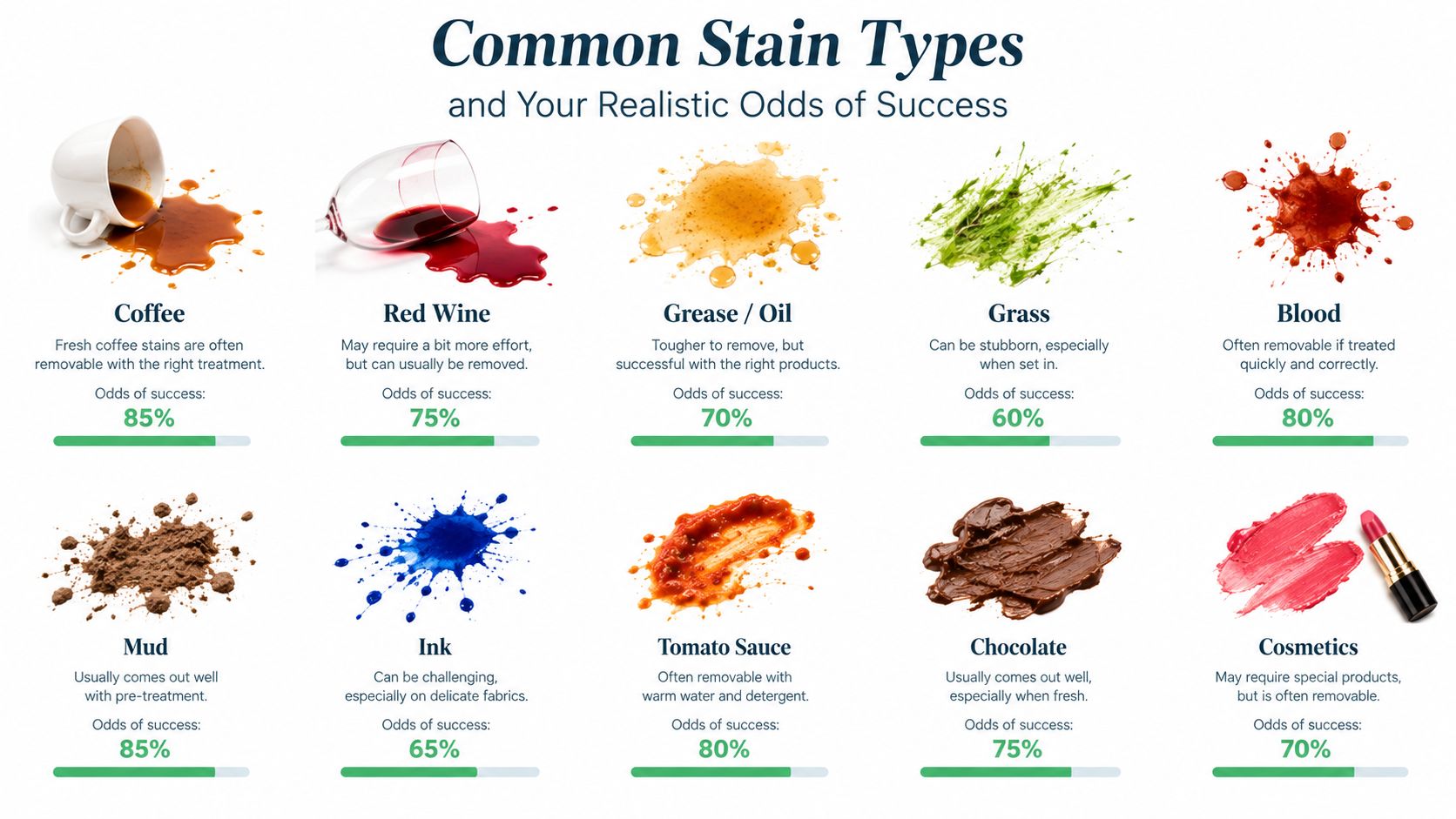
A technician who says, “We'll inspect it first and tell you what's realistic,” is giving you more useful information than one who says every stain will disappear.
The Professional Process from Vacuum to Extraction
Good stain work is a sequence, not a bottle of magic liquid. Each stage prepares the carpet for the next one, and skipping a stage can leave soil behind or create the familiar problem of a spot returning after the interior dries.
Step one starts with dry soil
The technician vacuums loose grit, salt crystals, hair, and debris before adding moisture. Wetting loose material can turn it into paste, pushing it farther into the pile or backing. A careful inspection also identifies whether the problem is a surface stain, a recurring wick-back mark, or broader wear.
Pre-treatment targets the visible problem
Visible stains, salt residue, and heavily soiled areas are treated before the main shampoo. The solution needs time to work, but the technician also needs to control how much moisture enters the carpet. More product isn't automatically better. In a vehicle, carpet backing and enclosed footwells can hold moisture longer than the surface suggests.
Agitation helps release embedded soil
Agitation works the treatment into the fibres so the cleaning solution can reach material that vacuuming alone can't lift. The technician may concentrate on pedal areas, entry points, seat edges, and the places where boots press slush into the carpet.
Shampoo loosens what vacuuming missed
Shampooing addresses soil that has attached to the fibres. The objective isn't to soak the vehicle. It's to loosen the contaminant so the extraction equipment can remove it. A provider should be able to explain the difference between a light surface refresh and a deeper interior treatment.
Extraction removes moisture and residue
Extraction is the part that protects the result. A technician uses suction to pull out loosened soil, dissolved salt, cleaning solution, and moisture. If someone over-wets the carpet without extracting thoroughly, salt and residue can wick back to the surface as the material dries. The customer then sees a familiar white or brown mark and assumes the treatment failed, when poor moisture control may have recreated the visible symptom.
Ask a provider to describe these stages in plain language. You don't need a technical lecture in the booking office, but you should hear more than “we use professional products.” A sound answer mentions inspection, pre-treatment, controlled agitation, shampooing, extraction, and realistic drying guidance.
When to Call a Pro and When DIY Is Enough
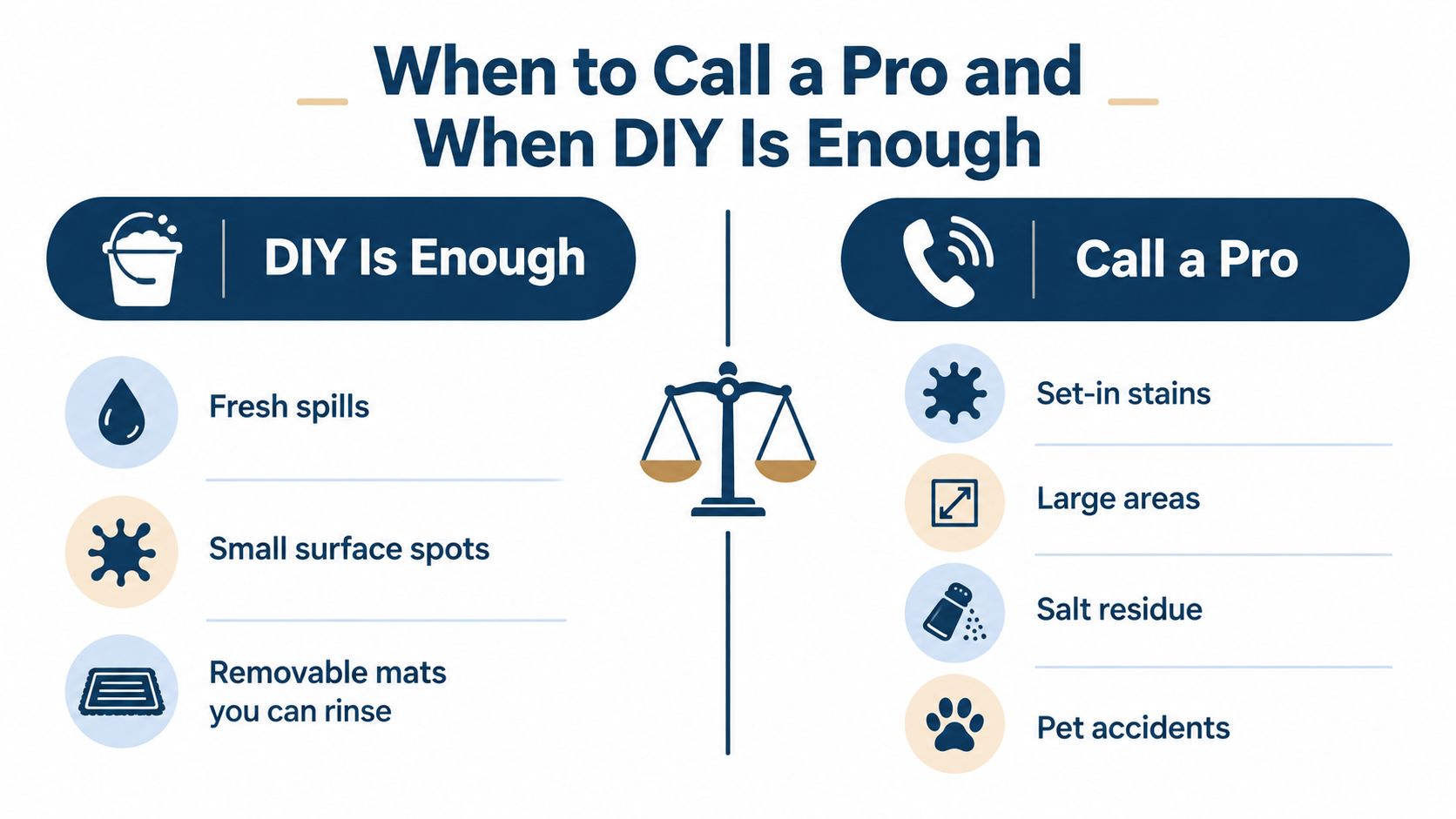
Not every carpet mark deserves a service appointment. If you spill a small amount of coffee on a removable mat and blot it quickly, sensible home care may be enough. The mistake is treating a deep, recurring, or odorous problem as if it were the same type of spill.
DIY usually makes sense for small, fresh problems
Blot a fresh spill with a clean absorbent cloth rather than scrubbing it outward. Scrubbing can spread the liquid and roughen the fibres. Removable mats can often be taken out, rinsed appropriately, and dried completely before returning to the vehicle.
DIY is a reasonable first move when:
- The spill is fresh: You know what caused it and the liquid hasn't had time to settle.
- The area is small: There's no broad damp zone or visible spread into the backing.
- The mat comes out: You can inspect both sides and dry it properly.
- The product is suitable: You've checked the material guidance instead of reaching for a household bleach or harsh solvent.
Test any product in an inconspicuous area first. A cleaning chemical can leave a lighter patch that looks worse than the original mark.
Professional treatment earns its place with deeper problems
Call a professional when the stain has returned after drying, covers a large area, or comes with an odour. Set-in salt, pet accidents, and contamination around fixed seats or trim also justify an inspection. Fibre-sensitive materials deserve caution because the wrong product or aggressive brushing can create permanent texture or colour changes.
A professional visit is also useful when you've tried one reasonable home remedy and the mark came back. That return suggests the material may still be in the backing, or the first treatment may have redistributed it. Repeating the same spray usually adds moisture without solving the source.
| Situation | DIY approach | Professional advantage |
|---|---|---|
| Fresh spill on a removable mat | Blot, rinse where appropriate, dry fully | Assessment if the mark remains |
| Small surface spot | Gentle, material-safe treatment | Controlled extraction if residue persists |
| Set-in winter salt | Limited surface improvement | Pre-treatment and deeper extraction |
| Pet accident with odour | Avoid repeated soaking | Assessment of carpet and backing |
| Large area or fixed carpet | High risk of uneven wetting | Equipment, access, and moisture control |
| Faded or chemically altered patch | Cleaning may not restore colour | Honest advice about limits or replacement |
The choice isn't “professional cleaning is always better.” It's a balance of cost, time, risk, and likely outcome. DIY wins for small, fresh, contained marks. A professional carpet stain removal service wins when the problem has moved below the surface or when another experiment could damage the textile.
What Carpet Stain Removal Costs in the Greater Toronto Area
A stain on a loose mat is one kind of job. Salt tracked into fixed carpet, pet hair packed into fibres, or an SUV that needs awkward access and extra drying is a different one. That is why GTA providers often fold carpet stain removal into a broader interior detailing package. The quote usually reflects the prep work around the stain, not just the stain itself.
Nanak Car Wash's published winter detailing guidance connects salt and interior cleaning with the seasonal conditions GTA drivers face, but a provider still needs to inspect the actual vehicle before promising an outcome. A menu line can only say so much. The condition of the textile, the depth of the contamination, and the layout of the cabin often matter more than the label on the service page.
What changes the quote
A good estimator will ask about the vehicle, the affected area, and the type of contamination. Clear details help more than a vague note like “the carpet is dirty.” Saying “there's a white salt ring under the driver's mat, a coffee mark behind the console, and an odour after drying” gives the technician something usable.
Several factors usually move the price.
- Vehicle size: Larger cabins and extra rows take more time to inspect and clean.
- Access: Fixed carpet, seat rails, tight footwells, and hard-to-reach edges slow the job.
- Contamination type: Salt and mud may fit routine interior work, while pet-related contamination can need specialty treatment.
- Textile condition: Worn fibres, old discolouration, and previous chemical damage make results less predictable.
- Hair and debris: Embedded material or pet hair can add prep time before shampooing starts.
- Service depth: A basic interior clean is different from dedicated stain restoration or odour work.
- Drying requirements: The technician may need controlled moisture and enough drying time before the vehicle goes back into regular use.
Interior service levels and what to budget
| Service level | Starting price | What is included |
|---|---|---|
| Basic interior refresh | Provider quote | Vacuuming, routine surface cleaning, and general interior care |
| Interior carpet cleaning | Provider quote | Carpet shampooing, spot pre-treatment, and extraction |
| Winter salt and stain treatment | Provider quote | Focused attention on salt residue, visible stains, and affected carpet areas |
| Full interior detailing | Provider quote | Broader interior cleaning, carpet and seat treatment, crevice work, and inspection |
| Specialty contamination treatment | Provider quote | Assessment-led work for pet-related contamination, odour, or difficult access |
Public package descriptions for GTA operators commonly state that interior and exterior detailing appointments can take 1 to 4 hours, with surcharges possible for SUVs, vans, trucks, and pet hair. That helps with planning, but it does not replace a written quote.
The useful question is not “What does carpet stain removal cost?” on its own. It is “What condition is the carpet in, how hard is it to reach, and how much restoration is really being promised?”
A provider should also separate spot pre-treatment included with cleaning from dedicated stain restoration. The first is part of a normal interior service. The second is slower, more selective work, and it may still end with a stain that is only lightened. Old bonded stains, chemically changed fibres, and textured damage can stay visible even after proper cleaning.
Before booking, ask five plain questions.
- Is stain pre-treatment included in the base package?
- Is dedicated stain restoration priced separately?
- Are vehicle-size, pet-hair, access, or specialty-treatment charges possible?
- What happens if the stain can only be lightened?
- What drying guidance will I receive?
A transparent provider will not pretend every stain has the same price or the same outcome.
How to Choose a Local Provider and Save with Memberships
The best provider for your vehicle isn't necessarily the one with the loudest promise. Look for the operator who can explain what happens before, during, and after extraction.
Start with the service page, but don't stop there. A useful page should distinguish bundled spot pre-treatment from dedicated stain restoration, identify carpet and upholstery work separately, and mention possible extras such as pet hair, vehicle size, stairs, access, or specialty odour treatment. If the page says “removes all stains” without discussing age, fibre, or permanent discolouration, ask for clarification before handing over the keys.
A practical booking checklist
- Process: Can the provider describe vacuuming, pre-treatment, agitation, shampooing, and extraction?
- Scope: Does the quote identify exactly which carpets, mats, seats, and stains are included?
- Limits: Will the technician explain when a stain may only be lightened?
- Winter knowledge: Does the team understand salt residue and wick-back in vehicle carpets?
- Extras: Are pet hair, larger vehicles, difficult access, and specialty odour work disclosed?
- Aftercare: Will you receive clear drying and post-service instructions?
- Convenience: Can you combine an interior treatment with other vehicle maintenance?
For drivers who need recurring upkeep, a multi-service operator can make scheduling simpler than booking a separate wash and interior appointment each time. Nanak Car Wash has operated since 2004 and offers wash memberships, discounted interior cleaning for members, prepaid options, and locations across Etobicoke, Brampton, Concord, Oshawa, Sheppard/North York, Burlington, Cambridge, and Guelph. Its service lineup includes interior detailing with carpet and seat shampooing, salt and stain removal, and related vehicle-care work.
Memberships make the most sense for people who wash regularly, drive through winter conditions often, or use a vehicle for rideshare, deliveries, and work visits. They won't replace a careful inspection for an old bonded stain, but they can support a routine that prevents salt and loose soil from becoming a larger interior job.

Before you book, photograph the affected area in good light, remove personal items, and describe what caused the stain if you know. That small bit of preparation gives the technician a better starting point and makes it easier to discuss whether you're paying for routine cleaning, specialty treatment, or an honest assessment that restoration may not be possible.
If winter salt, coffee marks, or recurring odours have taken over your vehicle's carpet, visit Nanak Car Wash to review interior detailing options that include carpet and seat shampooing, extraction, and salt and stain removal. Choose the location that suits you, ask what's included before booking, and get a clear plan for the specific stain rather than another vague promise.


 6600 Finch Ave W, Etobicoke, ON M9V 3Z6
 647-703-8515
 MON – SUN 8 AM to 7 PM