

The most popular advice about ceramic coating benefits is also the most misleading: treat the coating like winter armour and your car will be safe from Ontario's roads. It won't. A coating doesn't make a vehicle rust-proof, stop rock chips, or protect every metal component underneath it.
Its real strength is more practical. A properly prepared ceramic coating creates a slick, hydrophobic surface that helps water, slush, road film, and salt-laden grime bead and move away more readily. That can shorten the time corrosive residue sits on the paint and reduce the aggressive scrubbing needed during a wash. For GTA drivers, that maintenance advantage matters because repeated salting, wet slush, and freeze-thaw cycles create a demanding environment for unprotected finishes. Federal and transportation research has linked roughly 50% of vehicle corrosion to road salt and de-icing salts (Transportation Research Board study).
The better question isn't, “Will ceramic coating prevent corrosion?” Ask instead, “Will it make winter contamination easier to remove, and will I rinse the car more consistently because washing takes less effort?” That question leads to a much more useful buying decision.
Table of Contents
- Why Ceramic Coating Is Not the Winter Armor You Think It Is
- How Ceramic Coating Actually Works
- The Protective Properties Explained With Honest Limits
- Ceramic Coating Versus Wax and Sealants
- A Realistic GTA Week With a Coated Car
- Maintenance That Protects Your Investment
- How Coating Fits Into a Layered GTA Protection Stack
- Matching the Right Protection to Your Driving Life
Why Ceramic Coating Is Not the Winter Armor You Think It Is
Marketing often presents ceramic coating as an invisible shield against everything Ontario can throw at a vehicle. Its function is more focused and practical. The coating protects the paint surface, not the whole car, and it works best when the owner still removes contamination regularly.
Road salt is the key reason GTA drivers consider a coating in the first place. Salt and de-icing residue can remain in wet slush, collect around lower doors and wheel arches, and dry into crystals after a commute. A ceramic surface doesn't neutralise that residue. It helps water and grime release more easily, which can make a quick rinse or careful wash more effective.
Practical rule: A coating can reduce salt dwell time, but only a rinse or wash can remove salt from the vehicle.
That distinction separates a maintenance upgrade from permanent armour. If a coated sedan sits outside with dried brine on its rocker panels for days, the coating hasn't failed because the owner expected it to do a job it was never designed to do. The contamination still needs to come off.
What the coating can change
A hydrophobic finish can make winter washing less laborious. Salt film and road grime are less likely to cling as stubbornly as they do on neglected bare paint, so the owner may need less force from a wash mitt. Less aggressive contact also supports better control over swirl marks and wash-induced marring.
The coating can also help preserve gloss and delay surface dulling caused by repeated exposure to contaminants, ultraviolet light, and oxidation. But it won't repair existing corrosion, seal damaged metal underneath the car, or replace underbody care.
What it can't change
Ceramic coating won't stop a stone from chipping the paint. It won't prevent dents, deep scratches, or rust developing on an exposed subframe. It also doesn't remove the need for regular winter rinsing.
For an Ontario vehicle kept through several winters, the sensible strategy is layered. Use the coating to improve paint maintenance, then pair it with underbody rinsing, sound washing habits, and rust proofing where appropriate.
How Ceramic Coating Actually Works
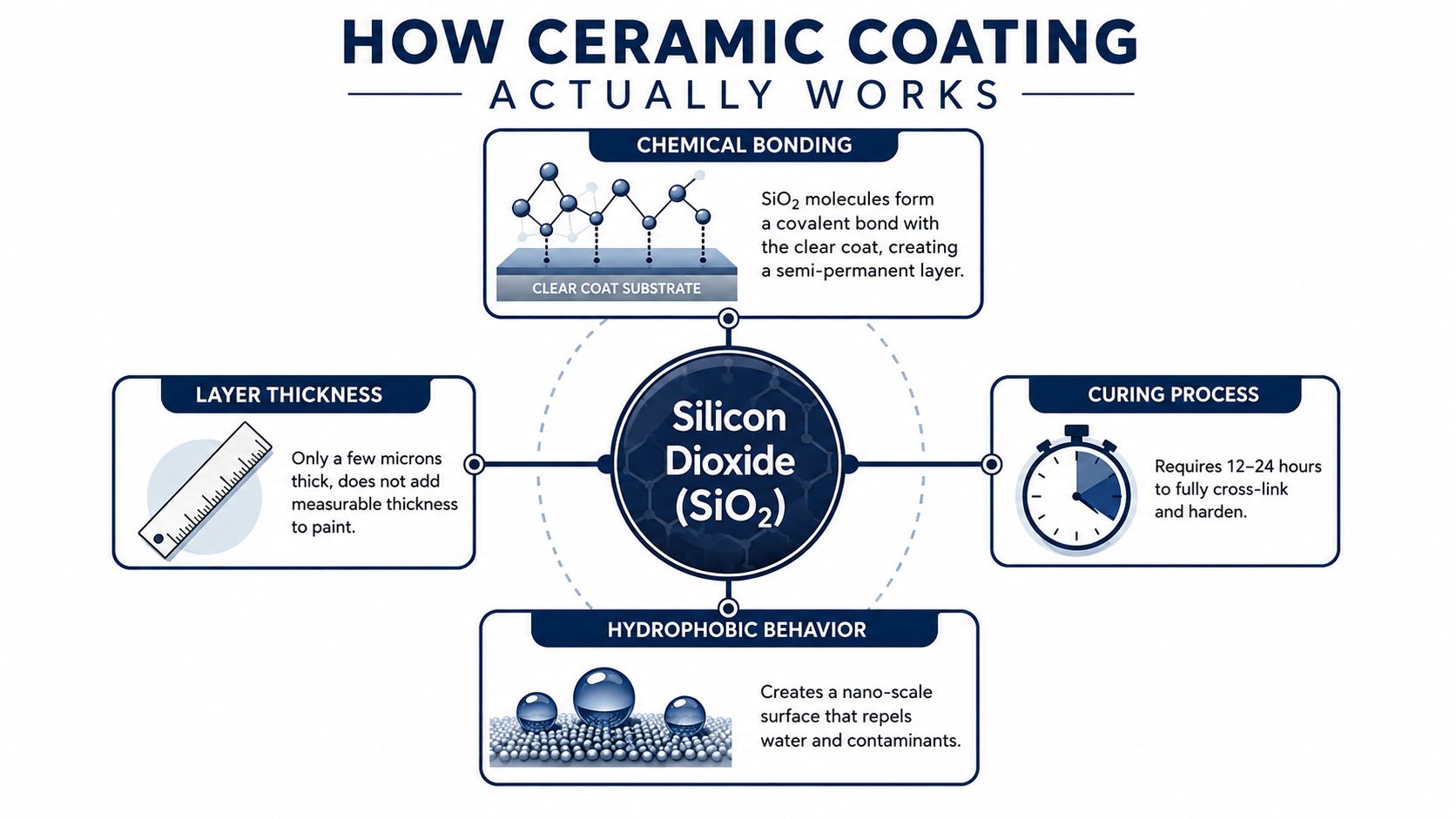
A professional automotive ceramic coating is generally built around silicon dioxide, often written as SiO₂. During application, the liquid coating is spread over a properly cleaned and prepared clear coat. As it cures, it forms a semi-permanent layer with strong hydrophobic behaviour.
That's different from applying a product that sits loosely on top of the paint. A useful analogy is a non-stick pan. Food and water move differently across that surface because the surface properties have changed. Ceramic coating creates a similar change in how contaminants interact with the clear coat, although it isn't turning your vehicle into a non-stick pan.
The coating bonds with the prepared clear coat, then changes how water and grime behave at the surface.
From chemistry to washing
The coating lowers the surface free energy of the finish. In plain language, water has less tendency to spread into a flat film, so it forms beads or sheets away more readily. Road film and grime can also require less force to release during a correctly performed wash.
That behaviour explains why a coated car often feels easier to clean. A pre-rinse can remove loose contamination before a wash mitt touches the surface, while the hydrophobic finish helps the remaining residue release with less scrubbing.
The effect is especially useful in winter. Salt-laden slush and calcium chloride residue can still sit on the vehicle, but frequent rinsing can remove it before dried crystals remain on the paint. The coating supports that routine. It doesn't replace it.
Why preparation matters
A coating magnifies the condition of the surface beneath it. If the paint contains bonded contaminants, oxidation, or visible defects, those issues can remain visible after application. Professional preparation may include decontamination, paint correction, and careful panel inspection before the coating is installed.
That preparation is one reason two cars with similar products can perform differently. Application quality, curing conditions, compatible wash products, and aftercare all influence how long the surface retains its intended behaviour.
The Protective Properties Explained With Honest Limits
Ceramic coating benefits become easier to judge when each property is matched with its ceiling. The same bonded, low-energy surface that helps water move away can also make contamination easier to manage, but it doesn't give the vehicle unlimited resistance.
UV exposure and oxidation
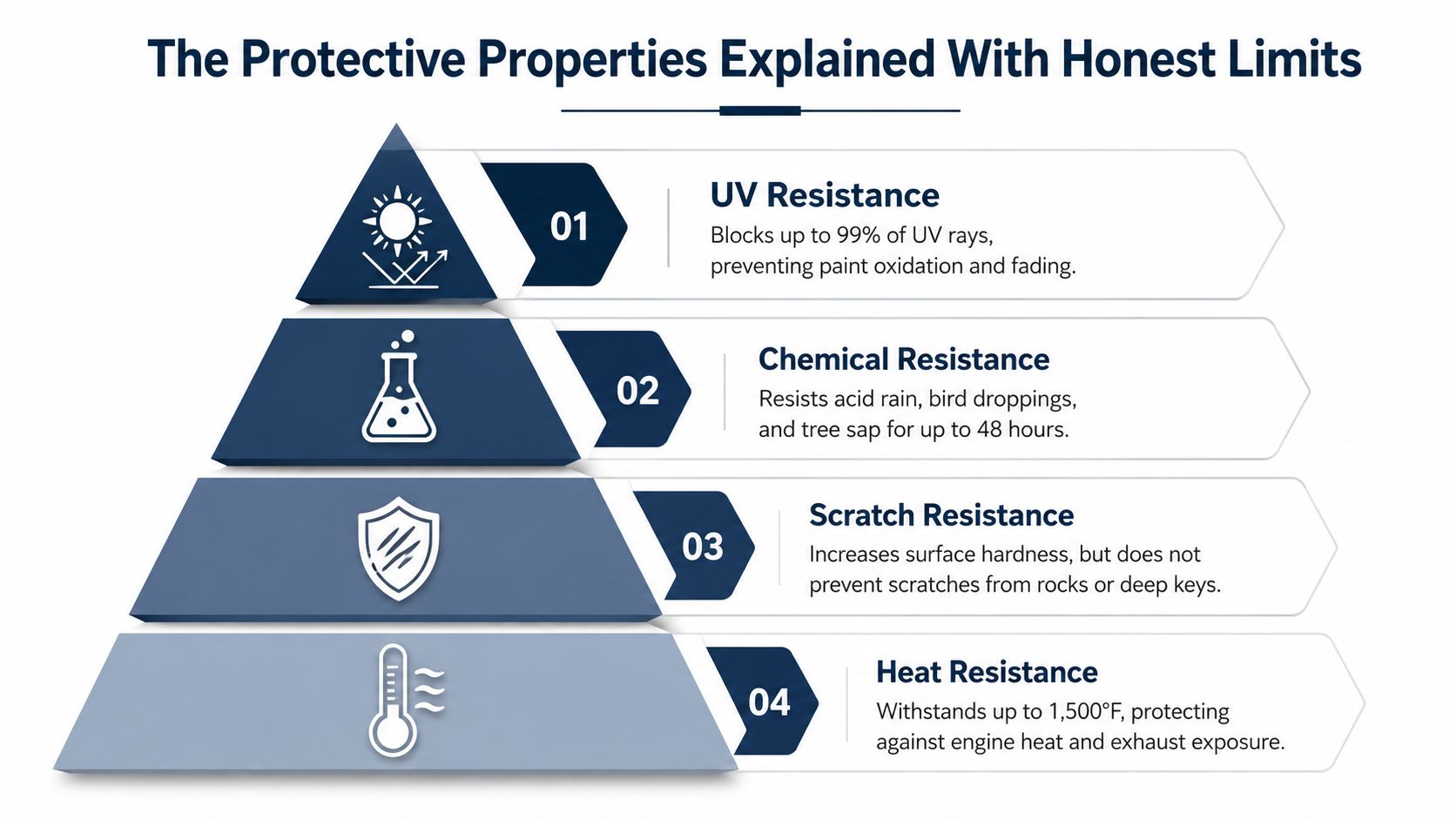
Summer sunlight can be hard on a dark sedan parked outside near an office or apartment building. Ceramic coatings help resist ultraviolet exposure and oxidation, supporting colour retention and gloss over time. They don't reverse fading that has already occurred, so paint correction may still be needed before coating.
The benefit is preventative. A clean, prepared surface has a better chance of holding its appearance when the coating is maintained properly.
Salt and chemical contamination
Professional coatings are described in Canadian technical guidance as resistant to contaminants such as road salt, acid rain, tree sap, insect acids, and light chemical etching (Canadian ceramic coating buyers guide). That resistance gives the owner more time to respond when spring sap lands on a bonnet or winter slush splatters across the lower panels.
More time doesn't mean unlimited time. Bird droppings, sap, and salt should still be removed promptly, especially after they dry or bake in the sun.
Hydrophobic and easier to maintain
Water beading is the visible part of the story. The useful part is reduced adhesion and easier cleaning. A coated wheel may release brake dust and winter grime more readily, while painted panels can need less aggressive agitation during a hand wash.
If you're comparing wash approaches beyond the GTA, this guide to paint protection Perth hand wash is useful because it also treats surface protection as part of a cleaning routine rather than a substitute for one.
Scratches and swirls
Hardness claims are often where expectations go off the rails. A coating may improve resistance to light wash-induced marring, but it isn't scratch-proof. A stone, careless brush, sharp key, or heavy contact can still damage the clear coat or the coating itself.
That limitation is good news, not a flaw. It tells you where to spend attention. Use careful wash media, avoid dirty automatic brushes, and consider paint protection film if impact resistance is the priority.
Ceramic Coating Versus Wax and Sealants
Wax, synthetic sealant, and ceramic coating protect the paint through different ownership routines. Carnauba wax suits someone who enjoys frequent detailing and wants a warm, freshly applied gloss. Synthetic sealant provides a longer-lasting layer with a simpler application. Ceramic coating requires more preparation and a larger initial commitment, then can reduce the effort needed to keep the vehicle clean.
The key distinction is maintenance efficiency, not permanent armour. A coating can make rinsing and washing more manageable, but it still needs regular care. Canadian guidance places professional ceramic coating service life at about 3 to 5 years, with premium systems potentially lasting 5 to 7+ years under proper maintenance (Canadian coating lifespan guidance). Those figures describe a maintained system, not a guarantee that the surface will perform the same way through neglected washes, harsh contamination, or poor preparation.
| Feature | Carnauba Wax | Synthetic Sealant | Professional Ceramic Coating |
|---|---|---|---|
| Main appeal | Warm gloss and hands-on detailing | Practical protection with simpler upkeep | Long-term hydrophobic maintenance efficiency |
| Lifespan | Shorter and requires regular renewal | Longer than traditional wax | About 3 to 5 years, with premium systems reaching 5 to 7+ years under proper care |
| Cost-per-year | Lower upfront commitment, but more frequent applications | Moderate ongoing commitment | Higher initial commitment, potentially spread across a longer service life |
| Hydrophobic behaviour | Noticeable after application | Strong and consistent when fresh | Strong water behaviour when clean and maintained |
| Maintenance effort | Frequent reapplication and surface preparation | Periodic renewal | Regular washing still required, but cleaning can take less effort |
| Best fit | Enthusiasts who enjoy frequent detailing | Owners wanting a middle-ground option | Owners keeping a vehicle through several GTA winters |
The table compares habits rather than declaring a winner. A weekend car stored indoors may suit wax or sealant because its owner enjoys occasional detailing and faces less road contamination. A GTA commuter exposed to salt, slush, and traffic film may value easier rinsing more than repeating a wax ritual.
Wax and sealant also make sense when the owner wants lower upfront commitment or prefers to refresh protection personally. Ceramic coating makes more sense when consistent washing matters, yet the owner wants less effort during each wash.
Ceramic coating works best as one part of a layered maintenance strategy, not as a complete solution for every form of vehicle deterioration.
Judge the value by the routine it supports. Ask how often you wash, whether you can use a touchless rinse after salt events, and whether the coating will encourage you to remove contamination before it sits on the paint. In a GTA winter, that behaviour can matter more than the finish's initial gloss.
A Realistic GTA Week With a Coated Car
Monday starts with wet snow and traffic spray. A commuter sedan leaves an outdoor driveway with a clean bonnet, then returns with grey film across the lower doors, mirrors, and rear bumper. The coating hasn't kept the car clean. It has helped keep the contamination from behaving like a stubborn, bonded layer on bare paint.
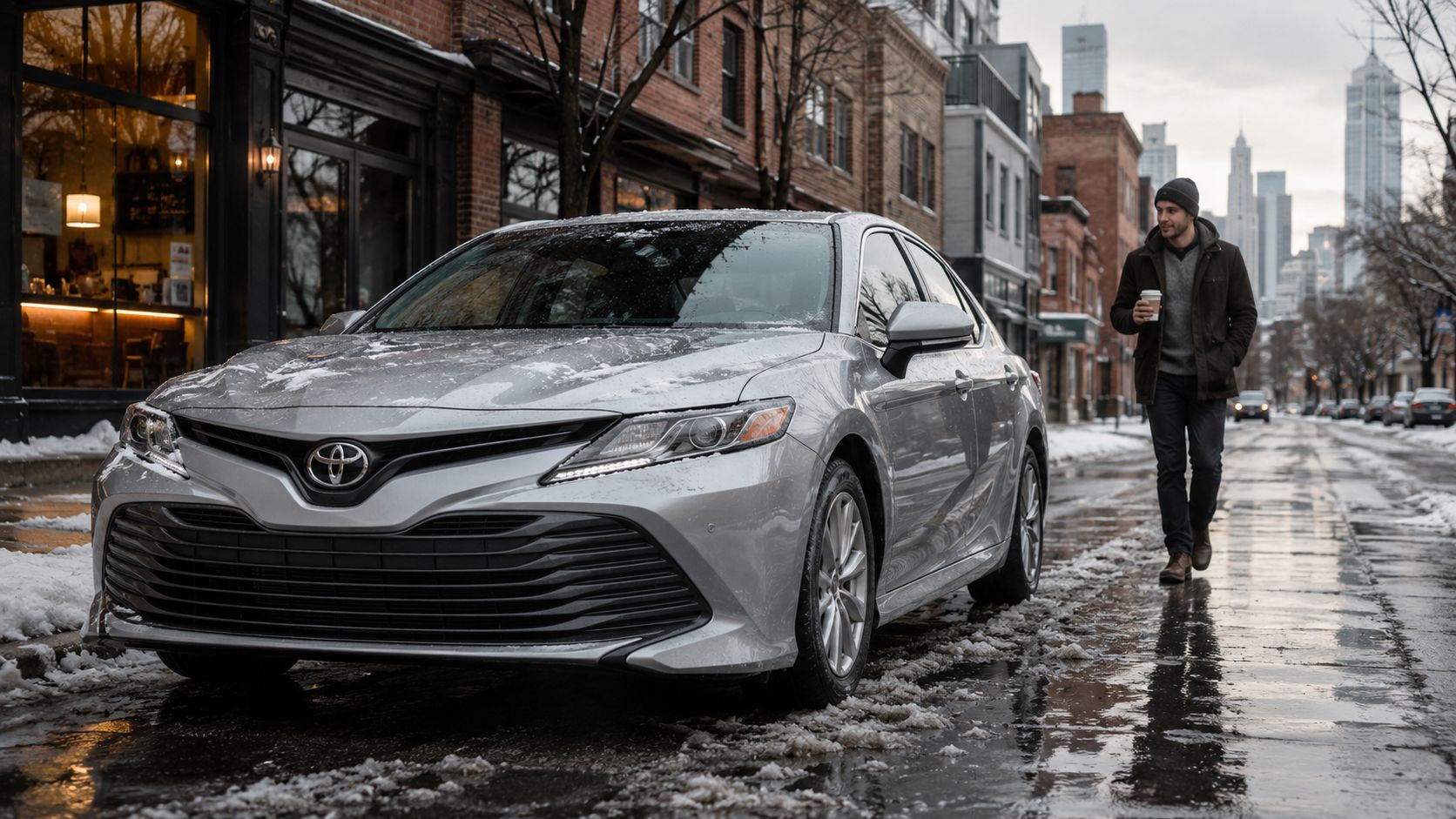
The car spends the night in a garage. By Tuesday morning, some water has drained away, but the salt hasn't disappeared. That's the part owners often misunderstand. Beading is a surface behaviour, not evidence that the vehicle is free of corrosive residue.
On Wednesday, the driver uses a touchless wash with an underbody rinse. The pre-rinse loosens the surface film without introducing brush contact, and the underbody step addresses areas the paint coating never reaches. The car looks better, but the lower wheel arches still deserve attention during the weekend wash.
The weekend difference
Saturday brings a careful hand wash. The owner uses clean microfibre tools and avoids grinding grit across the panels. Because the surface releases contamination more readily, the wash feels less like a wrestling match with dried slush.
A ride-hailing driver may repeat that rinse-and-wash rhythm more often because the vehicle spends more time in traffic and accumulates more road film. An SUV or pickup owner faces another challenge. Larger wheel arches, running boards, lower doors, and exposed underbody areas collect contamination that a paint coating can't address.
The coating's value appears in the routine. It helps the owner clean sooner, with less force, instead of waiting until the vehicle looks neglected. That habit is what supports long-term performance.
Maintenance That Protects Your Investment
A ceramic coating is easier to maintain than unprotected paint, but it still needs a maintenance plan. Winter rinsing remains essential because salt can sit on a hydrophobic surface even when water beads attractively. A quick rinse after a heavily salted commute can be more useful than admiring the beads and leaving the residue in place.
Use the right wash method
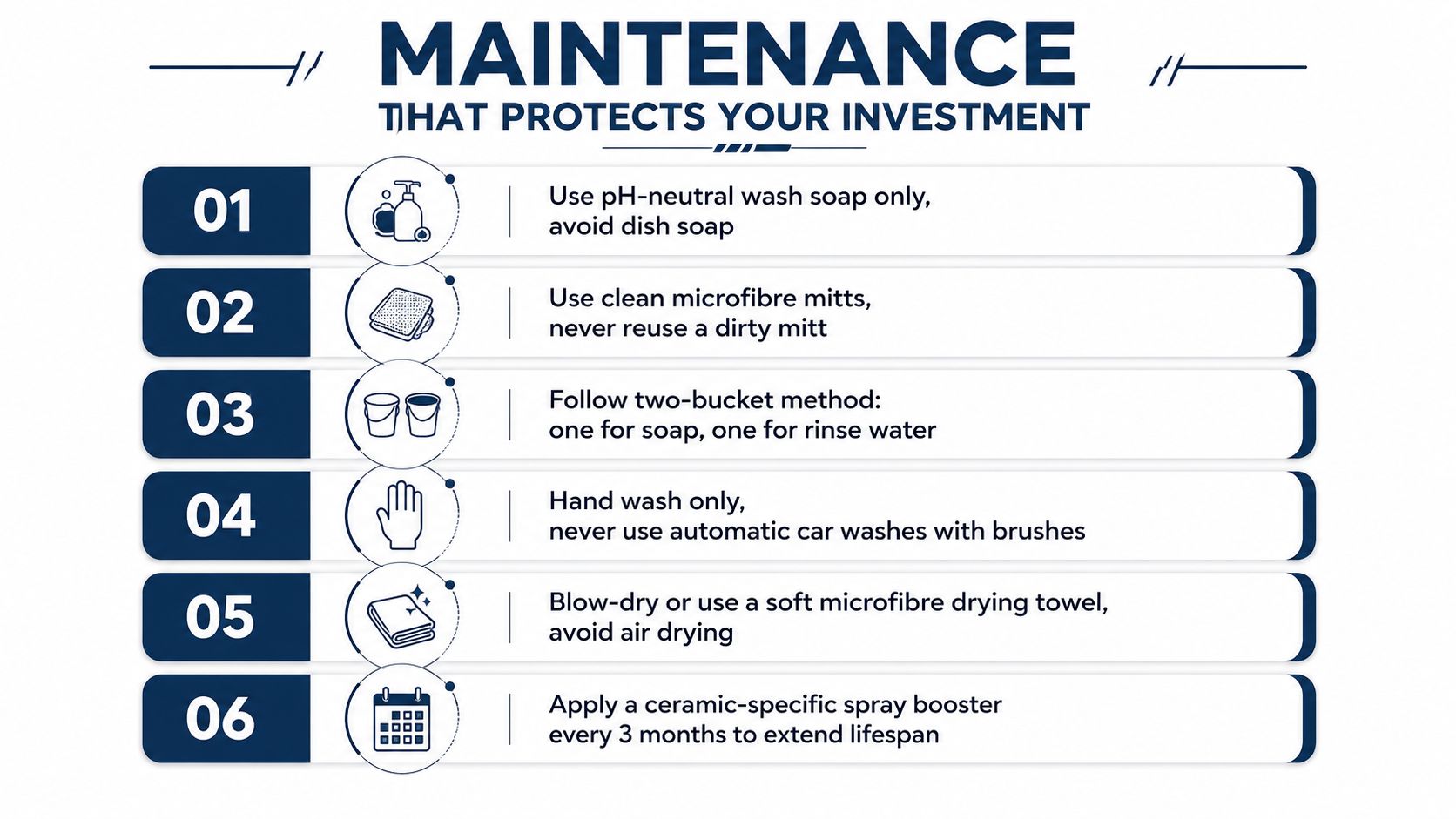
Start with a pressure pre-rinse to remove loose grit. Follow with a pH-neutral car shampoo, clean microfibre wash media, and a two-bucket method. One bucket holds wash solution. The other holds rinse water for the mitt.
- Choose pH-neutral soap: Avoid dish soap and harsh household cleaners that can interfere with the maintenance products designed for the coating.
- Keep microfibre clean: A dirty mitt can drag grit across the finish and create the very marring the coating was meant to help reduce.
- Wash from top to bottom: Roof, glass, bonnet, upper panels, lower panels, then wheels. Save the dirtiest areas for last.
- Dry without abrasion: Use a soft microfibre drying towel or filtered air. Don't let hard-water spots dry on the surface.
- Skip abrasive polishing: Compounds and aggressive polishes can remove or weaken the coated layer.
- Check product compatibility: If you use a topper or spray sealant, choose one made for ceramic-coated surfaces.
Touchless versus hand washing
A touchless wash makes sense as a mid-week response to salt and slush, especially when the alternative is allowing residue to dry for several days. It may not replace a careful hand wash because wheels, trim, seams, and stubborn lower-panel film still need targeted cleaning.
A maintenance routine for a coated vehicle has the same logic as broader property care. Owners who want a practical checklist for seasonal upkeep can also review these exterior building maintenance tips for cabin owners, particularly the emphasis on regular inspection and removing contamination before it becomes harder to manage.
Coating-specific spray boosters can restore slickness and water behaviour between professional inspections. They're maintenance aids, not a new coating and not permission to extend wash intervals indefinitely.
How Coating Fits Into a Layered GTA Protection Stack
The strongest winter plan puts the coating in the middle, not at the top of a magical protection pyramid. Paint needs a hydrophobic surface. The underside needs rinsing and corrosion protection. Wheels, wheel wells, trim, and the cabin need their own cleaning routine.
Four layers, four jobs
- Ceramic coating: Adds a semi-permanent hydrophobic layer to prepared painted surfaces. Its job is easier cleaning, improved contamination resistance, and support for gloss retention.
- Underbody rinsing: Removes salt and slush from chassis areas, suspension components, wheel wells, and other places the paint coating doesn't cover.
- Rust proofing: Adds a protective oil or wax-based compound to selected metal and underbody areas. This addresses a different risk from paint contamination.
- Regular detailing: Cleans wheels, wheel wells, trim, glass, carpets, seats, and hard-to-reach crevices before buildup becomes difficult to remove.
That's the contrarian answer to the standalone-coating myth. Ceramic coating can support the exterior finish, while rust proofing and underbody care address corrosion risks outside the clear coat.
Combining services sensibly
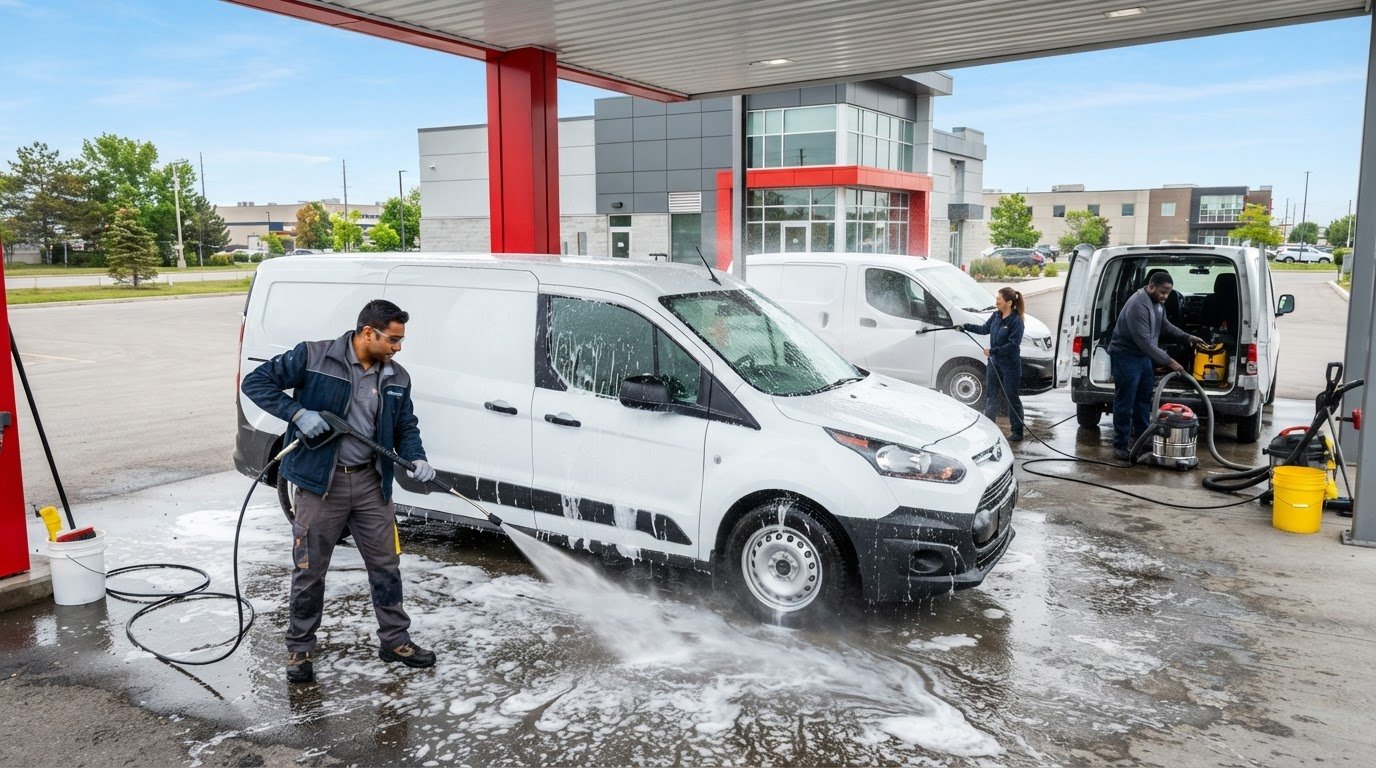
Nanak Car Wash offers express exterior washes with underbody and wax-related upgrades, full-service interior and exterior packages, appointment-based detailing, and rust proofing. Its published starting prices include $9.99 plus tax for express exterior packages, $29.99 plus tax for full-service packages, and approximately $119.95 to $149.95 plus tax for rust proofing by vehicle size (Nanak Car Wash service information).
A commuter might use a quick exterior and underbody rinse after a salt event, then schedule deeper detailing when the season changes. A fleet manager could organise repeat washing alongside rust protection rather than sending vehicles to separate providers. The point is not to buy every service at once. It's to match each layer to the surface it protects.
Matching the Right Protection to Your Driving Life
Ceramic coating suits owners who want fewer difficult washes, keep their vehicle through repeated GTA winters, and will follow compatible maintenance practices. It may offer less practical value to someone who enjoys waxing, drives occasionally, and stores the vehicle indoors.
Daily commuters
A commuter exposed to salted roads, outdoor parking, and traffic film can benefit from easier rinsing. Pair the coating with touchless rinses, careful hand washing, and attention to the underbody. If the budget is tighter, a synthetic sealant with frequent washing can still provide a sensible maintenance plan.
Weekend drivers
A weekend vehicle may gain more from paint correction followed by a well-maintained sealant than from a premium multi-layer coating. Indoor storage and limited winter driving reduce contamination exposure, so a coating's longer service life may not justify its maintenance commitment.
Ride-hailing and fleet vehicles
High-use vehicles benefit from efficient cleaning. A coating can make repeated exterior washing less laborious, but fleet owners still need a documented wash routine, wheel and underbody cleaning, and inspections for chips or exposed metal. Rust proofing addresses corrosion risks when vehicles spend long periods on salted roads.
Before booking, ask:
- Where does the vehicle sleep: Indoor, outdoor, or mixed parking changes contamination exposure.
- How often does it face salt: Frequent winter driving increases the value of easy rinsing.
- Who will maintain it: Coating performance depends on compatible washing practices.
- What needs protection: Paint, underbody metal, wheels, interior, and glass need different solutions.
- What is the alternative: Compare coating with a sealant and regular washing, not with doing nothing.
The best plan is the one you can repeat through a GTA winter. Ceramic coating reduces maintenance effort on painted surfaces, while rust proofing and detailing address underbody corrosion, interior buildup, wheels, and neglected crevices. Together, these layers form a practical protection plan rather than permanent armor.
If your vehicle needs a winter plan, visit Nanak Car Wash to explore express washing, underbody rinsing, detailing, and rust proofing options. Ask the team to match the service to your paint, driving routine, and underbody exposure, then set a schedule you can maintain.

 6600 Finch Ave W, Etobicoke, ON M9V 3Z6
 647-703-8515
 MON – SUN 8 AM to 7 PM