
You've just driven through a GTA winter wash bay. The car looked clean when you left, but after one commute, the lower doors are wearing a grey-brown stripe, the rocker panels have collected salt spray, and the windshield washer fluid is working overtime. A quick rinse removes the obvious dirt, but it doesn't change how easily the next layer of road film sticks.
That's where ceramic spray coating can help. Think of it as a seasonal raincoat for your paint, not a permanent force field. It makes water behave differently, helps grime release more easily, and adds a fresh gloss, while still depending on sensible washing and realistic expectations.
This guide is for the daily commuter heading across the 401, the ride-share driver cleaning a vehicle between passengers, and the family SUV that spends winter collecting salt at every intersection. We'll unpack what the product does, where it falls short, how it compares with wax and professional ceramic coating, and how a practical wash routine can make seasonal protection easier to maintain.
The useful question isn't “Will this bottle protect my car forever?” It's “Does a temporary hydrophobic layer make sense for the way I drive through Ontario?” For many Nanak membership drivers, the answer can be yes, especially when the coating is treated as one part of a repeatable salt-season routine.
Table of Contents
- Introduction Why Your Car Needs More Than a Quick Rinse
- What Ceramic Spray Coating Is and How It Works
- Benefits and Limitations You Should Expect in Ontario
- How Ceramic Spray Coating Compares With Wax and Pro Coatings
- DIY Versus Professional Application in the GTA
- Keeping the Coating Strong With Smart Washing and Maintenance
- Is Ceramic Spray Coating Right for You and Your Next Visit to Nanak
Introduction Why Your Car Needs More Than a Quick Rinse
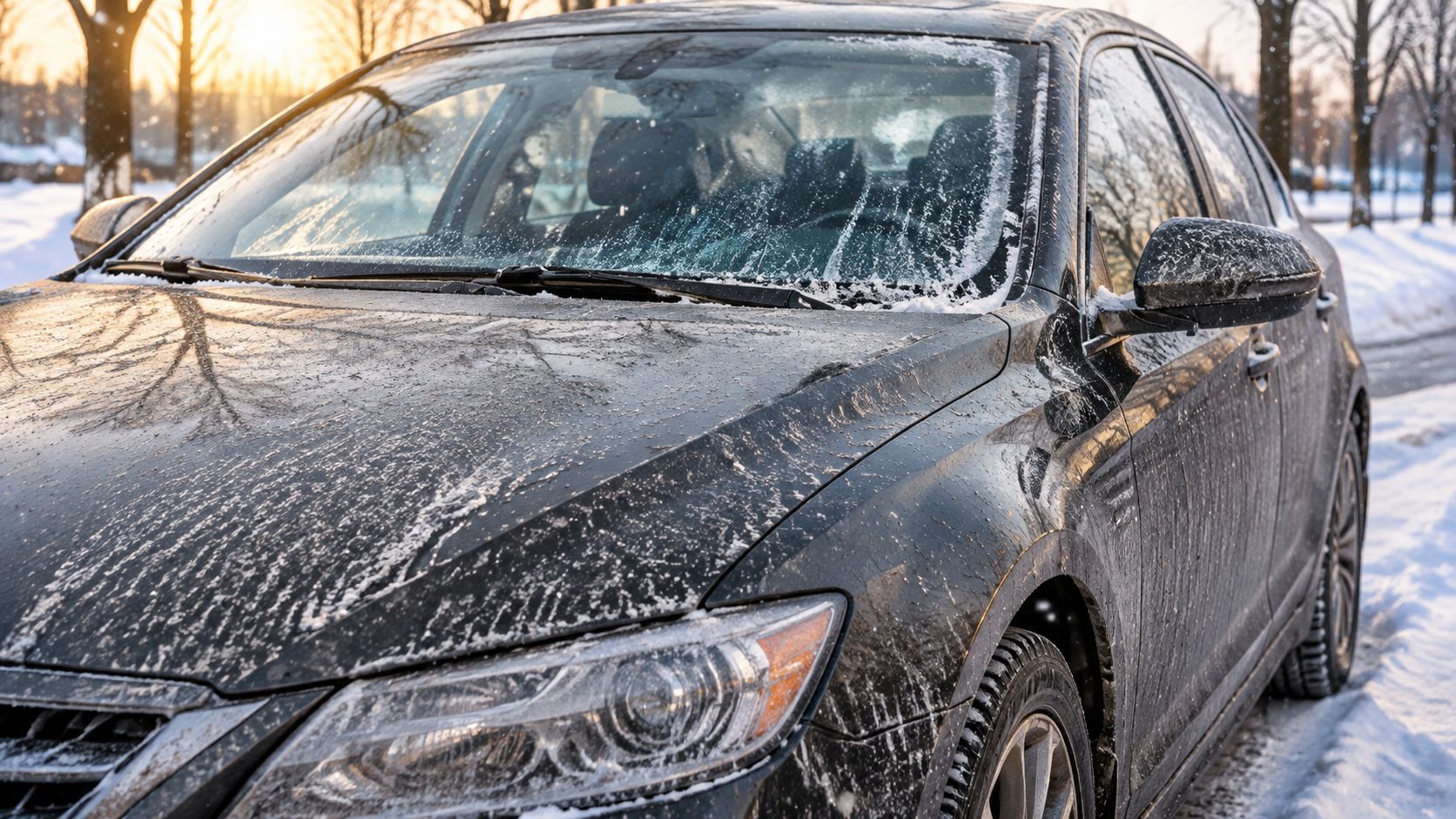
Ontario winter dirt is unusually persistent. Snow melts into slush, slush picks up road grit, and salt-laced spray settles along the doors, wheel arches, tailgate, and underbody. Then the temperature drops, the water freezes, and the residue gets another chance to cling to the paint.
A rinse can remove loose debris, but it may leave behind bonded film and deposits. A rinse doesn't create a surface that encourages water and grime to move away. A ceramic spray coating changes that surface behaviour by leaving a thin, slick, water-repelling layer over the clear coat.
The winter commute test
Consider a Brampton driver who parks outdoors and uses the car every day. The vehicle doesn't need a museum-grade finish. It needs paint that's easier to wash after a week of salt exposure, plus enough gloss to keep the car from looking permanently tired.
A delivery driver in Oshawa has a different problem. Frequent stops mean more road spray, more quick washes, and less time for a long hand-wax session. A seasonal spray product can fit that schedule because application is faster and reapplication is part of the plan rather than a failure.
The practical mindset: Ceramic spray coating is a maintenance layer. It helps the next wash, but it doesn't replace the next wash.
That distinction matters because Ontario conditions are hard on temporary surface products. A coating that performs well in a warm, clean garage may lose its dramatic beading sooner on a daily-driven vehicle exposed to salt, freeze-thaw cycling, automatic washes, and winter grime. The right decision depends on your driving pattern, storage, washing habits, and whether you want seasonal appearance and easier cleaning or longer-term paint protection.
By the end, you should be able to look at your vehicle and choose a sensible path. That might be a spray coating before winter, regular underbody rinses during salt season, and a refresh in spring. It might be traditional wax. Or it might be professional ceramic coating, paint correction, or rust proofing for a vehicle you plan to keep for years.
What Ceramic Spray Coating Is and How It Works
Your car's painted surface isn't one solid slab. It includes the base coat, colour coat, and clear coat, with microscopic surface irregularities where dust, traffic film, and contaminants can settle. A ceramic spray coating adds a thin layer over that clear coat, changing how water and dirt interact with the finish.
Many products use silica chemistry, commonly represented as SiO₂. You don't need a chemistry degree to understand the practical result. The liquid spreads across a clean panel, flashes as solvents evaporate, and leaves a bonded or partially bonded protective film, depending on the formula.
Think raincoat, not armour
A raincoat doesn't make the wearer invulnerable. It gives rain a surface that water struggles to soak through, so droplets bead and run away. Ceramic spray coating gives the clear coat a similar surface-level advantage. Water forms tighter beads or sheets off more readily, and loose grime often needs less agitation during washing.
The non-stick pan analogy helps too. Food can still burn onto a non-stick pan, and a coated car can still collect salt, tar, bird droppings, and road film. The difference is that the surface is less welcoming to contamination, so careful rinsing and washing can remove the mess with less effort.
Core idea: The spray doesn't erase winter contamination. It makes the painted surface less cooperative with that contamination.
The spray format is usually simpler than a paste or bottled professional coating. An applicator may mist the product onto a microfiber towel or directly onto a panel, spread it evenly, allow the residue to flash, then level and buff it with a clean towel. Overapplication is a common mistake because more liquid doesn't automatically create more protection. Too much product can leave streaks, smears, or visible high spots.
Why the Canadian background matters
Ceramic surface technology has Canadian industrial roots. Mettech, a company connected with University of British Columbia research, says it was established in 1990, launched its Axial III plasma spray system in 1994, and moved into nano-powder and nano-coatings by 2002. That history, documented in this Canadian thermal spray coatings overview, shows that ceramic coatings grew from engineered materials work, not from renaming wax.
For readers who want to understand how fine filtration and particle size affect surface processes, T1A Auto's 0.22 micron filter guide provides useful background. It isn't a car-coating manual, but it helps explain why small particles and controlled application matter in technical systems.
A spray coating still isn't paint correction, scratch repair, rust protection, or a substitute for washing. It won't level swirl marks, stop stone chips, or prevent every contaminant from etching the clear coat.
Benefits and Limitations You Should Expect in Ontario
The biggest benefit is simple. Water moves differently. Instead of spreading into a broad, sticky sheet across the paint, it can bead and run off more readily. That makes drying easier and can reduce the amount of scrubbing needed to remove loose dirt.
You'll often notice a gloss boost as well. Clean paint looks richer when the surface is smooth and slick, although a spray coating can't recreate the depth produced by proper paint correction and a professionally cured coating. If the clear coat already has oxidation, scratches, or heavy swirl marks, the product may make the finish look glossier without fixing the underlying defects.
What it can contribute
- Hydrophobic behaviour: Water beads and sheets away more readily after application.
- Easier washing: Road film and light grime can release with less aggressive contact.
- Short-term surface support: A clean, treated surface can be easier to manage during periods of salt and slush.
- Visual freshness: The paint often looks sharper after the product is levelled correctly.
The Ontario climate sets the boundaries. One GTA-focused reference describes consumer DIY spray coatings as lasting about 6 to 18 months under Ontario conditions with proper hand-wash maintenance, while professional-grade ceramic coatings may last 3 to 5 years. The same source estimates 40 to 80 freeze-thaw cycles per year, depending on the region, helping explain why durability claims must be connected to climate and maintenance rather than read as universal promises. You can review that local context in the Ontario ceramic coating durability reference.
The trade-off in plain language
| Benefits | Limitations |
|---|---|
| Water beads and releases more easily | It isn't a permanent finish |
| Adds slickness and gloss | It won't stop scratches or stone chips |
| Can make washing less laborious | Salt, soap, and winter exposure reduce performance |
| Works well as a seasonal refresh | Reapplication remains part of ownership |
Some Ontario seller guidance describes spray protection lasting up to four months, while a Toronto-area service comparison places spray coatings around 1 to 3 months and professional ceramic coating at 3+ years. Those ranges vary by product and use, so treat them as planning context rather than a guarantee. The useful conclusion is consistent: spray products are generally measured in months or a few seasons, not decades.
The same logic applies to larger painted or gel-coated surfaces. If you're evaluating protection for an RV rather than a car, an RV exterior restoration service may be more appropriate when the surface needs correction or repair before any protective product is applied.
How Ceramic Spray Coating Compares With Wax and Pro Coatings
A spray coating, a wax, and a professional ceramic coating can all make clean paint look better, but they occupy different places in a maintenance plan. Wax is familiar and forgiving. Ceramic spray coating offers a modern hydrophobic refresh with a quick application. Professional ceramic coating demands more preparation and controlled technique, but it aims at a longer protection window.
The mistake is comparing them only by shine. In the GTA, the more useful comparison includes winter exposure, washing frequency, application time, and whether the owner wants a seasonal layer or a longer-term investment.
Spray Coating vs Wax vs Professional Ceramic at a Glance
| Feature | Ceramic Spray Coating | Traditional Wax | Professional Ceramic Coating |
|---|---|---|---|
| Main role | Seasonal maintenance layer and hydrophobic refresh | Gloss and short-term surface protection | Longer-term bonded paint protection |
| Application | Spray, spread, flash, and buff | Apply, haze, and remove | Thorough preparation, controlled application, and curing |
| Hydrophobic effect | Strong water-beading effect when fresh | Beading varies by wax and condition | Typically designed for sustained hydrophobic behaviour |
| Appearance | Slick, reflective finish | Warm gloss, often associated with a softer look | Deep gloss that depends heavily on preparation |
| Winter suitability | Useful between washes, but needs upkeep | Useful as a basic seasonal layer | Better suited to owners seeking longer-term protection |
| Maintenance | Reapply when water behaviour declines | Rewax as the film wears | Wash carefully and maintain the coating |
| Best fit | Daily drivers, leased vehicles, and seasonal refreshes | Owners who enjoy regular hand application | Long-term owners willing to pay for preparation and installation |
Where the cost-benefit decision changes
A spray can make sense when the vehicle is leased, frequently replaced, or used heavily enough that a quick refresh has practical value. It also suits owners who want to improve washability without committing to a larger correction and coating process.
A professional coating makes more sense when the owner intends to keep the vehicle for years, cares about preserving a carefully corrected finish, or wants a foundation that doesn't rely on frequent spray reapplication. The preparation often matters as much as the liquid itself. Contamination and existing defects should be addressed before a long-lasting coating locks in the surface appearance.
Wax remains reasonable for someone who enjoys the process or wants a simple, familiar finish. It isn't obsolete. It offers a different ownership experience.
A seasonal spray is not a cheaper version of professional coating. It's a different tool for a different maintenance rhythm.
For a winter-driven Toronto vehicle, the practical plan may be a spray layer before the harsh season, frequent gentle washing during salt exposure, and a spring inspection. That approach treats the product as a replaceable top layer instead of expecting one application to carry the whole year without support.
DIY Versus Professional Application in the GTA
Application quality starts before the bottle is opened. Dust, grease, tar, water spots, and iron contamination can interfere with even coverage, so the panel should be thoroughly washed, dried, and inspected. If the paint feels rough after washing, decontamination may be necessary before applying anything designed to bond to the surface.
A driveway application can work when the weather is mild, the vehicle is clean, and the operator can control dust and moisture. The basic sequence is straightforward:
- Wash and dry completely. Don't apply over road film or trapped water.
- Work in small sections. Spread a light, even amount rather than flooding the panel.
- Watch the flash. As the product begins to haze or change appearance, level it with a clean microfiber towel.
- Inspect from several angles. Streaks and high spots can hide under flat light.
Why temperature changes the job
Canadian retail ceramic spray products can specify a minimum application temperature of 1.0°C and a freeze point of 0.0°C, as shown in this Canadian Tire Mothers CMX product listing. That doesn't mean every formula behaves identically, but it does show why late-fall and winter driveway application can be unreliable.
Cold panels can slow flashing and curing. Freezing conditions can affect both the product and the surface. An indoor bay, warmed vehicle, and controlled staging area offer more predictable conditions than spraying onto a panel that has just come off a snowy road.

When professional application earns its place
A professional workflow can add decontamination, polishing, consistent lighting, even application, and a final inspection. That matters if the paint is dark, heavily swirled, or large enough that missed areas are easy to overlook.
Safety also matters. A Canadian supplier safety data sheet classifies a ceramic coating product as flammable liquid Category 3 and lists a supplier address in Guelph, Ontario. The Würth Canada safety data sheet supports the need for ventilation, ignition-source control, and proper solvent handling, even when the marketing describes the product as an easy spray-on protectant.
Don't apply in direct sun, on a hot panel, or in a dusty space. Use the product's own instructions for flash time, towel choice, curing, and storage. A neat, thin application is safer and more consistent than trying to build protection by pouring on extra product.
Keeping the Coating Strong With Smart Washing and Maintenance
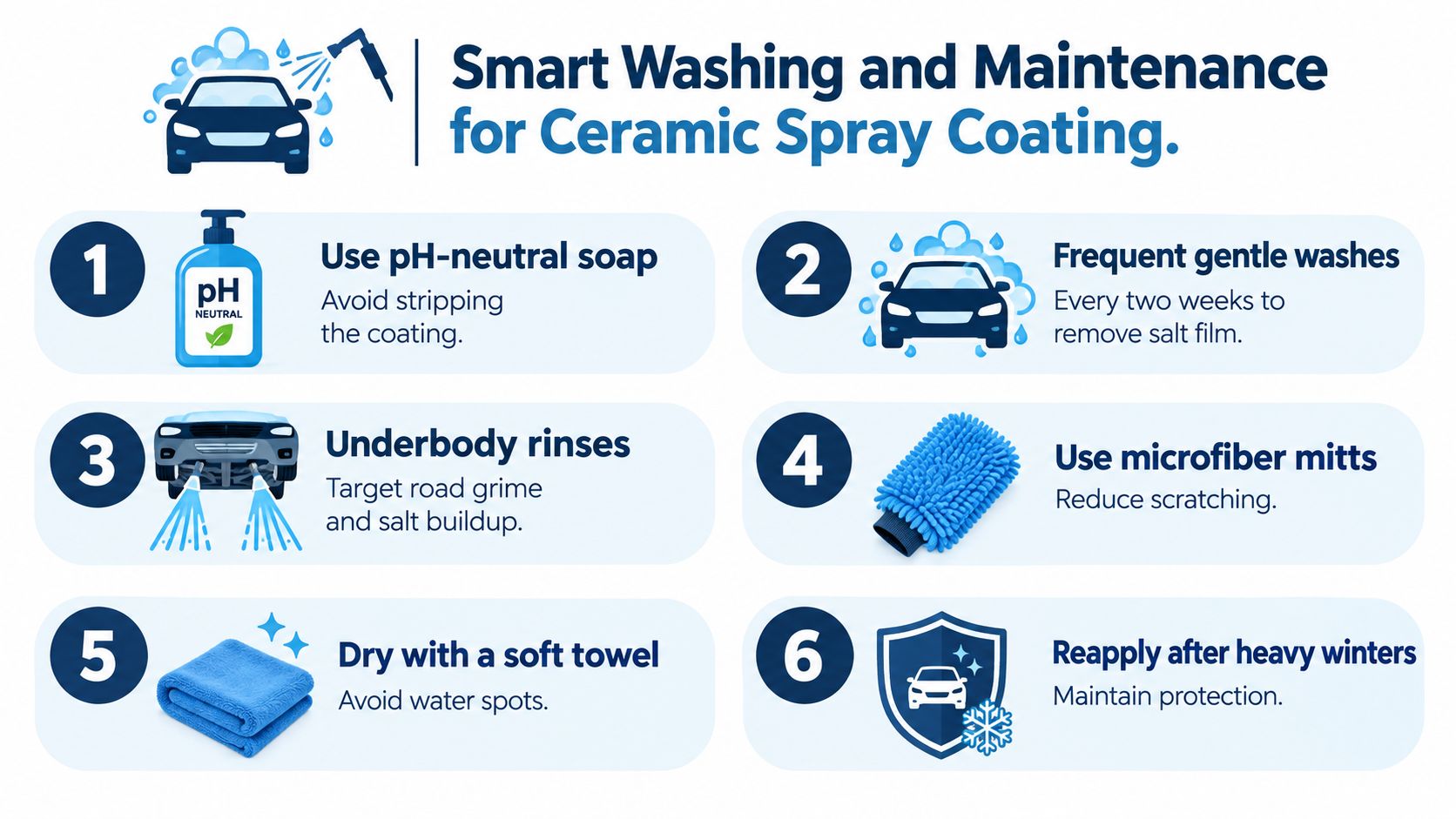
A ceramic spray coating can't do its job under a blanket of salt. Winter maintenance begins with removal, not admiration. Letting road film sit for long periods gives contaminants more time to dry, bond, and become difficult to lift without added contact.
Use a gentle wash method, a clean microfiber mitt, and a drying towel that won't drag grit across the paint. A pH-neutral soap is a sensible choice for routine cleaning because it avoids relying on aggressive chemistry for every visit. Underbody rinsing also deserves attention in Ontario, where salt and slush collect beneath the vehicle rather than only on visible panels.
A practical maintenance rhythm
- Wash regularly: Remove salt film before it becomes a baked-on layer.
- Rinse underneath: Direct water toward wheel wells, rocker areas, and the underbody.
- Dry carefully: Soft towels reduce water spotting and unnecessary rubbing.
- Use protection as a refresh: Add a compatible spray layer when beading and slickness fade.
- Inspect after winter: Look for tar, iron deposits, chips, and early corrosion before applying more product.
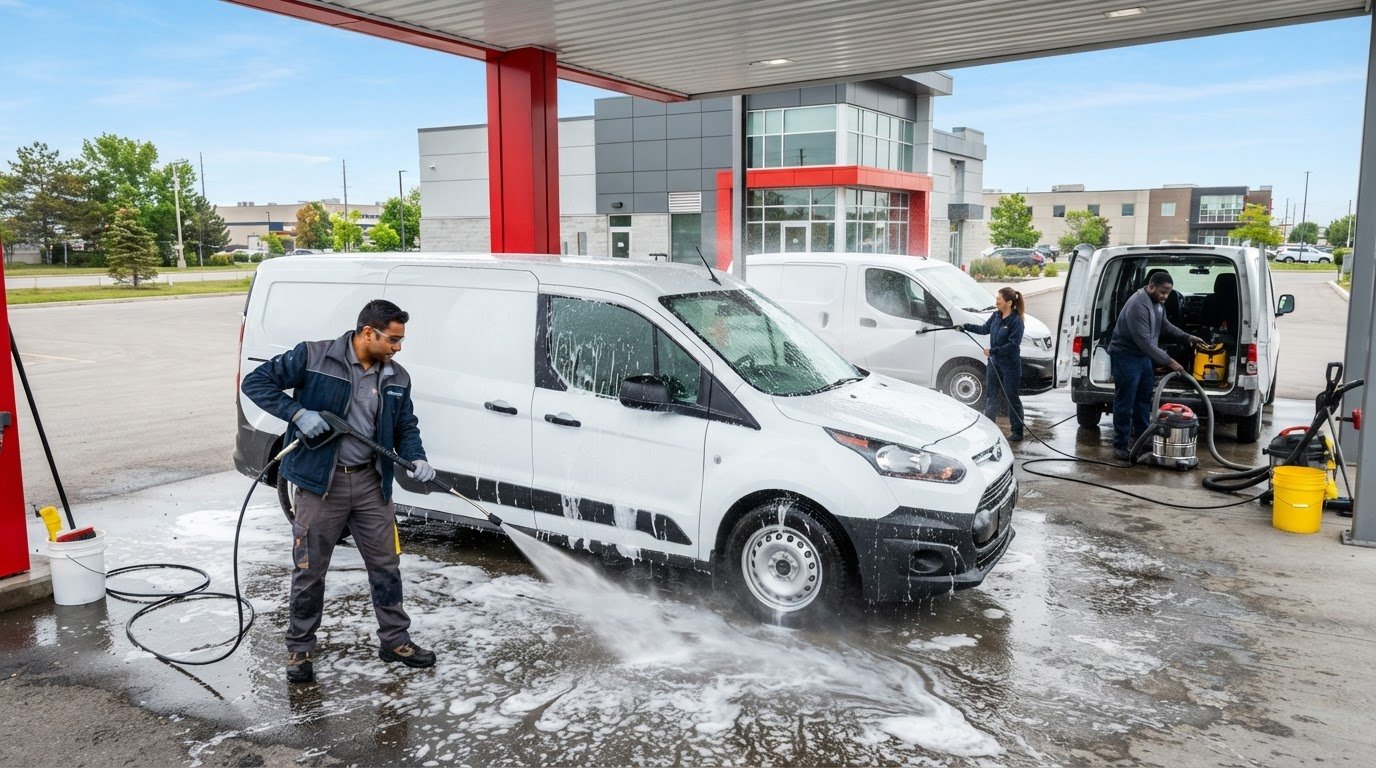
Nanak Car Wash fits into this routine with express exterior washes starting from $9.99 plus tax, including presoak soap, foam bath, rinse, drying agent, and air blowers, as listed in its service information. Available upgrades include underbody wash, sealer wax, and lava foam. Full-service packages start from $29.99 plus tax and add hand drying and interior cleaning.
The important point isn't a particular wash option. It's consistency. A membership or prepaid bundle can make repeat visits easier to budget for, especially for drivers who wash often during salt season. Nanak's Unlimited Wash Club is promoted without long-term contracts, and its locations serve communities including Etobicoke, Brampton, Concord, Oshawa, North York, Burlington, Cambridge, and Guelph. Check current package details before visiting because services and promotions can change.
Maintenance rule: If the paint is visibly carrying salt, the priority is a safe wash. A topper can wait until the surface is clean.
After a heavy winter, reassess rather than blindly reapply. If the coating still sheets water and the paint feels clean, continue washing. If the surface feels rough or water behaviour has flattened, decontamination and a fresh seasonal layer may be more useful than another rushed spray over residue.
Is Ceramic Spray Coating Right for You and Your Next Visit to Nanak
Ceramic spray coating suits drivers who want seasonal gloss, easier rinsing, and a manageable maintenance step. It's especially practical for daily commuters, ride-share and delivery drivers, leased vehicles, and owners who don't want a permanent-style coating commitment.
Choose another level of service when the problem is deeper. Heavy swirl marks call for polishing or paint correction. Persistent underbody salt exposure may justify rust proofing. Oxidised paint, stains, or neglected interiors need detailing before a surface spray can deliver a convincing result.
Use this quick decision test:
- Drive daily through winter: Treat spray coating as a repeatable layer, supported by regular washes.
- Park indoors and drive less: A seasonal application may remain effective for longer.
- Keep the vehicle for years: Compare professional ceramic coating with the ongoing effort of reapplication.
- Want shine without major preparation: Ceramic spray coating offers the simpler route.
- Need actual defect correction: Book detailing or correction first.
The Nanak membership model can suit drivers who want predictable wash access through the salt season, while prepaid bundles can work for owners who prefer to plan visits without a monthly pass. Pair the coating decision with the washing habit, and the product starts behaving like useful winter equipment instead of a bottle purchased on impulse.
Visit Nanak Car Wash for express or full-service washing, underbody cleaning options, detailing, and seasonal vehicle-care services across the GTA. Ask the team which wash or bundle fits your driving routine, then build ceramic spray coating reapplication into your salt-season maintenance plan.


 6600 Finch Ave W, Etobicoke, ON M9V 3Z6
 647-703-8515
 MON – SUN 8 AM to 7 PM