

You're sitting in traffic on a hot GTA afternoon, the steering wheel burns your palm, the dash looks a little more tired than it should, and the AC is doing way too much work for a car that's still at idle. That's usually the moment people start typing ceramic tint near me into their phone, and they're right to look for it now instead of after another summer of baked-up plastics and glaring glass. The problem is that most search results stop at “darker windows” and miss the decision, which is whether the shop can install a performance film that stays legal, keeps signals clean, and fits how you drive in Ontario.
Table of Contents
- Why Ceramic Tint Is the Upgrade GTA Drivers Are Asking About
- How Ceramic Compares to Dyed, Metallic, and Carbon Films
- Realistic Pricing, Timeframes, and What Moves the Quote
- What a Clean Ceramic Tint Install Looks Like
- Pairing Ceramic Tint with a Wash and Detailing Routine
- A Practical Checklist for Vetting Ceramic Tint Shops Near You
- Common Questions and Your Next Step
Why Ceramic Tint Is the Upgrade GTA Drivers Are Asking About
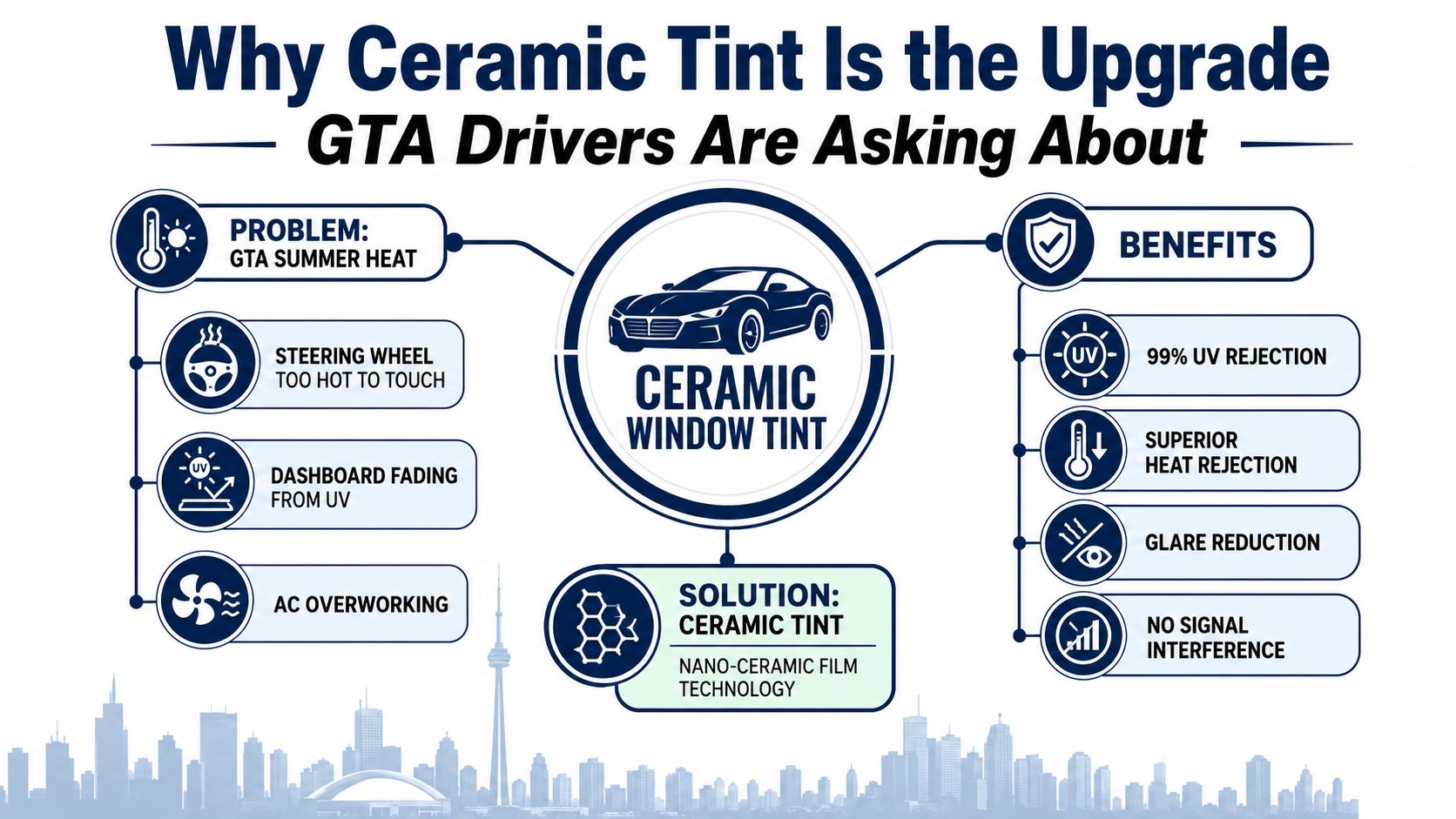
A GTA driver feels the difference fast. You park in the sun, open the door, and the cabin hits you with that baked-in heat that turns a commute into a chore. Ceramic tint earns its keep on days like that, because the point is not a darker look. The point is a cabin that stays easier to live with, with less heat on your skin and less punishment for the interior.
Ceramic window tint uses non-metallic nano-ceramic layers, and that detail matters more than most first-time buyers realize. The film is built to reject heat and block UV without the signal problems that older metallic films can create, which makes it a better fit for modern cars loaded with phones, sensors, and antennas. California's tint rules also force drivers to stay within clear limits, with front side windows required to transmit more than 70% of visible light and the windshield limited to a nonreflective strip along the top 4 inches. That is why ceramic belongs in the conversation as a practical upgrade, because you are buying performance under legal limits instead of chasing darkness for its own sake. California window tint guidance
What ceramic is actually doing
Ceramic film does not cool the car by magic. It cuts the amount of solar energy that gets into the cabin, so the air conditioning works less hard and the dashboard, trim, and upholstery take less abuse. Manufacturer data for Solar Gard's VortexIR nano-ceramic line shows >99% UV blocking, 60% to 88% SIRR, and 40% to 63% TSER, and that spread is the part buyers need to notice. Heat performance changes with the film stack, not just with how dark the glass looks. Solar Gard VortexIR product data
That is where a lot of buyers get it wrong. A darker film can look more private, but the comfort story sits in TSER and infrared rejection, not in curbside darkness.
Practical rule: If a shop only talks about shade, keep asking. If it talks about installed-glass VLT, UV blocking, and heat rejection, you are dealing with someone who understands the product.
Ceramic tint is a performance upgrade with legal constraints, especially on front windows. California-focused consumer guidance also points out that premium ceramic films are commonly specified at 90% to 96% infrared rejection, 99%+ UV rejection, and 50% to 70% TSER, while staying non-conductive so they do not disrupt GPS, cellular, or radio antennas. The buyer's job is simple, make the shop prove that performance on your actual glass, not just on a sales sheet. Ceramic tint buyer guidance
How Ceramic Compares to Dyed, Metallic, and Carbon Films
A driver walks into a tint shop asking for “the dark stuff,” and that is how bad installs get sold. Tint is a category, not a single product, and the film family you choose changes comfort, signal performance, appearance, and how long you stay happy with the job. If you want the right film for a daily driver, compare the options by how they behave on the car, not by the sales pitch.
| Film Type | Heat Rejection | Signal Interference | UV Blocking | Typical Price (Full Car) |
|---|---|---|---|---|
| Dyed | Low to moderate | None | Moderate | Lowest |
| Metallic | Strong, but less predictable | Possible | Strong | Mid-range |
| Carbon | Better than dyed, matte look | None | Strong | Mid-range |
| Ceramic | Strongest balance for comfort and clarity | None | >99% on listed ceramic examples | Highest |
Dyed film is the budget choice. It gives you darker glass and some privacy, but it is the one most likely to leave you underwhelmed if your real goal is cabin comfort. It also tends to be the least satisfying long term, because once the novelty of the darker look wears off, you are left with whatever heat control it delivers.
Metallic film can pull heat down well, but it brings a trade-off many drivers do not want in a modern car, possible signal issues. That matters if you rely on GPS, cellular service, or radio performance every day. Carbon sits in the middle, with a cleaner matte look and better durability than dyed film, so it makes sense for buyers who care more about appearance and decent performance than top-tier heat management.
Ceramic is the film I would point a first-time buyer toward if they plan to keep the car, drive it in every season, and avoid headaches with electronics. Independent consumer guidance says premium ceramic films are commonly non-conductive, which is why they are chosen for cars with GPS, cellular, and radio antennas. As noted earlier, the comparison is installed-glass transmission and heat control, not the label on the roll. Ceramic tint comparison guidance
My read: dyed is for budget looks, metallic is for drivers who will accept trade-offs, carbon is the clean middle ground, and ceramic is the best all-round pick when you want the strongest result without adding new problems.
If all you want is the cheapest way to darken the glass, buy dyed. If you want the most balanced result for a daily driver, ceramic wins because it does the job without creating avoidable issues.
Realistic Pricing, Timeframes, and What Moves the Quote
Walk into a tint shop with a clean question and you'll get a cleaner answer. A ceramic quote should not sound vague or improvised. If it does, the shop either has a sloppy pricing structure or hopes you will not compare it with the place down the road. The number moves for a few predictable reasons, and you should know them before you book.
Vehicle size is the first one. More glass means more labour, more material, and more time in the bay. Coverage comes next. Front-side windows only is a different job from a full vehicle, and a windshield strip is not the same as a full windshield or a panoramic roof. Film tier also changes the quote, because entry ceramic and premium nano-ceramic do not sit in the same price bracket, and the better films usually bring clearer visibility, stronger heat rejection, and a deeper warranty.
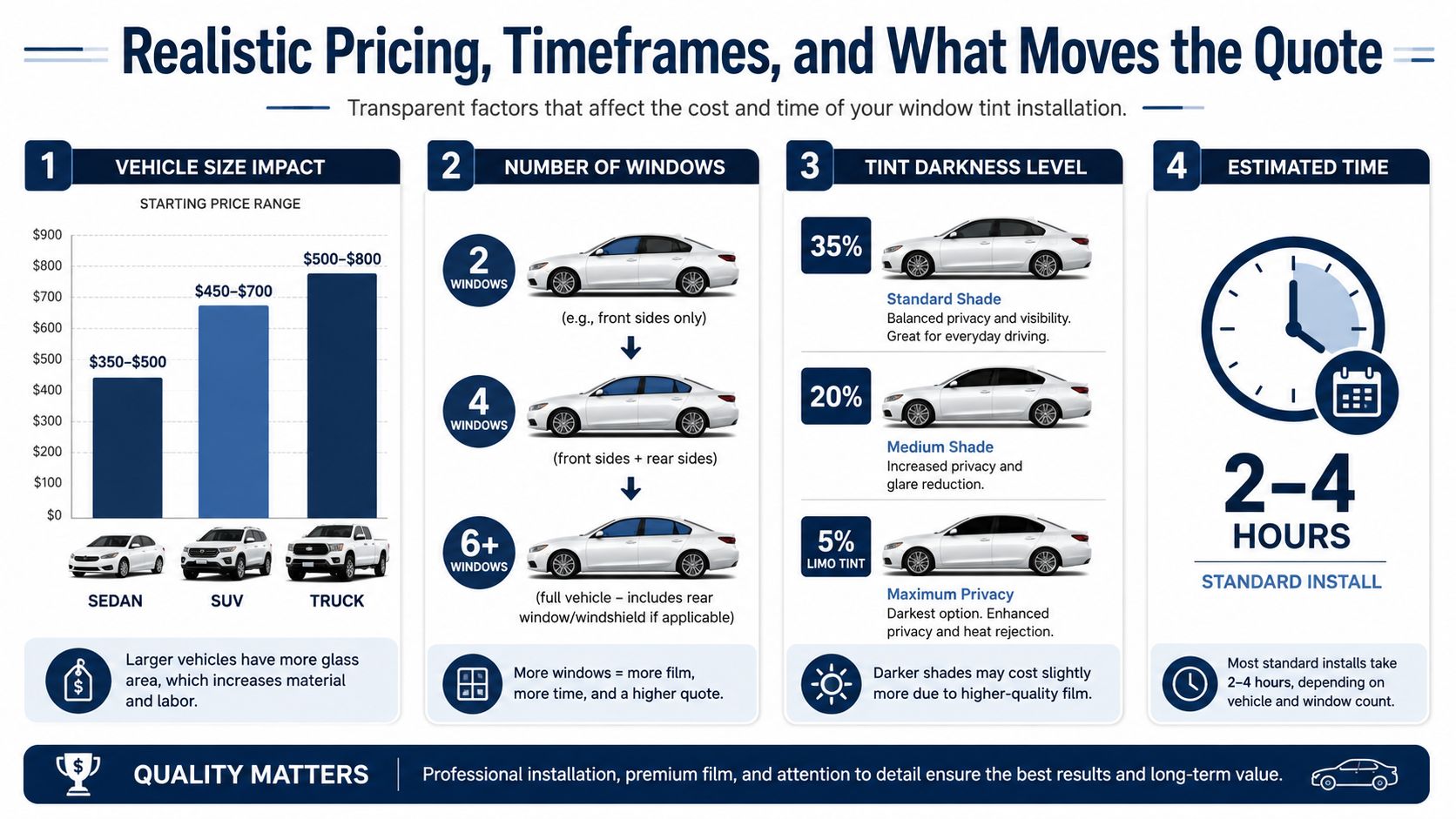
Ceramic film is usually quoted at a higher level than basic dyed film, and that gap is normal. You are paying for better heat control and UV protection, not just a darker cabin. For a full vehicle, ceramic pricing is commonly discussed in the higher bracket, while dyed film stays in the lower range. Window tint pricing and California vehicle guidance
What a quote should reflect
The quote should line up with the vehicle and the work you are asking for. A sedan with side glass only should be priced very differently from an SUV with a rear hatch, oversized glass, or a windshield strip. If the number looks suspiciously low, ask what is missing. Cheap quotes often hide bargain film, rushed prep, or a warranty that stops helping the moment the edges start to fail.
Shop-floor advice: If someone promises a fast ceramic install at a rock-bottom number, you are paying for speed, not craft.
What ceramic does
Ceramic gives you the practical benefit most first-time buyers want, better heat rejection without creating the same headaches that some cheaper films bring. That is why the quote is often higher, and why the installed result matters more than the sticker on the roll. The shop should be able to explain the film choice, the coverage, and what kind of finish you should expect once the glass is set.
Typical install time for a sedan is usually 2 to 4 hours, and that range makes sense when the prep is done properly. A shop that rushes usually leaves dust, sloppy edges, or weak curing conditions behind. Ask for a quote you can compare easily, and a schedule that sounds like it was built by someone who has done the job before.
What a Clean Ceramic Tint Install Looks Like
A good tint install is obvious before the car leaves the bay. The glass should be clean, the workspace should be controlled, and the installer should move like someone who respects the finish, because one speck of dust can bother you for years. The first few minutes tell you most of what you need to know.
Prep comes first, not the film
Good prep starts with protecting the interior, cleaning the glass thoroughly, and removing any old film or adhesive if the car already has tint. Old glue left behind is one of the fastest ways to ruin a new install, because it creates bumps and weak spots that show through the finished film. A proper bay also stays clean enough that the film is not fighting floating grit the whole time.
The install itself should use a cut pattern or plotter-cut film that fits the glass, followed by careful edge finishing. The installer's hands should look deliberate, not hurried, and the film should settle without obvious contamination around the corners. If the process looks casual, the result usually is too.
A clean shop will also show you what it is doing as it works. On a good job, the installer can point to the film, explain the coverage, and tell you how the final edges should sit once the glass sets. That is the kind of confidence you want, especially if you are comparing shops and trying to separate real workmanship from a fast sales pitch.
Curing is part of the job
Once the film is on, the cure starts. Do not roll the windows down too early. That is the classic mistake, and it turns a clean install into a repair visit if the film shifts before it has set.
A normal curing window is 24 to 72 hours, and small bubbles or haze can be part of that process. What you want is steady improvement, not a finish that looks worse by the day. If the haze is not settling, the edges are lifting, or the finish still looks dirty after the cure period, call the shop back and make them inspect it.
If you are standing at the counter, ask the installer what you should see by the next morning and what counts as a problem. A confident shop answers that right away because it knows the difference between normal curing and a job that needs attention. This is also the right time to ask for warranty paperwork and, if the shop offers it, a check of the installed glass so you know the film is giving you the expected VLT before you drive off.
The best installs do not need a sales pitch. They look straight, they sit clean, and they hold together after the cure.
Pairing Ceramic Tint with a Wash and Detailing Routine
Ceramic tint is only the first half of the job. Once the glass is protected, the rest of the car still takes the hit from salt, road grime, sap, fingerprints, and the usual GTA abuse. A clean tint job looks better, but the car needs to stay clean around it too, or the whole setup starts to feel half-finished.
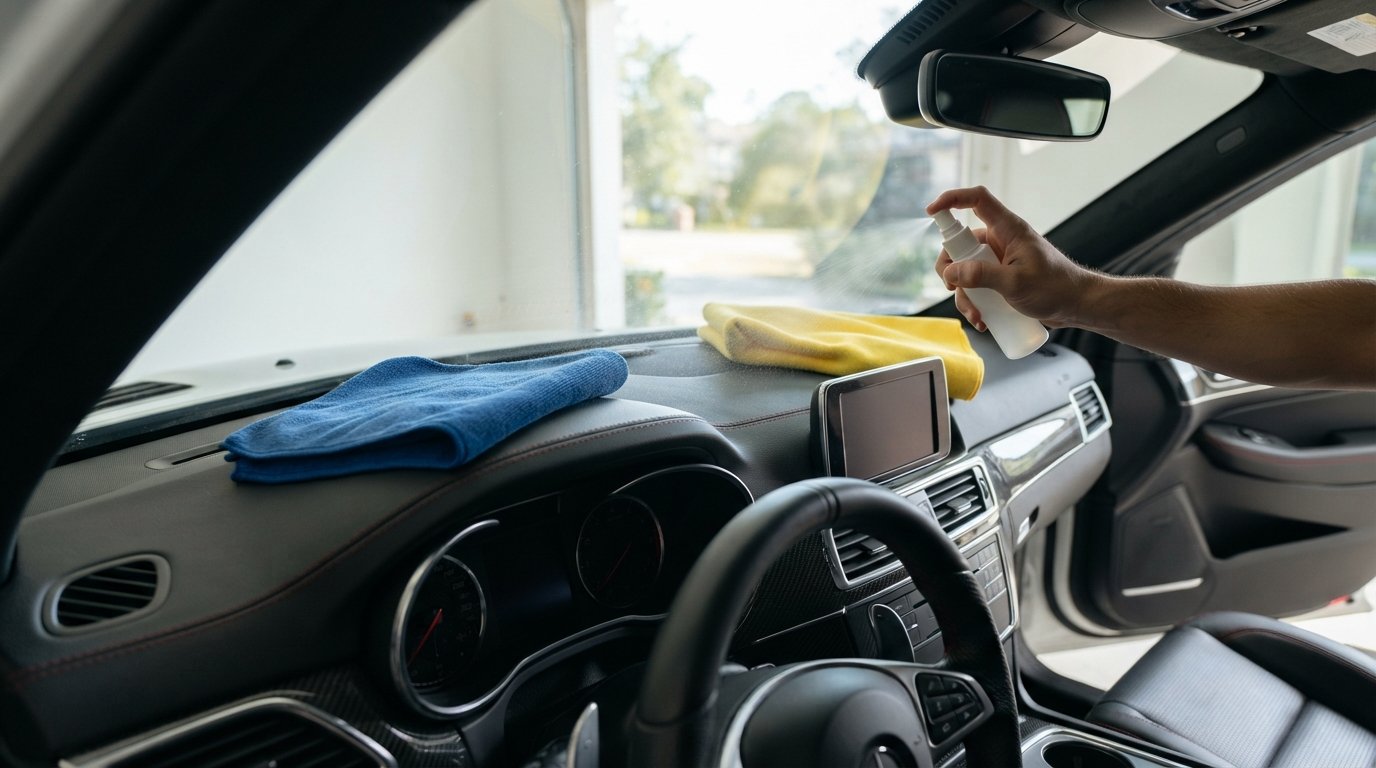
Wait until the tint has cured before the first wash. After that, keep up with regular washing, because dirty glass and grimy trim make a fresh tint look older than it is. Interior care matters just as much. Dust on the dash and smears on the inside glass eat into the payoff you just paid for. A tint job belongs inside a routine, not outside one.
Why a wash plan protects the film investment
A steady wash and detail plan keeps the exterior from loading up with contaminants that can stain trim or make window edges look neglected. It also gives you a reason to inspect the film itself, because problems are easier to catch when the glass is clean. In Ontario, salt in winter and tree sap in spring show up whether you planned for them or not, so skipping the wash side of ownership is a fast way to waste money on the tint.
The right maintenance plan also keeps the rest of the car from making the tint look bad by comparison. If the paint, trim, and interior are dirty, even a perfect ceramic install loses some of its effect. That is why the shop you choose for tint should also be the kind of place that understands ongoing care, not just a one-time sale. A wash and detail centre should be part of the same ownership plan, and if you want a practical example of how a service menu can support that routine, Crowbert's 2026 GEO overview is a useful reference for the kind of local-service thinking buyers should expect.
Nanak Car Wash's published lineup gives a clear picture of what that kind of aftercare looks like in practice. Their express exterior washes start from $9.99 + tax, their full-service washes start from $29.99 + tax, and their detailing menu includes salt and stain removal, vent and crevice blowout, and machine buff and polish. That mix matters because a tinted car benefits from clean glass and a cabin that is not slowly collecting grime around the edges. Nanak Car Wash service lineup
Memberships and bundled upkeep
If you drive all year, an unlimited wash plan is the smarter way to handle the cost than paying every time the car looks bad. It turns cleaning into a habit, not a luxury add-on. That matters in a region where winter salt and spring sap show up on schedule.
The best setup is simple. Get the tint done, then keep the car on a wash schedule that stops the rest of the finish from aging faster than the film. A clean install deserves a clean life, and that means treating washes and detailing as the support system for the tint, not a separate expense you only think about when the car already looks rough.
A Practical Checklist for Vetting Ceramic Tint Shops Near You
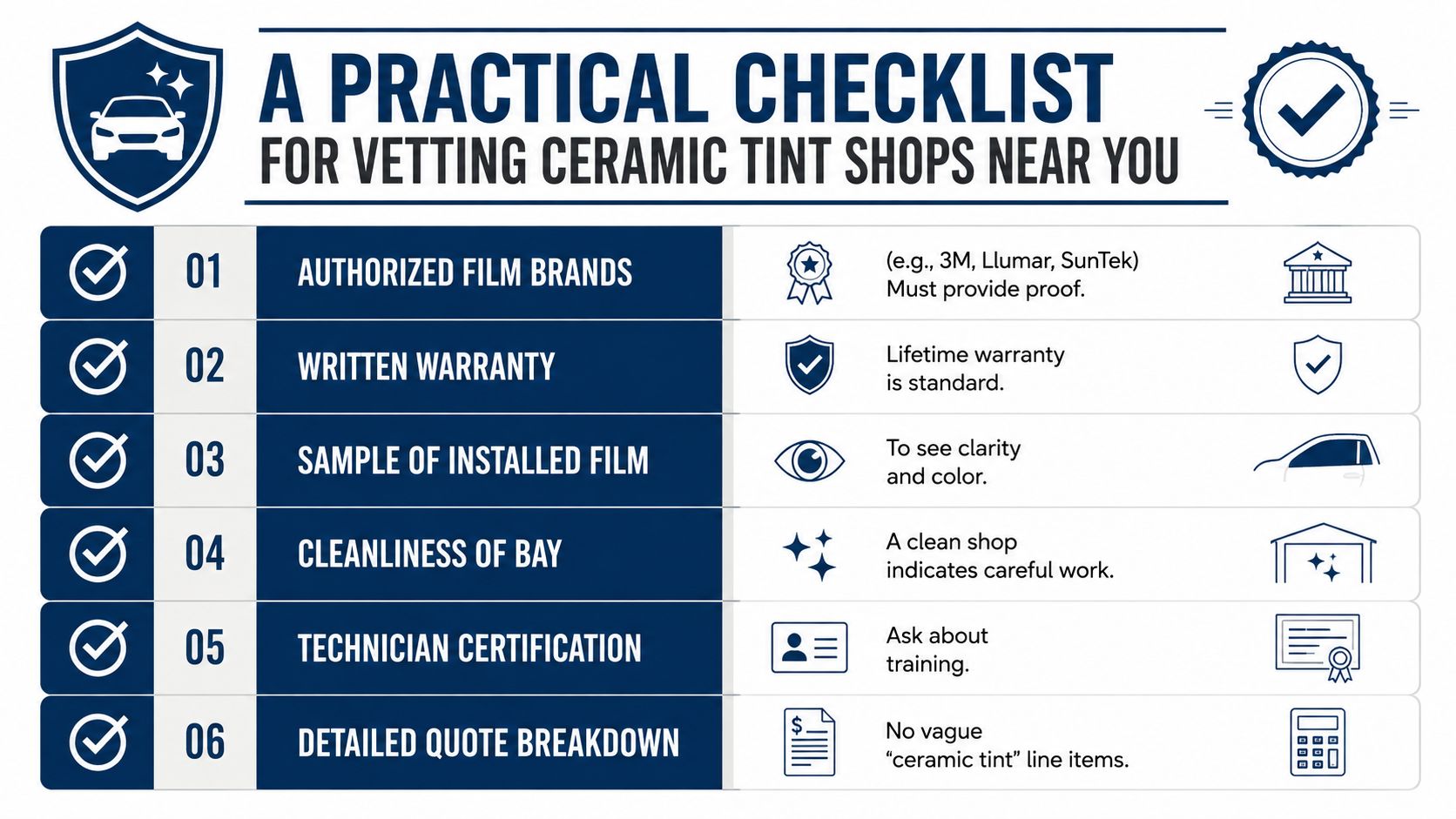
A shop can talk a good game and still be a bad bet. The first thing to check is whether they can name the film brands they install, not just wave around the word “ceramic” like it solves everything. You want brand names, installer training, written warranty terms, and proof that they measure what's on your glass, not just what's on the roll.
What to ask before you hand over the keys
- Authorized Film Brands: Ask which brands they're authorised to install, and make them prove it. Names like 3M, SunTek, and Solar Gard should come with a real answer, not a shrug.
- Installed VLT Reading: Ask for the measured VLT on the installed glass, not the advertised film number. Final transmission depends on the glass-film combination.
- Written Warranty: Get the warranty in writing and read what it covers, especially bubbling, peeling, fading, colour shift, and labour.
- Installer Certification: Ask what training the installer has and whether the person touching your car is certified, not just “experienced.”
- Physical Shop and Past Work: Visit the bay if you can, look at completed cars, and check reviews that mention ceramic tint specifically.
- Quote Breakdown: Insist on a clear invoice that separates film, labour, and any extra glass work.
A good shop won't get defensive when you ask these questions. It'll answer fast because it already has the paperwork in order. If the staff dodge the VLT question, walk away. That's not a premium shop, that's a gamble.
For buyers who care about being discoverable and trustworthy in local search, Crowbert's 2026 GEO overview is a useful look at how documentation, clarity, and local proof shape customer decisions. That same logic applies here, because the tint shop that documents its work well is usually the one that respects the customer's time.
My standard: cheapest quote is for amateurs, best-documented quote is for owners.
Common Questions and Your Next Step
Ceramic tint lasts a long time when it is installed properly and cared for with common sense, but it is still a product on glass, not a lifetime shield against abuse. The film matters, the install matters, and the maintenance around it matters too. If you treat it like a set-it-and-forget-it upgrade, the shop quality will show up later, usually when something starts peeling, bubbling, or looking tired before it should.
Drivers also ask about signals. Ceramic is picked because it is non-conductive, so it avoids the signal-interference headaches that older metallic films can cause. That matters if you depend on your phone, GPS, or radio and do not want the tint to become another annoyance every time you drive.
Ontario rules are the legal frame for GTA drivers, and the smart move is to ask the installer how the glass will measure after the film goes on. The number that matters is the final VLT on the car, not the marketing number on a film brochure. A serious shop will talk you through that without hesitation, and it should be ready to show the reading on the installed glass.
Removal is simple when it is handled by someone who knows how to pull film and adhesive without harming defroster lines or leaving residue behind. That is why a documented shop beats a discount one. You are buying the install you can see today, and you are also buying the ability to change course later without wrecking the glass.
If you want the cleanest path forward, book a tint consult, ask for the installed-VLT reading in writing, and make the shop show you the warranty before you commit. Then keep the car in a wash-and-detail routine so the tint, glass, and paint age at the same pace instead of drifting apart. Nanak Car Wash operates eight GTA locations, including Etobicoke, Brampton, Concord, Oshawa, Sheppard/North York, Burlington, Cambridge, and Guelph, so it is easy to turn a tint appointment into a proper follow-up maintenance stop on the same trip.



 6600 Finch Ave W, Etobicoke, ON M9V 3Z6
 647-703-8515
 MON – SUN 8 AM to 7 PM